Thursday, April 9, 2026
Home Blog Page 3102

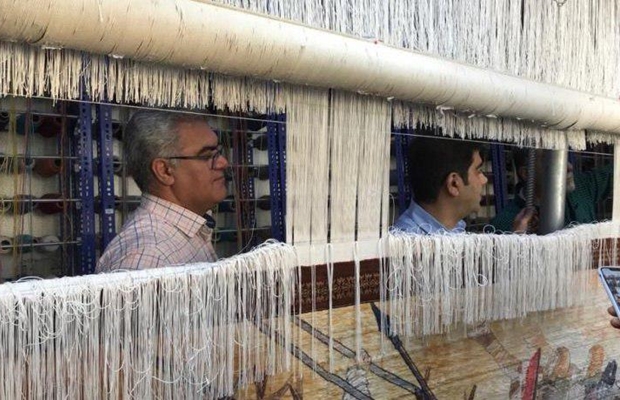
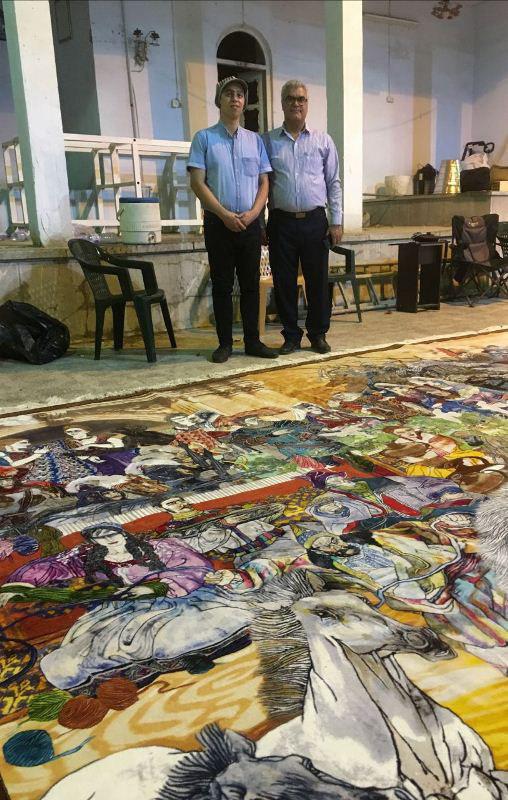
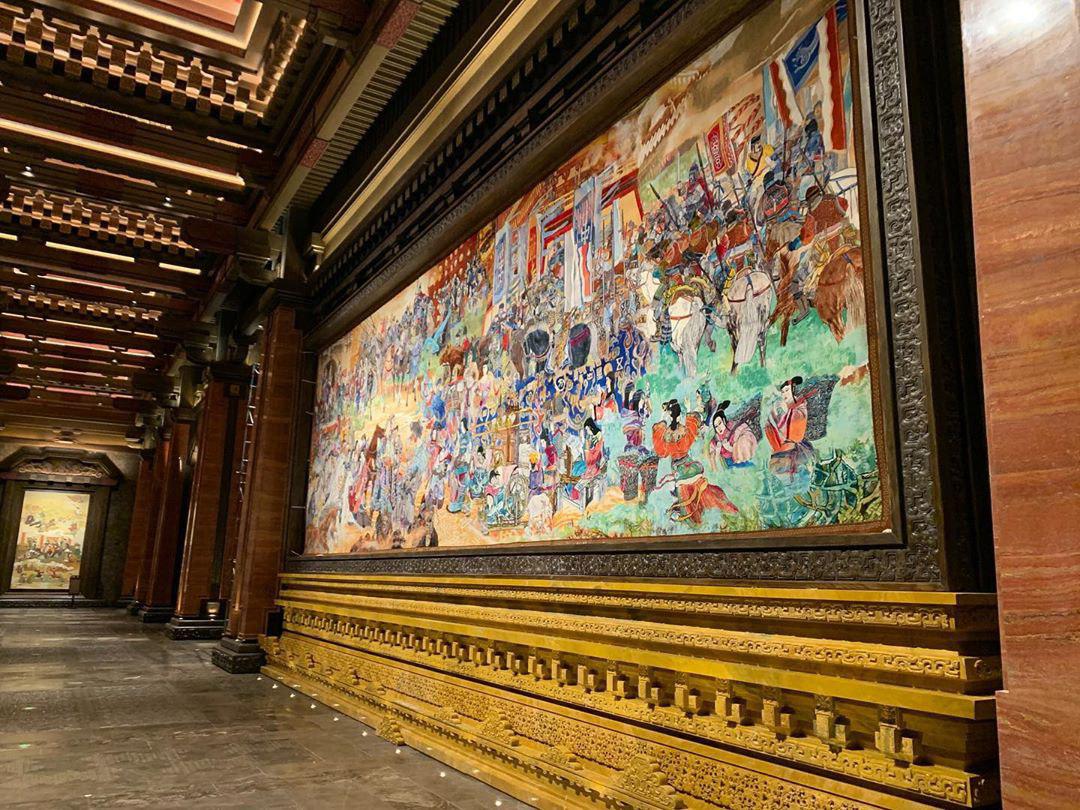
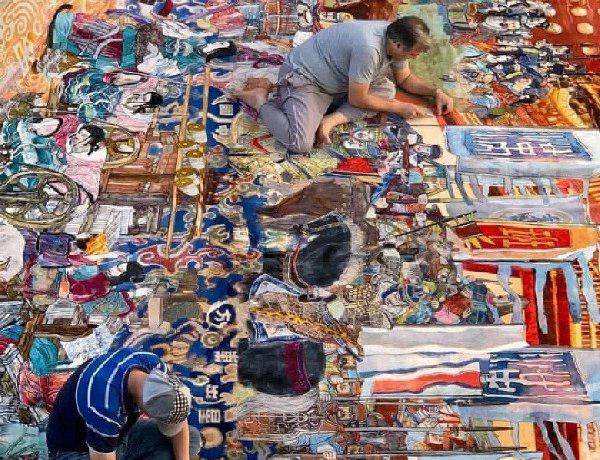
World’s Largest Pictorial Carpet Woven in Iran for China

This Persian rug has been woven with the consultation and in collaboration with a faculty member of the Kashan University’s Handmade Carpets Department.

The 2.5-metre rug was ordered by the Chinese government for the Silk Road Museum of Shanxi province.

The masterpiece was woven in nine months, in 168 colours and with 23 million knots, and is now placed at the museum.

The pictorial carpet is a great, unique, and valuable work of art which gives a picture of the great nations of the old times in trade with China.

The work gain much more value as all stages of the project have been carried out in modern and innovative ways to overcome the numerous constraints.

The combination of experience, art, knowledge and technology together is a valuable thing and can be a fresh hope for the future of the Iranian rug weaving.

Fat’h-Ali Qashqaifar, a professor at the University of Kashan and a member of the faculty of handmade carpets has been the artistic technical consultant of this global project. He constantly accompanied the team and came up with creative ideas and scientific solutions.

Professor Mohammed Seif has also given a hand in this project.

According to the ministry of science, 115 people were involved in weaving the rug, including 55 female artists.

The Persian carpet also known as Iranian carpet, is a heavy textile made for a wide variety of practical and symbolic purposes including home use, local sale, and export.

Carpet weaving is a vital part of Iranian culture and art. Within the group of oriental rugs, the Persian carpet stands out thanks to the variety and ornateness of its diverse designs.

Australia Releases Iranian Student after One Year in Jail

Reza Dehbashi who studied at the University of Queensland in Australia had been apprehended in September 2018 and remained in detention for 13 months on the baseless charge of sending American military equipment to Iran.

He was a student of the PhD program, and was finally released thanks to efforts by the Iranian diplomatic apparatus and Iran’s Embassy in Canberra.

After his detention, Iran’s then Foreign Ministry Spokesman Bahram Qassemi announced that the issue was being reviewed and that Iran’s embassy in Canberra and the Australian embassy in Tehran were following up the matter.

At that time, Australia’s ABC news channel reported that the United States had charged an Iranian student at the University of Queensland with sending military gear to Iran (purchasing and sending to Iran modern radar equipment used to spot missiles and stealth jet fighters) and demanded he be extradited to the US.

Last week, Negar Ghodskani, another Iranian citizen arrested in Australia and extradited to the US was also freed upon a court ruling and returned to Iran. She had been behind bars in Australia for almost three years on charges of circumventing US sanctions on Iran and had been recently extradited to the United States. She was released upon a US court verdict.

The developments come as Iran has released British-Australian woman Jolie King and her Australian boyfriend, Mark Firkin, after dropping all charges against them.

The Australian foreign affairs minister, Marise Payne, told reporters Thursday, “It is with some enormous relief that I announce that they have been released and returned.”

Payne said the Australian government held “very sensitive” negotiations with Iran over King and Firkin’s release and helped ensure they were treated appropriately while in detention.

Iran Ranks 2nd Worldwide in Terms of Growth in Tourism Sector

Figures by the United Nations World Tourism Organization (UNWTO) show the number of tourists visiting Iran in 2018 stood at 7,295,000 in 2018, registering a 49.9-percent rise year on year.

Only 4,867,000 visitors had visited Iran in 2017, the Iranian Cultural Heritage, Handicrafts and Tourism Organization quoted the WTO as saying.

The nearly 50-percent rise in the number of international visitors coming to Iran is registered as a negative growth of 1.5 percent had been reported in 2017 over the previous year.

The WTO has offered no figures on revenues generated by international tourism in Iran in 2018, but puts the figure at $4.402 billion for 2017.

Reports suggest Iran’s income in the tourism sector hovered around $2.438 billion in 2010.

Ecuador stood in the first place with a 51-percent growth. Located in Latin America, Ecuador managed to increase the number of tourists visiting the country from 1.6 million in 2017 to 2.6 million in 2018.

Iran, which ranks second, was followed by Egypt with a 36-percent growth, Uganda with 31.9 percent, Slovenia with 23 percent, Palestine with 20.5 percent, Vietnam with 19.9 percent, Georgia with 16.9 percent, South Korea with 15.1 percent and Qatar with 19.4 percent respectively in terms of the number of foreign tourists.

Iran Uses Nanotechnology to Develop Water-Repellent Construction Material

Nanotechnology can be used in a whole variety of sectors, including construction materials and the coating of structures. A knowledge-based company in Iran has, for the first time, produced a kind of nano-mortar which is completely water-repellent.

In the construction material sector, it has been quite some time that Iran has been importing materials that prevent the penetration of water, but they are not water-repellent. Scientifically, there is a huge difference between the two concepts.

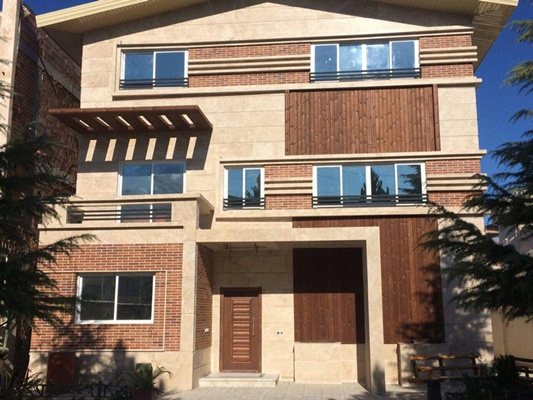
The Research and Development Department of this company has, for the first time in Iran, produced a type of construction material with super hydrophobe (water-repellent) property. The material has numerous applications. For instance, it can be used to produce a type of artificial stone for facades in different colours and shapes. The material is water-repellent; so; it never gets dirty and does not need cleaning.

The material is used as coating, two to three millimeters thick, on different types of artificial stone, making them economical construction materials to be used for the façades of buildings.

The material comes in different colours and shapes. Similar materials which are imported and which are not water-repellent is sold at between $8-15 per kilo on the Iranian market. However, the Iranian-made material costs less than $5.1 for end users.

In fact, the constructions materials used as the façade of buildings are expensive and are not insulators, either. For example, they may cause the building to become too warm in summer. However, the artificial stone produced with the newly-developed nano-mortar almost never gets dirty, is much cheaper and functions as an insulator, too. Moreover, it is produced in hundreds of different beautiful designs.

The water-repellent mortar made with nano-particles is not only used to produce materials for facades; rather, it has other uses as well. As a case in point, some equipment and devices in hot and humid climates can be coated with it to make them rust-proof. For example, pylons of some huge industrial tankers can be coated with this nano-mortar, so that they will never rust as a result of natural causes such as humidity.

The product can make its present felt on the export market as it is of a very high quality and extremely cheaper than similar foreign-made products.

Iran Releases Two Australians, Will Free Russian Journo Soon

The Australian foreign affairs minister, Marise Payne, told reporters, “It is with some enormous relief that I announce that they have been released and returned.”

Payne said the Australian government held “very sensitive” negotiations with Iran over King and Firkin’s release and helped ensure they were treated appropriately while in detention.

“We have done that discretely, and I would note each case of an Australian detained overseas is different and requires a specific and a particular response,” she said.

“For Jolie and for Mark, the ordeal they have been through is now over, they are being reunited with their loved ones.”

She said all charges against King and Firkin had been dropped.

Payne said King and Firkin were in good health and good spirits, and had requested privacy.

In a statement issued on Saturday afternoon they said, “We are extremely happy and relieved to be safely back in Australia with those we love.

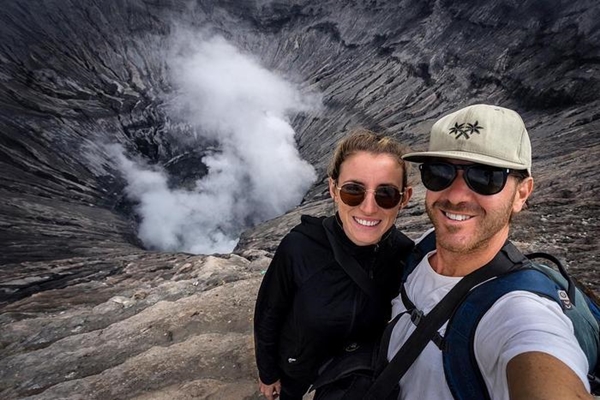
King and Firkin left their home in Perth, Western Australia, in 2017, documenting their travels on a blog called The Way Overland. They were arrested three months ago near the Iranian capital for flying a drone – allegedly to shoot pictures for the travel blog – near military installations in Jajrood in Tehran province. They were then detained and jailed in Evin prison.

Drone use with a permit is allowed in Iran, but there are strict conditions. People must not fly drones over people or large crowds, over the city of Tehran, or over sensitive areas. Flying a drone without a permit in Iran is punishable by six months in prison followed by immediate deportation.

The release came a week after the US released Iranian prisoner Negar Ghodskani, who had served 27 months in prison in Australia before being extradited to the US.

Iran to Release Russian Journalist Soon

Iran has also announced that Russian female journalist Yulia Yuzik, detained in Tehran allegedly on charge of spying for Israel, would soon be released.

“Russian Deputy Foreign Minister Igor Morgulov summoned Iranian Ambassador to Moscow Sanaei to the Russian Foreign Ministry on October 4 to demand clarification on the circumstances for the detention of Russian citizen Yuzik in Tehran. Sanaei confirmed that Yuzik had been detained by law enforcement agencies to give explanations on a number of issues, and will soon be released,” the Russian Foreign Ministry said.

Iran Set to Boost Tourism Ties with Tajikistan

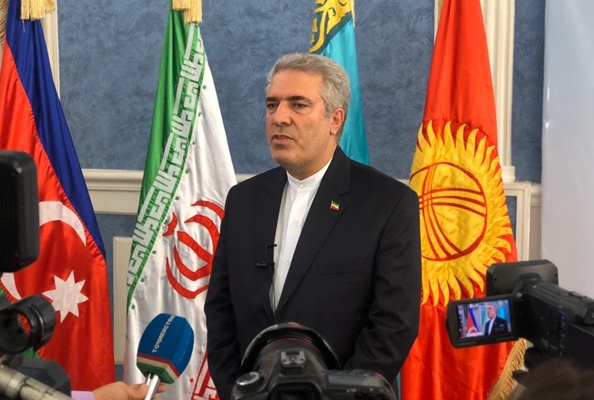
“During his trip to Tajikistan, our country’s president underlined that we should expand our relations with this friendly and brotherly country and we will try to make it happen,” said Ali-Asghar Mounesan on the fringes of a meeting of tourism ministers of the Economic Cooperation Organization (ECO) member states in the Tajik city of Khujand.

“In a meeting with Tajikistan’s foreign minister as head of the country’s Tourism Organization, we announced our readiness to help on all fronts. We stand ready to help Tajikistan in all areas and work together,” said the minister.

“Iranian companies have good experience in economic and development projects and have also implemented several projects in Tajikistan such as the construction of bridges, power plants, dams, etc.,” he said.

“Also in the tourism sector which is the scope of our responsibility, we are ready and will help in all areas in order to further upgrade the level of relations between the two countries,” he added.

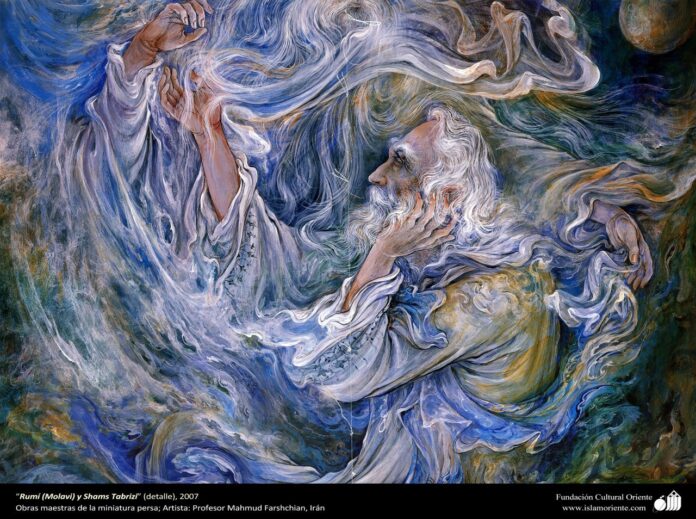
Rumi Remains Point of Contention after 800 Years

“Each befriended me on his own surmise, none sought my secrets, inner-wise,” says Rumi.

September 30 marks the national day to commemorate Rumi. His works of poetry and prose have been around for around 800 years, with a whole variety of viewpoints about the characters and concepts in his literary works.

Following reports of Iranian filmmaker Hassan Fathi’s bid to make a film about him, two top Shiite clerics said it would be religiously forbidden to even make a film about the story of his life because such a movie would promote Sufism, an ideology which they believe misleads Shiite people.

Some others also accuse Rumi and prominent contemporary mystic Shams of Tabriz of being male lovers, despite the fact that homosexuality is haram in Islam.

The following are some of the mixed viewpoints about the renowned Iranian poet and his magnum opus Manavi.

You Meet God in Masnavi

A great Iranian scholar says thousands of points are included in verses of worship in Masnavi, and urges people to read them.

“Rumi puts you in a circle where God also exists,” says Hossein Elahi Qomshei.

“Rumi takes to toward Paradise and informs you of the existence of Hell before the Judgement Day and shows you the flames of fire and wrath,” he adds.

“If you get familiar with Rumi, you will see the Judgement Day,” he says.

Rumi No Commodity to Be Seized

Mohammad-Ali Movahed, who has published a corrected version of Masnavi, believes Rumi’s verses emit love and hope which are much in demand today when morality is hard to find. He says the power and attraction of Rumi’s words are due to the miraculous combination of poetry, music and story-telling.

“Rumi is no commodity to be seized,” he says.

“Rumi is beyond such worlds. He is as related to us as he is to the whole world,” he adds.

“The world is infatuated with Rumi whose poems are in Persian, whose tomb lies in Konya, and who is also known as Balkhi Rumi,” he says.

Rumi Not Infallible

Late renowned Iranian scholar Mohammad Taghi Jafari says Rumi never claimed to be the Almighty or the Prophet; rather, on many occasions in Masnavi, he has confessed to paving his own way.

“So, one cannot say he was infallible,” he says.

The scholar says humans are liable to errors, and hence, Rumi must not be regarded as an infallible individual.

Rumi: Pure Islam, Divine Understanding

Leader of Iran’s Islamic Revolution Ayatollah Seyyed Ali Khamenei, himself a great fond of poetry, says Rumi was all mysticism, reality, pure Islam and divine understanding

Rumi Is No Mentor

Iranian philosopher and intellectual Mostafa Malekian says one should look at Rumi as a teacher, not a mentor.

“If we look at him as a mentor, we must listen to everything he says. But in fact, we should look at him as a teacher and see which of his thoughts and ideologies are useful for us and learn the same,” he says.

‘No Iranian City Will Have Problem in Access to Water in Two Years’

Reza Ardakanian said we strive to meet the financial and non-financial needs for this project.

“We at the ministry of energy are looking forward to launching a major water and electricity project every week in the second half of this year, which will begin as of next week,” he said.

The minister of energy reiterated that more than 220 large-scale projects of urban water supply, sewage, rural water, power plants including thermal and renewable energy and other projects nationwide will be put into operation and people would withstand how we made good use of the sanctions based on our domestic capabilities.

“Last summer, we were able to supply 150,000 megawatts more energy than the same period a year ago, and in a year named as the ‘boom in production’, two of the most important infrastructural products, i.e. water and energy, play an important role in the country’s development,” added Ardakanian.

Touching upon the importance of water management he said water is not less important than electricity, noting that the energy ministry plans to institutionalise the issue of proper consumption as a moral and cultural custom in the society. He mentioned that the role of media and NGOs is very crucial in this regard.

“The sustainability of development in our country and the resilience of our society depend more on ethical commitment, and the more ethical we are, the more resilient and developed we can be,” he continued.

Iran Raps France’s ‘Meddlesome’ Remarks on Iranian National

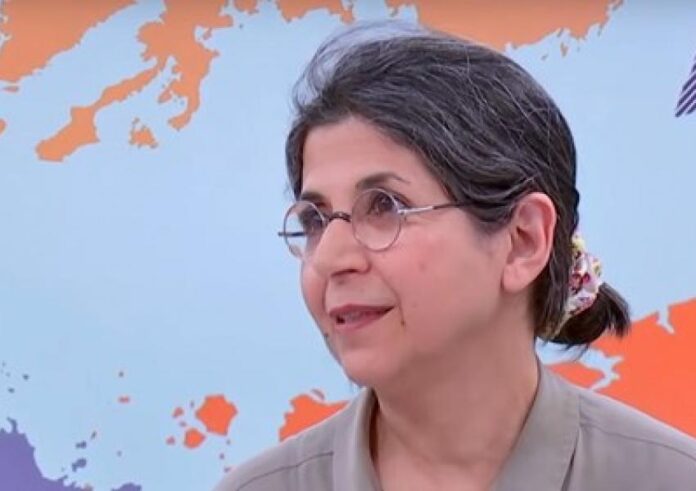
“The dual nationality of Iranian citizens is not recognized by the Islamic Republic of Iran’s national law; therefore, Ms. Adelkhah is regarded an Iranian national,” Mousavi said in a Friday statement.

“As an Iranian, she enjoys all recognized citizen rights for Iranian nationals,” he added.

The spokesman said the Iranian Judiciary is carefully investigating the case of Ms. Adelkhah within the framework of Iran’s fair trial law, and the French Foreign Ministry’s interference in the case of Iranian nationals has no justification.

“The move not only fails to help the resolution of the issue, but also would further complicate the trial procedure,” he added.

Mousavi said the move by the French government is considered as interference in the internal affairs of Iran and is unacceptable.

His comments came after French Foreign ministry spokeswoman Agnes von der Muhll called for the release of Adelkhah, who also holds French nationality.

“It is vital and urgent for the Iranian authorities to be transparent in this case as well as for all cases of foreign nationals arrested in Iran”, von der Muhll told reporters on Thursday in a daily online briefing.

“France has repeatedly demanded consolatory access to Ms. Adelkhah and her release from prison. But Iranian officials reject this request based on her Iranian nationality,” she noted.

“Her family has been able to meet her a few times,” the French foreign ministry spokeswoman added.

Adelkhah, a 60-year-old anthropologist and director of research at Sciences Po’s Centre for International Studies (CERI) in Paris, was reportedly detained in June on charge of espionage.

Tehran to Sue US at ICJ for Denying Visa to Iranian Staff

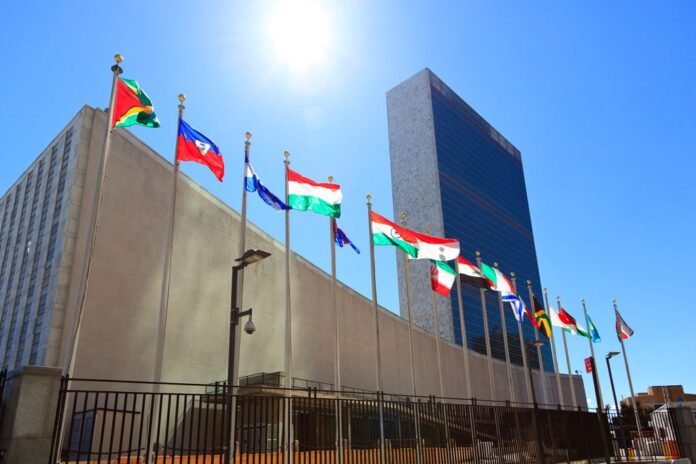
Gholam-Hossein Dehqani said the Islamic Republic will insist on the issue, but other countries, including Cuba and Russia, also have problems that were raised at United Nations Committee on Relations with the Host Country.

“Iran’s diplomatic missions to the United Nations have been discriminated against by the host government for the past several decades, and their movement was limited to about 25 miles from central Manhattan.”

Over the past six months, the current US administration has reduced the Iranian UN staff’s limit to three miles.

Iranian diplomats have been severely restricted from access to things such as physicians, universities or other required things.

“We have asked for the removal of the restrictions … but that has not been accepted,” added Dehqani. 

The US government has imposed travel restrictions on Iranian officials, including Foreign Minister Mohammad Javad Zarif. The restrictions drew widespread criticism during the recent visit of the Iranian delegation to New York to take part at the 74th annual meeting of the UN General Assembly.

The bans stand in stark contradiction to all international rules and serve as an abuse of the privilege to host the UN headquarters.

Based on an agreement signed in 1947 between the US and the United Nations, the former has been committed to issuing visa for all diplomats affiliated with the UN. The agreement explicitly states that there must be no restriction for the diplomats.