He made the remarks in a Friday address to the ministerial meeting of the Economic Cooperation Organization (ECO) held in New York on the sidelines of the 74th meeting of the UN General Assembly.
In his speech, he highlighted the significance of holding the ministerial meeting of ECO at a time when the US has increased its unilateral and hegemonic illegal measures.
Araqchi said such illegitimate measures have shaped a dangerous and unpredictable future for developing countries, and the current situation, where a superpower imposes its will and demands on other nations in the world, will influence the welfare and development of future generations as well.
“Under such dangerous circumstances, where the pillars of multilateralism are under unprecedented attacks, the Economic Cooperation Organization – as an exemplary case of successful multilateralism and with high goals, causes, and values – has created a unique atmosphere for promotion of cooperation and implementation of major projects and plans in the region,” Araqchi added.
“Although ECO has had an undeniable progress, it is still far from the level where it can meet the regional people’s expectations. Therefore, it is necessary to identify and deal with the obstacles and shortcomings, and at the same time find effective solutions to help the Organization and improve the region’s development,” he noted.
Hi said it is quite essential for ECO member states to have political will and commitment in order to achieve tangible results at operational levels.
The Iranian diplomat finally expressed the hope that the Organization’s activities would witness considerable developments given the serious interest and close cooperation of member states and through focus on the implementation of new plans and initiatives in line with the objectives of ECO Vision 2025, especially in the fields of trade, energy, transportation, and tourism.
The Economic Cooperation Organization or ECO is an Asian political and economic intergovernmental organization which was founded in 1985 in Tehran by the leaders of Iran, Pakistan, and Turkey.
It provides a platform to discuss ways to improve development and promote trade and investment opportunities. The ECO is an ad hoc organisation under the United Nations Charter.
The objective is to establish a single market for goods and services, much like the European Union. The ECO’s secretariat and cultural department are located in Iran, its economic bureau is in Turkey and its scientific bureau is situated in Pakistan.
The hospital is located outside the area around UN headquarters, and the US administration has already restricted FM Zarif from going anywhere outside the area.
The US government’s move to reject Zarif’s request to visit a 40-year friend was reported on Friday by Foreign Policy, which quoted US and Iranian officials as saying.
“Foreign Minister Zarif would like to visit a colleague who is in the hospital receiving world-class care,” said a State Department spokesperson.
“We have relayed to the Iranian mission that the travel request will be granted if Iran releases a US citizen,” the spokesperson added.
In reaction to the move, Iranian Deputy Foreign Minister Seyyed Abbas Araqchi, who has worked a long time with Takht-Ravanchi especially when they were both members of Iran’s nuclear negotiating team, said in a post on his Instagram account that his friend will soon recover and get out of the hospital, but the “disgrace” is what will remain for the US administration.
The US announced its travel restrictions on Zarif back in July, when he was in New York to take part at a UN meeting.
US State Secretary Mike Pompeo claimed at the time the decision was a tit for tat measure, as no American diplomat is allowed to step in Tehran.
This comes as the US, as the host of the UN headquarters, is required by the International law to provide the envoys of all members of the UN with an appropriate ground to take part in the UN meetings.
Meanwhile, since Iran and the US have no diplomatic ties, there is no justification for the presence of American diplomats in Iran, particularly now that the US has imposed the most severe sanctions in history on the Iranian nation.
Photo of Negar Ghodskani, an Iranian woman who was indicted in 2015 in Minnesota and arrested in June 2017 in Australia at the US’ request on charge of violating the American sanctions against the Islamic Republic of Iran. After extradition to the US following three years in detention, she was finally released and sent back home on September 25, 2019
Negar Ghodskani, 40, was indicted in 2015 in Minnesota and arrested in June 2017 in Australia at the US’ request on charge of violating the American sanctions against the Islamic Republic of Iran.
US prosecutors say Ghodskani had established a front company in Malaysia to illegally obtain restricted communications circuitry from companies in the US, in violation of the country’s anti-Iran bans.
At the time of her arrest, she was four months pregnant. She gave birth to her son Nickan in custody later in November 2017, but the baby was taken away from her and raised outside the prison.
After spending three years in an Australian jail, Canberra finally extradited Ghodskani to Minnesota in July 2019. US prosecutors had asked for a prison term of around three to five years, but US District Court Judge Joan Ericksen ruled on Tuesday that the 27 months she had spent in prison was enough, and she must be deported to her home country.
The Associated Press on Thursday quoted her lawyer, Robert Richman, as saying that Ghodskani had arrived in Iran by Wednesday night.
The “deportation” coincided with the visit of Iranian President Hassan Rouhani to New York, where he attended the 74th annual meeting of the United Nations General Assembly, and that raised the possibility the release of Ghodskani has been part of a prison swap deal between Iran and the US, similar to the 2016 exchange of prisoners.
However, Richman told AP that Ghodskani’s deportation was not part of any prisoner swap, and the idea of a swap was never discussed. “Negar Ghodskani is not an important person to Iran.”
Secretary of State Mike Pompeo also declined on Thursday to discuss the possibility of a US-Iranian prisoner swap after the release of Ghodskani.
Later on Friday, Iran’s Foreign Ministry Spokesman Seyyed Abbas Mousavi provided details on the release of Ghodskani, but did not clarify whether it was part of a prisoner swap with the US. He just described the US court’s ruling to release the Iranian detainee as a move to cover up what he calls the “legal scandal” of the US prosecutor who had prosecuted an innocent woman.
But these stances do not seem to be consistent with what Iranian officials had suggested over the past few months.
The issue of Ghodskani was raised by Iranian Foreign Minister Mohammad Javad Zarif during his discussion with Asia Society President and CEO Josette Sheeran in New York back in April.
“We have an Iranian lady in Australia who gave birth to a child in prison, not even on bail, inside prison, on an extradition request by the United States because she was responsible as a translator in a, whatever, in a purchase operation – purchase – of some transmission equipment for Iranian broadcasting company,” Zarif said.
“That’s her charge. She has been lingering in an Australian jail for the past three years. … nobody talks about this lady in Australia who gave birth to a child in prison whose child is growing up outside prison with mother in prison,” he added.
He said Iran had told Donald Trump’s White House team six months earlier that Tehran was open to a prisoner swap scheme but had not received a response.
President Rouhani also raised the issue of a prisoner swap with the US during his press conference in New York on Thursday, saying that Iran expected the US to reciprocate release of Lebanese-American “spy” Nizar Zakka in June, but Americans just appreciated the move.
Photo of Negar Ghodskani, the Iranian woman recently released by the US after spending 27 months in jail, uppon arrival in Tehran.
“During Mr. Trump’s term in office, the issue of holding talks on prisoners was raised once or twice … We once released a dual Lebanese-American prisoner, but they did not fulfill their promise to make a reciprocal move and release some Iranians, and sufficed it to thank Iran. Iran is always ready for negotiation on exchange of prisoners, and now the ball is in the US court,” Rouhani said, according to a transcript of his response to NBC’s reporter published on his official website.
Now it is not clear whether the US’ release of Ghodskani is its fulfillment of a long overdue promise to reciprocate the release of Zakka, or it is a goodwill gesture to convince Iranians to release the dual nationals currently jailed in Iran.
Earlier this month, Iran’s judiciary confirmed it had detained three Australian citizens on charge of spying and taking images from sensitive areas.
One of the cases related to images taken by British-Australian woman Jolie King and her Australian boyfriend Mark Firkin from military and restricted areas, and the other case involved British-Australian academic Kylie Moore-Gilbert accused of “spying for another country”, Iran’s Judiciary spokesman Gholam-Hossein Esmaeili said.
There are also at least four US citizens, mostly dual nationals, currently jailed in Iran. Xiyue Wang, a US citizen and Princeton University graduate student; Iranian-American father and son, Siamak and Baquer Namazi; and Michael White, a Navy veteran imprisoned in 2018, are among those jailed in Iran.
Dehqani made the remarks in a Thursday address to a UN General Assembly meeting held in New York to commemorate the International Day for Total Elimination of Nuclear Weapons.
In his speech, Dehqani described nuclear disarmament and creation of a world free from these weapons as a necessity that is long overdue, and stressed Tehran’s support for the cause.
He said the new rounds of nuclear arms race and nuclear weapons modernization race are worrying trends that threaten human survival.
He noted that the United States’ withdrawal from the JCPOA is another example of its irresponsible policies that undermine international peace and security, and at the same time, the country’s withdrawal from the Intermediate-Range Nuclear Forces (INF) Treaty has exacerbated the situation.
The incumbent US president seeks to acquire more nuclear weapons in order to stay at the top of the pack, Dehqani said, highlighting the US’ extensive plan to modernize its nuclear arsenals and develop small nuclear weapons with lower threshold for use.
He also pointed to the US’ 2018 Nuclear Posture Review (NPR), and said in this document, nuclear weapons have gained an increased role in the country’s strategies, and it advises the resumption of nuclear explosive tests, which is alarming.
Dehqani said the disastrous trend and the irresponsible policies of the US must be stopped. “No one should possess nuclear weapons, and we should destroy these weapons before they destroy us.”
To achieve that goal, it is necessary that countries possessing nuclear weapons comply with their explicit obligations under the Article VI of the Nuclear Non-Proliferation Treaty (NPT), he added.
The Iranian diplomat referred to the situation of the Middle East, and said all-inclusive compliance with the NPT in the region is an immediate necessity, as the only possessor of nuclear weapons that has not joined the treaty, namely the Zionist regime, has jeopardized the peace and stability of the region and beyond.
He said the regime’s nuclear weapons are the only obstacle on the way of achieving a nuclear-weapon-free Middle East, proposed by Iran in 1974.
Therefore, the Israeli regime must be forced into immediate and unconditional membership in the NPT as a party without nuclear weapons.
Dehqani finally expressed Iran’s preparedness to cooperate with all sides to totally eliminate nuclear weapons, and said Iran encourages all nations to use any opportunity to realize this collective responsibility.
Israel, the sole possessor of nuclear weapons in the Middle East, has a policy of deliberate ambiguity about its nuclear program.
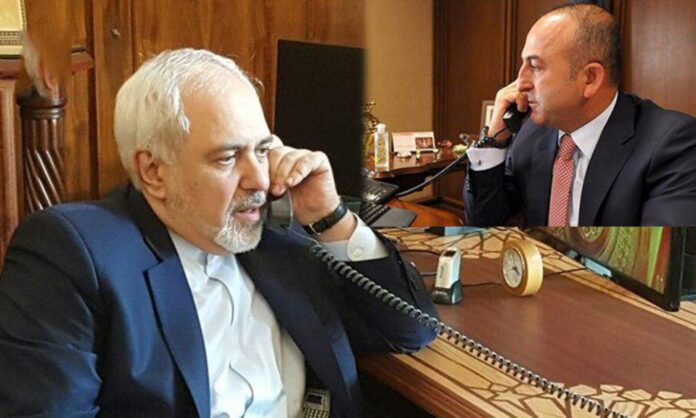
During the Friday meeting, the two sides conferred on bilateral relations, continuation of close contacts and consultations between the two countries’ officials, and the latest developments and progress made in the Astana Process.
Zarif once again underlined Iran’s full support for maintaining the territorial integrity of Syria.
“The US regime’s recent sanctions against certain countries are against the UN Security Council Resolution 2231, which has emphasized and encouraged the cooperation of all countries with Iran,” Mousavi said in a Friday statement.
“Through this move, the US administration is punishing other countries for respecting a resolution that even America had voted for,” he added.
The spokesman slammed the measures taken by Trump’s economic terrorism team as a factor against the security of international trade, and said, “As the main victim of economic terrorism, the Islamic Republic of Iran strongly condemns such destabilizing behaviours including the sanctions introduced against a number of Chinese companies, and warns the international community against the consequences of the US’ unilateralism in the form of economic terrorism.”
Mousavi also condemned sanctions against a number of Russian individuals and companies on the pretext of cooperating with the legal and legitimate government of Syria which is a member of the United Nations.
“The US’ excessive use of the weapon of sanction and economic terrorism has, on the one hand, turned into a factor against the American people and companies’ interests, and on the other hand, increased concerns about violating other independent countries’ freedom of doing international trade,” he said.
“The world needs to find solutions against such destructive interventions and thuggish unilateralism,” he added.
The US has put sanctions on several Chinese companies and their top officials for allegedly shipping Iranian oil, putting dozens of supertankers off limits to western energy traders.
The US Treasury department on Wednesday blacklisted two oil tanker subsidiaries of Cosco, a leading Chinese shipping and logistics company, although the parent company remains unaffected.
China Concord Petroleum, Pegasus 88 Limited, Kunlun Shipping Company and Kunlun Holding Company were also sanctioned.
The Trump administration also imposed sanctions Thursday against a Moscow-based firm and five vessels the Treasury Department said shipped fuel to Syria used to support the Syrian government.
Rouhani made the remarks in Thursday talks with Indian Prime Minister Narendra Modi in New York on the sidelines of the 74th session of the United Nations General Assembly.
In the meeting, the Iranian president described India as a very important Asian country, and hailed its long-standing relations with Iran.
Rouhani said Tehran and New Delhi can develop their bilateral relations in scientific, research and economic fields.
He further highlighted the two countries’ efforts to overcome the recent obstacles on the way of banking and energy relations, and appreciated India’s investment in developing the first phase of Chabahar Port in southeastern Iran.
“Today, Iran, India and Afghanistan are enjoying the advantages of this important project, and the region’s current and future generations will benefit from it,” he said.
He also pointed to the Kashmir issue, and called on Modi to adopt an approach that resolves the people’s problems in that region.
In turn, Prime Minister Modi referred to his recent visit to Iran and said, “My meeting with the Supreme Leader was very good and constructive, and he treated my so friendly that I felt at home.”
The Indian premier also stressed that his country has always supported Iran’s right to use peaceful nuclear energy and that India only recognises the UN sanctions.
At the end of the meeting, Rouhani invited the Indian Prime Minister to visit Iran again.
In a historic visit, Modi visited Tehran in May 2016 at the head of a large delegation in a bid to boost economic and political ties with the Islamic Republic.
During his stay, Iran and India signed 14 cooperation agreements, including an agreement to develop the Iranian port of Chabahar, which lies in the Gulf of Oman.
Iran and India agreed to develop the strategic Chabahar Port in 2003. The project, however, was suspended following the imposition of sanctions against Iran over the country’s nuclear program.
The first phase of the port was inaugurated in December 2017 by Rouhani, opening a new strategic route connecting Iran, India and Afghanistan bypassing Pakistan.
The Iranian top diplomat made the remarks in an address to the ministerial summit of Ancient Civilizations Assembly held in New York on the sidelines of the 74th annual meeting of the UN General Assembly.
“Ancient civilizations have a considerable role in the international peace and security in today’s world,” Zarif said, highlighting the diversity of ancient civilizations and its role in countering the cultural hegemony and monopoly of certain players.
“Apart from the civilizational diversity and special features of each of these civilizations, all ancient civilizations respect human and its dignity,” Zarif said, adding that today’s world needs this phenomenon.
In his speech, Zarif also appreciated the achievements and documents developed during the past two ministerial meetings of the Ancient Civilizations Forum held in Athens (2017) and La Paz (2019), and underlined the positive role of academic meetings organized by the Forum.
During the meeting chaired by Chinese Foreign Minister Wang Yi as the rotating president of the Ancient Civilizations Forum, the foreign ministers of Peru, Bolivia, Greece, Italy, Iraq, Armenia, and the representative of Egypt delivered speeches.
The Ancient Civilizations Summit was held in 2017 for the first, and the third ministerial meeting of the Forum is to be held in Beijing next month.
In the final statement of the Wednesday meeting in New York, the nine countries “stressed that the Ancient Civilizations Forum is an important platform for dialogue and cultural cooperation among member states.”
“Enhancing dialogue and exchanges among diverse civilizations is of vital importance to boosting further progress of human society, promote world peace and sustainable development, and address global challenges through joint efforts,” they stressed.
They also “reaffirmed that the diversity of civilizations is an essential feature of our world. Diverse nations, ethnic groups and civilizations should respect each other and treat each other as equals, uphold the beauty of each civilization and the diversity of civilizations in the world, stay open and inclusive and draw on each other’s strengths, advance with the times and explore new ground in development.”
The statement further emphasized “the need to enhance the dialogue among civilizations through continuous communication and cooperation, promote understanding, recognition and tolerance between cultures and peoples.”
“Preservation of cultural legacy of ancient civilizations and its transmission to future generations is essential for promoting tolerance, mutual understanding and respect in light of complex challenges that the world is facing,” the statement added.
It further “reaffirmed our commitment to upholding multilateralism with the United Nations as its core, adhering to the concept of mutual respect, fairness, justice and mutually-beneficial cooperation, abiding by international law and fundamental norms governing international relations.”
Greece, China, Bolivia, Egypt, Iraq, Iran, Italy and Peru, with the addition of Armenia, have formed a cultural initiative among countries, from different geographical regions, that are cradles of ancient civilizations.
These nine countries represent ancient civilizations such as the Egyptian, the Roman, the Persian, the Chinese, the Mesopotamian and Andean civilizations. Participating countries represent more than 40 per cent of the world population and are at the centre of international political developments in the Americas, Europe, Asia and Africa.
Through shaping a broad and multifaceted positive agenda of joint actions of the nine states, the Ancient Civilizations Forum aims to transform culture into a source of soft power and a fundamental tool of a modern and multidimensional foreign policy.
Another aim of the Forum is to highlight the international cultural cooperation as a factor for economic development.
Mousavi made the remarks on Thursday in reaction to recent “hackneyed” accusations levelled by UK Foreign Secretary Dominic Raab.
“Instead of launching a smear campaign against others, Britain must stop making mischief in regional issues, selling weapons to aggressors in Yemen, and participating in what the UN has approved as crime against humanity,” Mousavi said.
He slammed London’s pre-emptive move and rush to accuse Iran, without any evidence, of being involved in the Aramco incident in the early hours after the attack, but said this was not the first time the UK was doing it.
“The UK’s support for the aggressor side in the Yemeni war leaves no reason for public opinion to accept the delusive and one-sided accusations levelled by the British foreign secretary,” he added.
Mousavi further described the UK’s political and arms support for Saudi Arabia in the Yemen war as a key factor for the continuation of the aggression and carnage, and said, “Instead of accusing others, London must pressure its warmongering ally to end the destructive war as soon as possible.”
The spokesman said the UK foreign secretary’s move to raise the allegation right after Iran proposed its new initiative to resolve the regional disputes is meant to undermine the success of the plan.
“Britain had better stop meddling in regional nations’ affairs and allow them to find their own wise solution to put an end to the ongoing conflicts and tensions, mostly created as a result of foreign interference,” he went on to say.
“The Ministry of Foreign Affairs of the Islamic Republic of Iran strongly condemns Mr Raab’s anti-Iran and one-sided allegations, which have not been approved by any independent body, and believes that such propaganda campaigns against Iran will get nowhere, and if not stopped immediately and corrected with honest and positive approaches, would seriously harm the two countries’ relations,” he concluded.
The UK Foreign Secretary on Wednesday once again blamed Iran for the September 14 attacks on Saudi oil refineries without providing any evidence for his claim.
The drone attacks against Abqaiq and Khurais oil facilities run by the Saudi state-owned oil company Aramco were soon claimed by Yemen’s Ansarullah movement and their allies in the Yemeni army.
The unprecedented attack knocked out more than half of Saudi crude output, or five per cent of global supply, prompting Saudi and US officials to claim without any evidence that it probably originated from Iraq or Iran.
The United States and Saudi Arabia have accused Iran of carrying out the attack on Aramco installations. Tehran, however, has rejected the allegations, with Iranian Foreign Minister Javad Zarif saying Washington seems to be shifting from a failed campaign of “maximum pressure” to one of “maximum lying” and “deceit” against the Islamic Republic.
The E3 – Britain, France, and Germany – also issued a statement on the issue earlier this week, claiming that Iran must be behind the attacks as there were no other plausible explanations.
Negar Ghodskani, 40, was pregnant when Australian Federal Police arrested her on behalf of US authorities in 2017 over what Washington claimed was flouting US sanctions on Iran by purchasing US electronics components and products.
She gave birth to a boy in custody in Adelaide, South Australia, while fighting extradition to the US.
In July 2019, she stopped resisting extradition and finally arrived in the US.
On Tuesday, US District Court Judge Joan Ericksen in the state of Minnesota ruled that the Iranian mother, extradited to Minneapolis, had spent enough time in prison.
The judge agreed with Ghodskani’s lawyer Robert Richman that the 27 months she had already spent in custody in Australia and the US was enough.
“It went very well,” Richman said, adding, “We are expecting she will be deported back to Iran in the next few weeks.”
In April, Iran’s Foreign Minister Mohammad Javad Zarif publicly expressed Tehran’s preparedness for a prisoner swap with the US.
He called on Washington to swap all Iranians jailed in the US and on extradition requests from the US, mostly for alleged violations of US export restrictions and sanctions violations, with those imprisoned in Iran.
“We believe their charges are phony. The United States believes charges against these people in Iran are phony. Fine, let’s not discuss that. Let’s have an exchange. I am ready to do it and I have the authority to do it,” he noted.
In his remarks, Zarif particularly referred to Negar Ghodskani and called for her release as part of the swap deal he sought to negotiate with the US.