In a post on its Twitter account, Farsnews said that access to its .com domain had been blocked upon the US Treasury’s order.
The news agency said that it had received an email from the server company, which explicitly said that the blockage is due to an order by the Treasury’s Office of Foreign Assets Control (OFAC) and its inclusion in the list of Specially Designated Nationals (SDN).
The agency attached to its post a screenshot of its website with the message “www.farsnews.com’s server IP address could not be found.”
Now, access has become available to Farsnews’ website on its .ir domain.
Previously, Google, YouTube, Facebook, Instagram and Twitter targeted Iranian accounts, including those belonging to broadcasters.
In December 2019, Google blocked access to Press TV and Hispan TV’s official YouTube accounts without any prior notice.
The campaign even assumed the self-styled title of “maximum pressure” under the current US president. The drive has seen the US leaving a multi-party nuclear agreement with Iran in May 2018, and returning the nuclear-related sanctions that the deal had lifted.
As part of the campaign, the US State Department has called on social media companies to block the accounts of Iranian government leaders, and iOS — a mobile operating system created by US company Apple Inc. — disabling Iranian applications.
The Islamic Republic of Iran Broadcasting (IRIB) has been targeted by the US sanctions since 2013. The US Treasury sanctioned IRIB Head Abdolali Ali-Asgari in May 2018.
The Trump administration hopes the “maximum pressure” policy would ultimately force Iran to negotiate the sweeping 2015 deal, covering its ballistic missile program and its role in Middle East.
The Islamic Republic, however, has held its ground and said it will not renegotiate the deal which Trump abandoned in May 2018 and announced the most draconian sanctions ever on the country.
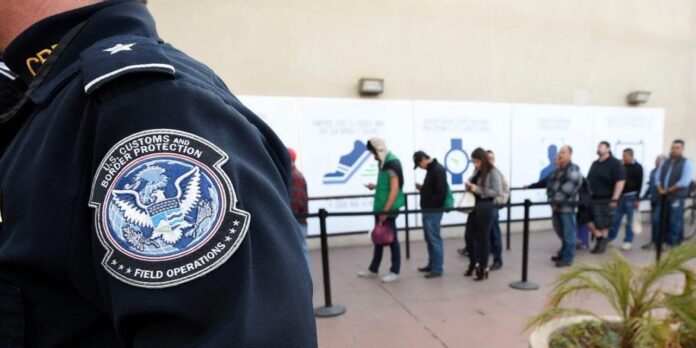
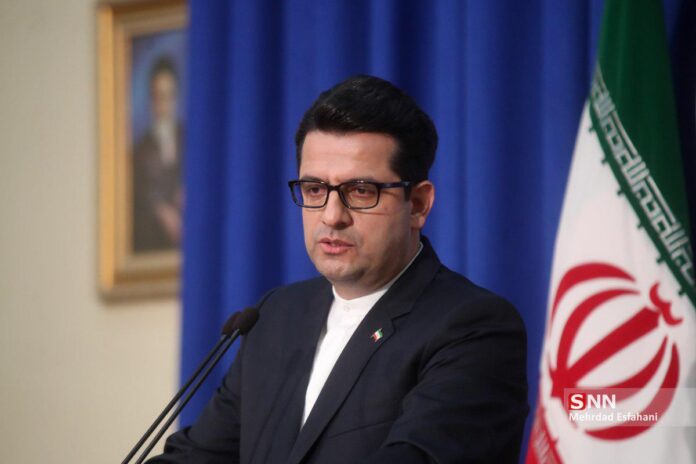
In a statement on Saturday, Spokesman for the Ministry of Foreign Affairs of the Islamic Republic of Iran Seyyed Abbas Mousavi decried the US Customs and Border Protection’s recent illegal and inhumane treatment of Iranian or Iranian-born nationals.
“Such absolutely discriminatory measures that are taken only because of the race, nationality or maybe the faith of people are totally rejected in terms of the international human rights laws and principles, and would result in accountability for the US government,” he added.
“Since those (Iranian) individuals have been questioned by the US border guards and security forces about their political and theological beliefs and their accounts in the virtual space have been also investigated coercively, such measure amounts to an example of inquisition and a blatant violation of human rights,” the spokesman deplored.
Mousavi strongly condemned the US Customs and Border Protection’s harassment of the Iranian citizens, adding, “Such measures against the Iranians are part of the US regime’s hostile and vindictive policy towards Iran and its identity and existence that transpires once in the shape of the decision to ban Iranians from entering the US, once in the threat of attack on Iran’s cultural and civilizational centres, another time in the cowardly assassination of the mythic hero of the fight against terrorism, and most recently in another form in the harassment of Iranians at the borders of the US.”
“Such behaviour from the US government could be definitely brought to and sued by the human rights tribunals,” the spokesman concluded.
The remarks came after dozens of Iranians and Iranian-Americans were stopped at several ports of entry including one in Blaine, Washington, and the Boston Airport, in the days following the US assassination of Iranian commander, General Qassem Soleimani, and Iran’s retaliatory missile attacks on US bases in Iraq.
Some were detained for hours and reported they were asked detailed questions about or additional questioning about their political views and allegiances.
Among them was Mohammad Shahab Dehghani Hossein Abadi, an Iranian student who had a valid F-1 US student visa, but was still deported from the United States in spite of a federal court order to delay his removal.
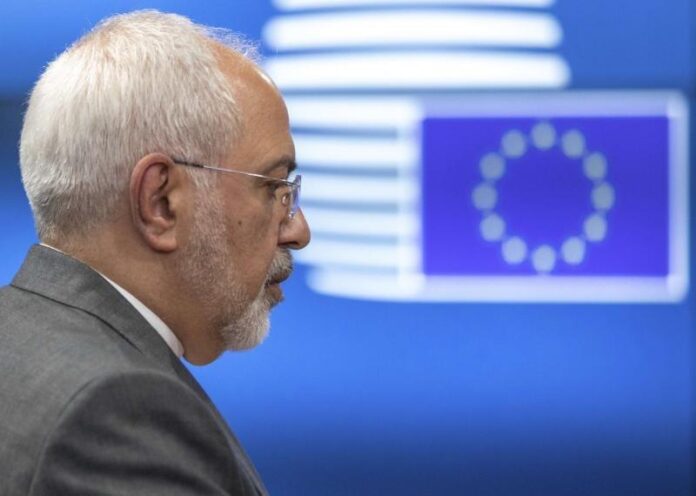
Iranian Foreign Minister Mohammad Javad Zarif arrives for a meeting at the Europa building in Brussels, on May 15, 2018 / Photo by AP
Speaking in an exclusive interview with Spiegel in Tehran, Zarif has warned of the threat of escalation in the nuclear dispute.
He says Tehran won’t rule out negotiations with Washington, even after General Qassem Soleimani’s assassination, if the US changes course and lifts sanctions.
The top diplomat also pointed to the recent accidental downing of a Ukrainian passenger plane, and said the operator who made the mistake is now jailed in Iran, while the US rewarded the American officer who had shot down the Iranian airliner in the 1980s.
What follows is the full text of the interview:
DER SPIEGEL: Mr. Zarif, Iran and the United States have been enemies for the past 40 years and you have held senior posts in Iranian foreign policy for at least 20 of them. Has there ever been a situation as dangerous as the one we are currently facing?
Zarif: First of all, I have to correct you. I have been in important posts for 30 years. And it has always been difficult. We were at the brink of war several times in the past 40 years. This time, it is particularly grave because the U.S. government undertook a terrorist operation against an official of the Iranian government. That has never happened before.
DER SPIEGEL: Is further escalation imminent?
Zarif: The attack was based on a misperception. The U.S. believed that by assassinating General Qassem Soleimani, it would improve its position in the region. Secretary of State Mike Pompeo tweeted that people were dancing in the streets of Iraq. But there were huge funeral processions. It has created a very difficult moment in this region. The United States will certainly not benefit from this.
DER SPIEGEL: The Iranian leadership has sworn that it would take revenge for Soleimani’s killing. There has already been a missile strike against a base in Iraq used by the U.S. military. Is there any reason to fear that you will do even more?
Zarif: The strike against the military base in Iraq, from which the U.S. conducted its operation, was Iran’s formal military response. There was no intention of causing any casualties with the missile attack – we were executing our right to self-defense in an proportionate manner. But the real response will come from the people of the region, who are showing that they are absolutely disgusted with the U.S. behavior. The Americans will see that Soleimani as a martyr will be much more effective than a General Soleimani.
DER SPIEGEL: Is it possible that hardliners in the U.S. might view the mild reaction from Iran as a sign of weakness?
Zarif: The damage we have done to the U.S. is extensive, because with all its military might, it could not prevent the missiles from hitting its base. It shows how vulnerable the U.S. is. But the Americans have inflicted the real damage themselves through the hatred the U.S. created in the people of the region. Soleimani’s murder is the beginning of the end of the U.S. presence – certainly in Iraq, but elsewhere in the region, too. It may not be tomorrow, but we have millennia of history, so we are not in a hurry.
DER SPIEGEL: At the height of the tensions, you communicated with Washington through Switzerland, which represents U.S. interests in Iran. What was it about?
Zarif: The communication was initiated by the U.S. in a very improper form.
DER SPIEGEL: Can you explain?
Zarif: Secretary of State Pompeo is not a very good diplomat. His message was provocative, insulting and threatening to us. I would not read it as de-escalation at all. We sent a very proper response through the Swiss after our counterstrike, without engaging in any sloganeering and chest-thumping. We told them that the action has ended and that we will not take any more action if they don’t take any more action – and that we are not responsible for the actions of others.
DER SPIEGEL: What does Soleimani’s death mean for Iran and its policies in the region?
Zarif: General Soleimani was extremely important. His death is an irreparable loss for Iran and for me personally. I’ve lost a good friend. But this will not have an impact on Iranian policy in the region.
DER SPIEGEL: Soleimani was the architect of Iran’s strategy of exerting its influence throughout the region by providing military support for its allies. The U.S. blames Soleimani for the death of hundreds of soldiers in Iraq.
Zarif: The U.S., Europe and the entire international community is indebted to General Soleimani for the victory over Islamic State. The realities in the region are incomprehensible to the United States. They always talk about proxies, but Iran doesn’t have any proxies. Proxies don’t bring millions out into the streets to mourn the death of a general.
DER SPIEGEL: But Iran isn’t popular with its influence. It’s not just Washington, but also Iran that is experiencing increasing difficulty in the region. There have been anti-Iranian slogans in protests in Iraq, and there have been protests in Lebanon against Hezbollah, Tehran’s close ally.
Zarif: There are protests in Iraq and in Lebanon against corruption and deficiencies people see in the government and there have also been anti-Iranian slogans. But the outpouring of emotion following Soleimani’s assassination has shown the real relationship. There are supporters and opponents for every policy.
DER SPIEGEL: That also applies to Iran. The moment of national unity after Soleimani’s death was brief. Now people are protesting again after the Revolutionary Guards accidentally shot down a Ukrainian passenger plane.
Zarif: First of all, the people had a very legitimate grievance. They were shaken by the death of so many bright young people in the plane crash. Many students lost someone they knew. It was an emotional situation.
DER SPIEGEL: Why did it take three days for your government to admit that its own armed forces had shot the plane down?
Zarif: This was a complicated situation in a complicated time. Others needed much more time. Almost 32 years ago, the U.S. shot down an Iranian passenger plane. As of today, they still haven’t issued an official apology. The American officer who was responsible for shooting it down even received a medal. Meanwhile, the Iranian man who shot down the Ukrainian plane is now in prison.
DER SPIEGEL: That still doesn’t explain why the Iranian government needed three days to admit the mistake.
Zarif: People were right to complain about the fact that information was withheld from them. But the government wasn’t responsible for this.
DER SPIEGEL: When did you personally learn of the mistake?
Zarif: On Friday afternoon, more than two days after it happened. That was the point at which the higher ups in the military reached the final conclusion that this was done by somebody by mistake. As soon as it was reported to the revolutionary leader, he demanded that the public be informed. That happened on Saturday morning. They were very painful weeks.
DER SPIEGEL: You blamed “U.S. adventurism” for the shooting down of the plane. But wasn’t it rather irresponsible of the Iranian authorities not to close the country’s airspace on the night of the attack?
Zarif: That was a technical decision as well as a political decision. Tehran was not in the area of hostilities. And we engaged in war against Iraq for eight years without closing our airspace.
DER SPIEGEL: Will there be an international investigation?
Zarif: We have invited the Ukrainians, the owner of the plane, and Boeing to participate. We are open to the participation of others. We are carrying out a proper investigation based on international requirements.
DER SPIEGEL: There were mass protests in Iran in November and now students are demonstrating. How strong is their resistance to your government?
Zarif: I recognize peoples’ anger and frustration, their mourning for the victims. The students who died deserve great attention and I’m not trying to belittle the legitimate concerns of the mourners. But if you want to consider this as a barometer of opposition to the government, then you have to balance it properly against the funeral processions for Soleimani. We should not disregard the voices of discontent, the voices of opposition, the voices of those whose lives have been ruined by U.S. economic terrorism. There are, however, other people who go out into the streets to show respect and admiration for a man who fought terrorism and defended his country. We are not a monolithic country. We have different voices. And the people have a right to demonstrate and to express their protest.
DER SPIEGEL: When Iranians exercised that right in November against the increase in gasoline prices, many were shot. There have been reports than more than 1,000 people were killed.
Zarif: These events were some of the worst times in our lives. But these numbers are wrong – it was less than a third of that. And there is an investigation. You have to differentiate between those who are exercising their right to free speech and those who are looting shops and burning down gas stations. The security forces also have a responsibility for maintaining public order.
DER SPIEGEL: You think the crackdown was necessary?
Zarif: No, I never say that. I don’t want to justify excessive measures. Anybody who used excessive force has to be brought to justice.
DER SPIEGEL: The protesters are demanding that revolutionary leader Ali Khamenei step down, with chants of “death to the dictator.”
Zarif: There is discontent in Iran, but my concern as foreign minister is that the international community has misperceptions about it. I warn the West against misperceptions that give rise to misguided policies. President Trump believed that by applying sanctions to Iran, the government would crumble within a few months. He’s been pursuing his policy of “maximum pressure” for two years now, but he still hasn’t reached his objective.
DER SPIEGEL: In May 2018, Trump announced the U.S. would withdraw from the nuclear deal with Iran and he slapped the country with tough sanctions. Because Iran is now being less and less compliant with the agreement, the European Union recently initiated a process that could lead to the reapplication of the United Nations sanctions.
Zarif: Unfortunately, the Europeans don’t view Iran as a partner. We triggered the dispute resolution back in 2018. As a result of that process, the Europeans, Russia, China and Iran issued a statement in June 2018. Among other things, it was stated that it is essential that Iran benefit economically from the nuclear agreement (the Joint Comprehensive Plan of Action, JCPOA). But the Europeans didn’t do anything. They have not fulfilled their obligations. The Europeans have to come down from their high horse.
DER SPIEGEL: The Europeans are merely responding to the fact that Iran has begun to violate the agreement.
Zarif: We are not violating the agreement; we are acting in accordance with JCPOA. Let me make it very clear to the Europeans: If they want to implement their obligations, we will be prepared to go back to full compliance immediately. But implementing their obligations is not just about making announcements that they are committed to JCPOA. I could also make the same announcement: We are committed to the agreement, we love the agreement, we want it to stay alive forever. Words are cheap. Europe should show us one single action. But what have they done?
DER SPIEGEL: They established the Instrument Support of Trade Exchanges (INSTEX), a special purpose vehicle to enable companies to do business with Iran despite the U.S. sanctions.
Zarif: INSTEX is basically an accounting company. More than a year and a half after the U.S. withdrawal from the JCPOA, the Europeans haven’t succeeded in carrying out a single transaction.
Zarif: No. Inspections and transparency about Iran’s activities are an important part of the agreement, and they are still happening. The EU has not fulfilled parts of the agreement and Iran has not fulfilled parts, but that doesn’t mean it is dead.
DER SPIEGEL: If Iran fails to reach an agreement with the Europeans within 30 days, the matter will go to the UN Security Council and UN sanctions will be imposed against Iran again. That would spell the end of the agreement.
Zarif: The Europeans have no legitimate grounds for resorting to this mechanism. They can’t just refer something to the Security Council because they are Europeans and they have blue eyes. And it’s not only us who think this, but also the Russians and the Chinese. The Europeans will be up against a major battle.
DER SPIEGEL: What do you expect from the EU?
Zarif: It’s a disaster for Europe to be so subservient to the U.S. Anybody who accepts unilateralism is helping it. The Europeans call us and say: We’re sorry, we cannot do anything. The Europeans can’t buckle to Trump and then try to act like the strong man against Iran.
DER SPIEGEL: How would Iran react to the reinstatement of UN sanctions?
Zarif: President Hassan Rouhani clarified the actions we will take in a letter to the treaty partners.
DER SPIEGEL: Could you explain for our readers?
Zarif: Your readers should know that the Europeans will be responsible for all the consequences.
DER SPIEGEL: Iran has threatened to withdraw from the Nuclear Non-Proliferation Treaty (NPT) if that happens.
Zarif: It’s mentioned in the letter.
DER SPIEGEL: Does that mean that Iran would head in the direction of building a bomb?
Zarif: No. Our decision not to build a bomb does not derive from NPT. It derives from our own moral and strategic convictions.
DER SPIEGEL: Did the killing of Soleimani change these strategic considerations?
Zarif: No. Moral convictions do not hinge on the illegal behavior of others.
DER SPIEGEL: There’s a faction inside the Iranian leadership that believes that nuclear weapons are the only way for Iran to defend itself against the U.S. They may well have an additional argument for that case now.
Zarif: As I told you, Iran is not a monolith – you will not find unanimity in Iran on most issues. But the revolutionary leader has issued a fatwa (Ed’s note: a religious legal opinion) prohibiting weapons of mass destruction.
DER SPIEGEL: Do you rule out the possibility of negotiations with the U.S. following Soleimani’s murder?
Zarif: No, I never rule out the possibility that people will change their approach and recognize the realities. For us, it doesn’t matter who is sitting in the White House. What matters is how they behave. The Trump administration can correct its past, lift the sanctions and come back to the negotiating table. We’re still at the negotiating table. They’re the ones who left. The U.S. has inflicted great harm on the Iranian people. The day will come when they will have to compensate for that. We have a lot of patience.
DER SPIEGEL: Mr. Zarif, we thank you for this interview.
“Normal countries don’t operate abattoirs disguised as consulates. “Normal” countries don’t attack their neighbors, cause a humanitarian crisis, and refuse to talk,” Zarif said on his Twitter account on Friday.
“Nonetheless, WE don’t set preconditions for dialog,” he added in his tweet.
“Normal” countries don’t operate abattoirs disguised as consulates.
“Normal” countries don’t attack their neighbors, cause a humanitarian crisis, and refuse to talk.
Nonetheless, WE don’t set preconditions for dialog.
Zarif’s remarks came in response to a recent comment by Jubeir, who told CNBC that Iran has to act like a “normal country” before Saudi Arabia would be willing to sit down and have a dialogue with them.
The Iranian foreign minister had said in another tweet in Arabic on Thursday that “Iran remains open to dialogue with its neighbors, and we declare our readiness to participate in any complementary work that is in the interest of the region, and we welcome any step that restores hope to its people and brings them stability and prosperity.”
Relations between Tehran and Riyadh have strained over the past years after their conflicting views on regional developments, particularly on Yemen and Syria, became more noticeable.
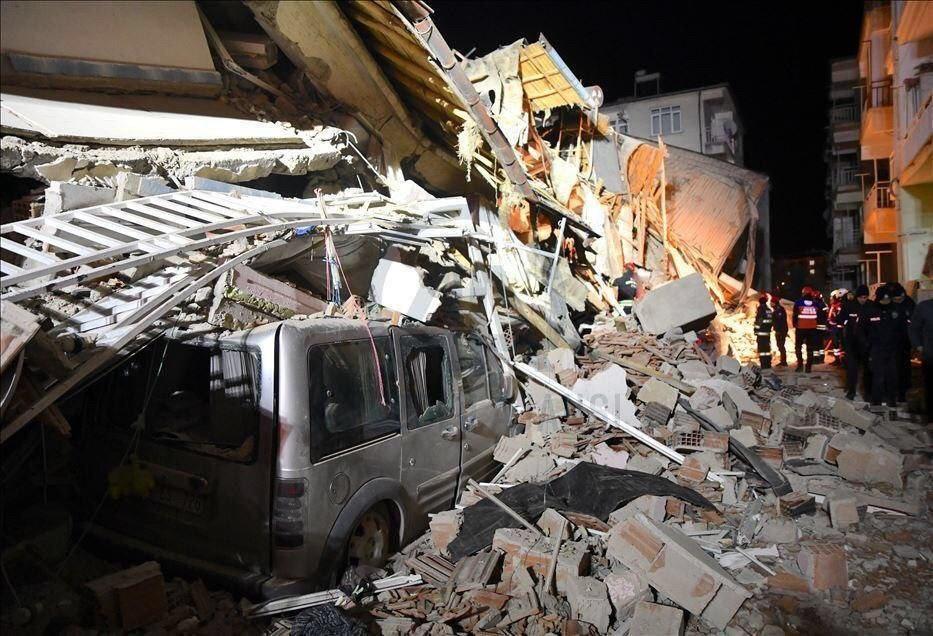
In a Saturday statement, Mousavi also offered sympathy to the Turkish nation and government, especially the bereaved families of the victims of the tragic incident, which killed and wounded numerous people and caused heavy damages.
Earlier in the day, Iran’s Health Minister Saeid Namaki told his Turkish counterpart the Islamic Republic is ready to send relief and rescue teams to help the people affected by the heavy earthquake.
The Turkish Health Ministry, however, thanked Iran’s immediate offer, and said the situation there is under control for now.
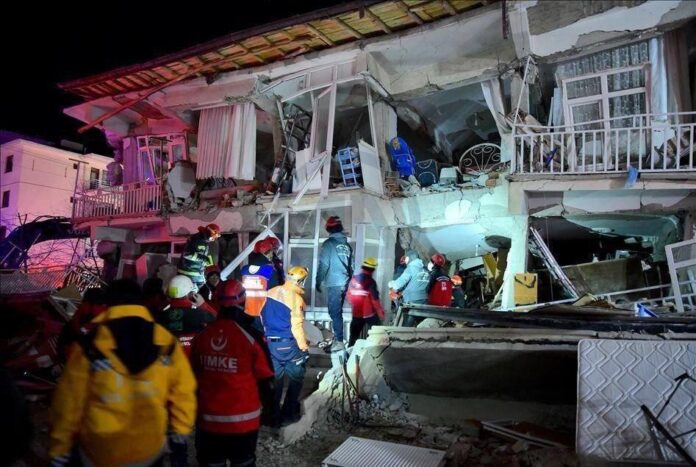
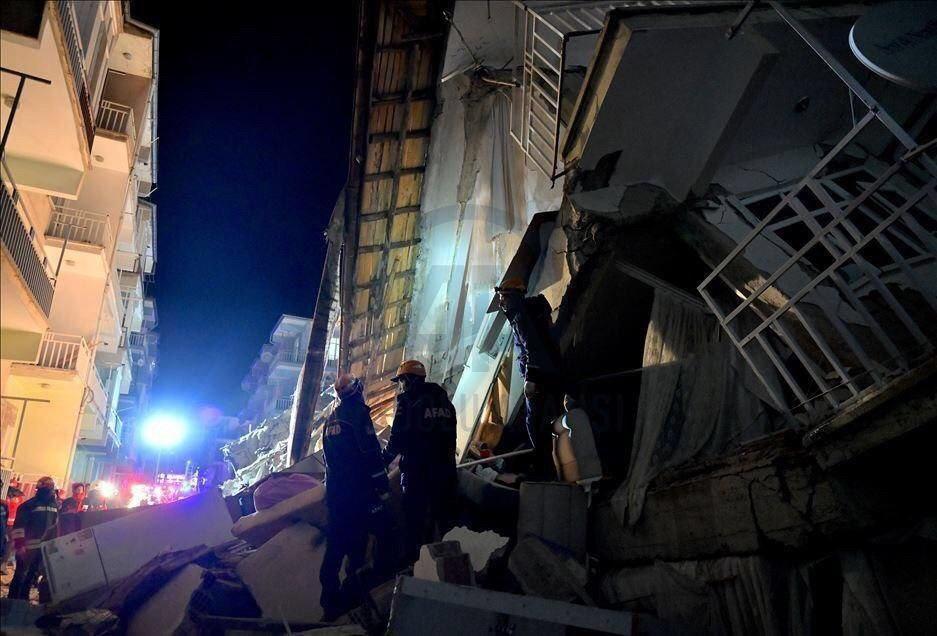
The 6.8-magnitude earthquake struck a sparsely populated part of eastern Turkey on Friday, killing at least 20 people, injuring more than 900 and leaving some 30 trapped in the wreckage of toppled buildings, Turkish officials said.
The Turkish Health Ministry has reportedly thanked Iran’s immediate offer, and said the situation there is under control for now.
At the order of the Iranian health minister, the Special Operations team of Iran’s Emergency Organization have been put on high alert so that they could be dispatched to quake-hit Turkey whenever needed.
The 6.8-magnitude earthquake rocked a sparsely populated part of eastern Turkey on Friday, killing at least 20 people, injuring more than 900 and leaving some 30 trapped in the wreckage of toppled buildings, Turkish officials said.
Rescue teams from neighbouring provinces were dispatched to the affected areas, working in the dark with floodlights in the freezing cold. Defence Minister Hulusi Akar said troops were on standby to help.
Hundreds of residents were left homeless or with damaged homes.
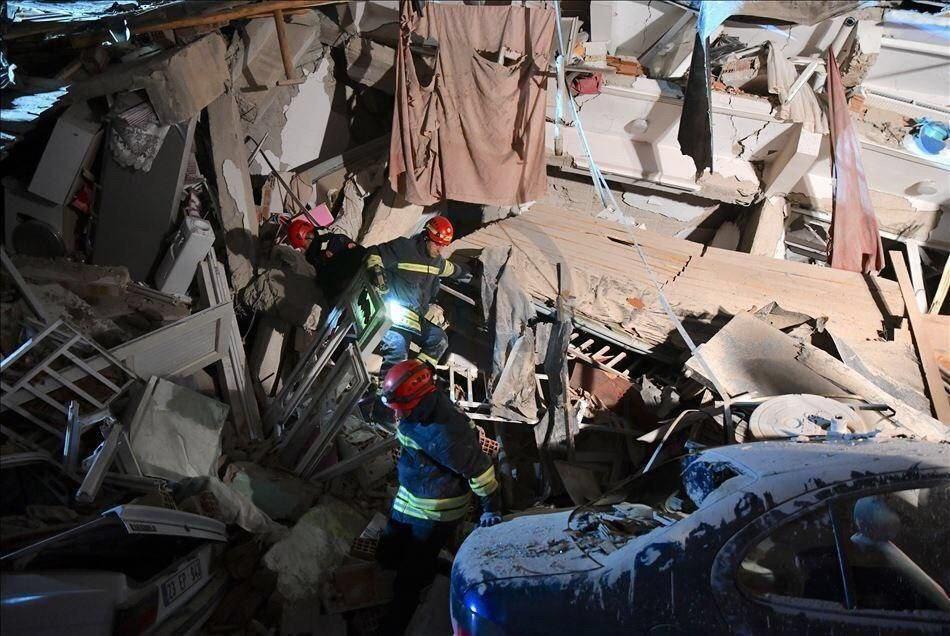
TV footage showed rescuers pull out one injured person from the rubble of a collapsed building in the district of Gezin, in the eastern Elazig province.
Interior Minister Suleyman Soylu said emergency workers were searching for 30 people trapped under the rubble.
The quake struck at 8:55pm local time (17:55 GMT), at a depth of 6.7km (4.1 miles) near the town of Sivrice in Elazig, the Disaster and Emergency Management Presidency, or AFAD, said. It was followed by several aftershocks, the strongest with magnitudes 5.4 and 5.1.
Elazig is some 750km (465 miles) east of the capital, Ankara.
AFD said sixteen people were killed in Elazig and four more in the neighbouring province of Malatya. Some 920 injured were in hospitals in the region, it added.
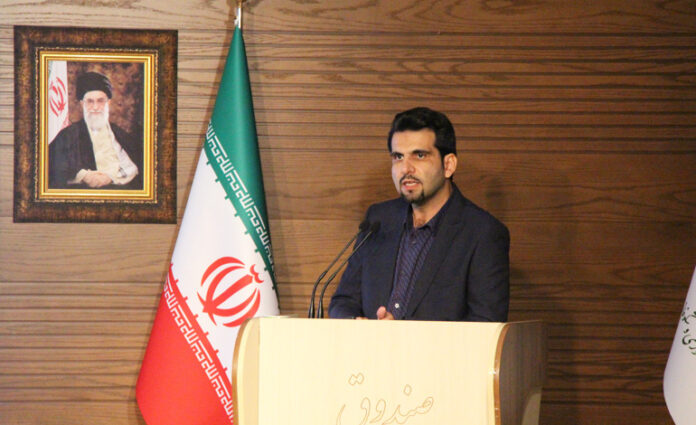
Ali Nazemi, the deputy director of investment affairs at Iran’s National Innovation Fund (INIF), made the remarks on the sidelines of a recent visit of an Iranian delegation to Istanbul, where representatives of 80 Iranian high-tech companies held intensive talks with their Turkish counterparts.
“Very good negotiations were held with a number of the funds during the visit. Detailed negotiations were held and the two sides’ facilities were examined. The space for collaboration was specified as regards how the problems of money transfer as well as investment problems can be removed, and what model to achieve which would qualify as an operational model,” Nazemi said in an exclusive interview with the Iran Front Page.
“We agreed with a number of Turkish investment companies that we set up a joint fund or a joint enterprise inside or outside Iran, and that Iran’s National Innovation Fund makes preparations to help the companies,” he added.
“As this was the first step towards the goal, it was not possible to achieve such tangible results as clinching an agreement or taking final steps, but it was a prelude to further negotiations, so that we can go on to more detailed issues such as setting up a fund, setting up a joint institution and starting investment,” the Iranian official noted.
“The conclusion was that we proceed with our meetings, and in the next weeks they will pay visits to Iran. It was also planned that there would be meetings at governmental levels, so that we could achieve final results.”
“Iran is interested in collaboration with international risk-taking investment funds, especially those in Turkey,” he noted, referring to international interactions as one of the main requirements of risk-taking investment.
“One of the ways for facilitating international interaction and for being capable of helping Iranian start-ups and knowledge companies gain access to the international markets is through international investment: that international investors can help internal investment companies take bigger and more useful steps, and take part in international markets,” he highlighted.
He further announced that Iran is also in talks with a major Russian fund. “Memorandums of understanding have been signed. Amendments to the memorandums have been made by the two parties’ experts, and we have arrived at a joint memorandum.”
“Now we are discussing the executive structure, decision-making process, and the way of interactions,” he added.
He said a meeting has been arranged with the managers of the Russian fund next week so that the two countries would have discussions in a more operational manner.
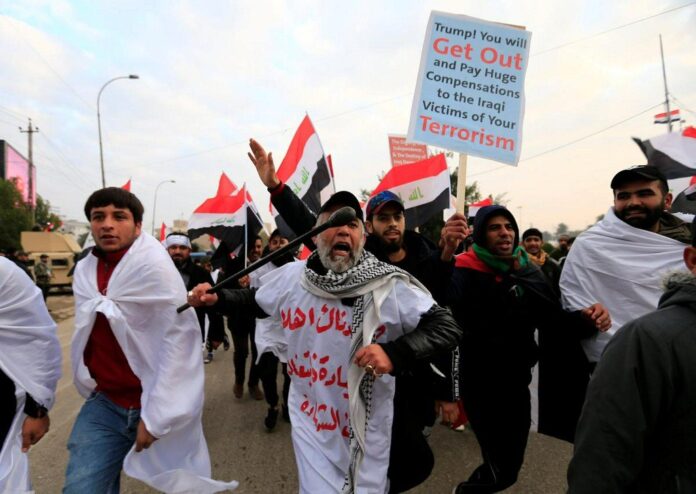
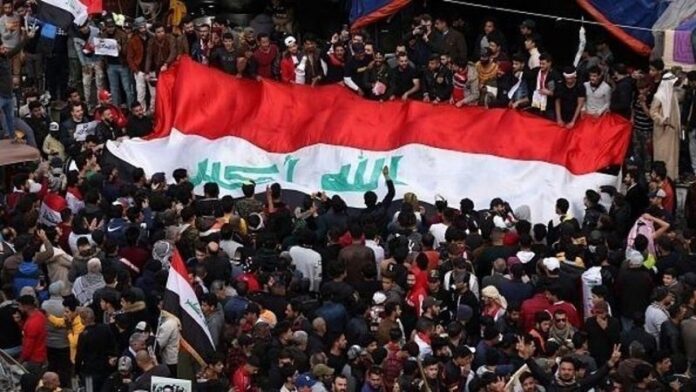
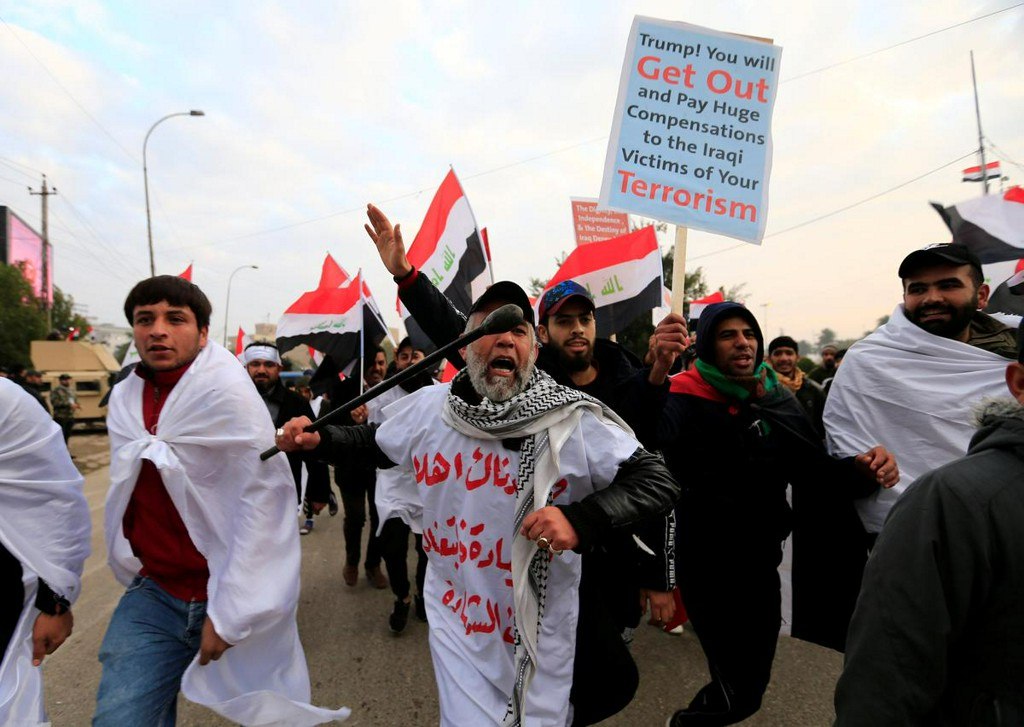
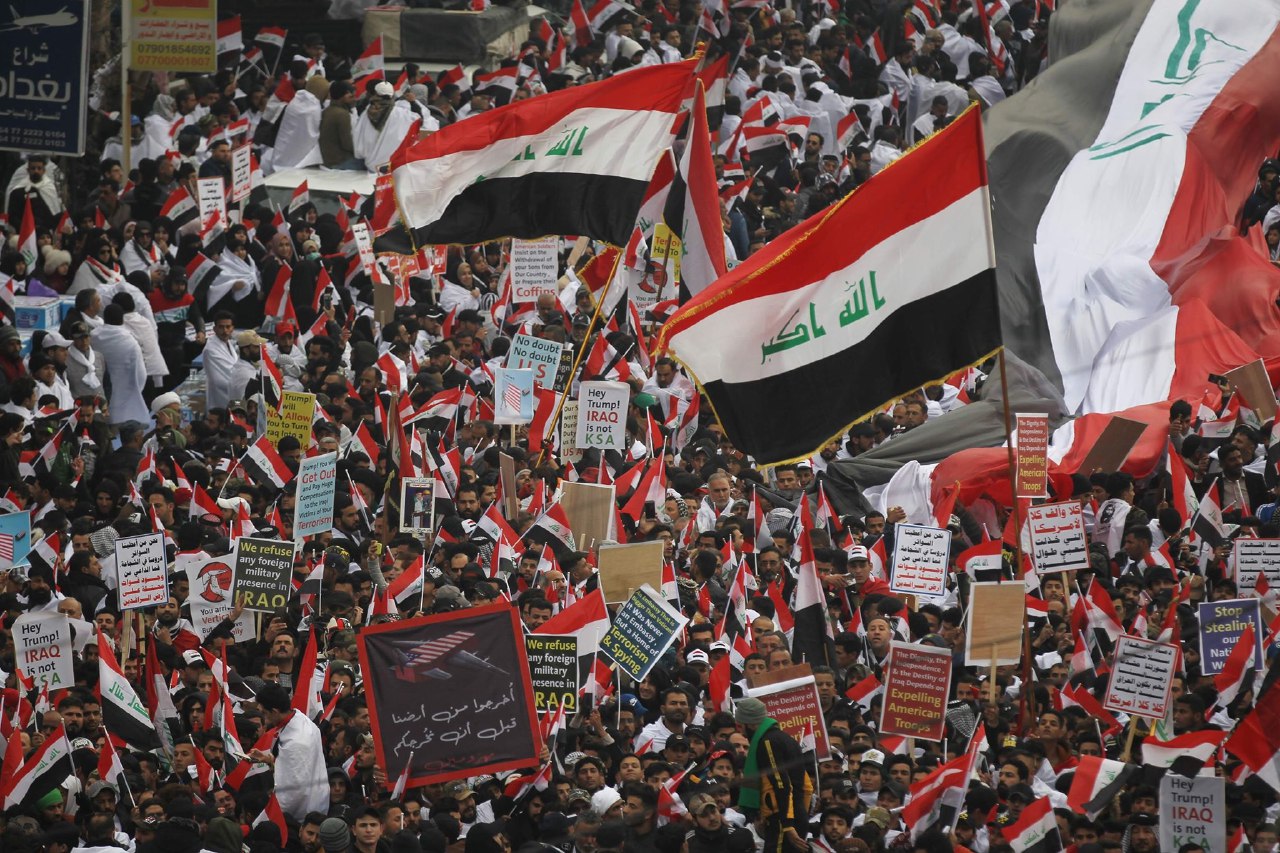
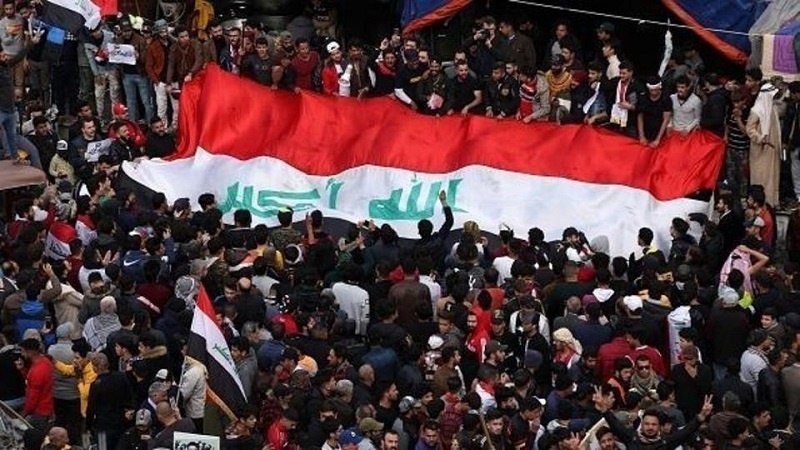
The protesters were seen carrying banners and chanting slogans calling for the expulsion of US terrorist forces. Iraqis in holy city of Karbala, south of Baghdad, were also seen boarding buses heading towards the capital.
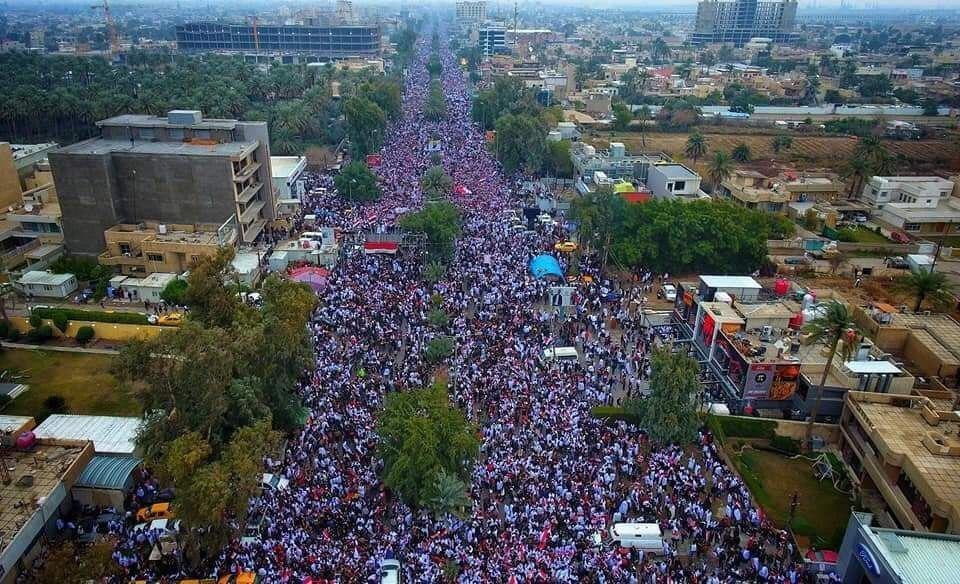
The protests, termed the “Friday of Independence”, are being held upon calls by influential Shiite cleric Muqtada al-Sadr to stage “a million-strong, peaceful, unified demonstration to condemn the American presence and its violations.”
Sadr’s latest call for mobilization came on Thursday, calling on all Iraqis to join the protest that will also be joined by resistance groups like Kataib Hezbollah.
The widespread calls for the expulsion of US troops came after the US assassinated Lt. Gen. Qassem Soleimani, the Commander of the Quds Force of Iran’s Islamic Revolution Guards Corps (IRGC) and Abu Mahdi al-Muhandis, who was Second-in-Command of the Iraq’s PMU, in Baghdad earlier this month.
On January 5, the Iraqi parliament voted overwhelmingly in favour of a resolution calling for the expulsion of all US-led forces in the country two days after Washington assassinated Lt. Gen. Soleimani and al-Muhandis.
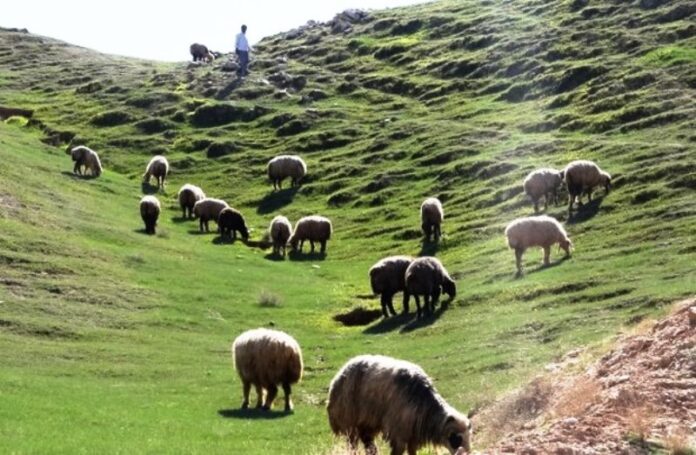
In the Zagros Mountains of Iran and the heights of Iraq, and Turkey, humans bread goats, sheep, and cows, which were taken from wild animals and tamed to ensure a steady supply of milk and meat.
Little did those early humans know about the fact that they were not only domesticating animals and plants, but also bacteria and microbes. Recently scientists found out that the microorganisms that decompose lactose found in milk and that help create dairy products such as yogurt or cheese actually originate from a faithful encounter between a pail of milk and a fruit fly, around 5,500 years ago.
With the help of this accident, ancient people managed to domesticate yeast, and they went on to produce cheese and yogurt, much like people do today. Domesticating and breeding are parts of an evolution process controlled by humans. Breeding only the desired aspects, humans produce offsprings with certain properties for their own use.
This is a form of survival of the fittest, but in a way that helps humans. That is how wolves also became friends with humans – they had more to win by playing nice with humans than attacking them.
When talking about microbes, however, early farmers accidentally domesticated them when they tried to preserve some food by fermenting it. As fermentation relies on microbes including yeast and bacteria, humans only kept the food that was actually eatable, and as a result, a certain breed of yeast was kept – the Baker’s yeast.
Human fascination with microorganisms
Intrigued by what could make things like cheese, yogurt, beer, wine, and other products as they are, humans have always tried to look in more detail at what food contains, and how specific foods like Brie cheese can form. As India Today tells the story, it was only in 1676 when a Dutch scientist finally managed to discover the fact that there are some really small organisms living in our world, and he named them animalcules.
The name suggested that these were animals but at the scale of molecules. Of course, he wouldn’t have been able to discover bacteria without the help of some microscopes. Fortunately, he was an avid fan of building microscopes and he created one every time he discovered a new species.
Nowadays we think we know everything about bacteria, but it was only recently, in 2016, when we found out that they see the world around them much more as humans do, in a remarkably similar way.
Our obsession to keep things clean
Before microorganisms were discovered, people believed that illnesses and diseases were just things transmitted by “bad winds”. Only after finding that there can be small organisms living all around us, humanity understood that these organisms can also bring disease. This is how our obsession with keeping everything clean started.
This is a good practice, especially in a world where new strains of viruses appear every day. Fortunately, science evolves faster than microorganisms, and in a recent article in The Daily Mail a new surface that cleans itself and keeps microorganisms away appears to have already been created in Canada.
If you can’t wait for this surface to be popularized and you want to see how clean your household is, you could get yourself a personal microscope, perfect for identifying bacterias.