
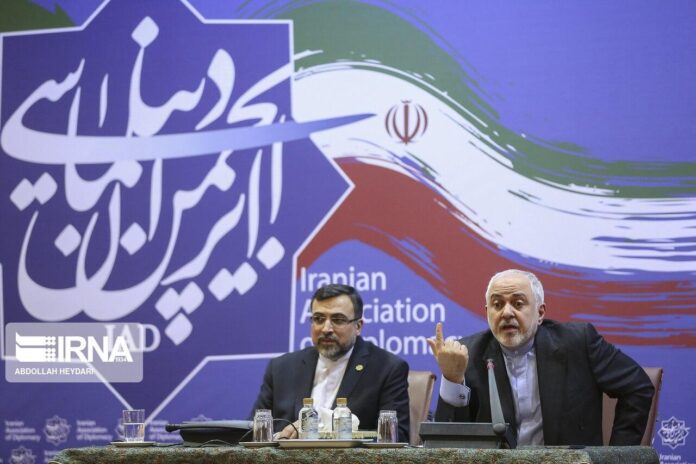
Mohammad Javad Zarif said on Tuesday that weapons and missiles are important, but a nation’s military spending cannot determine its power.
“If it was so, Saudi Arabia with $76 billion [worth of military spending] must have been stronger than Iran with a military spending of about $6 million.”
Speaking at an event on the occasion of the 42nd anniversary of the victory of Islamic Revolution, the Iranian foreign minister said the source of power is diplomacy.
He said diplomacy is not just a means of power; it is a means of power conversion, and a cost-cutting tool.
“Some think diplomacy is against military power while diplomacy is next to military power.”
Zarif also noted that today, diplomacy is not only a means of reducing the costs of failure and institutionalising achievements, but is itself a factor of power.
“Without diplomacy, the achievements of power cannot be institutionalised. Moreover, without diplomacy we cannot be powerful. That is, you need diplomacy to achieve field victories. This fact does not mean submission or acceptance of domination. It means acceptance of the opinions of others.”
The foreign minister added that “If we believe martyrdom creates power, why don’t we believe that diplomacy, resistance, dialogue and negotiation can create power?”
Referring to the martyrdom of General Qassem Soleimani, he went on to say that US President Donald Trump says he has spent two trillion dollars, but after Soleimani’s assassination, he understands he was mistaken and must leave the region.
Iran’s foreign minister reiterated if it was not for the support of General Suleimani in the 2001 international talks on Afghanistan peace in Bonn, we would not have achieved victories in that summit.
“The amount of help Soleimani offered in reaching an agreement during the Bonn negotiations was greater than anyone else’s. Diplomacy and fieldwork complement each other,” he concluded.
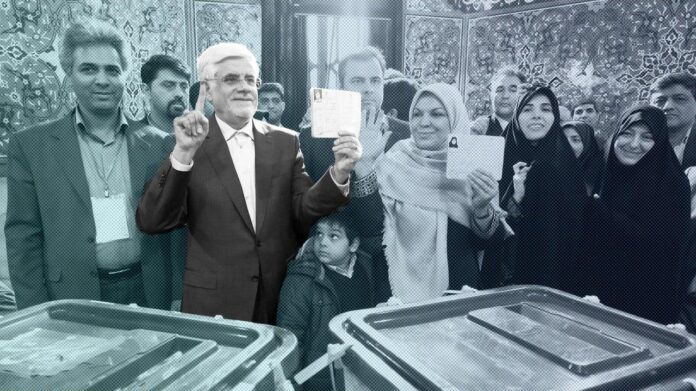
The Reformists’ Supreme Policy-Making Council has unanimously decided not to field any nominees for Tehran, arguing that major reformist candidates have been disqualified and deprived of the chance to run in most constituencies.
“The Supreme Policy-Making Council of Iran’s Reformists’ Camp representing other parties and factions of this camp, which has its roots in the revolution, has long … been seeking to play and effective role in this regard,” read part of the statement released by the council.
However, added the statement, the disqualification of a large number of reformist candidates by the Guardian Council has stripped them of the chance to run in the race in more than 200 constituencies across the nation.
“There is no possibility of fair competition for the deep-rooted reformist camp,” read the statement.
The statement called on reformist councils in other parts of the country to field nominees “in accordance with the realities of the election arena” to encourage people to turn out en masse.
“Undoubtedly, nominees introduced by provincial councils will have the backing of the Supreme Policy-Making Council,” it added.
It also said that reformist parties are free to propose their own lists for the upcoming elections, but the Supreme Policy-Making Council is not going to field any candidate.
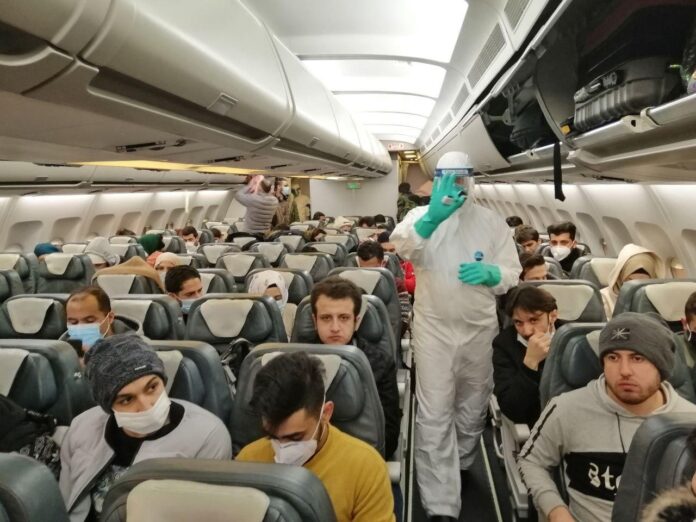
The plane landed in Tehran’s Imam Khomeini Airport early Wednesday.
Kianoush Jahanpour, the head of the Iranian Health Ministry’s Public Relations Department, told ISNA the passengers were transferred to a special site for initial checks, which are currently underway.
“Following initial checks, the people will be transferred to a quarantine centre and will remain under special care for 14 days in order to ensure their health,” he noted.
Mohammad Mahdi Gooya, the head of the Health Ministry’s Communicable Diseases Centre, said none of the 50 Iranians evacuated from China were diagnosed with coronavirus.
He said they will still be quarantined for two weeks.
The death toll from the month-long coronavirus outbreak has continued to climb in China, rising to 490. New cases have surged by double-digit percentages in the past 11 days, with no sign of a slowdown.
More people have now died in this epidemic than in the severe acute respiratory syndrome, or SARS, outbreak of 2002-3 in mainland China. During that outbreak, 349 people died in the mainland.
The new figures from China’s Health Commission on Wednesday showed that 65 people died on Tuesday and that 3,887 more people had been infected. So far, 24,324 people are known to have been infected.
Health experts say the death toll is likely to rise because of the large number of infections. The mortality rate of the coronavirus, about 2 percent so far, appears to be far lower than SARS, which has a mortality rate of about 10 percent.
The Faculty of Medical Sciences of Tarbiat Modarres University organised the conference entitled “Coronavirus” on Saturday, February 1.
Dr Mehrdad Ravanshad, a faculty member of the university was the keynote speaker of the event.
The conference was held to make academics more aware of the virus and of the ways to prevent it.
Late last year, coronavirus began to spread in China. With the arrival of the New Year and the death of more Chinese citizens with coronavirus, sensitivities to the transmission of the virus increased.
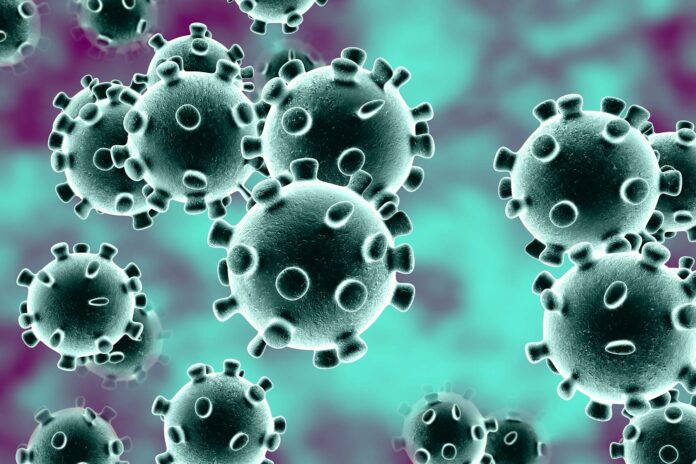
Coronavirus is currently unknown and scientists have named it 2019-nCoV, which represents a new type of coronavirus.
According to some doctors and experts, the virus has been transmitted to humans through the animals and the consumption of bat soup.
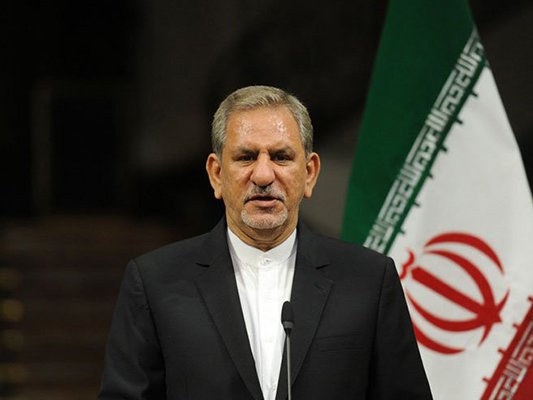
Speaking at an event in Tehran, Jahangiri said the Americans are really lying when they say they are not setting limits on Iranian medicine and food.
“We have billions of dollars in various countries like South Korea, Japan and many other countries, but we can’t transfer a dollar of it to buy medicine and food, because the Americans do not allow it.”
He pointed to the Swiss ambassador’s show-off with the small number of medicine packages imported into Iran through a Swiss channel, and said all this propaganda was spread about the channel, while they only allowed two million dollars for cancer medicine to be transferred through it.
“We have imported nearly three billion dollars’ worth of medicine so far this year and those who deny it do not know Iran and its economy.”
He said under the tough sanctions, Iranian officials, especially the private sector and business activists, are now trading with the world and their trade volume in the past ten months exceeded 70 billion dollars.
“The Iranian economy is a big economy, and this big economy cannot be locked up. Today, the United States has put in place almost the most powerful mechanism in the world to follow daily and momentarily whether the sanctions against Iran are working. An oil ship that wants to carry the Iranian oil is chased by the US. If they can identify, they will contact the company warning that it should not carry the oil. These sanctions are the most unprecedented ones.”
Iran’s first VP cited the victory of the Islamic Revolution as one of the greatest events of the time, adding that “The Islamic revolution was the result of the demands of the Iranian nation over the past hundred years who were seeking freedom, independence, progress, and the rule of law.”
Reviewing the notions of the basic slogan of the Islamic Revolution i.e. “Independence, Freedom, Islamic Republic”, the First Vice President went on to say that “41 years after the victory of the revolution, we are still going ahead with the same plan.”
He also emphasised that people have the right to self-determination and participation in the affairs of the country.
“Since the beginning of the revolution, it was decided that foreigners must not interfere in deciding the fate of the country. The economy of the country must have been able to stand on its own feet. Iran should be able to put forth its rhetoric and speak out.”
Jahangiri went on to point out the positive side of US government‘s unilateral and anti-human sanctions, saying that the share of oil in the budget has been decreased since last year due to the US pressures.
“Many things have happened in different parts of the country that we can proudly announce. Once, we were waiting for foreign oil companies to come to work and invest in all oil sectors. We used to wait for the country’s first industrial plants to have an Eastern European partner to be set up, but today the country’s industrial capability has expanded,” underscored Jahangiri.
“In these tough times, great things have happened in the quality of manpower and project management. Of course, Iran’s right has been more than that. We decided to industrialise Iran in the 60s and 70s. If it weren’t for the barriers they created for Iran, surely today Iran would be in a better position than many of the countries that claim to be industrialised,” concluded Jahangiri.
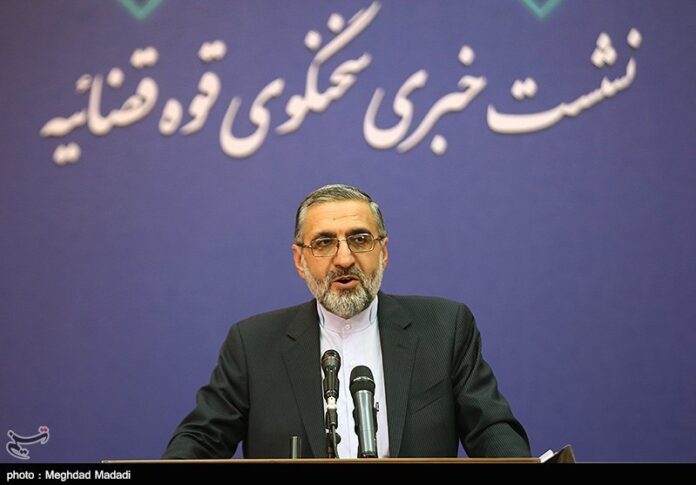
Speaking at a press conference in Tehran on Tuesday, Esmaeili pointed to the US hostilities toward the Iranian nation over the past four decades and said using spies to collect confidential data and hit the Islamic Republic is among the hostile acts by the US government against the country.
Amir Rahimpour, who spied for the CIA and was highly paid by the US spy agency for his attempts to provide it with some information on Iran’s nuclear activities, was tried and sentenced to death, he said.
“Recently the country’s Supreme Court upheld the death sentence of the American spy and, God willing, he will be punished for his actions soon,” the spokesman added.
In July 2019, Iran’s Intelligence Ministry said it has dealt a serious blow to the US Central Intelligence Agency by capturing 17 spies working for the CIA.
The director of the Intelligence Ministry’s counterespionage department said the spies had been employed in sensitive centers or worked in private sector firms related to these centers active in the economic, nuclear, infrastructural, military and cyber areas.

Given the utility of your website, you would not like the idea that any cybercriminal would make mischief with your website. As we have progressed with technology, our IT systems have become more vulnerable to cyberattacks. Research has suggested that small businesses suffered the major brunt of these attacks. You would need to prioritize data security for your website when you create your website. We will discuss some of the guidelines to follow while creating a secure site.
Choosing a content management system (CMS)
The first step in building a website is to select a CMS. You need not be a web designing whiz kid to understand which CMS is suitable for your website. Most CMS upgrade periodically and provide adequate security to your site. However, you should research and find out whether the CMS has any inherent vulnerabilities or not. What is the cyclicity of updates? You must also visit various chat forums and communities and enquire about the problems faced by anyone and the response time to solve the problem. Also, check the customer service facilities and the lead time to respond to a ticket.
Most websites are created using the major CMS like Joomla and WordPress. Almost 35% of all websites are built on WordPress. The other major CMS are Shopify, WooCommerce, and Magento. You may finalize a CMS depending on the features and functionalities offered and the security features provided by them.
Selecting the themes and plug-ins
While free themes could ease your budget, the flip side is that updates are very few and far between. Also, there could be quite a few exposures that could affect your website. It is always suggested to opt for a theme that is free from any vulnerabilities and has frequent updates.
Also, it would be best if you opted for minimal plug-ins and only install those that are necessary for your website. Excessive plug-ins could be a drain on resources and make your site function slowly. You also find out the frequency of updates and reviews by current users of these plug-ins.
You must always download the updates of the themes and the plug-ins as soon as they are available. These updates plug the gaps that could be there in the earlier versions. They also bring in new and better features for your website.
Select a suitable hosting package
You will need to host your website at a secure web host. While most of the hosting service providers will lure you through low prices and unlimited storage space, website security should rule supreme for you. First, you need to decide whether shared hosting would suffice for you or you need a dedicated hosting service.
While shared hosting would seem to be an excellent option for a start-up, a faulty website on the same server could ruin your website also. The defective site could drain out the resources of the data center. It would hurt your website too. Moreover, if the other websites do not have requisite security cover, any cyberattack on those websites could have a ripple effect on you also.
While finalizing a deal with a web host, do discuss with them about the data security infrastructure in place. The data center should be ISO certified and should undertake periodic IT audits through a third party. You may also request the web host to offer penetration testing on your website while on their web servers.
Use SSL certificates
How can a discussion on website security be without mentioning about SSL certificates? It is essential to ensure you opt for the HTTPS protocol. It ensures that the data passing between the server and the browser will be encrypted. No third-party will be able to understand the ongoing dialogue. If you are thinking of buying cheap SSL certificate then, you can think of purchasing SSL certificate from SSL2BUY that will be within your budget.
Most renowned web browsers are depicting which websites are secure or not by showing a padlock in the address bar. It means that the site is secure, and visitors can visit the website without fear. Moreover, if you have an e-commerce website dealing with the payment, you will need to adhere to the PCI-DSS norms, which are very stringent. It will compulsorily require you to implement security procedures for your website.
Imbibe strong IT practices
You must also deploy active IT measures within your company. It starts by having a robust password policy. Ensure that your IT team has an effective password policy that encompasses the latest best practices. Also, you must restrict your team members from accessing the website back-end. Unless necessary, only the developers should be able to make changes at the back end. It would be best if you periodically had an overview of the audit logs for the changes done at the back end.
You must have a strong policy regarding data backup. It always helps to keep a backup of the website every week or fortnight. Testing is also essential for a new website. You must undertake a proper penetration testing to ensure foolproof security for your website.
Conclusion
When you are creating a new website, you will need to first finalize which all information you want on the site. If you gather visitor information, you must incorporate a robust security arrangement to prevent the data from falling into the wrong hands. Also, periodically update the system software to plug any weaknesses in the website.
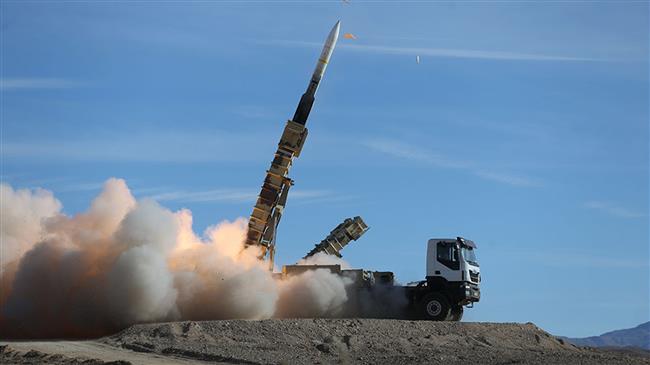
“The Islamic Iran currently stands among the world’s top five producers of anti-armor missiles,” Brigadier General Qassem Taqizadeh said while addressing a ceremony in Tehran on Monday.
“At the same time, we have attained a very high capacity with regard to manufacturing various kinds of satellites, Cruise missiles and other types of military equipment,” he added.
The top military official noted that Iran’s defense industry was totally dependent on other countries before the 1979 Islamic Revolution, but that trend changed after the revolution and the country now enjoys a high place in the world with regard to development of its military industries.
He pointed to Iran’s progress in the fields of manufacturing precision-guided missiles and smart air defense systems, saying that the domestically-built Bavar-373 missile defense system, which has a range of 120 kilometers and can reach an altitude of 27 kilometers, is one of the most important defense achievements of the country after the victory of the Islamic Revolution.
Iran unveiled the state-of-the-art surface-to-air Bavar-373 missile defense system, designed and manufactured by the country’s experts, in August 2019.
It is a mobile missile defense system designed to intercept and destroy incoming hostile targets. The system employs missiles that have a maximum range of 300 kilometers.
The system is capable of simultaneously detecting up to 300 targets, tracking 60 targets at once and engaging six targets at a time.
Iran has repeatedly said its military might poses no threat to other countries, and that its defense doctrine is based on deterrence.
Also in his remarks, the Iranian defense official said the country had no place in space technology before the Islamic Revolution, adding, “We are currently among the world’s top eight countries in the field of space technology.”
Head of the Iranian Space Agency (ISA) Morteza Barari said on Saturday the country is preparing to launch its new domestically-developed scientific observation satellite in the “coming days.”
Barari told AFP that the manufacture of the Zafar (Victory) satellite “began three years ago with the participation of 80 Iranian scientists.”
The 113-kilogram satellite will be launched by a Simorgh carrier 530 kilometers (329 miles) above the Earth, where it will make 15 orbits daily, said Berari.
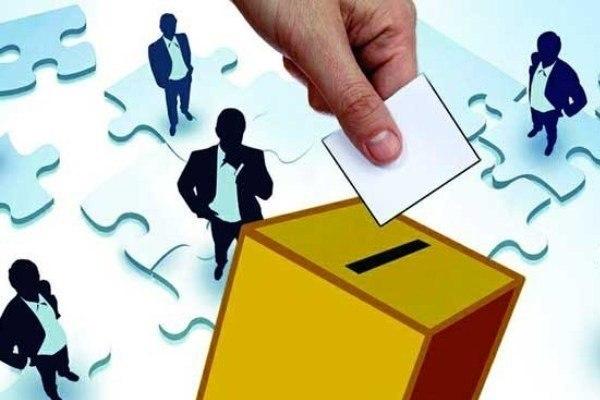
President Rouhani’s move is carried out in accordance with Article 123 of the Constitution of the Islamic Republic of Iran.
The next legislative election in Iran is scheduled for 21 February 2020.
The 290-seat Iranian parliament has 285 directly-elected members and five seats reserved for the Zoroastrians, Jews, Assyrian and Christians and Armenians.
© All Content by IFP News ( Iran Front Page ) is licensed under a Creative Commons Attribution 4.0 International License.
