Thursday, December 25, 2025
Home Blog Page 2955

A Look at Iranian Newspaper Front Pages on January 28

Iran Newspaper Headlines in April 11

Iran Newspapers

Abrar:

1- Lebanese Security Forces, Protesters Clash near Parliament

2- Iran Has No Trust in FATF: Expediency Council Secretary

3- We’ll Meet Murderers of Gen. Soleimani Sooner or Later, but Not for Negotiation: Raisi

A Look at Iranian Newspaper Front Pages on January 28


Afkar:

1- We Must Protest Our ‘Republic’: Rouhani

2- Plane Incidents, Again


A Look at Iranian Newspaper Front Pages on January 28


Aftab-e Yazd:

1- Three Air Incidents in Four Days! What’s Reason?

2- Prominent Iranian Singer Shajarian Hospitalized

3- Iran Three Generations Away from 5G: Official

4- Taliban Downs US Plane: Pentagon

A Look at Iranian Newspaper Front Pages on January 28


Arman-e Melli:

1- Rouhani Warns against Criminalization of Promoting ‘Republic’

2- Reformists to Announce Electoral List in Coming Days

3- State TV Once Again Refuses to Broadcast Rouhani’s Speech

A Look at Iranian Newspaper Front Pages on January 28


Ebtekar:

1- Death Flying over Iran’s Miankaleh Wetland

* Suspicious Deaths of 6,000 Migratory Birds

2- Middle East Getting New Order: Analyst

3- Taliban Deals Blow on US in Ghazni

A Look at Iranian Newspaper Front Pages on January 28


Jame Jam:

1- US Shocked by Downing of Its Plane in Afghanistan

A Look at Iranian Newspaper Front Pages on January 28


Javan:

1- Rouhani Speaks Like Opposition Figure!

* President, His Cabinet Evade Accountability

2- Continued Presence in Region Brings More Dead Bodies for Trump

3- Boeing Stops at Mahshahr Road without Casualties

A Look at Iranian Newspaper Front Pages on January 28


Kayhan:

1- Taliban Downs US Military Plane; Tens of CIA Officers Killed

2- Hashd al-Shaabi: We Didn’t Attack US Embassy; Our Response to Be on Par with Iran’s Reaction

A Look at Iranian Newspaper Front Pages on January 28


Khorasan:

1- Hunting CIA in Ghazni: Taliban Says Has Downed US Plane

2- Rouhani’s Straightforward Remarks about Elections

3- Iranians Worried about Maestro of Persian Music [Shajarian]

A Look at Iranian Newspaper Front Pages on January 28


Mardom Salari:

1- Any Negotiation beyond JCPOA Banned: Iran Foreign Ministry

2- Iranian People Concerned about Master of Persian Singing

3- Athletic World Shocked by Kobe Bryant’s Death

A Look at Iranian Newspaper Front Pages on January 28


Shahrvand:

1- Master Shajarian Hospitalized

2- Biggest Threat to Democracy Is Turning Elections into Formality: Rouhani

A Look at Iranian Newspaper Front Pages on January 28


Vatan-e Emrooz:

1- Bloody Day for Enemy: American Military Plane Downed in Ghazni

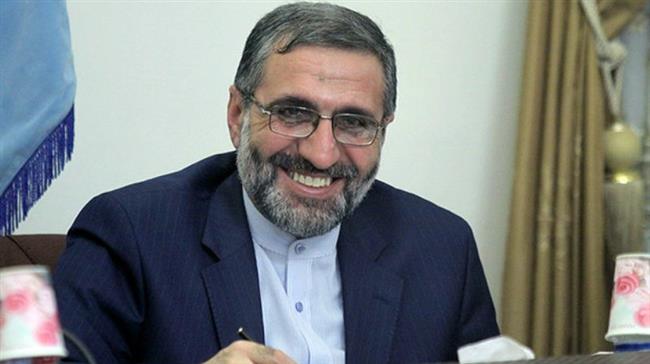
2- Judiciary Chief Vows Continued Punishment of Those Who Murdered Gen. Soleimani

A Look at Iranian Newspaper Front Pages on January 28

Iran to Open Marble Palace to Public after 40 Years

Iran to Open Marble Palace to Public after 40 Years


The Marble Palace was built upon the order of Reza Shah, the first Pahlavi king. It was designed by Iranian-Armenian architect, Leon Tadosian; and served as the king’s office before the formulation of Iran’s National Treasury Act which entailed the transfer of Iranian national jewelry from Golestan Palace to the building’s basement.

The Palace was renamed to “Pahlavi Museum” in 1976 with the aim of making people familiar with Reza Shah; and was registered in the Iranian National Heritage List in June 1978. The museum continued to operate until the fall of monarchy in 1979.

Located in downtown Tehran, the Marble Palace was operated by the Expediency Discernment Council for many years. The Mostazafan Foundation of Islamic Revolution took the building back this year, and decides to turn it into a museum again.

Parviz Fattah, the head of the foundation, announced that the doors of Marble Palace will open to the public after 41 years in less than a month. Journalists and media associates were the first people to visit the palace after decades on January 26th.

What follows are the photos taken by several Iranian news agencies from the Marble Palace during the visit:


Related Articles:


Iran, Russia Developing Ties Despite US Will: Rouhani

Iran, Russia Developing Ties Despite US Will Rouhani

Rouhani made the remark in a meeting with the visiting chairman of Russia’s State Duma Vyacheslav Volodin in Tehran on Monday.

“I stand assured that in spite of Washington’s pressures on the region and Iran in particular, the two countries will expand their relations more than ever before regardless of the White House’s will and intention,” Rouhani said.

Underlining that Iran is by no way interested in the spread of tensions across the region, Rouhani said, “Regional stability is of significance to Iran and Russia, and we are ready, as in the past, to further cooperation and deliberation between the two countries.”

The Iranian president also noted that, “Trilateral relations between Iran, Russia and China as well as joint maritime drills in the Sea of Oman indicate that the trio are bent on developing closer ties with each other.”

Rouhani expressed hope that the all the previous agreements between Tehran and Moscow for the promotion of joint investment will enter into force as soon as possible.

Volodin, for his part, said, “Despite increased tensions in the region, we should work towards defusing tensions and expanding ties without allowing such tensions to drift us apart.”

He added that the most important points raised during discussions within the framework of the two countries’ joint economic commission included the expansion of trade ties between the two countries, adding, “We believe that we can reach better conclusions through more meetings.”

US pushing region toward international dictatorship: Larijani

In a separate meeting with the Russian official, Iran’s Majlis Speaker Ali Larijani said the United States is pushing the West Asia region toward international dictatorship through its humiliating behavior.

“Americans are pushing conditions in the region toward international dictatorship and behave in a humiliating manner, which makes cooperation between Iran and Russia even more important,” Larijani said.

Expressing gratitude for the sympathy extended by the Russian Duma following the assassination of top Iranian anti-terror commander Lt. Gen. Qassem Soleimani, which proved America’s state terrorism beyond any doubt, Larijani said, “The Russian government acted very responsibly in this matter.”

On January 3, the US assassinated General Soleimani, commander of the Quds Force of Iran’s Islamic Revolution Guards Corps, and Abu Mahdi al-Muhandis, the second-in-command of Iraq’s Popular Mobilization Units (PMU), and a group of their companions in Baghdad. The operation was conducted with the authorization of US President Donald Trump. The US Department of Defense took responsibility for the assassination.

Both commanders enjoyed deep reverence among Muslim nations over their endeavors in eliminating the US-sponsored Daesh Takfiri terrorist group in the region, particularly in Iraq and Syria.

Pointing to close deliberations between Iran and Russia in various fields, Iran’s Majlis speaker said, “The two countries have taken joint strides particularly in the fight against terrorism, and also have good military and security cooperation, a recent instance of which was the joint naval drills between Iran, Russia and China.”

Larijani referred to the two countries’ joint economic commission as a venue for the expansion of bilateral economic ties, saying, “We hope the convention of this commission at such a level that depicts the two sides’ will for developing ties, will further contribute to the consolidation of relations.”

Stressing the need for the inter-parliamentary cooperation, Volodin, for his part, said, “Such interactions should help deepen ties between the two countries.”

Has Balance of Power Shifted in Iraq?

Has Balance of Power Shifted in Iraq

Many prominent international figures immediately called on both sides to exercise self-restraint, since they had the notion that any retaliatory action by Iran would result in a full-blown military reaction from the United States. However, this did not happen, as Iran attacked two military bases of the American forces in Iraq, although the strike did not cause casualties. Meanwhile, Donald Trump refused to take retaliatory action considering the internal problems surrounding his impeachment and his personal reluctance to start a war. But unlike what has been predicted, the course of developments has not ended pleasantly. Iraq which has gradually moved closer to neighboring Iran following the 2003 US invasion and, at the same time, requires the United States and the foreign forces to ensure its security has been stuck in these conflicts.

“After the killing of Iran’s Quds Force commander, Qassem Soleimani, and the deputy commander of the Iraqi Popular Mobilization Units (PMU), Abul Mahdi al-Muhandis, Iraq and its prime minister are where they don’t want to be — caught between America and Iran,” James Durso, the managing director of Corsair LLC -a supply chain consultancy- and a former US Navy officer has written in an op-ed article in The Hill.
Following the US strike, the Shiite bloc at the Iraqi parliament approved a non-binding resolution calling for the expulsion of the American and foreign forces. Prime Minister Abdul-Mahdi was also obligated to ask the United States to dispatch a delegation to Iraq for talks on the conditions of the pullout of American forces against his own wishes, which became clear later when he dragged his feet over implementing the Iraqi parliament’s resolution. The United States had once reduced the number of its forces in Iraq in 2011, under Barack Obama’s administration, but after the rise of ISIS and its conquest of Iraqi and Syrian territories, the US once again deployed forces into the region. There are currently 5,000 forces in Iraq. Washington’s response was already obvious: it rejected Iraq’s request.
The governments that have come to power in Iraq throughout the years after 2003 have made great efforts to create a balance in their relations with Iran and the US, and they have had a good reason for such efforts. It is a matter of national interests and foreign relations when it comes to the ties with the United States: If the presence of Americans in Iraq winds down, the Western presence in there will subside as well and the only option Iraq will have would be heavier dependence on Iran and probably on Russia and China. As regards Iran, Iraq is relying on its neighbor’s energy resources and the import of commodities, while another important issue is Iraq’s internal security as well as the ethnic and religious conflicts.

After toppling Saddam Hussein’s regime, the United States helped Iraq develop a new government structure in which every ethnic and religious group has a representative in the establishment: the prime minister is a Shiite Muslim, the president is Kurdish, and the parliament speaker is a Sunni Muslim.

Given that Shiite Muslims make up the majority of Iraq’s population, it can be concluded that such structure has been one of the major reasons for Iran’s growing influence in the Arab country. Following the most recent elections in Iraq, it took around three months until the local groups reached a consensus on the formation of a new government. In that period, many reports described Iran as the main victor in the field. Particularly after the rise of ISIS, the paramilitary Shiite groups in Iraq were acting under the guidance of General Qassem Soleimani, whose influence was even further extended after many commanders of those Shiite groups entered politics. This issue greatly affected the formation of the new government of Iraq. In the course of the nationwide elections in Iraq, General Soleimani held meetings with many prominent and influential political figures several times and provided great help in forming the ruling coalition government. But Abdul-Mahdi, the prime minister who was elected after all those efforts, has resigned from his post in the wake of the popular protests that have erupted since October 2019.

The internal consensus in Iraq on the formation of a new government appears to have become more difficult than ever following the escalation of tensions between Iran and US, and this could drive the political situation in Iraq into chaos. The majority of the Sunni and Kurdish legislators boycotted the parliamentary voting session on the expulsion of the foreign forces. Later, the Kurdistan Regional Government even made a proposal for the presence of American forces in that region.

“While Abdul Mahdi’s government made modest progress in reducing the political gap between Iraq’s constituent communities – Shiite, Sunnis and Kurds, including on the question of governing the contested, oil-rich city of Kirkuk – this gap is set to widen, as the future of the US military presence in Iraq becomes a new political fault line,” Galip Dalay, an IPC-Mercator Fellow at the German Institute for International and Security Affairs (SWP) and non-resident fellow at the Doha-based Brookings Institution has written in an article published in The Middle East Eye.

“Post-invasion Iraq was premised on Shia and Kurdish cooperation, while Sunnis felt marginalised and left out. As the future presence of US forces increasingly becomes the central item of debate, the gap between the Kurds and Sunnis is likely to decrease, while the gap between the Kurds and Shiite widens,” Dalay added.

The United States which has decided to continue its mission in Iraq will undoubtedly take advantage of the Kurdish and Sunni supports. But there is a bigger problem for Iran with regard to its neighboring state: finding a person with the level of influence that General Soleimani exerted in Iraq in order to remain close to the next government. In the recent demonstrations in Iraq, people have been protesting against corruption, economic mismanagement and the unemployment crisis. Since the protesters consider the Baghdad government to have close ties with Tehran, many slogans have been against Iran. The consultations between General Soleimani and various political groups in Iraq as well as his cooperation with the Popular Mobilization Units (Hashd al-Shaabi) were effective in supporting Abdul-Mahdi’s government, and even resulted in the parliamentary rejection of the prime minister’s resignation for about a month. A number of reports have even suggested that General Soleimani’s last visit to Baghdad was aimed at addressing the recent unrest in Iraq and holding consultations. However, Iran has now lost its influential commander; Abdul-Mahdi is heading a provisional government; and Abu Mahdi al-Muhandis –the deputy commander of Hashd al-Shaabi forces who was one of the closest allies of Iran- has been assassinated with General Soleimani.

The situation in Iraq over the past few weeks seems not to have been undesirable for Iran. The anti-Iranian sentiments in the popular protests in Iraq have turned into the anti-American sentiments, and many have accused the US of violating Iraq’s sovereignty and territorial integrity by launching the airstrike. Nevertheless, the prospect for Iran’s influence in Iraq does not seem very promising. While Iran is facing considerable economic problems under the pressure of the US sanctions, the private American companies and Iraq’s Arab neighboring states, including Saudi Arabia which is Iran’s main rival in the region, have been making investment in Iraq. Considering that the chaotic economic situation in Iraq has been the main reason for the popular protests, the investments and capital injection from the other regional and international actors could diminish Iran’s influence over the neighboring state.

Iran regards the influence in Iraq as a necessary component of its national security and is trying to prevent the repetition of the bitter experience of the 8-year war by whatever means possible. Moreover, Iran currently needs Iraq for bypassing the American sanctions. A waiver that exempts Iraq from the US sanctions against Iran to import natural gas and electricity will expire in February. Abdul-Mahdi’s government played an active role in persuading the Trump Administration to exempt Iraq from the anti-Iran sanctions, but it is not clear whether the Iraqi premier will be still able to do so or not. Moreover, it is probable that a new government will come to power in Iraq by then. As a result, it seems that Iran will not have much time to restore its influence in Iraq, while the US is also striving to make the most of this opportunity in order to make up for a tiny part of the great losses in the war in Iraq.

Iran FM, UN Envoy Discuss Afghan Peace Process

Iran FM, UN Envoy Discuss Afghan Peace Process

In a Monday meeting with Foreign Minister Zarif, Mr Yamamoto expounded on the latest internal developments in Afghanistan, highlighted the Islamic Republic of Iran’s support for the Afghan government and nation throughout the years of war in that country, and lauded Iran’s positive role in helping resolve the problems of Afghanistan.

For his part, Foreign Minister Zarif pointed to the results of the presidential election in Afghanistan, and stressed the need for protecting the votes of the Afghan people and for pursuing this process until achieving the results and declaration of the final results by observing the fairness and transparency of the election.

He also expressed hope that the new Afghan government would be able to begin its work as soon as possible.

Foreign Minister Zarif also voiced Iran’s support for the peace process under the aegis and guidance of the Afghan government until reaching an intra-Afghan agreement with the participation of all Afghan groups, including the Taliban.

The top Iranian diplomat also reaffirmed the mistrust of the plans proposed by the US, and emphasized the necessity for the United Nations to play a more active role in facilitating the peace talks.


Related Articles:


Murderer of Soleimani Killed in US Plane Downing in Afghanistan: Sources

Murderer of Soleimani Killed in US Plane Downing in Afghanistan: Sources

The downed plane was the mobile CIA command for Michael D’ Andrea, and now, America’s most advanced spy platform and mobile command centre with all equipment and documents are in Taliban’s hands.

De Andrea, who was responsible for the assassination of Iran’s top commander Lieutenant General Qassem Soleimani, was apparently among the officers on board the plane, the Veterans Today website reports, quoting Russian intelligence sources.

Also known as Ayatollah Mike, D’Andrea is the most prominent figure of the CIA intelligence in the region.

Since 2017, D’ Andrea has run the CIA’s false flag and assassination programs in the Middle East, allegedly responsible not only for the murder of General Soleimani but the killing of 300 Iraqi demonstrators as well.

CIA Appoints ‘Ayatollah Mike’ as New Chief of Iran Operations

The US military has acknowledged the loss of a Bombardier/Northrop Grumman E-11A plane in central Afghanistan. They added that they have not found any “indication” that the aircraft was downed.

The aircraft crashed in Ghazni city area on Monday. An investigation into the incident is underway and the military will provide further information when its available, a spokesman for the US force in Afghanistan, Col. Sonny Leggett has tweeted.

The official also dismissed Taliban claims that another aircraft had crashed in the country, describing them as “false.” Earlier in the day, the Taliban said that a military helicopter went down in the east of the country shortly after the plane crash. The militant group did not provide any details of the alleged incident, nor did they specify to whom the helicopter belonged.

There has been some confusion as to whether Taliban militants have claimed responsibility for the plane crash. Their initial statement in Pushtu only stated that the plane had gone down.

The Bombardier/Northrop Grumman E-11A is a surveillance and communications plane. Footage from the scene showing the wreckage has been circulating on social media, and photos that appear to show a plane with the same serial number have been unearthed.

Videos showed the shell of the plane ablaze on the ground. It was largely destroyed in the fire with only its tail section surviving the crash.

Journalists have made it to the scene of a plane crash in Afghanistan, snapping pictures of the wreckage and even some documents. It comes as the US Air Force’s chief of staff all but confirmed the loss of the military plane.

Footage from the scene shows that the aircraft burned upon the impact, with only its tail section remaining largely intact.

A Look at Iranian Newspaper Front Pages on January 27

Iran Newspaper Headlines in April 11

Iran Newspapers

Abrar:

1- Trump Replies to Zarif in Persian: No Thanks!

2- UK Crown Prince Interested in Visiting Iran

A Look at Iranian Newspaper Front Pages on January 27


Aftab-e Yazd:

1- Oman Continues Efforts to Open Mediation Deadlock

2- First Coronavirus Patient Treated

A Look at Iranian Newspaper Front Pages on January 27


Arman-e Melli:

1- Oman the Steadfast Mediator

* Omani FM Visits Tehran Once Again after 5 Days

* What Message Is He Carrying?

A Look at Iranian Newspaper Front Pages on January 27


Ebtekar:

1- Zarif to Trump: Base Your Foreign Policy Decisions on Facts

2- Qeshm to Be Removed from UNESCO List

A Look at Iranian Newspaper Front Pages on January 27


Etemad:

1- Inauspicious Year for Chinese

2- Democrats Pleased with Trump Lawyers’ Defence

A Look at Iranian Newspaper Front Pages on January 27


Ettela’at:

1- Foreign Ministry Spokesman: US Border Police’s Harassment of Iranians ‘Absolute Racism’

A Look at Iranian Newspaper Front Pages on January 27


Hamshahri:

1- Operation against Diplomacy

* White House Pinning Hopes on Domestic Attacks against Zarif after Failure to Control Him

2- Most Political Palace of Tehran’s History Opens Doors to Visitors

* Marble Palace Open to Visitors after 41 Years

A Look at Iranian Newspaper Front Pages on January 27


Iran:

1- Hardliners Attack Zarif after Twitter Fight with Trump

A Look at Iranian Newspaper Front Pages on January 27


Javan:

1- Qeshm Geopark Exchanged with Shrimp!

2- Trump Said He’d Behead Senators!

3- Iran’s Trade Turnover in 10 Months Exceeds $72 Billion

A Look at Iranian Newspaper Front Pages on January 27


Jomhouri Eslami:

1- Increased Opposition to Deal of Century

2- Obama: Trump Is a Fascist

A Look at Iranian Newspaper Front Pages on January 27


Kayhan:

1- People Want Revenge Not Negotiation with Murderer of Gen. Soleimani

2- Region on High Alert for Countering New Crisis Named ‘Deal of Century’

A Look at Iranian Newspaper Front Pages on January 27


Khorasan:

1- Bargaining on Hormuz Peace

* Rumours about Bin Alawi’s Repeated Visits to Tehran

2- Suspicious Death in Miankaleh

* Thousands of Migratory Birds Die in Miankaleh Wetland

A Look at Iranian Newspaper Front Pages on January 27


Shargh:

1- These 90 People

* Former Mayor of Tehran Wants One-Third of Parliamentary Seats

2- Turkey Quake and Successful Crisis Management [Editorial]

A Look at Iranian Newspaper Front Pages on January 27

Persepolis World Heritage Site Blanketed with Snow

Persepolis World Heritage Site Blanketed with Snow

Persepolis, also known as Parseh, is a mirror of ancient Iran’s history and culture. The complex has been built in 518 BCE upon the order of Darius the Great, the Achaemenid king; and is considered an architectural masterpiece of its time. Persepolis is located in Marvdasht, 63 km from Shiraz.

Pasargadae World Heritage Site is also a complex of ancient structures from the Achaemenid era. It consists of buildings such as the Tomb of Cyrus the Great, the Royal Garden, the Gate Palace, the Bridge, the Audience Palace, the Private Palace, the Tomb of Cambyses I, and the defence structures of Tal-Takht in the location of ancient Pasargadae city.

What follows are YJC’s photos of snowy days in Persepolis and Pasargadae:

Iran FM Says Trump Emboldened by Int’l Passivity

Iran FM Says Trump Emboldened by Int’l Passivity

In an address to a conference on safeguarding the cultural centres and the common heritage of mankind, held in Tehran on Monday, Zarif said unilateralism and law-breaking is as dangerous as tolerating them.

“Unfortunately, the passive stances of the countries and the international organizations in countering (US President Donald) Trump’s law-breaking and unilateralism have emboldened him in pursuing a bullying approach in the world,” Zarif deplored.

Passive unilateralism encourages active unilateralism, he noted, warning that the countries which have given in to Trump’s law-breaking and unilateral policies in order to fend off the US harms have indeed prepared the ground for the US president to bully them.

The foreign minister also slammed the recent threat of military attacks on 52 Iranian sites, including the cultural centres, from the US president as the most brazen example of extremism, racism and promotion of hatred and violence.

“The US president’s threat of destroying Iran’s cultural and civilizational centres is a clear example of international ‘cultural terrorism’, and is a continuation of the US regime’s law-breaking to break the Iranian people’s resistance,” Zarif noted.

“Trump’s threats incarnate the hatred stemming from lowliness, a hatred not only for Iran and the rich Iranian culture, but for culture, civilization and anything representing peace and stability,” Zarif added.

“While Trump calls the civilized and cultural nation of Iran ‘terrorist’ with his racist attitude, he brazenly announces it to the world that his regime is by no means committed to the principles and red lines of the international law, including the prohibition of racism and prohibition of discrimination,” the top Iranian diplomat added.

Zarif finally noted that the US regime has repeatedly proved that it does not believe in dialogue and does not honour its previous and current commitments either.

“The (American) hostility towards culture is not even hostility to a single nation, but hostility towards and battle against the common cultural values and the civilizational achievements of various nations of the world,” he concluded.

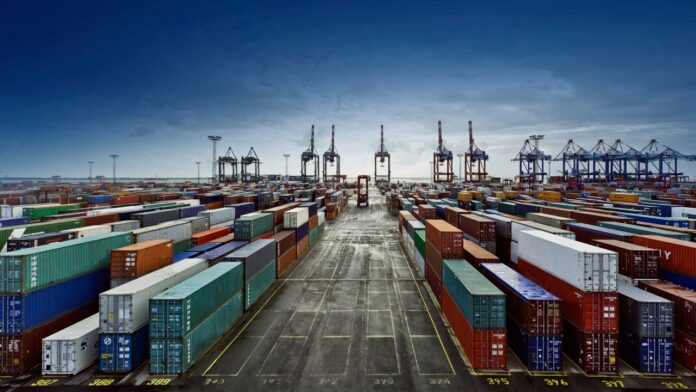
Iran’s Trade Turnover Over $72bn in 10 Months

Iran’s Trade Volume Over $72bn in 10 Months

Elaborating on facts and figures of Iran’s exports and imports, Chief of Islamic Republic of Iran’s Customs Administration Mehdi Mir-Ashrafi said that the export volume compared to the corresponding period last year has increased by 20.76 percent in weight, but decreased by 3.2 percent in value.

He mentioned that taking into account “the reform of exporting basics” one should add $9 billion to the value of Iran’s exports.
Stressing that the export volume in weight has been four times as much as imports, he said “to Iran’s total export volume must be added the export of electricity and technical and engineering services.”

The official said the “import volume has grown by 8 percent in weight, but in value remains the same as the corresponding period last year.”

“The import volume has been $81.36 billion, $600 million higher than registered export volume …19 million tonnes of the total import volume was allocated to basic goods, showing a 24% growth in weight, and a 20% growth in value under the current sanctions … 85% of other imported goods include raw materials as well as the materials required for production lines,” Mir-Ashrafi said.

Describing China “as Iran’s first trade partner,” the official said Iran’s first five export targets are China ($8.3 billion), Iraq ($8 billion), UAE ($3.7 billion), Afghanistan ($1.9 billion), and Turkey ($1.4 billion), adding that that China, UAE, Turkey, India and Germany are the first five exporters to Iran.

“The most exported products are petrochemicals ($15 billion), which account for 44% of the country’s exports, and the rest of the exported goods are worth $19 billion,” Mir Ashrafi said.

Stating that Iran has become an observer member of Eurasian Customs Union since 26 November, he said “as five Eurasian countries are operating in the north of Iran, we have increased our activities along the coast of the Caspian Sea both to reduce the traffic from southern ports and to tap into all of our ports.”

He added “we managed to reduce the required paperwork from 26 days to 4 days for imports and from 7 days to 1 day for export, and the measures have led to five-rank promotion of Iran in the beyond-borders economy and 39-rank in customs performance index.”