Sunday, December 28, 2025
Home Blog Page 2925

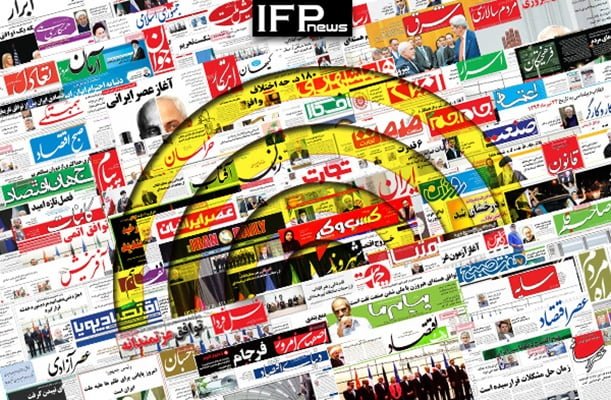
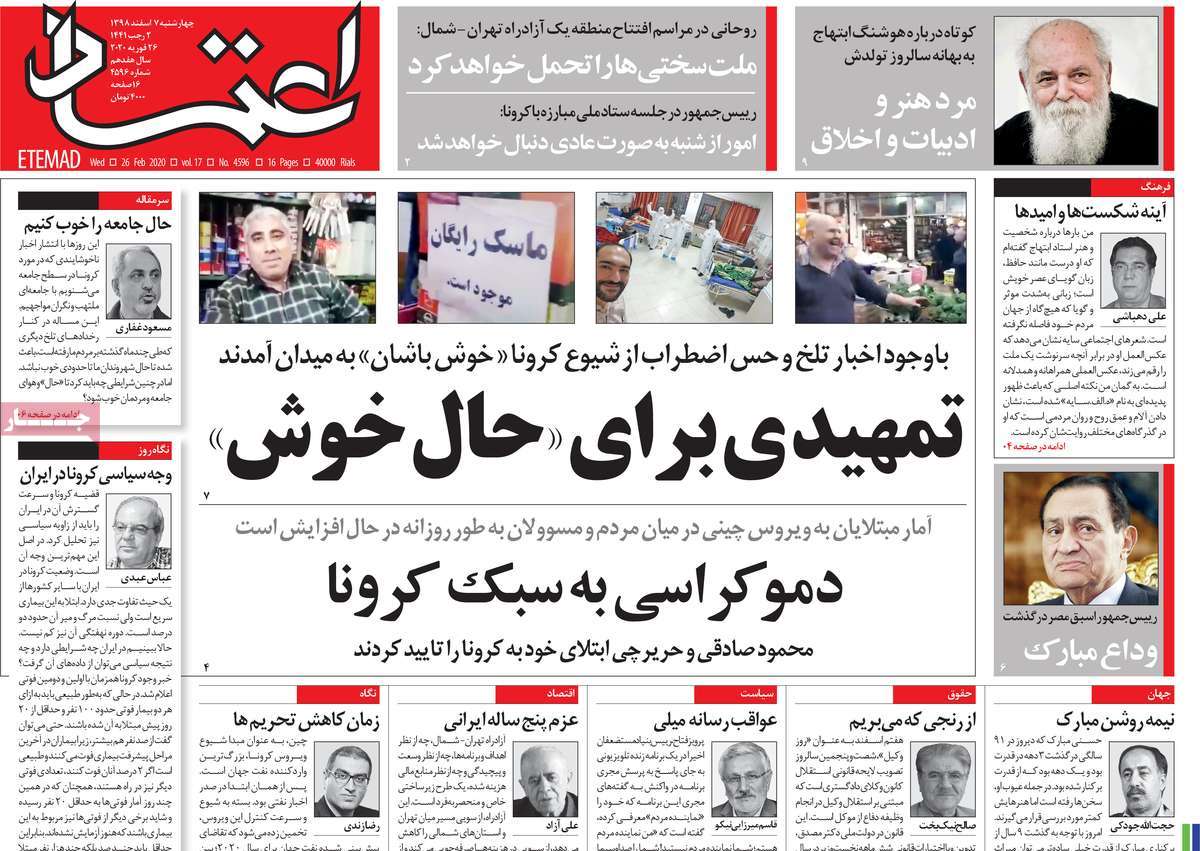
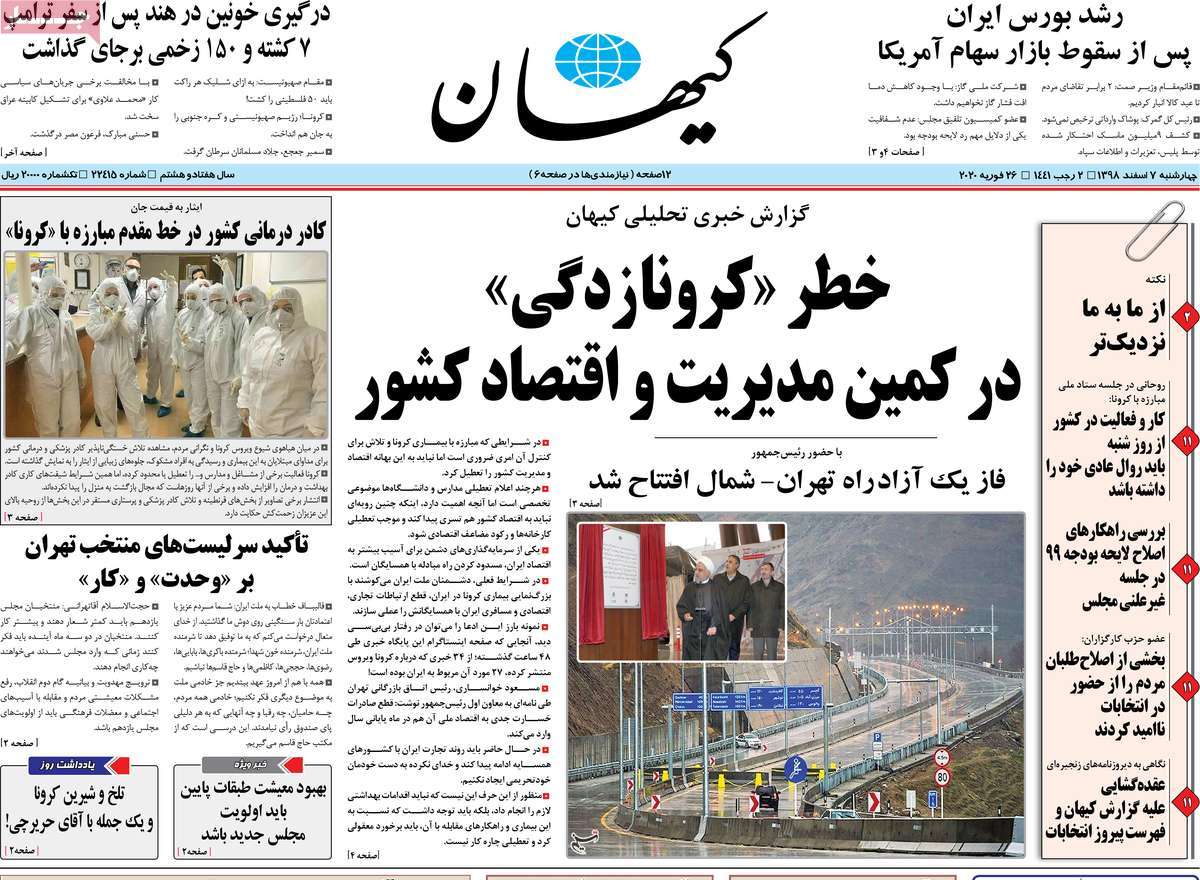
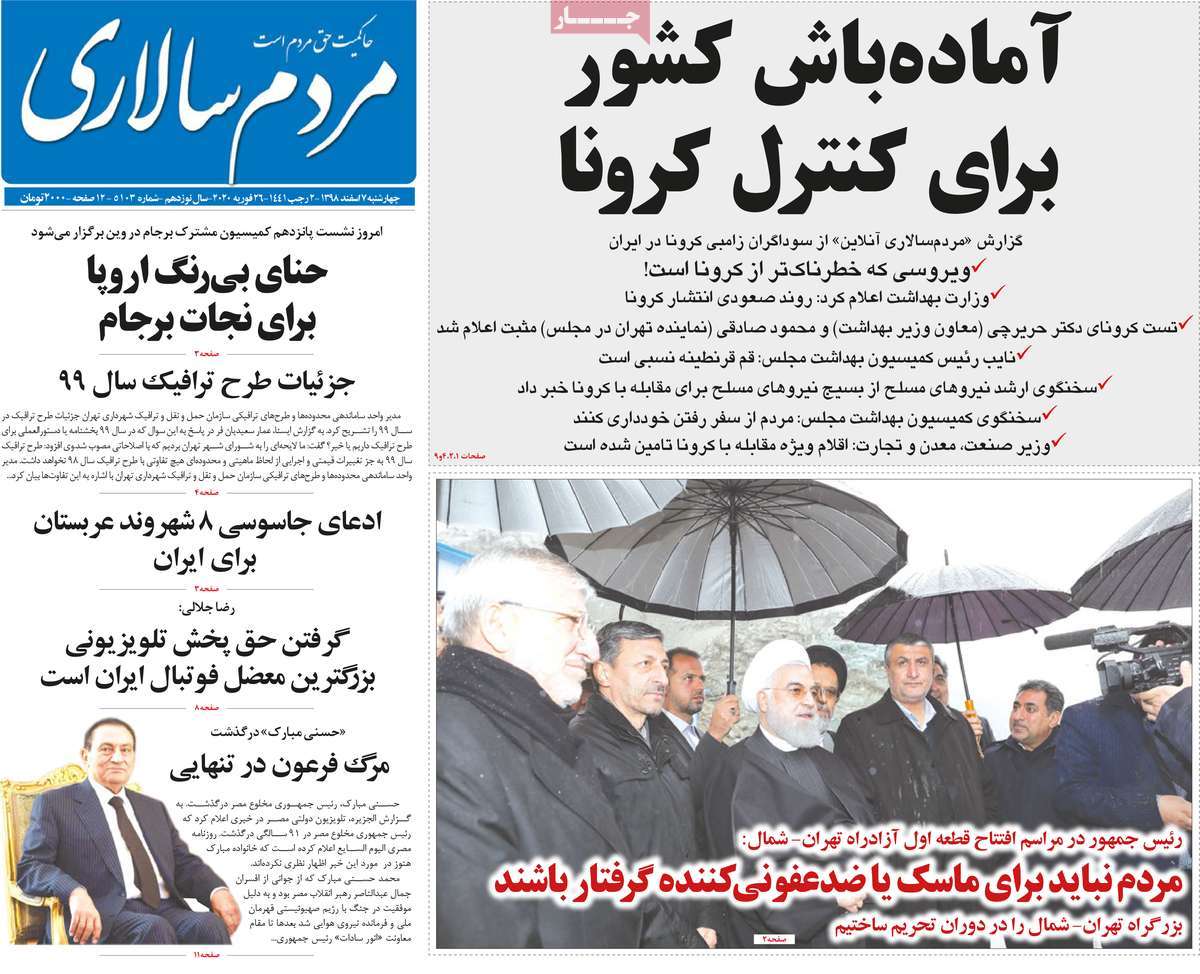
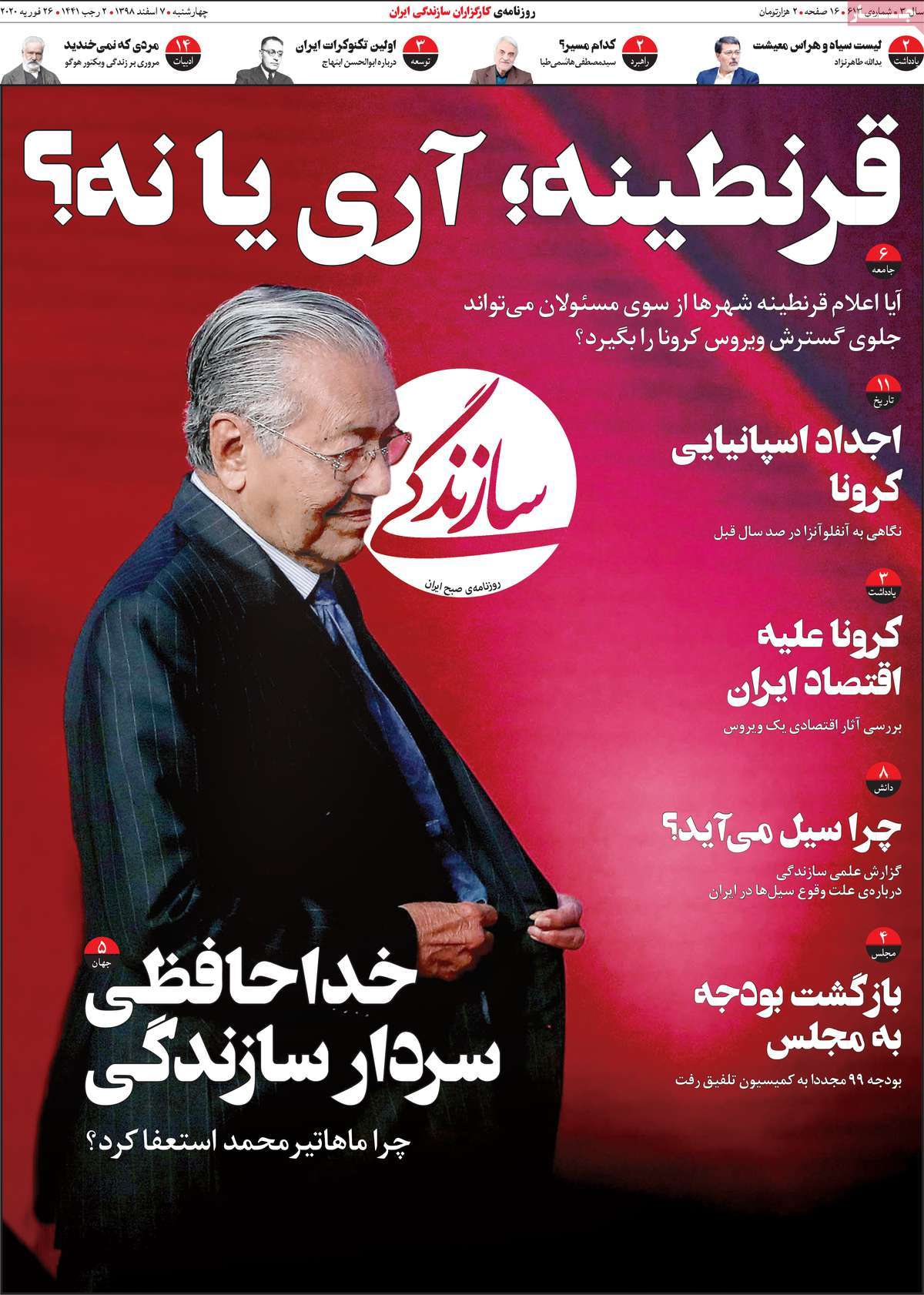
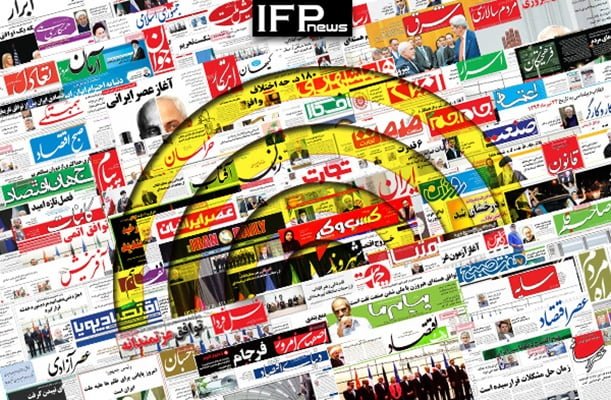
A Look at Iranian Newspaper Front Pages on February 27

Newspaper Headlines

Iran Newspapers

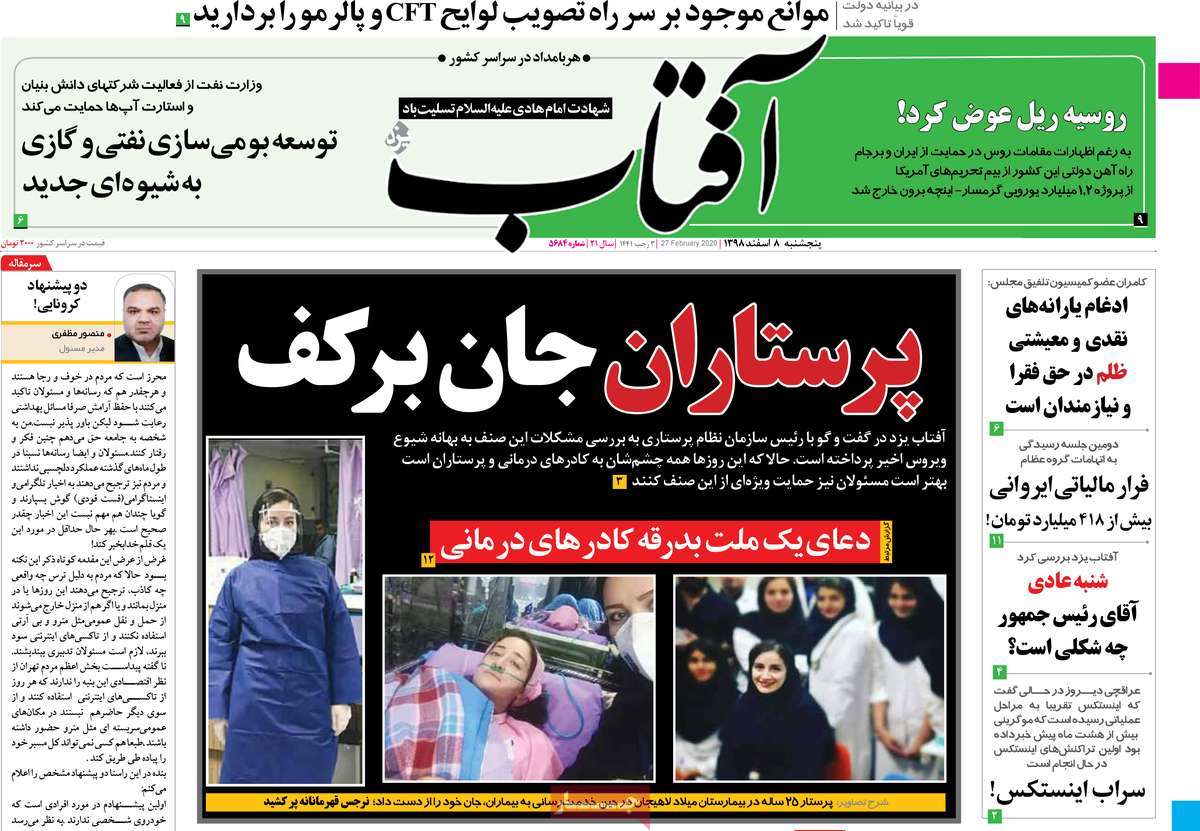
Aftab-e Yazd:

1- Russia Changes Track!
* Despite Earlier Remarks in Support of Iran, Russia Leaves Iran Railway Project


A Look at Iranian Newspaper Front Pages on February 27


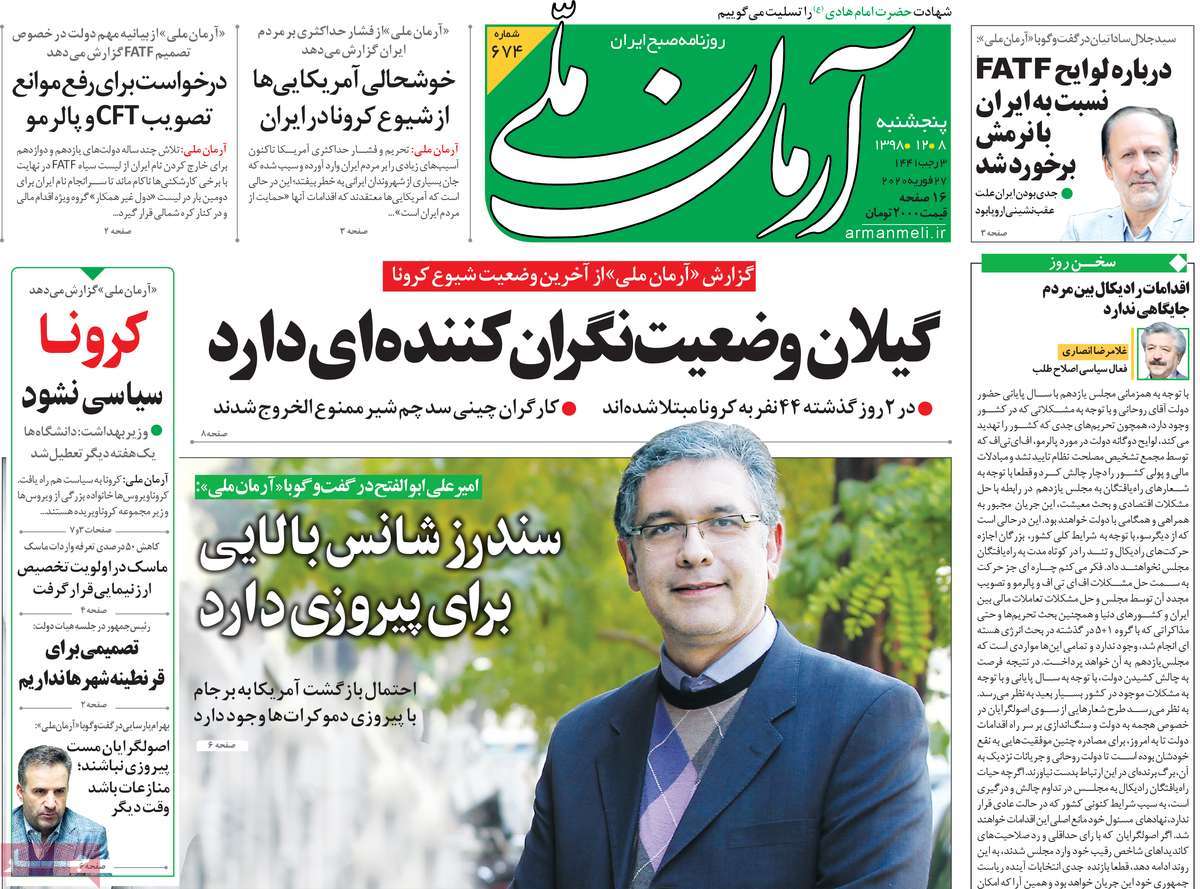
Arman-e Melli:

1- Gilan Has Worrying Situation: Chinese Dam Workers Banned from Leaving

2- Gov’t Calls for Removal of Barriers to Ratification of CFT, Palermo Bills

3- Sanders Has Great Chance for Winning Presidency: US May Return to JCPOA If Democrats Win

A Look at Iranian Newspaper Front Pages on February 27


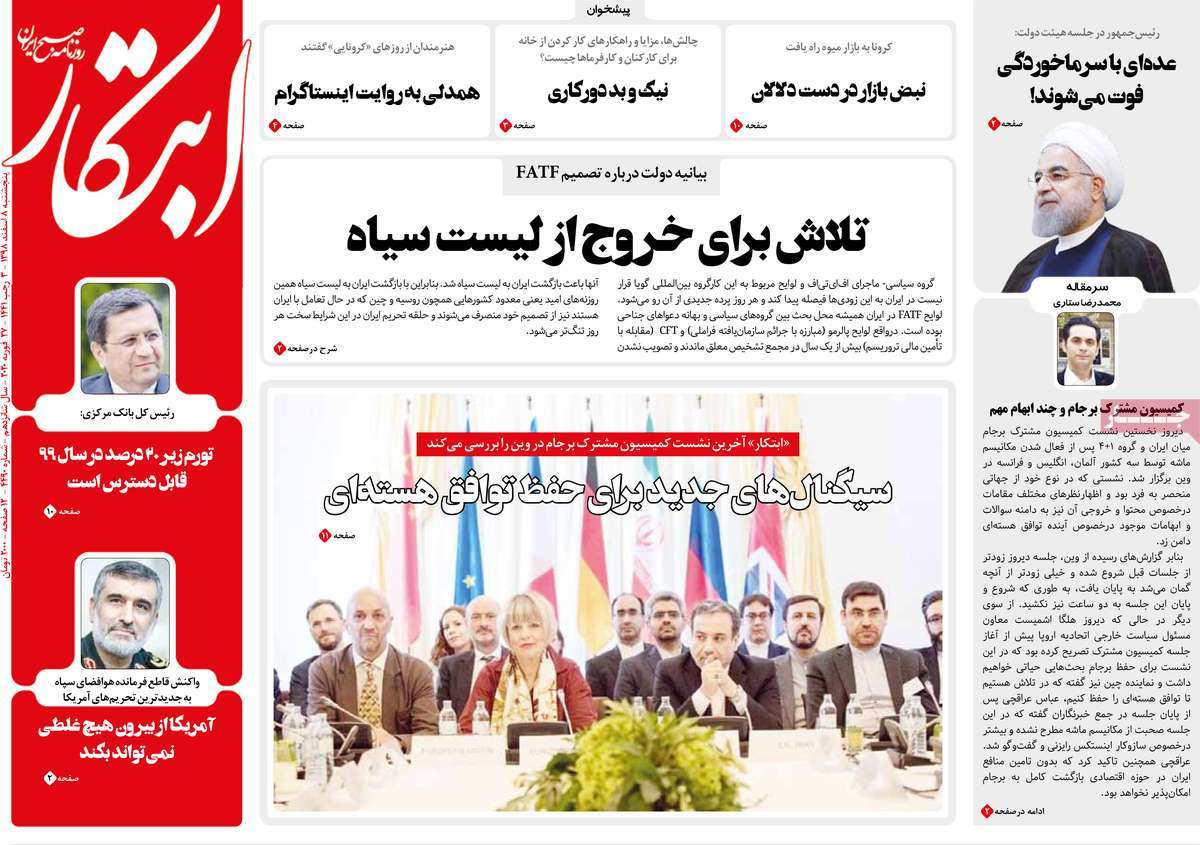
Ebtekar:

1- Rouhani: Some Die of Simple Cold!

2- Gov’t Issues Statement on Efforts to Get Iran Out of FATF Blacklist

3- New Signals to Preserve JCPOA

4- US Cannot Do Any Damn Thing: IRGC Aerospace Chief’s Reaction to US Bans

A Look at Iranian Newspaper Front Pages on February 27


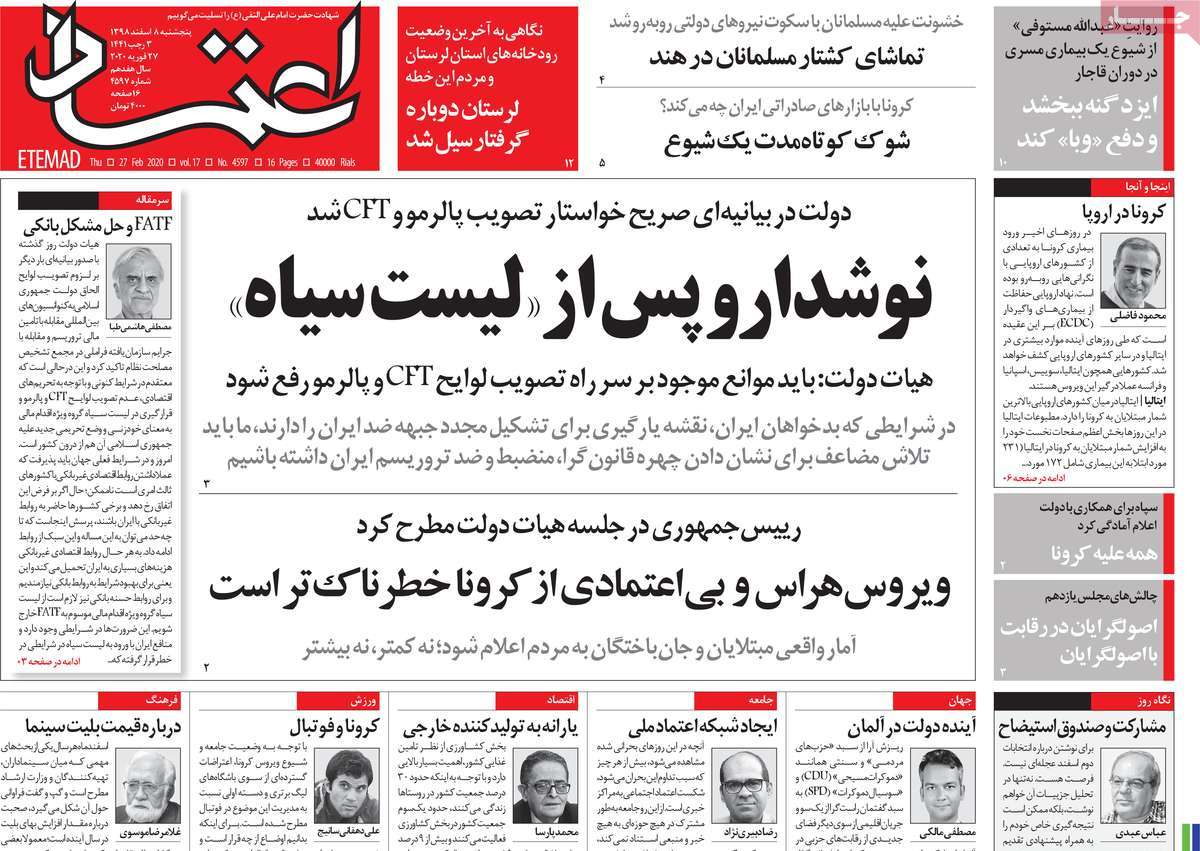
Etemad:

1- Indian Police Just Watches How Mobs Slaughter Muslims

2- Gov’t Says Iran Should Show Its Anti-Terrorism Face to World in Face of FATF Blacklisting

A Look at Iranian Newspaper Front Pages on February 27


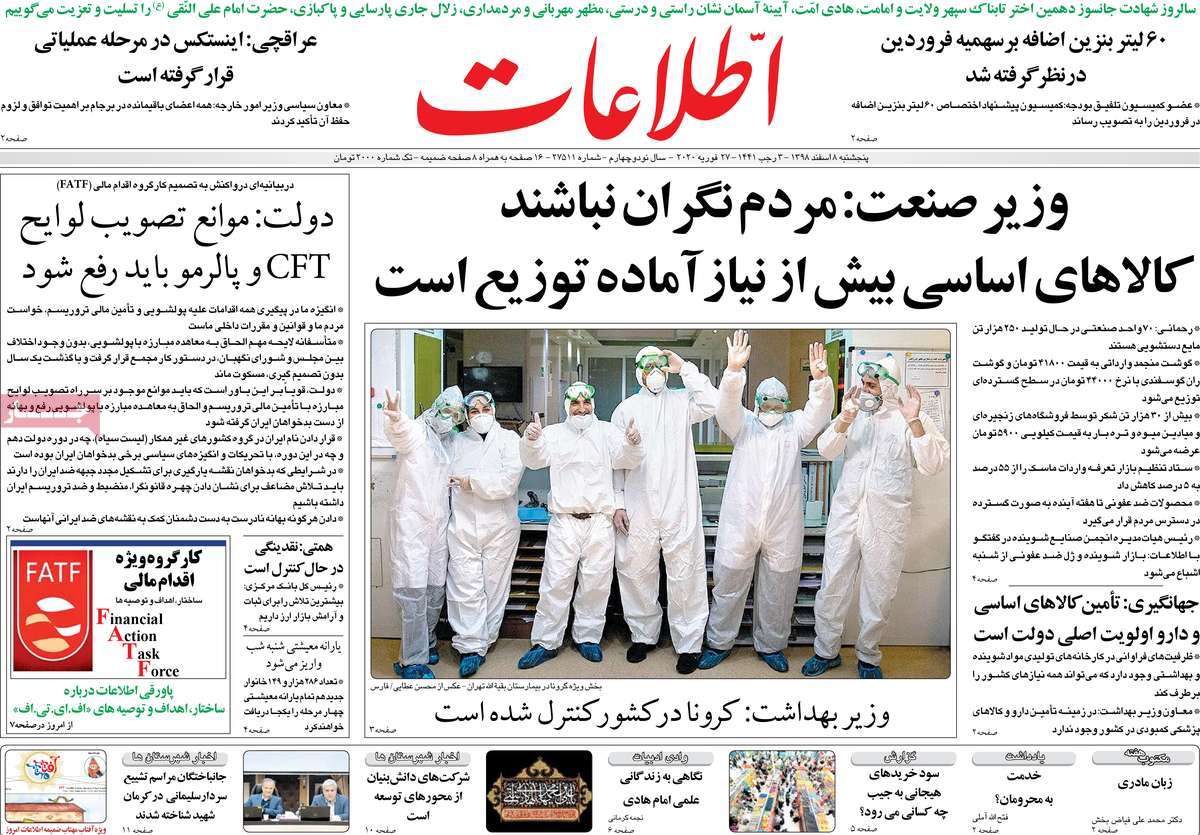
Ettela’at:

1- Industry Minister: No Need to Worry, All Basic Commodities Provided for Nowruz

2- Health Minister: Novel Coronavirus Contained in Iran

3- Gov’t: Barriers to Ratification of FATF Bills Must Be Removed


A Look at Iranian Newspaper Front Pages on February 27


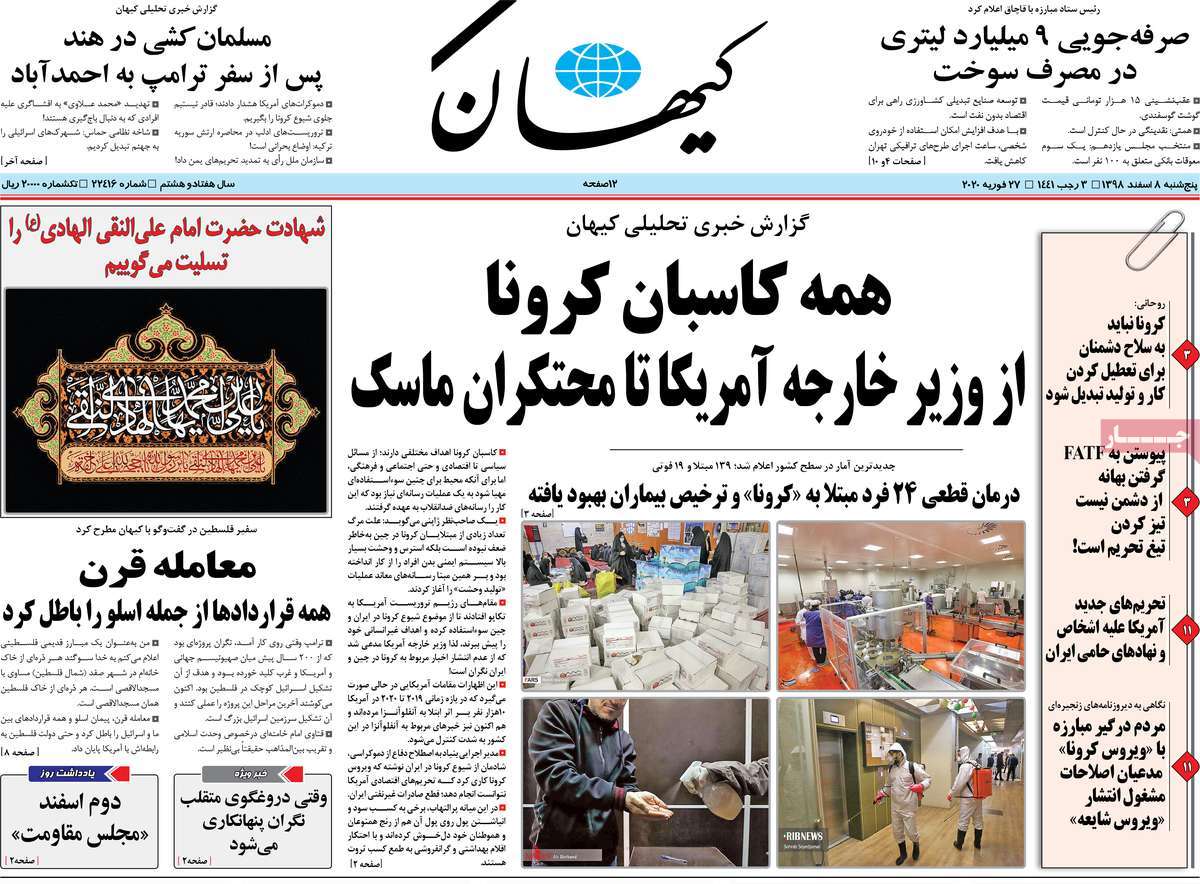
Kayhan:

1- All Profiteers of Coronavirus: From Pompeo to Mask Hoarders

2- 24 Coronavirus Patients Fully Recovered, Discharged from Hospital

3- Rouhani: Coronavirus Shouldn’t Be Turned into Enemy’s Weapon to Shut Down Production

A Look at Iranian Newspaper Front Pages on February 27


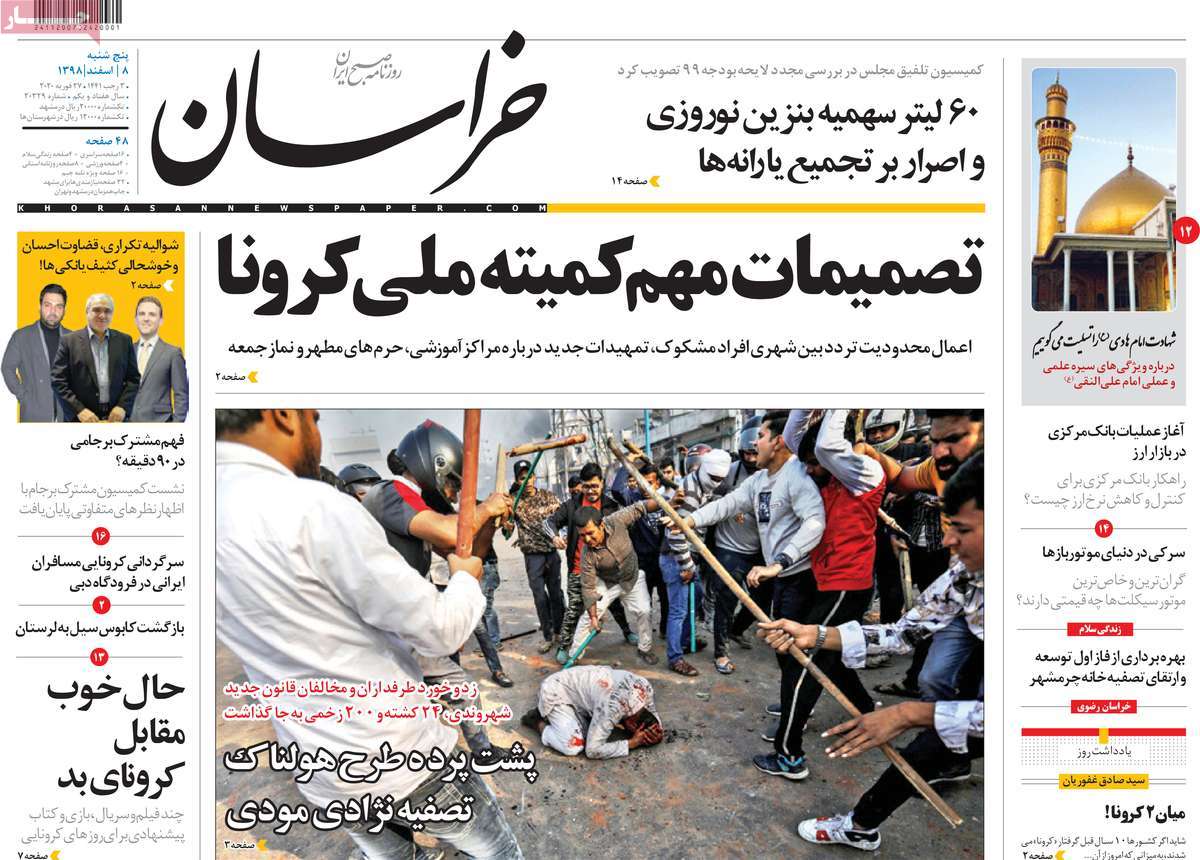
Khorasan:

1- Important Decisions by National Coronavirus HQ

* Restrictions Imposed on Travel, Pilgrimage, Friday Prayers

2- Behind Scenes of Modi’s Ethnic Cleansing: Clashes in India Kill 24, Wound 200

A Look at Iranian Newspaper Front Pages on February 27


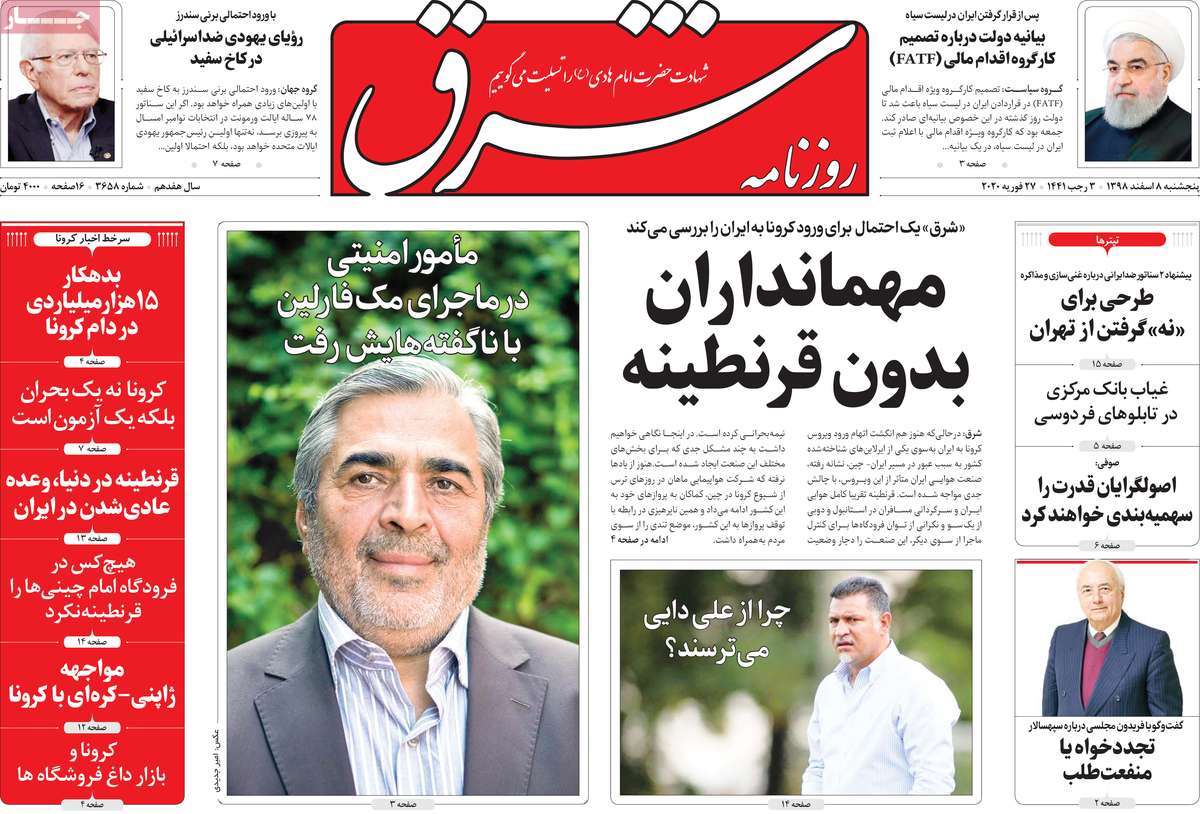
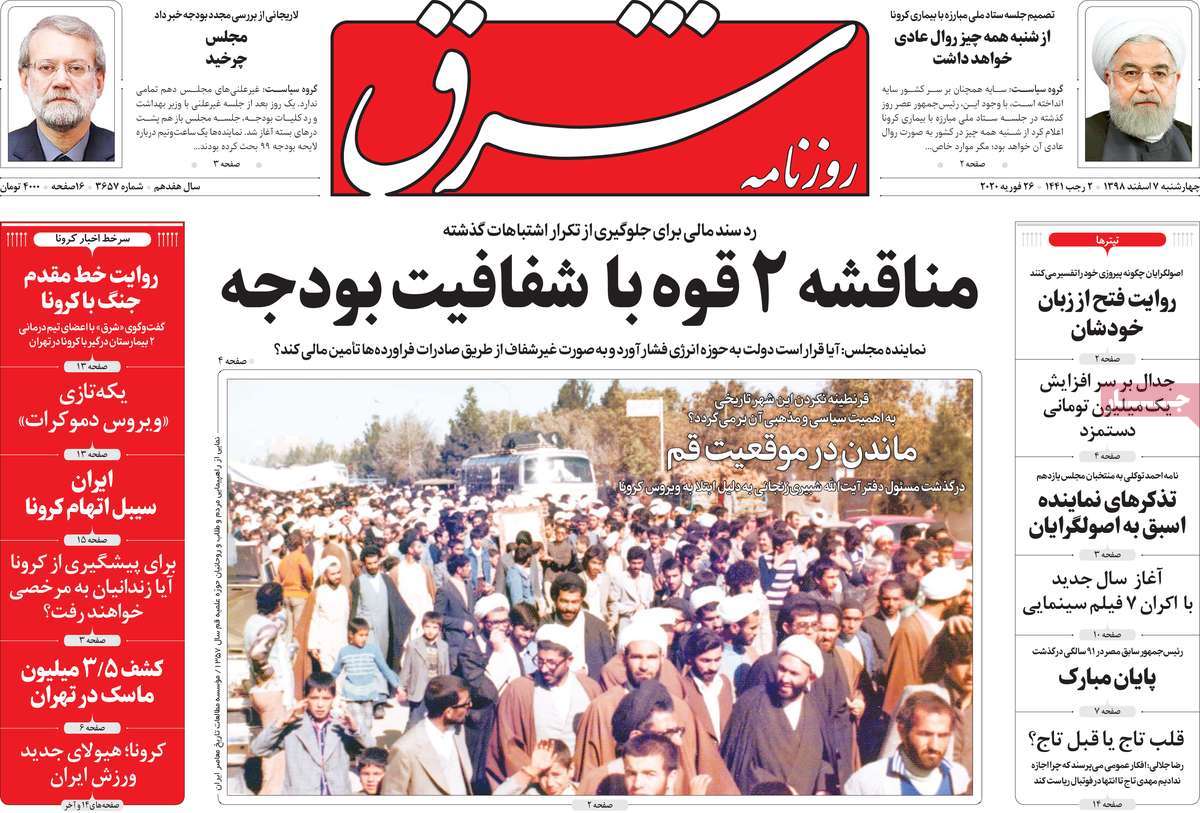
Shargh:

1- Dream of Seeing an Anti-Israel Jew in White House If Sanders Win

2- World Quarantines Its Cities, While Iran Vows Return to Normalcy

A Look at Iranian Newspaper Front Pages on February 27

Coronavirus Infection Rate in Iran to Drop in Coming Weeks: Expert

In an article, Payman Salamati has referred to memoirs by renowned American epidemiologist Larry Brilliant, who was the brain behind the eradication of smallpox in the world.

In his memoirs, Brilliant speaks of the time when the H1N1 virus had broken out. The American specialist says he asked top epidemiologist what would happen if the disease would become a pandemic. In response, they answered that around one billion people would be infected and some 165 million would die.

Salamati mentioned this brief extract to highlight people’s concern over the coronavirus outbreak in Iran. However, he said he personally believes the disease will be controlled in Iran soon.

“In recent days, we have witnessed a new disease outbreak in the country, which has caused great panic among our fellow countrymen. For different reasons, I believe that this disease will be controlled in the coming weeks, and the infections and fatality rate from the disease will decrease,” he said.

He refers to a February 24, 2020 report by the World Health Organization to support his claim.

Salamati says the report shows the rate of coronavirus infection in China slowed down after 3 to 4 weeks.

“The report says no major changes happened to the genome of the virus in that [3-to-4-week] period,” says Salamati.

“All the above points show we are facing a similar situation in the country, and there are no worries about a possible genetic change to the virus, which is a dangerous and uncontrollable forms of epidemics,” Salamati added.

He also referred to good cooperation between medical personnel, the health ministry and people as another reason why he believes the rate of coronavirus infection in the country will fall in the coming weeks.

He said doctors and medical personnel are trying their best and people are observing hygiene rules, which contributes heavily to controlling the disease.

Salamati further said it would be a good idea to create panic among people, so that they will fully abide by hygienic principles.

“Some doctors and experts believe when it comes to medical-hygienic issues, people should have deep fears, so that they will comply with instructions,” he said.

The expert then underscored that experience shows epidemics in recent years have all finally been controlled.

“Since the beginning of this century, the H1N1 virus, Severe Acute Respiratory Syndrome (SARS) and Middle East Respiratory Syndrome (MERS) went through a trend for some time and then were brought under control,” he added.

Given the above-mentioned points, he says, the rate of infection is expected to drop soon.


Related Articles:

Iran to Use Get E-Bikes for Its Mail Service

Iran to Use Get E-Bikes for Its Mail Service

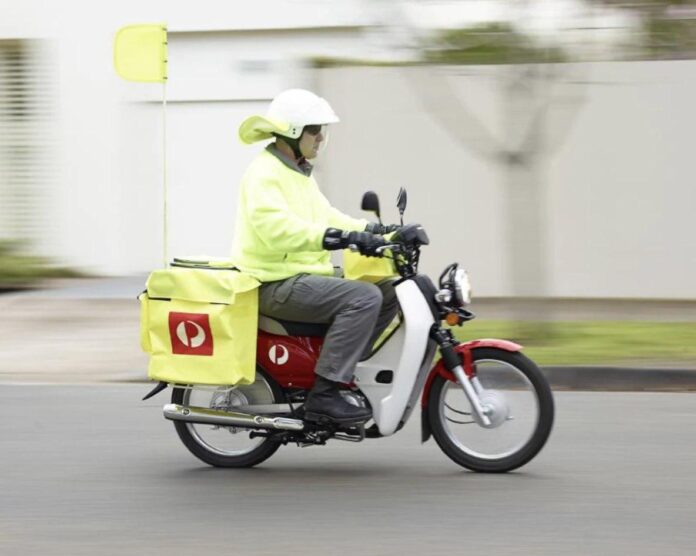
Under a quadripartite agreement signed among the Iranian Vice Presidency for Science and Technology’s Center for the Promotion of Space Technologies and Advanced Transportation, the Traffic and Transportation Organization of Tehran Municipality, the Islamic Republic of Iran Post, and a domestic manufacturer of electric motorcycles, the Iranian mailmen are going to receive around 3,000 e-bikes.

In the first phase of the plan, a total of 50 electric motorcycles will be manufactured by the local factory.

In comments at the signing ceremony, secretary of the Iranian Vice Presidency for Science and Technology’s Center for the Promotion of Space Technologies and Advanced Transportation, Manoochehr Manteqi, said the figures show that motorcycles, mostly driven by carbureted engines, are to blame for 18 percent of air pollution in Tehran.
He also noted that implementation of a major plan to replace 300,000 gas motorcycles with the electric ones in capital Tehran is expected to reduce air pollutants by nearly 1.5 million tonnes in the metropolis.

Iran to Electrify Motorcycles to Reduce Air Pollution: Minister

Manteqi explained that the four-party agreement has been signed in an effort to promote and institutionalize the use of electric means of transportation, support the local knowledge-based companies in manufacturing homegrown electric motor vehicles, and develop the infrastructures for the utilization of e-bikes.

The Iranian motorcycle manufacturer is going to make 50 e-bikes in a pilot project at the first stage of the plan. If the other parties to the agreement are satisfied with the quality and efficiency of the e-bikes and the time of delivery of the orders, a separate contract will be signed for the production of 2,950 other electric motorcycles, provided that the necessary funding is received.

European Parties to JCPOA Willing to Save It: Araqchi

Azerbaijan-Armenia Peace Deal Based on Iran’s Proposal: Araqchi

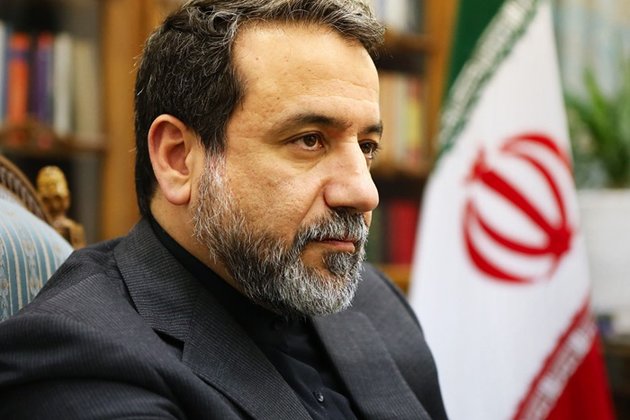
Araqchi made the remarks after the 15th meeting of the JCPOA’s Joint Commission in Vienna aimed at finding ways to save the agreement.

“All remaining participants in the JCPOA confirmed once again the importance of this deal and their support for the deal, and their efforts, their willingness to protect this deal to make sure that the JCPOA would stay alive,” Araqchi told reporters.

“We are still open to any initiative, which can ensure Iran’s [benefits] of the JCPOA and we are fully prepared to reverse the steps we have taken so far in return for the fulfillment of the other sides’ commitments in the JCPOA,” he added.

He said that during the Wednesday meeting the Europeans put forward more serious and pragmatic ideas to reinforce INSTEX, a non-dollar direct payment channel — officially called the Instrument in Support of Trade Exchanges, adding that INSTEX has almost reached an operational stage.

“There is a willingness to strengthen INSTEX so it can cover major parts of Iran-EU trade. We discussed about different ways to strengthen this mechanism,” he noted.

The three European signatories to the JCPOA — the UK, France and Germany — unveiled late in January 2019 the long-awaited mechanism meant to safeguard their trade ties with Tehran following the US withdrawal from the nuclear deal and in the face of the harsh sanctions imposed by the United States against the Islamic Republic.

In its initial stage, INSTEX was supposed to facilitate trade of humanitarian goods such as medicine, food and medical devices, and later be expanded to cover other areas of trade, including Iran’s oil sales. However, it has not resulted in any trade deals so far.

In 2018, the US left the JCPOA and returned its sanctions against Iran in defiance of the agreement’s multilateral nature and the fact that it had been ratified by the United Nations Security Council.

Washington then began forcing other parties to toe its sanctions line. The three European signatories to the deal have stopped their transactions with the Islamic Republic, bowing under the pressure.

In response to the US moves, Tehran has so far rowed back on its nuclear commitments four times in compliance with Articles 26 and 36 of the JCPOA, but stressed that its retaliatory measures will be reversible as soon as Europe finds practical ways to shield the mutual trade from the US sanctions.

On January 5, Iran took a final step in reducing its commitments, and said it would no longer observe any operational limitations on its nuclear industry, whether concerning the capacity and level of uranium enrichment, the volume of stockpiled uranium or research and development.

Araqchi said that Iran was still keen and making efforts to keep the JCPOA alive but reaffirmed that Tehran would continue to suspend its commitments under the JCPOA unless its economic demands were met.

The Islamic Republic stressed in every meeting and also this meeting that without its demands being met in economic sectors Iran’s full return to the JCPOA is not possible, he said, adding that nevertheless, Iran’s intention is still to keep the JCPOA  and make efforts to this goal.

Helga Schmid, secretary general of the European Union’s External Action Service (EEAS), said on Twitter that the JCPOA’s Joint Commission meeting on Wednesday “concluded with substantial discussions on next steps.”

Schmid added, “As a follow up to the statement by @JosepBorellF (https://bit.ly/2v98z5r), participants reviewed experts level discussions which have taken place in different formats in past weeks.”

The Joint Commission was chaired by Schmid on behalf of EU High Representative Josep Borrell.

After the meeting, a statement by Borrell was also issued. It said that the meeting addressed both Iran’s steps in reducing its nuclear commitments under the JCPOA, as well as longstanding concerns, recognized by all participants, regarding the impact of the US withdrawal from the agreement and its re-imposition of sanctions.

“Participants also acknowledged that the re-imposition of US sanctions did not allow Iran to reap the full benefits arising from sanctions-lifting,” read part of the statement, adding, “All participants reaffirmed the importance of preserving the agreement recalling that it is a key element of the global nuclear non-proliferation architecture.”

It said that participants reviewed expert-level discussions which have taken place in different formats in past weeks, both as regards nuclear implementation issues and the wider impacts of the withdrawal of the US from the JCPOA and its re-imposition of sanctions and benefits arising from sanctions-lifting.

Dispute mechanism launch no solution to woes: China

Meanwhile, Permanent Representative of China in Vienna Wang Qun said at the end of the JCPOA’s Joint Commission meeting that the launch of the dispute resolution mechanism enshrined in the Iran nuclear deal is not the right way to respond to the challenges of the deal and thus is not on the agenda of the meeting.

“The re-imposition of sanctions or the launch of the [dispute resolution] mechanism are not answers to the challenges standing before us.

The participants of the meeting agree that this must not be included on the agenda. Yes, there are different points of view, but it is not on the agenda,” Wang said.

Wang added that the participants of the meeting reaffirmed their commitment to the JCPOA and underlined the need to uphold its tenets.

Last month, the three European signatories to the Iran deal accused Iran of violating the terms of the accord and announced that they plan to trigger a dispute settlement mechanism that could eventually restore UN Security Council sanctions against the Islamic Republic.

Araqchi said on January 19 that the three European signatories to the Iran nuclear deal cannot logically activate the dispute settlement mechanism, because Iran has already done that.

“We are now engaged in complicated legal discussions and Russia and China are of the same opinion. It was Iran that first resorted to Article 36 [of the JCPOA] and completed its application. Therefore, logically, legally and even politically speaking, the European countries cannot take advantage of this article, because we have already done that and applied its mechanism in full,” Araqchi said.

WHO, Foreign Ambassadors Briefed on Iran’s Battle with COVID-19

WHO, Foreign Ambassadors Briefed on Iran’s Battle with COVID-19

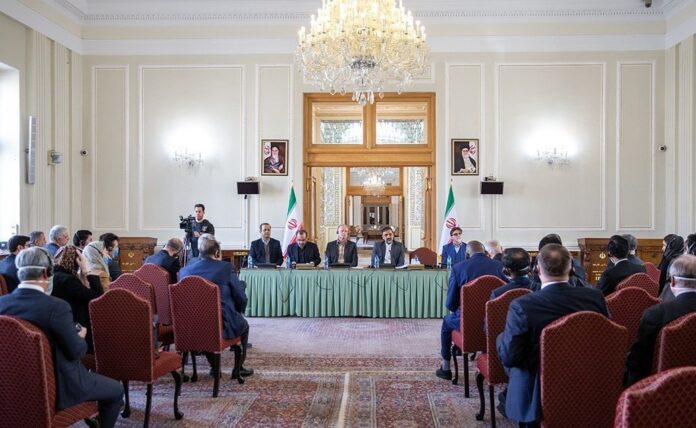
The meeting was held at the Iranian Foreign Ministry on Wednesday evening, attended by the WHO representative, the ambassadors of foreign countries residing in Tehran, and the Iranian Health Ministry authorities.

The participants in the meeting were briefed on the latest preventive and therapeutic measures that Iran has taken amid the outbreak of coronavirus.

In comments at the gathering, the WHO representative said Iran has the necessary fundamental capacities to address the disease.

The Iranian Health Ministry officials also provided information on the latest status of the battle with the coronavirus epidemic in the country, and reaffirmed Iran’s commitment to the internationally-recognized health regulations. The Health Ministry authorities also emphasized that Iran enjoys the whole necessary technical and specialized capabilities to counter the coronavirus.

Elsewhere in the meeting, the WHO representative hailed Iran’s capabilities and performance as a successful and exemplary example in the region and the world.

Considering Iran’s transparent measures in this regard and the sufficient and effective information provided about the disease, the health authorities, the relevant officials and the WHO representative demanded that the international community avoid imposing strict policies beyond the international standards and regulations, particularly in the trade interaction sphere.

In the meeting,the Iranian Health Ministry also presented a list of the necessary supplies for controlling, curing and containing the coronavirus disease to the representatives of the countries willing to provide assistance.

The participants also described the international cooperation and maintenance of medical stances on the problem of coronavirus as key factors in the fight against the disease.

At the conclusion of the meeting, the ambassadors asked the Iranian authorities a series of questions.

Iran Blasts US Breach of UNSC Resolutions

Iran Blasts US Breach of UNSC Resolutions

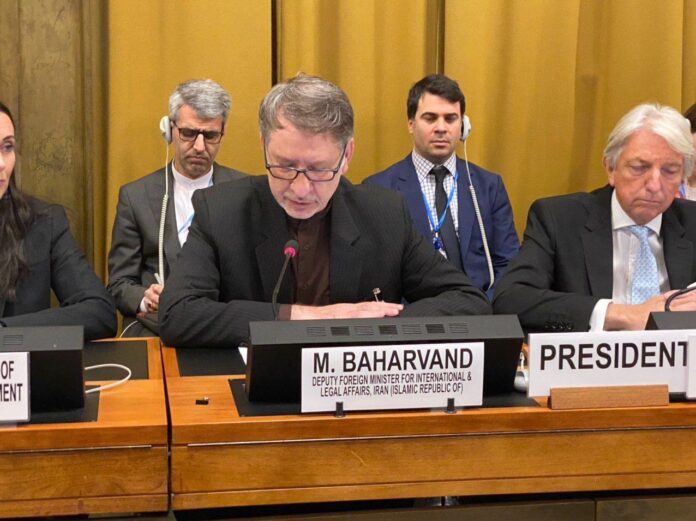
In an address to the UN Conference on Disarmament, held in Geneva on Wednesday, the Iranian Deputy Foreign Minister for International and Legal Affairs strongly protested against the US’ unilateral policies, its failure to honour the JCPOA commitments, and the US government’s vicious measures.

The US is a state that, as a permanent member of the Security Council, is violating a UNSC resolution, forces the other countries to violate that resolution, and, at the same time, criticizes Iran for not adhering to the very resolution, Baharvand added.

In response to comments by Saudi Arabia’s Foreign Minister who had criticized Iran for helping the people of Yemen, the Iranian Deputy Foreign Minister for International and Legal Affairs said, “This is a war that you (Saudis) have started and still continue with it.”

Baharvand also said in reaction to the Saudi Foreign Minister’s allegations, “Do not blame others for your own mistakes. The Islamic Republic of Iran has always supported negotiations for ending this war. You (Saudis) have no right to treat the people of the region arbitrarily and expect them not to respond to you.”

Iran Government Issues Official Statement on FATF Blacklisting

https://ifpnews.com/iran-government-issues-official-statement-on-fatf-blacklisting

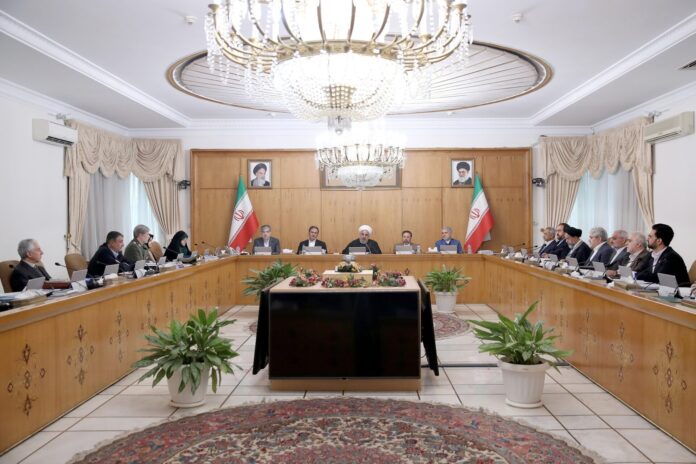
Following is the text of the statement, released by the Iranian administration at a Wednesday session of the cabinet:

“1. Iran’s anti-terrorism policy is based upon the justice-seeking and peaceful nature of the Islamic Republic of Iran’s establishment, and is being seriously enforced in all arenas, including the fight against financing of terrorism, and our motivation for pursuing all measures against money-laundering and financing of terrorism are demanded by our people and our domestic laws and regulations which have been ratified during various terms of the Parliament and the Administration.

2. Accordingly, we have also welcomed cooperation with the other countries in this field, and have approved the implementation of the regulations accepted by the world countries and the international standards in this regard which have been in line with our internal laws and regulations and for the country’s benefit.

3. Placing Iran in the list of non-cooperative countries (blacklist), either during the tenth administration or in this term, has undoubtedly taken place with the provocations and political motivations from certain ill-wishers of Iran. However, Iran’s technical and expert handling under the 11th administration, which resulted in the confirmation of Iran’s action plan, foiled the provocations in that stage.

4. Since Iran has always believed in fighting against money-laundering and against financing of terrorism, the road for cooperation with the FATF and the agreement on implementing the work plan had been ratified since the tenth Administration with the efforts by the Supreme National Security Council and the Ministry of Economic Affairs and Finance, and had been put on the Administration’s agenda.

5. Following the change of Administration and the activation of the exit from sanctions diplomacy, the Administration was actively present in this international body (FATF) as well, and proposed its activities in the fight against money-laundering and sponsoring of terrorism, which led to a change in the status of Iran and gave a two-year time limit on international interaction.

6. In this interval, the Administration carried out whatever possible in the action plan that was within the purview of the executive power, and also adopted and ratified four bills, which were among the very important items of the “action plan”, and submitted them to the Parliament. The Parliament also ratified those bills with some modifications. The Guardian Council sent back one of the bills, namely the bill on countering the financing of terrorism (CFT), to the Parliament after making a number of objections. Ultimately, the case was referred to the Expediency Council as the Parliament was not convinced of the reason for putting that important bill on hold; and there, this major issue has been shelved after a year since being put forward, because the (Expediency) Council has not made a decision on it.

7. Unfortunately, the other important bill, namely the bill on joining the anti-money laundering convention, which had been practically finalized after the Parliament addressed the objections raised by the Guardian Council, was put on the (Expediency) Council’s agenda without any disagreement between the Parliament and the Guardian Council, but this bill has been also shelved without any decision after one year.

8. The Administration has held and still holds the belief that while the ill-wishers of Iran, spearheaded by the US government, are plotting to recruit allies to once again form a front against Iran, we must double our efforts to express the law-abiding, disciplined and anti-terrorism image of Iran; and giving the enemies any wrong pretext would help their anti-Iranian plots.

9. The Administration strongly believes that the existing obstacles to the ratification of those two bills must be removed to deny the ill-wishers of Iran an excuse. We will pursue our measures in this regard and will do our utmost to settle the issue, improve the conditions and prevent further harms to the national interests and intensification of the costs of sanctions on the lives of people.”

A Look at Iranian Newspaper Front Pages on February 26

Iran Newspaper Headlines

Iran Newspapers

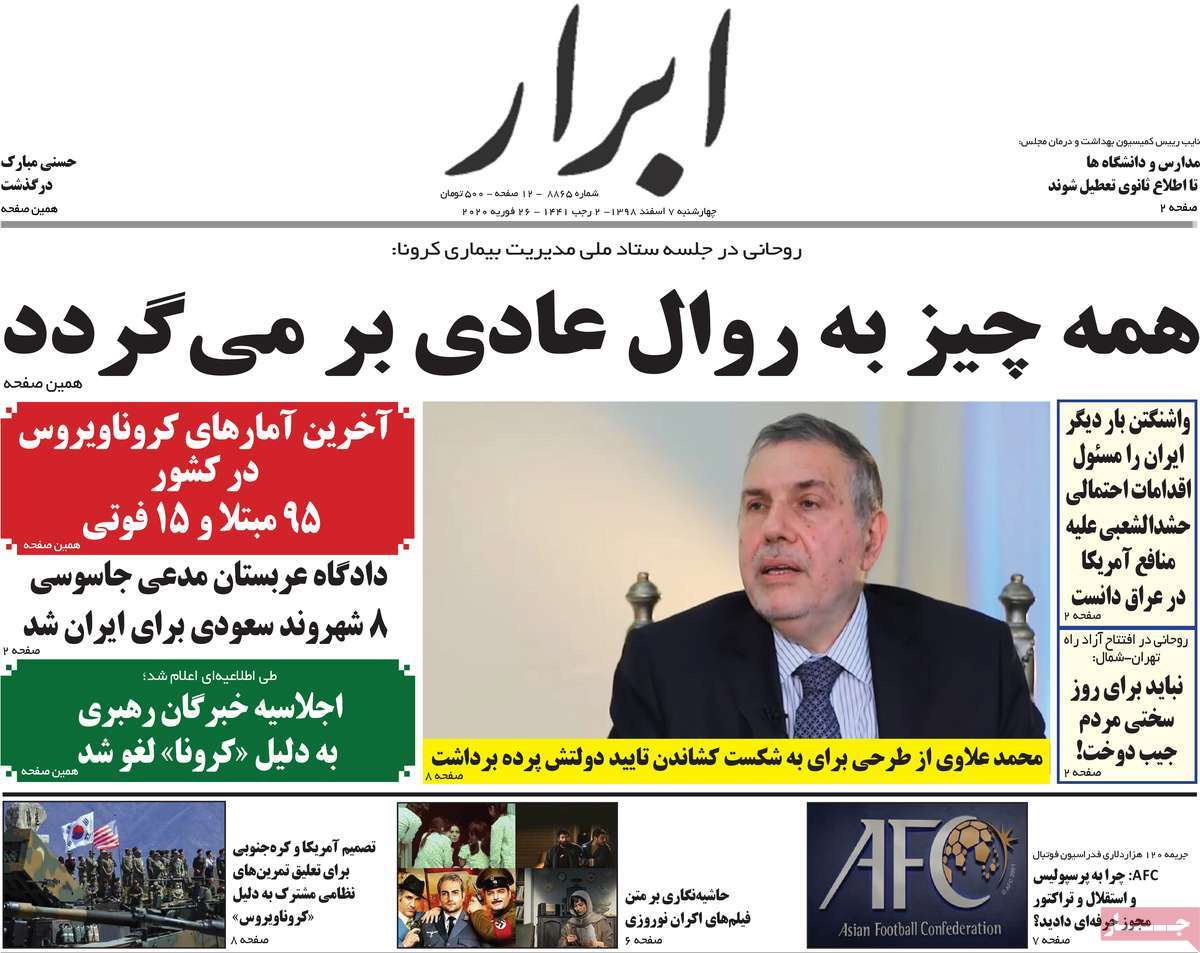
Abrar:
1- Rouhani: Everything Will Get Back to Normal
2- Assembly of Experts Calls Off Meeting over Corona
3- Hosni Mubarak Dies
4- Saudi Court Claims 8 Saudi Citizens Spied for Iran

A Look at Iranian Newspaper Front Pages on February 26


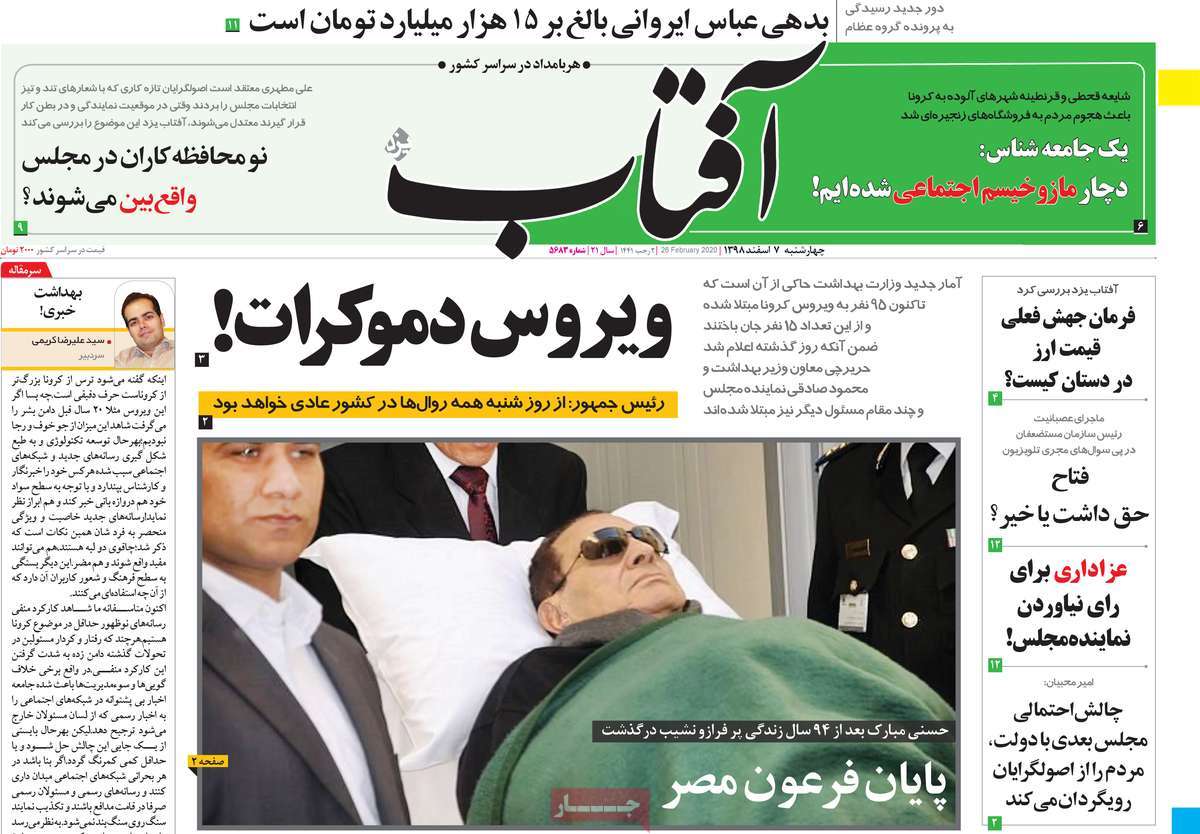
Aftab-e Yazd:
1- Democratic Virus!
2- Rouhani: Normalcy Will Return to Iran as of Saturday
3- End of Egypt’s Pharaoh: Mubarak Dies at 94

A Look at Iranian Newspaper Front Pages on February 26


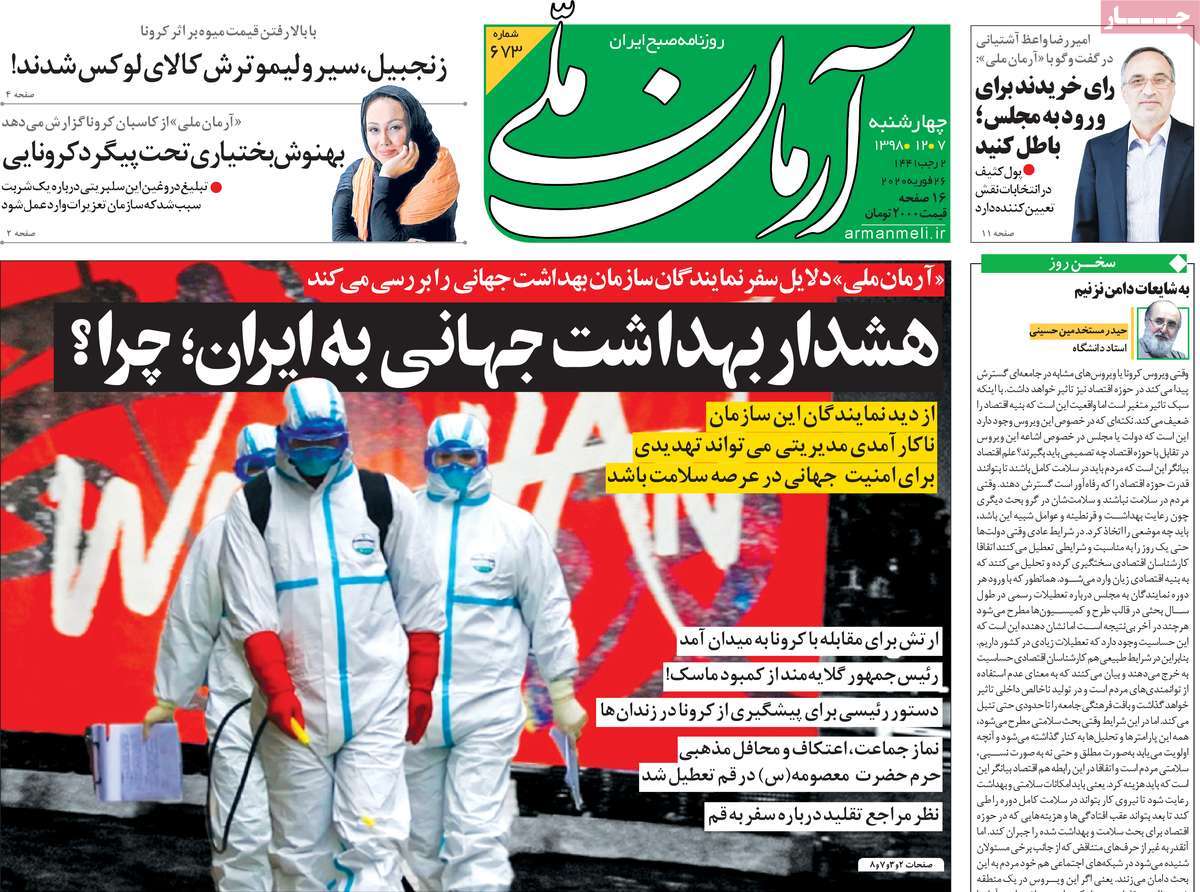
Arman-e Melli:
1- WHO Warns Iran over Mismanagement of Corona Outbreak
2- Army Comes to Help Fight Corona
3- Rouhani Complains about Shortage of Mask

A Look at Iranian Newspaper Front Pages on February 26


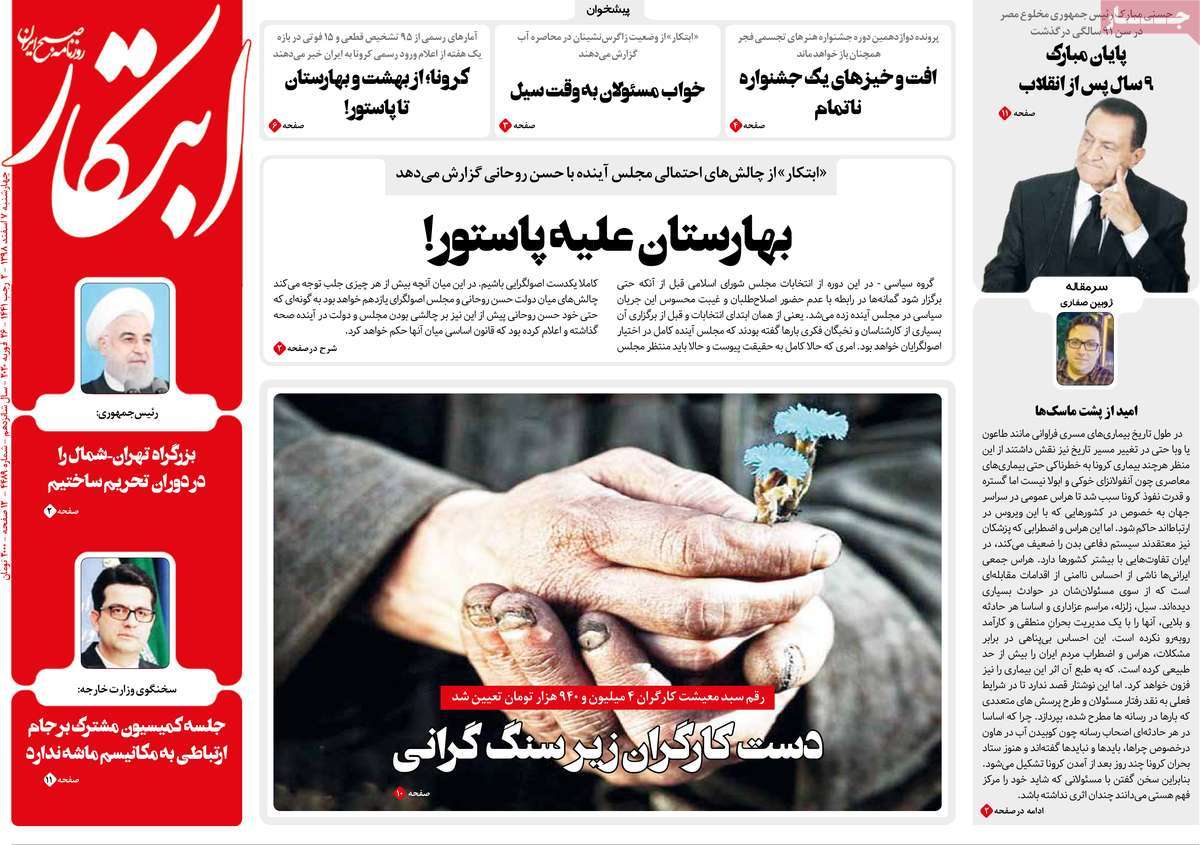
Ebtekar:
1- Rouhani: We Built Highway Connecting Tehran to Northern Iran at Time of Sanctions
2- Foreign Ministry Spokesman: JCPOA Joint Commission Meeting Has Nothing to Do with Dispute Mechanism

A Look at Iranian Newspaper Front Pages on February 26


Etemad:
1- Rouhani: People Will Endure Difficulties
2- President: Life Will Get Back to Normal as of Saturday
3- Democracy in Corona Style: Number of Corona Patients Growing among People, Officials Alike

A Look at Iranian Newspaper Front Pages on February 26


Kayhan:
1- Danger of Being Obsessed with Coronavirus Threatening Iran’s Management, Economy
2- Bloody Clash in India after Trump’s Visit Kills 7, Wounds 150
3- Iranian Doctors, Nurses in Frontline of War on Coronavirus

A Look at Iranian Newspaper Front Pages on February 26


Mardom Salari:
1- Rouhani: People Shouldn’t Face Any Difficulty Finding Mask
2- Europe No Other Reliable for Saving JCPOA: 15th Joint Commission Meeting to Be Held in Vienna

A Look at Iranian Newspaper Front Pages on February 26


Sazandegi:
1- Quarantine: Yes or No?
* Can Quarantine of Cities Prevent Spread of Coronavirus?
2- Commander of Construction Bids Farewell: Why Mahathir Resigned?

A Look at Iranian Newspaper Front Pages on February 26


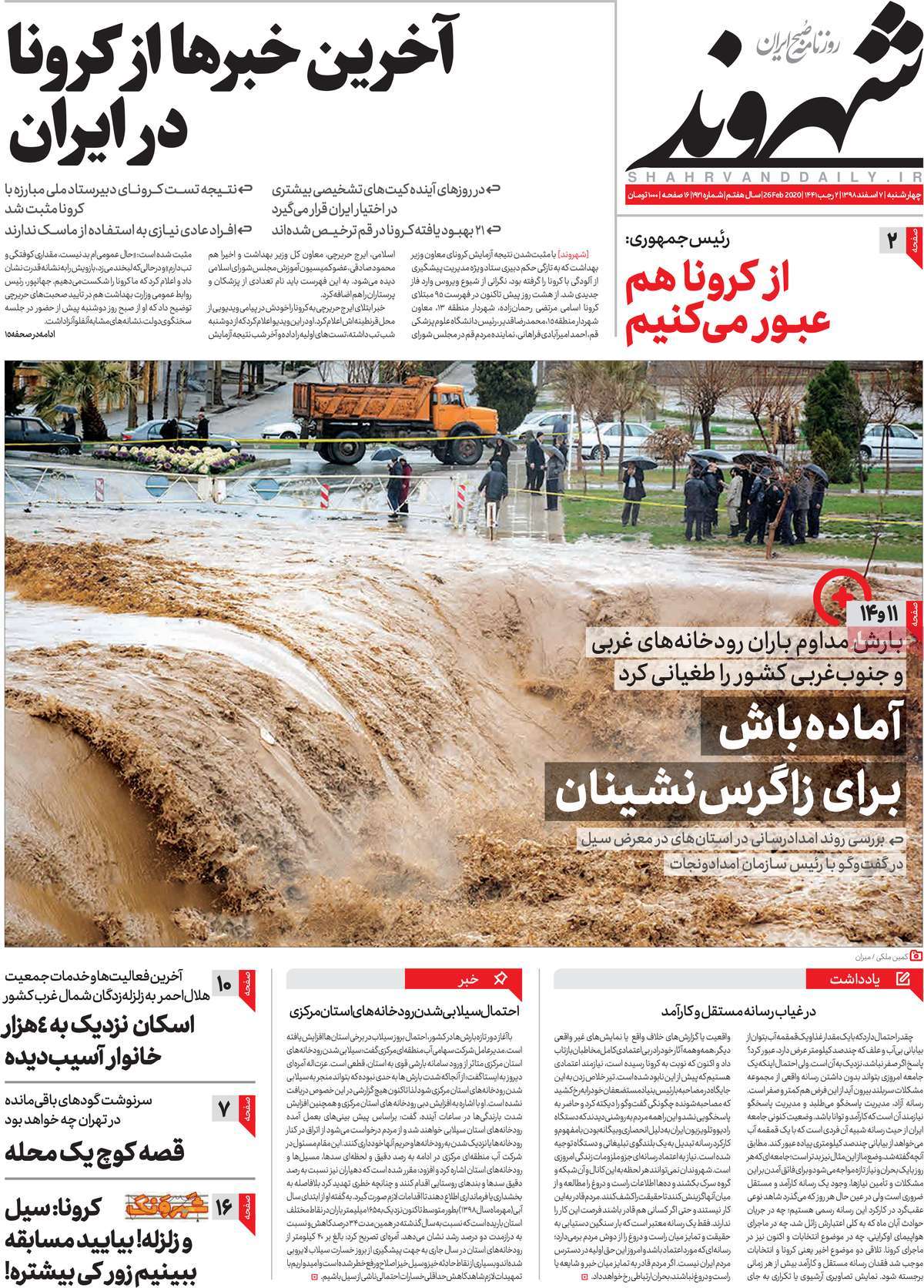
Shahrvand:
1- Rouhani: We’ll Overcome Coronavirus as Well
2- Latest News about Coronavirus in Iran
* High-Ranking Health Official Tested Positive for Coronavirus

A Look at Iranian Newspaper Front Pages on February 26


Shargh:
1- Why Wasn’t Qom Quarantined?
2- Iran Target of Corona Accusations
3- End of Mubarak: Egyptian Ex-President Dies

A Look at Iranian Newspaper Front Pages on February 26

Coronavirus Kills 19 in Iran: Health Ministry

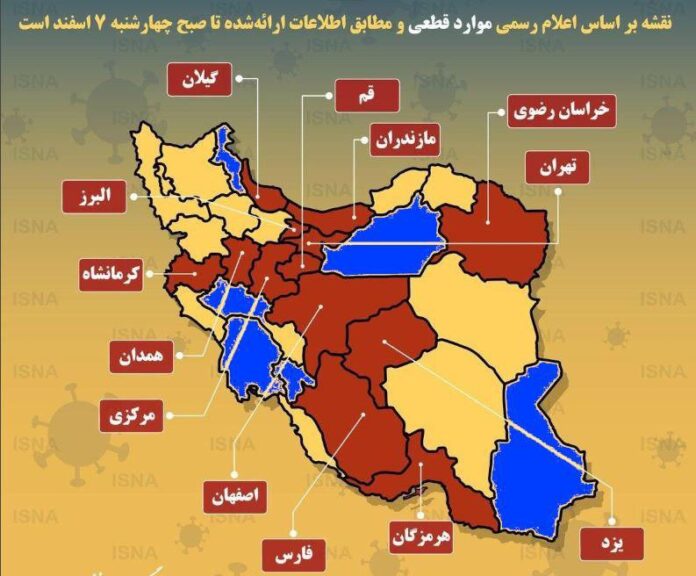
Coronaviruse in Iran porivinces
A map of Iranian provinces where people have tested positive for the novel coronavirus. The red ones were the ones confirmed until Feb. 25, and the blue ones are the new provinces affected by the virus, announced by the Health Ministry on Feb. 26, 2020

The Health Ministry spokesman, Kianoush Jahanpour, told the state TV on Wednesday that 44 new cases of infection have been confirmed during the past 24 hours, increasing the total number of confirmed Coronavirus cases to 139.

Four people among the 44 new cases have died, according to the spokesman.

The new cases included 15 infections in Qom, nine in Gilan, four in Tehran, one in Markazi, three in Khuzestan, two in Sistan-Baluchestan, one in Kermanshah, one in Ardabil, one in Mazandaran, one in Lorestan, two in Fars, one in Semnan, two in Kohgiluyeh and one in Hormozgan.

That means the majority of Iranian provinces, from south to north and from west to east, are currently grappling with the virus.

2 Herbal Teas to Protect Yourself against Coronavirus

2 Herbal Teas to Protect Yourself against Coronavirus

An official at the Health Ministry’s Iranian Medicine Office says the expert recommendations made by the office and the other specialists in traditional medicine for containing the coronavirus should be taken into account.

In an interview with ISNA, Dr. Alireza Abbasian provided the recipe for two herbal teas which he said will boost the body’s immune system.

The physician, however, noted that no approach would be more useful to combat the contagious diseases than realizing the importance of personal hygiene.

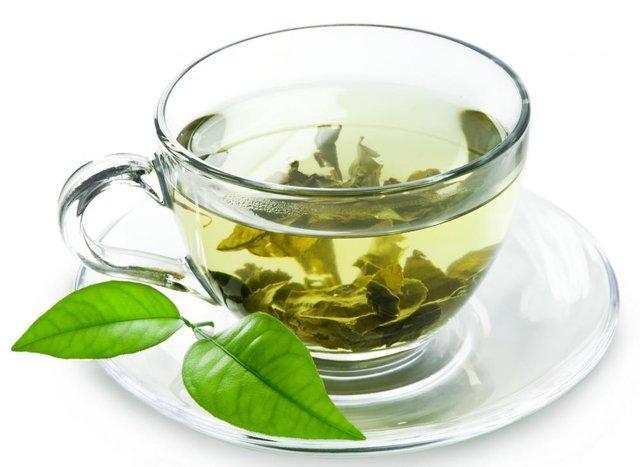
Two easy-to-make herbal teas that could be prepared at home to strengthen the body’s defence amid the outbreak of COVID-19 include seeds of Lallemantia, Plantago major, thyme, and liquorice, he explained.

The first drink, consisting of steeped seeds of Lallemantia and Plantago major, could be drunk with some rosewater and saffron.

To make this herbal tea, you need to pour a teaspoonful of Lallemantia seeds and a teaspoon of Plantago major seeds into a glass three-quarters full of water and a quarter filled with rose water. Wait for half an hour and let the seeds become gooey and gelatinous. Add a pinch of ground saffron to the mixture and stir it. Your drink is ready. You can sip it after adding some natural honey. A full glass of such drink could be taken up to three times a day for the adults.

The recipe for the other herbal tea is as follows:

Put a spoonful of thyme leaves, a teaspoon of powdered liquorice root, and five jujube fruits in a teapot and pour a glass of boiling water into it. Stew the mixture for 15 minutes over a low heat. Drink the tea warm after pouring it into a sieve. Adults can drink this tea twice a day.

Dr. Abbasian finally recommended that people with high blood pressure should refrain from having liquorice more than 3 or 4 times a week.

He also added that the children over the age of 7 can take those herbal teas half the amount mentioned in the recipe, while the kids between 2 and 7 can drink as much as a third or fourth of that amount.

The infants under the age of 2 can take only two to four spoonfuls of the mixtures a day, he noted.