Friday, January 2, 2026
Home Blog Page 2868

Iran FM Lauds China for Help in Coronavirus Fight

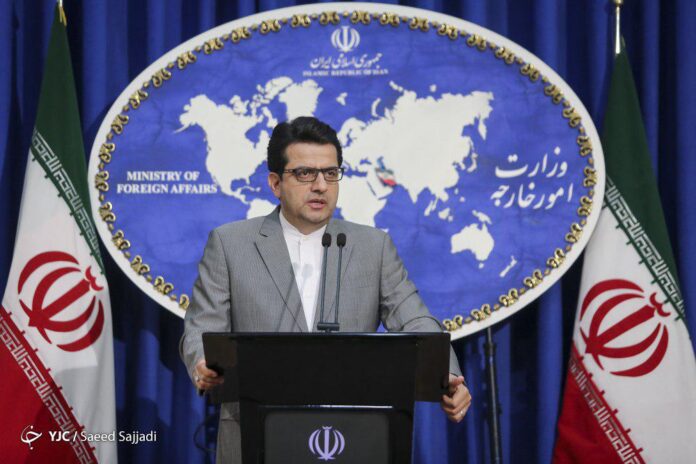
In a post on his Twitter account on Thursday, written in the Chinese language, the top Iranian diplomat gave details of the subjects he has discussed with his Chinese counterpart Wang Yi in a recent telephone conversation.

“I am very happy to talk to my old friend, Wang Yi, Chinese State Councilor and Foreign Minister again. We exchanged views on issues of common interest, such as fighting the new coronavirus epidemic, deepening the comprehensive strategic partnership between the two countries, and the peace process in Afghanistan,” Zarif noted.

The Iranian foreign minister also highlighted China’s assistance for Iran in dealing with COVID-19, noting, “I thank China for providing Iran with anti-epidemic materials and sending medical experts, condemning the continued illegal sanctions by the United States that seriously hindered Iran’s efforts to fight the epidemic.”

China has so far provided Iran with several shipments of medical and humanitarian supplies after the outbreak of coronavirus.

Coronavirus online test
If you are worried that you may have contracted the Coronavirus, take this test right now.

Iran Reports Lowest Number of COVID-19 Daily Deaths in 30 Days

Some 340,000 Iranians Recover from COVID-19: Ministry

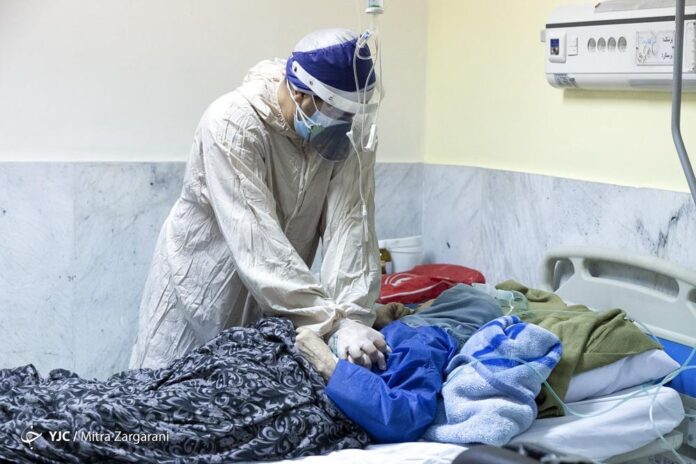
Speaking at a daily press conference on Thursday, Iran’s Health Ministry Spokesperson Kianoosh Jahanpoor put the official death toll from the coronavirus in Iran at 4,869, saying the disease has taken the lives of only 92 patients over the past 24 hours, down from 94 a day earlier, and marking the lowest number of deaths in more than a month ago.

He also noted that at least 52,229 positive cases have recovered from the coronavirus infection so far and have been discharged from the hospitals across the country.

The number of people tested positive for COVID-19 infection in Iran has risen to 77,995 following the detection of 1,606 new cases since Wednesday noon, the spokesman added.

Among the patients undergoing treatment in the medical centres at present, 3,594 ones have critical health conditions because of more severe infection, Jahanpoor stated.

He finally noted that 310,340 coronavirus diagnostic tests have been carried out in Iran as of Thursday.

The number of people infected with COVID-19 across the world has surpassed 2,096,000 and the death toll exceeded 135,000.

A Look at Iranian Newspaper Front Pages on April 16

Iranian Newspapers

Iranian Newspapers

Abrar Newspaper:

1- Iraqi PM-Designate: I’ve Made My Picks for Cabinet
2- Gov’t Spokesman: Not Even a Single Dollar Is Missing
3- Health Ministry: Number of COVID-19 Fatalities Decreased

A Look at Iranian Newspaper Front Pages on April 16


Abrar-e Eqtesadi Newspaper:

1- World Economy Shrinks by 3 Percent: IMF
2- Iran Had $14.5 Billion Worth of Trade during Corona Outbreak

A Look at Iranian Newspaper Front Pages on April 16


Aftab-e Yazd Newspaper:

1- Health Ministry Obliges Businesses to Provide Insurance for Workers Who Contract COVID-19
2- Buts and Ifs of Getting Back $1.6 Billion Worth of Iranian Assets Released in Luxembourg

A Look at Iranian Newspaper Front Pages on April 16


Ebtekar Newspaper:

1- Trump’s Corona War with WHO: US Defunds UN Body
2- IMF Says It Takes Time to Assess Iran’s Loan Request
3- Democrats United to Save US: Obama Endorses Biden’s Candidacy
4- Corona, Oil, and Geopolitical Battle [Editorial]

A Look at Iranian Newspaper Front Pages on April 16


Etemad Newspaper:

1- Trump’s New Propaganda Campaign: US Defunds WHO
2- Rouhani Categorically Rejects Allegations Billions of Dollars Missing in His Gov’t

A Look at Iranian Newspaper Front Pages on April 16


Ettela’at Newspaper:

1- No Ceremony to Be Held This Year on Anniv. of Imam Khomeini’s Demise
2- Zarif: World Tasting US’ Bullying
3- Continued Decrease in Number of Infections, Fatalities Caused by COVID-19

A Look at Iranian Newspaper Front Pages on April 16


Jame Jam Newspaper:

1- Golden Chance for Iran to Turn into Petrol Exporter in Days When People’s Consumption Halved

A Look at Iranian Newspaper Front Pages on April 16


Kayhan Newspaper:

1- Al-Kazemi: US Destroyed Iraq
2- Judiciary Chief Orders Tehran Prosecutor to Give Special Attention to Fate of $4.8 Billion Worth of State Funds

A Look at Iranian Newspaper Front Pages on April 16


Vatan-e Emrooz Newspaper:

1- Corona-Detector: IRGC Chief Unveils New Smart Device Capable of Detecting Coronavirus
2- In Controversial Decision, US President Defunds WHO

A Look at Iranian Newspaper Front Pages on April 16

Iran, Other UNWTO Members Discuss Ways to Revitalize Tourism Industry

Iran, Other UNWTO Members Discuss Ways to Revitalize Tourism Industry

The Iranian deputy minister was one of the participants in the UNWTO video conference on “Policies for an Inclusive Recovery in Global Tourism”.

Chaired by Secretary-General of the World Tourism Organization Zurab Pololikashvili, the webinar was attended by more than 240 participants, including officials of the UNWTO, ministers and ranking officials from the member states of the UN specialized agency, and the policy-makers and other figures in the tourism sector.

Considering the outbreak of coronavirus pandemic and its direct impacts on the world economy, particularly the tourism industry, the World Tourism Organization has devised plans to advance immediate response and find common executive policies in the countries affected by the contagious disease.

The participants in the recent webinar discussed various plans and decided that the World Tourism Organization should publish a compilation of the necessary policies and recommendations and provide it for the Member States.

The Iranian Ministry of Cultural Heritage, Tourism and Handicrafts has already submitted a detailed report on the impacts of the novel coronavirus on the country’s tourism industry, the measures that Iran has adopted and the plans that it is implementing to handle the crisis, as well as the strategies that the ministry has developed for the post-coronavirus era.

During the webinar, the Iranian deputy minister of Cultural Heritage, Tourism and Handicrafts highlighted the main features of the report which has been officially given to the World Tourism Organization.

Iran Struggling with Virus of Sanctions amid COVID-19 Outbreak: Rouhani

Iran Struggling with Virus of Sanctions amid COVID-19 Outbreak: Rouhani

In comments at a meeting on Thursday, held to inaugurate four water and electricity projects in the province of Tehran, President Rouhani said Iran is faced with two viruses in the current year, namely the COVID-19 infection and the foreign sanctions.

“We will do our best to reduce the difficulties for people, so that our people could earn a livelihood in a relatively proper manner although it is a tough year. Nonetheless this year is a tough year for the entire world, and it is more difficult for us,” he noted.

The president then gave an assurance that all members of the administration and all companies and institutions from the state-run and the private sectors have been working uninterruptedly and will continue their activities in compliance with the health protocols amid the outbreak of coronavirus.

President Rouhani finally expressed hope that people would work in cooperation, coordination and solidarity to contribute to the domestic production and development as the country is fighting against the coronavirus and observing the health issues.

Coronavirus online test
If you are worried that you may have contracted the Coronavirus, take this test right now.

President Inaugurates Major Energy Projects in Tehran Province

President Inaugurates Major Energy Projects in Tehran Province

President Rouhani inaugurated the energy projects on Thursday via video conferencing.

The new projects include the steam section of a combined cycle power plant in Parand, the second phase of the sewage treatment plant in Eslamshahr, the first phase of the sewage treatment plant in Malard, and the sewage treatment plant of the Mehr housing project in Safadasht.

The opening of the latter project allows a population of more than 50,000 in the area to use wastewater collection system which includes 32 kilometers of sewage pipes. The new project will greatly improve the public health and the quality of groundwater.

Meanwhile, the coming into operation of the first phase of the sewage treatment plant in Malard follows an operation to lay 150 kilometers of sewage system pipes, which offers facilities to more than 235,000 residents of the region. The wastewater treated in the new plant will be provided to the industrial plants and farmlands.

The new phase of the sewage treatment plant in Eslamshahr also covers an area with 250,000 residents and includes a network with 125 kilometers of sewage system pipes.

The opening of the steam section of the combined cycle power plant in Parand is also increasing the efficiency of the power plant from 33 to 53 percent and brings the power generation capacity to 1,503 megawatts.

The new energy project will save 750 million liters of liquefied fuel per annum. Moreover, the combined cycle power plant in Parand is the first Iranian plant whose electricity will be available on the open market and will be up for trade in Iran Energy Exchange.

How Embargo on Transfer of Funds into Iran Is Hurting Iranians Abroad

How Embargo on Transfer of Funds into Iran Is Hurting Iranians Abroad

For more than a generation, sanctions applied against Iran (to say nothing of the threats of all-out war) have disproportionately hurt ordinary people.

In the 2010s, relations appeared to be turning a corner. Under the Obama administration, a historic deal was struck. Iran would begin to scale back its nuclear program, and in return, America would lift sanctions that would allow Iran to trade most goods and capital freely.

Sadly, that progress was demolished in a few short years. In the same way a bully destroys a sandcastle, Donald Trump scrapped the Iran Nuclear Deal in 2018. In February 2020, he went further, successfully arguing for Iran’s placement on the FATF blacklist (Financial Action Task Force).

These restrictions included an embargo on the transfer of funds to/from Iran. Because of this development, Iranians abroad now have assets trapped in their home country. In today’s blog, we’ll explore the pain this has caused, and whether things will change in the foreseeable future.


Trump Administration’s Tough Stance on Iran


2016 marked a sea change in American politics. Contrary to the expectations of pundits, voters opted to elect Donald Trump, a billionaire best known for being the host of NBC’s The Apprentice.

He pulled off this colossal upset by playing to a wave of populist anger in the electorate. After campaigning to the left of Secretary Clinton, he morphed into a typical establishment Republican once in office.

From the Iranian point-of-view, this was a disastrous development. Rather than pull back from foreign aggression as promised, Trump instead adopted an extremely hawkish stance.

After ramping up involvement in Syria, he turned his attention to Iran. With neocon advisors like John Bolton in his ear, he tore up the Iran Nuclear Deal. Then, in November 2018, the Republican-controlled Congress applied fresh sanctions that, among other things, restricted US dollar transactions.

In September 2019, the American government accused Iran of involvement in a terrorist attack on Saudi oil facilities, which Tehran denied. This event gave the Americans further reason to escalate sanctions. These restrictions further tied the hands of Iran’s central bank.

However, the worst measures taken against Iran occurred just recently. In the early days of January 2020, American officials claimed that General Qassem Soleimani, leader of the IRGC Quds Force, was actively planning terrorist attacks against US positions in Iraq.

They used this rationale to justify assassinating him while he was on a peace mission in Iraq. This act triggered a retaliatory strike by Iran on an American military base.

Following these developments and after Iran’s failure to adopt the FATF standards, the OECD placed the Islamic Republic on the FATF blacklist in late February. This designation makes it next-to-impossible for banks and regulated companies to move cash in or out of Iran. Businesses and expats have been unable to send/receive funds even through regulated money transmitters.


Because of this, a volatile economic/geopolitical situation has been made much worse.


Iranian Expats Have Lost Contact with Much of Their Life Savings


This act has vastly increased pressure on the Iranian government. As usual, though, ordinary people have suffered the most. With no legal way for capital to flow in/out of the country, Iran has plunged into a deep recession.

People are out of work or have had their wages/hours cut. The economy contracted 4.8% in 2018, and by a brutal 9.5% in 2019. Unemployment has soared to almost 16.8%. The Iranian Rial has devalued by more than half, leading to out-of-control inflation. Business owners are finding it exceedingly difficult to import goods and pay vendors outside their beleaguered nation. Worst of all, Iran’s weakened position has left it ill-equipped to deal with an outbreak of coronavirus.

However, the pain isn’t limited to those inside Iran. After the signing of the Iran Nuclear Deal, America lifted many sanctions. Foreign direct investment flooded in, which caused GDP growth to soar to 12.3% YoY in 2016.

Many investors were Iranians who had left home for greener pastures. Once Trump dropped the hammer on Iran in 2018 and 2019, many had access to their capital cut off. While exact figures are hard to come by, pre-sanction foreign direct investment in Iran totalled 2.3 billion USD in 2017.


Sanctions Unlikely to Be Lifted Anytime Soon


Given that figure, it’s not unreasonable to conclude that at least HUNDREDS of MILLIONS of dollars are stranded inside Iran. So, the question then becomes: When will US-led sanctions be lifted?

If current headlines are any guide – not anytime soon. Even as the coronavirus pandemic rips through Iran, America has refused to lift drug import sanctions. At the same time, American officials have criticized the EU for not walking in lockstep with them.

Republicans in the Executive Branch and Congress are pushing Iran to abandon their nuclear program completely. As long as Iran continues to develop atomic technology (even for peaceful purposes), sanctions will remain in place.

At present, NO discussions on this matter are taking place. Should the Democrats take the White House later this year, their administration might be open to dialogue. However, if Trump gets re-elected, that possibility will shrink to near-zero.


Coronavirus and Iranian Sanctions


Iran could end up being the epicenter of COVID-19, the notorious pandemic which is hitting globally nowadays. A big part of it is due to sanctions, which president Trump has already mentioned will not be lifted under any circumstances, even on a temporary basis.


Ordinary Iranians Pawns in Geopolitical Chess Match


The impact of these sanctions makes sense from a geopolitical point of view. As tax revenue nosedives and the population gets restive, the pressure to conform to American demands escalates.

In the end, though, everyday Iranians are the biggest losers. They are the ones getting thrown out of work and paying 3-4x more for groceries. Outside the country, expat Iranians can no longer access a large portion of their net worth. Possibly worse than everything, there could be more dead in Iran in light of American sanctions.

Until reasonable leadership returns to Washington DC, little hope exists that these parties will come together to resolve this situation.

Iran Says COVID-19 to Peak in Autumn; No Vaccine in Sight in Near Future

Deputy Health Minister Iraj Harirchi on Thursday underlined that it is not possible to develop a vaccine for COVID-19 in the coming 12 to 18 months.

The official said at least 3 billion coronavirus vaccines will be needed for one year.

He noted there is no coronavirus medication available.
“Some drugs are available on the black market and prescribed by some doctors, but those medicines are not approved by the Medical Council,” he added.

He said the coronavirus outbreak is a pandemic which has gripped the whole world.

“Since the beginning of the coronavirus outbreak, Iran had been criticized by foreign media, but later on, major industrial countries, including Italy, Britain, the US, France, Germany and even Spain were massively gripped by the coronavirus,” he said.

He said Iran ranks tenth in the world when it comes to the number of fatalities due to the coronavirus outbreak.

According to Harirchi, 21% of those who have died of COVID-19 infection have been Americans.

He said there are no shortages of ICU beds and ventilators in Iran right now.

“Unlike European countries such as Italy, Spain and Britain, in Iran it was not only the youth whose treatment was a priority; rather, all coronavirus patients are a priority for treatment. So, no one has received preferential treatment in this regard,” he said.

Elsewhere in his remarks, Harirchi said no sensitivity to heat has been observed with regards to the coronavirus.

He added the coronavirus is not sensitive to heat and grows in temperatures of between 5 to 12 degrees centigrade and humidity of 40 to 70.

He further said 26.5 percent of COVID-19 infections happen on public transport while the possibility of virus transmission in schools with over 14 million students is just half a percent.

The official also stressed the importance of observing social distancing plans.

He noted the epidemic has affected both people’s health and the nation’s economy.

So, he added, measures should also be adopted to prop up the economy.

Coronavirus online test
If you are worried that you may have contracted the Coronavirus, take this test right now.

Storytelling Helps Children Overcome Fear of Coronavirus

Storytelling Helps Children Overcome Fear of Coronavirus

Children and young adults are among the vulnerable groups who need care and support amid the outbreak of coronavirus more than ever. They are more liable to psychological harms and crises such as wars, floods, earthquakes, pandemics and contagious diseases. Such distressing events could cause psychological trauma in children, including stress, anger, anxiety, nervousness or obsession.

Therefore, it is necessary for the parents to take utmost care in talking to their children about the news and threats of the coronavirus outbreak, because the kids are unable to analyze such issues and may be left in a state of confusion and get into a panic.

Psychologists recommend that the parents should first control their own stress and anxiety before trying to ensure the psychological safety of children, because the children would feel safe by observing the calmness of their parents. For the next step, the parents should make plans to entertain the kids at home and make it clear for the children that in the current circumstance amid the outbreak of coronavirus, the situation is not appropriate for getting out of the house and playing in parks, because it is safe for them to stay home.

No doubt long-term planning to entertain children at home requires creativity and familiarity with family science. One of the most helpful factors in planning a variety of family entertainment is cultural and artistic activities, such as reading books and storytelling. Reading stories could have a more beneficial effect than the other activities, since the children are overly fond of stories and storytelling. Stories can deeply affect the spirit, language, behavior and character of children.

In an interview with Iran’s Book News Agency (IBNA), director general of the Institute for the Intellectual Development of Children and Young Adults in Iran’s southern province of Bushehr has highlighted the significant role of storytelling during the days of self-quarantine.

“Parents must take into account the psychological capacity of their children when telling and reading stories and even buying a book. We know that every child has a different sentimental atmosphere and interests. A story that is chosen for a child must be simple, concise, attractive and, above all, hopeful, because giving energy and hope to children will have many positive impacts,” Sommaye Rasouli said.

“For instance, the local and indigenous stories about the culture of people in old countries in the past and their customs and traditions, and handing down those stories from generation to generation have helped to bind the generations together. The children hearing these stories are given the opportunity to broaden their knowledge of their national identity. All of the old stories told by our grandfathers and grandmothers are full of the difficulties that end in comfort, full of the problems that are solved with wisdom and thoughtfulness, and full of the tears ending in grins; so that a happy ending strengthens the hopes for justice, eternal victory for truth, and hopefulness about future in our children,” she added.

Coronavirus Fears May Trigger Mass Hypochondria

Asked about how the way a storyteller narrates a story can attract the children, Rasouli said, “This is a very important and at the same time difficult skill. The only tool that a storyteller can utilize to attract the children and engage their interest is ‘speech’. The storyteller should talk and narrate the story with the words, should set the stage, should depict the time and location, should convey the feelings, and should of course use the body language to tell the children, the young adults and sometimes the adults a story in an attractive manner. Don’t forget that using a clear voice, speaking fluently, using the appropriate intonation, the proper and skillful use of words, and trying not to speak with a monotone voice are all among the necessities of storytelling. Here I must admit that storytelling is truly an art.”

She finally highlighted the important role that stories can play in easing the children’s fears about the coronavirus, noting, “We just need to select a story that would make the children realize that they can get through these tough days by observing the health tips and taking care of themselves and the others. We should give children the hope that good days are coming. Stories are not for children alone, and giving hope and feeling enthusiastic about life are necessary not only for children, but are a must in the life of every human being. Accordingly, all humans at all ages can employ the capacity of stories and storytelling during the quarantine days.”

Stress, Anxiety, and Your Wellbeing

Stress, Anxiety, and Your Wellbeing

We’ve begun to see articles and videos come through of our favourite celebrities and superstars either offering support to their followers or showing a more vulnerable side as they also begin to struggle with the impact of being locked down in their own homes. The effects of this are starting to find a further reach, however, as fears around those fighting on the frontlines start to show.

For the doctors and nurses that are working extra hours and dealing with unimaginable losses, experts fear that they may be at increased risk of PTSD and other such stress induced difficulties – and for those who are at home fearing for their loved ones and fearing for their jobs, the same difficulties are also starting to show through too. Many are starting to report that they’re having extremely vivid dreams as experts attribute stress at home with the ongoing coronavirus situation to be a big part of this – with many turning to alternative methods to help relieve stress and anxiety amidst the time of uncertainty.

Lucid dreaming is a method many have used in the past in an effort to have control over the dreams they have – learning to remember and then remind yourself that you are dreaming are part of the process for this method of self-wellbeing – especially for those that are experiencing more vivid and unpredictable dreams. There are those that turn to top psychics in order to help with this, but it is also a technique that can be learned alone with just a little practice.

Meditation has also been used effectively for many – and it comes in many different forms. There are even apps on your smartphone that can help you to learn different forms of meditation and find one that best suits you, from breathing exercises to methods that utilise sound or visual stimulus to put you in a relaxed frame of mind. As our social media news feeds, our radio and our televisions are surrounded by news with updates on new cases and rising death figures, meditation could be a useful stress relieving tool for you.

Exercise during this time is also extremely important – although not an alternative method to reduce stress and anxiety, it is a proven certainty to help. As you exercise, your body will release endorphins, or chemicals that help you feel good – you may not be able to get to a gym, and may be too nervous to get outside in areas where small groups of people may form, but there are plenty of effective ways to exercise from home.

As we continue to move through the coronavirus epidemic, it is clear that there will still be a long time before we return to normal – and even when the numbers begin to drop and as we return to our daily working routine, stress and anxiety factors around the economy, businesses and those who have lost loved ones will still be present – and it will be more important than ever to look after your wellbeing and to develop methods to handle your stress and anxiety.