
Iran Not Interested in Escalation of Tensions in Persian Gulf: Spokesman
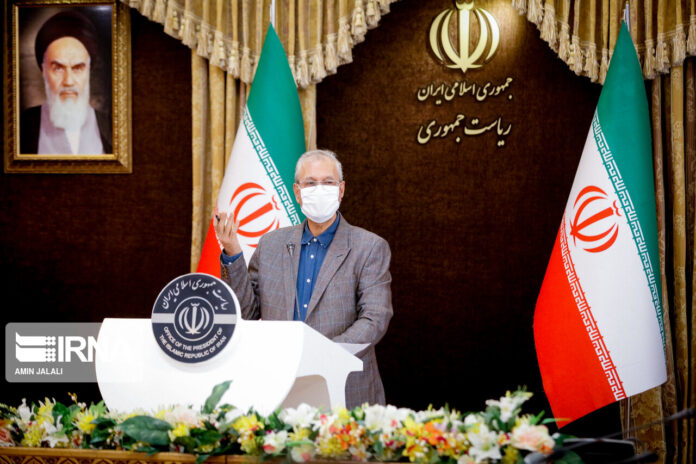
Iranian government Spokesman Ali Rabiei says the Islamic Republic does not welcome increased tensions in the Persian Gulf, and it will do its best to ensure security in the region.
In a video press conference on Saturday, Rabiei referred to the recent threats by US officials saying that the Islamic Republic has always expected to hear such useless words from the United States, but Tehran constantly has announced its stance.
“We and all the countries in the region are the great victims of insecurity in the Persian Gulf. Amid the conditions in the domestic economy and oil prices, the one who benefits from insecurity in the Persian Gulf is the United States of America,” added Rabiei.
“Our strategy is to reduce tensions in the Persian Gulf, but we warn that if the United States is looking for adventure, the responsibility of every incident will falls on Washington.”
As long as the United States continues its destructive military presence in West Asia, and refers to defeated groups and lobbies in recognising its interests, even the interests of the American people will not be protected, underlined Rabiei.
Noting that Iran is not seeking tension in the region and is taking action in its territorial waters, the government spokesman stated security in the region is Iran’s main demand. Tehran has sent several messages to the leaders of the regional countries calling for security in the region, he added.
Rabiei also announced that during Ramadan, security accords with the countries of the region and agreements to deal with corona can be reviewed to have a violence-free region to cope with the coronavirus and save lives. However, the Islamic Republic will definitely give the necessary response to the aggressors.
In another part of his remarks, he said, unfortunately, amid the fight against Corona, where all the people of the world must unite, we are witnessing such comments [by US officials].
“We believe we must move towards peace in the region so that we can confront corona. The world needs a physical and a mental security to overcome this crisis. Unfortunately, the Americans are still launching psychological projection, and we know in the difficult conditions since the outbreak of the coronavirus in the United States, the US government, especially the president, has been trying to divert public opinion from his failures against COVID-19. In order to escape from his international responsibilities, he has no choice but to launch psychological projection.”
Iranian spokesperson further said the United States accuses the Islamic Republic of Iran of violating the UN resolution for a conventional act that does not contradict the legal and international regulations, but the Islamic Republic has no doubt that Washington will fail to prove this.
He emphasised that the Islamic Republic of Iran believes its military and civilian technological advances are in accordance with international law and saying such advances are Iran’s absolute and irreconcilable right.
“This kind of warning from a country that has become the number one threat to global security, and has proven its mastery in discriminating against the rules of law will not have the slightest effect on our will to continue on our legal path.”
He also advised European countries to learn from the past experiences and put an end to giving concessions to this bully as soon as possible. In this way, the world will be safer amid the coronavirus outbreak and even after corona, reiterated Rabiei.
We have not taken any action contrary to the laws and resolutions, stressed Rabiei, underlining that the United States must return to resolve its internal problems.
The government spokesman went on to say that misleading statements about disease control and statements rejected instantly by scientific and medical associations are only meant to pose a mental challenge to the American people. So instead of resolving his country’s problems, Donald Trump is blaming other countries.
“We believe that we are committed to the highest level of transparency in the fight against the coronavirus, and we have not endangered the lives of our citizens,” highlighted the spokesman.
“I assure the people we have kept our promise regarding people’s lives. Certainly, the life of an elderly, a patient and any Iranian is important to us in any way, and like many countries, we did not abandon these people and did not say which social class and which age group our hospitals belong to.”
In the end, Rabiei called on people to help the government in maintaining relative control of the disease. He asked people to observe personal hygiene and use masks to go ahead with smart social distancing protocols, especially in crowded places.
Iran’s First VP, FM Congratulate Muslim Nations on Arrival of Ramadan
First VP Esha’q Jahangiri wrote in separate messages, “Now that the fresh breeze of servitude and self-purification is blowing, I hope we will be subject to the blessings of God Almighty through our worships and veneration in this cherished month.”
He also expressed hope that the ties between the Muslim countries will get stronger than before.
“I hope Muslim nations will be able to work together to accelerate the process of fighting the deadly coronavirus to see its eradication by the end of this blessed month,” reads his message.
Foreign Minister Mohammad Javad Zarif also congratulated Muslim nations on the holy month, expressing hope that God may help people to pass through the ongoing crises.
In an Arabic tweet on Saturday, Zarif said, “I ask God Almighty to accept our worships in this blessed month and to help us overcome the crises and establish unity among the believers and ensure security, peace, justice and equality throughout the world.”
رمضان كريم
و كل عام و الأمّة الإسلاميّة و شعوب العالم بألف خير.
أسأل الله أن يتقبل أعمالنا في هذا الشهر الفضيل، و أن يمنّ علينا بالخير و النصر و تجاوز الأزمات، و أن يوحد صفوف أهل الإيمان، و أن يحقق الأمن و السلام و العدالة و المساواة على وجه المعمورة.
آمين، بمنّه و كرمه.— Javad Zarif (@JZarif) April 25, 2020
The holy month of Ramadan began on Saturday in Iran and many other Muslim countries. During this month Muslims abstain from eating and drinking from dawn to dusk.
Iran Starts Exporting Medical Supplies for Coronavirus Battle
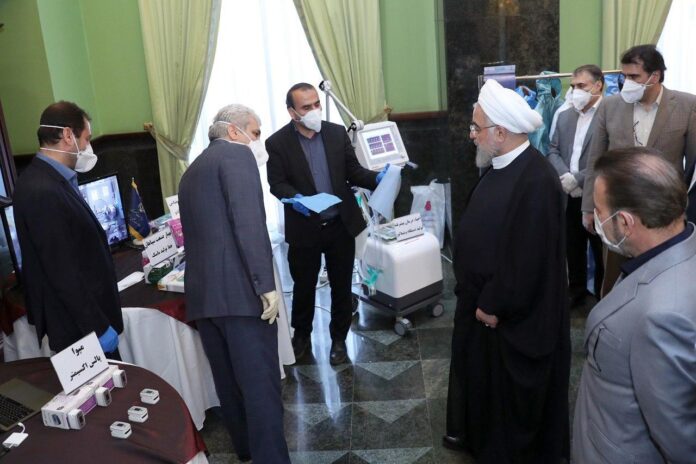
Iranian President Hassan Rouhani has highlighted the country’s success in dealing with the novel coronavirus outbreak, saying the Islamic Republic has begun to export the health supplies necessary for the fight against COVID-19 after meeting the domestic demand.
Addressing a meeting with economic activists from the Iranian private sector on Saturday evening, President Rouhani said the Islamic Republic has successfully coped with the coronavirus pandemic.
Commending all Iranians for joining hands in the fight against the contagious disease, President Rouhani said the administration, the private sector, the non-governmental public sector, the Armed Forces, the knowledge-based companies, and the medical society have all played a role in the national efforts to contain the coronavirus.
Paying special tribute to the Iranian medical personnel for their devotion to duty, the president said, “They (health staff) are doing a great job today. This is not an easy job. This is an outstanding and great job when you see that the bulk of people admitted to the hospital are being discharged in good health, thank God.”
Highlighting Iran’s major progress in the production of health supplies over the past two months, President Rouhani said the administration has not only fulfilled the domestic needs for medical items and disinfectants, but can even export those products.
“The administration has permitted the Minister of Industry to allow the plants with overproduction to export (their output),” President Rouhani noted.
Iran has achieved such great success in coping with the local demand for medical supplies that it is going to export the coronavirus diagnostic test kits in future, he noted.
The president also lauded the production of medical ventilators, computerized tomography (CT) scan devices, N95 masks and disinfectants by the domestic knowledge-based companies as a remarkable job, saying such breakthrough has been achieved through the efforts of local companies, private sectors, administrative organizations and banks.
Stressing the need for closer interaction between the state-run and private sectors, President Rouhani said the social distancing scheme is targeted only at the battle with the coronavirus.
“In light of closer contacts among the banks, the private sector and the stock market, we will be able to make a great move in the economic arena,” the president underscored.

Iran’s Leader Attends Quran Recitation Ceremony via Video-Conference
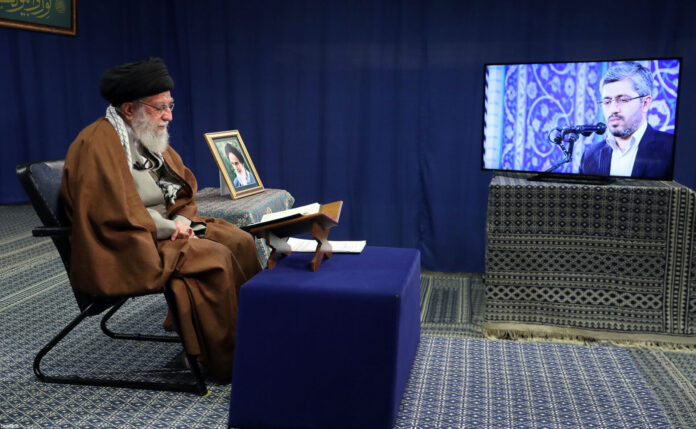
Iran’s Leader Ayatollah Seyyed Ali Khamenei has attended a ceremony to recite holy Qur’an via video-conferencing amid the spread of the coronavirus.
In previous years, the ceremony used to be held in the presence of the Leader during the holy month of Ramadan, but this year because of the COVID-19 pandemic Ayatollah Khamenei and Qur’an reciters attended the event via video-conference.
This ceremony was broadcasted live on the national TV and radio channels as well as on the website of the leader, Khamenei.ir.
At the end of this event, Ayatollah Khamenei said the Qur’an is the book of life.
He added that if human beings follow the rules of life based on the Qur’an teachings, happiness will befall them in this world and the next.
Zarif, Qatari Counterpart Discuss Regional Issues
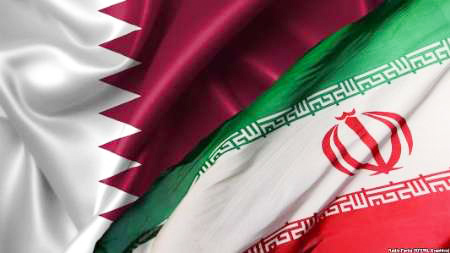
During the phone call, Zarif offered congratulations to his Qatari counterpart as well as the country’s nation and government on the arrival of the holy Islamic month of Ramadan.
The two sides also conferred on the latest developments in Afghanistan, and Tehran’s efforts to help build political consensus and form a comprehensive government in Kabul.
The phone conversation came a few hours after Iran’s President Hassan Rouhani and Emir of Qatar Sheikh Tamim bin Hamad Al Thani held phone talks on the latest developments in the region.
Rouhani told the Qatari leader that Tehran is closely watching the US troops’ movements, but will never start a conflict or tension in the region.
The Qatari emir, in turn, urged all countries to make efforts to stave off tension in the region.
The comments came after the escalation of tension between Iran and the US in the Persian Gulf, especially following the IRGC Navy’s warning to US warships and the subsequent anti-Iran threats made by US President Donald Trump.
A Look at Iranian Newspaper Front Pages on April 25
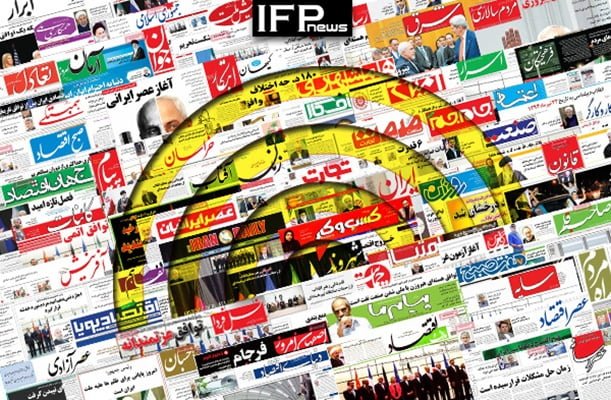
IFP has taken a look at the front pages of Iranian newspapers on Saturday, April 25, 2020, and picked headlines from 8 of them. IFP has simply translated the headlines and does not vouch for their accuracy.
Iranian Newspapers
Abrar Newspaper:
1- IRGC Aerospace Chief: We’re A Superpower Today
2- Official: We’ll Definitely Face New Wave of COVID-19 Outbreak
3- US Defence Department: We’re Watching Iran’s Space Programs
4- IRGC Chief: Any Move Will Receive IRGC’s Decisive Response

Aftab-e Yazd Newspaper:
1- Europe Unable to Pay Loan to Iran
- Borrell Regrets US Opposition to Iran’s IMF Loan Request

Ebtekar Newspaper:
1- Trump’s Bizarre Corona Advice: US President’s Advice Can Result in Death
2- US, Europe Cannot Preach Iran: Tehran in Reaction to EU, US Officials
3- Iran Leader to Attend Quran Sessions through Video Conference
4- American War-Therapy May Create Post-Corona Crisis
* A Review of US’ Aggressive Behaviours amid COVID-19 Pandemic

Etemad Newspaper:
1- Iran’s Noor Satellite Complicates Trump’s Calculations: Washington’s Maximum Pressure Fails
2- Who’ll Assume Presidency of Iran’s Parliament in New Term?

Ettela’at Newspaper:
1- Rouhani: Gov’t Will Try to Boost Production, Employment While Countering COVID-19
2- Ayatollah Sistani’s Office in Qom Orders Construction of Noor Hospital
3- IRGC Chief Orders Naval Units to Counter US Troops’ Threats

Jomhouri Eslami Newspaper:
1- Iran’s Customs Chief: We Had Exports to 128 Countries Despite Cruel Sanctions
2- Biden: Earth Can No Longer Tolerate Trump

Kayhan Newspaper:
1- LA Times: Corona Indicates It’s Time for US Segregation
2- US, Israel Dazzled by Iranian ‘Light’ Rotating Around Earth
3- World Welcomes Iran’s Experiences in Fight against COVID-19

Sazandegi Newspaper:
1- Noor (Light) Placed into Orbit
* World Reacts to Iran’s Successful Launch of Noor Satellite
2- Iran’s Foreign Ministry: No Resolution Has Kept Iran from Sending Satellite to Space

US Opposition to Iran’s IMF Loan Bid Breaching Right to Health Peremptory Norm
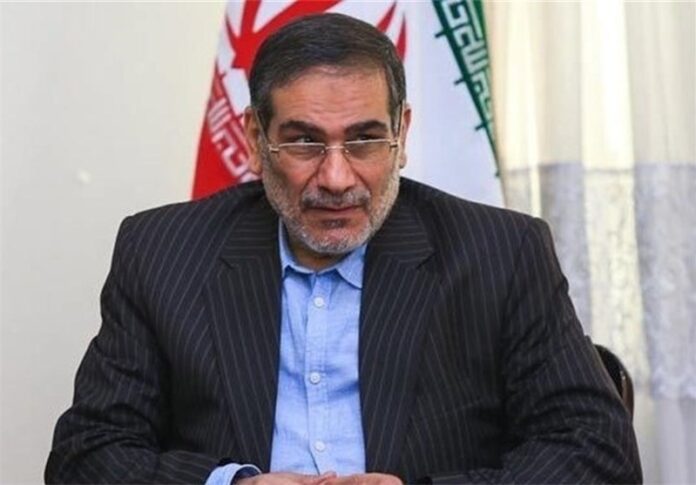
Secretary of Iran’s Supreme National Security Council has denounced the US’ attempt to block Tehran’s request for an emergency International Monetary Fund loan to fight the coronavirus as a violation of a peremptory norm of international law (jus cogens) that entitles people to right to health.
In a post on his Twitter account on Saturday, Ali Shamkhani said Washington’s opposition to Iran’s request for the IMF loan is in breach of the peremptory norms of international law on right to health.
مخالفت #آمریکا با درخواست وام ایران از صندوق بینالمللی پول، نقض «قاعده آمره حق بر سلامتی» است. دولتهای ثالث دو تعهد دارند؛ قطع همکاری با دولت ناقض و اقدام برای رفع وضعیت غیرقانونی. #اروپا چون همیشه فقط ابراز تاسف کرد!#باید_قوی_شویم
— علی شمخانی (@alishamkhani_ir) April 25, 2020
“The third governments have two commitments; to halt cooperation with the violator state and to act for lifting the illegal situation,” he noted.
Shamkhani also deplored Europe for its usual “expression of regret” about such violation of law by the US.
He has ended his tweet with a hashtag saying “we must get strong.”
Iran has asked the International Monetary Fund for a $5 billion loan to deal with the outbreak of COVID-19.
Governor of the Central Bank of Iran Abdolnaser Hemmati says the IMF’s response will be a litmus test for claims about relief aid for containing the disease.
Iran’s Health Ministry Says COVID-19 Deaths Down by 70%
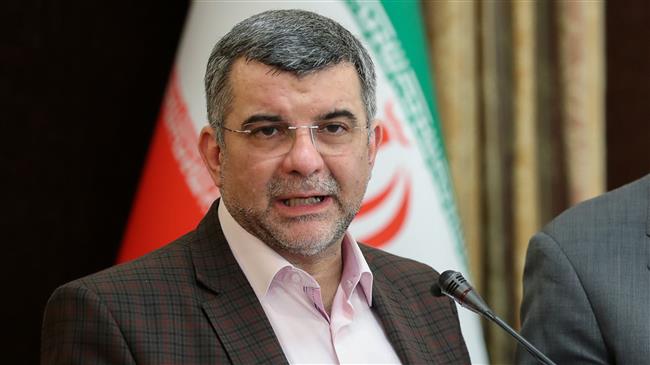
Iraj Harirchi, the deputy minister of health, announced in Tehran Saturday that more than 50 percent of coronavirus cases, and about 70 percent of coronavirus-related deaths have decreased across the country.
“There is a declining trend in corona disease in most provinces and this has been the result of effective actions by the people and the government,” Harirchi said.
“I would like to emphasize that at a time when smart and gradual social distancing takes place, any violation can have serious and irreparable consequences,” he added.
The deputy health minister also predicted that there would be “two to three outbreaks” over a year in most of the world’s countries before the discovery of corona vaccines and drugs, underlining that people should stick to the stay-at-home slogan and avoid unnecessary commuting.
Iran’s Health Ministry announced a day earlier that the country was no longer “in the red” as the daily death toll from the coronavirus had begun to slow.
Kianoush Jahanpour, the health ministry’s spokesman, said on Friday that 93 people had died in the past 24 hours, bringing the overall death toll since the pandemic first emerged to 5,574.
More than 66,000 people were reported to have recovered from the infectious disease.
Jahanpour said out of 88,194 confirmed cases, 66,596 patients had been released from hospital and recovered from the illness.
“None of our provinces are in the red, but warnings remain, and the situation will not be considered normal at all,” the Health Ministry’s spokesman tweeted on Friday.
Jahanpour called on Iranians to continue to respect social distancing measures, avoid large crowds and frequently wash their hands.
Iran has been doing its utmost to contain the respiratory disease caused by COVID-19 despite the hardships caused by US sanctions.
The administration of US President Donald Trump has not only defied international calls on Washington in recent weeks to halt the draconian sanctions, but has even slapped more such restrictive measures on the Islamic Republic.
Washington re-imposed its sanctions on Iran in May 2018 after unilaterally leaving a historic nuclear accord with the Islamic Republic and other countries that has been endorsed by the UN Security Council.
Washington claims that it has exempted foodstuffs and medicine from the bans, something that Tehran entirely disputes.
Iran Says Only 76 Died of COVID-19 in Past 24 Hours
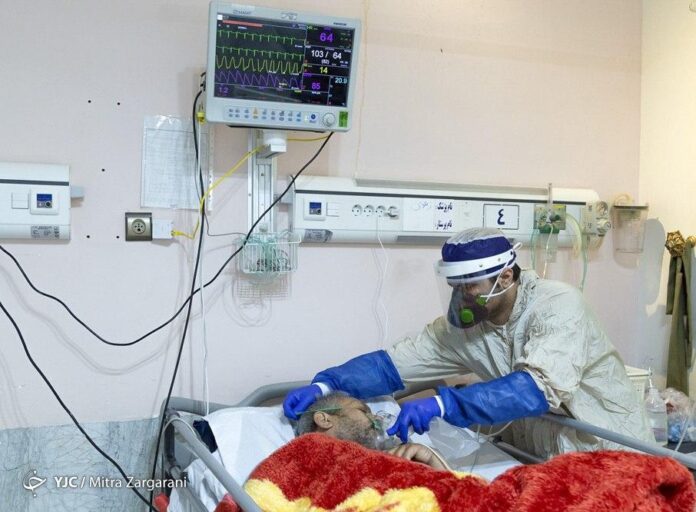
Speaking in his daily briefing on Saturday, Health Ministry Spokesman Kianoush Jahanpour confirmed 1,134 new cases of COVID-19 infection, increasing the total number of infections to 89,328.
The spokesman further noted that 68,193 patients have so far recovered and been discharged from the hospital.
Jahanpour also said that 3,096 patients are in severe conditions of the disease.
So far, 410,075 tests for the novel virus have been taken in the country, he added.
