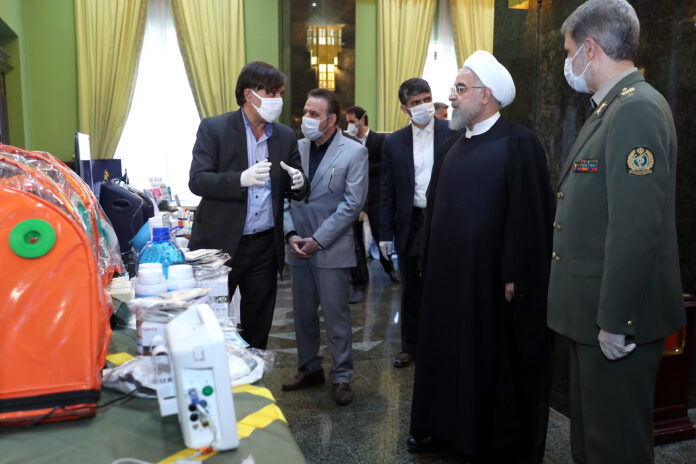
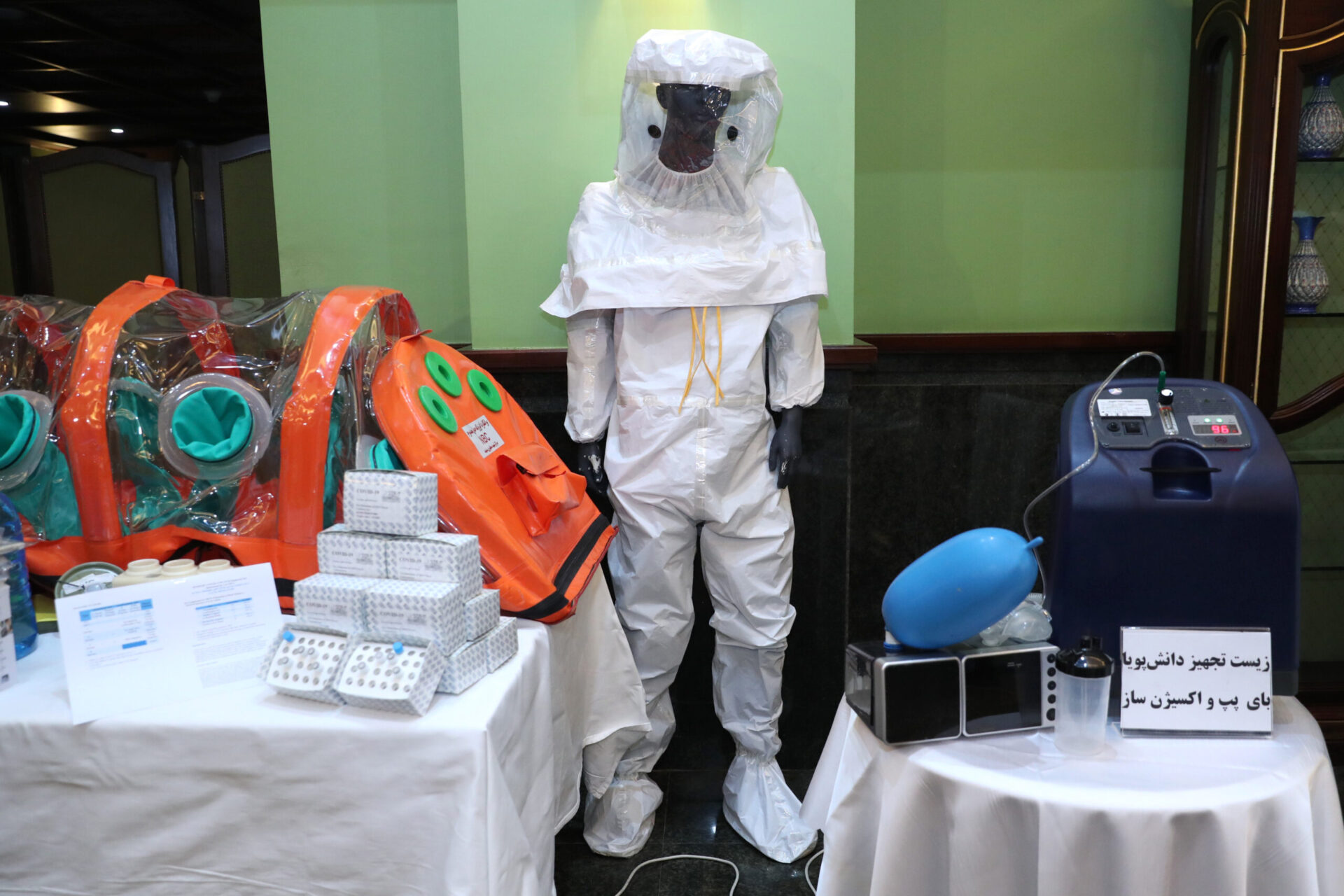
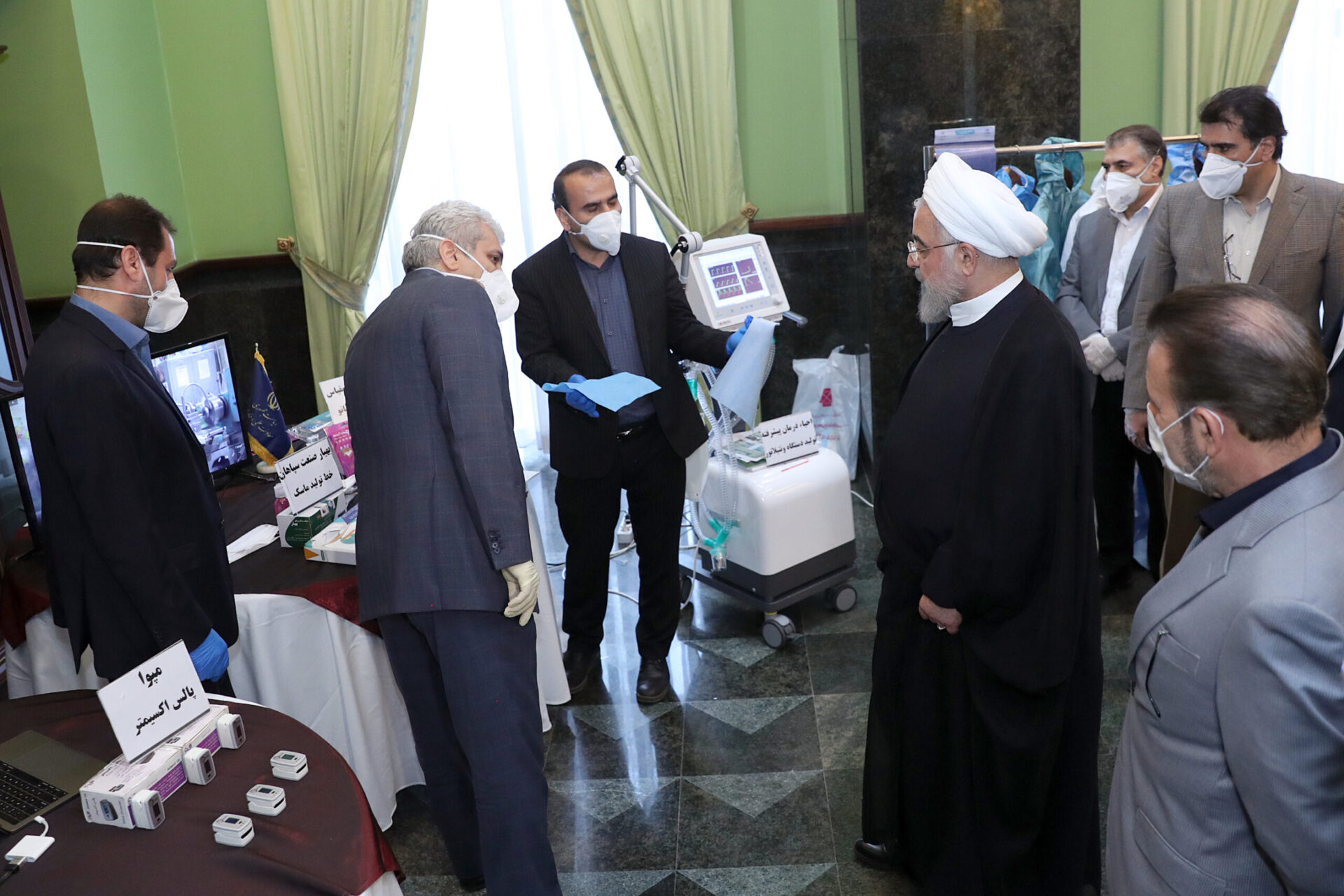
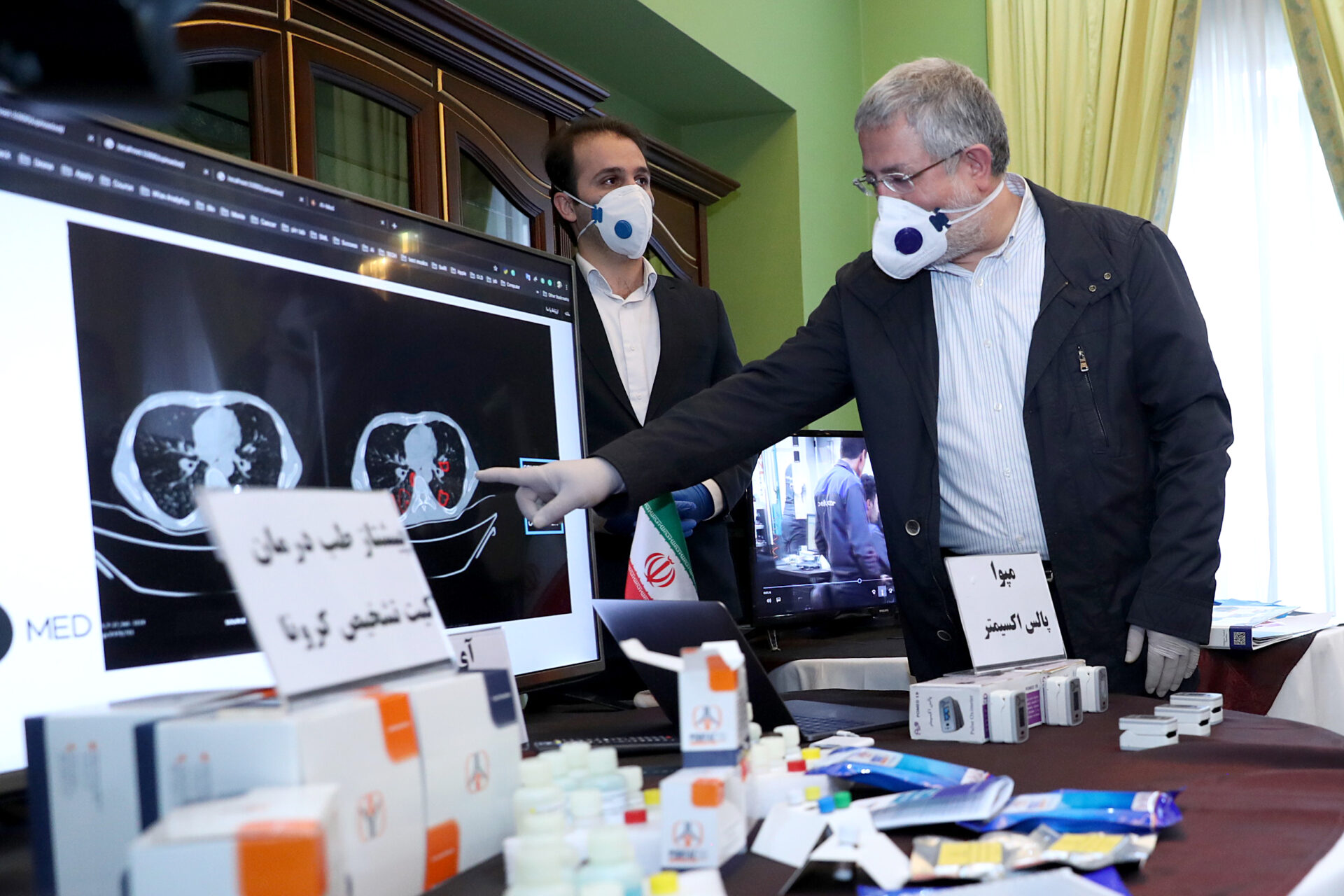
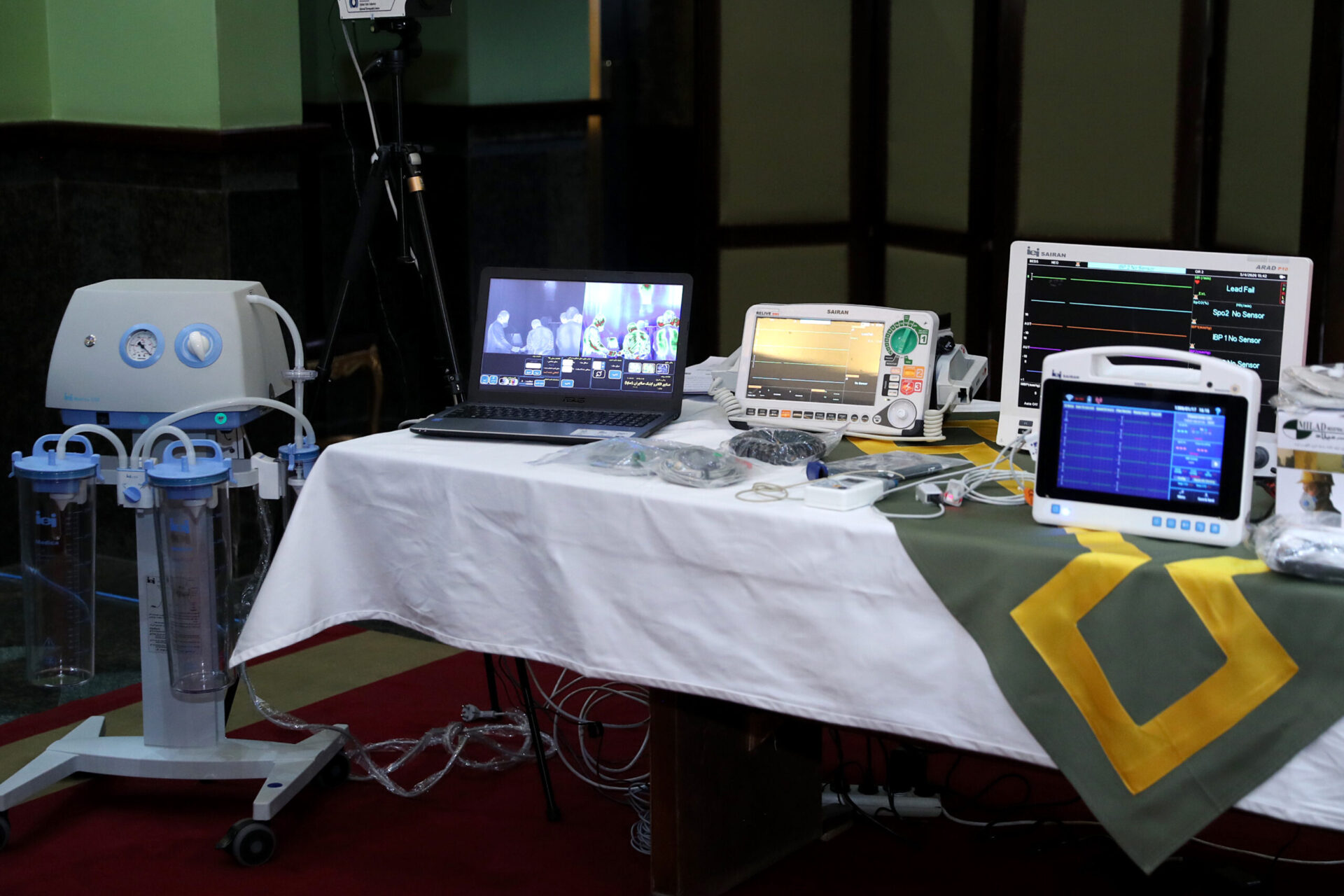
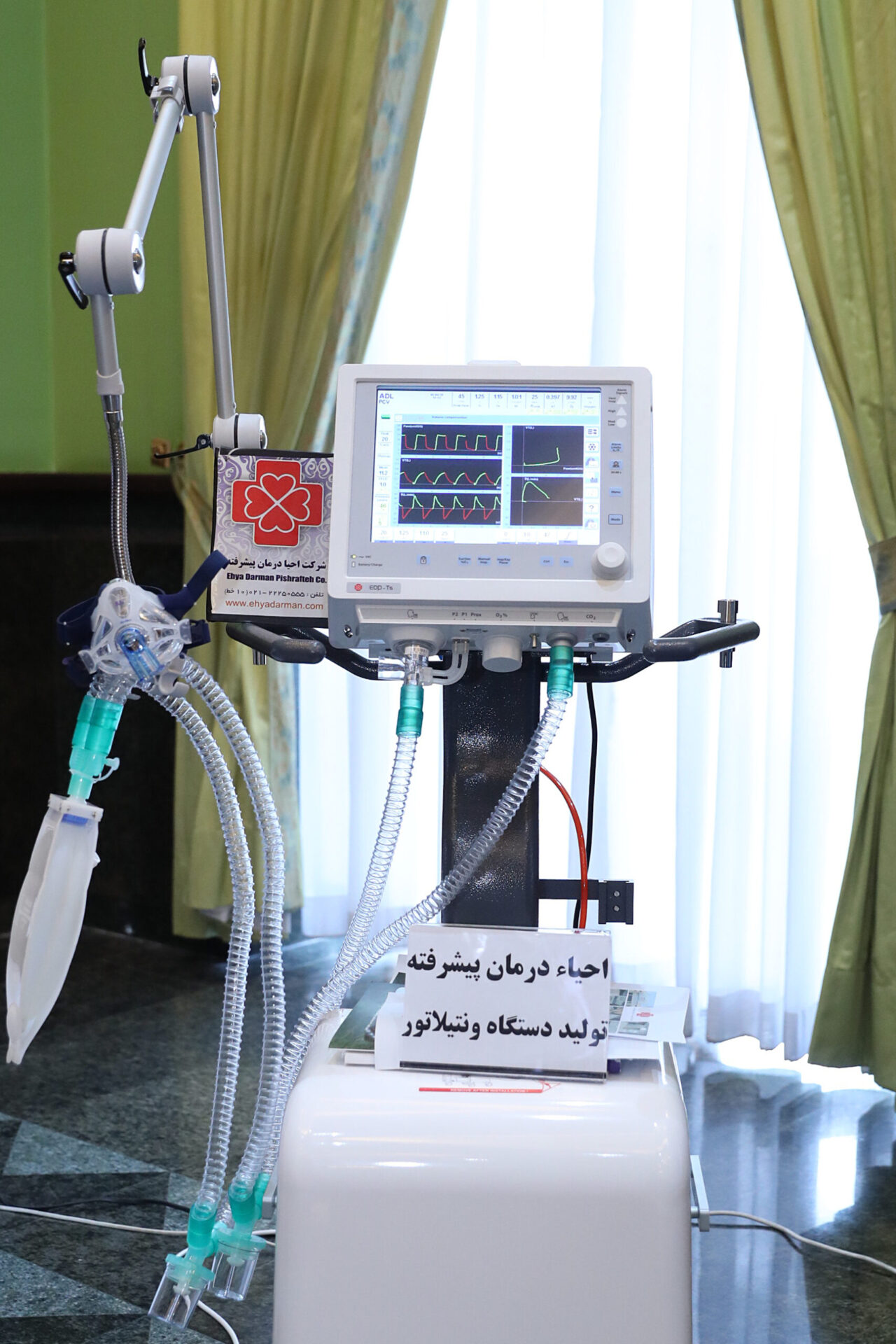
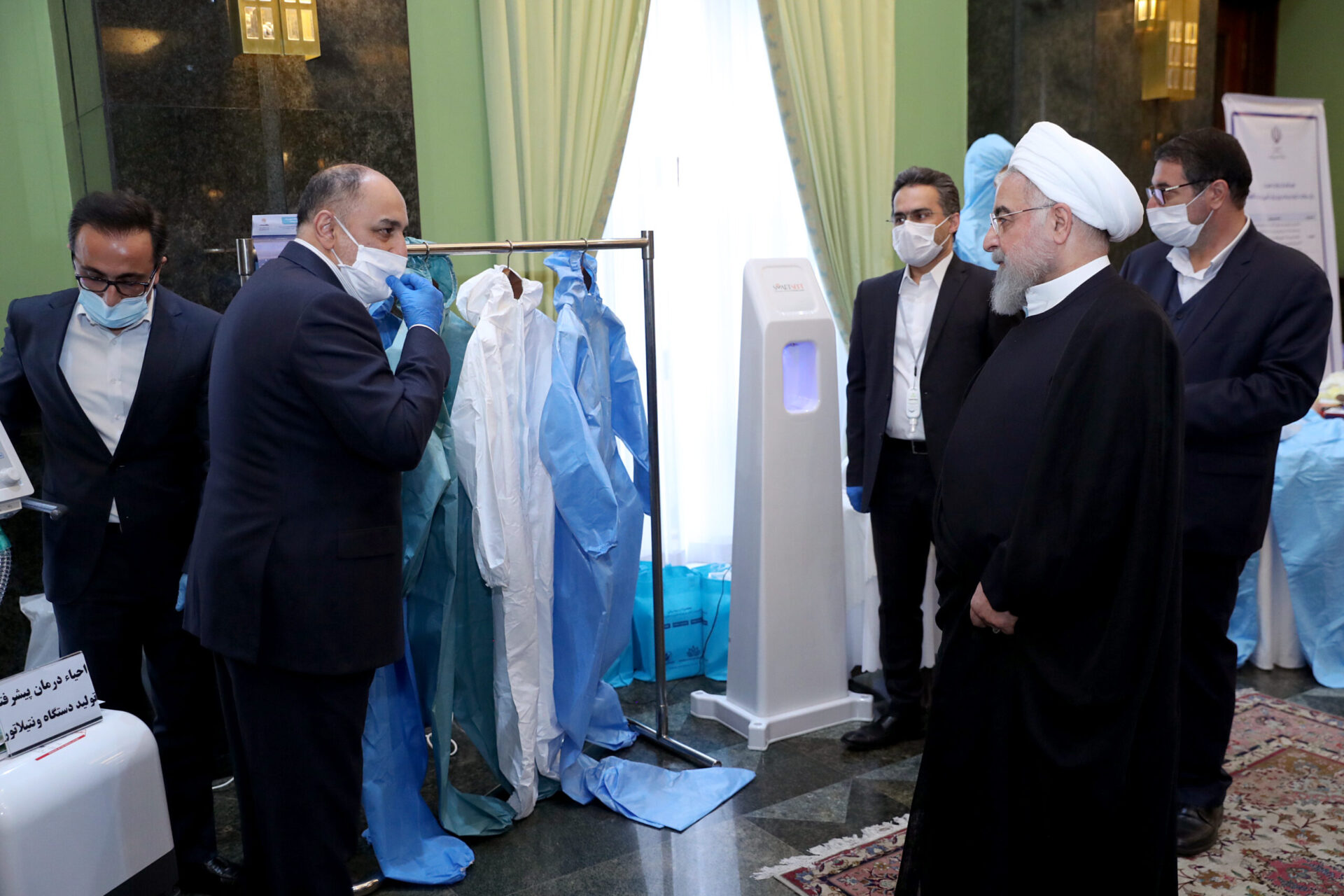
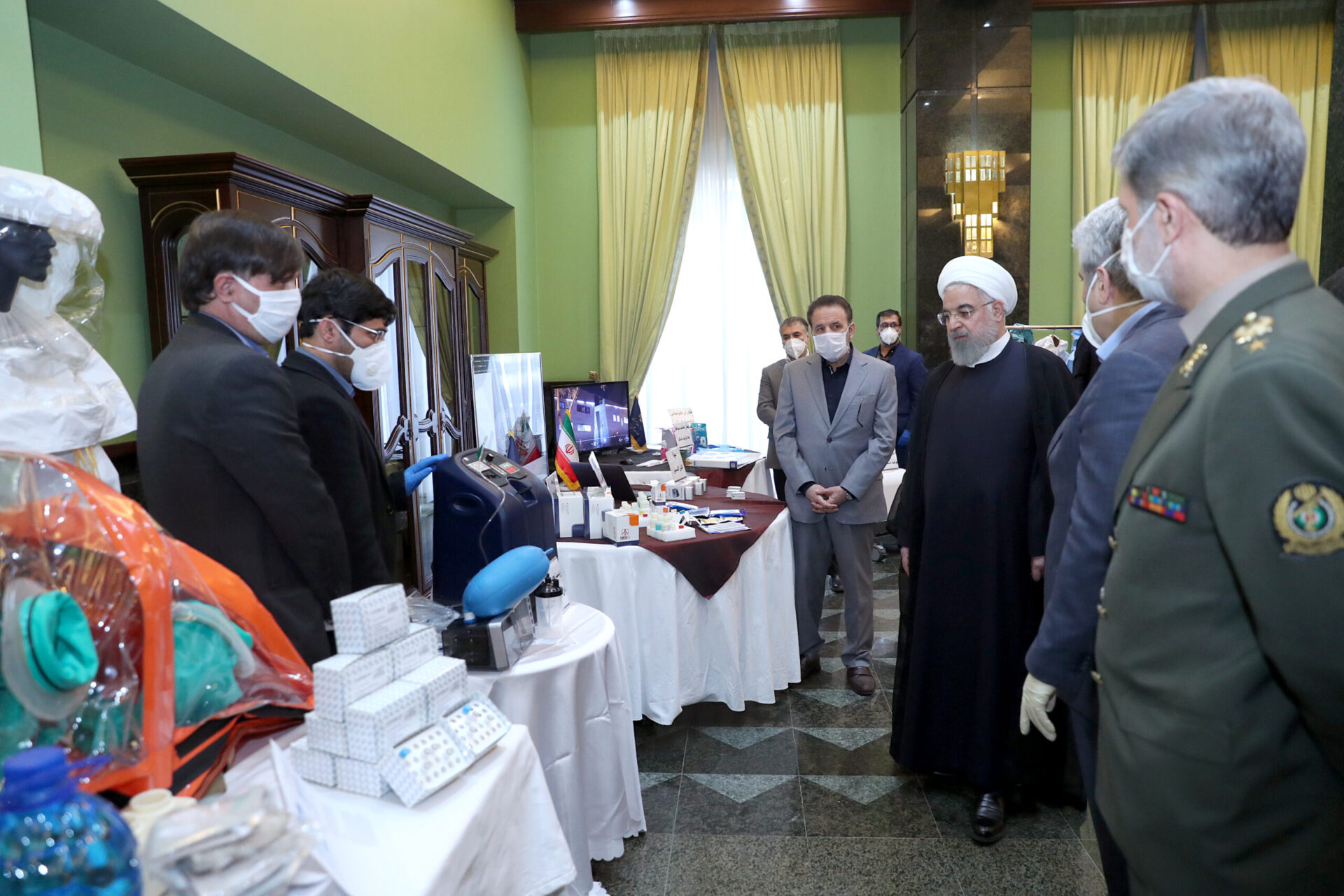
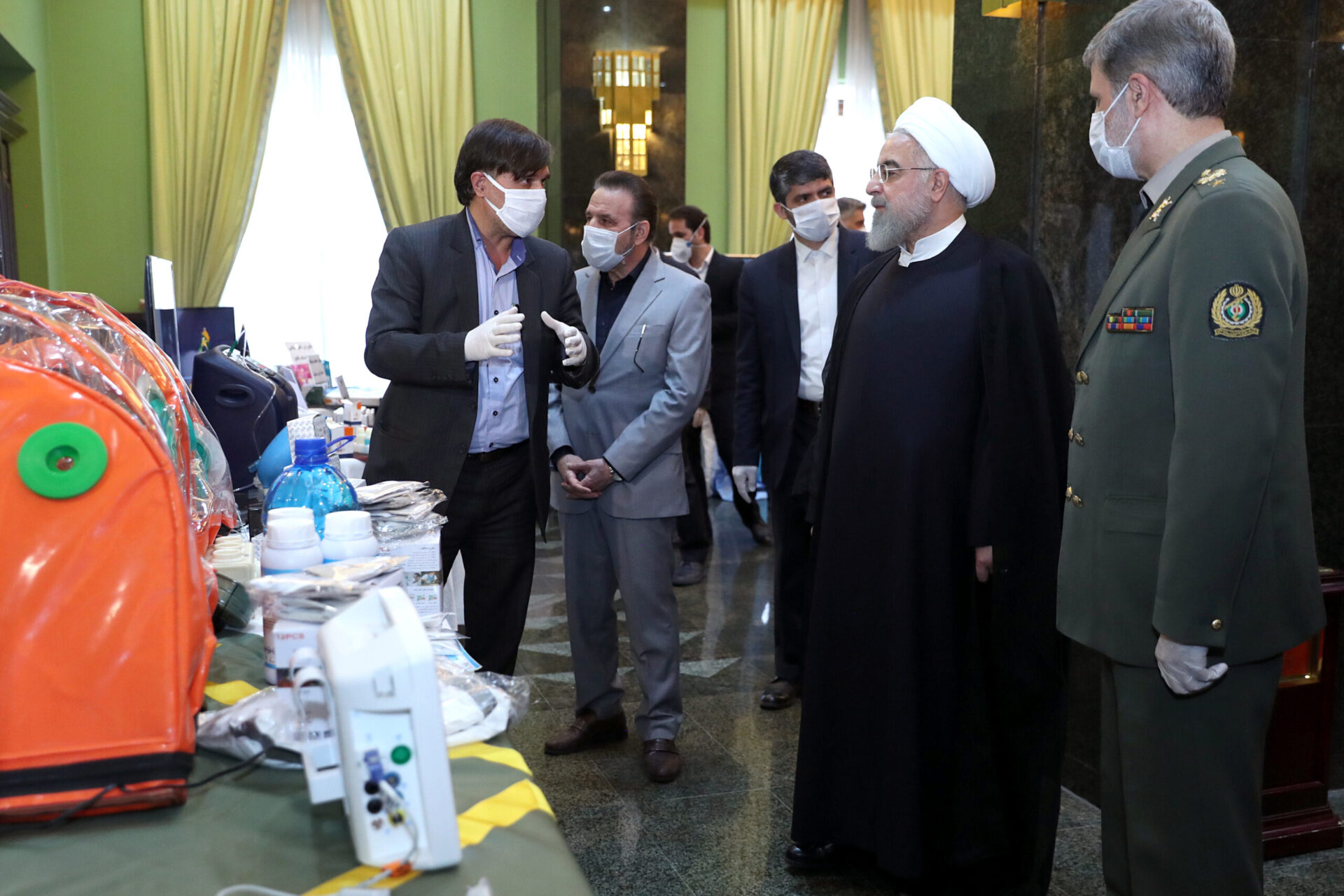
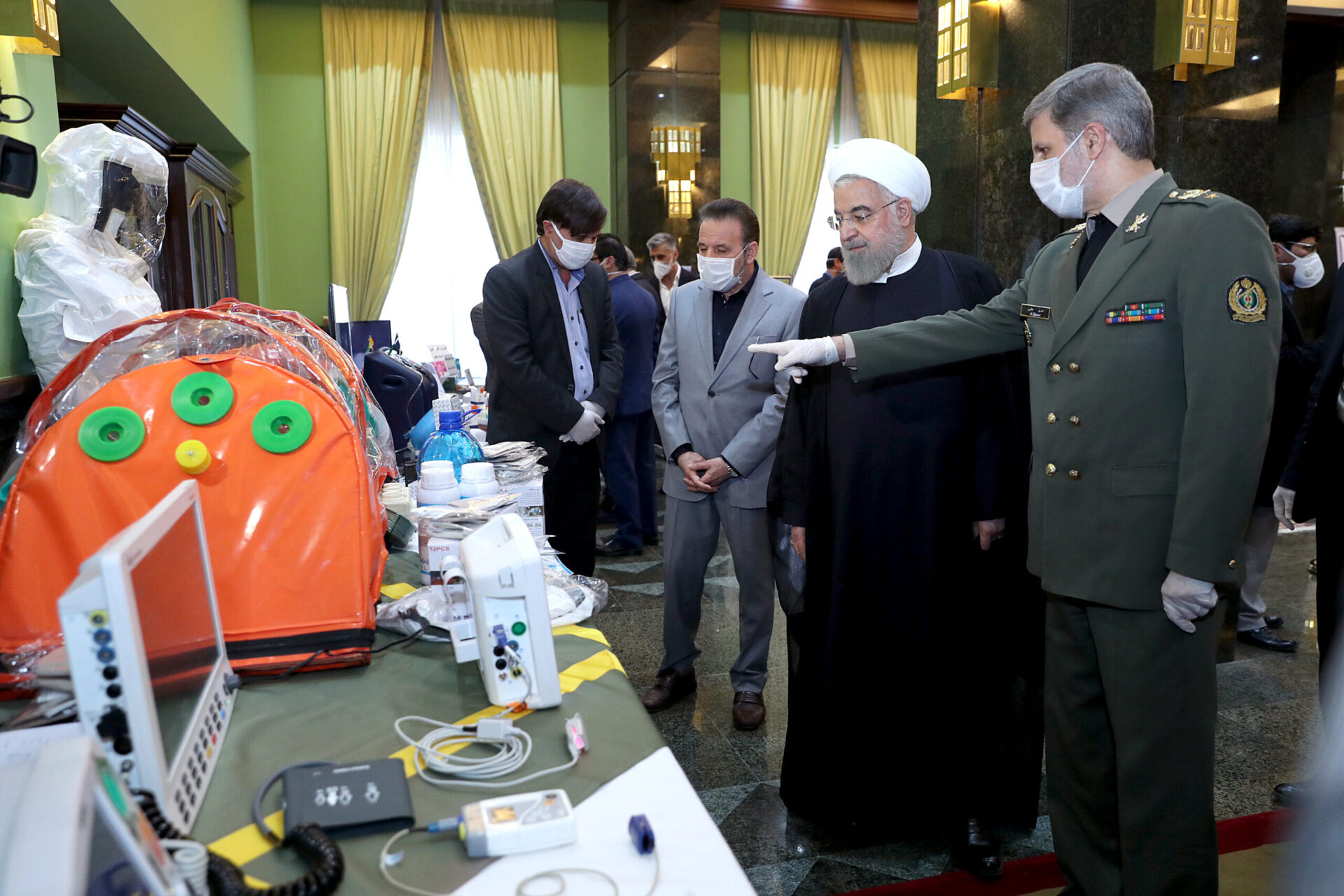
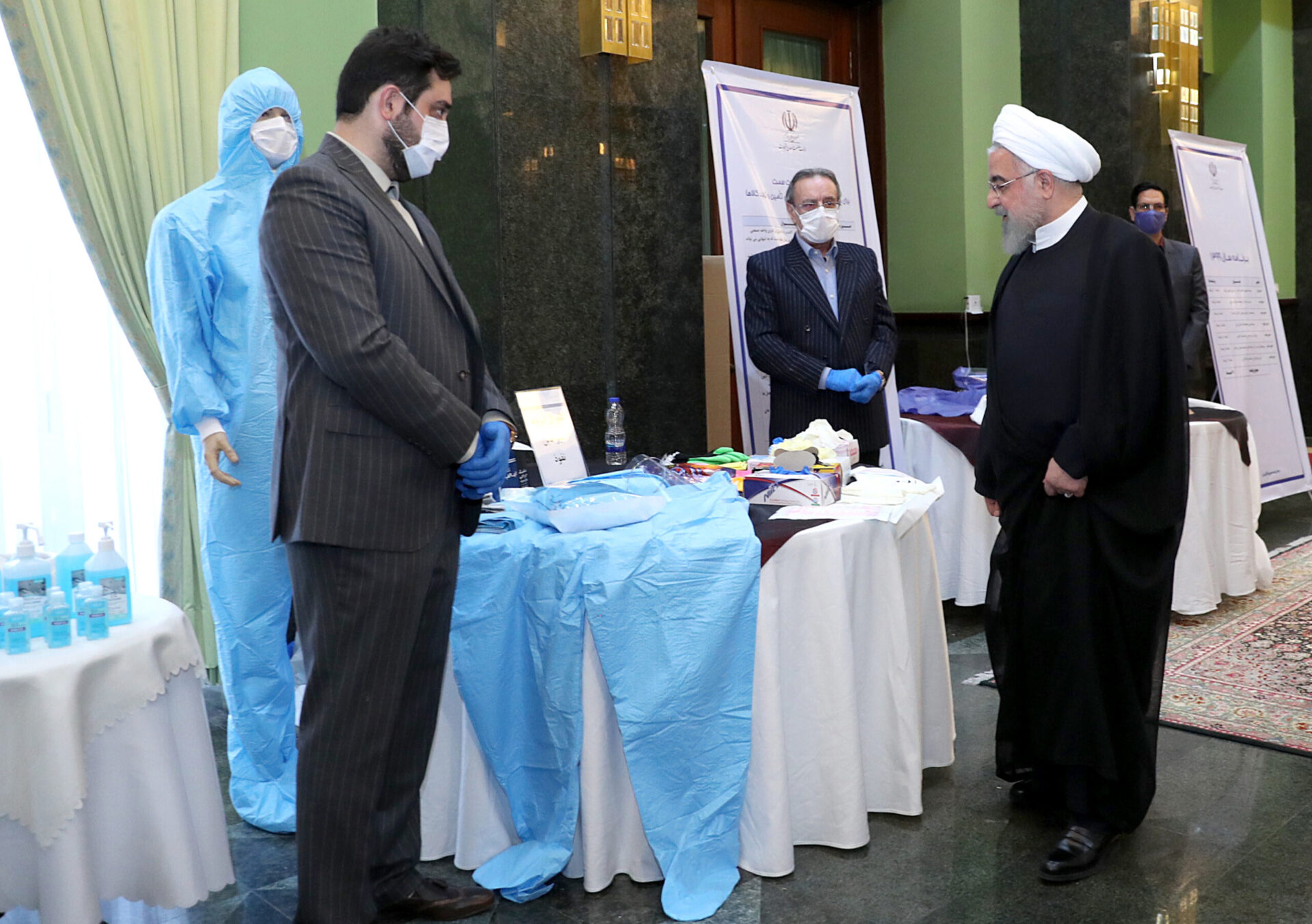
The achievements and products displayed at the exhibition have been developed by the experts of Industry Ministry, Defence Ministry, and the Vice-Presidency for Science and Technology.
What follows are photos of the visit retrieved from the president’s official website:
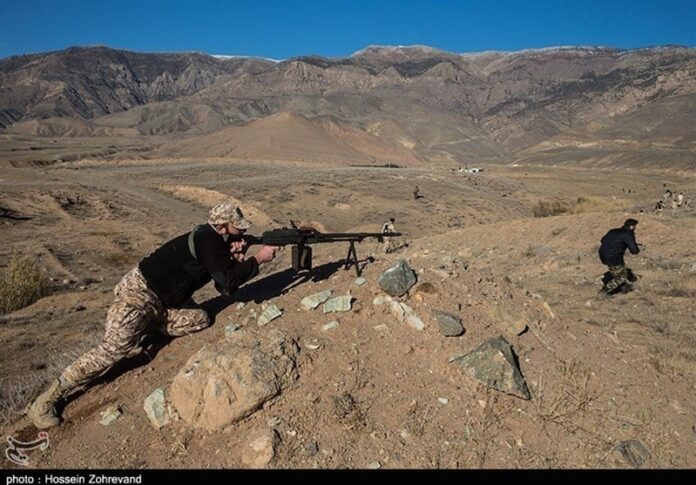
The incident happened in “Posht-e Bam” region of Saravan in Sistan and Baluchestan province near the border with Pakistan.
Local Basij member Esmail Qalandarzehi was shot dead in the gun battle, said the Public Relations Department of Ground Forces of Iran’s Islamic Revolution Guards Corps (IRGC).
The armed terrorists, who were confronted by the heavy fire of the Quds base of the IRGC’s ground forces and were unable to resist, fled into the neighbouring country in the dark.
Iran has repeatedly called on Pakistan to tighten control along the common border and fight off the terrorist groups, reminding the Islamabad government that the burden of ensuring security along the 900-km joint border has always fallen on Tehran alone.
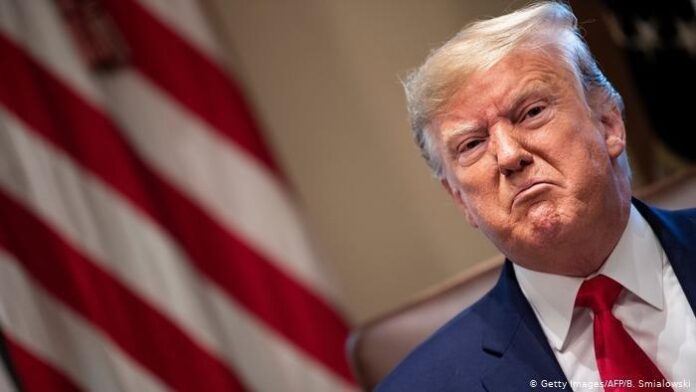
In a tweet on Sunday, Shamkhani said that the US sanctions are unlawful, and US president Donald Trump is more dangerous than the Coronavirus.
“The US opposition to the International Monetary Fund’s granting of a loan to Iran for the purchase of the items needed to deal with the Coronavirus is a real example of crime against humanity,” reads Shamkhani’s tweet.
The sanction of health items is an illegal & inhumane act & a symbol of #Trump‘s open hostility to the Iranian people.
US opposition to granting #Iran‘s requested facilities from @IMF to provide items needed to deal with #CoronaVirus is a real case of crimes against humanity.
Iran has repeatedly stated that the US economic sanctions are taking the Iranian people’s lives, as the country is battling against the novel coronavirus.
Tehran’s call for the United States to lift the sanctions on humanitarian grounds has been echoed by Russia, China, the European Union, and the United Nations.
Earlier, Iran Foreign Minister Mohammad Javad Zarif accused Washington of hampering health efforts through economic and medical terrorism.
“We had always said the sanctions are unjust, but coronavirus revealed this injustice to the world,” said Zarif in a video.
Months before the coronavirus pandemic, the Human Rights Watch said “the sanctions have largely deterred international banks and firms from participating in commercial or financial transactions with Iran, including for exempted humanitarian transactions, due to the fear of triggering US secondary sanctions on themselves.”
That came in a ceremony attended by Sorena Sattari, the vice president for science and technology, and Alireza Zali, the head of the of the Tehran coronavirus headquarters.
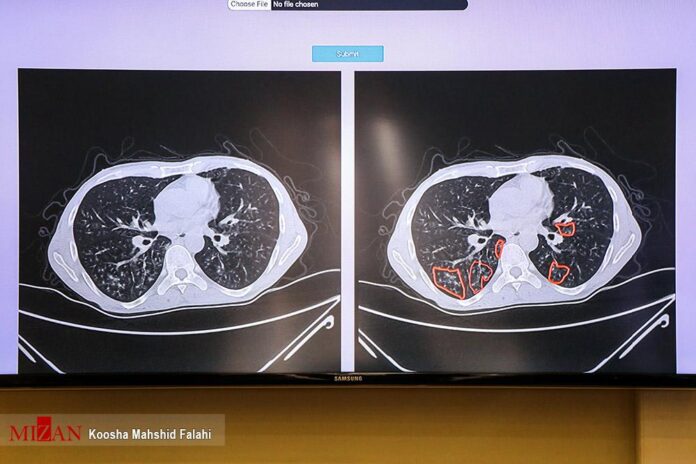
Developed by a team of researchers at Sharif University of Technology for the first time in Iran, the system uses the artificial intelligence algorithm to take a CT scan of the chest.
The COVID-19 pneumonia diagnosis system is capable of detecting abnormalities which cannot be spotted in CT scan images in the early stages and can calculate the volume of the infected zone.
During the ceremony, Sattari described the unveiling of the apparatus as a good development in the domain of ecosystem technology and innovation.
“It has been two months that the country has been gripped by the disease (coronavirus), and we have been able to manage it well,” he said.
“All these good developments are the result of investments in the ecosystem,” he noted.
“As we made progress in the production of diagnosis kits, now, with this new technology, we developed a new method using artificial intelligence, a mehod which is even more precise than the kit in certain stages of the disease,” said Sattari.
“This another accomplishment coupled with innovative solutions offered by knowledge-based companies.
A prominent professor at Sharif University of Technology also weighed in on the achievement.
“At the moment, there are numerous methods in the world to diagnose the COVID-19 coronavirus disease, but what is proven and has been confirmed by the American Board of Radiology is that the best way to diagnose infection with the virus is to take a CT scan image of the chest,” said Hamidreza Rabiei, the head of the Advanced Information Technology and Communications Research Center of the Sharif University of Technology.
“Currently, there are two systems similar to this in the world: one in China and another at Stanford in the United States,” he said.
“On the back of efforts by young researchers in the country, we have been able to design and launch this system in order to diagnose COVID-19,” he noted.
Rabiei, who is in charge of the newly developed system, said the system is highly accurate.
“The systems which exist in the world are susceptible to error, and what we did with the team of researchers was that we designed a system which is among the top ones in terms of accuracy,” he said.
“This system has been designed with 97% accuracy and will be made available to hospitals and medical centres via the Internet by next week,” he noted.
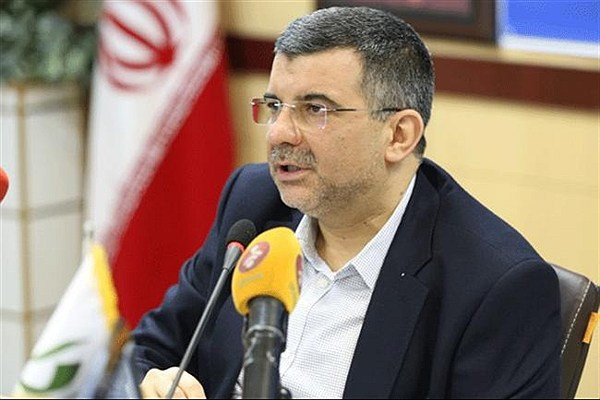
Iraj Harirchi said the two objectives are hard to be achieved at the same time.
“We have two issues at hand; one is to control the disease and bring down the fatality and infection rate; the other goal is to mitigate the economic and social fallout from the virus,” he said.
“The key point is that these two objectives are mutually exclusive, and it is not possible to achieve both goals at the same time,” he noted.
“What is important is that our objective is to enforce social distancing, which means reducing contact among people; however, we should see to what extent our economy can bear it because Iran is fighting not only coronavirus, but also sanctions,” the deputy health minister said.
He also thanked people for their cooperation while implementing the social distancing plan.
“People’s ongoing cooperation with regards to the social distancing program has been exceptional,” urging them to keep maximum social distance.
Elsewhere in his remarks, the official noted that the infection rate in most provinces across the country has been on the decline, but “this does not mean the disease has been controlled and contained.”
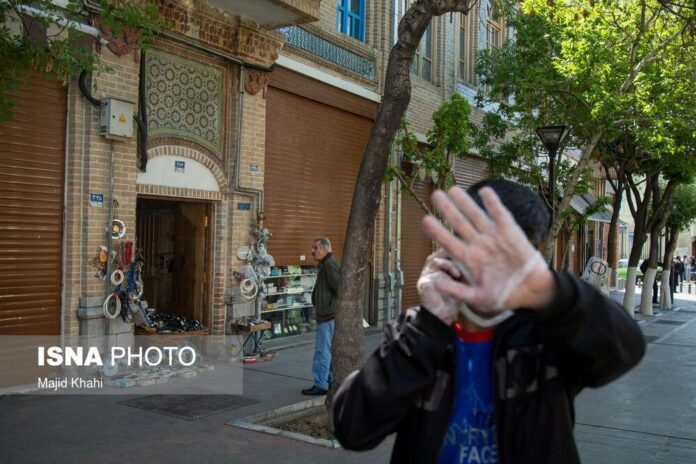
“We are still concerned about coronavirus. Traffic levels in Tehran today worried us, and these people can carry the virus home or to their workplace,” the deputy health minister underlined.
He specifically voiced concern about the situation in Tehran.
“In provinces where the disease began to spread sooner [than in other provinces] and are regarded as high-danger provinces, the infection rate is dropping, and this trend is seen in most provinces,” he said.
He said the fatality and infection rate is relatively rising in certain other provinces.
“We are concerned about Tehran. Because it is a key province, the existence of virus even at a medium level can contribute to its spread,” he said.
The Iranian Health Ministry Spokesman, Kianoush Jahanpour, said on Sunday 2,483 new cases of coronavirus infections, including 151 new deaths, were confirmed in the country in the past 24 hours.
That brings to 58,226 the total number of infections. The death toll has also increased to 3,603.
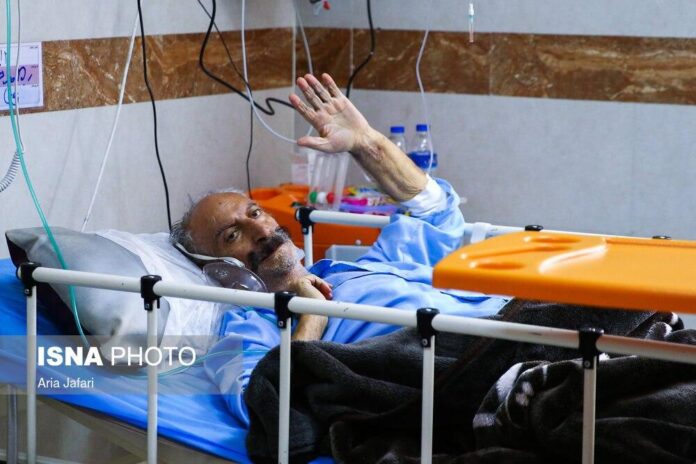
Jahanpour said 4,057 patients are in severe conditions.
The spokesman said 189,790 patients have been tested for the COVID-19 so far.
Official figures show the number of new infections has decreased for the seventh day in a row.
Stress is normal in every person and is more common in people at risk and their close ones. At the time of an epidemic of an infectious disease, you need to be careful about both your physical and mental health and know when to seek help from others.
You should know that stress symptoms are a set of behavioural, physical, emotional, and cognitive responses that are all indicators of anxiety and stress.
Symptoms of Stress
First: Behavioural Symptoms
Increase or decrease of energy and activity levels
Increased smoking or similar habits
Increased irritability leading to nervousness and a lot of quarrel
Difficulty in sleeping and resting
Crying a lot
Too much anxiety
Desire to be alone
Blaming others for everything
Difficulty in communicating and listening to others
Difficulty in giving help or getting help from others
Not to be happy
Second: Physical Symptoms
Stomach-ache or diarrhoea
Headaches and pain in the body
Losing appetite or eating too much
Excessive sweating or chills
Hand trembling and muscle twitching
Getting scared of everything soon
Third: Emotional Symptoms
Being overly anxious or scared
Feeling depressed
Feeling guilty
Feeling angry
Feeling heroic, euphoric or invincible
Disregarding everything
Feeling too sad
Fourth: Cognitive Symptoms
Difficulty in remembering things and tasks
Nausea
Difficulty in thinking and focusing
Difficulty in making decisions
The first thing is to see the end of the story from the very beginning:
If you or your loved ones are heavily exposed to the disease, it’s natural to want to know all the news. Remember to keep your focus on daily life and limit the amount of time you spend on reading, listening, and watching news of the disease.
The second is to access the “true” news:
If you are at risk, you should be able to get enough information and protect yourself against the disease by listening to the true news.
Listen to people or news sources that are trustworthy. For example, at Corona.ir, you make every effort to provide you with the right educational content.
The third is to use practical ways to reduce stress:
Take a deep breath, stretch, wash your hands and face and participate in virtual entertainment programs if possible.
Try to break in between stressful events. It means to have a little joy after a hard work.
Take every opportunity to get some rest. For example, eat slowly and healthy.
Have a good sleep, exercise and physical activity and stay in touch with friends and acquaintances by email, phone or social media.
Study, listen to music, take a shower and open out your hear as much as you can with your family members or health care consultant or staff.
Avoid smoking cigarettes and hookahs and taking drugs, stimulants and drinking alcohol
Plan to meet possible physical and mental needs. Know where to go and where to get help if needed.
Therefore, you need to pay attention to your body and soul, so:
Know the early symptoms of stress
Remember how your past successful life experiences can help solve current problems. With them, you can control your emotions and feelings at the time of unwanted events.
Know that feeling stressful, depressed, guilty, or angry is a natural thing for everyone after the epidemic of infectious diseases.
Talk to your friends and acquaintances, who are also stressed out, about worries. Strive to have reliable news and information sources. Gather information that can help you correctly predict the risk and take the necessary precautions. Use reliable sources of information such as public relations of the Health Ministry, the Medical System Organisation, or the universities of medical sciences.
Protect both yourself and your family from listening and watching disturbing and damaging news on social media.
Try to talk about things other than the disease and remind yourself that there are many important and positive things in life that need to be addressed.
Most importantly, you need to keep up your spirit by trusting in Great God, worshiping, praying and helping others.
Please also introduce Corona.ir to other friends and loved ones to raise awareness.
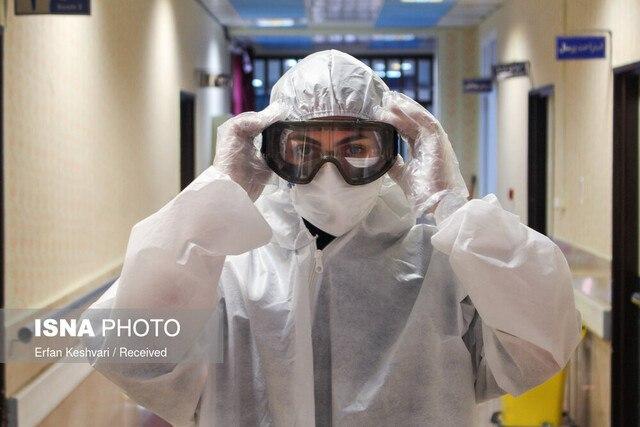
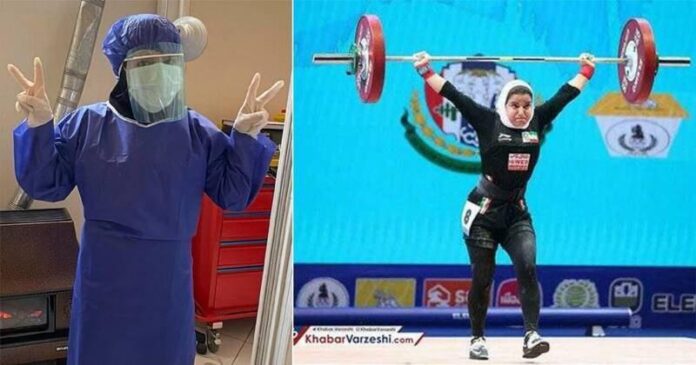
“I have been a nurse for seven years now,” she says.
“Before taking up weightlifting, I worked at hospitals,” she adds.
“Since February 22, 2020 when the situation began to become critical, I have been here to help,” she said.
“I myself liked to study Physical Education, but due to my family’s insistence, especially my mother, I took up Experimental Sciences [at school.]” she says.
“I both studied and began training as a weightlifter.”
“The condition at hospital is not very good, but we hope it will get better,” she says, adding people are contributing heavily to the campaign against the coronavirus.