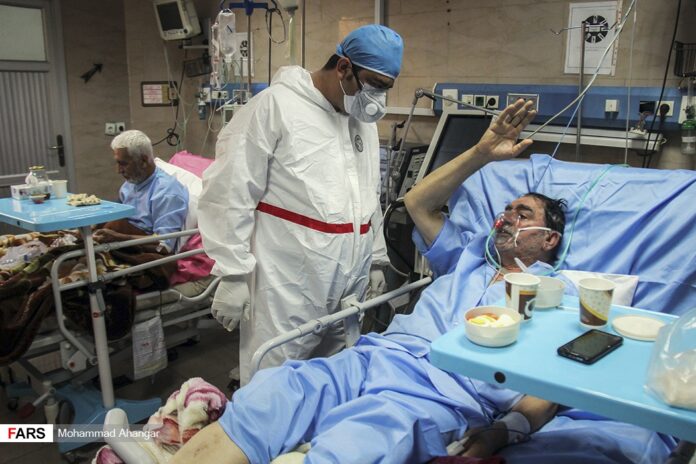
Mohammad Shariatmadari said hundreds of thousands of other medical supplies were also produced by the organization and other workshops working under its supervision.
He, however, said what is more significant than the production of these medical items is national unity consolidated amid the pandemic.
“How many items have been produced is unimportant; what is important is the solidarity and unity of the Iranian nation all across the country to fight this phenomenon which has emerged not only in Iran, but in other parts of the world as well,” he said.
“The unity, solidarity and rapport that have been created today among officials and people at all levels may be our most significant achievement amid this unpleasant phenomenon (coronavirus outbreak),” he added.
“Since the beginning of this year, we have been facing the wicked coronavirus in addition to the virus of sanctions imposed on the Islamic Republic of Iran by hegemonic powers in recent years,” he said.
“We have been gripped by the coronavirus outbreak in the country as a new ordeal. The Iranian nation has always put up a stiff resistance against threats and remained united, turning threats into opportunities,” the minister added.
He also expressed regret over the fatalities caused by the COVID-19 pandemic.
“It is true that some of our fellow countrymen lost their lives during the course of this unholy happening, and were extremely sorrowful because of that and we wouldn’t like this trend to continue,” said Shariatmadari.
The minister urged people to keep abiding by health protocols to help stem the spread of the disease.
“We should make every effort in that regard by maintaining personal hygiene, keeping social distances and paying due regard to health issues, which is not very hard to do, and which will help save lives if done,” he noted.
“We should take major steps in that regard and rid the country’s health and treatment system of the extreme pressure caused by the rapid spread of this virus,” he concluded his remarks by saying.
An Iranian company has developed a homegrown technology to produce a special fabric with nanocoating to manufacture N95 and N99 masks and fulfill the growing need for face masks amid the outbreak of coronavirus.
In an interview with IRIB at the mask-producing factory, Head of the Iran Nanotechnology Initiative Council (INIC) Saeed Sarkar said the local experts have manage to produce medical masks with nanomaterial by making modifications to the production process.
“After the outbreak of this crisis, the colleagues could fortunately adapt the same machinery to be able to produce nano-masks out of the ordinary material or fabric for production of normal masks,” he noted.
Sarkar noted that the new material has extreme filtration power and perfect breathability.
The N95 masks made out of the homegrown nanofabrics are being delivered to the medical staff at the hospitals across the country.
“This type of filtration papers, namely N95 and N99, were being mostly imported, and in the current circumstance, even if we were not faced with sanctions, these products would not be available to us. But, fortunately, by using the domestically-made filtration papers and coating them with nanofibers, we are turning them into a filtration paper that is suitable for the N95 and N99 masks,” an official at the factory said.
Apart from Iran, only one other country in the world has reportedly gained the technology to produce fabrics with nanocoating suitable for the medical masks.
Mohammad Reza Bahmani, Head of the Centre for Information Technology and Digital Media at Iran’s Ministry of Culture and Islamic Guidance, told a meeting of the culture ministry representatives of different countries that challenges caused by the coronavirus can be addressed via cultural activities.
He made the remarks at the first virtual meeting of the Ministers of Culture of UNESCO member states on the impact of COVID-19 on the culture and art of the world. The meeting was held in the presence of a group of ministers of culture of the world and their representatives.
Bahmani also explained the Islamic Republic’s cultural and artistic efforts to combat coronavirus.
Referring to the most important cultural challenges caused by the corona pandemic and the performance of the people and the government of Iran in this situation, he said this year, the Nowruz ceremony was not held and family and social relations were affected. Therefore, in order to reduce the negative effects of this issue, the audio and video communications were increased.
“Tehran International Book Fair, which is one of the busiest exhibitions in the world in terms of public attendance, was canceled due to the spread of the corona. However, publishers paid the delivery cost of books and offered discounts of up to 80 percent on digital books. They also implemented a plan to help people access the books online,” he said.
He noted during the New Year holidays, cinemas, concerts, theatres and bookstores are usually very busy in Iran, but they were closed this year. This situation has caused a lot of damage, and the government is trying to pay for part of it, but the US government’s economic sanctions on Iran, which is contrary to the UN regulations, have made such assistance very difficult. That’s why hundreds of Iranian artists have called for a campaign to protest the harsh US economic sanctions against the Iranian people.
The representative of the culture minister said pilgrimage to religious sites is one of the main interests of the Iranian people during the lunar months of Rajab, Sha’ban and Ramadan, but they avoided this activity with the spread of the corona. Instead, the faithful people of Iran have paid attention to individual veneration and spirituality at homes.
Although it is very dangerous to approach patients with corona, many groups of young students, clerics and the military personnel are in hospitals to help the healthcare staff, mentioned Bahmani.
“The production and dissemination of cultural and artistic content by writers, journalists and religious missionaries on social media platforms has increased fivefold during the days of the corona outbreak, and this has helped people to stay at home.”
Let’s work together to turn these threats into another opportunity, he urged. This can be achieved through the development of cultural and artistic exchanges, as well as the fostering of fundamental humanitarian values, he concluded.
In another part of this meeting, which was attended by more than 130 ministers and deputy ministers of culture, some other ministers presented their views and actions on the effects of coronavirus on their country’s culture and art.
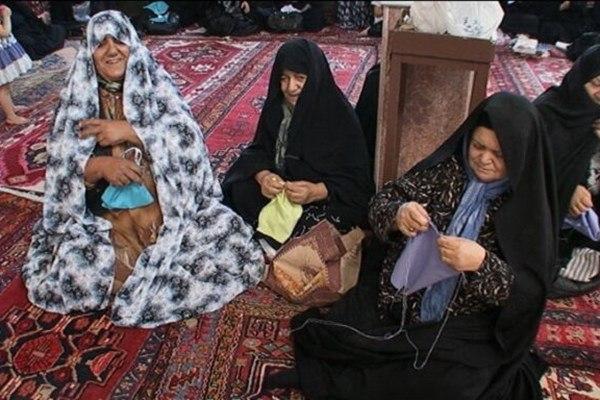
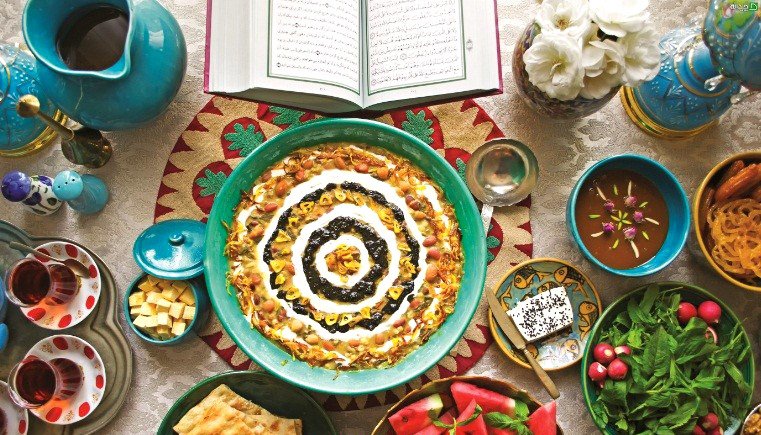
Some of these Kurdish rituals include arranging reconciliation ceremonies, baking local breads for blessing, and visiting relatives on Eid ul-Fitr.
Reconciliation Ceremony
One of the most popular and appreciated customs of the Kurds, especially the people of Sanandaj, is to hold reconciliation ceremonies in Ramadan. A few days before the start of the holy month, those in the neighbourhood who are at odds with each other are invited to a white-bearded person’s home to reconcile and put aside differences.
Saying Hello, Saying Goodbye
On the last night of the month of Sha’ban, a local pious person goes to the roof to announce the arrival of Ramadan after seeing the moon. He does this by reciting a prayer called Marhaba Marhaba (Hello). The Kurdish people say the Marhaba prayer until the middle of the month, and after that, a prayer called Al-Vida (goodbye) replaces it, which announces the end of the month.
Praying at dawn is the same ritual that many Iranian tribes perform before the dawn prayer time. Some Kurdish people know it as Saharikhani. The ceremony begins by performing some special music from different regions which is called Saharikhani music. Among these melodies to awaken people, the song of saying hello and goodbye is the most famous. Among the Kurds, the people of Bijar perform this custom with more fervour. According to a long-standing tradition, one of the neighbourhood’s elders prays on the roof of a house at dawn and wakes up the residents for Suhoor. In ancient times, this custom was known in some areas as “Pashiyo”, in which musicians played the tambourine or the drum, announcing the arrival of dawn.
Chain of Cookies & Salt Bag
One of the interesting customs of Kamyaran in Kurdistan province is to prepare cookie chains to hang on a salt bag. At the beginning of Ramadan, Kamyaran women cook very small, uniform cookies and thread them. They tie the cookie chain to a salt bag that is to be used for Ramadan food. They believe such a move will bring blessings.
Hanging “Koolireh” Bread
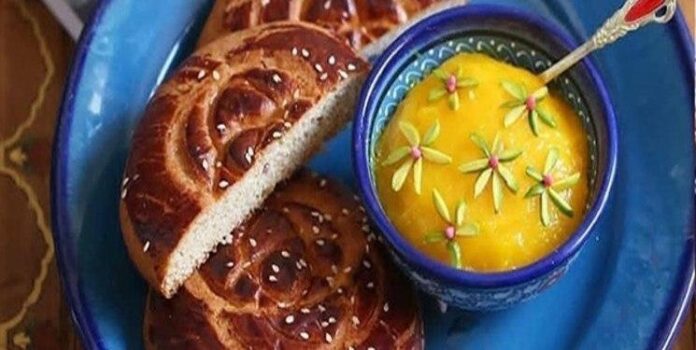
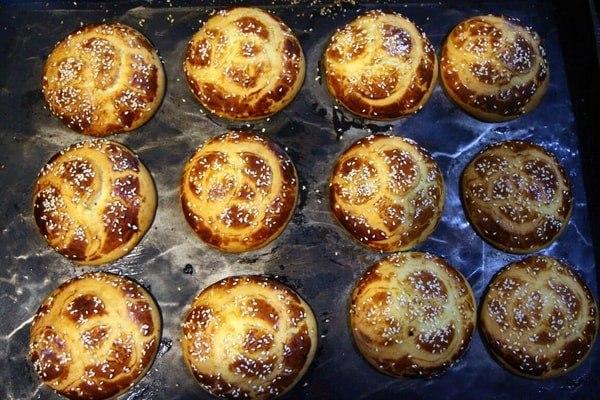
One of the most important rituals of Kurds during Ramadan is baking traditional breads, which they believe will bless the Iftar and Suhoor tables.
The people of Baneh bake “Koolireh” bread on the twenty-seventh night and break their fast with Koolireh and yogurt. Meanwhile, more affluent families cook more of this bread and take them to the mosque with yogurt and dates. They distribute them among the locals and the needy. They also thread a few breads and put them in their rice bag for more blessing.
The people of Dehgolan bake “Koolireh Naskeh” bread on the last day of Sha’ban and give it to each other as a gift for the month of Ramadan. They eat this bread at the first night to acquire the strength and ability to fast.
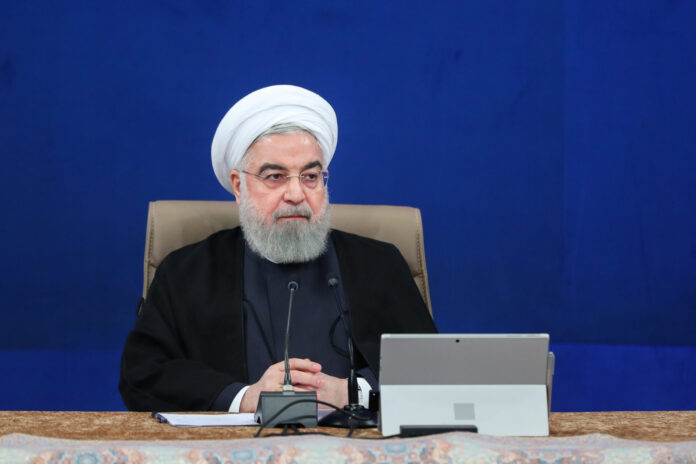
During their conversation, President Hassan Rouhani of Iran and his opposite number, Indonesian Joko Widodo touched upon cordial, brotherly and ever-growing relations between the two countries.
They also underlined the need to further enhance Tehran-Jakarta ties in all areas to serve the interests of both nations.
The two presidents also touched upon the coronavirus pandemic in the world as well as the plans made and measures adopted by both countries to fight the disease. They underscored the necessity of boosting mutual cooperation as well as exchanging experience and scientific and technological achievements in that regard. They also highlighted the need to meet each other’s needs in the campaign against the virus.
“The Islamic Republic of Iran has achieved good accomplishments in the field of science and technology and producing items such as diagnosis kits, ventilators, CT scan machines and N95 masks, and stands ready to work with Indonesia in that regard,” said President Rouhani.
The two presidents also touched upon friendly and age-old relations between the two countries, and expressed hope the holding of the 13th meeting of the Iran-Indonesia Joint Economic Cooperation Commission will expedite the implementation of agreements signed between the two sides and lead to further expansion of reciprocal ties.
President Rouhani noted that US sanctions against Iran run counter to basic human rights.
“Illegal objections can be dangerous at a time when all world countries are fighting the coronavirus,” said the Iranian president.
The Indonesian president, in turn, expressed content with Iran’s achievements in the fight against the coronavirus.
He said the pandemic has created tough conditions for the whole world today, urging all countries, especially Muslim nations, to help one another under the current circumstances.
Members of the clergy and vice-president Mike Pence pray over Donald Trump at the New Spirit Revival Centre in Cleveland Heights, Ohio, in September 2016. / Photo by Reuters
Born in 1953, Masjed-Jamei is a religion scholar and researcher, with a special focus on Christianity. A former ambassador of the Islamic Republic of Iran to Vatican and Morocco, Masjed-Jamei has authored several books including “Christians and the New Era”, which deals with the geopolitics of modern Christianity in the contemporary era.
A PhD graduate in geopolitics from the University of Pisa in Italy, Masjed-Jamei has taught at the University of Religions and Denominations of Qom as well as the Iranian Foreign Ministry’s School of International Relations.
Mohammad Masjed-Jamei, Iranian Religion Scholar and Researcher
In a detailed interview with Iranian news website Khabar Online, Masjed-Jamei has weighed on the impact of evangelical Christianity on the US politics and the country’s foreign policy, especially since President Donald Trump assumed office.
An English version of the interview, originally conducted in Persian, is published by IFP News in several parts.
The first part, below, mainly focuses on the impact of evangelical Christianity on Trump’s relations with Iran:
Even under the current critical circumstances brought about by the coronavirus pandemic, the Americans are seeking to make Iran surrender. Trump says Iranians should first ask for help before Washington offers them any assistance. This comes as the embattled US president has kept his disgraceful call for negotiations on the agenda. Even some time ago, a video was released showing a US military official explaining to American politicians that the coronavirus had weakened the Iranian military. What’s your take on these developments?
Developments related to the coronavirus unfold so rapidly that we need to pay attention to the date when political and military authorities make comments. Just a month ago, neither Trump nor other US officials would have thought that the virus would come to affect and paralyze the US society as well. Since the outset, they had been telling American people that the fuss kicked up over the coronavirus outbreak was a ploy by the Democrats, and that they (the Democrats) had blown the issue out of all proportion.
Of course, I would like to somehow get away from the day-to-day news and turn instead to the root causes of the current US approach. We should examine how the US policy toward Iran and the Middle East has changed since Trump took power as US President, and what features that policy now has. In our country, an overwhelming majority of people believe that the hostile policy adopted by both Trump and the US under Trump vis-à-vis Iran is the continuation of the White House’s same old policy over the past forty years and is geared to serving the interests that the US has always had, with some differences that are the result of today’s changing circumstances.
However, the reality is something else. The policy adopted by the US under Trump, which has become more and more hostile, is practically an ideological policy. Until before Trump took office, whether during Obama’s tenure or during the terms of Bush junior, Clinton, Bush senior and presidents prior to them, the United States’ policy toward Iran had been determined based on a whole raft of material and non-material interests as well as short-term and long-term objectives. Nevertheless, after Trump assumed office, Washington’s approach fundamentally changed and took on a completely ideological dimension, an ideology a key part of which is religion.
Has the US adopted this mostly religious, ideological approach only toward Iran, or toward the whole world?
In its totality, Trump’s foreign policy is geared to turning the United States into the “Number-One Power.” On the other hand, Trump and his like-minded associates are of the conviction that the United States’ credibility was badly stained during the tenure of Obama. Even former US Ambassador to the United Nations Nikki Haley shared the same idea. He is pursuing the motto and policy of “The US is Number One,” and, accordingly, he has ideas about his foreign policy. As a case in point, the issue of the environment is not important to him at all, and he takes international agreements lightly. Another example is that he does not care much about consultations with his allies such as Japan and South Korea as well as NATO members, even key members of the military alliance such as France. Hence, he makes unilateral decisions, which draw their ire.
On the whole, Trump has adopted a “nationalistic” policy, which is also called a “bullying” policy in layman’s term. His policy vis-à-vis the whole world is the same, especially with regards to international agreements, especially climate deals. The United States didn’t use to be so, even when Republican administrations were in power.
The widely-held belief in Iran is that the United States’ policy toward our country is mostly influenced by historical records over the past four decades and is associated with issues which started with the US-orchestrated coup in 1953 against the government of [then Iranian Prime Minister Mohammad] Mosaddegh and the continuation of rule of the 2nd Pahlavi ruler.
This mentality was true before Trump took office. All previous American presidents, even a neo-conservative person and rather radical like Bush Junior, based their Iran policy on political calculations and their interests. George W. Bush and a group of his associates had really evangelical inclinations, but their evangelicalism was an individual belief and they did not take their religious beliefs into account when adopting their foreign policy. Nevertheless, Trump and his team not only incorporate this ideology into the foreign policy, but basically these very ideologies lay the foundation of their foreign policy.
Therefore, the assumption which exists in Iran does not conform to reality. The United States’ current policy vis-à-vis Iran and the Middle East region is exactly ideological, and ideology in which religion plays the key role.
You can read the second part of the interview here.
An Iranian deputy foreign minister says diplomatic efforts are being made to allow the foreign businesspeople to travel to Iran in conformity with the health protocols amid the coronavirus concerns, noting that nearly all border crossings, except the common border with Turkmenistan, are open at present.
In remarks on Sunday, Iranian Deputy Foreign Minister for Economic Diplomacy Gholamreza Ansari said the Iranian diplomatic missions abroad are holding consultations with the host countries to pave the way for the resumption of business travels to Iran in the current circumstances.
While the outbreak of the novel coronavirus has hampered travels between the countries, Iran has launched talks with the neighbouring countries to normalize the situation for the business people intending to cross the border, he noted, saying the country’s foreign missions have been provided with a series of protocols formulated by the Health Ministry covering the air, sea and land travels.
“We have asked our missions to start negotiations with the local authorities on the ways the two sides can figure out to allow for safe travels by the individuals,” Ansari added.
He further noted that nearly all of the Iranian borders, except for the common border with Turkmenistan, remain open.
“Turkmenistan has shut its borders with all countries, including the neighbours and non-neighbours, due to the coronavirus outbreak. As the Turkmen officials claim, there has been no case (of coronavirus) in that country, so they have closed almost all borders in order to protect themselves against the coronavirus harms,” the Iranian deputy minister noted.
Although the trade activities and the shipment of commodities are going on at Iran’s northern, southern, eastern and western borders, the business processes could not rely only upon the freight operations, but the individuals and merchants should be also able to make trips, Ansari added.
He finally noted that business people and truck drivers from Afghanistan and Pakistan are allowed to enter Iran by observing a series of health protocols and regulations, adding, “We seek to reach agreements on frameworks for the same situation with the other neighbours as well, and to create conditions for the travels by individuals with strict border control.”
Having your phone as a remote control would be very practical since people forget where they placed the remote, and having this app on your mobile device would give you easy access. In this article, we will be talking about what the roku mobile app is and how to use it.
What is Roku App About?
Roku mobile app is a mobile partner program which is free for both Android and iOS. It is able to make your smartphone into your partner for an amazing viewing experience. Additionally, it can also be a substitute for the actual remote control for Roku. It can copy most of the actual remote’s functions. However, it can’t serve as a universal remote control.
How to Start Roku TV
You can utilize the mobile app to operate the Fast TV Start on your Roku TV, and this has a quick start-up time, so don’t worry about waiting that long. It gives your TV the ability to download and install certain updates even when it’s on standby mode.
You have to first press the power logo on your remote control to turn your TV on, and this feature comes with a voice command, you can use this by pressing on the microphone logo. You now have the ability to turn your TV on just by uttering the words “Launch TV,” or if you want to use the YouTube channel, you can say “Launch YouTube.”
How to Add Channels from the Store
Using this app, you are able to add and find channels from the store of the app. You can search for certain channels that you like by scrolling down the list. Once you have located the store, you can now look for channels that you want to add on your list. All you have to do is just to tap the “Add Channel,” then you’re good to go.
If you already know the specific title of the show or movie that you want to watch, you can just search for it on the search bar or use the voice command for easy access. You can add it to your view later list if you decide to watch it on a later date.
Roku’s Remote App
This is just an amazing application that gives off better features that would improve the execution of the regular Roku remote control. An accessible keyboard for an easy search for entering data or voice search. This app serves as a substitute when you don’t have the actual remote control for Roku.
If you want to utilize this app, you just have to download it on your app store devices. When you have opened the mobile app, you have to look for the control icon, which is found on the bottom part of the navigation bar. The remote is automated, so it will launch on its own when you have opened a certain channel from the app.
Takeaway
There you have it! Roku mobile app is certainly a practical way of watching movies and TV shows that you are fond of. With this app, you are now able to spend more time with your family and friends without having to spend so much money. This app is very helpful for people who just want to have a nice and quiet evening and just enjoy a movie.
Iran’s deputy health minister says over a hundred towns and cities across the nation have, on average, reported one or zero daily case of coronavirus infection over the past two weeks.
Iraj Harirchi said the 116 towns and cities where daily infections have almost been nonexistent are regarded as “white” areas.
He said of a total of 436 towns and cities, 127 had two or fewer confirmed cases of daily infection in 14 days.
Seventy-three towns and cities also reported around three cases of daily infection over the same period, he added.
The official said very few towns and cities reported more than ten daily cases over the past two weeks.
His comments came after the National Coronavirus Headquarters divided the country into “white,” “yellow” and “red” areas.
White areas are spots with very few infection cases; red ones are high-risk areas, and yellow areas are somewhere in between.
Haririchi said the policies adopted for towns and cities differ based on whether the intended town is classified as white, yellow or red.
He said the first decision adopted was that holy sites like mosques will gradually begin to reopen and religious congregations such as congregational prayers are allowed to be held in white areas.
However, he added, this easing of restrictions does not mean the situation is back to normal. He urged people to keep observing health protocols and directives. He added if a “white” area changes to a “yellow” or “red” area, for instance, then health protocols for that town or city will change accordingly.
Iranian Foreign Minister Mohammad Javad Zarif had a phone conversation with his Emirati counterpart Sheikh Abdullah bin Zayed Al Nahyanon Sunday evening.
In the phone call, the two sides offered congratulations to each other on the advent of the holy Islamic month of Ramadan.
They also exchanged views on the latest regional developments, the fight against the COVID-19 pandemic, and other issues of mutual interest.
Earlier in the day, Zarif held separate phone conversations with his Omani and Iraqi counterparts, Yusuf bin Alawi and Mohamed Ali Alhakim, on the latest regional developments as well as the COVID-19 outbreak.
In the phone calls, the top diplomats congratulated each other on the advent of the holy Islamic month of Ramadan. They also discussed the latest developments in bilateral relations, the regional issues, and the fight against the coronavirus outbreak.
The Iranian and Iraqi foreign ministers particularly exchanged views on the latest developments in Iraq.