Saturday, December 27, 2025
Home Blog Page 283

Israeli settler attacks against Palestinians in occupied West Bank up 30%: Report

Israel’s Army Radio, citing government data, said the first half of 2025 saw 414 settler attacks, up from 318 in the first half of last year.

“This represents a significant increase of about 30% compared to the same period last year,” it added.

“This increase is reflected not only in the number of attacks but also in their severity, as the attacks are becoming more and more severe,” the radio reported, citing a senior military official.

According to the radio, illegal Israeli settlers staged 679 attacks against Palestinians in the West Bank in 2024.

Since the start of Israel’s assault on Gaza in October 2023, at least 986 Palestinians have been killed and more than 7,000 injured in the West Bank by Israeli forces and illegal settlers, according to the Palestinian Health Ministry.

The International Court of Justice last July declared Israel’s occupation of Palestinian territory illegal and called for the evacuation of all settlements in the West Bank and East Jerusalem.

Palestine called on Sunday for “deterrent international measures” to end Israeli settler violence in the occupied West Bank.

In a statement, the Palestinian Foreign Ministry appealed to the international community “to bear its responsibility to stop settler crimes against Palestinian civilians and implement the relevant UN resolutions.”

It called for taking “the necessary deterrent measures to end attacks of the settler gangs and their terrorist elements against our people, their land, property, and sanctities.”

Parliament speaker condemns Trump’s anti-Iran rhetoric

“The allegations of [US] disputes with the apartheid Zionist regime, the use of insolent language towards prominent and distinguished Iranian figures as well as other rhetoric are all meant to draw public attention, and disrupt our decision-making,” Qalibaf said at an open parliament session in Tehran on Sunday.

“The stances of this gambler president (Donald Trump) lack any value and credibility,” he noted.

Qalibaf further highlighted that Trump’s statements are part of a psychological strategy intended to promote disillusionment and fear among the Iranian people while hindering the critical insight required by Iranian officials for political decision-making.

The top Iranian legislator also pointed out contradictory statements and fake news from high-ranking Western officials, notably the “disrespectful” US president, as evidence supporting his assertion.

“One day, he lifts the [anti-Iran] sanctions in his own imaginary world without having issued a decree simply to deceive the public.”

“Hours later, he reimposes the sanctions that have not been lifted under the pretext of such-and-such a position of Iranian officials to suggest that Iranian officials are to blame for the imposition of the sanctions,” Qalibaf added.

The Iranian parliament speaker went on to note that questions remain unanswered as to how Washington initiated the war of aggression against Iran while it was engaged in indirect nuclear negotiations with Tehran.

Qalibaf stressed that Iranians will never back off from protecting their homeland, saying the traitors and mercenaries will be consigned to the dustbin of history.

“Now that the zealous Iranian youths have disappointed the enemies, the ill-wishers are attempting to wreck the unified front of Iranians in confronting the enemy through psychological warfare, sending contradictory and meaningless messages, and disrupting the nation’s decision-making, and to complete their unfinished project of plunging Iran into chaos,” he stated.

Israel launched an unprovoked war of aggression against Iran on June 13, assassinating senior military commanders and top nuclear scientists in targeted strikes before attacking nuclear and military sites and residential areas.

The Iranian Armed Forces responded with 22 waves of missile strikes as part of Operation True Promise III, which targeted numerous strategic sites across the Israeli-occupied territories.

Kayhan newspaper criticizes Western-leaning factions over war, negotiations

The editorial questioned why, despite promises to prevent war, the nation found itself embroiled in military confrontation after their rise to power.

The newspaper specifically called out those who had claimed that “with the victory of their candidate in elections, the threat of war would recede.”

It argued that the reality had been the opposite, with the nation now facing the consequences of these groups’ approach to diplomacy, including a failed reliance on negotiations with the US.

The article further criticized the notion that the US under Donald Trump might invest billions in Iran, labeling such claims as “naive.”

It also raised questions about the priorities of these factions, noting their focus on issues unrelated to the escalating threats.

Kayhan concluded by urging for accountability once the current crisis is over, calling for these figures to explain their actions and miscalculations.

Israeli lawmakers accuse PM of trading Gaza war for end to his corruption trial

Benjamin Netanyahu

“(Netanyahu) is conditioning the future of Israel and our children on his trial,” Knesset member for the Democrats Party, Naama Lazimi, said in a statement.

She added that the Israeli premier showed that he is unfit for the office by “trading his indictment in exchange for a political settlement and an end to the war.”

US President Donald Trump called again on Saturday for Netanyahu’s corruption trial to be cancelled.

Highlighting the billions of dollars the US spends annually to support Israel, Trump declared, “We are not going to stand for this,” and urged authorities to “Let Bibi go.”

“Those behind President Trump’s tweet are Netanyahu and his corrupt gang,” Democrats lawmaker Gilad Kariv stated.

He denounced the Israeli premier and his circle’s “willingness to play with the national security of the State of Israel and the issue of the hostages in order to save Netanyahu from conviction in court.”

The Palestinian resistance group Hamas has repeatedly announced that it is ready to release all Israeli captives in Gaza in exchange for an end to the ongoing war, Israeli withdrawal from the enclave, and the release of Palestinian prisoners.

However, Netanyahu has rejected these terms, and continued his genocidal war on the Gaza Strip, where more than 56,400 people have been killed since October 2023.

Yesh Atid Knesset member Karine Elharrar warned that Netanyahu was “acting against the Israeli public interest” by linking his legal fate with hostage negotiations and regional normalization agreements.

She also accused Trump of effectively “conditioning US aid on the prime minister’s trial.”

Opposition leader Yair Lapid urged the US president “not to interfere in a legal process in an independent country.”

He also suggested that Trump’s interference might be a form of “compensation” to Netanyahu for political concessions in Gaza.

Religious Zionism lawmaker Simcha Rothman, chairman of the Knesset Constitution, Law and Justice Committee, called Trump’s call to end Netanyahu’s trial “inappropriate even if he is correct.”

Netanyahu faces charges of bribery, fraud, and breach of trust that could lead to imprisonment if proven.

In January, Netanyahu began interrogation sessions related to Cases 1000, 2000, and 4000, which he denies. The attorney general filed an indictment related to these cases at the end of November 2019.

Case 1000 involves Netanyahu and his family receiving expensive gifts from wealthy businessmen in exchange for favors.

Case 2000 concerns alleged negotiations with Arnon Mozes, the publisher of the Israeli daily Yedioth Ahronoth, to gain positive media coverage.

Case 4000, considered the most serious, involves providing facilitation to Shaul Elovitch, the former owner of the news site Walla and a telecommunications company Bezeq, in return for favorable media coverage.

Netanyahu, whose trial began on May 24, 2020, is the first sitting Israeli leader to take the stand as a criminal defendant in Israel’s history.

He also faces charges of war crimes and crimes against humanity, with the International Criminal Court issuing arrest warrants for him and former Defense Minister Yoav Gallant in November 2024 over atrocities in Gaza.

Iran says doubts ceasefire durability, warns of response to any further attacks

In a phone call with Saudi Defense Minister Prince Khalid bin Salman, General Mousavi stated that the recent military assault on Iranian territory by the US and Israel occurred despite Iran’s restraint and while indirect negotiations with Washington were underway.

“These two regimes have once again proven their disregard for international norms,” Mousavi said, referring to the 12-day conflict as further evidence of “unlawful aggression.”

“We were not the ones to start this war, but we responded with full force. Given our doubts about the enemy’s commitment to any ceasefire, we are prepared to deliver a firm response to any renewed violations.”

The Saudi defense minister expressed condolences over the loss of Iranian military commanders in the conflict.

He emphasized that Saudi Arabia has not merely condemned the aggression but has actively worked to help end the hostilities.

IAEA chief says Iran could rebuild nuclear program within months

In an interview with CBS News released on Sunday, Grossi said the strikes on Iranian nuclear facilities, including Fordow, Natanz, and Isfahan, inflicted “a very serious level of damage,” but some of the assets are “still standing.”

“The capacities they [Iran] have are there. They can have, in a matter of months, I would say, a few cascades of centrifuges spinning and producing enriched uranium, or less than that,” he added, while acknowledging that even the Iranians likely do not yet know the extent of the damage.

According to the IAEA chief, Iran maintains a significant industrial capacity.

“Iran is a very sophisticated country in terms of nuclear technology, as is obvious. So you cannot disinvent this. You cannot undo the knowledge that you have or the capacities that you have.”

Grossi went on to say that concerns about Iran’s nuclear program cannot be put to rest through a military solution.

“I think this should be the incentive that we all must have to understand that… you are not going to solve this in a definitive way militarily. You are going to have an agreement,” he stated, expressing hope that IAEA inspectors would soon have access to the country’s nuclear sites again.

Iran has barred the inspectors from its nuclear facilities, accusing the agency of distorting facts in a recent report, which Tehran stresses served as justification for the Israeli and US strikes.

Grossi responded by saying: “Really, who can believe that this conflict happened because of a report of the IAEA? And, by the way, what was in that report was not new.”

The comments come after a 12-day conflict between Israel and Iran, during which the US and Israel conducted airstrikes on Iranian nuclear sites.

US President Donald Trump claimed the strikes “completely obliterated” Iran’s nuclear facilities and warned of further attacks if Iran pursues nuclear weapons. Several US media outlets have suggested, however, that the damage to Iran’s nuclear infrastructure was limited.

Tehran has denied that it has plans to produce a nuclear weapon and maintains that its nuclear program is for peaceful purposes, stressing that it wants to reserve the right to enrich uranium for civilian use.

Iran begins gas exports from third train of South Pars Phase 14 refinery

South Pars

Hamidreza Saghafi, CEO of Petropars Group, announced the successful launch of the third processing unit, which follows the recent commissioning of the fourth train.

He described the achievement as a clear demonstration of Iranian engineering capability and a step forward in expanding the nation’s production and export capacity amid ongoing regional challenges.

“The commissioning of the third gas sweetening train enabled the start of exports from Phase 14. This accomplishment reflects not only technical expertise but also the strong organizational cooperation and national commitment of Petropars personnel,” Saghafi said.

He expressed gratitude for the efforts of project staff, including contractors, engineers, workers, and the Petropars Operation and Management Company (POMC), highlighting their dedication to securing the country’s energy future.

Saghafi emphasized the importance of human capital in advancing Iran’s energy sector, especially under current economic and geopolitical pressures.

The South Pars Gas Filed in the Persian Gulf contains the largest of gas reserves in the world, shared by Iran and Qatar.

Trump slams Israel’s prosecutors over corruption trial for Netanyahu

Trump and Netanyahu

Netanyahu was indicted in 2019 in Israel on charges of bribery, fraud and breach of trust – all of which he denies. The trial began in 2020 and involves three criminal cases.

On Friday, the court rejected a request by Netanyahu’s lawyers to delay his testimony for the next two weeks because of diplomatic and security matters following the 12-day conflict between Israel and Iran this month.

He is due to take the stand on Monday for cross examination.

“It is INSANITY doing what the out-of-control prosecutors are doing to Bibi Netanyahu,” Trump said in a Truth Social post, adding that the judicial process was going to interfere with Netanyahu’s ability to conduct talks with Palestinian fighters Hamas, and Iran.

Trump’s second post over the course of a few days defending Netanyahu and calling for the cancellation of the trial went a step further to tie Israel’s legal action to U.S. aid.

“The United States of America spends Billions of Dollar [sic] a year, far more than on any other Nation, protecting and supporting Israel. We are not going to stand for this,” Trump noted.

Netanyahu “right now” was in the process of negotiating a deal with Hamas, Trump said, without giving further details. On Friday, the Republican president told reporters that he believes a ceasefire is close.

Hamas has announced it is willing to free remaining hostages in Gaza under any agreement to end the war, while Israel says it can only end it if Hamas is disarmed and dismantled. Hamas refuses to lay down its arms.

Interest in resolving the Gaza conflict has heightened in the wake of the U.S. and Israeli bombings of Iran’s nuclear facilities.

Hezbollah chief rules out laying down arms amid Israeli attacks

Hezbollah

According to a report by the Lebanese News Agency NNA, Qassem said a ceasefire with Israel would impose responsibilities on the state, but Hezbollah was prepared in the face of Israel’s continued attacks.

“Who in their right mind would give up their power? We will not give up our power while Israel continues its attacks,” he stated in Dahieh, south of Beirut.

Qassem added Israel’s attacks targeting civilians in Nabatieh are unacceptable and the state must do its part to deal with the situation.

He emphasized that the Lebanese resistance group would not remain silent in the face of the attacks.

“Do you think we will remain silent forever? That is not true. You have already tried us, and we have no choice but our honor.”

Hezbollah frequently states it will not surrender its weapons in the context of national sovereignty.

Lebanese Druze leader and former head of the Progressive Socialist Party, Walid Jumblatt, and leader of the Christian Lebanese Forces Party, Samir Geagea, have also said weapons should only be in the hands of the state.

Israeli forces have conducted near-daily attacks in southern Lebanon, claiming to target Hezbollah’s activities despite a ceasefire between Israel and Lebanon that was reached in November. The truce ended months of cross-border warfare between Israel and the Lebanese resistance group.

Lebanese authorities have reported nearly 3,000 Israeli violations of the truce, including the deaths of at least 224 people and injuries to more than 500, since the agreement was signed.​​​​​​​

Under the ceasefire deal, Israel was supposed to fully withdraw from southern Lebanon by Jan. 26, but the deadline was extended to Feb. 18 after Tel Aviv refused to comply. Israel still maintains a military presence at five border outposts.

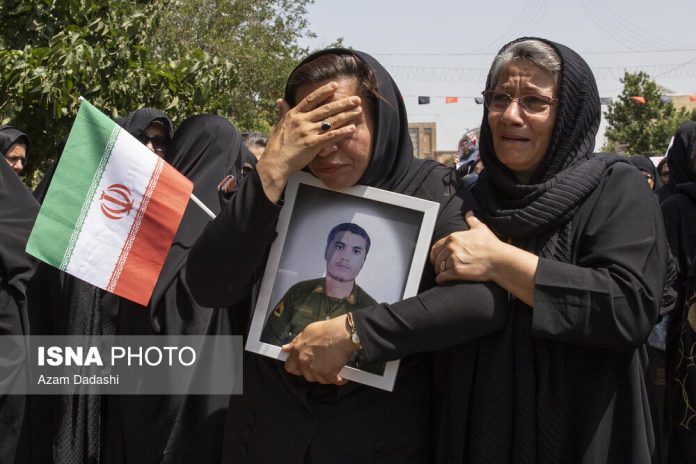
Funeral held for senior IRGC commanders

The senior commanders were laid to rest in Behesht-e Zahra Cemetery, in an area designated for Iran’s fallen military personnel, including the “Defenders of the Shrines” against militants in Iraq and Syria.

The ceremony began at 8:00 AM local time and was attended by a large crowd of mourners.

Mourners chanted religious slogans as the coffins were carried to their final resting place.

Senior Iranian officials, including General Esmail Qaani, the commander of the IRGC’s Quds Force, were present at the ceremony.

General Hajizadeh and General Bagheri were among several other top officials assassinated in Israeli strikes on June 13 in Tehran.

Separately, preparations were underway for the burial of General Hossein Salami, the commander in chief of the IRGC, at the Shrine of Abdul Azim in Shahr-e Rey, south of Tehran.

The body of General Ali Shademani, the commander of the Khatam al-Anbiya Central Headquarters, will also be laid to rest on Sunday in the western city of Hamedan beside the grave of the late General Hossein Hamedani, a prominent IRGC commander assassinated in Syria in 2015.