Saturday, December 27, 2025
Home Blog Page 284

At least 71 killed in Israeli attack on Iran’s Evin prison, judiciary spokesman says

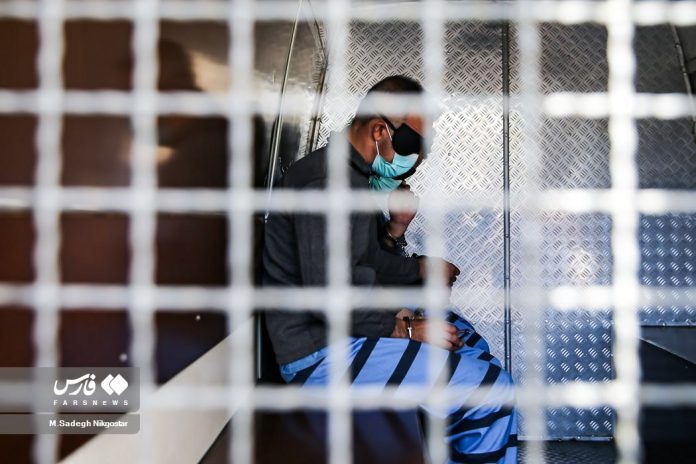
Evin Prison

Speaking on Sunday, Jahangir stated that the casualties include prison staff, conscripted soldiers, inmates, their visiting family members, and nearby residents.

He described the incident as a “full-scale crime” committed by a “Zionist terrorist gang.”

The attack targeted key facilities within the prison compound, including the medical ward, engineering offices, and visitation and judicial buildings.

Jahangir noted that several civilians living adjacent to the prison were also killed or injured, with many sustaining serious physical and material losses.

“Some of the victims were family members who had come for visits or to follow up on legal matters. The projectile struck the visitation area, causing fatalities and injuries among those present,” he said.

Jahangir added that several injured individuals were treated on-site, while others were hospitalized and later discharged after receiving medical care.

Iranian authorities have condemned the attack as a violation of international law and called on global institutions to hold Israel accountable for the 12-day unprovoked aggression.

Iran’s prosecutor general: Illegal migrants must all leave 

Afghan Refugee in Iran

He was speaking at a ceremony honoring the Iranian judiciary martyrs on Saturday.

He warned that if the illegals fail in leaving Iran, they will face legal action.

Addressing the judiciary, Movahedi Azad called on citizens to cooperate with security forces and reminded undocumented foreigners that Iran has shown hospitality, but security remains a red line.

He also said all those who have been deceived by Iran’s enemies into trying to undermine the country’s national security are obliged to surrender to authorities if they want to be shown leniency by the Islamic Republic of Iran.

Iranian security forces have arrested a number of illegal migrants over the past days for involvement in acts of sabotage during the Zionist regime’s aggression against Iran.

Iranian envoy: Possible launch of Israeli drones from Azerbaijan being investigated

Mehdi Sobhani stated that Tehran is conducting investigations to determine whether Israeli drones used Azerbaijani soil during the recent 12-day war to carry out attacks on Iran.

He added, “We do not confirm some of the information and reports published by certain sources in this regard… Once all aspects of the situation become clear, we will decide on our response.”

Sobhani further said, “We have not permitted Iranian territory to be used for such purposes. If Azerbaijan has granted such permission, it must provide an explanation in accordance with international law.”

He also noted that Tehran has requested Baku to conduct a thorough investigation into the matter.

In a recent phone call between the presidents of the two countries, Baku assured Tehran that Azerbaijani soil would not be allowed to be used against Iran.

However, the Iranian ambassador cautioned, “We all know that the Israeli regime does not abide by any laws or regulations. They may have taken advantage of the situation, but we need accurate information before making any judgment.”

Nearly half of Americans support sanctions on countries that buy Russian oil and gas: Survey

Russia Oil

A bipartisan sanctions bill in the U.S. Senate aims to slap 500% tariffs on imports from countries that continue to purchase Russian energy products. U.S. President Donald Trump has not backed the measure and a vote on the bill has reportedly been postponed.

In a YouGov survey of adult U.S. citizens conducted June 12-16, 24% said they “strongly support” sanctioning Russian energy buyers while 25% said they “somewhat support” secondary sanctions against these countries.

Like the Senate bill, support for secondary sanctions among respondents was bipartisan. Of “strong supporters,” 26% indentified as Democrats while 27% were Republicans.

More Republicans than Democrats said they favored the specific 500% tariff penalty proposed by legislators. While 29% of respondents who “strongly supported” the measure were Democrats, 41% were Republicans. Only 32% of survey respondents overall said they supported the 500% tariff.

The 500% tariff has been championed by Republican Senator Lindsey Graham, a Trump ally and co-author of the sanctions bill alongside Democrat Richard Blumenthal. Along with tariffs on countries purchasing Russian oil, the bill would also slap “bone-crushing” new sanctions against Russia, according to Graham.

A majority of Americans support increasing or maintaining U.S. sanctions against Russia, the survey found. Here the division along party lines is stark, with 59% of those in favor of increasing sanctions on Moscow identifying as Democrats and only 37% identifying as Republicans.

The poll also showed that about 50% of Americans oppose cutting military aid to Ukraine. According to YouGov, 26% of U.S. adults are in favor of increasing military aid while 23% believe Washington should maintain its current levels of support.

The results illustrate the contrast between the prevailing views of the American public and the policies of the Trump administration. Trump has repeatedly undercut the Senate sanctions bill, requesting delays to the vote and calling on lawmakers to weaken the proposed measures.

While Trump has at times threatened to impose new sanctions on Russia, he has never followed through on any of those threats and consistently shoots down domestic and international appeals to get tough on Moscow. At the recent G7 Summit in Canada, Trump reportedly insisted that sanctions would be at odds with U.S. business interests.

U.S. Defense Secretary Pete Hegseth also announced earlier this month that Washington will cut military aid to Ukraine in its upcoming defense budget.

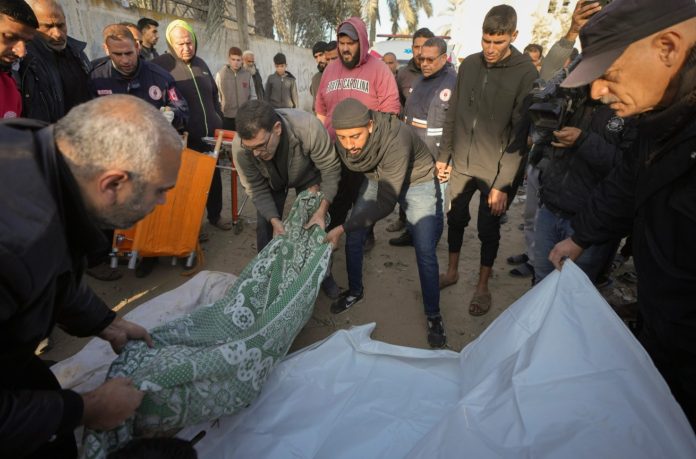
66 children died from malnutrition in Gaza under Israeli blockade since start of war

Gaza War

The infant deaths reflect the worsening humanitarian crisis in Gaza, where Israel has imposed a siege since Oct. 7, 2023, tightening restrictions on aid and fuel.

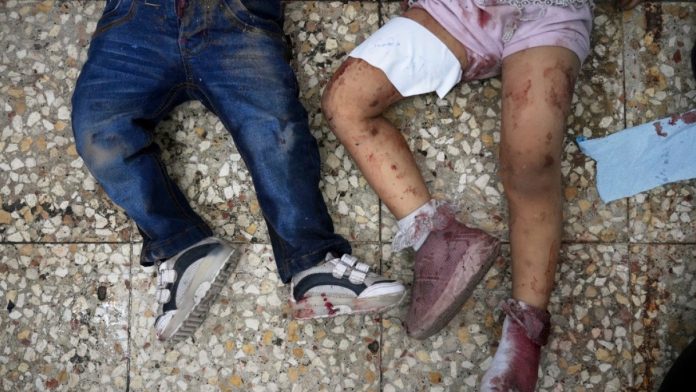
The latest fatalities include three infants who died from malnutrition and lack of medicine this week.

Jouri al-Masri, three months old, died Thursday in Deir al-Balah after her family was unable to obtain the specialized therapeutic milk she needed, according to Gaza’s Government Media Office.

On the same day, 5-month-old Nidal Sharab and 10-day-old Kinda al-Hams died at Nasser Hospital in Khan Younis, with their families blaming extreme malnutrition and critical shortages of medical supplies.

“These deaths reflect the ongoing war crime of denying access to life-saving essentials,” the media office announced, describing the blockade and border closure as a “crime against humanity and a blatant violation of international humanitarian law and the Geneva Conventions.”

The office also condemned what it called the international community’s “shameful silence” in the face of systematic starvation in Gaza.

On Friday, World Health Organization Director-General Tedros Adhanom Ghebreyesus stated an estimated 112 children are being admitted to Gaza hospitals each day for malnutrition treatment.

Israel has kept Gaza’s main crossings largely closed since March 2, blocking hundreds of aid and supply trucks. UN agencies say Gaza requires at least 500 trucks daily to meet basic needs, but often fewer than 50 are allowed to enter.

Rejecting international calls for a ceasefire, the Israeli military has carried out a deadly offensive on Gaza since October, killing more than 56,400 Palestinians, most of them women and children, according to Gaza health officials.

The International Criminal Court in November issued arrest warrants for Israeli Prime Minister Benjamin Netanyahu and former Defense Minister Yoav Gallant over war crimes and crimes against humanity in Gaza.

Israel also faces a genocide case at the International Court of Justice over its war on the enclave.

NATO state members wary of buying US weapons: Bloomberg

US Weapons

During a summit in The Hague this week, NATO states committed to raising military spending to 5% of GDP by 2035 to counter what they described as a “long-term threat posed by Russia to Euro-Atlantic security” – a claim that Moscow has repeatedly denied.

Concerns have reportedly emerged about deepening dependence on the American defense industry, particularly under the leadership of President Donald Trump.

According to Bloomberg, leaders fear they could be exposed to greater risks, especially in light of Trump’s efforts to improve ties with Russia and past threats to annex allied territory. Boosting reliance on US arms has become “an increasingly hard sell at home,” the outlet noted.

French President Emmanuel Macron has long championed the idea of securing greater defense autonomy for European NATO states, urging the development of a self-sufficient military industrial base.

Canada, a key NATO ally, is reportedly reconsidering its involvement in the US-led F-35 fighter jet program and may switch to Swedish alternatives.

“We should no longer send three-quarters of our defense capital spending to America,” Canadian Prime Minister Mark Carney stated earlier this month.

Copenhagen has also displayed some resistance, telling Washington that American arms deals have become “politically difficult” given Trump’s suggestion that the US annex Greenland, which is currently controlled by Denmark, Bloomberg reported.

Unease in the alliance has also been stoked by Trump’s move to cut intelligence sharing with Ukraine earlier this year. According to unnamed officials cited by Bloomberg, this decision “alarmed allies,” as it raised concerns over how much control the US might wield over weapons exports in the event of a crisis.

Nevertheless, a lack of viable domestic alternatives continues to bind European nations to US suppliers, according to the outlet. Decades of underinvestment have left Europe’s defense manufacturing capacity underdeveloped. As a result, countries will likely keep buying American equipment to meet rearmament targets, particularly as stockpiles have been depleted by shipments of military aid to Ukraine.

Moscow has condemned the EU’s militarization trend and arms transfers to Kiev, characterizing the conflict as a NATO proxy war. President Vladimir Putin has dismissed NATO’s concerns of Russian aggression as “nonsense,” instead blaming the alliance’s expansion and “aggressive behavior” for escalating tensions.

Iran’s envoy protests to UN over US, Israeli threat to assassinate Ayatollah Khamenei

Ayatollah Khamenei

In a letter addressed to the UN Secretary-General, Security Council, and General Assembly President on Friday, Amir Saeid Iravani called upon the international organization to take necessary measures to hold those responsible for such internationally unlawful actions accountable.

These officials have “openly and repeatedly threatened the Supreme Leader of the Islamic Republic of Iran with assassinations,” read the letter.

According to the letter, the Israeli minister of military affairs, Israel Katz, threatened Ayatollah Khamenei during an interview with Israeli media on June 26, revealing the regime’s assassination plots.

“The US and the Zionist regime of Israel have openly threatened to assassinate Iran’s Supreme Leader. This criminal act constitutes a manifest instance of State terrorism; and, the very gravity of such a threat must not be permitted to be diminished or normalized in any manner whatsoever,” Iravani said.

This “criminal and provocative rhetoric” was made in complete coordination with equally provocative statements by the US President Donald Trump, first on June 18 and again on Friday.

In these remarks, Trump described Iran’s Leader as an “easy target”, saying “we are not going to take him out— at least not for now”, while claiming to have prevented either the Israeli regime or US armed forces from ending his life, the letter added.

“Iran, while reserving its inherent right to exercise self-defense under Article 51 of the United Nations Charter, calls upon the Secretary-General and the Security Council to condemn in the strongest possible terms these assassination threats, which constitute a blatant violation of international law and the United Nations Charter, and to deem such statements illegal, irresponsible, and terrorist in nature,” it said.

“Such reckless and deliberate threats by senior officials constitute a serious violation of the Charter of the United Nations, particularly Article 2 (4), which unequivocally prohibits both the threat or use of force against the territorial integrity or political independence of any State.”

“Such threats set a dangerous precedent by seeking to normalize assassination as a tool of foreign policy, in blatant contempt for the international legal order. The international community must not remain silent in the face of such clear and escalating violations of international law,” it added.

Israel carried out multiple acts of aggression on Iranian territory, targeting high-ranking military commanders, nuclear scientists, and ordinary civilians. On Sunday, the US bombed the Natanz, Fordow, and Esfahan nuclear sites in violation of the United Nations Charter, international law and the NPT.

The Iranian Mission brought this flagrant violation of international law and the UN Charter to the attention of the Secretary-General, the President of the Security Council, and the President of the General Assembly, urging them to fulfill their legal obligation in confronting such incendiary and criminal statements.

Earlier on Saturday, Iran’s Foreign Minister Seyed Abbas Araghchi advised Trump to show respect toward Ayatollah Khamenei, if he genuinely seeks a deal with Iran.

“If President Trump is genuine about wanting a deal, he should put aside the disrespectful and unacceptable tone towards Iran’s Supreme Leader, Grand Ayatollah Khamenei,” the top diplomat wrote in a social media post.

US Senate refutes limiting Trump’s military authority on Iran

US Attack Iran

The vote is a win for the White House and a sign of how much leeway Republicans and some Democrats are willing to give President Trump to take unilateral military action against Tehran.

The resolution, offered by Sen. Tim Kaine (D-Va.), was rejected 47-53. One Democrat — John Fetterman (Pa.) — voted “no,” and one Republican — Rand Paul (Ky.) — voted “yes.”

Many Democrats, and even some Republicans, have argued that the White House was required to seek consent from Congress before green-lighting last weekend’s strike.

But the White House received backup from Republican leadership on the Hill, with Speaker Mike Johnson (R-La.) going so far as to suggest the War Powers Act is unconstitutional.

The Iran strike reignited an old tug-of-war between the executive branch and Congress over war powers.

Trump twice vetoed resolutions related to the War Powers Act in his first term, including one aimed at curtailing his powers to strike Iran.

Congress also confronted the question when President Barack Obama authorized air strikes on Libya in 2011.

A pair of briefings in the Senate and House on Thursday and Friday did little to satisfy Democrats.

House Democrats left their Friday morning largely grumbling at what they described as “propaganda” and a “waste of time.”

The sentiment was similar among Democratic senators following their Thursday afternoon session.

‘One-sided game’ in relations with West has finished: Putin

Putin

NATO is currently justifying its planned defense spending hike to 5% of its members’ GDP and military buildup in Europe by pointing to Russia’s “aggressiveness,” Putin said, adding that the bloc’s members are “turning everything upside down” when they make statements such as these.

“No one is saying a word about how we’ve come up to the Russian special military operation,” the president said, adding that the roots of the Ukraine conflict go back decades when Moscow was “blatantly lied to” about NATO expansion. “What followed was one expansion wave after another,” he stated.

Russia’s security concerns about the bloc’s activities have been consistently ignored and met with silence, according to Putin. “Isn’t it aggressive behavior? That is precisely aggressive behavior, which the West does not want to pay attention to.”

According to the president, Western nations have supported separatism and even terrorism as long as it is directed against Russia. Terrorist groups were outright ignored if they acted on Russian territory, he claimed.

“Everything was good as long as it was against Russia. Haven’t we seen this? They [the West] saw it as well. Yet, they only talk about our aggressiveness.”

He stressed, “We are not aggressive. The Collective West is.”

The president’s words came just days after the NATO summit in The Hague, where the bloc’s members made a commitment to hike defense spending to 5% of GDP annually by 2035. The decision was made “in the face of profound security threats and challenges, in particular the long-term threat posed by Russia to Euro-Atlantic security,” the summit’s statement read.

Russia has said it considers NATO expansion towards its borders to be a major national security threat, and cited Kiev’s ambitions to join the US-led bloc among the key reasons that led to the conflict between Moscow and Kiev.

Putin also said Moscow is prepared for a third round of negotiations with Kiev, adding that the talks should center on proposed agreements to resolve the Ukraine conflict.

Asked by reporters how the settlement process was progressing – and when a third round of talks with Ukraine might take place – Putin said the heads of both negotiating teams remain in constant contact, speaking regularly by phone.

He added that draft proposals from both Russia and Ukraine should form the basis of the next round of negotiations, the time and venue for which still need to be agreed on.

”These are two completely opposing documents. But that’s exactly what negotiations are for – to look for ways to bridge the gap. The fact that they’re polar opposites isn’t surprising in my view,” Putin said. ”I’d rather not go into details, because I believe it’s neither appropriate nor helpful to get ahead of the negotiations themselves.”

During the previous round of direct negotiations in Istanbul earlier this month, Russian and Ukrainian representatives exchanged draft memorandums outlining their respective visions for a road map toward a peace deal and agreed to exchange prisoners of war. Moscow also unilaterally decided to repatriate the bodies of slain Ukrainian troops as a humanitarian gesture.

Since then, Moscow has handed over 6,000 bodies to Kiev and is ready to return nearly 3,000 more, Putin said. “But it’s now up to the Ukrainian side to accept the remains of their fallen soldiers,” he added.

”We agreed that once this stage is completed, we would hold a third round of negotiations. Overall, we’re ready – we just need to agree on the time and place.”

Israeli soldiers ‘ordered’ to shoot unarmed Gaza aid seekers: Haaretz

Israeli Army

Israel ordered an investigation into possible war crimes over the allegations by some soldiers that it revealed on Friday, the daily said.

At least 549 Palestinians have been killed and 4,066 injured while waiting for food aid distributed at sites run by the Israeli-and United States-backed Gaza Humanitarian Foundation (GHF), the Gaza Government Media Office said on Thursday. The GHF has been a source of widespread criticism since its establishment in May.

According to the Haaretz report, which quoted unnamed Israeli soldiers, troops were told to fire at the crowds of Palestinians and use unnecessary lethal force against people who appeared to pose no threat.

“We fired machineguns from tanks and threw grenades,” one soldier told Haaretz, adding, “There was one incident where a group of civilians was hit while advancing under the cover of fog.”

In another instance, a soldier said that where they were stationed in Gaza, between “one and five people were killed every day”.

“It’s a killing field,” that soldier stated.

The Israeli army “strongly rejected” the accusations in the report, according to a military statement published on Telegram.

“Any allegation of a deviation from the law or [military] directives will be thoroughly examined, and further action will be taken as necessary. The allegations of deliberate fire toward civilians presented in the article are not recognized in the field,” it added.

Israeli Prime Minister Benjamin Netanyahu and Defence Minister Israel Katz condemned the report, calling it “blood libel” on the Israeli Defence Forces (IDF), according to a statement carried by The Times of Israel news outlet.

“The IDF operates under difficult conditions against a terrorist enemy that operates from within the civilian population,” they said, adding, “IDF soldiers receive clear orders to avoid harming innocent civilians, and they act accordingly.”

According to Haaretz, the Military Advocate General has told the army’s General Staff’s Fact-Finding Assessment Mechanism, which reviews incidents involving potential violations of the laws of war, to investigate suspected war crimes at these aid sites.

“War crimes” are taking place at GHF aid distribution sites in Gaza, the enclave’s Government Media Office said in a statement, referencing “the shocking confessions” published by Haaretz.

“The report’s direct military orders to fire on unarmed civilians who pose no threat, and the use of heavy machine guns, artillery, and shells against peaceful gatherings waiting for food, are further evidence that the Israeli occupation army is pursuing a systematic policy of genocide under the false guise of ‘relief’,” the statement added.

The GHF operates four sites in Gaza – one in the centre and three in the south – and attacks on aid seekers have only increased since an Israeli blockade was lifted and the Foundation started distributing food at the end of May.

The GHF has come under intense condemnation by aid groups, including the United Nations, for its “weaponisation” of vital items.

“We don’t need a report of that nature to acknowledge that there have been massive violations of international law [in Gaza],” UN Secretary General Antonio Guterres said in response to a question from Al Jazeera about the Haaretz report.

“And when there is a violation of international law, there must be accountability,” he added at a press conference in New York.

Elsewhere on Friday, medical charity Doctors Without Borders, known by its French initials, MSF, called the GHF’s aid distribution sites “slaughter masquerading as humanitarian aid”.

Since Israel began its war on Gaza in October 2023, at least 56,331 people have been killed, with 132,632 wounded in Israeli attacks, Gaza’s Health Ministry reported.