Wednesday, April 8, 2026
Home Blog Page 2774

Iran, Iraq Reaffirm Determination to Boost Economic Ties

Iran, Iraq Reaffirm Determination to Boost Economic Ties

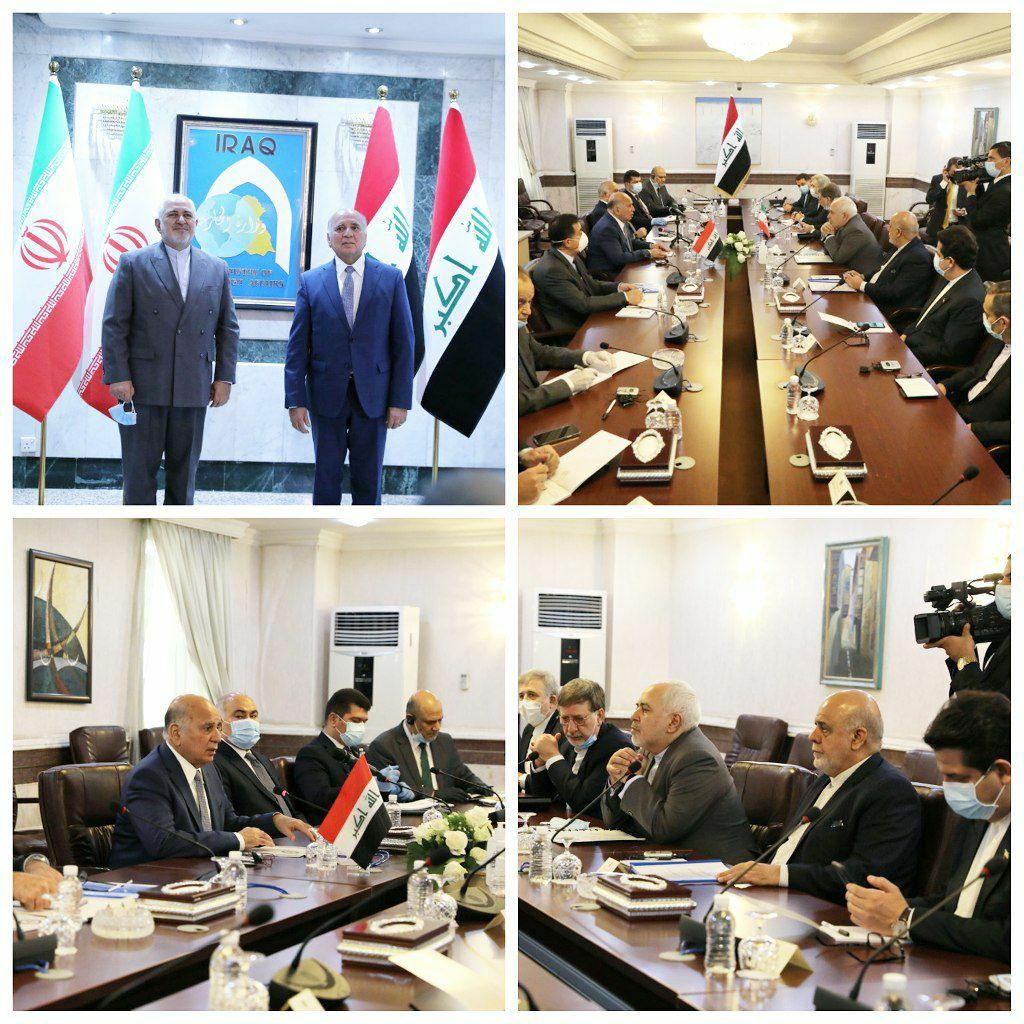
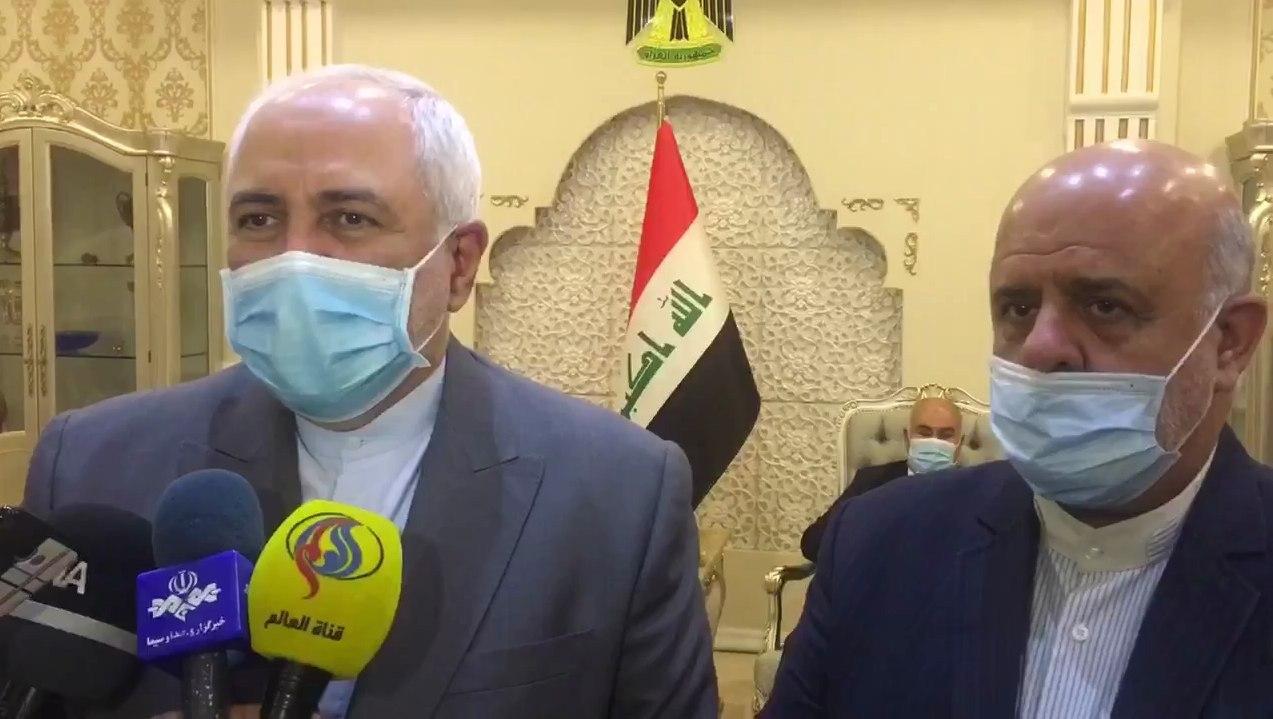
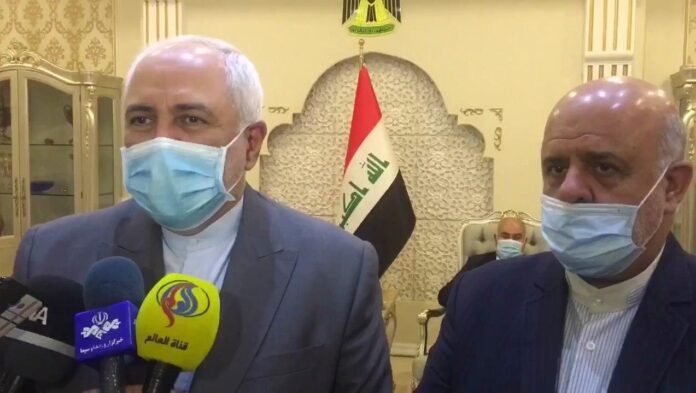
Iranian Foreign Minister Mohammad Javad Zarif, who is in Baghdad on a one-day visit, held a joint press conference with his Iraqi counterpart Fuad Hussein on Sunday after two rounds of talks.

In the presser, the top Iraqi diplomat said he and Foreign Minister Zarif have discussed the economic interaction between the two neighbours and the impacts of the outbreak of coronavirus on the economic ties in their bilateral talks.

“We share the view that it is necessary to support Iraq’s sovereignty,” Hussein noted, adding that Zarif has emphasized that a strong Iraq would contribute to a strong region.

“We must keep the region and Iraq away from the international tensions and support Iraq’s sovereignty,” he stressed, noting that Baghdad seeks “balanced ties” with the neighbouring states.

For his part, the visiting Iranian minister said Tehran is delighted to have supported Baghdad in the fight against terrorism, which is the common enemy of humanity.

It is necessary to hold talks about the regional and international issues, since the region requires calm, Zarif added.

He further said the US assassination of top Iranian commander Lt. General Qassem Soleimani and Iraqi commander Abu Mahdi al-Muhandis was a great loss to the war on terrorism.

Top Iranian, Iraqi Diplomats Hold Talks in Baghdad

It is highly significant for Iran that Iraq’s sovereignty is not violated, Foreign Minister Zarif underlined, calling for vigilance to combat the constant threat posed by the ISIS terrorist group.

He finally called for the enhancement of economic ties between Tehran and Baghdad, saying the two neighbours will work on various joint plans such as shipping industry, maritime border, and connection of the railroad networks.

The Iranian foreign minister is visiting Baghdad to make arrangements for Iraqi Prime Minister Mustafa al-Kadhimi’s upcoming trip to Tehran.

Zarif is going to visit Erbil in the afternoon at the invitation of President of the Iraqi Kurdistan Region Nechirvan Barzani.

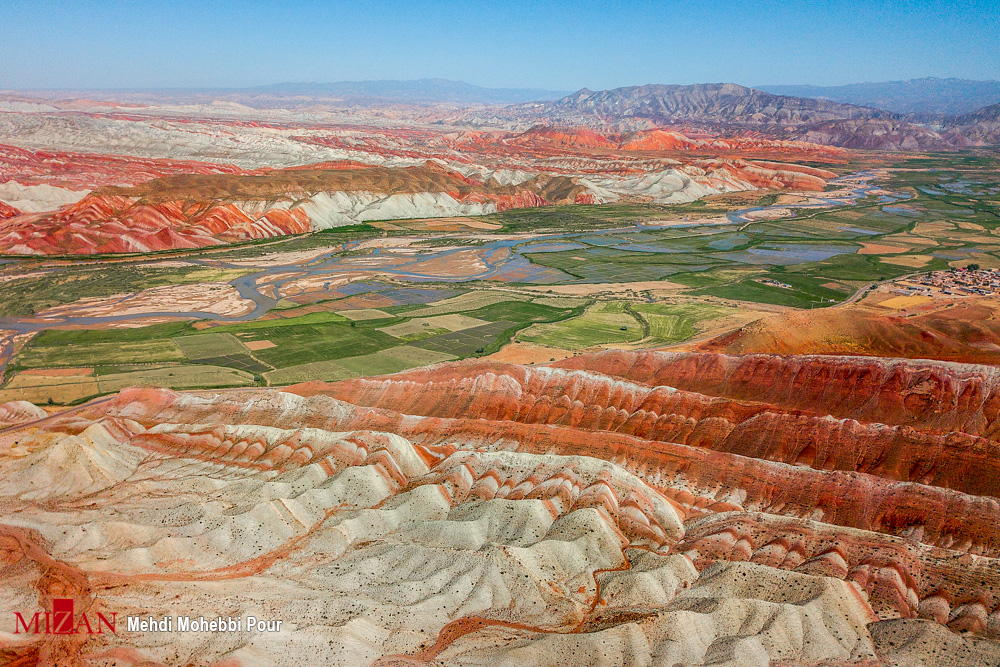
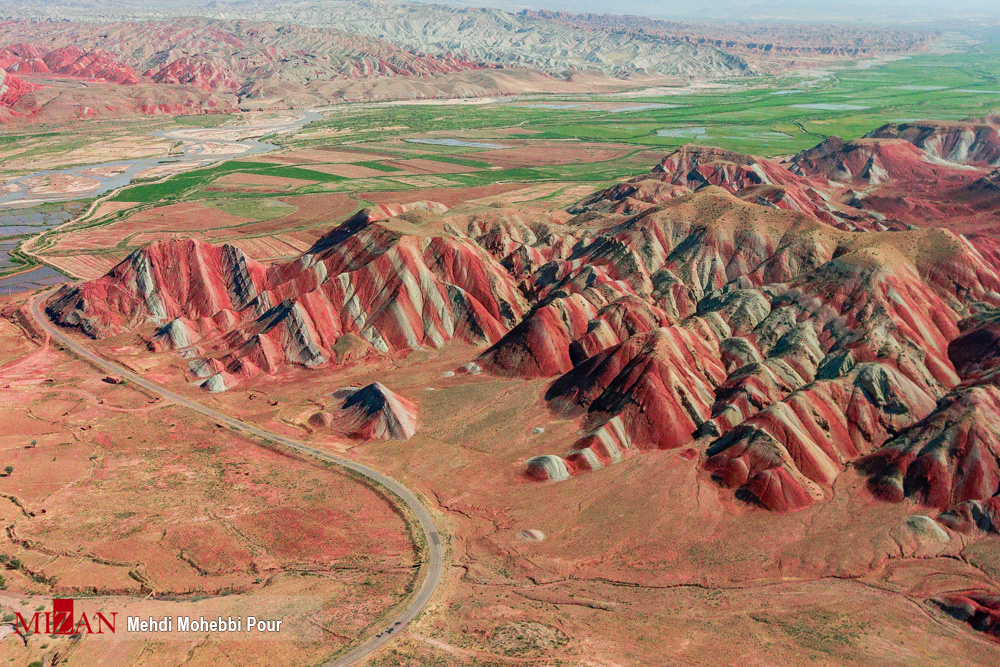
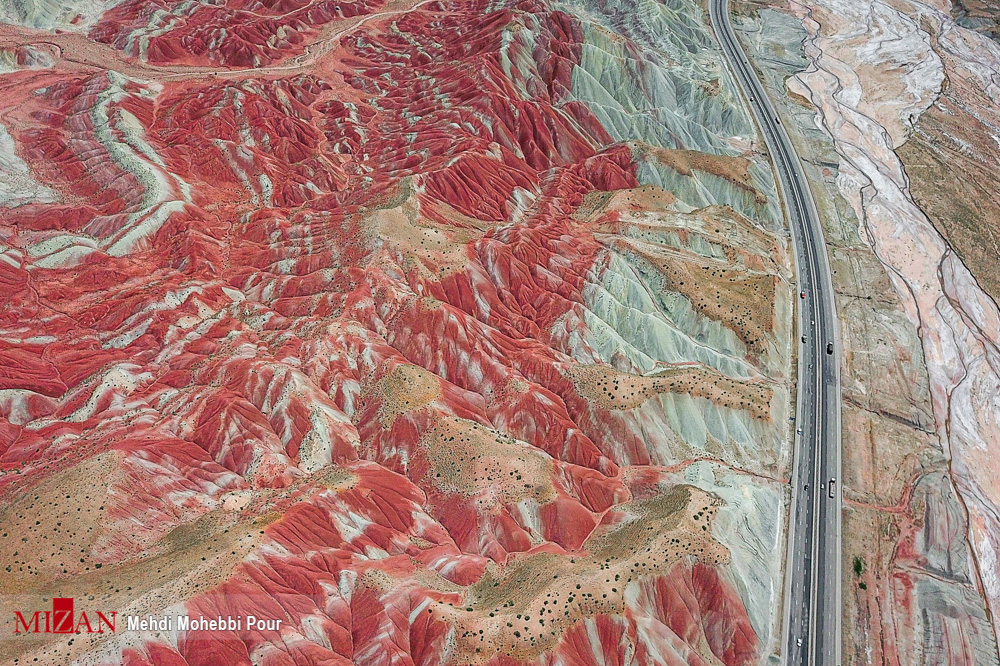
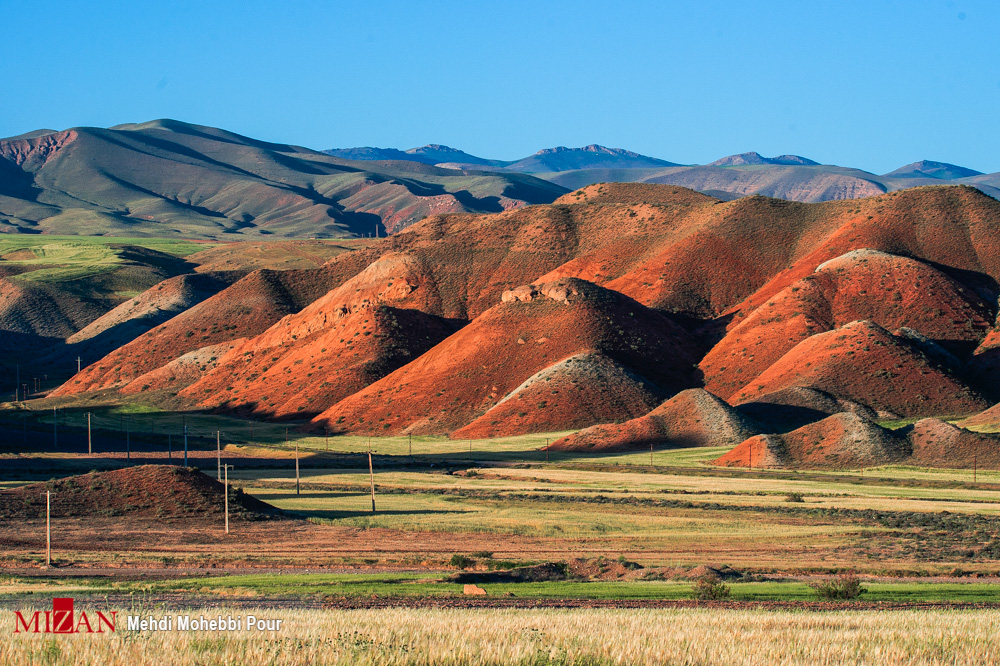
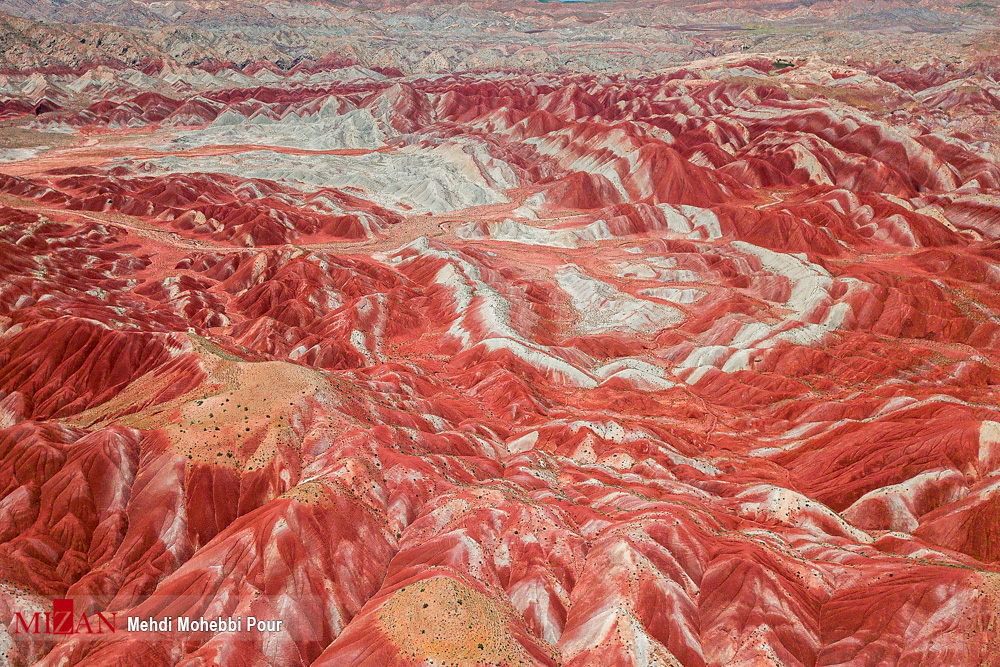
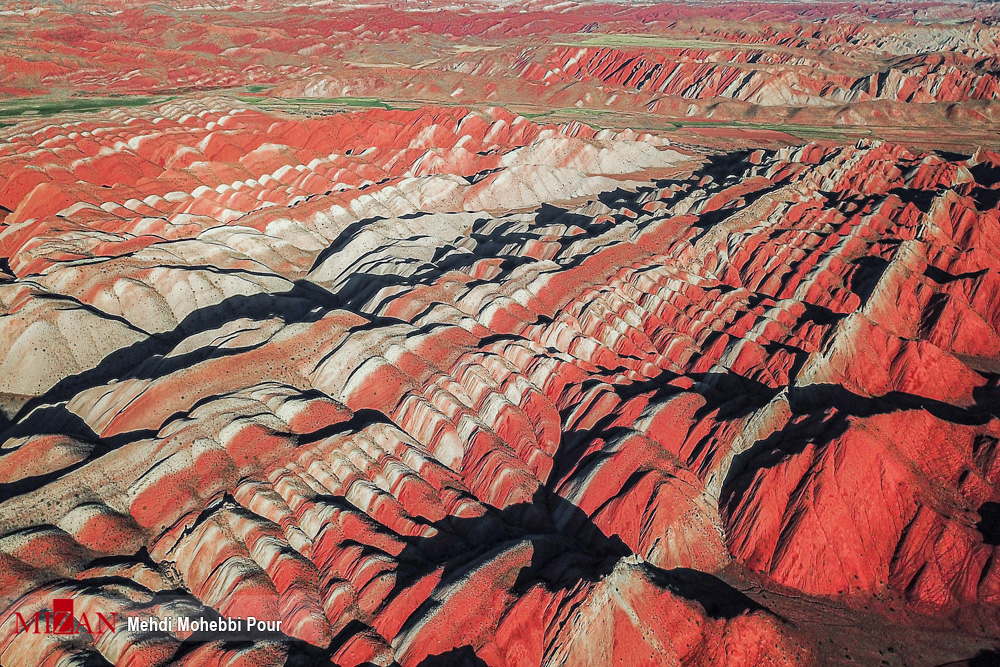
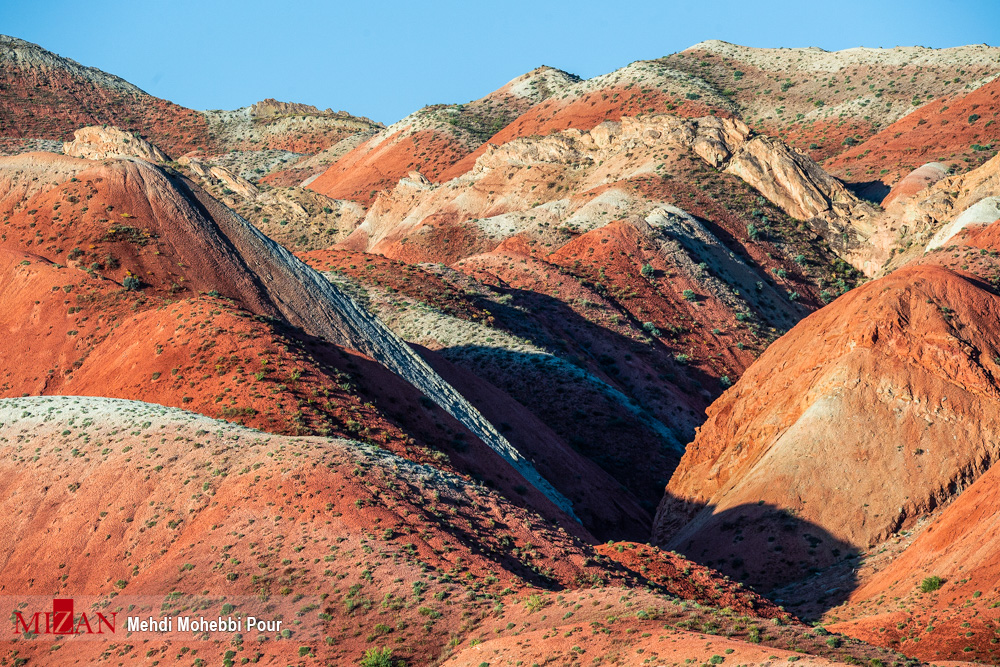
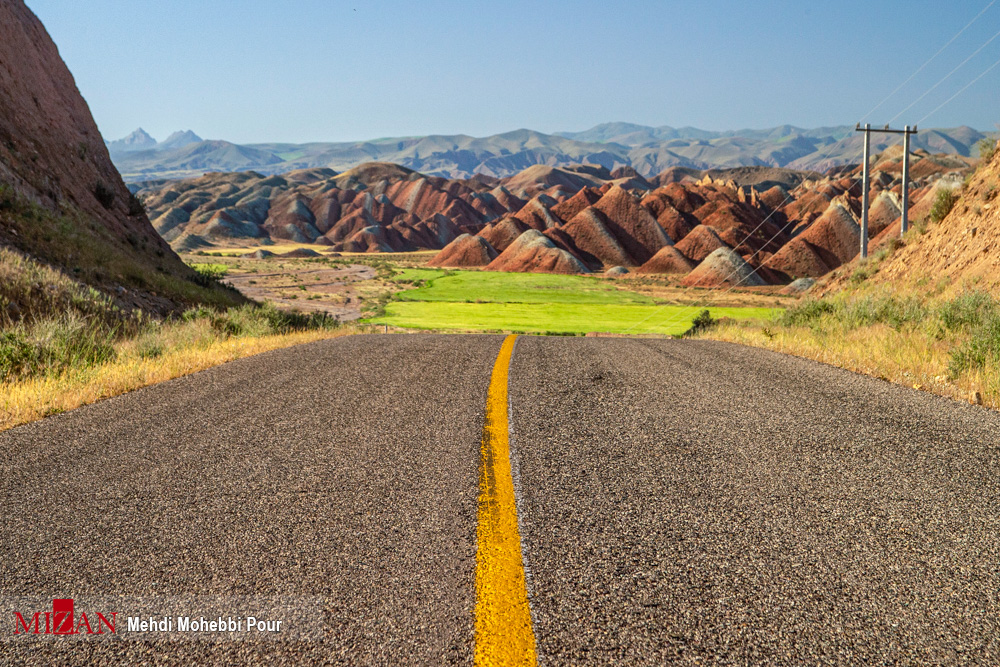
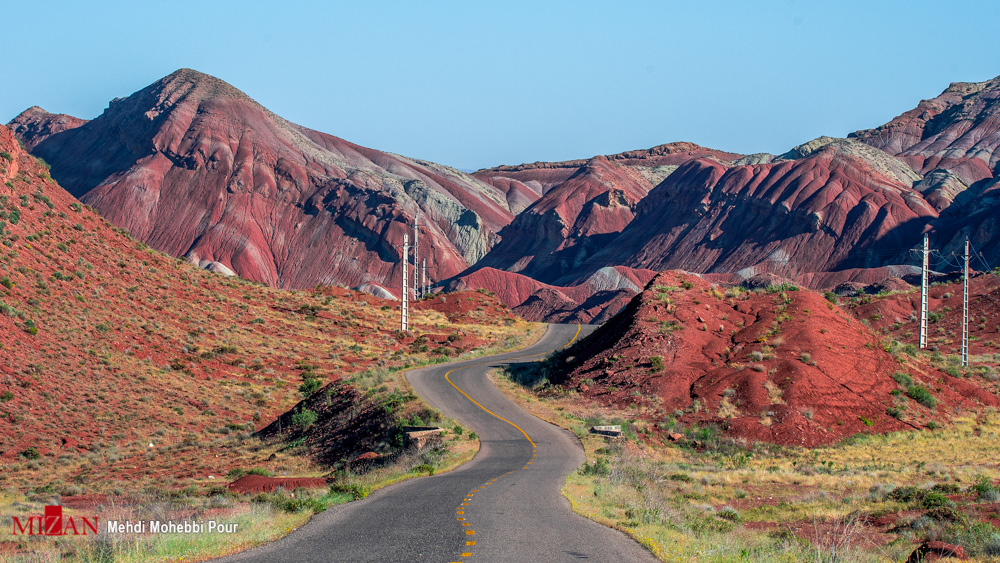
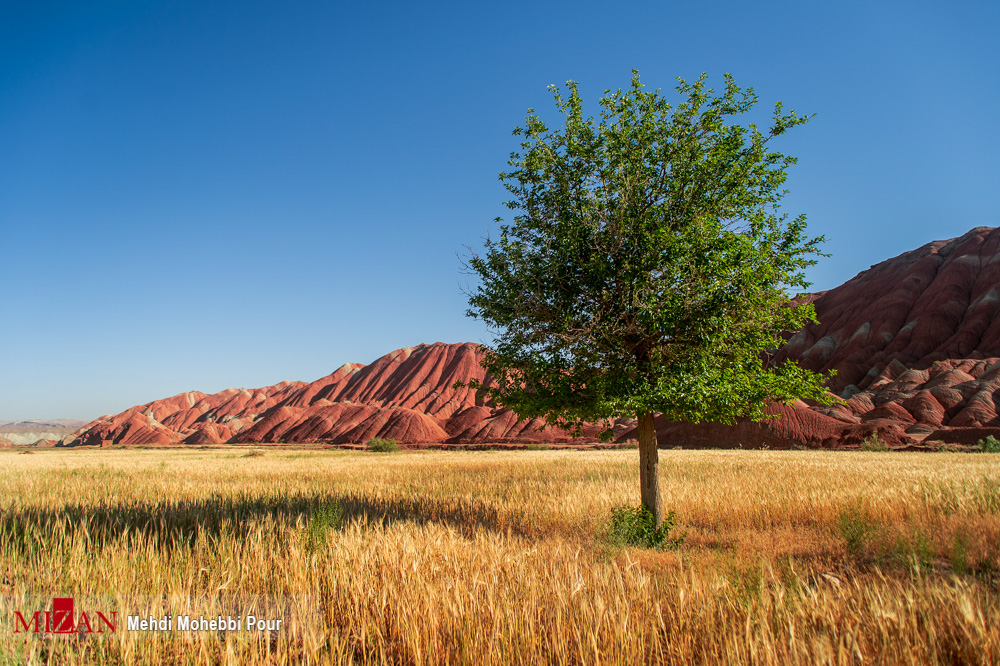
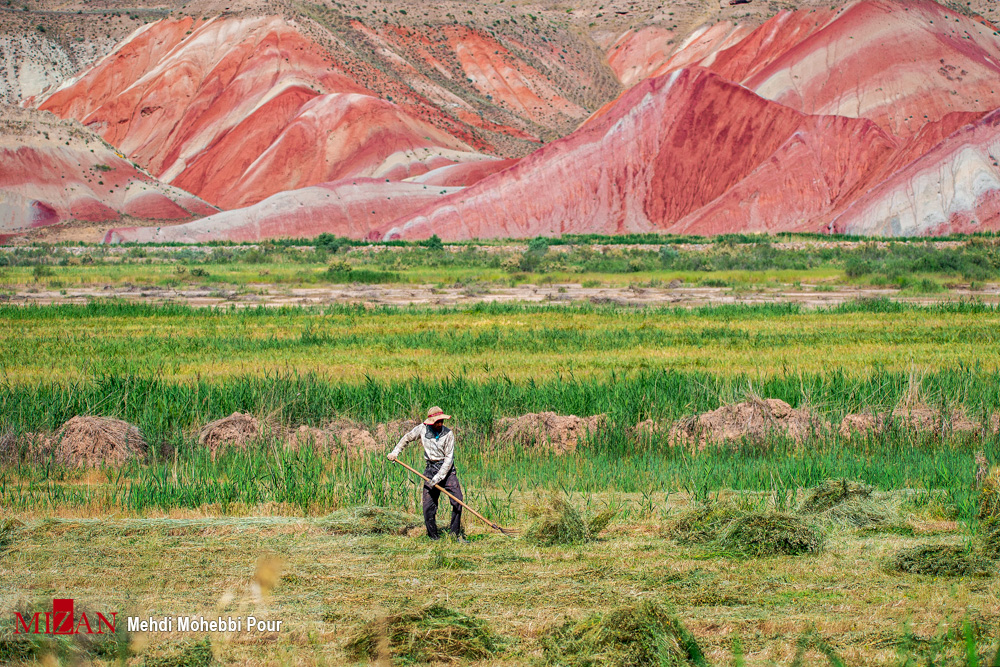
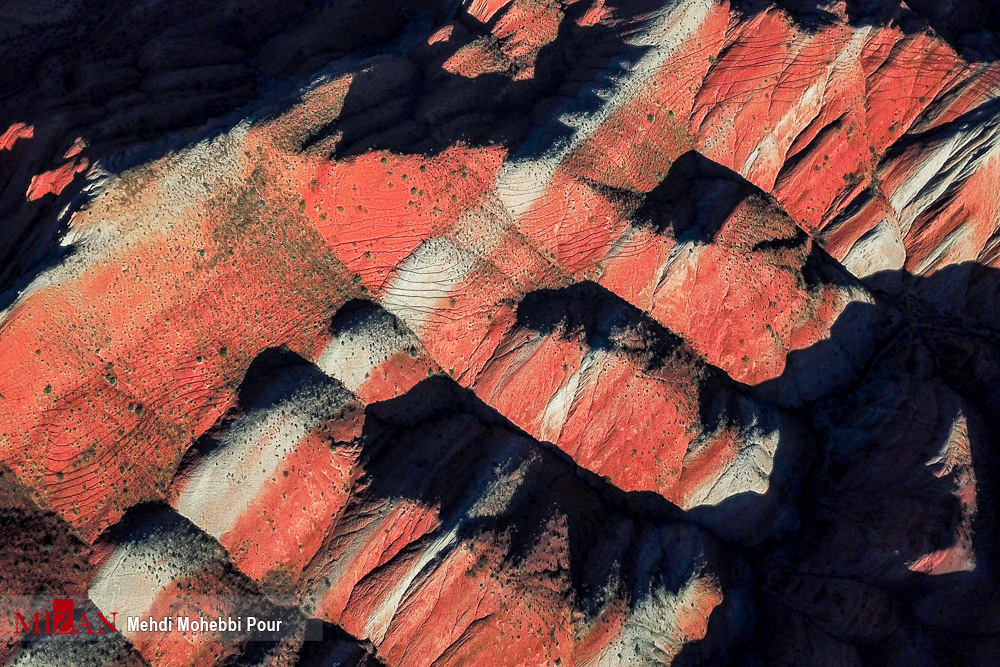
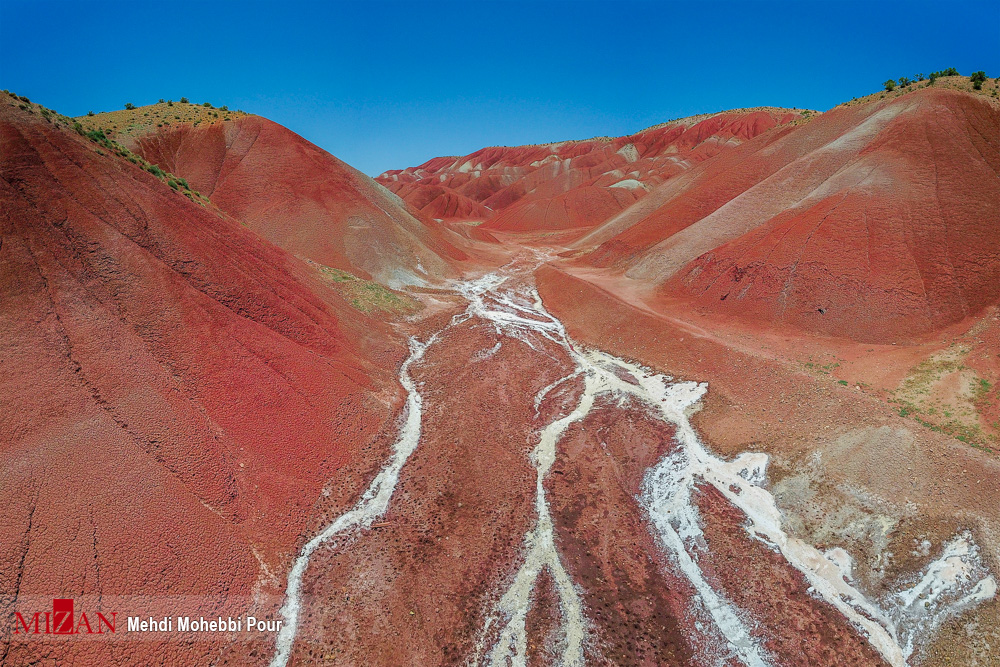
Iran Nature in Photos: Colourful Mountains of Tabriz

Colorful Mountains of Tabriz 9

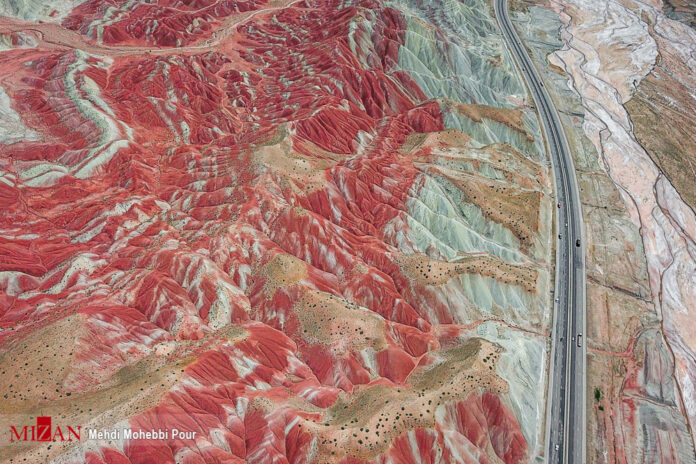
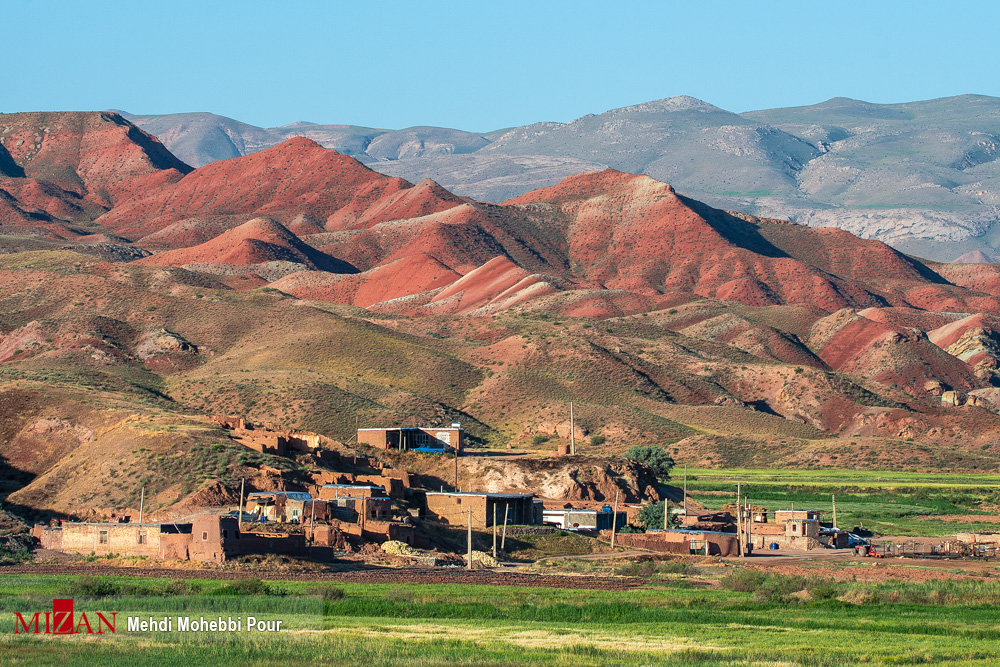
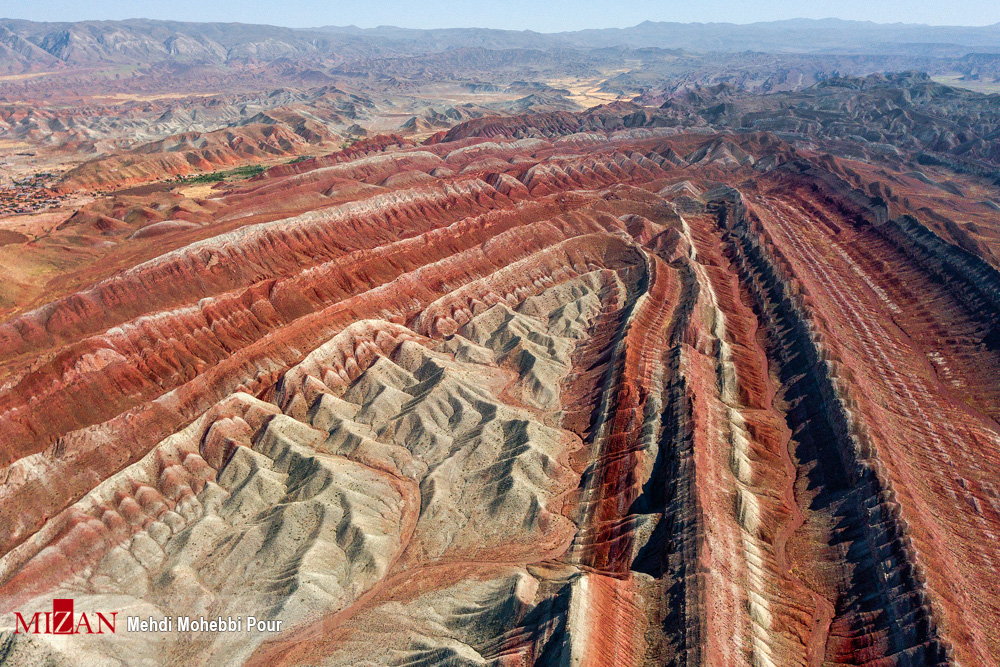
Colorful Mountains, locally known as Ala Daghlar, are located 25 km to the northeast of Tabriz in northwestern Iran.

The colorful scenery is so beautiful that one might think they are looking at images from another planet.

The following images have been released online by Tasnim News Agency:

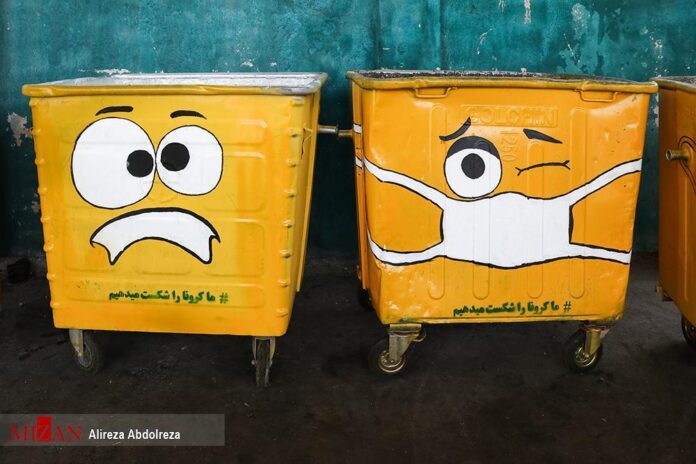
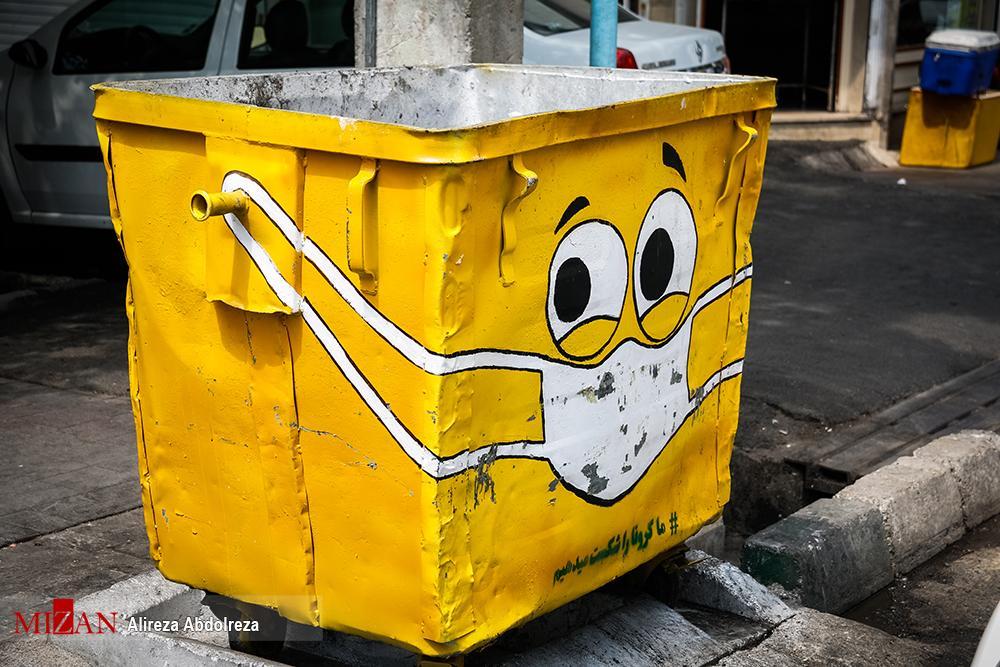
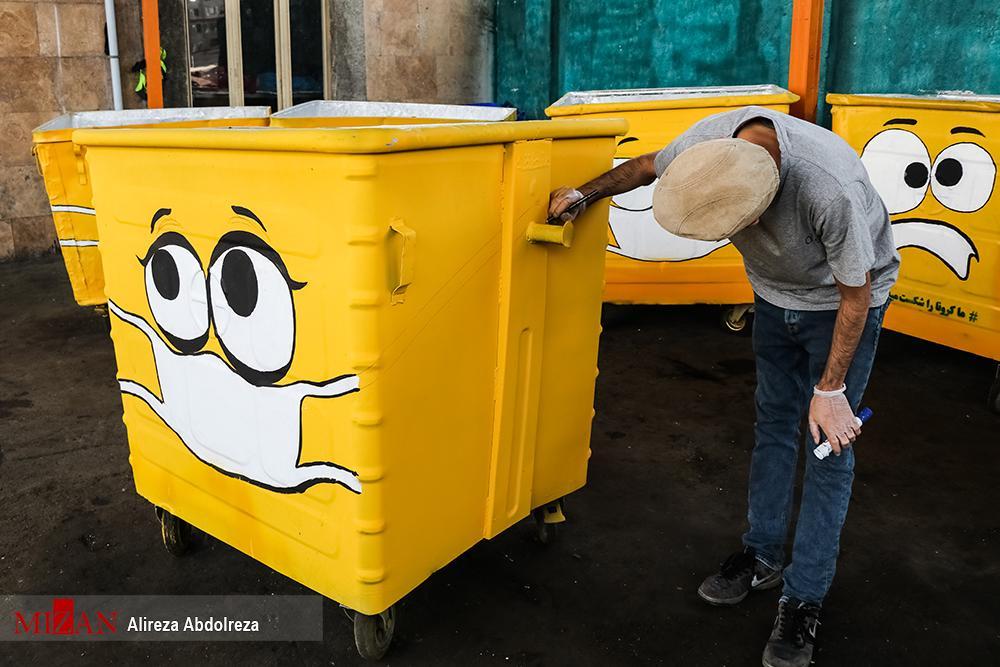
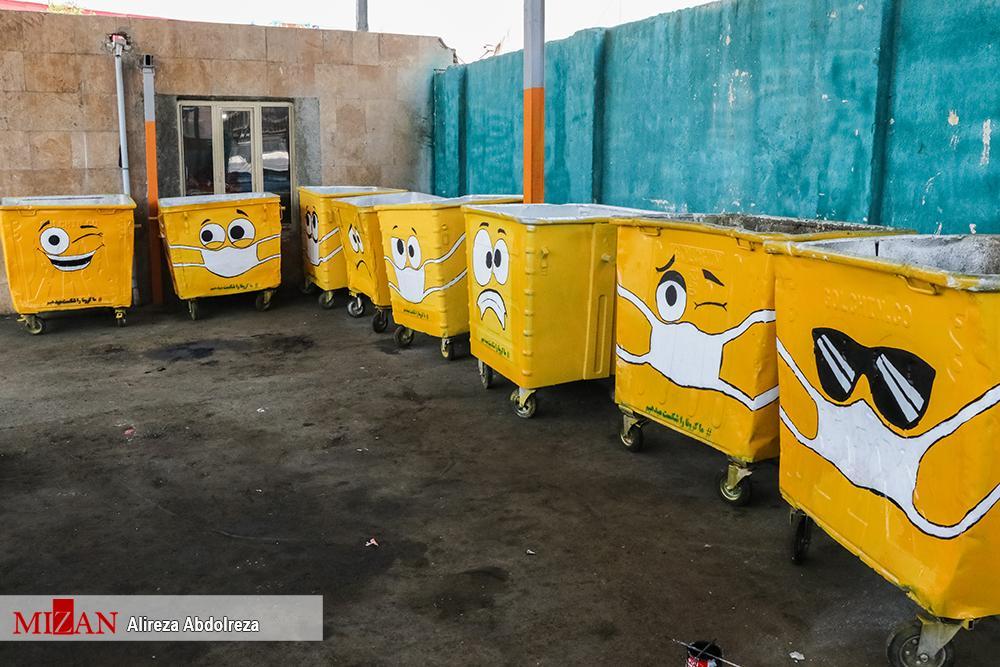
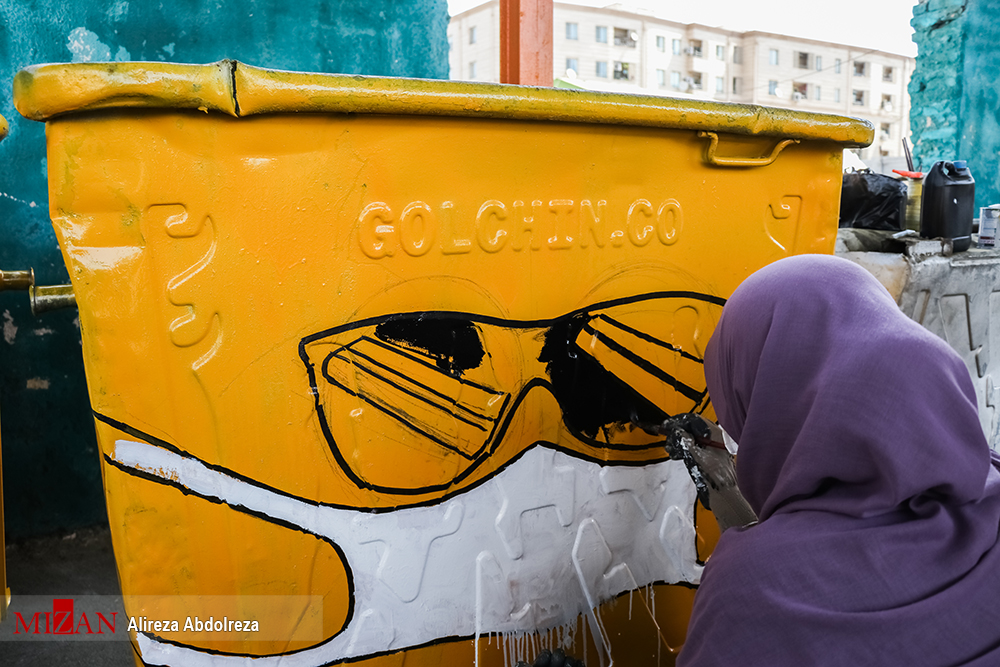
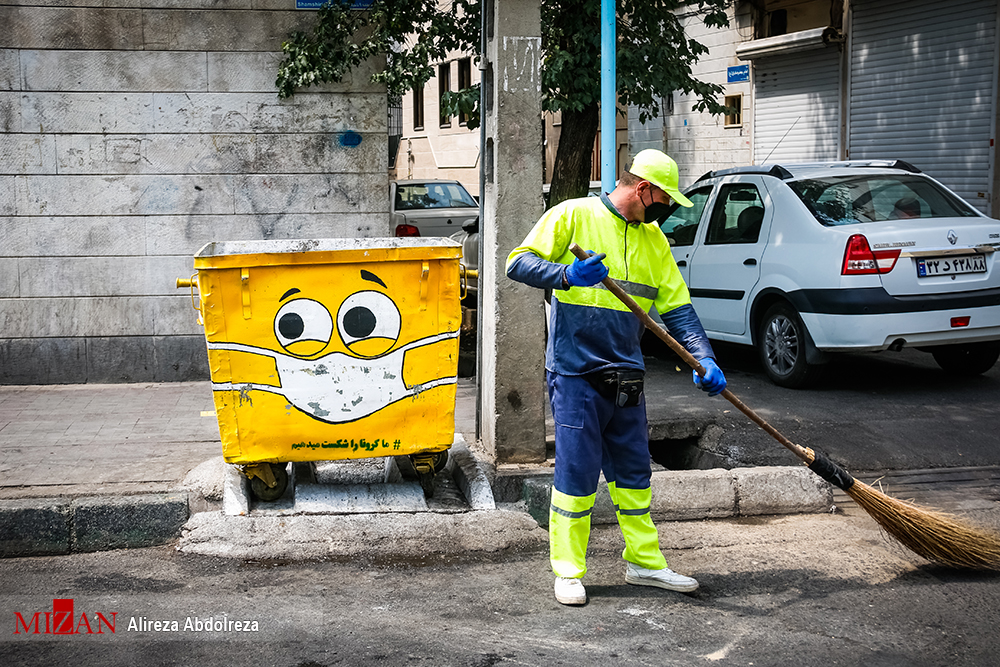
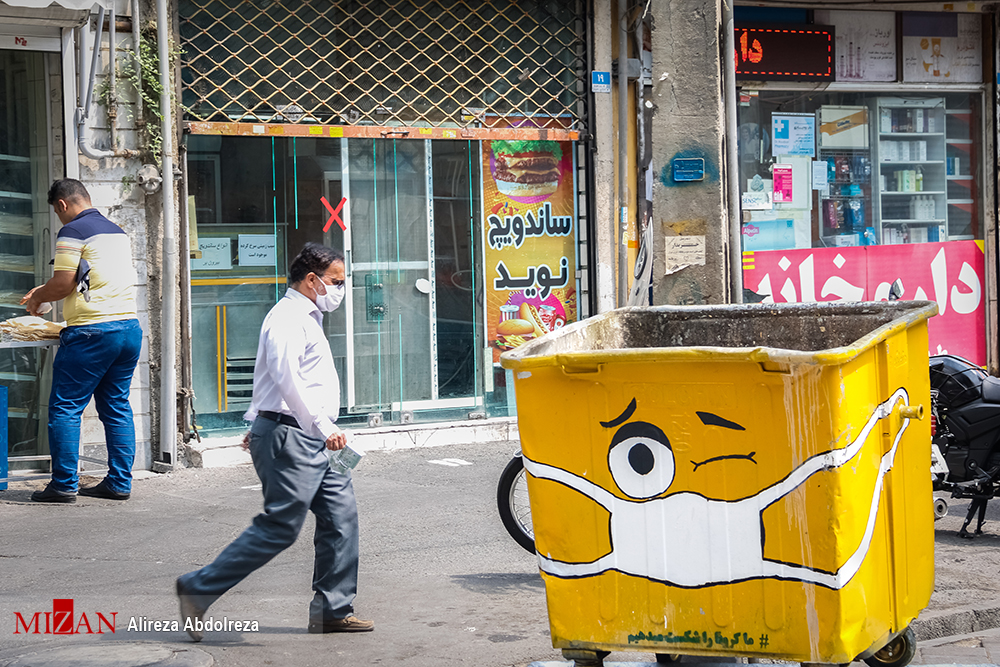
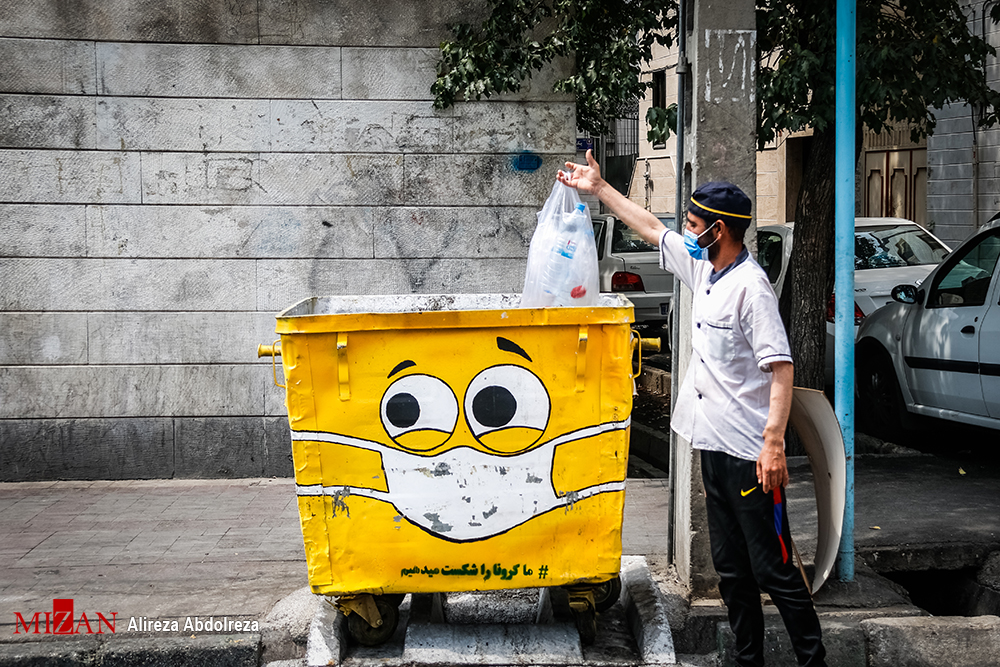
Tehran Municipality Uses Creative Way to Tell People to Wear Mask

Photo by Alireza Abdolreza, Mizan News Agency:


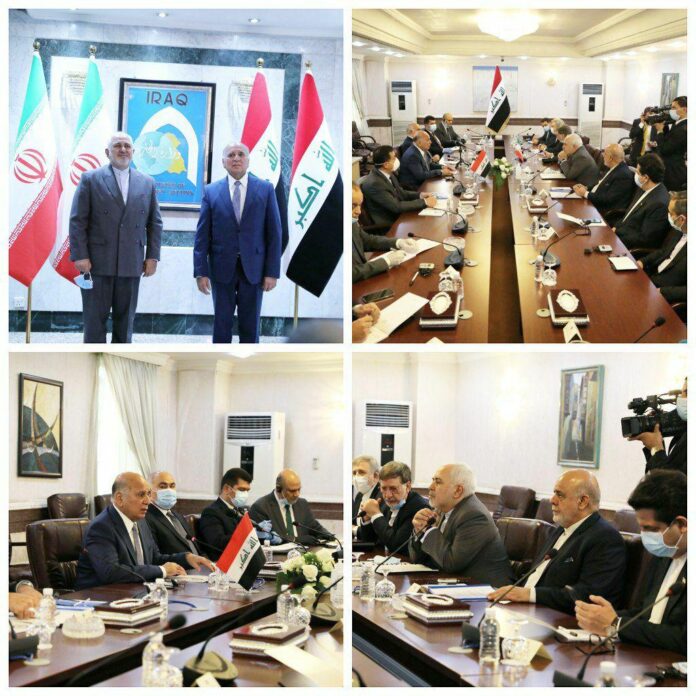
Top Iranian, Iraqi Diplomats Hold Talks in Baghdad

Top Iranian, Iraqi Diplomats Hold Talks in Baghdad

In the second round of negotiations, Foreign Minister Zarif and Foreign Minister Hussein discussed various aspects of bilateral relations between Iran and Iraq, including the political, economic and security cooperation.

The two senior diplomats also talked about the Iraqi Prime Minister’s upcoming visit to Iran, the agreements signed during Iranian President Hassan Rouhani’s most recent visit to Iraq, the plans to strengthen and intensify cooperation on legal prosecution for the martyrdom of Lt. General Qassem Soleimani and Abu Mahdi al-Muhandis, stronger economic and trade ties between the two countries – particularly holding of a virtual session of Joint Economic Commission –, the joint fight against terrorism, and the plans to promote cooperation and share experiences in the battle with the coronavirus pandemic.

Zarif in Baghdad to Discuss Regional Cooperation, US Crimes with Iraqis

The Iranian foreign minister is visiting Baghdad to make arrangements for Iraqi Prime Minister Mustafa al-Kadhimi’s upcoming trip to Tehran.

Zarif is going to visit Erbil in the afternoon at the invitation of President of the Iraqi Kurdistan Region Nechirvan Barzani.

Zarif in Baghdad to Discuss Regional Cooperation, US Crimes with Iraqis

Zarif in Baghdad to Discuss Regional Cooperation, US Crimes with Iraqis

Speaking to reporters upon his arrival in Baghdad on Sunday morning, Zarif expressed delight at visiting the Arab country after formation of the new Iraqi government, saying he is going to make arrangements for Iraqi Prime Minister Mustafa al-Kadhimi’s upcoming trip to Tehran at the invitation of Iranian President Hassan Rouhani.

Zarif also noted that he would hold meetings with senior Iraqi officials, including the president, prime minister, Parliament speaker, foreign minister, Judiciary chief and Hashd al-Shaabi chief for talks about Tehran-Baghdad cooperation, the regional issues, and the US crimes in the region, such as the January assassination of Lt. General Qassem Soleimani, Iraqi commander Abu Mahdi al-Muhandis and their companions.

The top Iranian diplomat finally noted that he will pay a visit to Erbil on Sunday evening at the invitation of President of the Iraqi Kurdistan Region Nechirvan Barzani.

US Concern over Tehran-Beijing Deal Shows It’s Right Thing to Do: Iran

US Concern over Tehran-Beijing Deal Shows It's Right Thing to Do: Iran

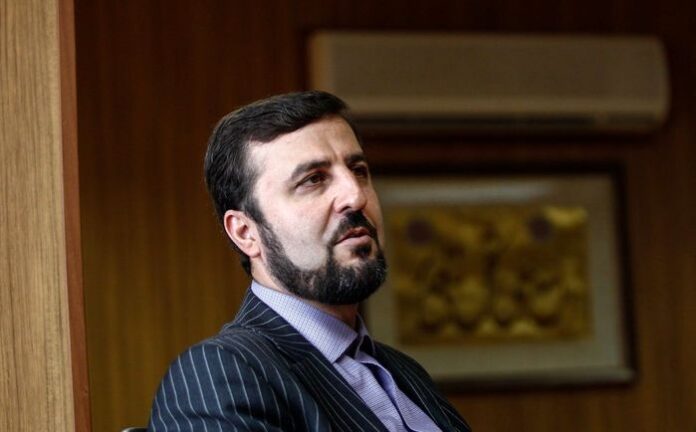
Iran’s ambassador to Vienna-based international organizations Kazem Gharibabadi said their opposition indicates the document is a judicious decision to take the most advantage of international opportunities against Washington’s “maximum pressure” policy vis-à-vis Iran.

“The Islamic Republic of Iran is under the US regime’s toughest unfair and illegal sanctions,” said the senior diplomat on his Instagram page.

“Trump has adopted the so-called ‘maximum pressure’ policy on Iran to, as he believes, achieve his objectives,” he noted.

“Despite the country’s strong infrastructure and the noble nation’s unflinching support for the Establishment and [the nation’s] resistance against sanctions, we should make the most of different opportunities on the international stage to counter sanctions,” he said.
He said among the ways to use these opportunities is to enter into long-term strategic cooperation while preserving the country’s national interests and observing the country’s laws.

“Today, China is not only opposed to the United States’ unilateral and expansionist policies, but also has the world’s second largest economy with a GDP of 14.14 trillion dollars,” he added.

Gharibabadi underlined that Beijing and Tehran have common ground on numerous international issues. Moreover, he said, China has, in recent years, opposed the adoption of decisions and taking action against Iran within the framework of international organizations.

“Under such circumstances, it is natural that the US and its supporters will make desperate efforts to keep Iran in economic isolation and keep it from forging broad trade and economic relations with other countries,” he said.

“Opposition by the United States and its allies shows entering into bilateral and strategic cooperation with China, which is in the interests of both countries, is a right and judicious decision,” said the top diplomat.

“One of the major concerns of foreign countries opposing this strategic document is the development and progress of Iran while under sanctions,” he said.

The top diplomat said the US and its Western and regional supporters are worried neither about Iranian people, nor about Iran’s development under tough sanctions.

“All they want is to simply put more pressure on our dear people and country,” he said.

10 Questions That Will Help You Assess Calibre of RoR Developer

Hence, it is essential to know whether the person is capable of doing the job. Since the goal of the framework is to reduce the time and effort required to build a web application, there is always a burden on the developer and their knowledge of the structure. 

The best way you can hire Ruby on Rails experts is by asking questions based on the framework. 

Given below are some questions you may want to ask in the interview and the answers that show the true worth of an RoR Developer.

The Comprehensive List of Top-10 Ruby On Rails Questions
10 Questions That Will Help You Assess Calibre of RoR Developer1. What is the Strength of Ruby on Rails (ROR)?

Learning a language and understanding what it does are two different contexts. A developer should be able to explain the strength and weaknesses of the language. Given below are some of the points you may expect from an RoR Developer.

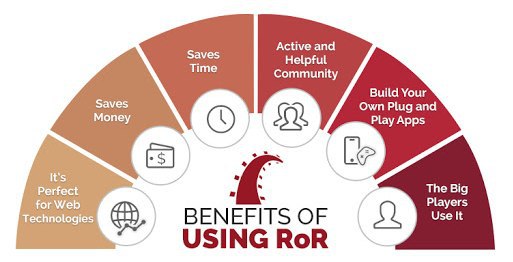
  • It has a vast library of tools, functions, and plug-ins, which helps in quicker coding
  • It is readable and straightforward, which makes detecting fault, and debugging easy
  • ROR allows its users to create their custom code for a project and then use it later for another project
  • It is an open-source program and has a helpful community
  • It has some security features built into the framework and enabled by default which makes it secure

2. What do you Know About Rack?

A Developer should not only be able to explain or describe the basic structure of RoR, but s/he should also be able to develop an application through it. As Rack is the underlying technology behind all of the web frameworks, one must surely know about it. You may also ask them to define Rack.

Here are some answers that you can expect.

  • The Rack is a Ruby interface that connects web applications and web servers.
  • The Rack is an architecture that defines a straightforward interface.
  • It is a minimal interface between the webservers which supports Ruby and its frameworks.

3. What do You Think About Ruby Gems?

An RoR Developer should know why Ruby Gems are useful. So, by asking this question, you can understand how they view this function. You should not only ask for their views but instead, ask them how it works and if they can explain the basic structure of it. 

Given are some points an RoR Developer may say for this topic.

  • It is a package manager for the programming language.
  • It is a tool designed to easily manage and distribute gems.
  • It provides a standard format for distributing programs and libraries of gems.

4. How Can You Make an Application Secure?

An RoR Developer must know how to make an application secure as it is a crucial factor. They should understand the importance of security. Here are some questions you may ask for security.

  • Explain the difference between SQL injection and XSS injection.

SQL injection targets databases of websites directly, whereas XSS injection redirects the end-user to a phishing page to easily access all data. 

  • What is the need for HTTPS instead of HTTP?

HTTPS uses TLS to encrypt HTTP requests and hence is more secure. 

  • Explain how to store secure data such as passwords

The best way of storing data is by salting and hashing. 
10 Questions That Will Help You Assess Calibre of RoR Developer

5.Tell me About the MVC Architecture.

Since ROR has Model View Controller architecture, a Developer needs to explain it. 

You can expect the following answer.

  • MVC has three interconnected layers
  • This structure breaks the complex systems into a simplified structure
  • It is capable of maintaining and facilitating the decoupling and testing process

6. What do You Know About Active Records?

A good Developer will quickly understand the model part of an application and write the least possible codes in Active Record models. Here are some points the developers may talk about.

  • It is the layer of the system responsible for representing business data and logic
  • Active Record maintains and helps to creates frequently required business objects of a database
  • It provides an interface and binding between the tables in a relational database

7. What Tasks Should You Pay Attention to While Writing the Rails Application?

You cannot give a job to a person who doesn’t know where the attention is needed while writing an application. You can also ask them to write one for you. Here are some essential points that you may expect from an RoR Developer.

  • Attention must be paid to describe and model the domain of the application
  • One must pay attention to specify what can be done in the area and its critical factors
  • Close attention must be paid to the views of the design available from those who have considered the same

8. Explain the Purpose a Few Directories

As the interviewee has a good knowledge of the language, try to ask some questions from the inside of the language. Explained here are two directories and their purpose.

  • App – It is responsible for organizing components in the application, and exact display templates and fills them with the data that belong to a different framework
  • Components – holds tiny self-contained applications that bundle model, view, and controller

9. What is the Role of Garbage in RoR?

A ROR developer should know about the importance and the function of garbage. You might expect the following from the interviewee.

  • It allows the removal of the pointer values that are left behind when the execution of the program ends
  • Garbage allows the programmer to focus on other things instead of tracking dynamically created objects during runtime
  • It provides a provision to remove the inaccessible objects from the storage for other processes to use it

10. Can You Make or Rework a Program?

In the end, you can ask developers to make a specific program. It can help you understand if they can provide practical results. Check the following, though.

  • The program should be able to update or delete tasks
  • Comments can be added to a task
  • Able to mark a task as done

You can also hand a program to the developers and ask them to improve the program. 

Conclusion

Whether you want to hire a ROR developer, or need to hire Python experts, you must ask the right questions. Moreover, having a hub where you can find a lot of developers will help you acquire the RoR Developer for your need.

 

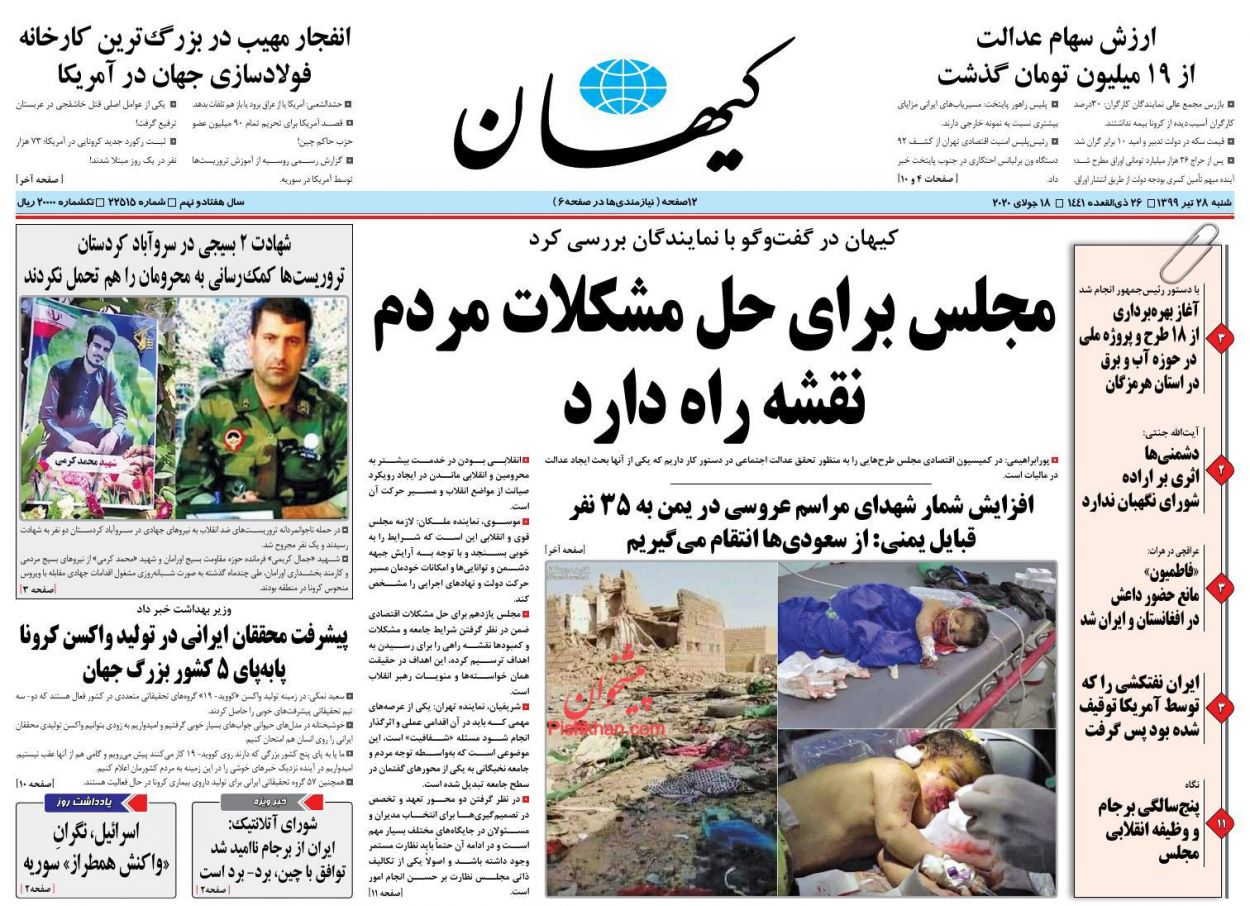
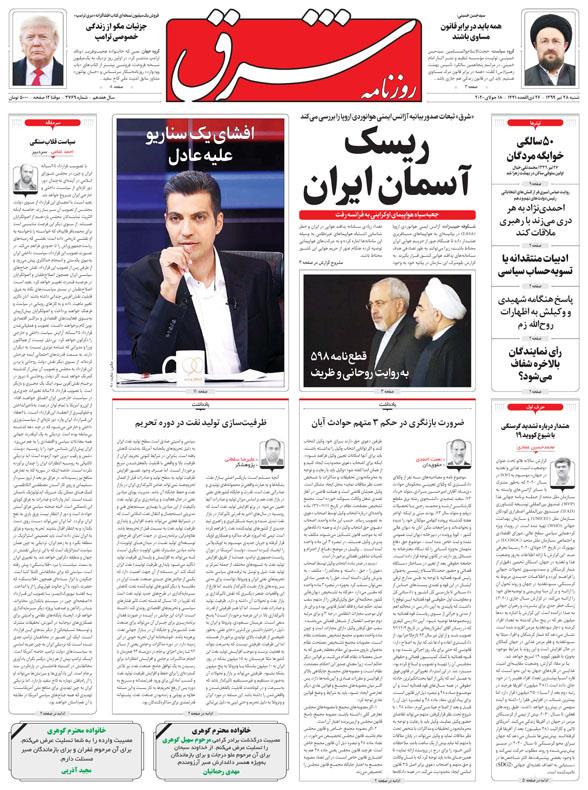
A Look at Iranian Newspaper Front Pages on July 18

A Look at Iranian Newspaper Front Pages on November 19

Iranian Newspapers

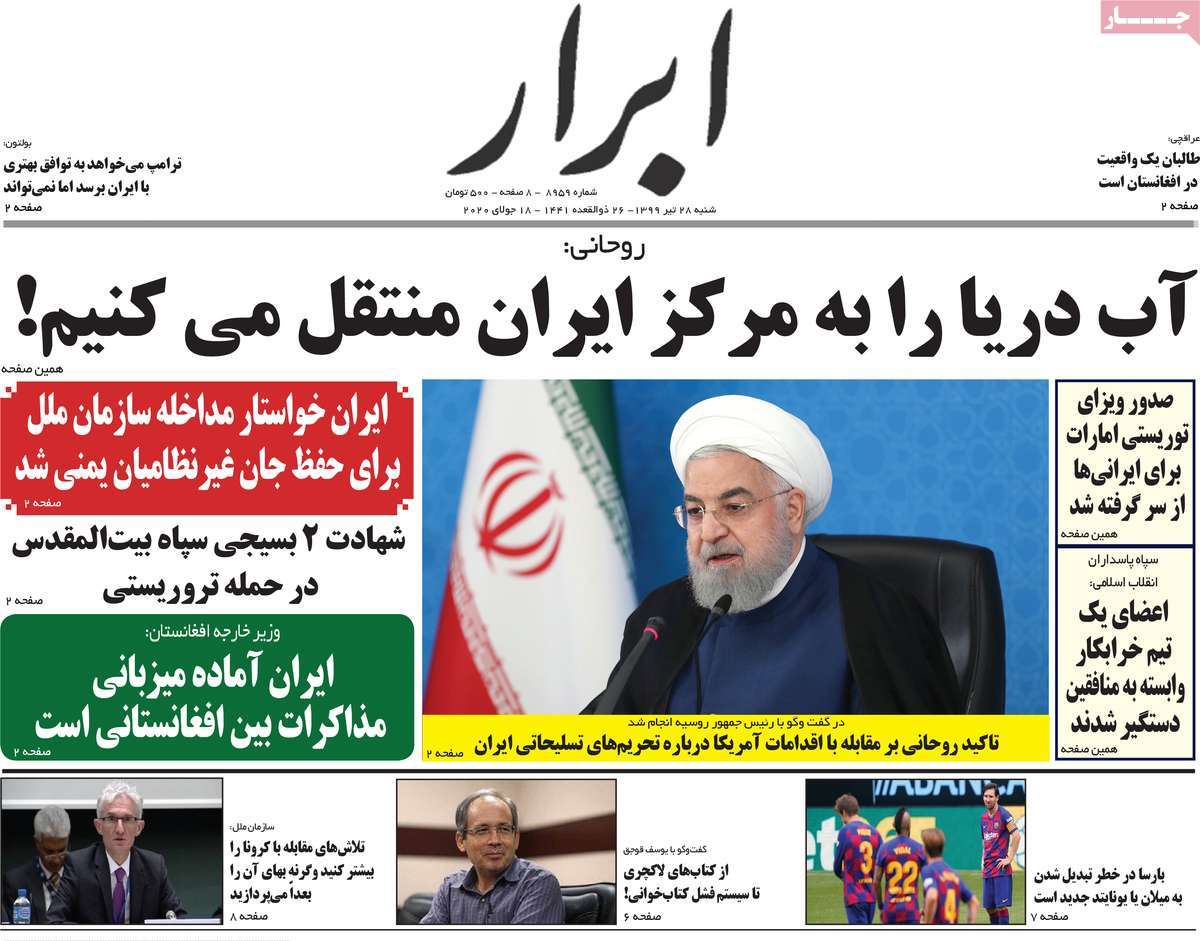
Abrar Newspaper:

1- Rouhani: We’ll Transfer Sea Water to Central Iran!
2- Araqchi: Taliban Is a Reality in Afghanistan
3- Iran Urges UN’s Intervention to Save Civilian Lives in Yemen
4- Iran Ready to Host Intra-Afghan Talks: Afghan Top DiplomatA Look at Iranian Newspaper Front Pages on July 18


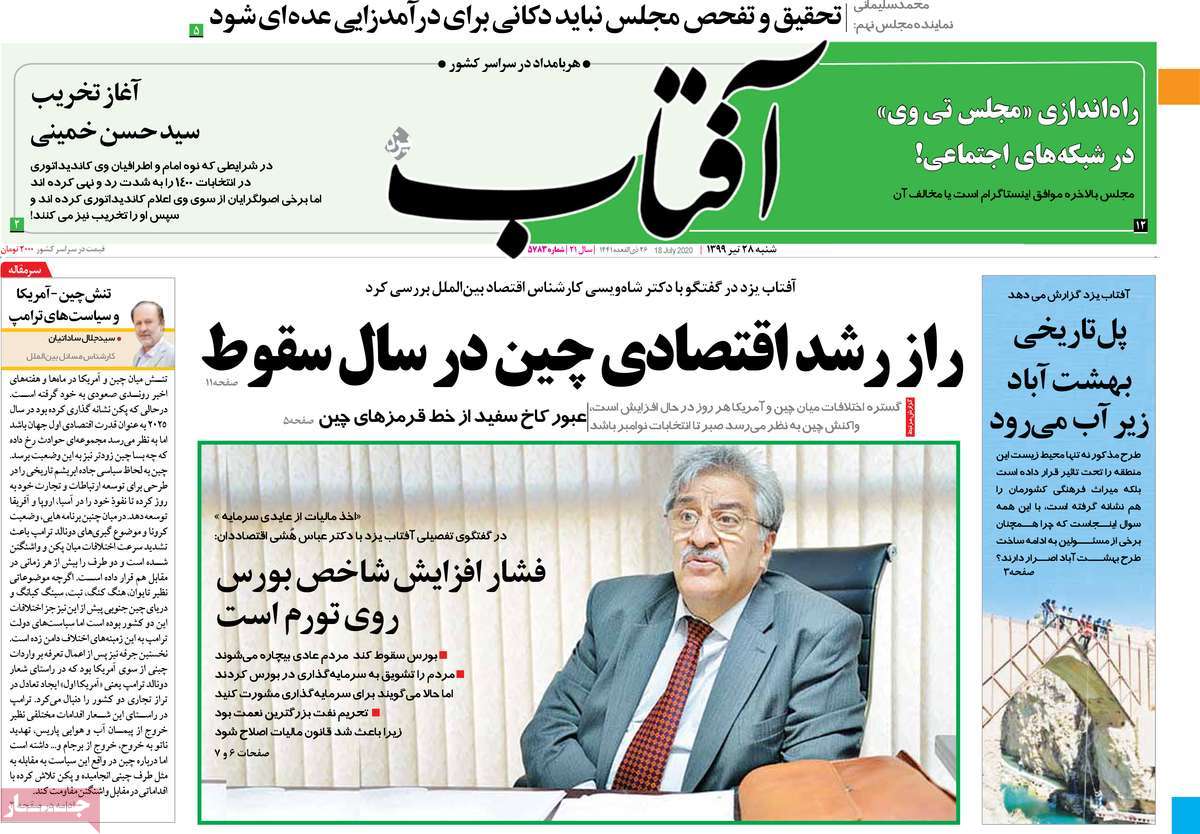
Aftab-e Yazd Newspaper:

1- Secret behind China’s Economic Growth in Year of Decline
* White House Crosses China’s Red Lines
2- US-China Tension and Trump’s Policies [Editorial]A Look at Iranian Newspaper Front Pages on July 18


Arman-e Melli Newspaper:

1- We Won’t Give One Inch of Iranian Territories to China: Zarif
2- No Hegemony in Iran-China Agreement [Editorial]A Look at Iranian Newspaper Front Pages on July 18


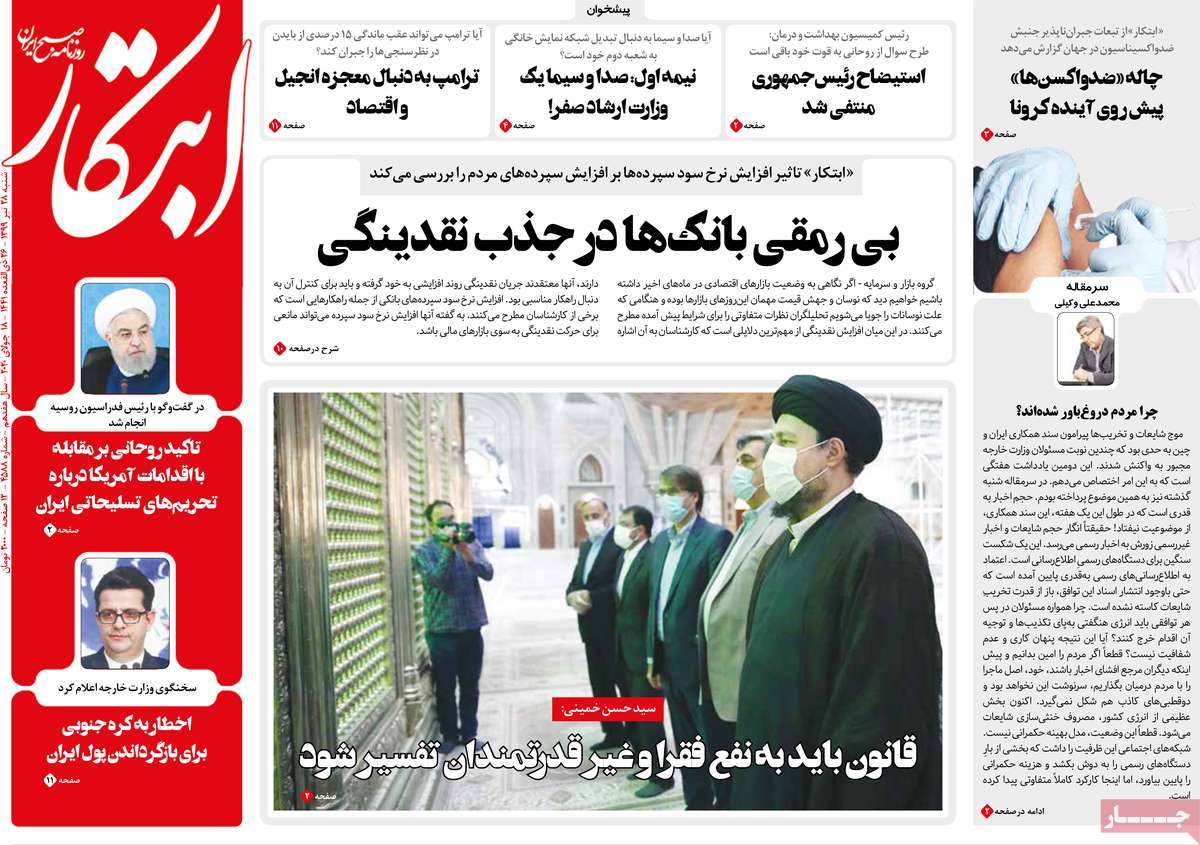
Ebtekar Newspaper:

1- Rouhani Calls on Russia to Counter US’ Move to Extend Iran Arms Embargo
2- Iran Warns South Korea over Frozen FundsA Look at Iranian Newspaper Front Pages on July 18


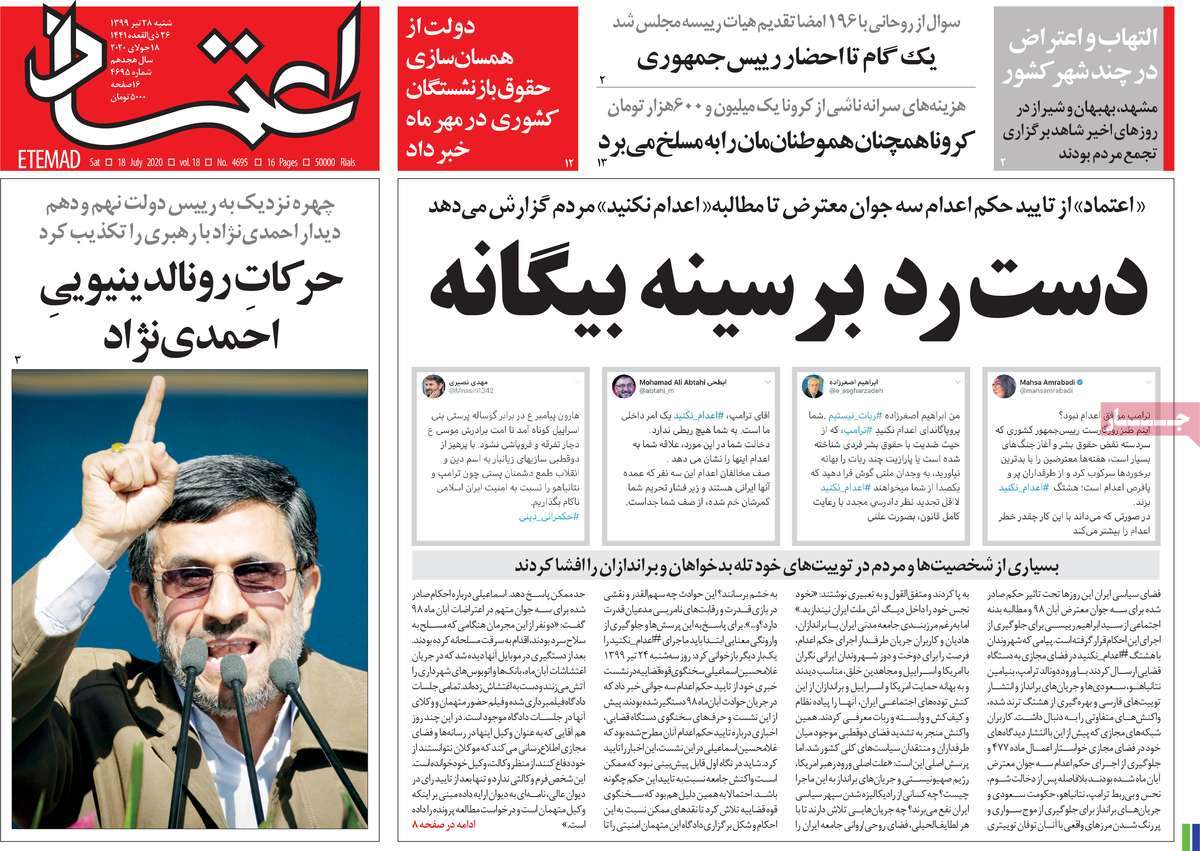
Etemad Newspaper:

1- Tension, Protest in Several Iranian Cities
* Mashhad, Behbahan, Shiraz Scene of Public Gatherings in Recent Days
2- One Step to Summoning Rouhani: 196 MPs to Question PresidentA Look at Iranian Newspaper Front Pages on July 18


Ettela’at Newspaper:

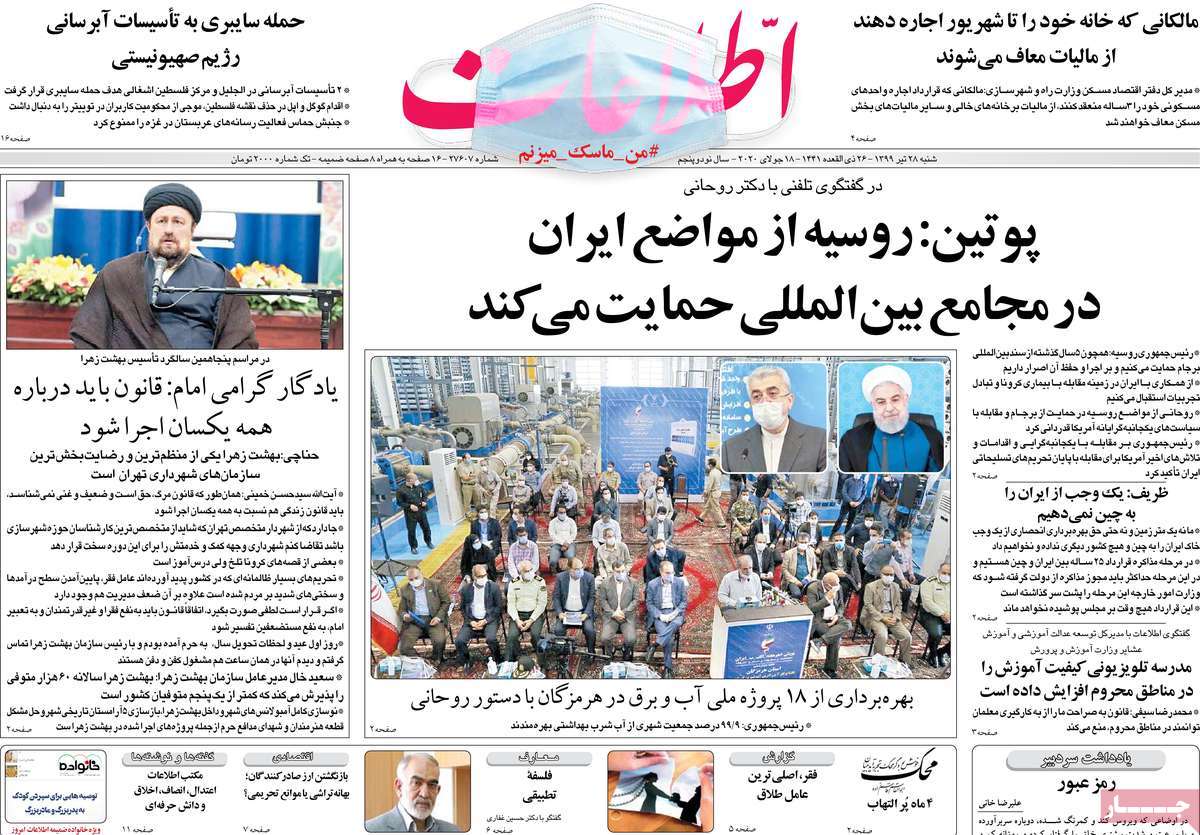
1- Putin: Russia to Support Iran’s Position at Int’l Bodies
2- Cyberattack on Israeli Irrigation FacilitiesA Look at Iranian Newspaper Front Pages on July 18


Iran Newspaper:

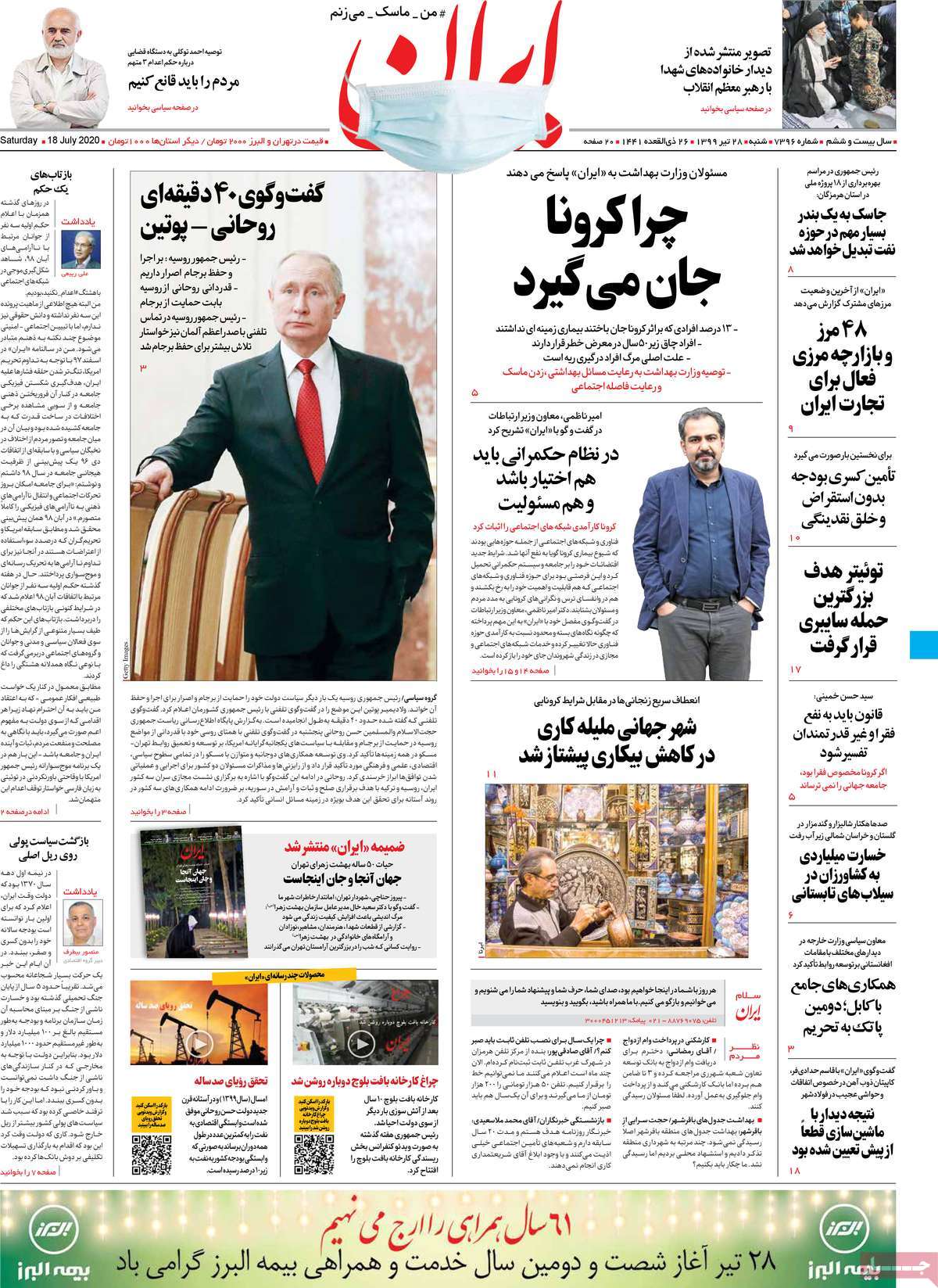
1- Rouhani, Putin Hold 45-Minute Phone Conversation
2- 48 Borders, Border Markets Active for Trade with IranA Look at Iranian Newspaper Front Pages on July 18


Javan Newspaper:

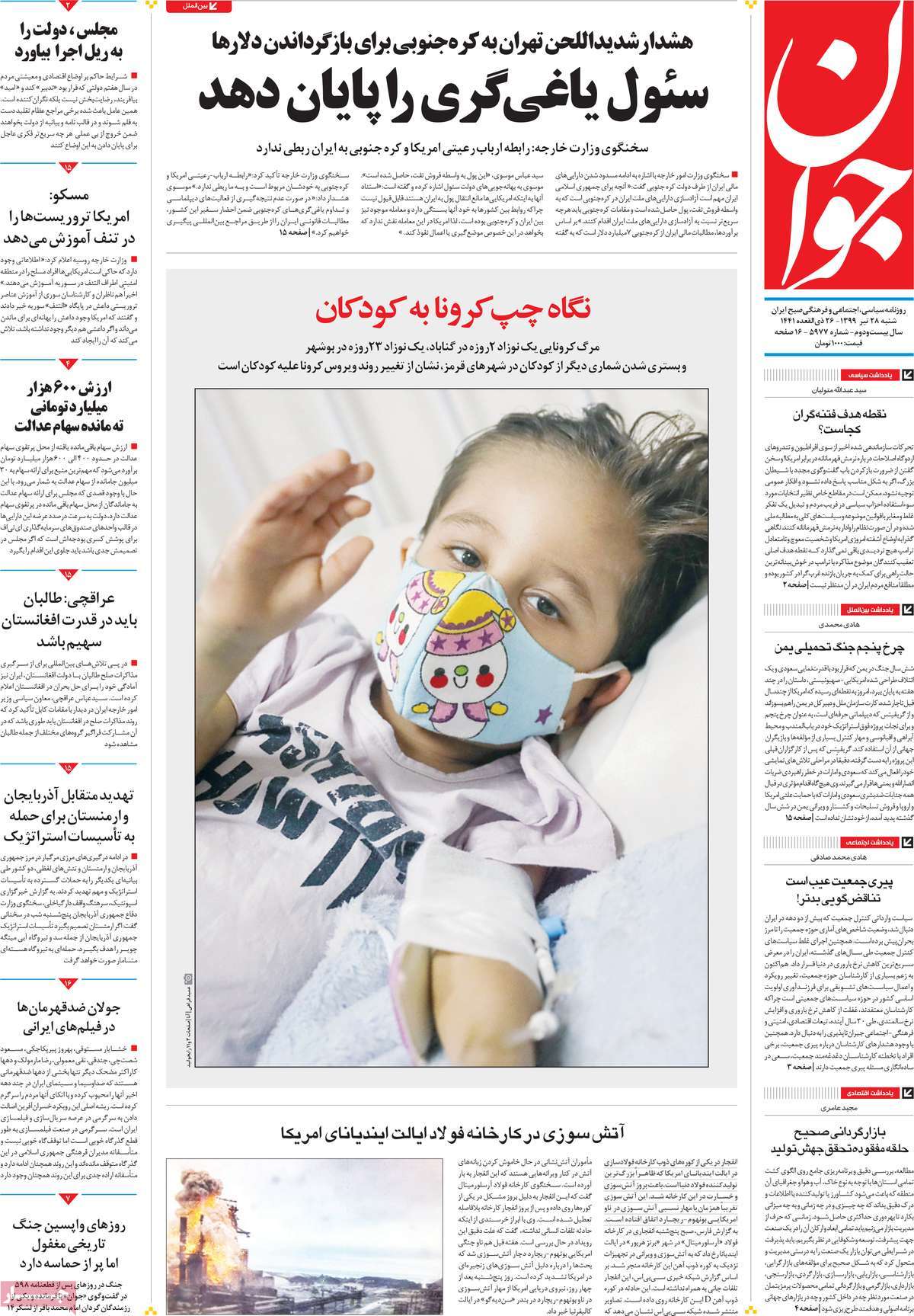
1- Seoul Must End Its Rogue Behaviour, Tehran Warns
2- Moscow: US Training Terrorists in al-TanfA Look at Iranian Newspaper Front Pages on July 18


Jomhouri Eslami Newspaper:

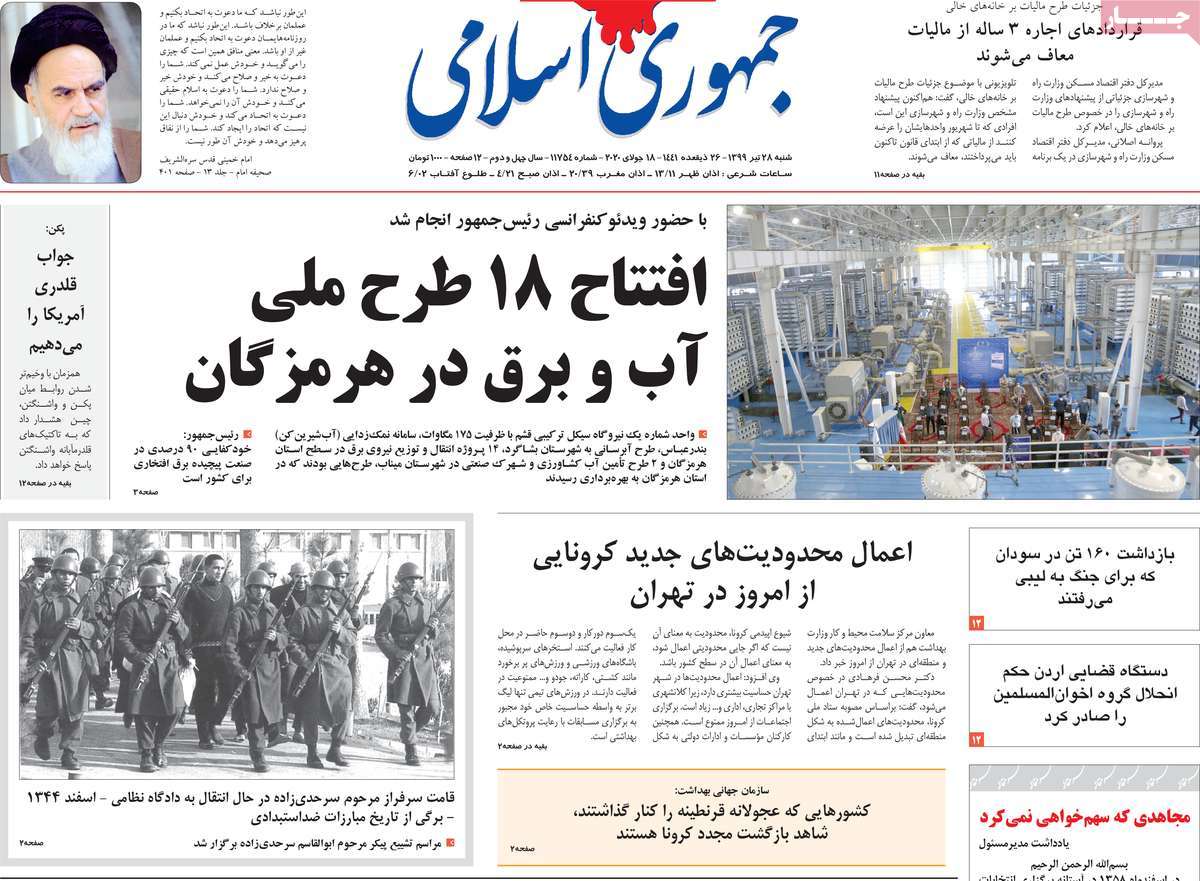
1- 18 National Water, Power Projects Opened by President in Hormozgan
2- New COVID-19 Restrictions in Tehran as of Today
3- Beijing: We’ll Reciprocate US Bullying
4- WHO: Countries that Lifted COVID-19 Restrictions Hastily Are Seeing Return of VirusA Look at Iranian Newspaper Front Pages on July 18


Kayhan Newspaper:

1- Two Basij Members Martyred in Iran’s Kurdistan: Terrorists Don’t Even Tolerate Aid Delivery to Deprived People
2- Huge Explosion in World’s Biggest Steel Factory in USA Look at Iranian Newspaper Front Pages on July 18


Sazandegi Newspaper:

1- Russian Twitter Attack? Major Democrat Twitter Handles HackedA Look at Iranian Newspaper Front Pages on July 18


Shargh Newspaper:

1- Consequences of EASA’s Warning over Safety of Iran’s AirspaceA Look at Iranian Newspaper Front Pages on July 18

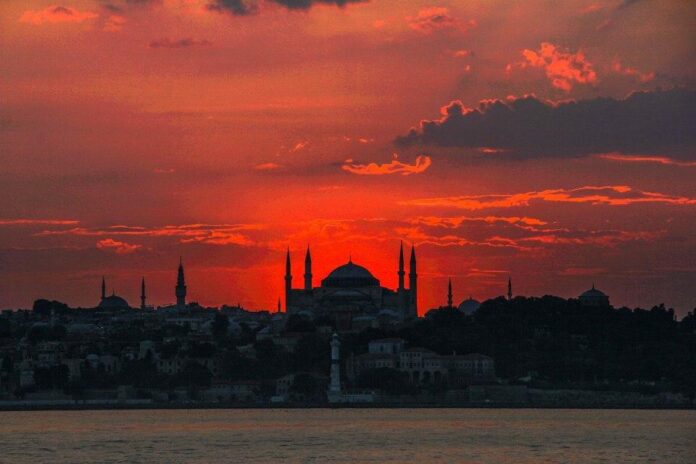
Critics of Turkey’s Hagia Sofia Decision Fail to Recognize a Successful Compromise

The Pope said he was “saddened” by the news. The United States likewise chose a low-key response, with a State Department spokesperson saying the US was “disappointed” by the decision. The Geneva-based World Council of Churches – made up of both Protestant and Orthodox Churches – used the terms, “grief and dismay”. Matteo Salvini, the leader of Italy’s far-right League Party, led an angry protest in Milan and demanded a halt in aid funds to Turkey. A look at a news websites list might lead one to think the Hagia Sofia was scheduled for demolition.

The international furor reported by the global media over a July 10, 2020 Turkish court ruling that annulled a 1934 cabinet decree was predictable, and yet regrettable. True, the decision by Turkey’s highest court does allow for the edifice to be used as a mosque, but those who are sad and or angry may want to consider how Turkey says it intends to implement the plan.Critics of Turkey’s Hagia Sofia Decision Fail to Recognize a Successful Compromise

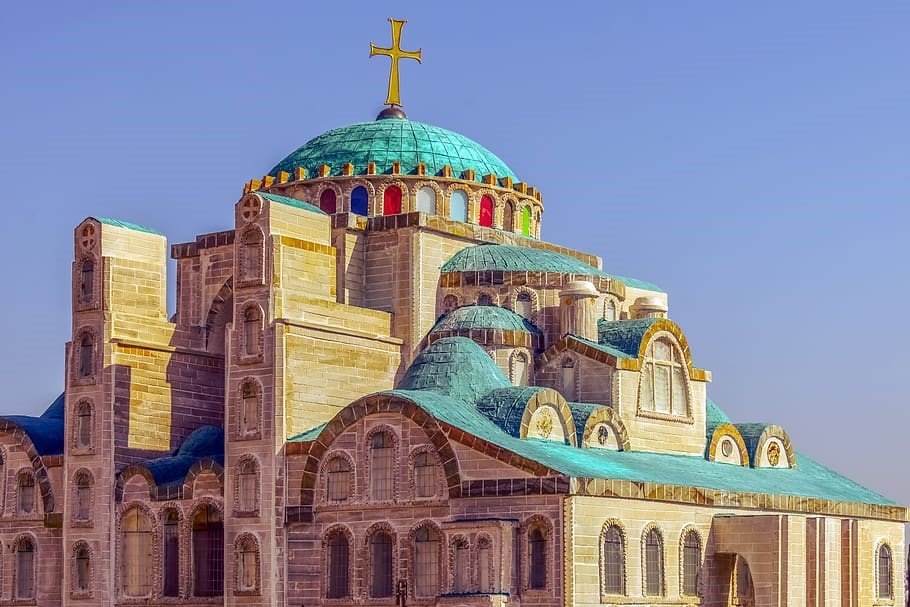
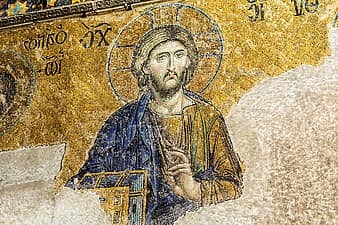
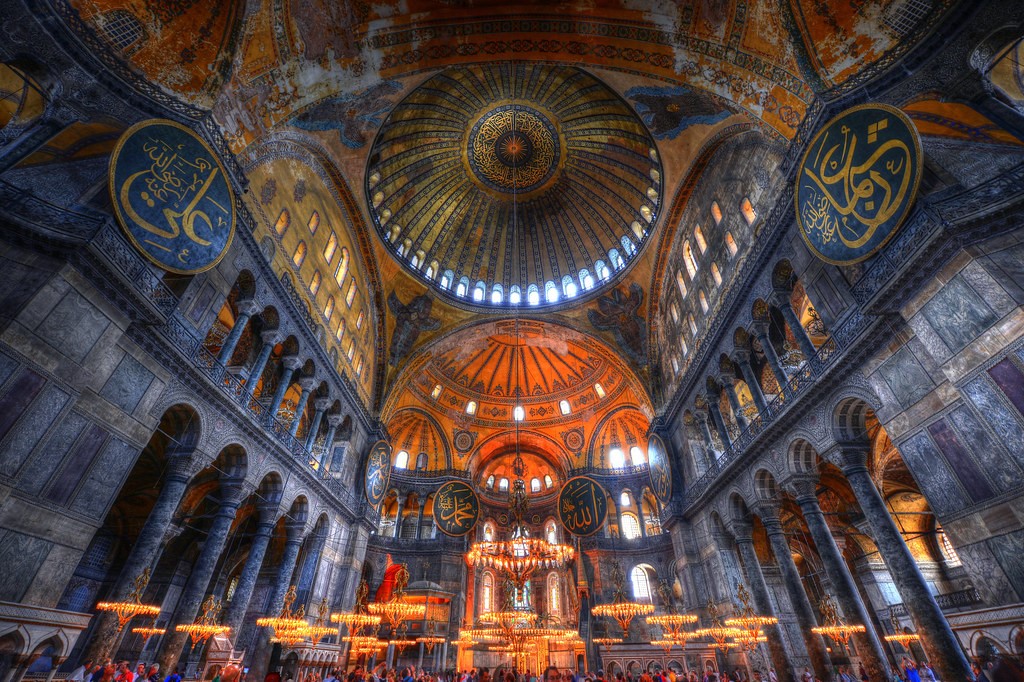
Now known as the Hagia Sophia, the 1,500-year-old building was completed in 537 CE under the reign of the Eastern Roman –or Byzantine – Emperor Justinian the First. The magnificent edifice originally served as an Orthodox Christian basilica, then briefly as a place for Catholic worship before being converted into a mosque following a decisive victory in 1453 CE by Ottoman Sultan Mehmed the Conqueror who – at the age of just 21 – defeated Constantinople’s Orthodox Christian defenders, took the city, and ended the Byzantine Empire.

The original conversion of the basilica into a mosque did involve the destruction of certain Christian artwork, icons and symbols. Such were the times. Today, however, fears of “desecration” or “cultural destruction” are unwarranted as Turkey’s governing party, the Justice and Development Party (AK) has clearly stated its intentions; a compromise between the apparent will of Turkey’s overwhelming Muslim majority, the Turkish legal system, and the needs and wishes of the international community and other faith traditions.

No demolitions will occur. Rather, Christian mosaics, art and icons at Hagia Sophia – or the Great Mosque of Ayasofya – will simply be covered during prayer when used for Islamic prayers. The conversion plan could even apply some 21st century creativity, with Al Jazeera news reporting the possible use of lasers to cover mosaics and other Christian iconography. An announcement from the AK Party’s Omer Celik further stated that Christian icons and artwork would then be uncovered, and the building is to be open to all visitors of all faiths at all other times, with admission free of charge.

Critics of Turkey’s Hagia Sofia Decision Fail to Recognize a Successful Compromise

No removals. No permanent alterations. Continued access to all – except during its use as a mosque. These conditions hardly seem unpalatable and certainly don’t represent some kind of Islamic fundamentalist “take-over” of this UNESECO World Heritage Site.

It’s somewhat understandable that those who follow the faith of the original builders of the Hagia Sofia – Greek Orthodox Christianity – would be the most dismayed. But history isn’t stagnant and the building was used exclusively as a mosque from the Ottoman conquest until 1935. For closing in on 500 years, the former city of Constantinople (today, Istanbul) has been home to a predominately Muslim population. At least 95 percent, if not higher, of the people of the nation of Turkey overwhelmingly adhere to Islam. Polls reveal that over 73 percent of Turks back the plan to covert the museum into a mosque.
When a government manages to find a “middle way” that satisfies the desires of the majority, while simultaneously allowing minorities a high degree of satisfaction, it should be applauded, not condemned. Such “truce-like” compromises are rare and represent a good example of how nations and peoples can move towards tolerance in the contentious worlds of religion and politics.
Critics of Turkey’s Hagia Sofia Decision Fail to Recognize a Successful Compromise

Set aside the debate in the west over whether Turkey’s AK Party under President Recep Tayyip Erdoğan is moving away from democracy. That is not the issue at hand. It’s perhaps a debate worth having, but so are other questions, such as whether the west – and many international news outlets – should respect the wishes of Islamic voters, even if the government voters choose is not considered “sufficiently liberal” by nations in Europe or the United States.

The debate today is about the Hagia Sofia. If the Turkish government adheres to its stated plan to allow open access to all at all times except during its use as a mosque and merely covers the icons of other faiths during Islamic prayers and uncovers them for pubic viewing thereafter, a unique compromise will have been achieved; the kind of compromise many can only dream of occurring in other self-professed “democratic” states.

* Article by Erik Richardson, a Dutch-American traveler, commenter, writer and student. He is interested in culture, tourism, global affairs related to Asia, food, literary arts and is fond of cats. Richardson spends his time traveling between major Asian capitals. 


Iran’s COVID-19 Death Toll Nears 14,000: Ministry

Iran's COVID-19 Death Toll Nears 14,000: Ministry

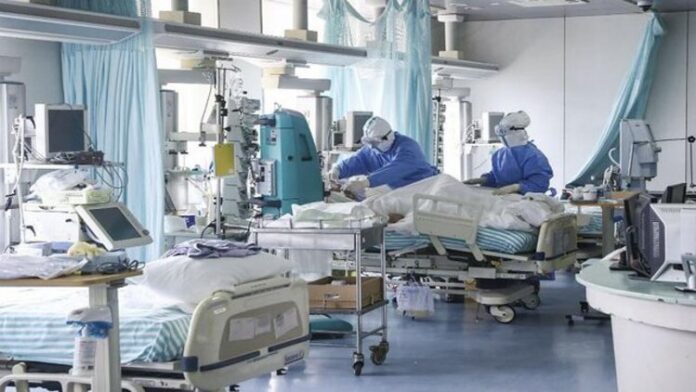
In a press briefing on Saturday, Sima-Sadat Lari confirmed 2,166 new cases of COVID-19 infection, raising the total number of infections to 271,606.

The spokeswoman said 235,300 patients have so far recovered from COVID-19, but 3,529 are still in severe conditions of the disease.

She further stressed that so far 2,123,518 COVID-19 tests have been taken across the country.

Lari said Khuzestan, East Azarbaijan, Khorasan Razavi, Zanjan, Golestan, Ilam, Bushehr, Kerman, Fars, and Mazandaran provinces are considered as “red zones”.

According to the spokeswoman, the number of COVID-19 cases has decreased in Khuzestan and Zanjan provinces thanks to people’s cooperation in observation of health protocols.