Thursday, January 15, 2026
Home Blog Page 273

Washington offers to oversee disputed Armenia-Azerbaijan corridor: US envoy

Although Armenia and Azerbaijan reached consensus on a draft peace agreement in March, Baku continues to insist on several additional conditions before formally signing the deal.

Azerbaijan demands that Yerevan amend its constitution to remove references to Azerbaijani territory, among other conditions.

One of the main sticking points remains the so-called Zangezur Corridor, which would connect Azerbaijan proper to its exclave, Nakhchivan, via Armenian territory.

Armenia refuses to use the term “Zangezur Corridor,” arguing that it has irredentist connotations on sovereign Armenian territory, known as Syunik.

Azerbaijan has insisted that the corridor should not be placed under Armenia’s total control, expressing concerns that Yerevan cannot be trusted to guarantee unfettered access.

Likewise, Armenia categorically opposes transferring control of the route to any third party.

The 32-km-long corridor has become a significant obstacle to achieving lasting peace between Armenia and Azerbaijan.

“They are arguing over 32 kilometers of road, but this is no trivial matter. It has dragged on for a decade – 32 kilometers of road,” Barrack told journalists during a briefing hosted in New York.

“So what happens is that America steps in and says: ‘Okay, we’ll take it over. Give us the 32 kilometers of road on a hundred-year lease, and you can all share it’.”

Barrack’s comments mark the first official confirmation that the Trump administration offered to manage the corridor through a private US commercial operator, which would serve as a neutral guarantor.

A recent report by Carnegie Endowment suggested that the plan is modelled on an earlier European Union proposal, which would put a US logistics firm in charge of managing and monitoring cargo transit along the route, sharing data transparently with all parties.

The report noted that the proposal draws on precedents of international oversight in Georgia’s breakaway regions, aiming to address Baku’s demand for robust, long-term security guarantees while preserving Yerevan’s sovereignty over the corridor.

Meanwhile, Turkey has quietly urged Baku to sign the peace agreement, reminding Azerbaijani officials of shifting regional dynamics, such as Iran’s waning influence.

A regional source familiar with the negotiations told Middle East Eye that it was Turkey that originally proposed the idea of a private company, approved by both Armenia and Azerbaijan, managing the corridor.

“However, the Armenian side demanded that the company should also work on the Nakhchivan side of the corridor, which was unacceptable for Baku,” the source said.

The conflict between Armenia and Azerbaijan dates back to the 1993 Nagorno-Karabakh war, when Armenian forces seized the disputed enclave, recognised as Azerbaijani territory by the United Nations, following the collapse of the Soviet Union.

After a bloody six-week war in late 2020, Azerbaijan launched a military operation in September 2023 to retake Nagorno-Karabakh, leading to a ceasefire agreement. Most ethnic Armenians fled, and the breakaway region was officially dissolved on 1 January 2024.

Turkey’s own normalisation process with Armenia is closely tied to the prospect of a peace deal between Azerbaijan and Armenia.

Turkish officials view Armenia as a vital link in the so-called Middle Corridor, which would directly connect Turkey to Central Asia. Turkish companies are also eager to participate in potential infrastructure projects within Armenia.

Despite Baku’s objections, Turkish President Recep Tayyip Erdogan hosted Armenian Prime Minister Nikol Pashinyan last month, marking the first official visit to Turkey by an Armenian leader.

Trump to slam Russia with ‘severe’ 100% tariffs if no agreement is made on Ukraine in 50 days

Trump said on Monday he has struck a deal with NATO to purchase the weapons that will be delivered to Ukraine, as he met NATO Secretary General Mark Rutte in Washington.

“We made a deal today where we will be sending weapons to (Ukraine) and NATO will be paying for it,” Trump announced at a press conference at the White House.

The US is ready to implement 100% tariffs on Russia in response to President Vladimir Putin’s lack of interest in ending his war in Ukraine, which could kick in in 50 days, according to Trump.

“We’re very unhappy with Russia and we’ll be doing very severe tariffs … at about 100%,” Trump said.

“We’ve spent $250 billion on this war … and we want to see it end. I am disappointed in Putin because I thought we’d have an agreement two months ago,” he added.

Trump has publicly expressed irritation with Russian President Vladimir Putin’s reluctance to reach a peace deal in Ukraine, accusing the Russian leader of throwing “bulls**t” at Washington.

“I am very disappointed with President Putin,” Trump said.

“I thought he was somebody that meant what he said. And he’ll talk so beautifully and then he’ll bomb people at night. We don’t like that.”

In an about-turn last week, Trump said that Washington would send sophisticated weapons, including Patriot air defence systems, to Ukraine via NATO.

The Patriot missile system can detect and intercept a wide range of oncoming air targets, high-end ballistic missiles in particular, and is regarded as one of the world’s best, at a time when Moscow is increasing its nightly missile and drone attacks amid its all-out war against Ukraine, now well into its fourth year.

Speaking at the Ukraine Recovery Conference in Rome on Thursday, Ukraine’s President Volodymyr Zelensky said that Germany would pay for two of the systems, while Norway has agreed to supply one.

Other European partners have also said they are prepared to help, Zelensky said.

US Secretary of State Marco Rubio said on Friday that some of the US-made weapons that Ukraine is seeking are already deployed with NATO allies in Europe.

Those weapons could be transferred to Ukraine quickly, with European countries buying replacements from the US, he said.

“It’s a lot faster to move something, for example, from Germany to Ukraine than it is to order it from a (US) factory and get it there,” Rubio told reporters during a visit to the ASEAN summit in Kuala Lumpur.

After repeated Russian drone and missile onslaughts on Kyiv, authorities announced on Friday that they are establishing a comprehensive drone interception system under a project called Clear Sky.

The project includes a 260-million-hryvnia (approximately €5.3 million) investment in interceptor drones, operator training, and new mobile response units, according to Tymur Tkachenko, the head of the Kyiv military administration.

Rutte will be in Washington on Monday and Tuesday for talks with Trump, US Secretary of State Marco Rubio, US Defence Secretary Pete Hegseth and members of Congress.

Over 700 Palestinians killed by Israeli military fire while collecting water in Gaza: Report

“The Israeli occupation continues to wage a systematic and deliberate war of thirst against the Palestinian people in Gaza, in a flagrant violation of all international and humanitarian conventions,” Gaza’s government media office said in a statement.

The office accused Israeli forces of using water as a weapon of war “to deprive the Palestinians of their most basic rights.”

It noted that Israeli army forces had committed 112 massacres against Gazans collecting water, killing more than 700 people, mostly children, since October 2023.

On Sunday, at least 12 people were killed, including eight children, by Israeli fire while waiting to collect water in the Nuseirat refugee camp in central Gaza.

The media office noted that over 720 water wells were deliberately destroyed by the Israeli army in Gaza.

“Attacks on water wells have deprived more than 1.25 million Palestinians of access to clean water,” it added.

According to the statement, the Israeli army has obstructed the entry of 12 million liters of fuel monthly, the necessary amount to operate the minimum number of water wells, sewage stations, waste collection mechanisms, and other vital sectors in Gaza.

“This has caused a complete paralysis in water and sewage networks and the spread of epidemics, mainly among the children,” it added.

The media office called on the international community and human rights organizations to take immediate action to stop Israel’s systematic and deliberate use of water as a war weapon and allow the necessary amount of fuel and heavy equipment to reoperate water wells and drainage stations.

Israel has kept Gaza crossings closed to food, medical, and humanitarian aid since March 2, deepening an already severe humanitarian crisis in the enclave, affecting Gaza’s 2.4 million residents. The blockade has pushed the region into famine conditions, with many reported deaths due to hunger.

Rejecting international calls for a ceasefire, the Israeli army has pursued a brutal offensive on the Gaza Strip since Oct. 7, 2023, killing over 58,000 Palestinians so far, most of them women and children. The relentless bombardment has destroyed the enclave and led to food shortages and a spread of disease.

Last November, the International Criminal Court issued arrest warrants for Israeli Prime Minister Benjamin Netanyahu and his former Defense Minister Yoav Gallant for war crimes and crimes against humanity in Gaza.

Israel also faces a genocide case at the International Court of Justice for its war on the enclave.

Former Israeli PMs slam Netanyahu’s plans for ‘concentration camps’ in Gaza

Gaza War

Former Prime Ministers Yair Lapid and Ehud Olmert levelled the criticism on Sunday as Israeli forces continued to bombard Gaza.

Lapid, the leader of Israel’s biggest opposition party, told Israeli Army Radio that “nothing good” would come out of the plans to establish the “humanitarian city” on the ruins of the city of Rafah.

“It’s a bad idea from every possible perspective – security, political, economic, logistical,” he said.

“I don’t prefer to describe a humanitarian city as a concentration camp, but if exiting it is prohibited, then it is a concentration camp,” he added.

Lapid served as Israel’s prime minister for six months in 2022.

According to the Israeli government, the “humanitarian city” will initially house 600,000 displaced Palestinians currently living in tents in the overcrowded area of al-Mawasi along Gaza’s southern coast. But eventually, the enclave’s entire population of more than two million people is to be moved there.

Satellite images have shown Israeli troops have stepped up demolition operations in Rafah in recent months. On April 4, the number of destroyed buildings stood at about 15,800. By July 4, the number had gone up to 28,600.

Olmert, who served as Israel’s prime minister from 2006 to 2009, also slammed the Israeli plan.

“It is a concentration camp. I am sorry,” he told the United Kingdom’s Guardian daily newspaper.

“If they [Palestinians] will be deported into the new ‘humanitarian city’, then you can say that this is part of an ethnic cleansing,” he stated.

“When they build a camp where they [plan to] ‘clean’ more than half of Gaza, then the inevitable understanding of the strategy of this [is that] it is not to save [Palestinians]. It is to deport them, to push them and to throw them away. There is no other understanding that I have at least.”

Humanitarian officials also have announced the plan for the internment camp in Rafah would lay the groundwork for the ethnic cleansing of Palestinians from Gaza.

The Israeli government insisted the transfer of Palestinians to the internment camp in Rafah would be “voluntary” while Netanyahu and United States President Donald Trump have continued to tout their proposal to forcibly transfer all of the Palestinians in Gaza out of the enclave.

Netanyahu said during a dinner with Trump last week that Israel was working with the US “very closely about finding countries that will seek to realise what they always say, that they want to give the Palestinians a better future”.

For his part, the US president added “we’ve had great cooperation from [countries] surrounding Israel” and “something good will happen” soon.

Israel’s neighbours and other Arab states, however, have roundly rejected any plans to displace Palestinians from Gaza, and so have the war-weary Palestinians of the coastal enclave.

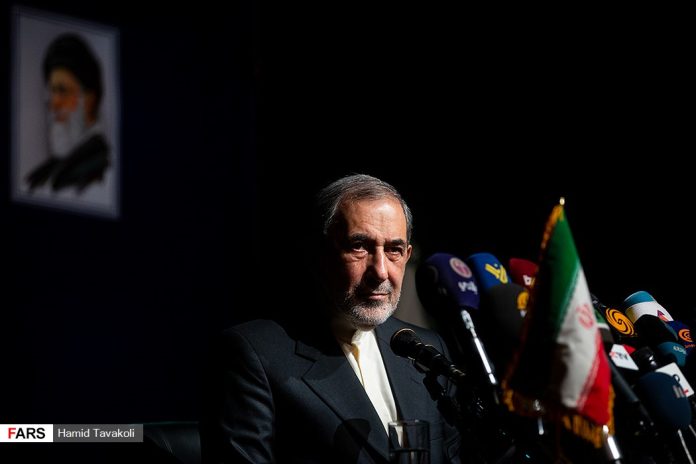
Iran leader’s advisor reiterates red line on uranium enrichment

Ali Akbar Velayati

Velayati also reiterated Iran’s openness to dialogue with the US, but only if national red lines, particularly on enrichment, are respected.

He however described the US as untrustworthy.

Velayati’s remarks came during a meeting in Tehran with Pakistan’s Interior Minister Syed Mohsin Naqvi. Velayati further condemned the Zionist regime’s aggression against Gaza, supported by the US, and urged unity among Islamic countries in confronting illegal actions by Tel Aviv.

The Pakistan side reaffirmed his country’s support for Iran and denounced recent acts of aggression by the Zionist regime and the US on Iranian soil.

Iranian MP warns European troika against activating snapback mechanism

Nuclear Negotiations in Vienna

Azizi called such a move hostile and illegitimate.

In a post on his official account on the social media platform X, Azizi wrote, “The Islamic Republic of Iran does not consider the activation of the snapback mechanism as a tool for pressure, but as a hostile act lacking any legal legitimacy”.

He added that the activation of the snapback mechanism will mark the beginning of a costly cycle for the European parties and that Iran, with full authority and preparedness, will make the three European states bear the consequences of this mistake.

The snapback mechanism, embedded in UN Security Council Resolution 2231, would allow the reimposition of international sanctions lifted under the JCPOA.

Iranian officials have repeatedly cautioned that such a move would prompt a decisive and firm response from Tehran.

Observers also warn the activation of the mechanism could deal a fatal blow to diplomatic efforts aimed at resolving the dispute over Iran’s nuclear program.

Iran’s president calls for inclusive role of universities in solving challenges

“If we respect and empower our intellectuals, the country will flourish”, he said during the 40th Summit of Presidents of Major Universities held at the University of Tehran.

While referring to the urgency for transformation in higher education, Pezeshkian called on university leaders to shift their institutions toward being problem-solving centers capable of addressing the country’s complex and interwoven challenges.

He also stressed that modern institutions must engage directly in national development and called for academic participation in government planning.

Pezeshkian warned against pressuring professors and scholars under vague pretexts, urging merit-based appointments and improved human resource management.

He further underscored that without behavior change in public administration, bureaucracies would stagnate.

Among key university missions, he enumerated improving energy efficiency, developing renewable energy, addressing Iran’s water crisis, and promoting performance-based budgeting.

“Real progress,” he said, “happens when knowledge powers our production and industries”.

Iranian official warns senior figures against using WhatsApp

Instagram Whatsapp

Speaking on state television on Sunday, Hassan Meisami emphasized that while ordinary citizens are permitted to use WhatsApp, high-ranking officials must exercise caution and refrain from sharing sensitive or personal information on the platform.

“Senior national and military leaders should under no circumstances use WhatsApp,” Meisami stated.

“For the general public, usage is not prohibited, but necessary precautions should be taken.”

Amid the escalating active conflict last month, Iranian television delivered a directive to the citizens to delete the messaging platform on account of safety and privacy concerns.

The instruction says that the messaging platform is gathering user information to share with Israel.

Iranians were encouraged to refrain from using other location-based applications as well.

Top Iranian commander warns of stronger response if Israel strikes again

Major General Abdolrahim Mousavi

During a visit to the Islamic Revolution Guard Corps (IRGC) Aerospace Force, Mousavi met with commanders and personnel, praising their role in defending Iran during the 12-day conflict in June.

He highlighted the Aerospace Force’s achievements as more significant than some of Iran’s major operations during the Iran-Iraq War of the 1980s.

“Never before has the territorial integrity of the Islamic Republic faced such a threat,” Mousavi stated. “By the grace of God, our Aerospace Force struck decisively, cutting off the hands of our enemies.”

He paid tribute to the late General Amir Ali Hajizadeh, a key figure in Iran’s missile and drone development, calling his legacy enduring and inspirational for future generations. General Hajizadeh and several other top military commanders were assassinated in Israeli strikes on June 13.

General Mousavi emphasized that Iran’s defense production continues around the clock and affirmed that Iran’s forces will carry forward the mission of fallen commanders until full victory is achieved.

Iran Red Crescent chief: 126 women, 41 children martyred in Israeli aggression; over 8,200 homes destroyed

Speaking at a press conference alongside Foreign Ministry spokesperson Esmaeil Baqaei, Kolivand confirmed that over 8,200 residential units were destroyed across various provinces.

He further noted that five Red Crescent aid workers were martyred, as Israeli forces deliberately targeted ambulances and emergency responders.

Kolivand emphasized the extensive war crimes committed by Israel, including attacks on hospitals and intensive care units, which have been documented and submitted to international bodies such as the International Committee of the Red Cross.

He added that the Iranian Red Crescent, in cooperation with the International Red Cross representative in Iran, inspected several affected areas to verify the scale of the atrocities.

Despite the devastation, including burning homes and casualties among women and children, Kolivand praised the courage and dedication of his colleagues who continued rescue and relief operations throughout the conflict.

More than 80 countries have expressed solidarity with Iran’s Red Crescent regarding these crimes.