Wednesday, April 29, 2026
Home Blog Page 274

Iranian animation wins Oscar at 97th Academy Awards

Directed by Shirin Sohani and Hossein Molayemi, the film marks Iran’s third Oscar win, following Asghar Farhadi’s A Separation (2012) and The Salesman (2017).

The ceremony, hosted by Conan O’Brien at the Dolby Theater, saw Anora emerge as the night’s biggest winner, securing five awards, including Best Picture and Best Director for Sean Baker.

The film also earned accolades for Best Actress, Best Original Screenplay, and Best Editing.

Other notable wins included The Brutalist, which claimed three awards, including Best Actor for Adrien Brody, and Emilia Perez, which took home two Oscars for Best Supporting Actress and Best Original Song.

Dune: Part Two also won two awards, while The Meeting secured one.

The success of In the Shade of the Cypress, a minimalistic, dialog-free tale about a former captain suffering from PTSD, highlights the growing recognition of Iranian talent on the global stage, and its win is a proud moment for the country’s animation industry.

Satellite images show Taliban’s diversion of Helmand river away from Iran

Taliban Afghanistan

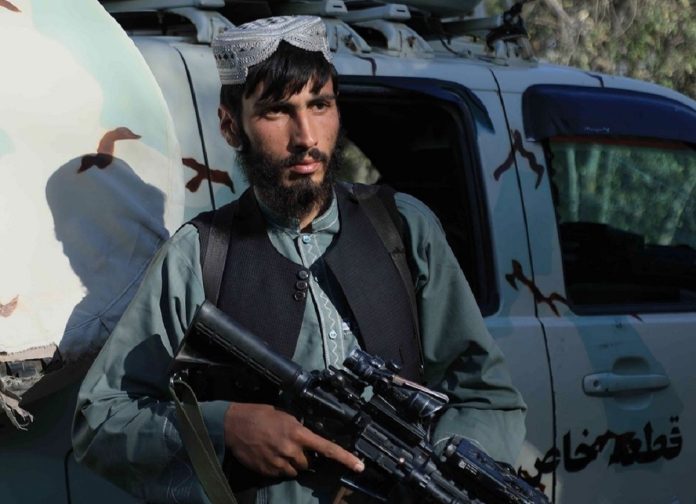
Residents of Iran’s Sistan and Baluchestan province, who have endured years of drought due to water shortages and Afghanistan’s failure to uphold its commitments, are calling on President Masoud Pezeshkian and the Ministry of Foreign Affairs to take decisive action and prevent another missed opportunity to secure Iran’s rightful share of water.

Despite multiple assurances from Taliban officials that water would no longer be redirected to Godzareh, recent satellite images confirm that water continues to be diverted from Kamal Khan Dam into the salt flats of Godzareh.

This development follows repeated assertions by Taliban authorities that drought conditions and reduced rainfall were preventing them from releasing Iran’s legally entitled water share. However, recent heavy rainfall and uncontrollable floodwaters from Afghanistan into Iran initially raised hopes that the Taliban might finally honor its commitments.

The Taliban had been refusing to allow Iran’s share of water from Hirmand, known as Helmand in Afghanistan, to stream into Iran, blaming drought and technical issues for the low supply of water.

Iran says Afghanistan must adhere to the terms of the internationally-binding 1973 Hirmand river water treaty and provide its share of water from the river.

Iran’s parliament ousts economy minister, first in President Pezeshkian’s cabinet

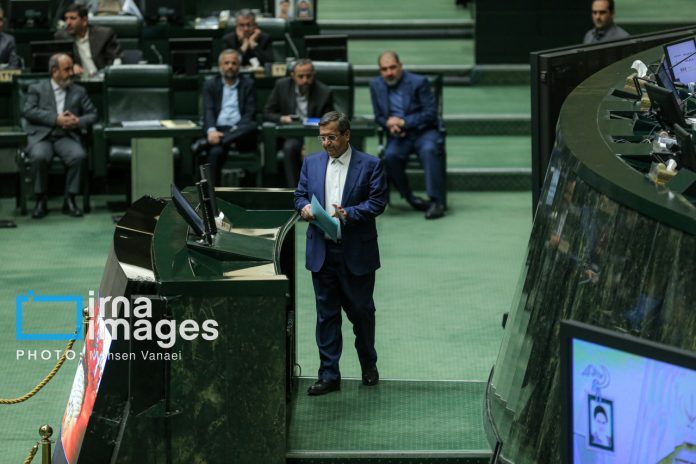
Hemmati, who previously served as central bank governor under former President Hassan Rouhani, was dismissed with 182 votes in favor, 89 against, and one abstention.

Hemmati’s tenure, which lasted fewer than 200 days, ended amid criticism of “economic mismanagement” and rising foreign currency parity rate.

President Pezeshkian defended Hemmati during the impeachment session, stating, “The country’s economic challenges cannot be attributed to one individual alone.”

This marks the first time in Iran’s political history that an economy minister has been impeached within the first six months of a government’s term.

Pezeshkian now faces the task of nominating a replacement, subject to parliamentary approval.

The impeachment came amid growing pressure on the government to address economic instability, including inflation and unemployment.

According to ECO Iran economic site, Hemmati’s dismissal follows a similar pattern seen during Rouhani’s second term, when two ministers faced impeachment but retained their positions.

Cristiano Ronaldo to miss match against Iran’s Esteghlal due to injury, says Saudi league

The Portuguese star is among seven key players sidelined for the first leg of the round of 16 clash, set to take place on Monday night at Tehran’s Azadi Stadium.

Al-Nassr faces significant absences, including Ronaldo, Otávio, Aymeric Laporte, and Sultan Al-Ghannam, due to injuries and other issues.

However, Senegalese forward Sadio Mané is expected to play in the high-stakes match.

The return leg will be held in Saudi Arabia a week later. Al-Nassr, preparing for the knockout stage, faces a daunting task to overcome Esteghlal amid the absence of several starters.

Ronaldo’s injury comes as a blow to fans eagerly anticipating his appearance in Tehran.

The five-time Ballon d’Or winner has been instrumental for Al-Nassr since joining the club in 2023.

Iranian parliament begins impeaching economy minister

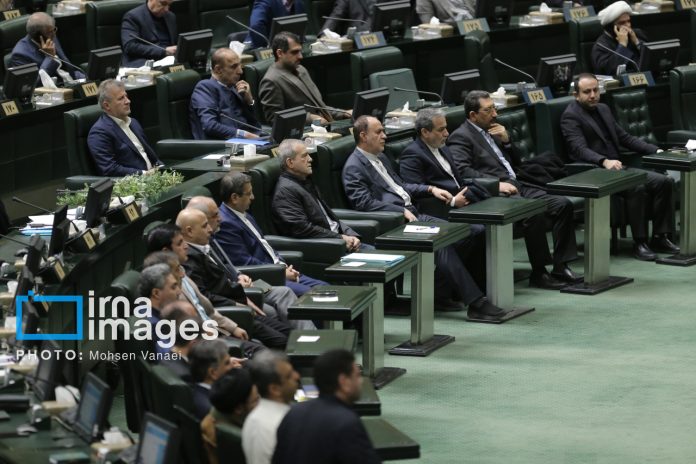
The session, chaired by Parliament Speaker Mohammad Bagher Ghalibaf, saw the participation of 246 lawmakers and key government officials, including ministers of industry, agriculture, and foreign affairs, as well as the central bank governor.

The impeachment motion, signed by 91 MPs on February 20, accuses Hemmati of mismanaging economic policies.

Under Article 224 of the parliamentary bylaws, the five-hour session allocated two hours for questioning by MPs and three hours for defense by Hemmati, President Pezeshkian, and supporting lawmakers.

President Pezeshkian defended Hemmati, stating that major monetary and banking policies were decided collectively by the heads of government branches, economic committees, and experts.

“It is unfair to blame one individual for all shortcomings,” he emphasized, calling for unity to address economic challenges and the plummeting value of national currency against the dollar.

The session will conclude with a vote, determining Hemmati’s fate.

Traffic policemen killed in shooting incident in Iran’s Kerman Province

Iran Police

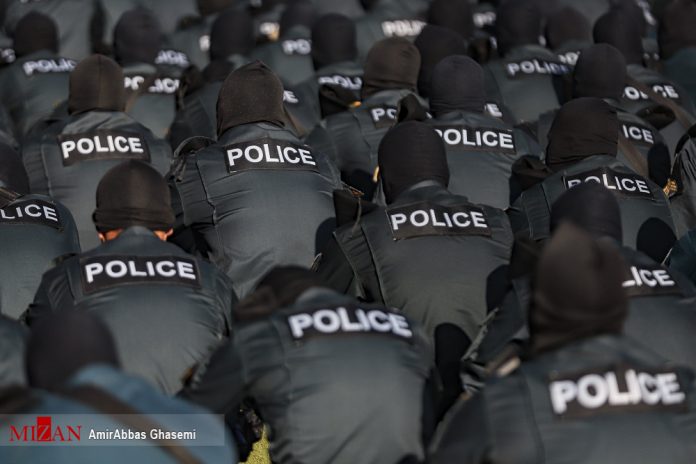
The attackers opened fire on the traffic police car in the southern Iranian city.

A number of security forces and traffic police members have been killed in similar attacks in southern and southeastern Iran in the past couple of years.

Iran mainly treats such attacks as acts as terror.

Top US diplomat says EU wants another year of war

Russia Ukraine War

Rubio’s comments came after a heated meeting between President Donald Trump and Volodymyr Zelensky on Friday, which triggered accusations from American officials that the Ukrainian leader showed “disrespect” and ingratitude towards the US.

In an interview with CNN, Rubio emphasized that Washington is seeking peace for Ukraine, adding that if there’s even a 1% chance of that happening, it “needs to be explored.” He also suggested that some of his EU counterparts are not exactly on board with this approach.

He cited an unnamed European foreign minister as saying that the EU’s plan is to allow “the war go… on for another year and at that point Russia will feel so weakened that they’ll beg for peace.” Rubio criticized this approach, stating, “That’s another year of killing, another year of dying, another year of destruction, and by the way, not a very realistic plan in my point of view.”

Rubio has also called on Zelensky to apologize for what he called an “antagonistic” approach during the meeting, rebuking him for his stance on an agreement granting the US rights to Ukraine’s natural resources, which was set to be signed at the White House but ended up in limbo due to the spat that ensued.

While Zelensky – who urged the US to continue military support for Ukraine while warning that the failure to do so would backfire – was heavily criticized by Trump administration officials and Republicans, many EU leaders rallied to his support.

Ursula von der Leyen, the president of the EU Commission, praised Zelensky’s “dignity” and reassured him that he is “never alone.”

Friedrich Merz, Germany’s presumed future chancellor, said that “we must never confuse aggressor and victim in this terrible war.”

Kaja Kallas, the EU’s top diplomat, went even further, issuing a not-so-veiled rebuke to Trump.

“We stand by Ukraine. We will step up our support to Ukraine so that they can continue to fight back the aggressor… Today, it became clear that the free world needs a new leader. It’s up to us, Europeans, to take this challenge.”

Whereas Russia has praised the Trump administration for its willingness to find ways to resolve the Ukraine conflict, including examining its root causes, Kremlin spokesman Dmitry Peskov has denounced the EU for what he described as a desire to further escalate the hostilities.

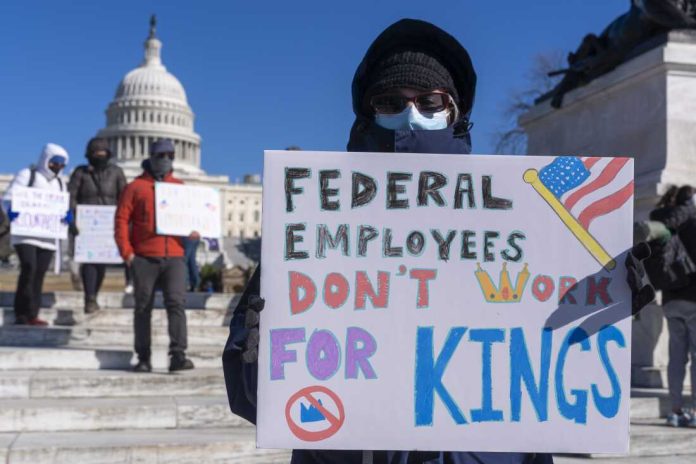
US intel discloses Russia and China seeking to recruit disgruntled federal employees

The intelligence indicates that foreign adversaries are eager to exploit the Donald Trump administration’s efforts to conduct mass layoffs across the federal workforce – a plan laid out by the Office of Personnel Management earlier this week.

Russia and China are focusing their efforts on recently fired employees with security clearances and probationary employees at risk of being terminated, who may have valuable information about US critical infrastructure and vital government bureaucracy, two of the sources said. At least two countries have already set up recruitment websites and begun aggressively targeting federal employees on LinkedIn, two of the sources said.

A document produced by the Naval Criminal Investigative Service said the intelligence community assessed with “high confidence” that foreign adversaries were trying to recruit federal employees and “capitalize” on the Trump administration’s plans for mass layoffs, according to a partly redacted copy reviewed by CNN.

It added that foreign intelligence officers were being directed to look for potential sources on LinkedIn, TikTok, RedNote and Reddit.

At least one foreign intelligence officer directed an asset to create a company profile on Linkedin and post a job advertisement, and to actively pursue federal employees who indicate they are “open to work,” the NCIS document says.

The adversaries think the employees “are at their most vulnerable right now,” another of the sources stated, adding, “Out of a job, bitter about being fired, etc.”

“It doesn’t take a lot of imagination to see that these cast aside federal workers with a wealth of institutional knowledge represent staggeringly attractive targets to the intelligence services of our competitors and adversaries,” a third source familiar with the recent US assessments told CNN.

The intelligence seems to confirm what was previously a hypothetical fear for current and US officials: that the mass firings could offer a rich recruitment opportunity for foreign intelligence services that might seek to exploit financially vulnerable or resentful former employees. The Justice Department has charged multiple former military and intelligence officials for providing US intelligence to China in recent years.

Career officials at the CIA have been quietly discussing that risk and how to mitigate it in the recent weeks, current and former intelligence officials previously told CNN. Director of National Intelligence Tulsi Gabbard earlier this week suggested that those discussions represented a “threat” made by disloyal government employees — rather than a clinical warning of the potential risks posed by President Donald Trump’s aggressive cost-cutting strategy — and that those involved should be penalized.

“I am curious about how they think this is a good tactic to keep their job,” Gabbard told Fox News’ Jesse Watters on Tuesday.

“They’re exposing themselves essentially by making this indirect threat using their propaganda arm through CNN that they’ve used over and over and over again to reveal their hand, that their loyalty is not at all to America. It is not to the American people or the Constitution. It is to themselves.

“And these are exactly the kind of people that we need to root out, get rid of so that the patriots who do work in this area, who are committed to our core mission can actually focus on that,” she continued.

Multiple current officials across national security agencies who spoke to CNN on the condition of anonymity expressed frustration at the administration’s response to what they see as very real warnings — not partisan swiping.

“Employees that feel they have been mistreated by an employer have historically been much more likely to disclose sensitive information,” said Holden Triplett, who served as director of counterintelligence at the National Security Council in the first Trump administration and is a former FBI attaché at the US embassies in Moscow and Beijing.

“We may be creating, albeit somewhat unintentionally, the perfect recruitment environment.”

“This isn’t reality TV,” another former intelligence official stated, adding, “There are consequences.”

The CIA and Defense Department are weighing significant staff cuts. The Pentagon said in a memo last week that over 5,000 probationary employees, who in most cases have been in their job a year or less, could be fired in the short term. And the CIA has already fired more than 20 officers for their work on diversity issues, many of whom are now challenging their dismissal in court.

The CIA also aggressively seeks to recruit disaffected government employees in adversarial countries “all the time,” noted a former intelligence official — using similar tactics. The agency has released a series of public recruitment videos aimed at persuading disgruntled Russian government employees to spy for the United States, videos that detailed ways to securely contact the agency.

“’Domestic political turbulence in your country? Sign up with us to help us help your country!’” the former official paraphrased the US efforts, adding that those efforts deeply aggravate foreign governments.

The CIA may have already inadvertently put some American secrets within the grasp of foreign spies and hackers. In an effort to comply with the executive order to downsize the federal workforce, the CIA earlier this month sent the White House an extraordinarily unusual email listing all new hires that have been with the agency for two years or less — a list that included CIA officers who were preparing to operate under cover — over an unclassified email server.

Some of those officers, who have had access to classified information about the agency’s operations and tradecraft, may now be terminated as part of the layoffs.


US terminates support of Ukraine energy grid restoration

Power outages have been applied overnight in some regions of Ukraine due to the attacks on energy facilities. The country’s systems have sustained near-constant impact throughout the course of the three-year war.

“It significantly undercuts this administration’s abilities to negotiate on the ceasefire, and it’d signal to Russia that we don’t care about Ukraine or our past investments,” one USAID official involved in the Ukraine mission told NBC News.

The official continued: “Russia is fighting a two-pronged war in Ukraine: A military one but also an economic one. They’re trying to crush the economy, but USAID has played a central role in helping it be resilient, [including] shoring up the energy grid…We’ve provided vast amount of support to the Ukrainian government to avoid a macro economic crisis.”

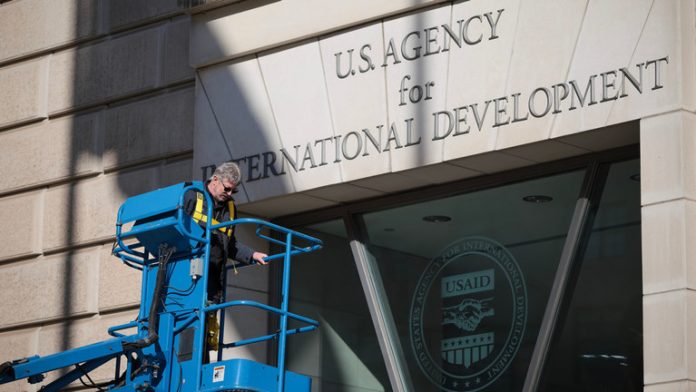
In addition to ending the Ukraine Energy Security Project, USAID is also dramatically downsizing its presence in Ukraine.

Before the Donald Trump administration’s latest moves, 64 American government employees and contractors were serving on the ground in Ukraine for the agency. Just eight of those personnel are slated to remain on the ground in the war-torn country after the Trump administration placed its remaining global workforce on administrative leave and ordered those workers not deemed “critical” to return to the U.S.

The two officials warned that USAID withdrawing from Ukraine would leave its energy grid vulnerable in the heart of the winter as it endures assaults from further Russian missiles.

Both officials also asserted that USAID plays the foremost role in ensuring financial aid provided to Ukraine is spent for its intended purposes.

Based on a document obtained by NBC News, the State Department has also ordered the termination of a program focused on “financial sector reform activity.”

“We won’t have the eyes on where this money has gone over the last few years,” one of the officials said.

USAID’s Bureau for Europe and Eurasia, which oversees the Ukraine mission, has 115 staff based in Washington, D.C. The bureau’s staff has been told that number would be pared down to 29 employees remaining active, according to the two USAID officials.

UK’s intl. development minister quits over aid cuts

Earlier this week, Prime Minister Keir Starmer announced plans to increase defence spending from 2 percent of GDP to 2.5 percent by 2027, with a target to hit 3 percent by the end of the next parliament.

That would partly be funded, he announced, by slashing aid from 0.5 percent of gross national income to 0.3 percent.

Dodds said on Friday that it would be “impossible” to deliver such aid cuts without it impacting programmes such as those in Gaza, Sudan and Ukraine.

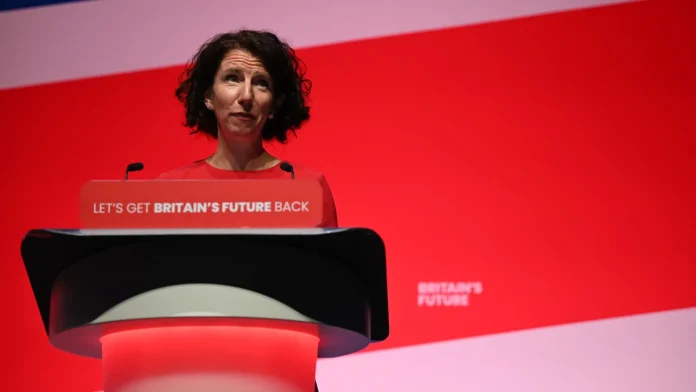
She wrote in her resignation letter to Starmer that the postwar global order had “come crashing down” and that she agreed with increased defence spending.

“The tactical decision was taken for ODA [official development assistance] to absorb the entire burden. You have maintained that you want to continue support for Gaza, Sudan and Ukraine; for vaccination; for climate; and for rules-based systems,” she added.

“Yet it will be impossible to maintain these priorities given the depth of the cut; the effect will be far greater than presented, even if assumptions made about reducing asylum costs hold true.”

In September, Dodds wrote a column for Middle East Eye, in which she stated the plight of women and girls needed to be at the heart of the global response to the war in Sudan.

The outgoing minister told Starmer that his decision would likely lead to the UK pulling out from African, Caribbean and Western Balkan nations “at a time when Russia has been aggressively increasing its global presence”.

Dodds added that the UK would likely have to leave a number of multilateral bodies and have a reduced role in the G7, G20, World Bank and climate negotiations.

“I know you have been clear that you are not ideologically opposed to international development. But the reality is that this decision is already being portrayed as following in President Donald Trump’s slipstream of cuts to USAID.”

Days earlier, Foreign Secretary David Lammy said that Britain would “protect the most vital programmes in the world’s worst conflict zones of Ukraine, Gaza and Sudan”, but other programmes doing vital work “will have to be put on hold”.

It was earlier this month that Lammy described Trump’s decision to make large cuts in USAID was a “big strategic mistake” which would allow China to further its global influence.

The Guardian reported on Friday that the cut would take overseas aid to its lowest percentage of national income since records began.

Experts say aid programmes in Yemen, Syria, Afghanistan, Ethiopia and Nigeria are likely to be among those affected.

On Thursday, 138 charities wrote to Starmer this week condemning the decision.

“It is alarming that the UK is now following in the US’s footsteps and has accepted the false choice of cutting the already diminished UK aid to fund defence,” they wrote.

“No government should balance its books on the backs of the world’s most marginalised people. The previous UK aid cuts and the current US aid freeze have already shown their impact: children are now at risk of missing out on vaccines, girls may lose access to education, and healthcare services in refugee camps are being withdrawn.”

The charities announced that in the long term, alternative funding could be secured through a wealth tax, while in the short term, the proceeds of the sale of Chelsea FC could be used.

The football club was among a number of assets frozen from Russian oligarch Roman Abramovic after Russia invaded Ukraine.