Iran, UNICEF Sign Cooperation Deal
The cooperation agreement has been signed by Advisor to the Iranian Minister of Culture and Islamic Guidance and General Director of Ministerial Affairs, Mohammad Mahdi Ahmadi, and the UNICEF representative in Iran, Mandeep O’Brien.
Ahmadi said the agreement entails mutual cooperation and partnership in improving the ethical representation of children in the mass media, as in the virtual space and among the media professionals.
The agreement also includes plans to improve child dignity and self-esteem in the motion pictures and photography industries and promote book reading, he noted.
The Iranian official also noted that the new cooperation agreement, signed as part of the second round of collaboration between Tehran and the UNICEF, would provide opportunities to help the teenagers and young people hone their filmmaking skills.
In July, the Iranian Ministry of Cooperatives, Labour and Social Welfare launched a joint cooperation program with the UNICEF in preventing and treating the COVID-19 pandemic.
Iranian Actemra for COVID-19 Patients Available in Hospitals
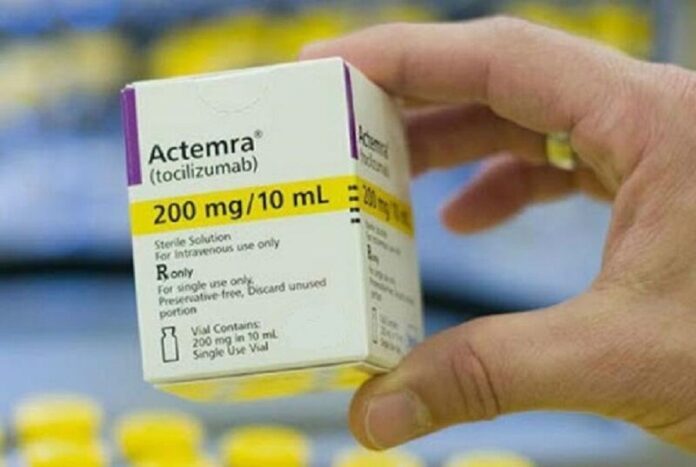
Manager of the Infectious Diseases Ward at Masih Daneshvari Hospital of Tehran says the results of a study conducted by the Association of International Auditors (Empacta) demonstrates that Actemra medicine reduces the risk of COVID-19 pneumonia patients advancing to mechanical ventilation or death by 44 percent.
Dr. Payam Tabarsi said the initial results of the Empacta trial, involving 389 patients and conducted in the US, Brazil, Kenya and a number of other countries, indicate that that Actemra drug -known as tocilizumab made by Swiss company Roche- reduced the risk of COVID-19 pneumonia patients advancing to mechanical ventilation or death by 44%.
Fortunately, the Iranian Actemra, sold under the trademark TEMZIVA, has been approved by the Food and Drug Administration of Iran and is now available in the pharmacies of a number of hospitals, he added.
The high-quality homegrown drug is 38 times cheaper than the Actemra produced by Switzerland’s Roche, Tabarsi said.
Iranian companies have produced homegrown versions of several drugs for the treatment of coronavirus patients after the outbreak of the pandemic in February, including Favipiravir and Remdesivir.
Vice President for Science and Technology Sorena Sattari announced in July that almost all domestic needs for equipment needed to combat COVID-19 have been met by knowledge-based companies.
Iran Calls for IAEA’s Impartial Verification of Saudi Nuclear Activities

In an online address to the 64th General Conference of held in Vienna International Centre, Iran’s nuclear chief said the professional, impartial, and independent nature of the IAEA’s work would only be guaranteed if the Agency also considers unequivocally and impartially the available information on the nuclear activities of the Kingdom of Saudi Arabia.
“If Saudi Arabia is seeking a peaceful nuclear program, it should act in a very transparent manner and allow the Agency’s inspectors to verify its activities,” Salehi noted.
He also lashed out at “the regime of Israel as a non-party to the NPT” for “continually and adamantly refusing to adhere to the IAEA safeguards”, and said the issue requires an “unbiased and professional approach by the Agency”.
“This regime which is the main source of instability and insecurity in the region as well as a threat to international peace and security, should abandon its Weapons of Mass Destruction program and accede to the NPT without further delay and precondition. Needless to say that, clarifications on the nuclear activities and programs in this regard would certainly strengthen the credibility and professionalism of the Agency,” he added.
He also said the only way to protect multilateralism in the world is to get united and put an end to the destructive behaviour of the current United States administration for the interests of all in the international community.
What follows is the full text of his Monday statement:
The world is enduring very serious and unique circumstances caused by the pandemic COVID-19, which has practically required many fora and organizations, including the Agency, to change their modus-operandi. In view of this, it is a distinct pleasure for me to virtually join the 64th session of the General Conference of the Agency.
Amidst such a unique gloomy and painful environment wherein almost all Members of the Agency have suffered one way or another from the COVID-19, the international community could not witness the tattering of another thread of multilateralism, namely the architecture of the United Nations. It is no secret that international organizations are under political pressures from certain States, and the IAEA is of no exception. At this critical point in time for multilateralism, on the one hand, the raison d’être of the United Nations System has come under serious question; and on the other hand, the International Atomic Energy Agency is facing a very serious challenge of its kind since its inception.
I am proud to say that the international community has successfully passed the first phase of this dire ordeal; the UN Security Council members in New York have rightly shown that they are not willing to compromise on the achievements simply because of the intimidation approach of one specific Member State. 13 out of 15 members of the Security Council not only unanimously rejected the US Resolution on the extension of the arms embargo against Iran but also didn’t recognize the US as a JCPOA participant to use specific mechanisms of the Deal to bring back Council’s already terminated sanctions. That is a real asset that should be preserved.
Also, here in Vienna, the Agency and the Islamic Republic of Iran have shown utmost vigilance in relation to their long term interests with the view that it will be materialized only through mutual cooperation avoiding any outside influence. Thus, within the framework of the safeguards obligations of States under the Comprehensive Safeguards Agreement (CSA) and Additional Protocol (AP), the Agency should show its determination that it will not compromise its impartiality, independence, and professionalism for the sake of short-sighted comforts.
It is worthy to know that Iran, alone, receives 22 percent of the total inspections of the IAEA at the global level, 432 inspections, and 33 complimentary accesses that have also been conducted in Iran in 2019. Furthermore, the Agency has also been able to carry out its verification activities in Iran even during the difficult situation caused by the Covid-19 pandemic. With this transparent and extensive cooperation, Iran and the Agency agreed to work in good faith to resolve three safeguards related questions with an understanding that based on the analysis of information available to the Agency, there will be no other questions or requests for access.
Such approaches taken in New York and in Vienna are the real silver-linings in this gloomy political environment for multilateralism and deserve genuine compliments.
On the current status of the Joint Comprehensive Plan of Action (JCPOA), I would like to say that, while there is still a broad agreement among the international community that the JCPOA should be preserved as the real turning point in the history of multilateralism and as an important achievement of diplomacy, the JCPOA is caught in a quasi-stalemate situation due to the illegal withdrawal of the US from the deal. Therefore, preservation of the JCPOA is also a common responsibility of all members of the international community. In this context, the responsibility of the EU specifically E3 as members of the JCPOA is of utmost importance, i.e. they must implement their obligations fully and effectively. Thus, the Deal is preserved only when its provisions are implemented in a balanced manner by all parties involved. As a result, Iran has and had no other option rather adopt a step-by-step approach in implementing paragraphs 26 and 36 of the JCPOA to restore the lost balance to the Deal.
Nuclear safety is among Iran’s highest priorities. In doing so, progress has been made in establishing an advanced Nuclear Safety Centre (NSC). While the responsibility for nuclear safety and security rests entirely with the Member States, Iran strongly believes that these areas need to be strengthened and enhanced through cooperation between States.
New threats by malicious sides have been observed recently by way of cyber and other technological instruments. In this regard, let me point to the recent explosion at Shahid Ahmadi Roshan (Natanz) Nuclear Facility which was the result of sabotage as already declared. These malicious acts need to be condemned by the Agency and the Member States. Iran reserves its rights to protect its facilities and make necessary reactions to any threat as appropriate.
The Islamic Republic of Iran persists in its path towards the peaceful application of nuclear science and technology in various fields including agriculture, health, and industry while continuing to generate electricity. Here, we reiterate that one of the main missions of the IAEA is “to foster the exchange of scientific and technical cooperation on the peaceful uses of atomic energy” and “to encourage the exchange and training of scientists and experts in the field of peaceful uses of atomic energy” among member states.
One last word of wisdom, the professional, impartial, and independent nature of the work of the Agency would only be guaranteed if the Agency also considers unequivocally and impartially the available information on the nuclear activities of the Kingdom of Saudi Arabia. If Saudi Arabia is seeking for a peaceful nuclear program, it should act in a very transparent manner and allow the Agency’s inspectors to verify its activities. In this context, the regime of Israel as a non-party to the NPT which has continually and adamantly refused to adhere to the IAEA safeguards requires an unbiased and professional approach by the Agency. This regime which is the main source of instability and insecurity in the region as well as a threat to international peace and security, should abandon its Weapons of Mass Destruction program and accede to the NPT without further delay and precondition. Needless to say that, clarifications on the nuclear activities and programs in this regard would certainly strengthen the credibility and professionalism of the Agency.
To conclude, the Islamic Republic of Iran is ready to continue its efforts and cooperation with others in the International Community to bring back multilateralism and diplomacy at the centre of international relations. To this end, there is no way but to get united and put an end to the destructive behaviour of the current United States administration for the interests of all of us in the international community.
Iran Confirms 177 New COVID-19 Fatalities
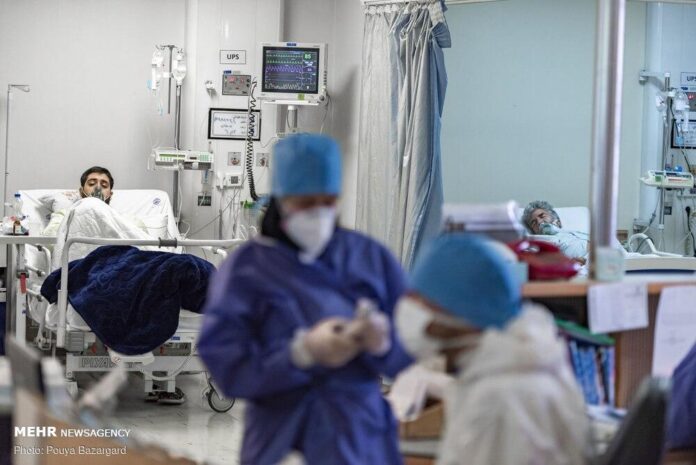
In a press briefing on Monday, Sima-Sadat Lari said 425,481 patients have contracted the virus so far, including 3,341 new cases identified in the past 24 hours, the highest daily rise in new patients since June 6.
So far, she added, 361,523 patients have recovered from the disease or been discharged from the hospital.
Lari said 3,912 patients are also in critical conditions caused by more severe infection.
The spokeswoman noted that 3,773,300 COVID-19 tests have been taken across the country so far.
She said the high-risk “red” zones include Tehran, Qom, Mazandaran, East Azarbaijan, Isfahan, Yazd, Ardabil, Khorasan Razavi, Khuzestan, Hamadan, West Azarbaijan, Bushehr, Alborz, Lorestan, Markazi, Ilam, South Khorasan, Kermanshah, North Khorasan, Semnan, Gilan, Zanjan, Qazvin, and Kerman provinces.
The “orange” zones also include Golestan, Hormozgan, Chaharmahal and Bakhtiari, Kohgiluyeh and Boyer-Ahmad, and Fars provinces, she added.
Iranian Forces Attend Russia’s Kavkaz-2020 Military Drills
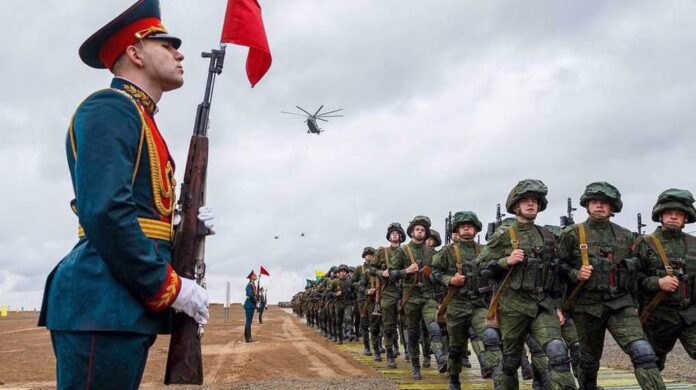
The joint military exercises, which started on September 21 and will run through September 26 involve about 80,000 personnel, including officers of the Russian Emergencies Ministry and the Russian Guard, as well as up troops from Iran, Armenia, Belarus, China, Myanmar and Pakistan.
In addition, more representatives from the armed forces of Iran, Azerbaijan, Indonesia, Kazakhstan, Tajikistan and Sri Lanka will participate as observers of the military drills.
About 12,900 military personnel from the participating countries are going to take part in activities covered by the 2011 Vienna Document of the Negotiations on Confidence-and Security-Building Measures. Most of the action on the ground will be taking place in the Southern Military District.
Up to 250 tanks, 450 infantry fighting vehicles and armored personnel carriers and 200 artillery and missile systems will participate.
Ships of the Black Sea Fleet and the Caspian flotilla will join the action, too, enjoying the company of the Iranian Navy vessels.
About 60 Ilyushin Il-76 military transport planes have been moved to operational airfields as part of the military drills.
The distance of the flights was up to 2,000 km, according to a statement by the Russian Defense Ministry.
Russia’s Armed Forces will pay particular attention to combating cruise missiles and unmanned aerial vehicles during the exercise, the Ministry stated.
“The Kavkaz-2020 drills will particularly focus on combating cruise missiles and unmanned aerial vehicles, as well as on fire and electronic warfare activities against entire enemy formations, on training airborne troops’ vertical envelopment capability and ways to rapidly shift between military activities,” the statement read.
The event is led by Chief of the General Staff Army General Valery Gerasimov.
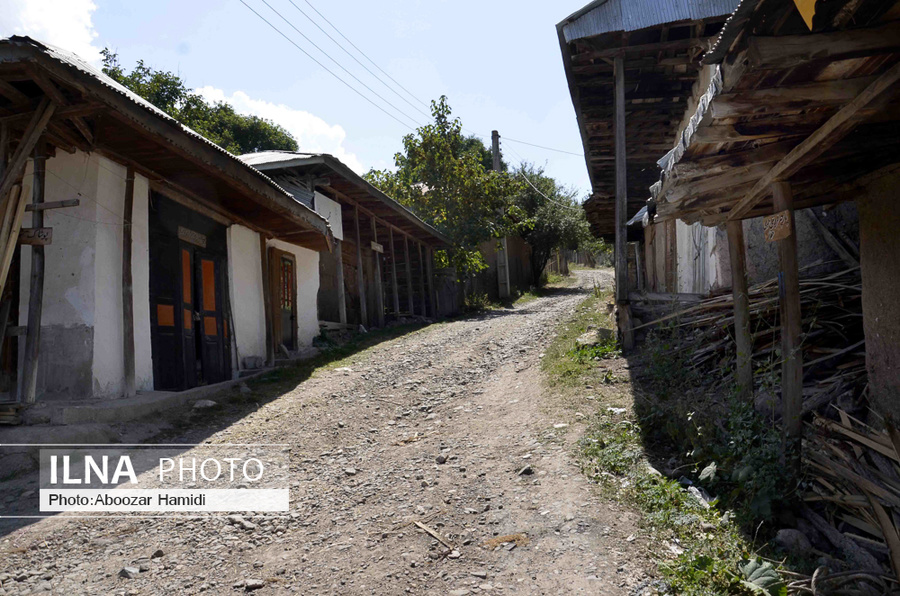
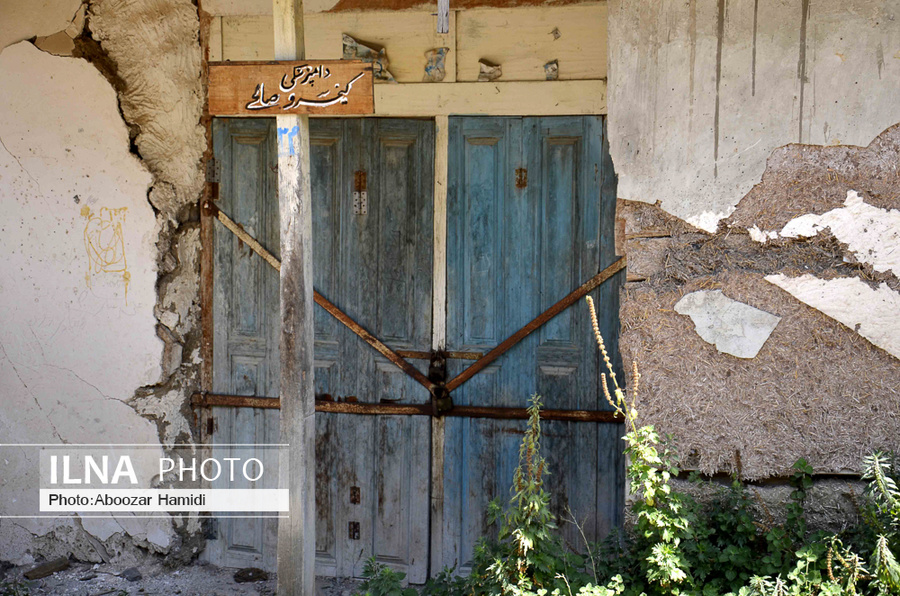
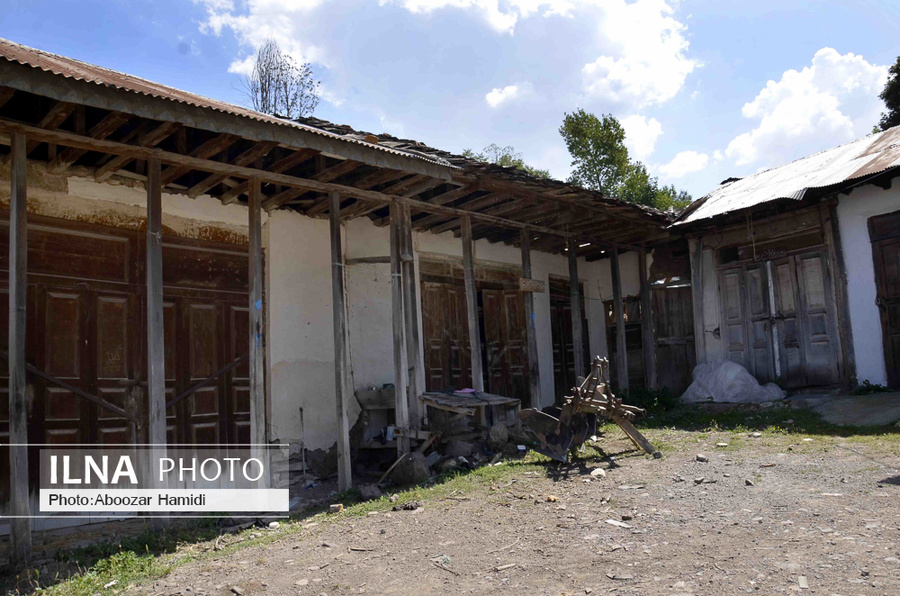
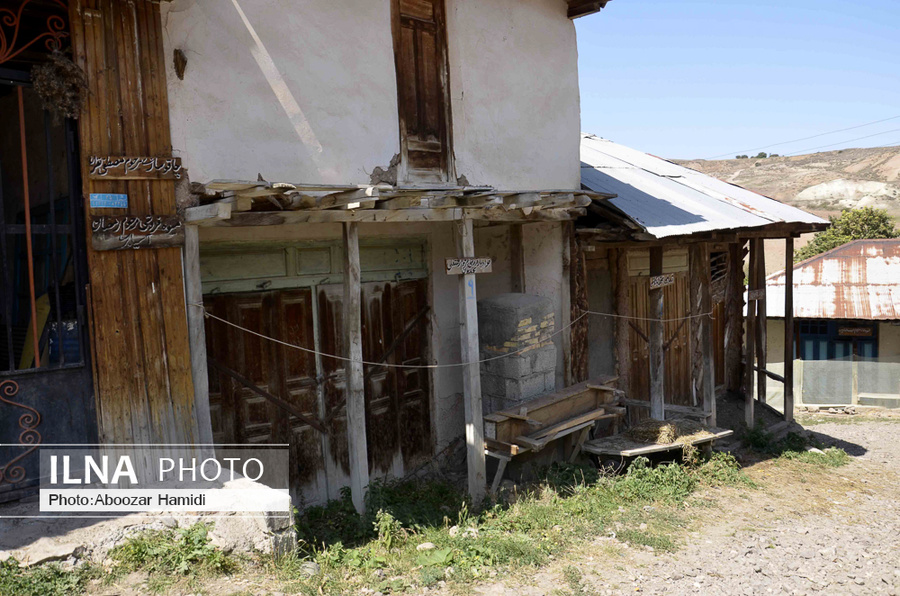
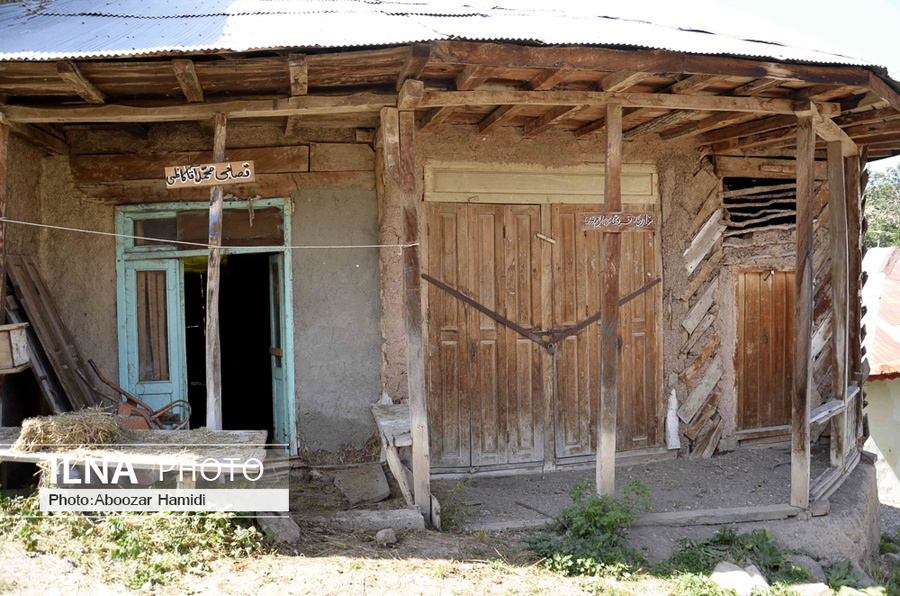
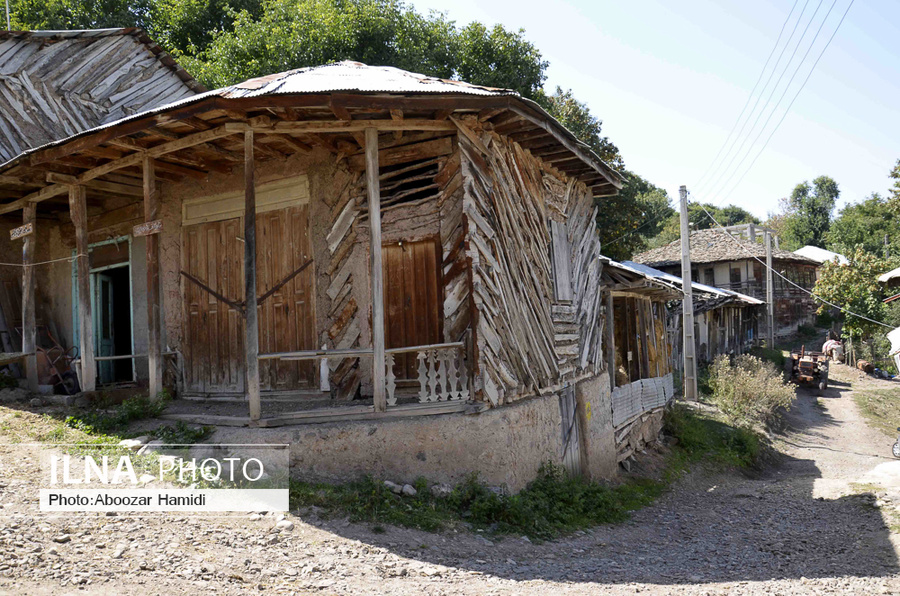
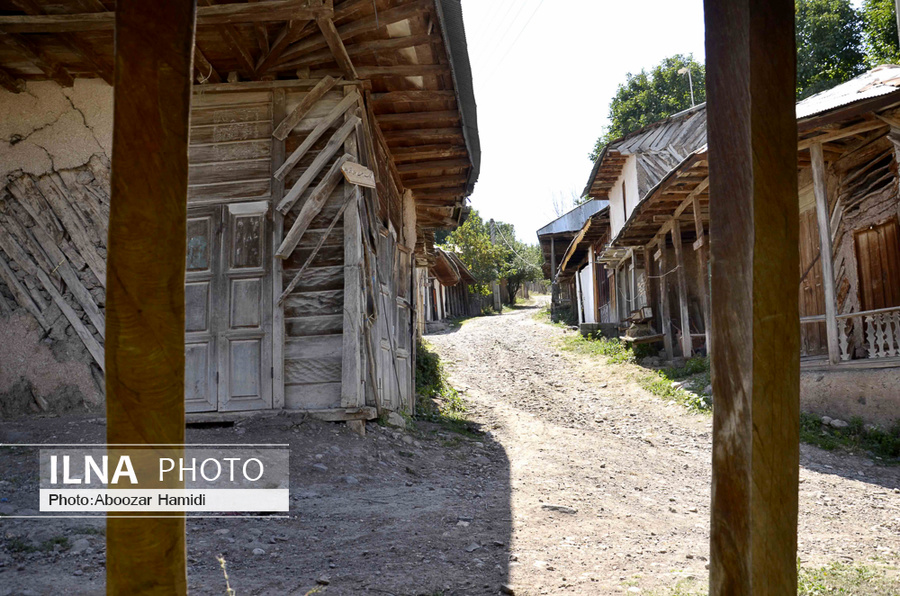
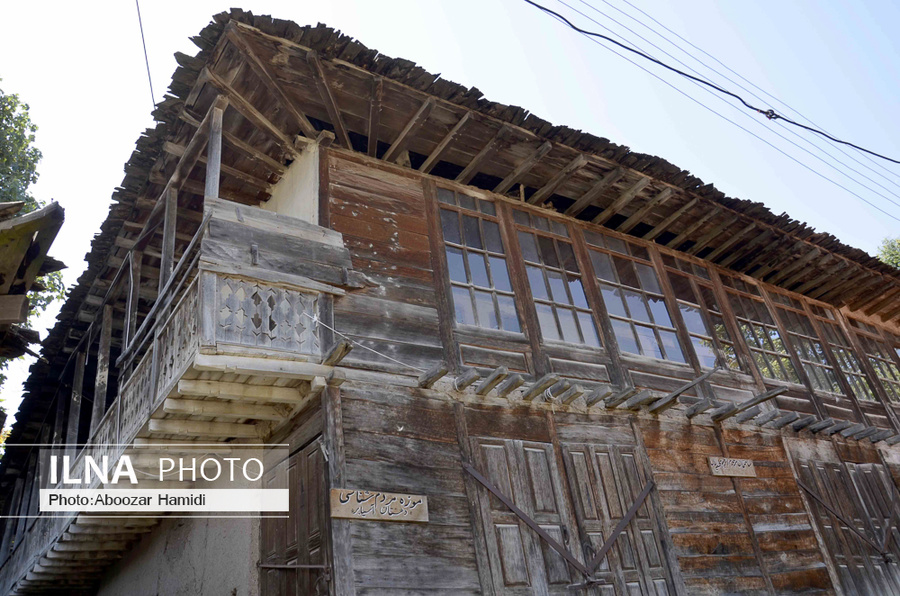
Iran’s Beauties in Photos: Asiabar Traditional Market
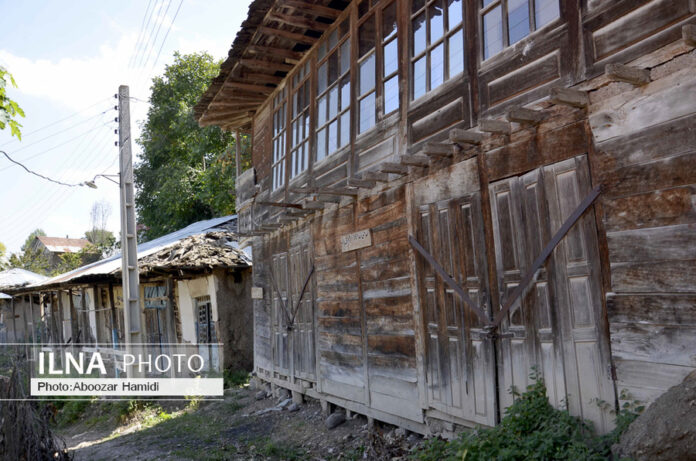
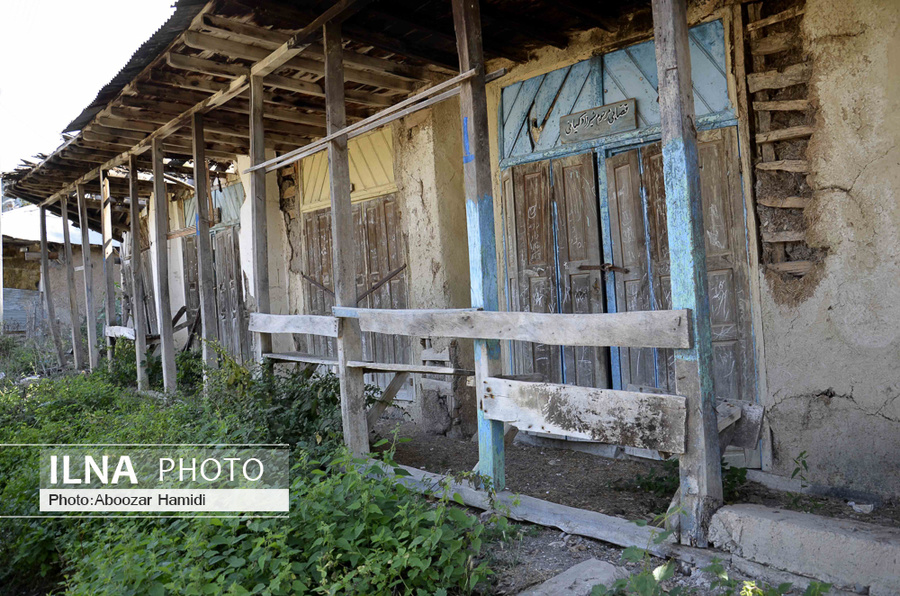
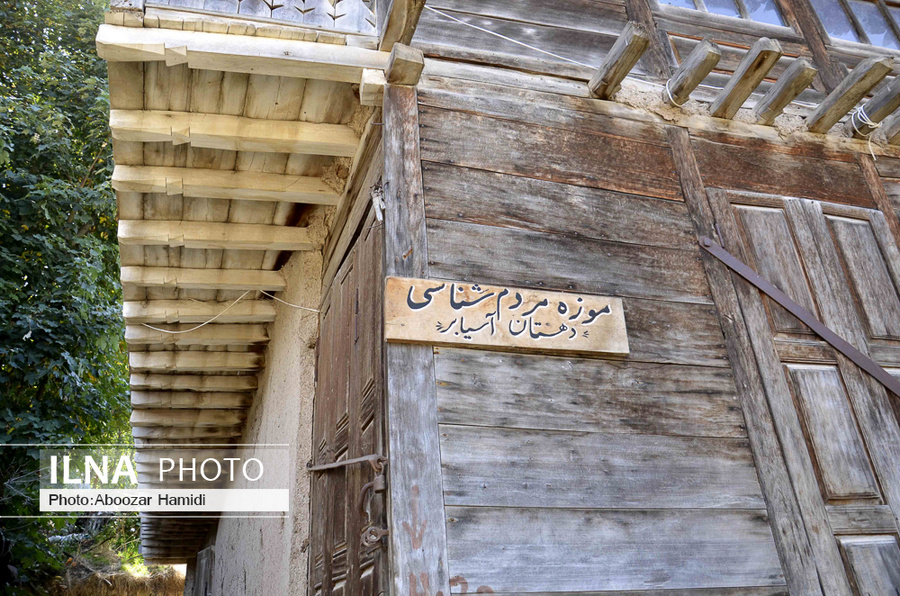
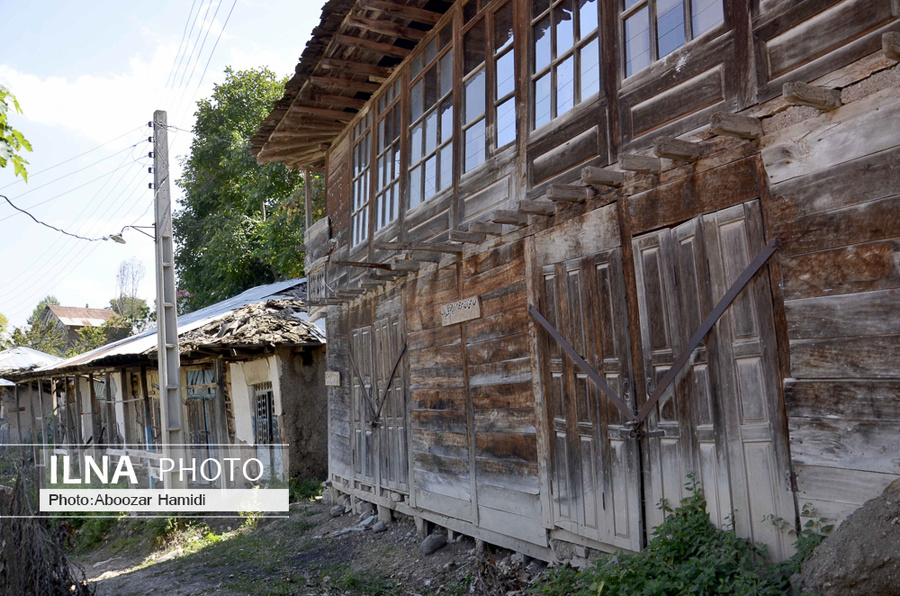
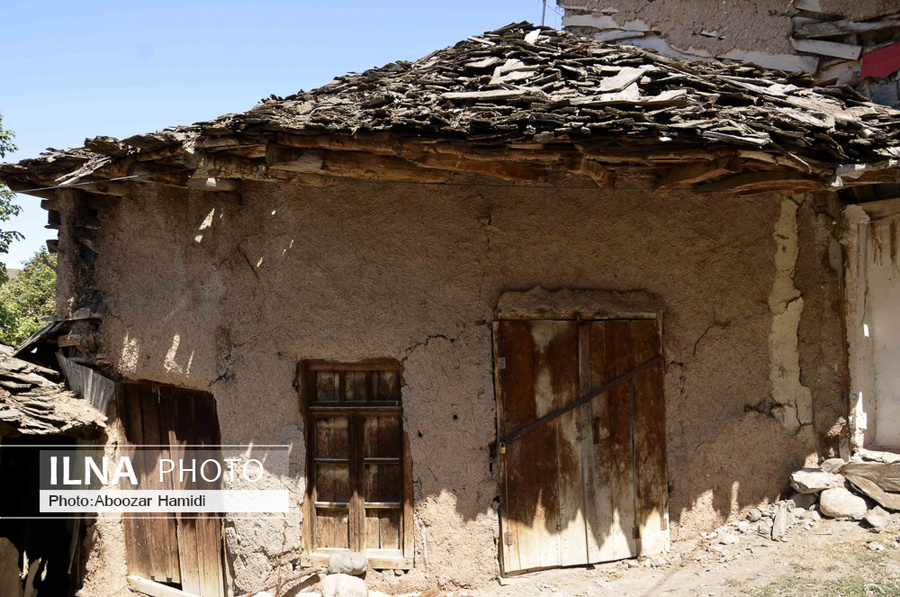
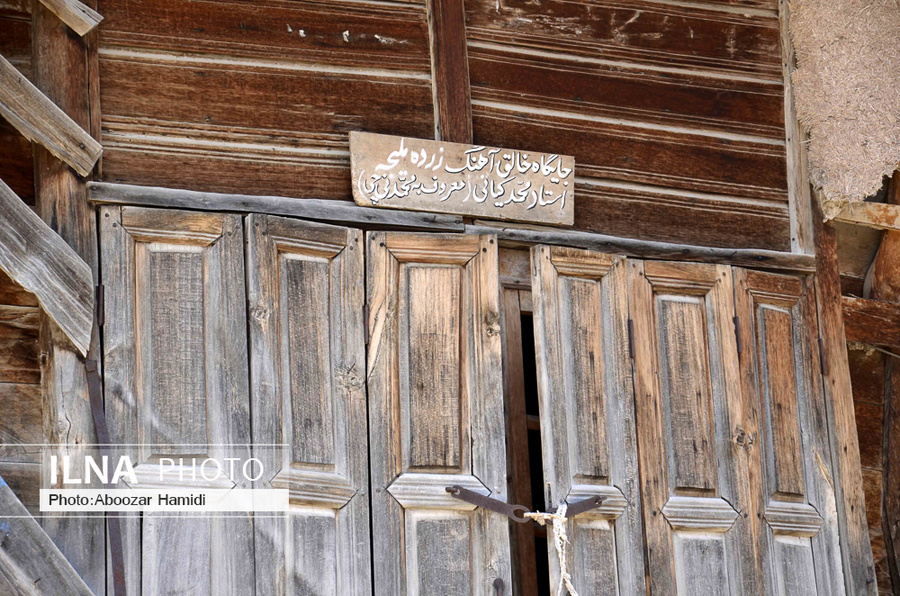
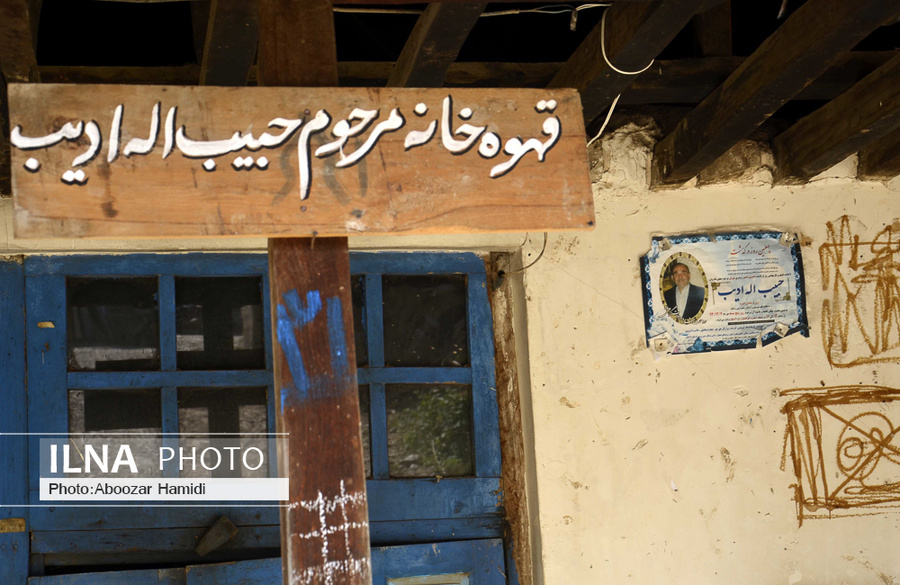
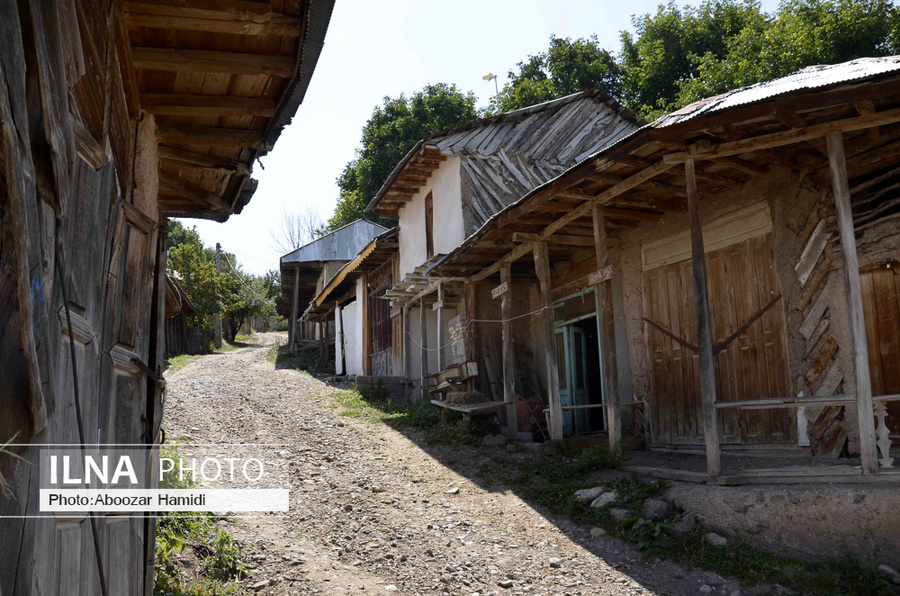
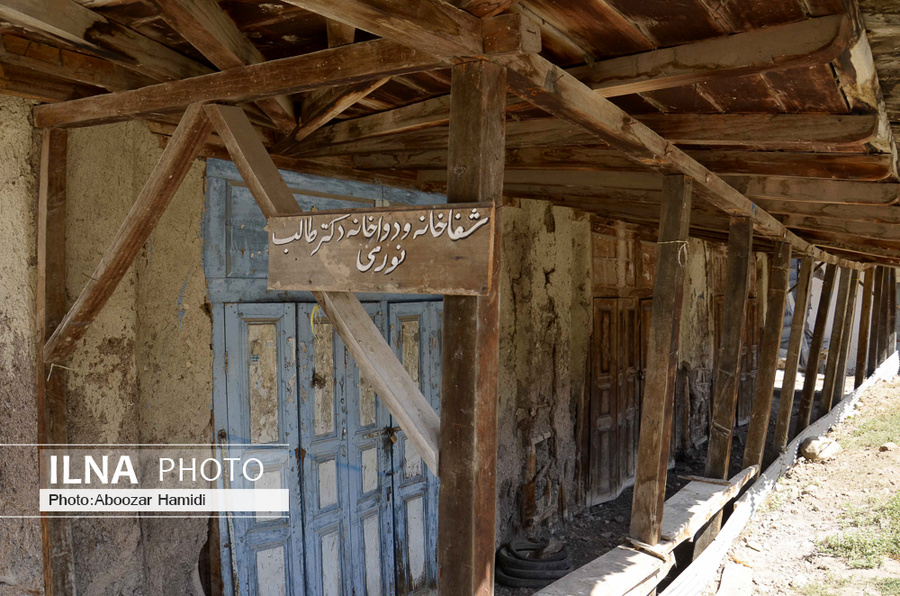
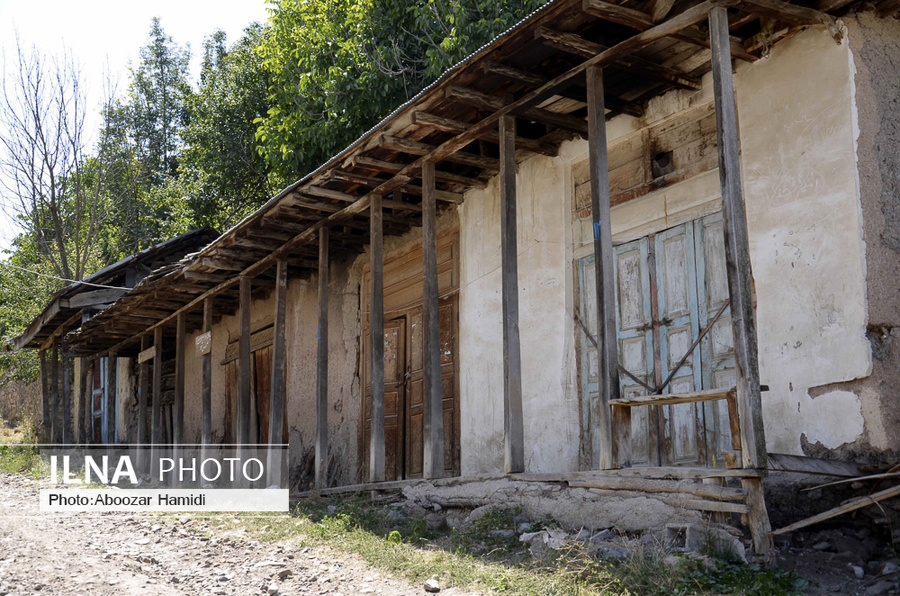
Asiabar is located in Deylman region of Siahkal County in northern Iranian province of Gilan. The traditional market of Asiabar is said to date back to the Safavid era.
There used to be more than 50 stalls in the bazaar to meet the needs of people from different villages: traditional forging, sewing, butchery, bakery, coffee house, hostel, carpentry, blacksmithing, pottery, shoemaking, trading, hospital, veterinary, petitionary, school room, pharmacy, apothecary and horseshoe making.
Easy access had been a main factor for the prosperity of Asiabar bazaar in the mountainous region of Deylman. It was registered this year in the list of Iran’s National Heritage as the first traditional market in the north of country.
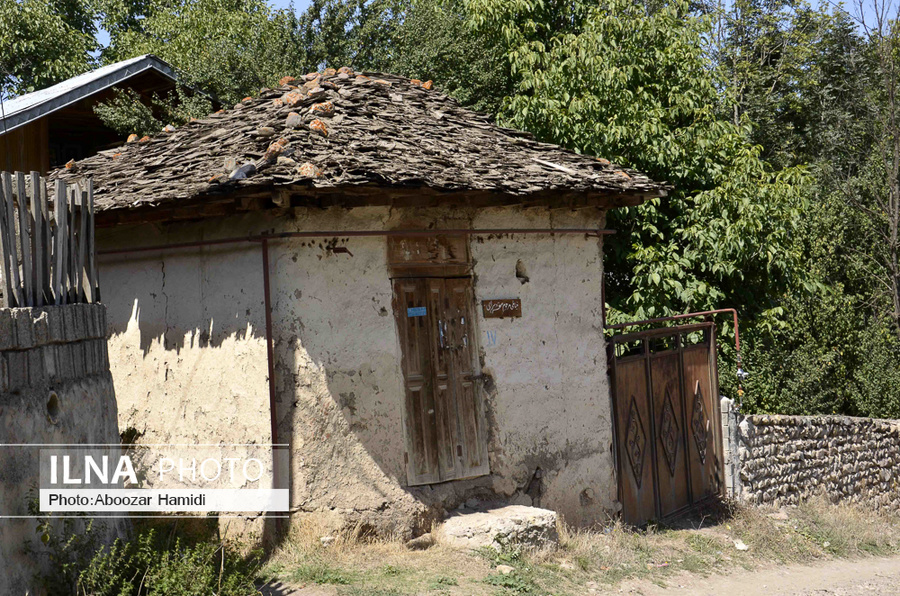
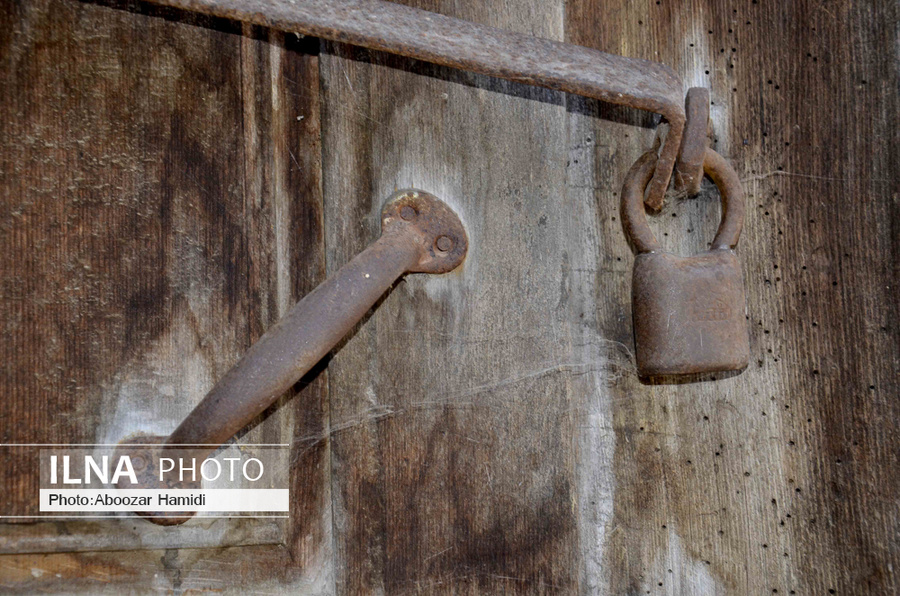
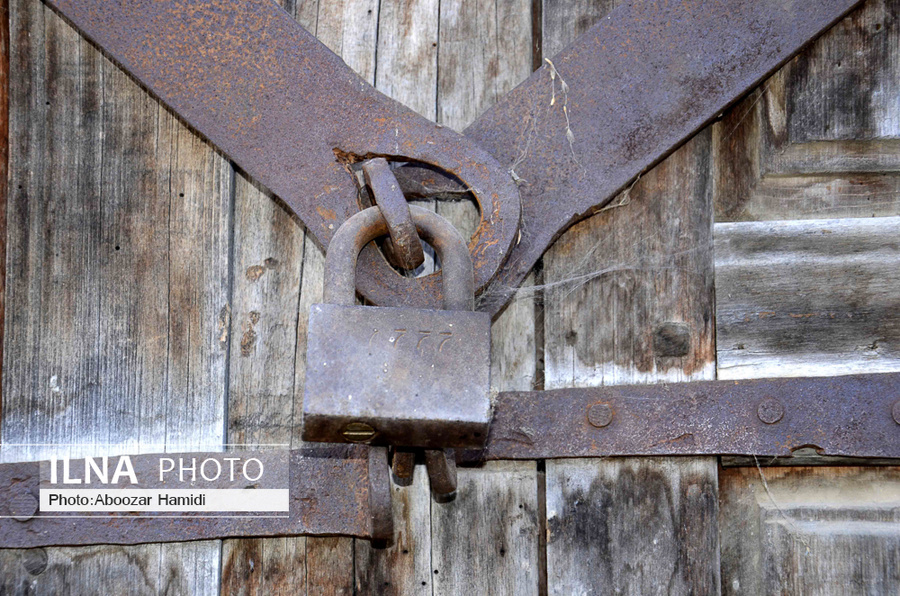
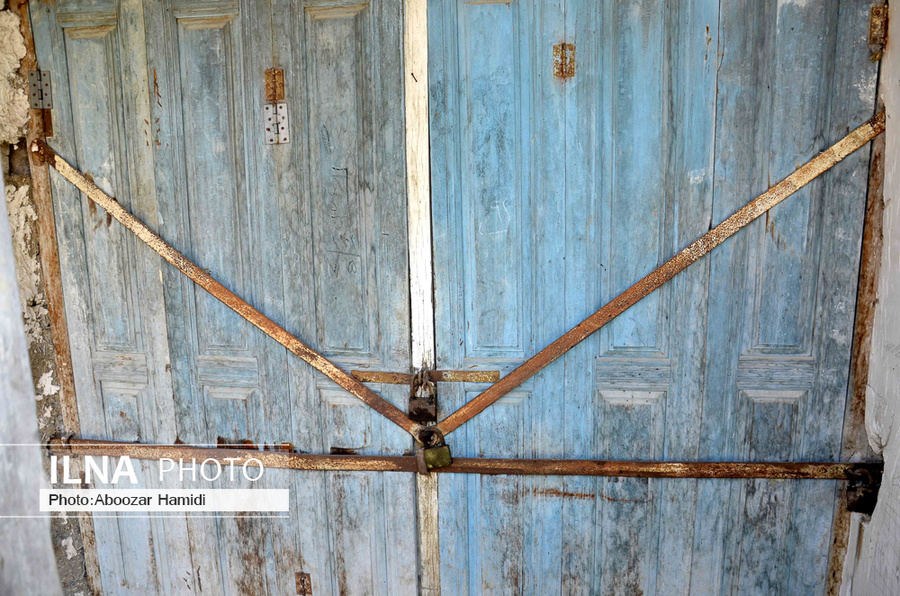
What follows are ILNA’s photos of Asiabar bazaar:


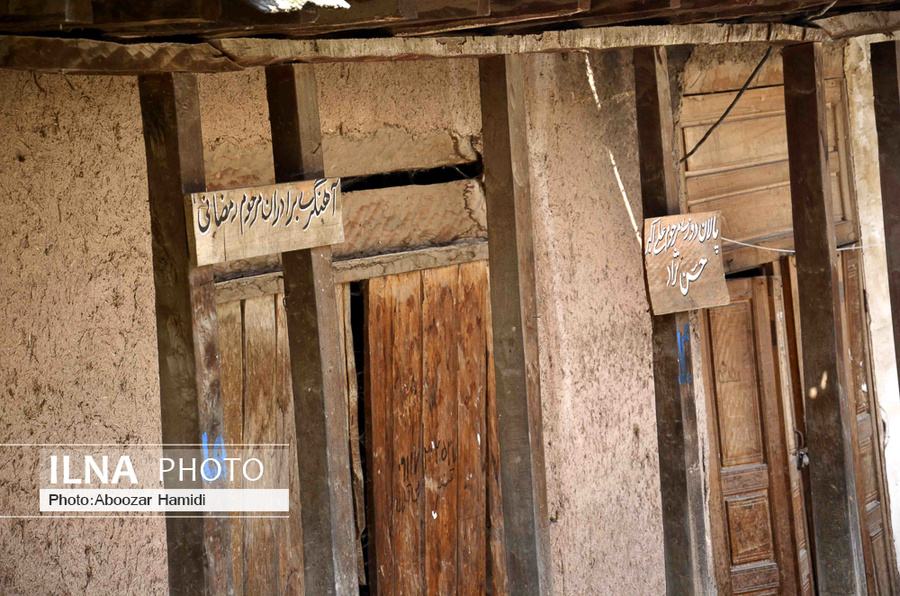
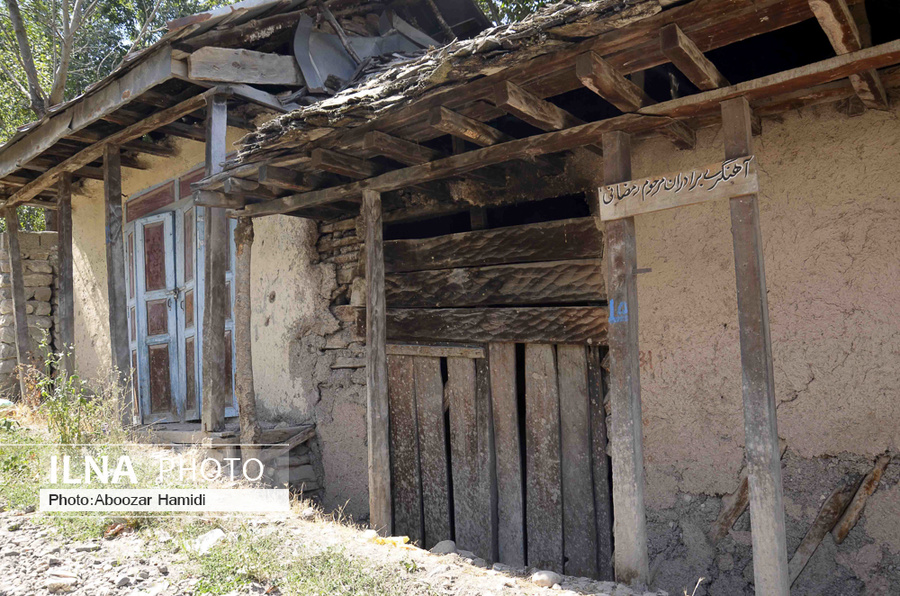
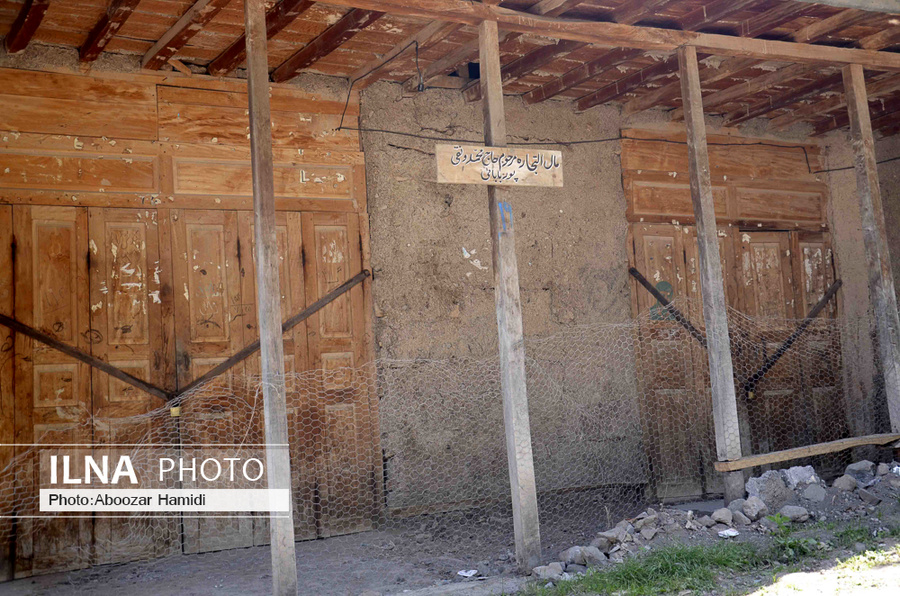

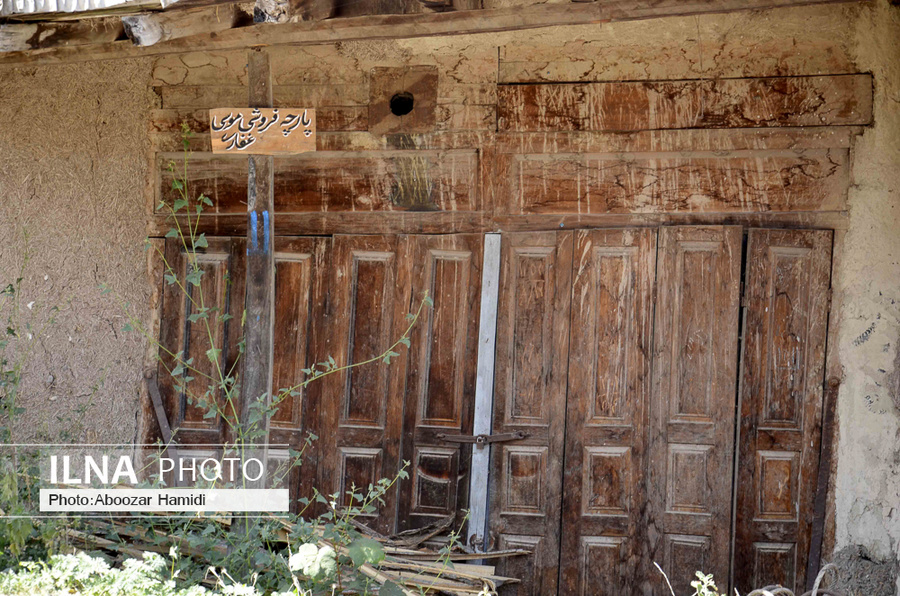





Iraqi Imposed War Proved Cost of Invading Iran Very High: Leader
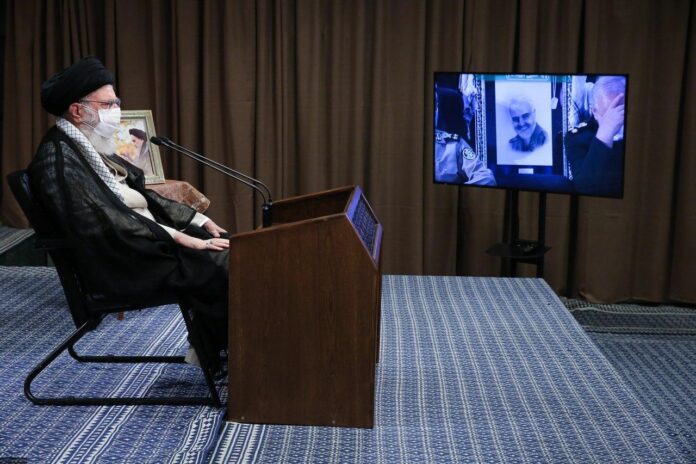
The Leader made the remarks on Monday in a virtual address to an event held for commemoration of the veterans of the country’s 1980-88 Sacred Defence against the Iraqi war.
“When a nation shows that it has the diligence and power to defend itself and delivers a crushing response to invaders, invaders would then think twice before perpetrating any incursion against this country and its people, and realize that such an act of aggression would be very costly for them,” Ayatollah Khamenei said.
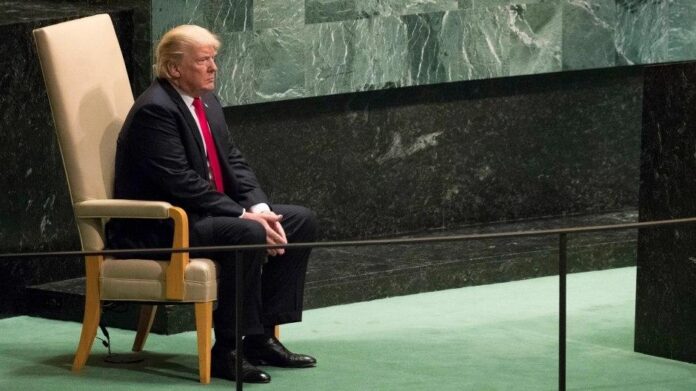
Ayatollah Khamenei’s comments came in an apparent reaction to the recent threats by US President Donald Trump to take military action against the Islamic Republic of Iran.
The Leader highlighted the rewards of Iran’s defence against the Iraqi invaders, and said successful engagement in the war awarded Iran its current level of security.
He said the resistance shown by Iranian people also equipped them with a sense of self-belief in their ability to fend for themselves and put it on a course of technological and scientific development because it had to wade into many new areas to be able to buttress its defensive activities.
The war taught Iran that “some things that appear to be impossible are actually possible,” Ayatollah Khamenei added.
The Leader’s comments came on the anniversary of the day when Iraqi invading forces took on Iran with untrammeled foreign support, just one year after the victory of its Islamic Revolution.
The war lasted until 1988, leaving a treasure trove of memories of self-sacrifice and spiritual conviction in ultimate divine victory.
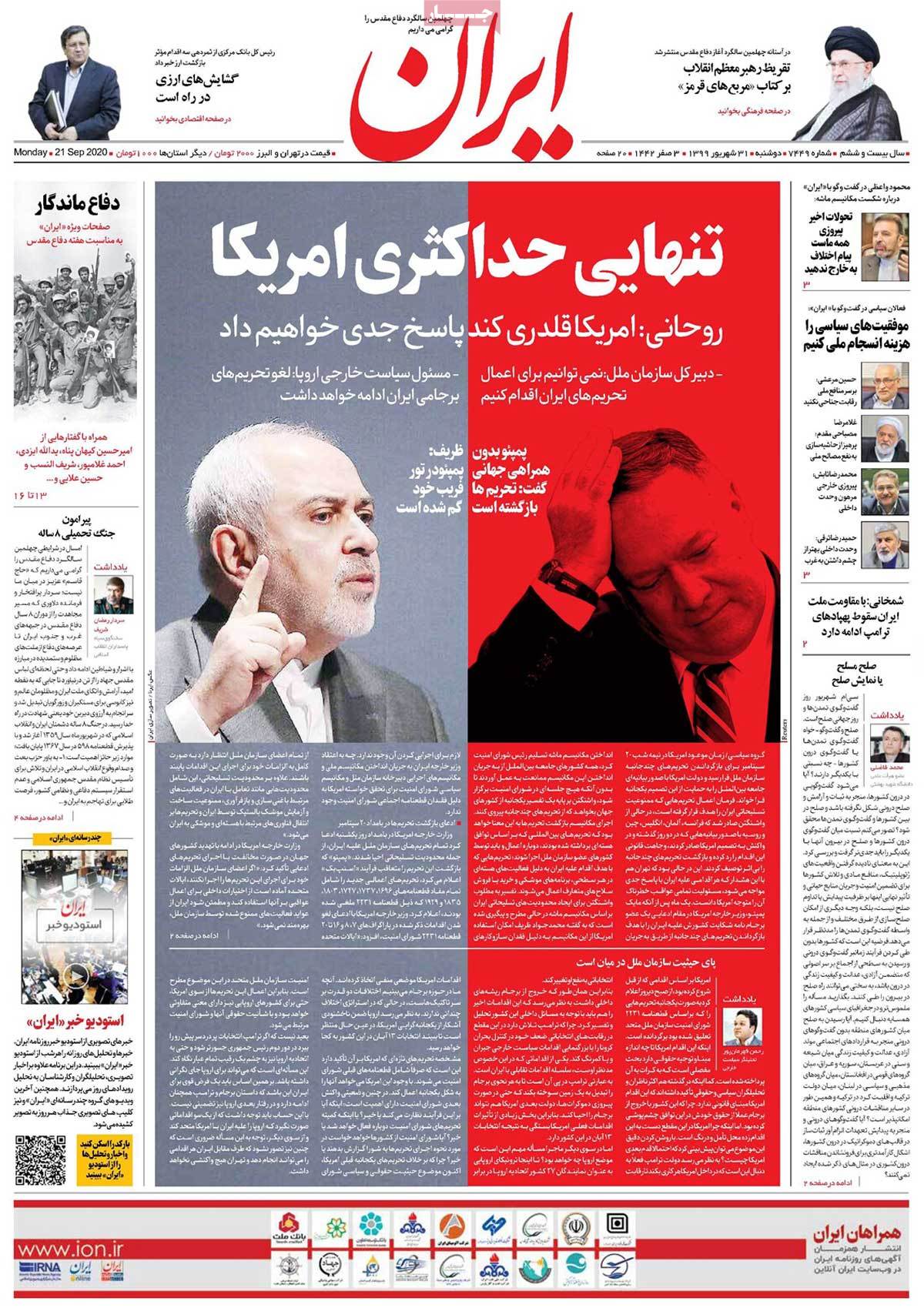
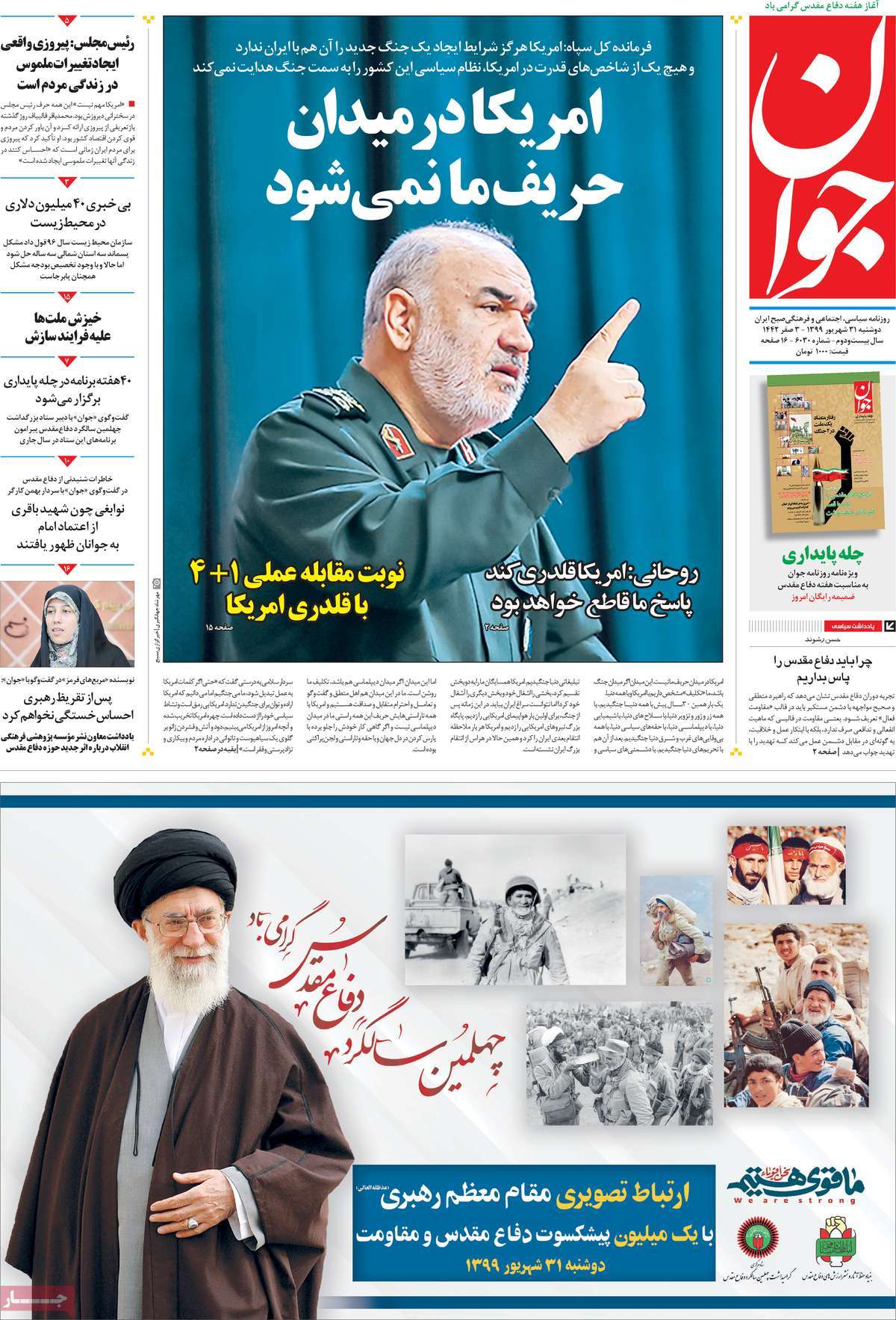
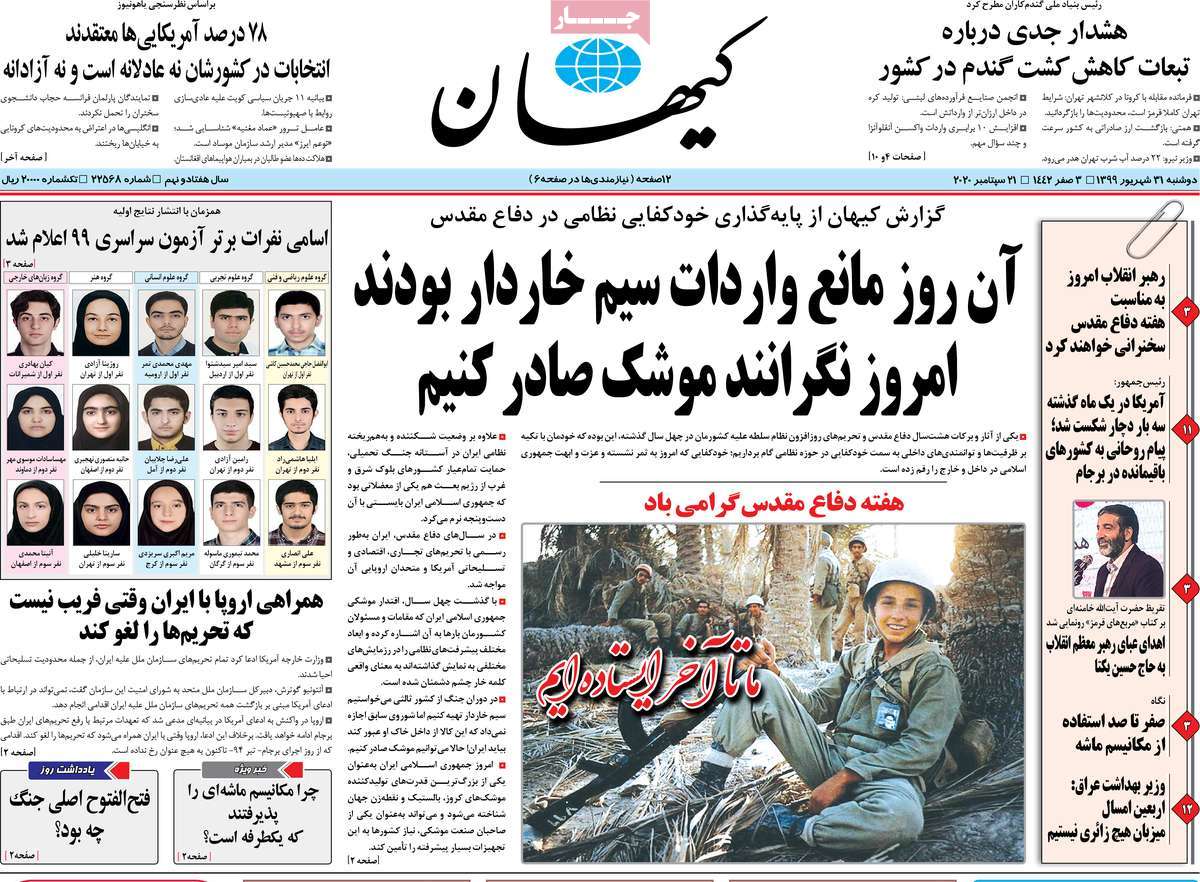
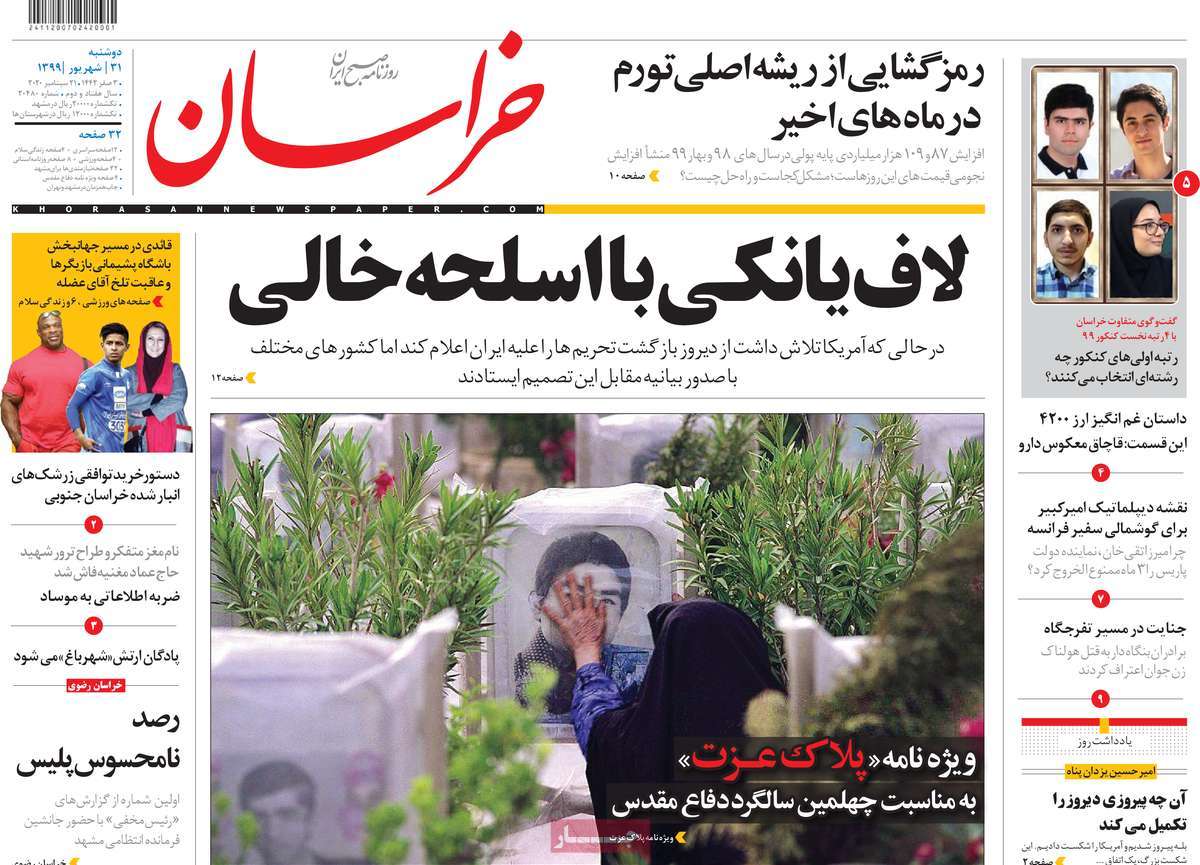
US’ ‘Defeat’ over Snapback Sanctions Makes Headlines in Iran
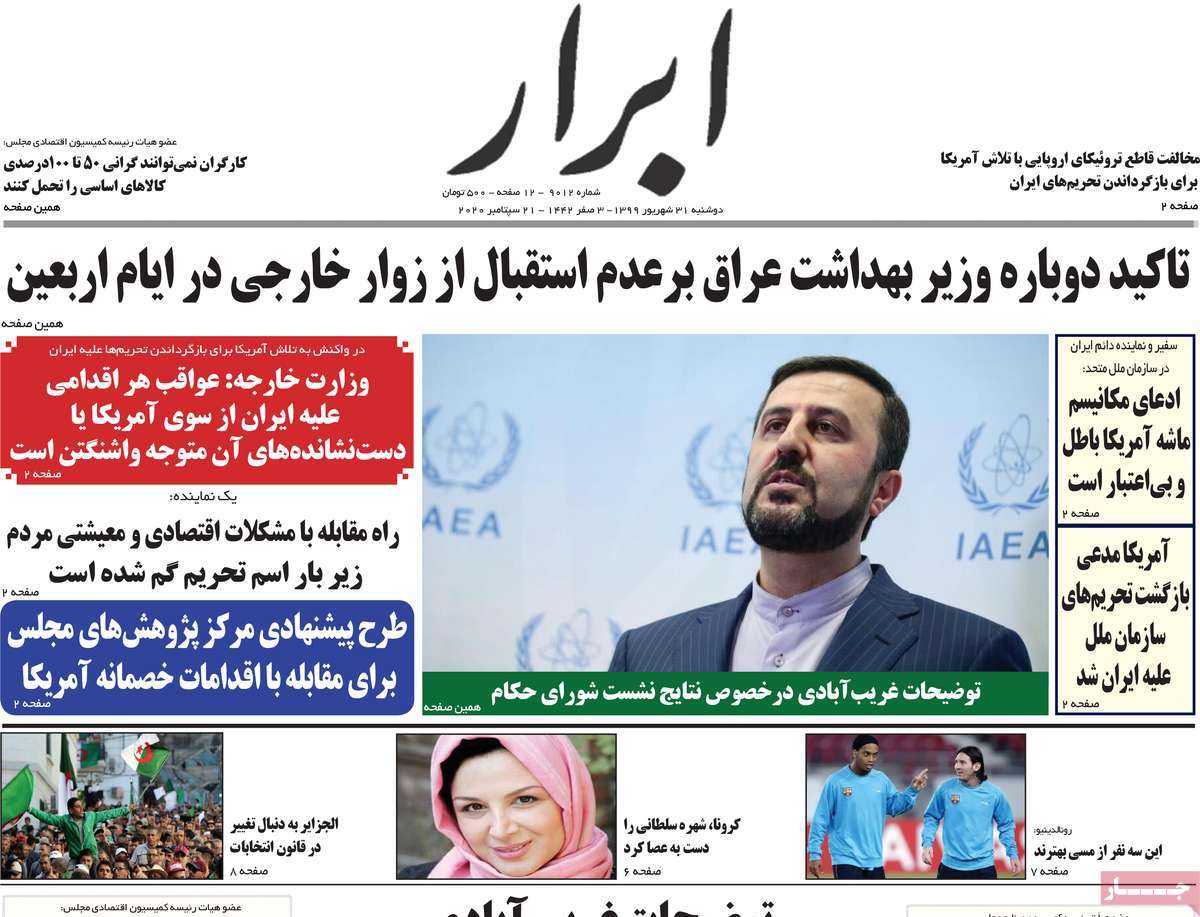
Iranian Newspapers
Abrar Newspaper:
1- Foreign Ministry: Washington Responsible for Consequences of Any Move against Iran
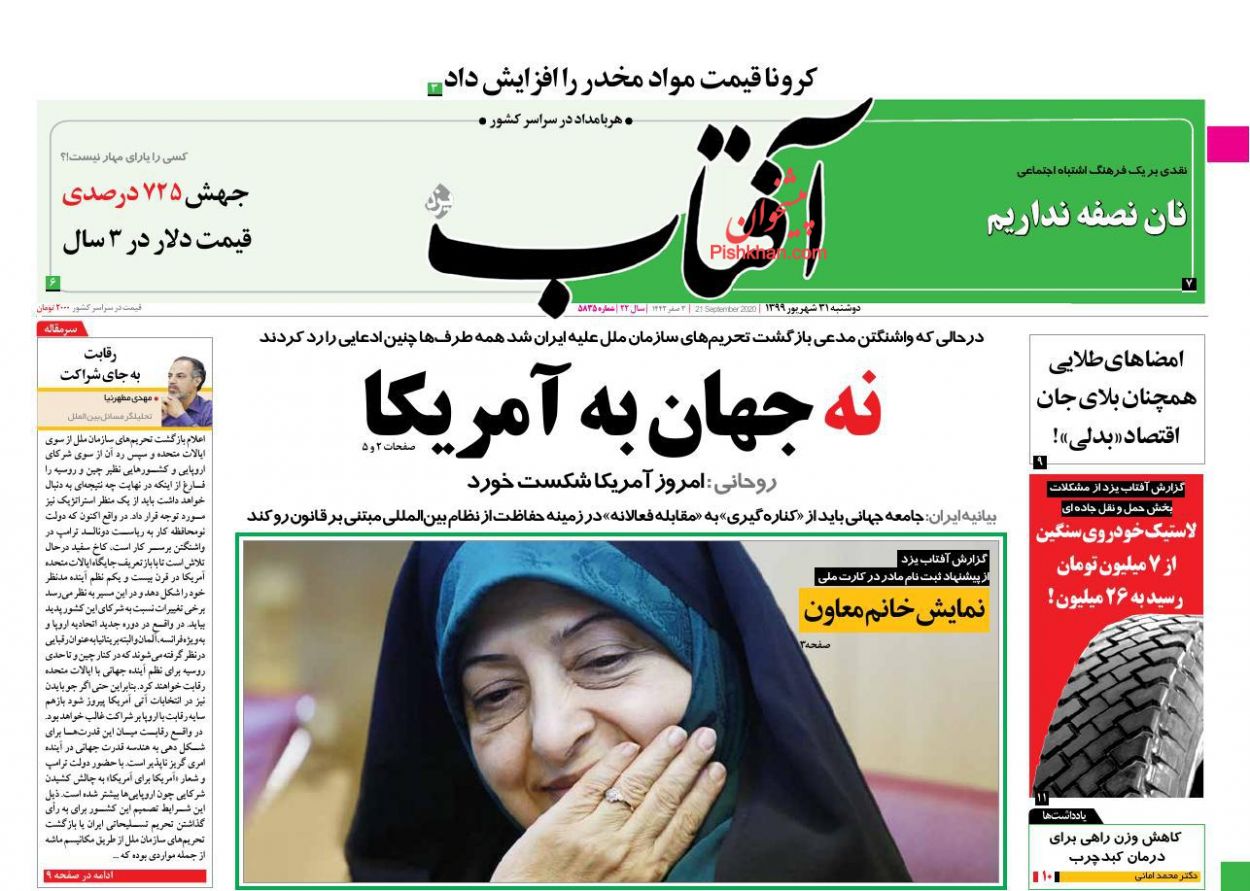
Aftab-e Yazd Newspaper:
1- World Says No to World
2- Coronavirus Increases Narcotic Prices
3- US Dollar Rate Rises by 725% in 3 Years
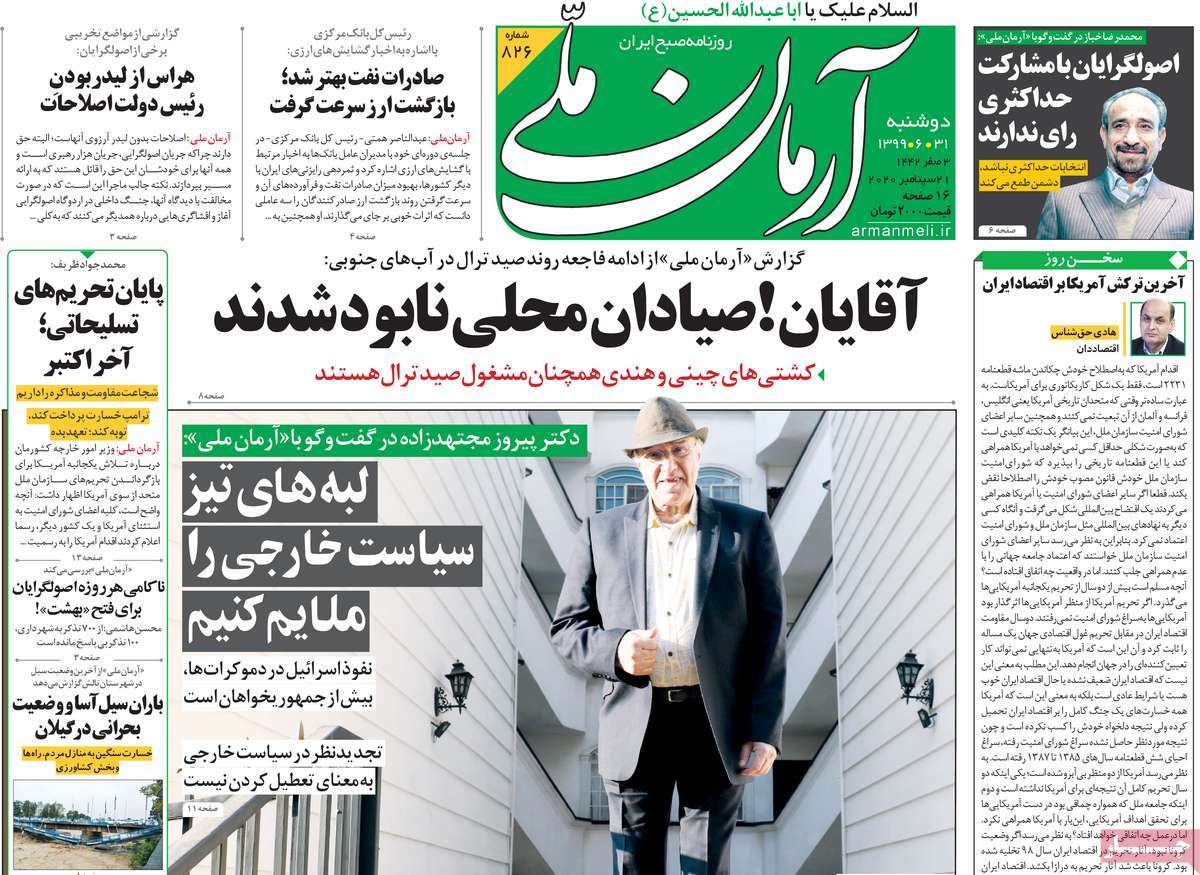
Arman-e Melli Newspaper:
1- End of Arms Embargo in Late October
2- Analyst: We Should Soften Edges of Our Foreign Policy
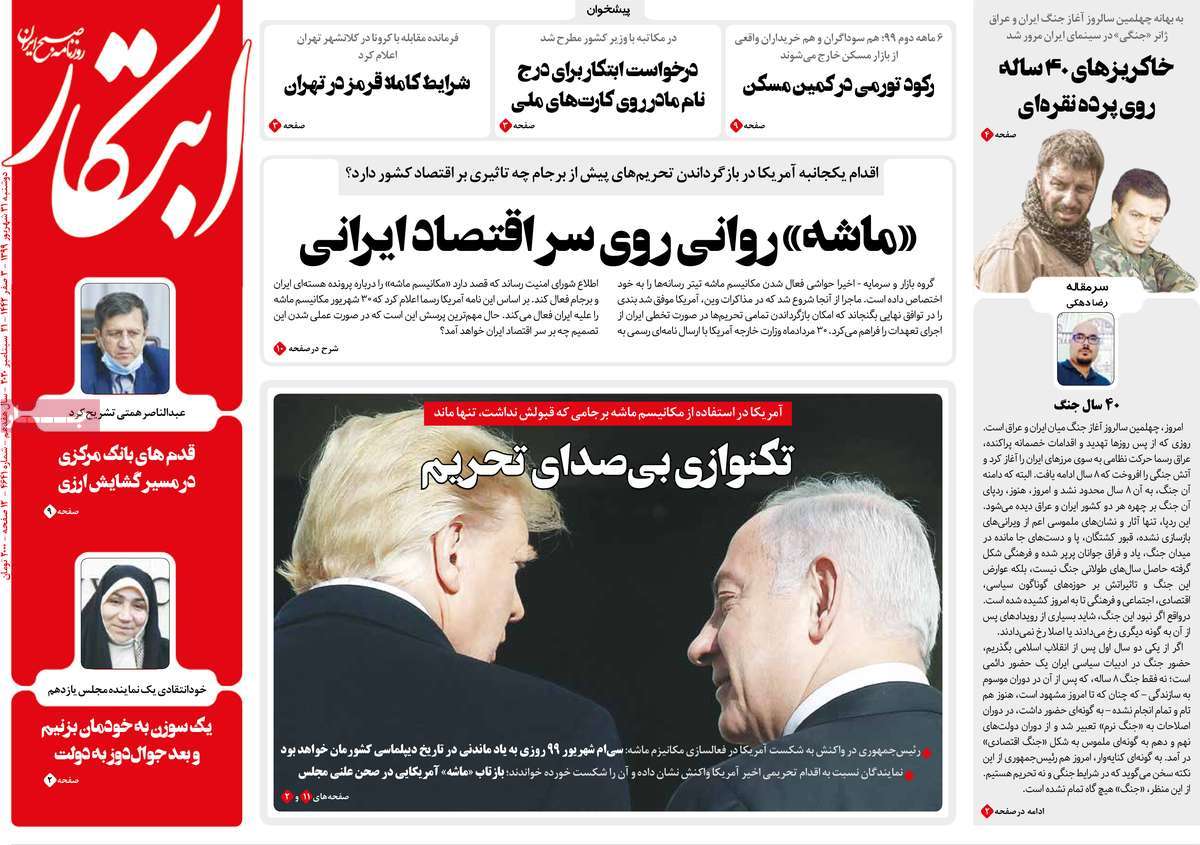
Ebtekar Newspaper:
1- Washington’s Solo Performance with No Sound
* US Isolated in Using Snapback Mechanism of JCPOA It Had Rejected
2- Iran’s VP for Women Affairs Say Mother’s Name Must Be Included in National ID Card
3- Tehran in Totally Red Condition in Terms of COVID-19 Outbreak
4- Psychological Trigger against Iran’s Economy
* What Impact Will US Unilateral Move Have on Iran Economy?
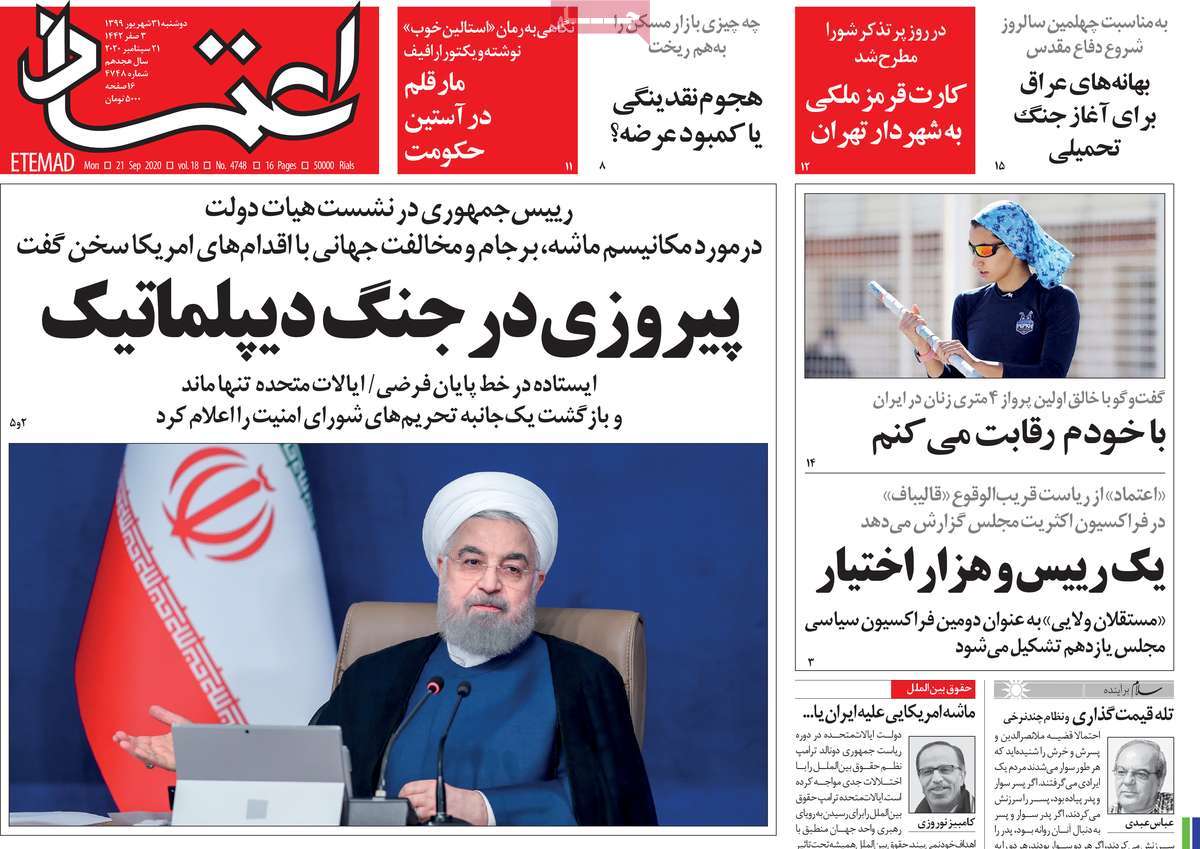
Etemad Newspaper:
1- Victory in Diplomatic War
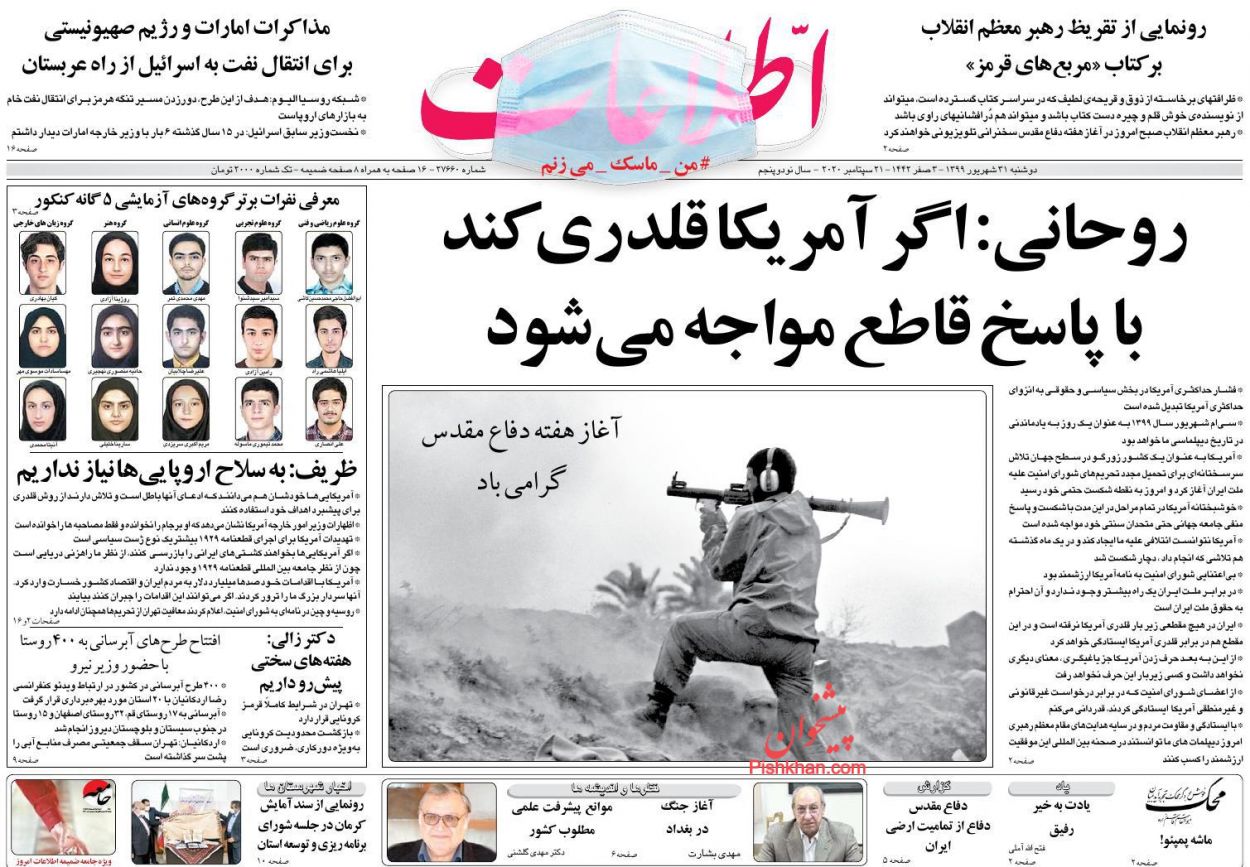
Ettela’at Newspaper:
1- Rouhani: US to Receive Iran’s Decisive Response If It Resorts to Bullying
2- Zarif: We Don’t Need European Weapons
Iran Newspaper:
1- US’ Maximum Loneliness
2- Without Global Support, Pompeo Says Iran Sanctions Reinstated
3- Zarif: Pompeo Lost in Net of His Own Deceit
Javan Newspaper:
1- IRGC Chief: US Can’t Beat Us in Battlefield
2- It’s Time for P4+1 to Counter US Bullying in Practice
Kayhan Newspaper:
1- They Prevented Export of Wired Fence to Iran in 1980, Now They’re Worried about Iran’s Missile Exports
2- Europe’s Support for Iran Meaningful Only If They Lift Sanctions
3- US Was Defeated Three Times in Past Month; Rouhani’s Message to Remaining JCPOA Parties
4- 78% of Americans Believe US Elections Neither Fair nor Free
Khorasan Newspaper:
1- Americans Bluff with Unloaded Weapon
Mardom Salari Newspaper:
1- E3 Opposed to US Unilateralism
2- Iran’s Official Damages in 1980s War: $97 Billion
3- Rouhani: US Was Defeated
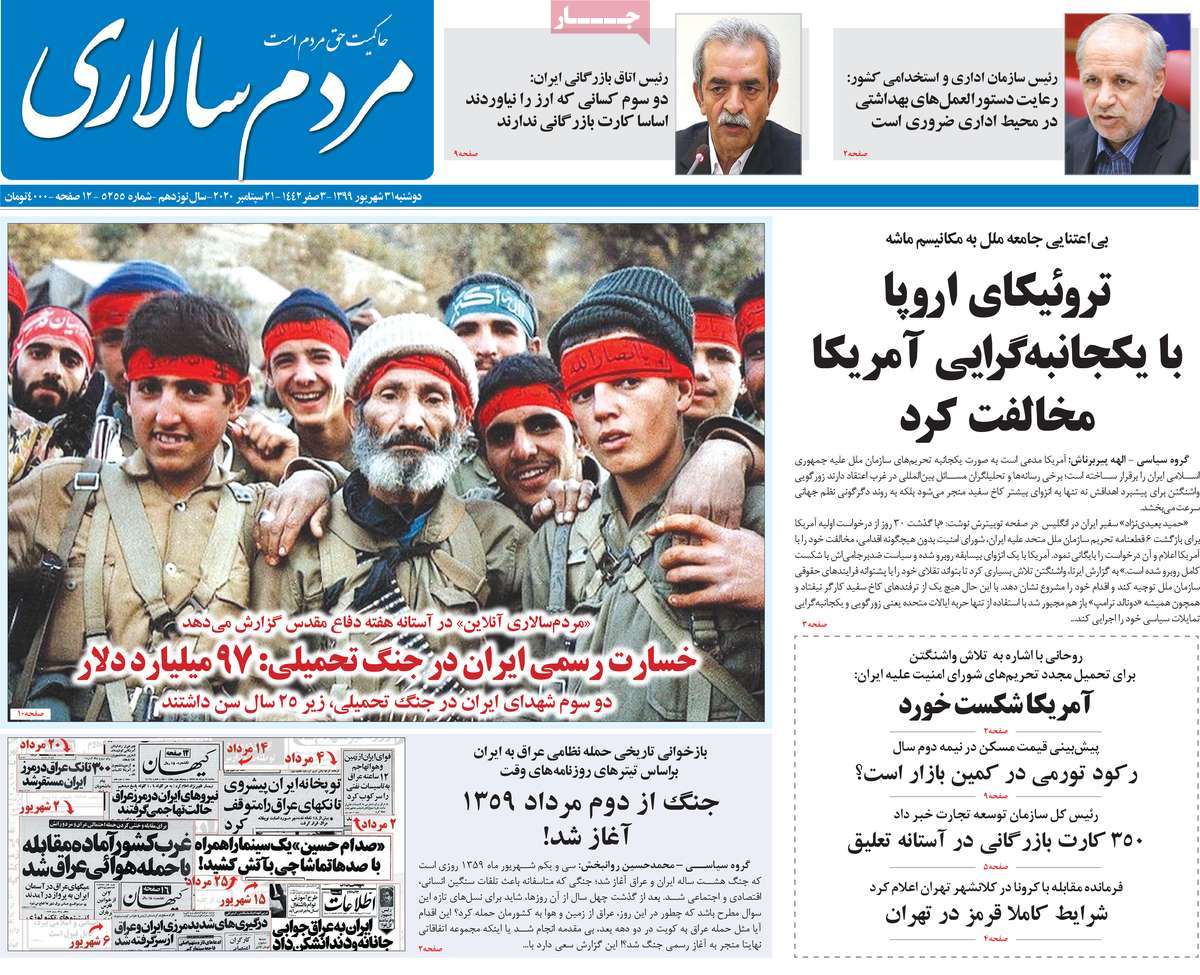
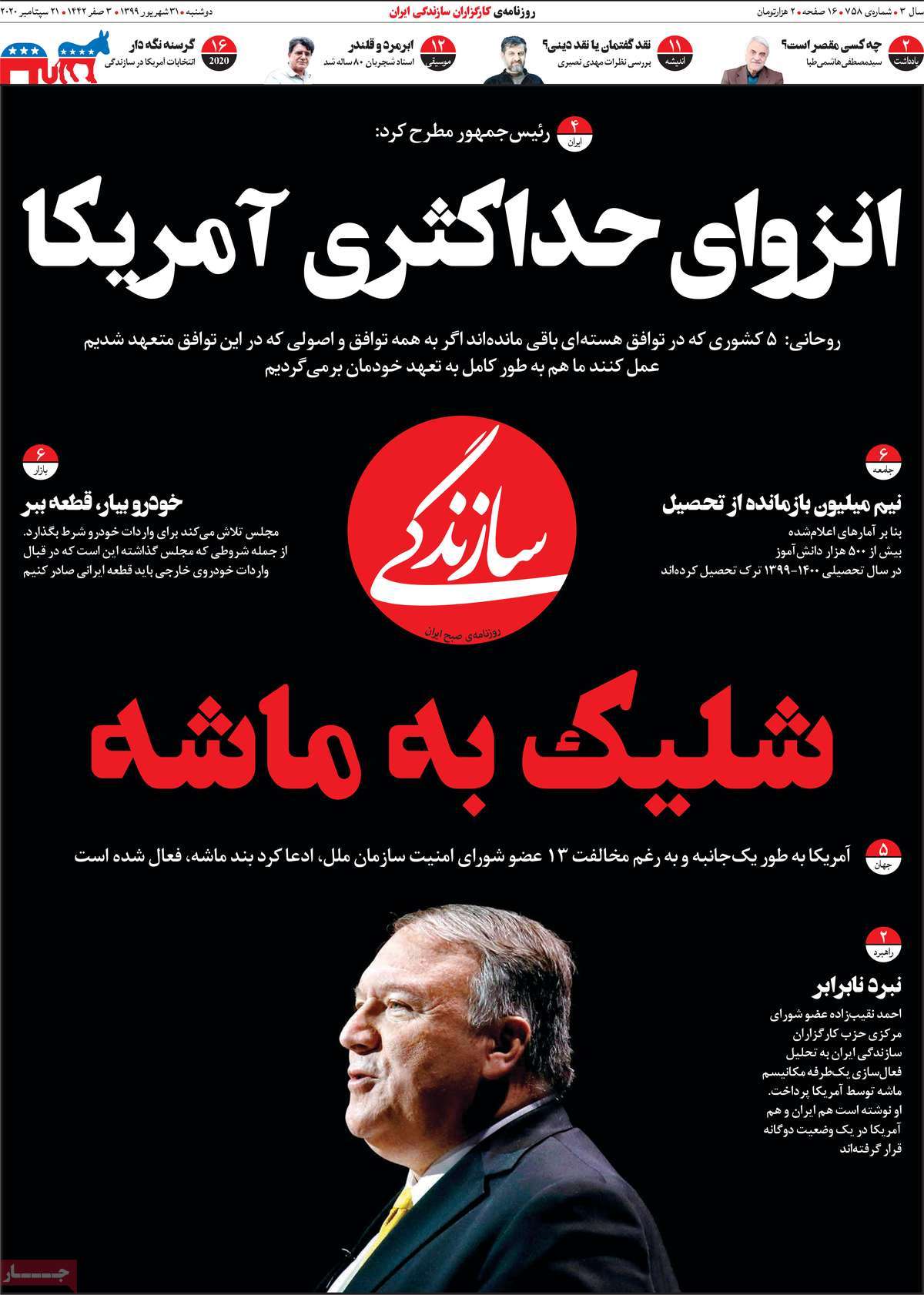
Sazandegi Newspaper:
1- Shooting at Trigger
* US Unilaterally Claims Snapback Mechanism Activated Despite Opposition of 13 UNSC Members
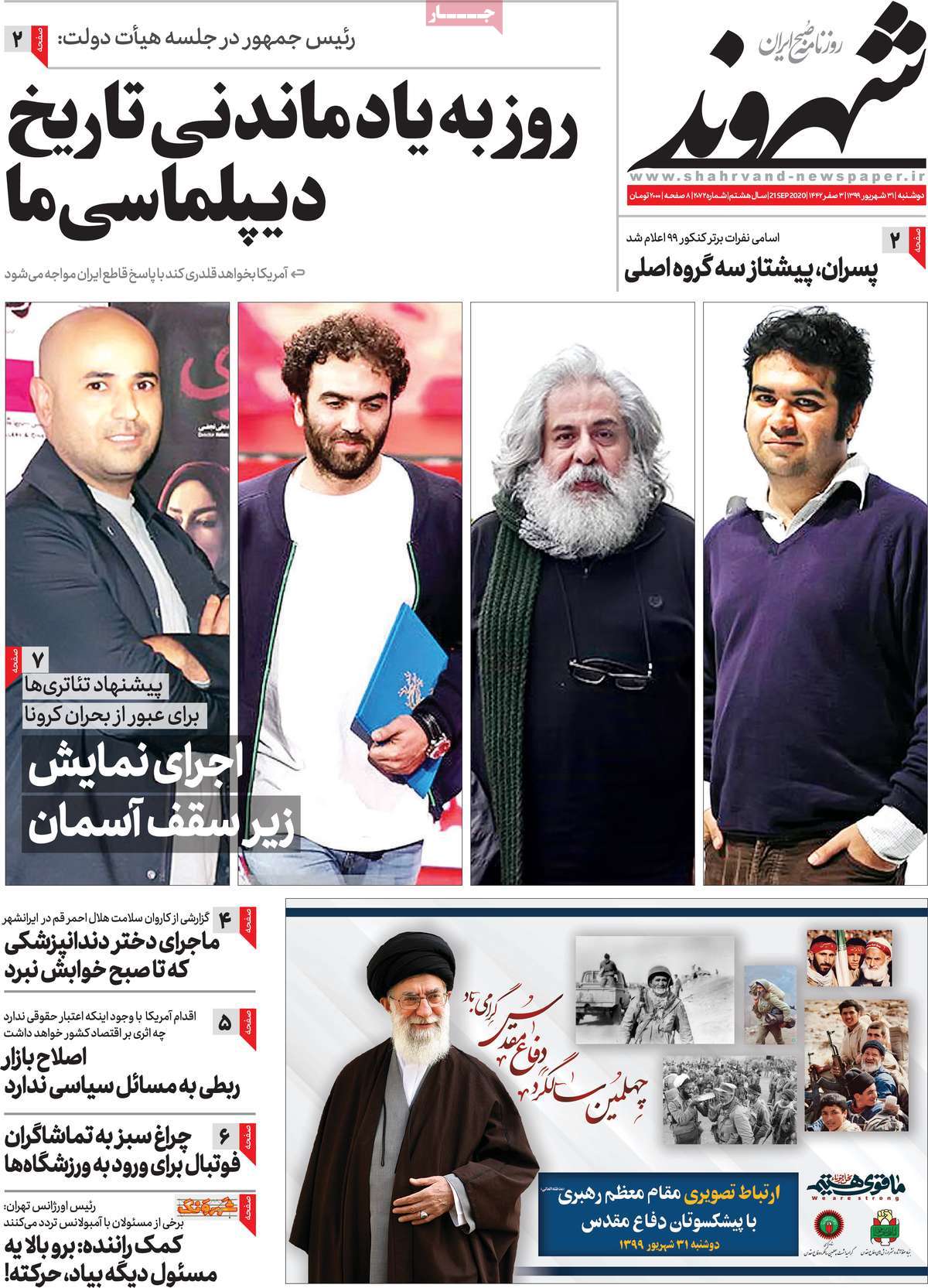
Shahrhvand Newspaper:
1- Sep. 20 Memorable Day of Iran’s Diplomatic History: Rouhani
Shargh Newspaper:
1- Trump’s Victory to Change Europe’s Path in Mideast
2- Reformists Waiting for Biden’s Victory: Analyst
3- India’s Parsis to Make Huge Contribution to Iran
* Indian Man of Iranian Descent Pledges to Provide Iran with COVID-19 Vaccine
4- Rouhani: US Was Defeated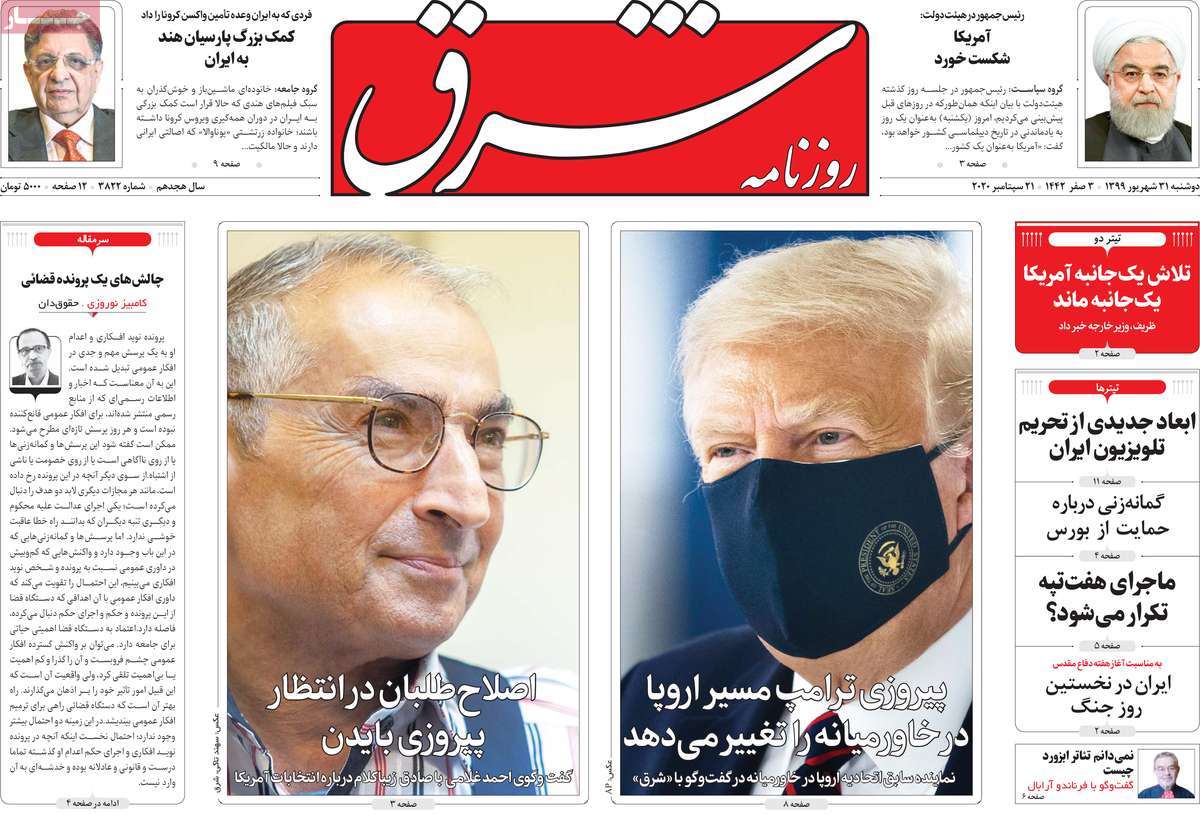
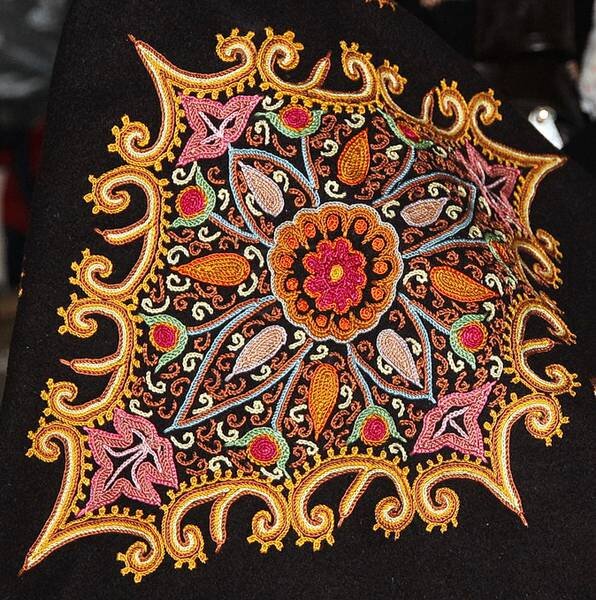
Rashti-Style Crochet: An Ancient Iranian Art
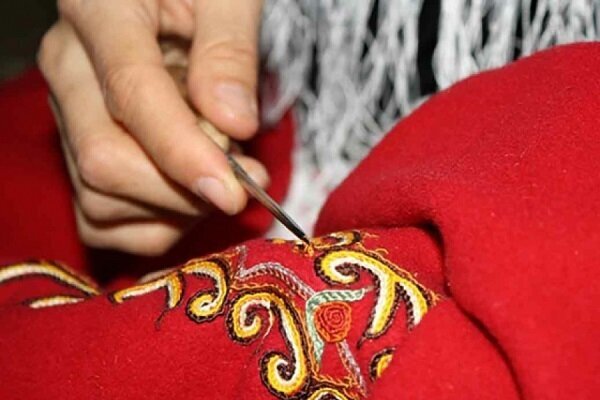
Rashtidoozi, literally meaning “Rashti-style crochet”, is an old art originally practiced in the northern Iranian city of Rasht. The art has its roots in ancient history and is still alive.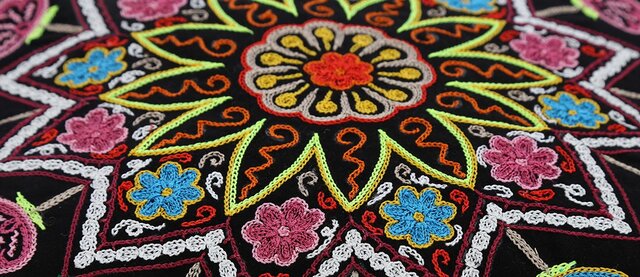
It is one of the most ancient handicrafts of the city of Rasht and has been registered on the National Intangible Heritage list. Rashti-style crochet works are mostly produced by women and used to decorate curtains, hats, clothes, tablecloth, bedspread, etc.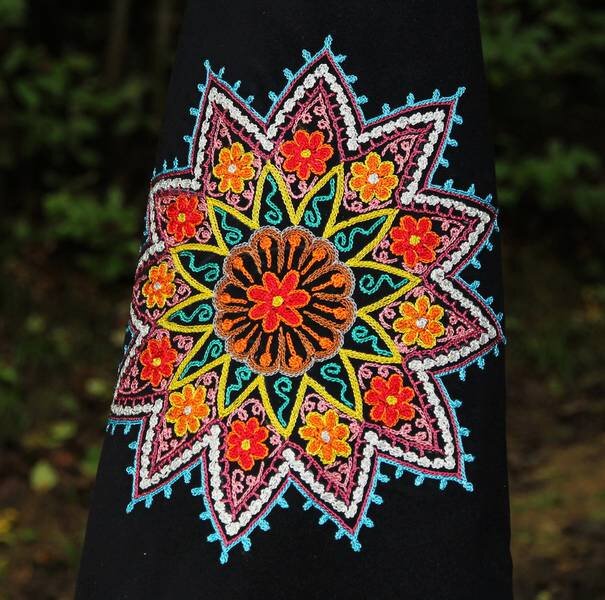
Rashtidoozi products are usually decorated with fixed patterns which have been used since old times, though some more modern and creative patterns are used as well.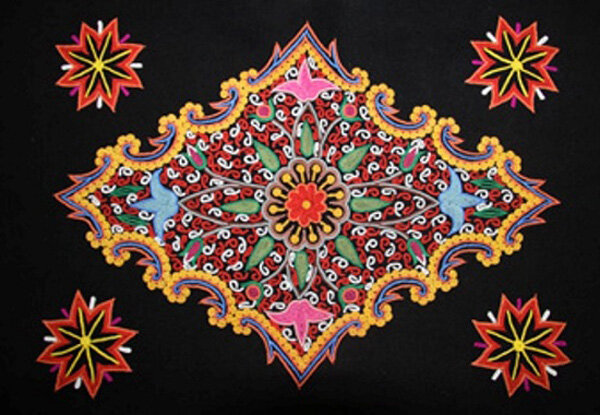
There is no precise recorded history of Rashtidoozi, but some handicrafts experts believe the art has an ancient history and dates back to the Achaemenid era.