Sunday, April 12, 2026
Home Blog Page 2654

“Iran Must Shift Focus Away from Arabs, Invest in Ties with Asia”

Mohammad Masjed-Jamei has, in a recent interview with Khabar Online news website, recounted his memories of the time when he served as ambassador and weighed in on the ups and down in relations between Iran and Arab countries, particularly Morocco.

The interview was conducted shortly after Rabat severed its diplomatic relations with Tehran after accusing Iran of supporting the liberationist Polisario Front. The highlights of Masjed-Jamei’s remarks follow.

“Polisario” has a long story. It is an Algeria-backed independence-seeking group based in a region south of Morocco and Algeria. The region, called Western Desert, also borders Mauritania on the west.

In short, it goes back to the mid-70s of the previous century. That region had been colonized by Spain. At last, Spain left the region. At the same time, Morocco claimed the region was part of its territory.
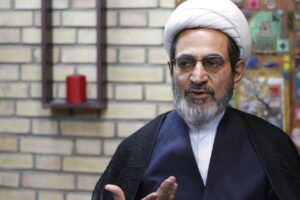
Mohammad Masjed-Jamei

Communities in parts of Sahara have favoured the independence of Sahara. They are supported by Algeria. However Morocco wants Sahara annexed to its territory.

The issue of Sahara has become chronic. Mauritania’s ties with Sahara as well as the issue of Sahara has seen ups and downs. Accordingly, Mauritania’s relations with Morocco has ups and downs, too. The controversy over Sahara made Morocco leave the African Union because some members of the union had voted for Sahara.

The Norwegian ambassador to Morocco told me that Sahara had rich hydrocarbure resources. In those days, Norwegians were carrying out oil exploration operations in south Morocco as well as in Sahara. The Moroccans have kept a low profile about the energy deposits in Sahara and prefer not to talk about it until the legal status of the issue becomes clear.

The UN’s stance on Sahara is complicated, too. At the moment, the issue of Sahara is not only related to Morocco and Algeria. It has also spread to Europe, especially Spain and France where the official position is different from that of political parties. We can say that Spain and France are pressuring Morocco. Because Paris and Rome know that Morocco is sensitive about the issue, they play with the issue in different ways.

Regarding Iran’s relationship with Polisario, I should say that Tehran had no relationship with Western Sahara before the 1979 Islamic Revolution. After the revolution, when there were talks of backing for freedom-seeking movements, Polisario was one of the movements that came under support.

Before the revolution, King Hassan requested several helicopters from the former despotic ruler of Iran, the Shah, who then sent thirteen helicopters. The choppers were used to crack down on Polisario militants, who had socialist-marxist tendencies at that time, and Iran was committed to countering leftist tendencies in the whole region and even Africa before the revolution.

After the revolution, freedom movements, in general, were supported by Iran one way or another. One of them was Polisario, which even opened an embassy in Tehran. Iran’s backing for the Polisario front was a key contributor to the tensions in Iran-Morocco relations. And Polisario’s opening an office in Tehran was the reason behind King Hassan’s severance of ties with Iran at the time.

[Asked about the possible consequences of the severance of ties with Morocco, he said] The reality is that Morocco is in the second or third degree of importance for us. Morocco is neither our neighbour, nor a very significant country as far as Iran’s foreign relations are concerned. We are not a top priority for them, either. We are of the second or third degree of importance.

Moreover, Morocco is really a complicated country. It is difficult to manage relations with Rabat, and this is something I’ve heard from all ambassadors to Morocco, whether from Europe, or Asia, or Latin America or Arab countries. The ambassadors to Morocco praised Morocco, but criticised its “system.”

The Moroccan society is vital and dynamic, with many parties and groups, both religious and non-religious. When I was there, I was in contact with all of them. What is important is that such a relationship must be coupled with respect, which would lead to trust. So, it is not like other countries where you are only in contact with the foreign ministry. And, there is a lot of sensitivity about Iran. Of course, all around the world such sensitivity exists about Iran. In Morocco, too, the people as well as the government are sensitive about the Islamic Republic.

They are sensitive about specific issues such as the Western Sahara and promotion of Shiism.

We need public diplomacy in order to handle relations with Morocco. Public diplomacy means having contacts with the important and dynamic sections of society such as universities, the parties or parliament, and different groups, especially influential figures.

Anyway, if the points mentioned are taken into consideration, it would be possible to work with them.

One point is that certain Arab countries are united against Iran. It looks like animosity with Iran is the most important factor that leads to coordination and cooperation among them. Regarding Morocco, for example, Bahrain, Saudi Arabia, Qatar, the Arab League, the Persian Gulf countries, and even the Organisation of Islamic Cooperation, which is swayed by Saudi Arabia, backed Morocco when it accused Iran of supporting Polisario. This is because Morocco is breaking ties with Iran. If Morocco had severed its relations with a country such as Columbia or Venezuela, which has happened before, everybody would have remained silent.

It seems that we have looked at these countries with too much optimism in recent decades and have made extensive unilateral efforts to expand or consolidate relations, which has not been very fruitful. To deal with them, first we need to figure out what their declared and undeclared policies exactly are.

As for future developments, I believe the future belongs to Asia. By Asia I mean India and the Asian countries to the east of India. Our interests lie in establishing a close relationship with these countries, an approach that those countries welcome as well.
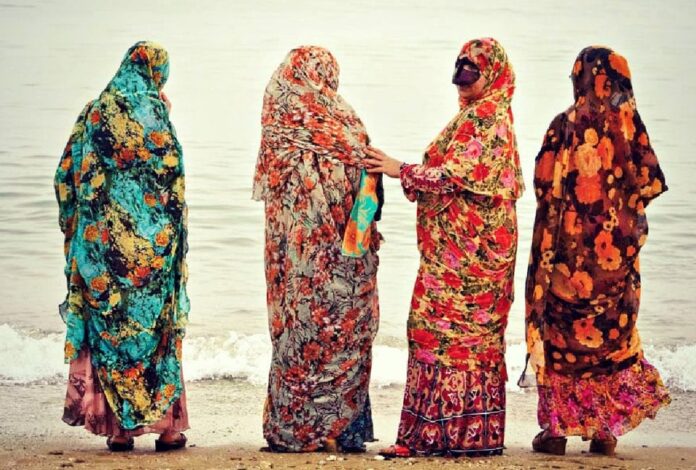
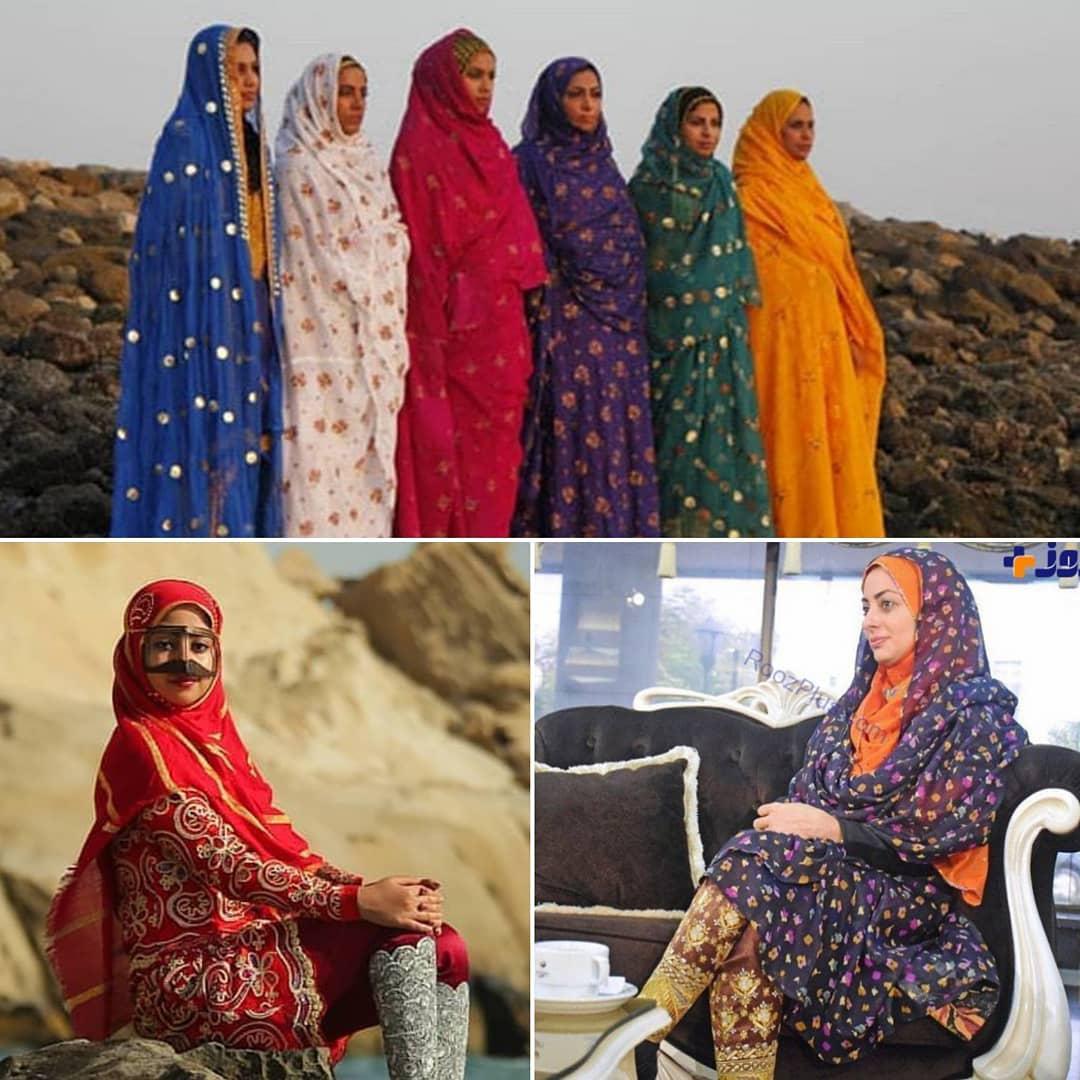
Iran Lets Women Civil Servants Wear Local Costumes at Work

That was announced by Alireza Darvishnejad, the head of the provincial Culture and Islamic Guidance Department, at a recent cultural event.

“With the approval of the minister and the governor general of Hormozgan, women civil servants and academics working in government institutions and schools are now permitted to wear traditional clothes,” said the official at the 8th International Cultural-Artistic Persian Gulf Festival.

Iran Lets Women Civil Servants Wear Local Costumes at WorkAccording to Aftab News, local costumes are popular among residents native to different regions across Iran. Various geographical regions and ethnic groups are known by unique features, including local traditional outfits.

Even tourists show much interest in local costumes worn by natives in different regions in Iran as traditional clothes are also manifestations of the locals’ culture and customs.

Traditional clothes have long been part of locals’ folklore and much respected by local residents. Clothes worn by locals in towns and cities on the Persian Gulf coast in southern Iran are among the most attractive and popular traditional costumes in the country, and reminiscent of the Persian Gulf history as well.

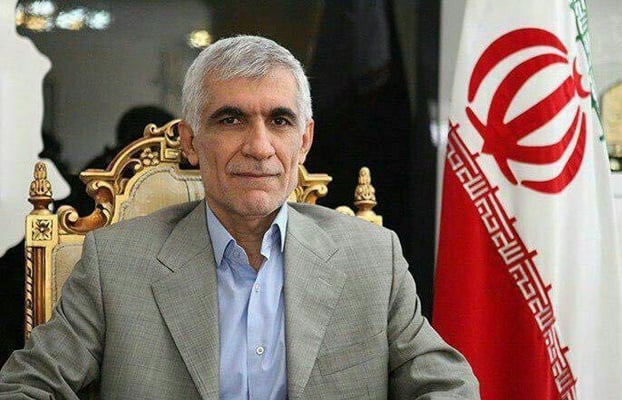
Afshani Elected as New Mayor of Tehran

Afshani was one of the two final candidates shortlisted by the reformist city council, and finally managed to defeat his rival Samiollah Makarem-Hosseini, the acting mayor of Tehran.

Afshani, a member of the reformist party Etemad Melli (National Trust), was elected after securing 19 votes in favour, while only one councillor voted against his election.

The new mayor is currently a deputy minister of interior, and must resign from the post to start his job at the municipality.

During the first term of President Hassan Rouhani, Afshani served as the governor-general of Fars Province.

His election as the mayor of Tehran came after Mohammad-Ali Najafi, another reformist politician, resigned earlier this year over what he called his health problems.

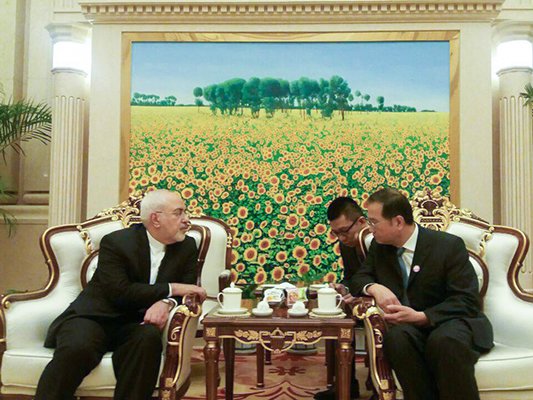
FM Zarif in China to Discuss Iran Nuclear Deal

FM Zarif in China to Discuss Iran Nuclear Deal

Speaking upon arrival in the Chinese capital, Zarif told reporters, “European countries should give me assurances that the Iranian nation’s interests will be safeguarded despite the United States’ withdrawal from the JCPOA.”

He said the most important action that Europe can take is to give Iran guarantees that it can keep reaping the benefits of the nuclear deal.

The foreign minister noted that Europe has, on numerous occasions, called on Iran to stay in the nuclear deal, IRNA reported.

The top diplomat, who will later leave Beijing for Moscow and Brussels, described his trips as significant.

“Iran’s relations with these countries have always been good and positive, and become all the more important now that the US has pulled out of the JCPOA,” said Zarif.

Zarif’s trip to China is the first leg of his three-nation tour, during which he is to sit down with officials to discuss how Europe is to guarantee Iran’s interests under the JCPOA.

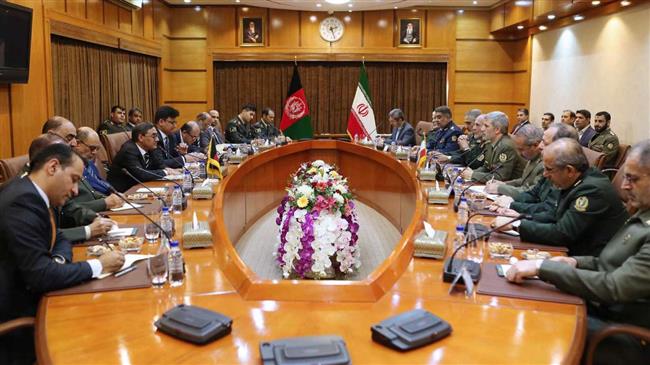
Iran Ready to Help Afghanistan Fight against Terror

“We regard ISIS as the security tool of the US and hegemonic powers to create insecurity in the region. So, the eradication of ISIS is among the policies of the government and Armed Forces of the Islamic Republic of Iran,” Hatami said in a meeting with Afghan Defense Minister Tariq Shah Bahrami in Tehran on Saturday.

“We believe that Afghanistan should not turn into a place for regional and international rivalries, rather it should be a center for regional cooperation,” he added.

He noted that Leader of the Islamic Revolution Ayatollah Seyyed Ali Khamenei and the Iranian government have always stressed the importance of bolstering cooperation with Afghanistan in all political, economic, cultural, security, defense and military fields.

Late in January, Ayatollah Khamenei said the United States has been relocating ISIS from the Middle East to the South Asian country to rationalize its military presence in the region.

By transferring the ISIS terror group from Iraq and Syria to Afghanistan, the US seeks “to justify the continuation of its presence in the region and to create security for the Zionist regime,” the Leader said.

Later in February, Iran’s top military commander said the United States is transferring ISIS to Afghanistan now that the terrorists have lost their strongholds in Iraq and Syria.

Chief of Staff of the Iranian Armed Forces Major General Mohammad Baqeri said that continued tensions in Southwest Asia would provide Americans with the much-desired pretext to prolong their military presence there.

Enemies aim to spread instability in Afghanistan: Bahrami

The Afghan defense minister, for his part, said enemies intend to spread instability in Afghanistan and disintegrate the country.

As a friendly and neighboring country, Afghanistan would never allow any country to use the Afghan territory to carry out an act of aggression against Iran, Bahrami added.

He noted that both Iran and Afghanistan aim to fight terrorism, particularly the ISIS terror group, and said the presence of terrorists would increase insecurity and instability across the region.

He said the Afghan government seeks to boost close cooperation with Iran as an influential country in the region.

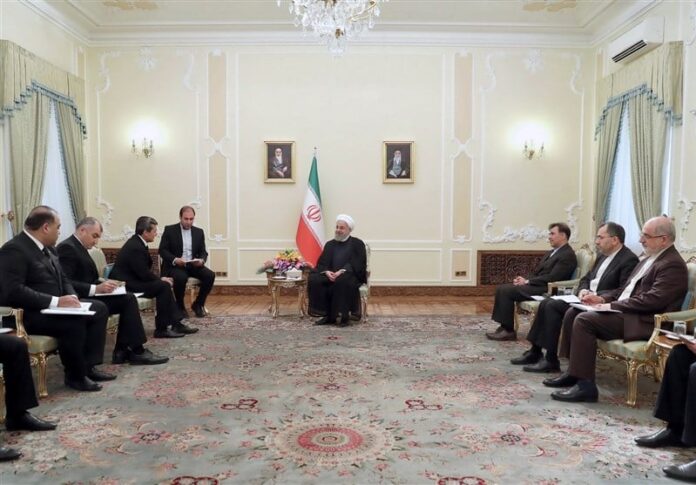
Iran Can Cooperate with Turkmenistan in Construction Projects

In a meeting with Turkmenistan’s Foreign Minister Rasit Meredow in Tehran on Saturday, Rouhani urged the implementation of agreements between the two neighbors in energy swap, electricity transfer, transportation industry and trade interaction.

“Iranian companies are ready to provide Turkmenistan with technical and engineering services and carry out relevant projects such as constructing highways and roads,” the president added.

He also called for the expansion of academic interaction among the companies developing new technologies.

For his part, the visiting diplomat voiced Turkmenistan’s willingness to enter long-term agreements with Tehran in various fields of mutual interest.

The two countries have great potential for cooperation in the energy and transportation industry, Meredow said, adding that during his visit, he will discuss with Iranian officials the implementation of energy swap and transportation agreements.

Iran Welcomes Restoration of Peace, Security to Armenia

In a Saturday statement, Qassemi said neighbours and their calm, stability and security are a major priority for Iran.

“Like before, we are ready to expand and deepen our relations with Armenia in all fields,” he said.

Armenia’s parliament elected Nikol Pashinyan as the country’s new prime minister on Tuesday.

The appointment ended weeks of street protests led by Pashinyan against the election of Serzh Sargsyan, Armenia’s president for the past 10 years, to the premiership office.

Iran to Host Meeting of World Crafts Council’s West Asia Sub-Region

This is the third time that Iran is going to host the WCC-West Asia Sub-Region over the past years.

According to a report by the Miras-e Arya News Agency, the new round of World Crafts Council-West Asia Sub-Region will be held in September with all member states in attendance.

Headed by Ghada Hijjawi Qaddumi from Kuwait, the WCC-West Asia Sub-Region has twelve members including Kuwait, Oman, Jordan, Lebanon, Bahrain, Palestine, Qatar, Saudi Arabia, the UAE, Yemen and Iran.

This year’s jury of WCC-West Asia Sub-Region includes one or two experts from Iran, one from Kuwait, one from Oman and two others from Asia and European countries.

Those Iranian handicrafts which received National Seal of Excellence for Handicrafts in Iran last year will represent the country during this year’s competition.

From 70 to 100 handicrafts picked up out of 356 pieces by Cultural Heritage, Handicrafts and Tourism Organization of Iran will compete this year.

The competition is aimed at encouraging artisans to produce quality products using original and traditional techniques and design in order to ensure their continuity and sustainable development.

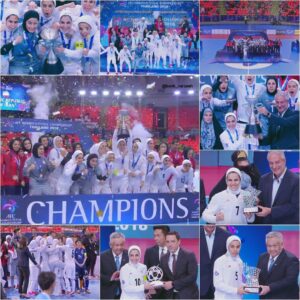
Iran’s Women Futsal Team Crowned Asian Champions Again

A hat-trick to Sara Shirbeigi and further goals to tournament MVP Fereshteh Karimi and veteran Fahimeh Zarei sealed an outstanding victory for Sharhzad Mozafar’s side, who also won the inaugural title in Malaysia three years ago.

Japan had the better of goalless first half but failed to capitalise, before Iran produced a blistering scoring burst that included three goals in two second-half minutes, to take the game away from Kenichiro Kogure’s side.

Masami Kato had two shots in the first six minutes, before Mika Eguchi forced Iranian goalkeeper Farzaneh Tavasoli into an excellent save six minutes later, and volleyed over the crossbar after tricking her way into space not long after

The player who had arguably done the most to get Japan to the final, four-time player of the match Anna Amishiro, hit the side netting in the 18th minute before Tavasoli made another fine save to deny Misato Komura a minute later. Despite spending extended periods under pressure, Iran looked as though they might take a half-time lead when Sara Shirbeigi ran right through the Japanese in the dying seconds, only for Eguchi’s last-ditch defending to snuff out the chance.

Iran’s Women Futsal Team Crowned Asian Champions AgainIt took less than 30 seconds for Ryo Egawa to force Tavasoli into another save, and less than two minutes for Shirbeigi to blast her effort over the crossbar as the battle intensified at the start of the second half.

Fahimeh Zarei looked certain to put Iran in front in the 24th minute, but failed to make contact with the ball with the goal at her mercy, then watched as Seyedehnastaran Moghimidarzi’s follow-up flew harmlessly over the crossbar.

Iran’s breakthrough came in the 27th minute when a lighting fast counter-attack drew Ayaka Yamamoto out of position, before Moghimidarzi rounded the Japanese goalkeeper and kept her cool to find Shirbeigi whose one-touch finish made it 1-0 from close range.

Having scored the winning goal in the final three years ago, Karimi made her mark on the 2018 final when she scored directly from a kick-in with the help of a Komura deflection at the half-hour mark.

That signalled the start of an Iranian goal-rush as Karimi set up Shirbeigi to make it 3-0 just seconds later, and three became four when Shirbeigi completed a magnificent hat-trick by scoring another in the following minute.

The goal also brought Shirbeigi level with teammate Fatemeh Etedadi as the tournament’s top scorer with nine.

Japan head coach Kencihiro called a time-out, and his side re-emerged in a power play formation, which paid immediate divivdeds when Eguchi finally got a reward for constant goal threat to make it 4-1.

Not content with her goals, Shirbeigi turned provider to set up Zarei for one of the goals of the tournament when masterfully flicked the ball past Yamamoto in the 36th minute.

Amishiro scored her ninth goal of the tournament in the final minute to create a three-way tie in the race for the tournament’s top scorer, but it had little bearing on the final outcome as Iran celebrated a wonderful win.

Iran women’s futsal team had been crowned as the inaugural champions of the AFC Women’s Futsal Championship in September 2015 in Malaysia.

Iran beat Japan 1-0 in the final in the inaugural final in Malaysia three years ago, with the tournament’s Most Valuable Player Fereshteh Karimi scoring the decisive goal and Farzaneh Tavasoli making a number of key saves.

Both players have been outstanding again in Bangkok this year, with able support from the likes of nine-goal top scorer Fatemeh Etedadi and Sara Sirbeigi.

On the way to the final clash Iran beat Turkmenistan 14-0 and Uzbekistan 9-2 to reach quarterfinals as the table-topper of the Group D.

In the clash against China in quarterfinals, Iran won 4-2 to reach the semifinal game where it hammered Vietnam 5-0 to pave the way to the final game.

Iran has long been an Asian futsal powerhouse. Men’s national team has dominated the AFC Futsal Championship, winning the competition 12 of the 15 times it has been staged.

The tournament, which was the second edition of the games, was started on May 2.

The AFC Women’s Futsal Championship is the premier national women’s futsal competition of Asian Football Confederation nations.

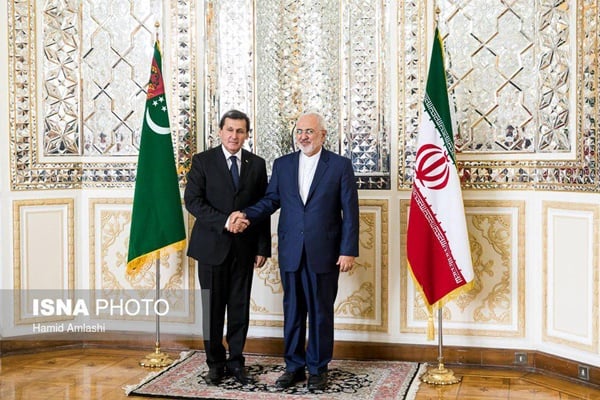
Ashgabat Ready to Enhance Ties with Tehran: FM

Speaking in the meeting, Meredow said he is pleaded to visit Tehran and that his country is “ready to expand relations with Iran in various fields.”

Zarif, in turn, said Tehran welcomes greater cooperation between the two countries in political, economic and cultural sectors.

“We see no limit to expansion of relations and are eager to deepen bilateral relations with the neighbouring country, Turkmenistan,” he said.

Zarif and Meredow conferred on a wide range of grounds for cooperation including gas, oil, industries, agriculture, tourism, education and culture.

The two officials also discussed efforts to establish a legal regime for the Caspian Sea, the two countries’ joint investments, the water crisis in the region, holding of Nowruz (Persian New Year) ceremony, facilitating travels between the two countries, and road and railroad cooperation.