Monday, December 29, 2025
Home Blog Page 265

FM: Iran to stay in NPT, but reshape cooperation with IAEA

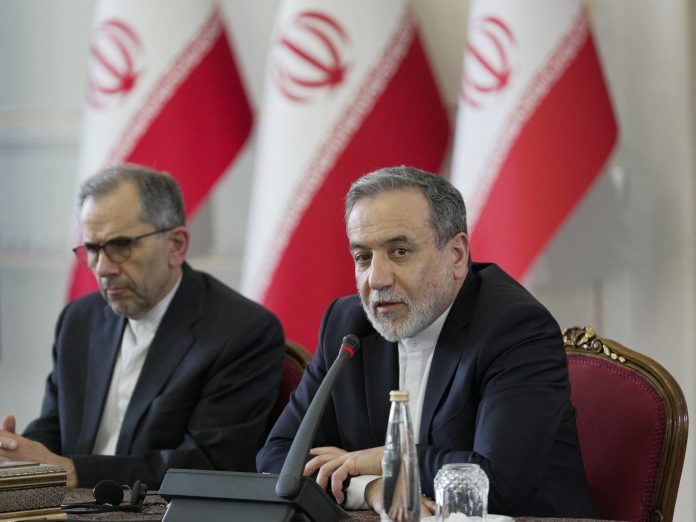
Abbas Araghchi

Araqchi said on Saturday in a meeting with ambassadors, chargés d’affaires, and heads of foreign and international missions based in Tehran that, in accordance with a law passed by Parliament, all of Iran’s cooperation with the IAEA will henceforth be managed through the Supreme National Security Council. Requests from the Agency for continued monitoring in Iran and further cooperation will be reviewed and decided upon by this Council.

Araqchi continued: “We are not satisfied with the performance of the IAEA. The report prepared by the Agency led to the adoption of a completely political resolution by the Board of Governors, and that resolution and the report themselves became pretexts for military attacks on Iran’s nuclear facilities.”

Referring to the Supreme Leader’s fatwa banning the production of nuclear weapons, he said: “If Iran intended to pursue nuclear weapons, it would have done so already. The Islamic Republic adheres to principles rooted in Islamic and humanitarian beliefs.”

He also said: “We have always been ready to engage in dialogue regarding our nuclear program, and we will continue to be in the future. But naturally, there must be assurances that any future negotiations will not once again be turned into war by the US or other countries.”

Araqchi also referred to the threat by the three European countries—Britain, Germany, and France—to reimpose sanctions against Iran through the so-called snapback mechanism, saying: “Snapback would mean the end of Europe’s role in the Iranian nuclear issue.”

He stressed that: “In any negotiation-based solution, the rights of the Iranian people regarding the nuclear issue—particularly the right to enrichment—must be respected. We will not accept any agreement that excludes enrichment.”

Araqchi further emphasized the importance of preserving Iran’s military capabilities, stating: “Our defensive capabilities are for the protection of the Iranian people, and these capabilities will not be the subject of any negotiation.”

First vice president: Negotiations remain Iran’s state’s strategy

Mohammad Reza Aref

Speaking during a meeting with professors at Sharif University of Technology, Aref stated, “There is no conflict between the field and diplomacy. Differences may arise during decision-making, but once a decision is finalized, all sides align.”

Aref praised the public’s unity during the 12-day war with Israel last month, calling it an “unprecedented show of national cohesion.”

He said this social capital must be preserved, noting that even those who boycotted the last presidential election actively supported the country’s defense.

The first vice president called on universities to offer practical strategies for maintaining social unity, proposing that Sharif University host research-based dialogues to assess strengths and weaknesses of national responses.

Aref also revealed that the government has approved a “wartime economic” plan, anticipating scenarios like reduced oil sales.
He urged greater public engagement to strengthen trust in the state.

On technology, he highlighted Iran’s advances in areas like nanotech and peaceful nuclear energy, and stressed the need for strategic focus on AI and cybersecurity.

67 children starved to death in Gaza since start of war

Gaza War

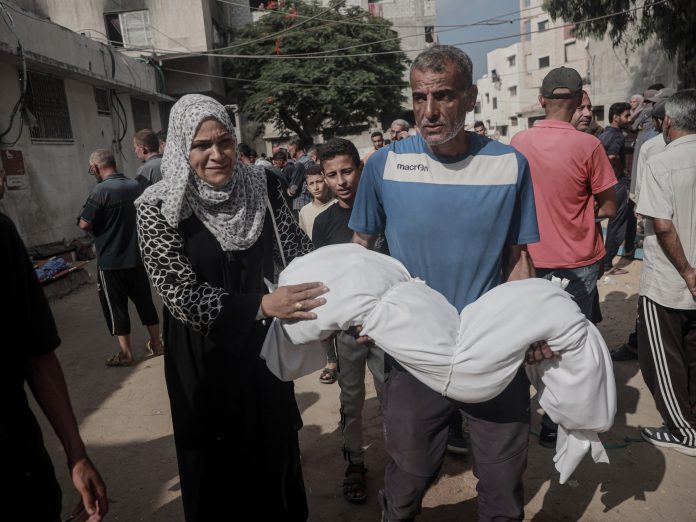
The office warned that the number could rise dramatically, with more than 650,000 children aged under 5 now facing severe and life-threatening malnutrition in the coming weeks due to the continued denial of food, medicine, and fuel.

“Starvation is now killing what bombs have not,” the office stated, describing the ongoing siege as one of the “most extreme forms of collective punishment in modern history.”

The media office said “dozens of additional deaths had been recorded in just the past three days alone, as Israeli forces continue to block the entry of flour, infant formula, and vital nutritional and medical supplies.”

It accused Israel of “deliberately pursuing a policy of mass starvation.”

As of now, around 1.25 million people in Gaza are enduring catastrophic hunger, while 96% of the population, including over 1 million children, suffers from acute food insecurity, the office added.

It held Israel fully responsible for a “systematic and organized starvation campaign” and placed legal and moral blame on its international backers for their support or silence.

“We are sounding the alarm: this is a mass death sentence unfolding before the eyes of the world,” the office said, adding, “Immediate international intervention is not optional, it’s a matter of life or death.”

Rejecting international calls for a ceasefire, the Israeli army has pursued a brutal offensive on the Gaza Strip since Oct. 7, 2023, killing over 57,800 Palestinians so far, most of them women and children.

The relentless bombardment has destroyed the enclave and led to food shortages and the spread of diseases.

Last November, the International Criminal Court issued arrest warrants for Israeli Prime Minister Benjamin Netanyahu and his former Defense Minister Yoav Gallant for war crimes and crimes against humanity in Gaza.

Israel also faces a genocide case at the International Court of Justice for its war on the enclave.

EU’s population hits record 450mn with numbers driven by migration: Eurostat

The EU has recorded more deaths than births annually since 2012, which means migration is the only driver of population growth.

“The observed population growth can be largely attributed to the increased migratory movements post-COVID-19,” Eurostat said.

In 2024, the EU added 1.07 million new residents, with positive net migration of 2.3 million people compensating for a natural decline in people of 1.3 million.

Deaths last year, logged at 4.82 million, continued to outweigh the birth rate of 3.56 million.

The trend puts Europe’s demographic challenges under the spotlight as the continent’s ageing population and low birth rates strain the welfare systems and create labour shortages.

France, Germany and Italy retain their positions as the EU countries with the largest populations, accounting for almost half of all the people living in bloc at 47%.

While 19 countries recorded an uptick in population figures last year, eight saw declines.

Malta logged the highest growth rate at 19.0 per 1,000 people, followed by Ireland with 16.3 and Luxembourg at 14.7.

Among the countries reporting a drop in populations, Latvia recorded the steepest fall at -9.9, followed by Hungary (-4.7) and Poland and Estonia tied in third place with -3.4.

The EU’s population stood at 354.5 million in 1960.

PKK disarmament opens ‘new page in history’ after group lays down arms: Turkey

PKK

The Kurdistan Workers’ Party, or PKK, held a symbolic ceremony on Friday in northern Iraq. It was the first concrete step toward a promised disarmament, as part of a peace process.

Speaking at a meeting of his ruling Justice and Development Party on Saturday, Erdogan hailed the event as a victory.

“Turkey has won, my nation has won. Every single one of our 86 million citizens, Turkish, Kurdish, and Arab has won,” he said.

“We will not participate in, nor will we engage in, any attempt to threaten our unity, our integrity, our homeland, our state, our nation, our peace, our honour and our pride,” Erdogan added.

The PKK announced in May that it would disband and renounce armed conflict, ending four decades of hostilities.

“As of yesterday, the 47-year scourge of terrorism has entered the process of ending, God willing,” Erdogan continued, adding, “As of yesterday, Turkey began to close a long, painful and tear-filled chapter.”

The move came after PKK leader Abdullah Öcalan, who has been imprisoned on an island near Istanbul since 1999, urged his group in February to convene a congress and formally disband and disarm.

Footage from Friday’s event showed fighters — both men and women — casting rifles and machine guns into a large cauldron, where they were then set ablaze.

The PKK issued a statement from the fighters who were laying down their weapons, saying that they had disarmed “as a gesture of goodwill and a commitment to the practical success” of the peace process.

“We will henceforth continue our struggle for freedom, democracy, and socialism through democratic politics and legal means,” the statement read.

The state-run Iraqi News Agency reported that 30 fighters had disarmed “symbolically” on Friday, and that the continuing disarmament process “will take place in stages.” The process is expected to be completed by September, the agency reported.

Iranian reformist politician urges caution amid rising tensions: “no need to beat the drums of war”

In an interview with Iranian media, Gerami-Moghaddam said that while Iran is prepared to pay the price for preserving its independence and rejecting foreign pressure, the responsibility for foreign policy decisions lies at the highest levels of the state, not solely with the Foreign Ministry.

He criticized some internal voices for promoting a pro-war narrative, arguing that such positions threaten national interests. “Why do some insist on beating the drums of war? This only plays into the hands of our enemies,” he stated.

Referring to the 12-day war with Israel last month,  Gerami-Moghaddam urged Iran’s diplomatic and security bodies to actively de-escalate tensions and prevent extremist rhetoric.

He also warned of the potential reactivation of the UN “snapback” mechanism, which could reinstate international sanctions against Iran.
“We must act wisely to avoid giving the world justification to label us a threat,” he said.

Iranian Judiciary: 943 killed, 8 missing in Israel’s 12-day war on Iran

Speaking on Saturday, Jahangir stated that Iran’s Forensic Medicine Organization has issued death certificates for 943 victims so far, adding that eight individuals are still unaccounted for, with no traces yet discovered.

Jahangir said Israel has violated multiple international laws during the conflict. “The Zionist regime blatantly violated key principles of international law, including the UN Charter’s prohibition on the use of force,” he said. He cited violations in international humanitarian law, human rights law, arms control, and even outer space law.

The spokesperson detailed that hundreds of Iranian civilians were killed or wounded, with seven hospitals, four health centers, and six emergency bases damaged.

He also reported two separate attacks on Iranian state broadcasting facilities, which he said breached both humanitarian protections for media workers and freedom of expression.

Jahangir underlined that Israel’s actions constitute war crimes and crimes against humanity under the Rome Statute of the International Criminal Court, and emphasized that human rights must be upheld even during armed conflict.

Dozens of Labour MPs call for UK to immediately recognise Palestinian state

The MPs, who include centrist and leftwing backbenchers, sent a letter to David Lammy on Thursday warning they believed Gaza was being ethnically cleansed.

They are urging the foreign secretary to take immediate steps to prevent the Israeli government from carrying out its Rafah plan, and to go further and recognise Palestinian statehood immediately.

The letter was sent just after the French president, Emmanuel Macron, made a similar plea at a joint press conference with Keir Starmer, the UK prime minister.

The MPs wrote: “It is with great urgency and concern that we are writing to you regarding the Israeli defence minister’s announcement on Monday of his plans to forcibly transfer all Palestinian civilians in Gaza to a camp in the ruined city of Rafah without allowing them to leave.”

They added: “The defence minister’s plans have been described by a leading Israeli human rights lawyer, Michael Sfard, as ‘an operational plan for crimes against humanity. It’s about population transfer to the southern tip of Gaza in preparation for deportation outside the strip.’

“Though an accurate description, we believe there is a clearer one. The ethnic cleansing of Gaza.”

The letter calls for ministers to take five different measures. The government is already pursuing some of those, such as providing funding for the UN agency for Palestinian refugees, Unrwa, and working to secure the release of hostages held by Hamas.

Others, however, are likely to prove more controversial, including imposing a trade blockade on Israeli settlements in the West Bank and immediate recognition of Palestinian statehood.

“By not recognising [Palestine] as a state, we undermine our own policy of a two-state solution and set an expectation that the status quo can continue and see the effective erasure and annexation of Palestinian territory,” the MPs warned.

Ministers plan to recognise Palestine as part of a peace process, but only in conjunction with other western countries and “at the point of maximum impact” – without saying what that is.

Several European countries have already granted recognition, while France, which has not yet done so, has recently been putting pressure on Britain and other allies to do so in tandem.

The letter is the second time in recent weeks Labour MPs have written to ministers calling for them to recognise Palestine, but the first time they have been willing to make their names public. A previous letter also included the names of some parliamentary aides and junior ministers.

US court nixes guilty plea for 11 September attacks mastermind

A panel of judges at the Washington, DC-based federal court of appeals ruled on Friday that Austin “had full legal authority” to revoke the plea agreement for Mohammed and two other defendants.

That deal would have spared Mohammed the possibility of the death penalty in exchange for a plea of guilty.

Friday’s decision will prolong a decades-long legal saga for Mohammed, who has been imprisoned at a notorious detention facility in Guantanamo Bay, Cuba, since he was captured in Pakistan in 2003.

Austin revoked the deal in August of last year, saying that the US public and victims’ families “deserve the opportunity to see” the case brought to trial before a military commission — an alternative justice system established for Guantanamo detainees.

But any trial is likely to be fraught with challenges — including questions about evidence obtained by torture — and will take years, extending the legal limbo for the Guantanamo detainees.

A military judge reinstated the plea agreements in November, and a military appeals court affirmed the decision one month later.

The administration of former President Joe Biden then took the case to a federal civilian court of appeals.

Lawyers for defendants like Mohammed argued that Austin was too late to revoke the agreements, parts of which were already materialising.

But the court of appeals in Washington, DC, ultimately ruled that Austin was right to wait for the outcome of the plea negotiations before revoking the deals.

Writing on behalf of the court’s majority, Judges Patricia Millett and Neomi Rao said that preventing the withdrawal of the deal would have sent the message that plea agreements are “irrevocable upon signing”.

“The Secretary acted within the bounds of his legal authority, and we decline to second-guess his judgment,” the ruling read.

However, dissenting Judge Robert Wilkins decried the decision as revoking a contract that was already in effect.

He likened nixing the plea agreement to refusing to pay a painter who has already finished parts of the work stipulated in a home repairs contract.

For years, rights groups have called for shutting down the detention facility at Guantanamo Bay, known as Gitmo.

The prison opened in 2002 to house prisoners from the so-called “war on terror” following the attacks in the US on September 11, 2001.

Detainees were arrested in countries across the world on suspicions of ties to al-Qaeda and other groups. Many endured torture at secret detention facilities, known as black sites, before being transferred to Guantanamo.

At Gitmo, civil liberty advocates say detainees had few legal rights. Even those cleared for release through the military commissions remained imprisoned for years, with no recourse to challenge their detention.

The detention facility once housed nearly 800 Muslim men and teenage boys. Now only 15 prisoners remain at the prison; three are eligible for release.

Zelensky says aid shipments restored following halt in US weapons deliveries

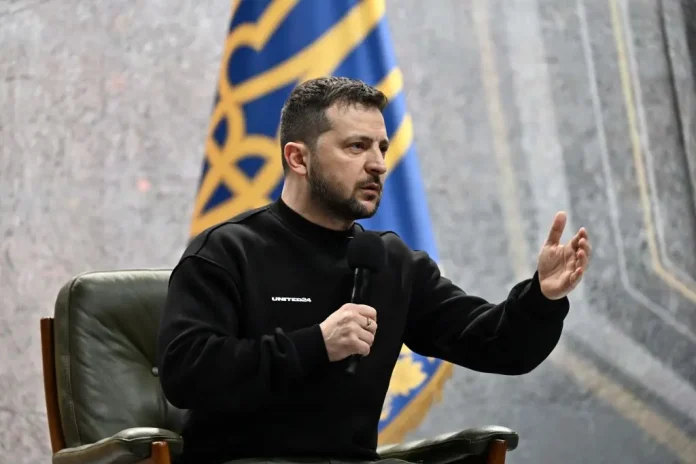
Volodymyr Zelensky

“We have received political signals at the highest level — good signals — including from the United States and from our European friends. According to all reports, aid shipments have been restored,” he said.

The United States halted weapons shipments to Ukraine amid a capability review, the White House and Pentagon previously confirmed, with U.S. President Donald Trump denying the pause.

Days later, Trump stated that the United States would provide Ukraine with additional shipments of weapons amid intensified Russian attacks.

In his address, Zelensky noted that Kyiv will continue to discuss military aid deliveries with U.S. Special Envoy Keith Kellogg.

“We will continue our work next week with the American side at the military level, in particular, our military will be working with General Kellogg,” Zelensky added.

Kellogg is set to arrive in Ukraine on July 14 for a week-long visit. Zelensky and Kellogg met days earlier ahead of the Ukraine Recovery Conference in Rome.

Defense Minister Rustem Umerov and Kellogg are expected to meet in Kyiv, with Kellogg’s spokesperson Morgan Murphy saying the meeting was “set up before news of the arms pause came to light last week.”

Trump and Zelensky spoke on July 4, agreeing to strengthen Ukraine’s air defenses amid intensified Russian strikes.

Zelensky described his recent phone call with Trump as “the best conversation in all this time” in an evening address on July 5.

“This was probably the best conversation in all this time, it was maximally productive. We discussed the topic of air defenses. I am grateful for the readiness to help,” Zelensky stated, describing his phone call with Trump.

A day prior to speaking with Zelensky, Trump held a phone call with Russian President Vladimir Putin in an effort to discuss ending Russia’s war against Ukraine.

Trump described his July 3 conversation with Putin as disappointing, saying that the call “didn’t make any progress” in stopping Russia’s war.

The weapons reportedly held back during the U.S. aid halt include two dozen Patriot air defense missiles, over two dozen Stinger air-defense systems, precision artillery rounds, Hellfire missiles, drones, and more than 90 AIM air-to-air missiles launched from F-16 fighter jets.