
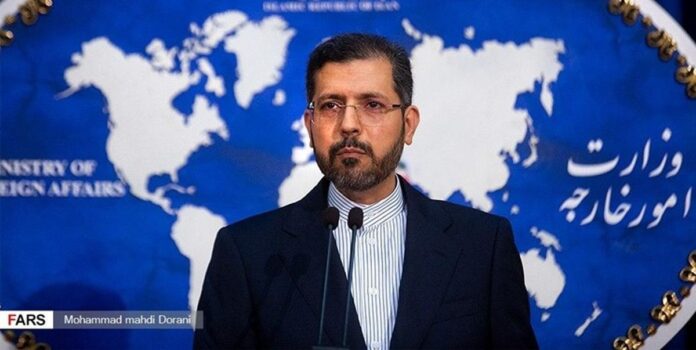
Speaking in a press briefing on Tuesday, Saeed Khatibzadeh said all other Persian Gulf littoral states have reacted to the act of terror.
“Unfortunately, only one country (Saudi Arabia) has not adopted any positions [on the assassination of Iranian scientist Mohsen Fakhrizadeh]. The other six of the seven Persian Gulf Arab states have adopted a serious stance,” he explained.
“They either issued statements in condemnation of the assassination, or had phone contacts with Mr. Zarif,” he said.
“That country (Saudi Arabia) should reconsider its policies,” Khatibzadeh said.
He then touched upon a recent trip by US Secretary of State Mike Pompeo.
“We saw [US Secretary of State Mike] Pompeo made a hasty and urgent trip to the region.
It is clear why this bankrupt secretary of state of the Trump administration is so anxious and doing things so hurriedly. This anxiety and rush is aimed at fending off a major historic defeat, or probably the biggest historic defeat that the US regime could have ever suffered,” he said.
“They compromised all their credit and reputation and used everything available to them to pressure the Iranian nation. They failed to achieve any of their objectives,” said the spokesman.
He then expressed hope those acting against Iran would rethink their policies.
“We would like to think that they are correcting the approach they have adopted.
Otherwise, if any trace is found of anyone [’s involvement in the assassination], as Iranian officials have rightly said, those ordering and perpetrating the terrorist act will be punished,” he said.
Follow the latest on the assassination of Mohsen Fakhrizadeh through this link.

In an address to a Tuesday session of the Administration’s Economic Coordination Headquarters, President Rouhani said the enemy has failed to achieve its main purpose in imposing the sanctions and economic war against Iran, namely the economic collapse of the Islamic Republic.
In spite of the harmful effects of sanctions on Iran’s economy and the livelihood of people, “we can assert strongly that the impacts of sanctions have been neutralized,” the president added.
The success in tackling the sanctions has been gained with resistance and prudent policies, President Rouhani stressed, saying the enemy’s objective to disrupt the Iranian society’s calm, psychological security and economic stability has also ended in failure.
“Those who have failed to meet the objective of halting Iran’s economy during two years and a half of implementation of the anti-Iranian policy of maximum pressure are now angry about the clam and the improving course in Iran’s economy, and are seeking to send negative waves to (Iran’s) economy in these few weeks,” the president added, pointing to the termination of the US administration’s term.
“People are confident that the economic resistance has born fruit and those who have imposed sanctions will have to reverse their approach. That’s why the predictions of future have become positive, as the economic behavior in various markets attest to it,” President Rouhani stated.
On the efforts to finalize the next year’s national budget bill, the president said the budget bill prepared by the administration would pave the way for the country’s progress and development of infrastructures.
The main strategy in preparing the next year’s budget is to maintain and strengthen the process of development and support the vulnerable groups, the president explained, hoping that removal of the obstacles would accelerate the country’s development pace in the next Iranian year, which begins in March 2021.
President Rouhani finally noted that oil revenues have been excluded from the next year’s budget, highlighting the administration’s detailed planning and accurate calculations coupled with the experience of countering severe economic sanctions.
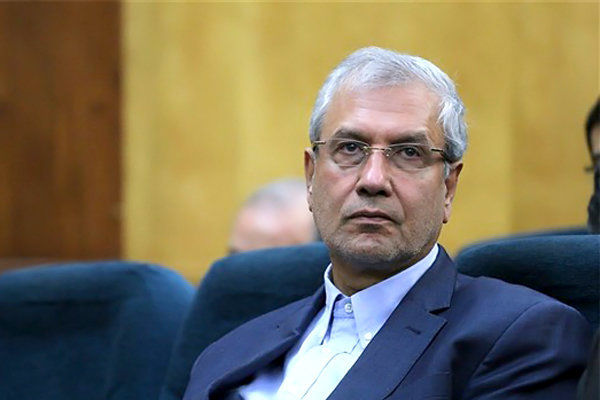
In comments on Tuesday, Ali Rabiei said terrorists will fail to attain their goals.
“Terrorists will definitely not be able to achieve their objectives,” he said.
“Our nuclear and defence know-how cannot be subjected to terror, nor is it reversible,” the spokesman said.
“Our people were not only not affected by the psychological dimensions of the assassination, … but they became more vigilant and more united in safeguarding national interests against their real enemies,” the spokesman said.
Rabiei said the assassination pursued multiple objectives.
“The act of terror was aimed at disrupting the psychological tranquility of the society, discouraging people from achieving victory and tackling the ‘maximum pressure’ policy, creating confusion in Iran’s strategy, forcing Iran to play in the enemy’s court, and finally disrupt regional security and remove rays of hope for peace and calm,” he said.
Rabiei underlined that terrorists also would like to disrupt international security as potential upcoming changes will create an opportunity for the Iranian nation to reclaim its rights.
He said terrorists are well aware that they cannot put the brakes on Iran’s scientific progress, are unable to keep Iran from playing an effective role in ensuring peace and security and cannot keep Iran from enjoying peaceful nuclear technology; so, they carried out that act of terror.
The spokesman added the tragic event could have been prevented if security protocols had been observed.
Follow the latest on the assassination of Mohsen Fakhrizadeh through this link.
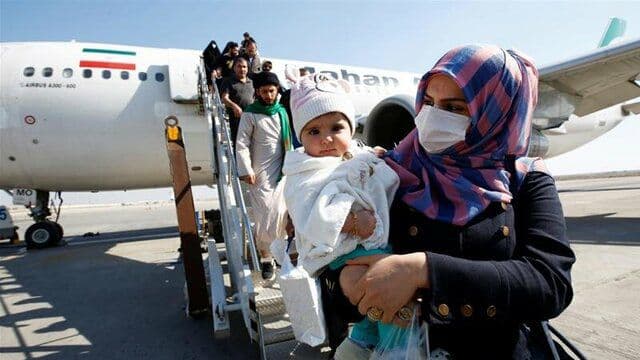
Iranian Deputy Minister of Cultural Heritage, Tourism and Handicrafts Vali Teymouri said cooperation among international institutions to keep tourism alive during the coronavirus pandemic is of utmost significance.
Teymouri was speaking at a virtual meeting of tourism ministers of member states of the Standing Committee for Economic and Commercial Cooperation of the Organization of Islamic Cooperation (COMCEC).
He touched upon possible changes in the general structures of travel in the post-corona era, and highlighted the need to review target markets, redefine tourism products and improve electronic services.
The webinar event focused on “reaction to COVID-19” and “improvement of entrepreneurship for competition in the tourism industry.”
The Iranian minister presented a report on Iran’s measures to manage tourism amid the coronavirus crisis, including support for those working in the tourism industry by offering rescue packages to them, writing off their debts, granting them low-interest loans and long grace periods, introducing health protocols and issuing regulations for smart travel.
He said the tourism industry has suffered considerable losses, urging Islamic nations to share ideas and exchange experience to help tackle the coronavirus crisis in the tourism sector.
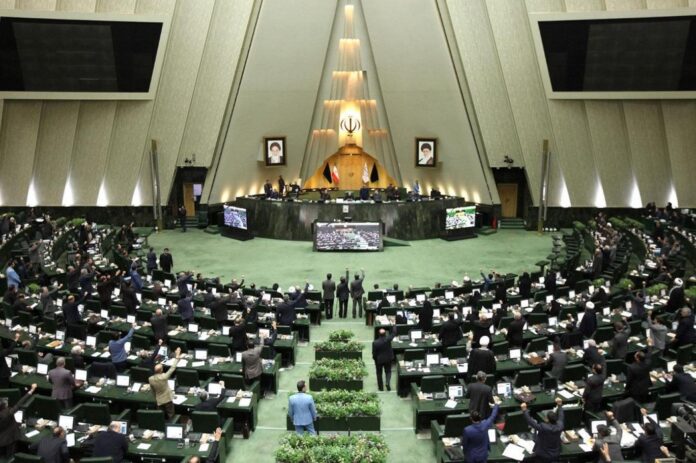
The bill instructs the Atomic Energy Organization of Iran (AEOI) to produce at least 120 kilogrammes of 20%-enriched uranium annually and stockpile it in the country and use it for peaceful purposes as needed.
After the bill is signed into law, the government also has a duty to meet, fully and without delay, domestic industries’ need for uranium enriched up to a purity level of 20 percent and above for peaceful purposes.
Under the bill, the government would also be obliged to raise the country’s uranium enrichment and production to realize the enrichment capacity of 190 thousand separative work units (SWU).
The bill also requires the government to make use of advanced centrifuges, including IR6 and IR2M types.
The government will also be duty-bound to halt inspections of its nuclear sites which are beyond the Additional Protocol.
The double-urgency of the motion had already been approved on parliament floor. The move followed the assassination of eminent Iranian nuclear and defense scientist, Mohsen Fakhrizadeh.
Meanwhile Iranian Foreign Ministry Spokesman Saeed Khatibzadeh said the government believes the motion proposed by legislators is neither useful, nor necessary.
“Unfortunately, the viewpoints of the Ministry of Foreign Affairs have not be incorporated into the Parliament’s recent legislation,” he said.
“We hope the Parliament will pay attention to the expert views of the Ministry of Foreign Affairs and the precise look which exists in the government and state institutions,” he added.
Lawmakers adopted the motion to tackle anti-Iran sanctions following the assassination of prominent Iranian nuclear and defence scientist Mohsen Fakhrizadeh.
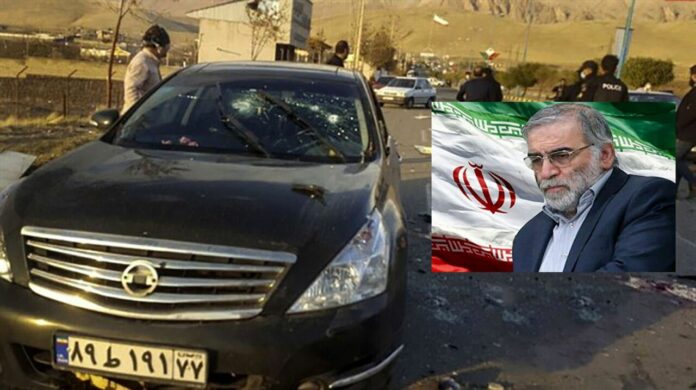
The network said Tel Aviv had recruited elements that were adversaries of the Islamic Revolution of Iran in order to assassinate Fakhrizadeh.
According to the same source, the weapon used to kill the scientist had been made in Israel and controlled by satellite.
Many Iranian authorities and media outlets have suggested there is ample evidence implicating the Israeli regime in the scientist’s slaying.
Earlier, Press TV had made the claim quoting its own source.
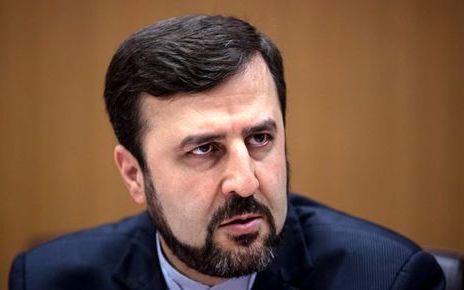
Iranian legislators had proposed stopping or restricting the IEAE’s inspections of its nuclear sites following the assassination of eminent Iranian scientist Mohsen Fakhrizadeh.
Iran’s ambassador to international organizations Kazem Gharibabadi said the agency should adopt a clear stance on the terrorist act.
“In the first place, the IAEA is expected to clearly announce its position on this act of terror and strongly condemn it,” Gharibabadi said.
“The IAEA has immediate and fundamental responsibility toward a member state which has allowed the most number of inspections by the agency and had the most transparent nuclear program by living up to various commitments, but whose scientists are facing assassination threats or are assassinated, and whose nuclear facilities are threatened by assaults or are sabotaged,” Gharibabadi.
In an interview the AFP news agency, Grossi had said that the agency understand the existing concern by Tehran, but that neither Iran nor anyone else will win anything by halting or restricting the IAEA’s inspections of the country’s nuclear sites.
As for the assassination of the Iranian scientist, Grossi said the IAEA is and international organization for peace and security and expresses its hatred of any kind of violence.
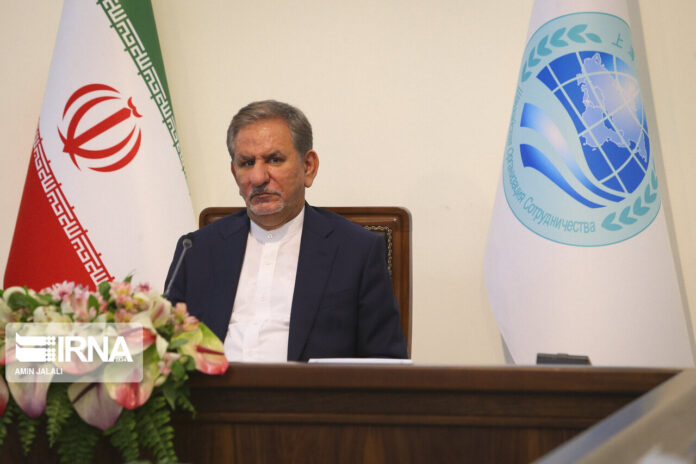
The Iranian First Vice-President made the remarks on Monday in an address to the 19th meeting of the Shanghai Cooperation Organisation’s (SCO) Council of Heads of Government, held via videoconference and hosted by India.
In his speech, Jahangiri said Iran has become a victim of state-sponsored terrorism despite its fruitful cooperation with other countries in the fight against terrorism, particularly its help for Iraq and Syria in combating Daesh (ISIS) terrorists that pose a major threat to the world.
The blatant examples of utilizing state-sponsored terrorism against Iran were the January assassination of Lt. General Qassem Soleimani by the US and the recent assassination attack on defense scientist and manager Mohsen Fakhrizadeh, Jahangiri added.
The vice-president then called on governments and regional and international organizations not to remain silent on state-sponsored terrorism and condemn it to prevent a recurrence of such inhumane measures.
“Iran, of course, will give a decisive and calculated response to this crime at the proper time,” Jahangiri added.
He further described regional organizations as one of the most effective mechanisms for the management and settlement of regional and global problems, saying the Shanghai Cooperation Organisation member states can take advantage of the ample opportunities and capacities for multilateral cooperation and play a major role in development and progress.
Jahangiri also deplored the serious challenges that the US government has posed to multilateralism, adding, “The JCPOA which is known as a major achievement of international diplomacy in the past decade, has been salvaged so far in spite of the Trump administration’s anti-JCPOA policy and illegal withdrawal (from the nuclear deal) and the imposition of cruel sanctions against our country and inaction from the European members, because of Iran’s peaceful policy and strategic patience and with the support from the international community, including the Shanghai Cooperation Organisation members, and of course with the great Iranian nation’s resistance.”
The Iranian vice-president then lashed out at the US government for resorting to illegal and cruel sanctions to pressurize the sovereign states that ultimately target the people, saying one of the instruments in Washington’s policy of sanctions is employment of banking mechanisms and dollar.
“Since the imposition of the unilateral American sanctions amounts to an action against free global trade and could be reused against any political or economic rival of that country (the US), it is necessary for the Shanghai Cooperation Organisation to devise appropriate plans to thwart such unlawful measures,” Jahangiri underlined.
The Iranian official then proposed the idea of developing interregional banking and monetary mechanisms to rid the regional sovereign states of the cruel sanctions and pave the way for interregional trade exchanges by using national currencies or creating a single common currency that would replace dollar.
He also suggested establishing a regional center for transit and transportation within the framework of the SCO to facilitate and promote economic cooperation.
Highlighting Iran’s strenuous efforts to tackle the coronavirus pandemic, Jahangiri said the Iranian nation is dealing with another dangerous virus simultaneously, namely the “cruel economic sanctions” imposed by the US.
The sanctions have impeded Iran’s access to pharmaceutical and medical products for the treatment of children, women and the elderly, the vice-president noted, adding that the Islamic Republic, however, has relied on domestic power to fulfill many medical demands.
Elsewhere in his speech, Jahangiri welcomed the establishment of peace in the Nagorno-Karabakh region, saying the Islamic Republic of Iran considers security and stability of the regional countries and neighbors as its own security.
Highlighting Iran’s historical commonalities and common border with the Republic of Azerbaijan and Armenia, the vice-president expressed Tehran’s readiness to employ its economic potential in the transportation and energy industries for the reconstruction of the war-stricken areas.
“Considering its special geographical, historical, cultural and economic position, the Islamic Republic of Iran, which connects various regions, including Central Asia, the Caucasus, West Asia, and the Middle East, and which is situated between the Caspian Sea in north and the Persian Gulf and the Sea of Oman in the South, is prepared as a rich energy hub and a linking expressway of the region to cooperate with the Shanghai Cooperation Organisation member states to pursue the common economic purposes, including the transfer and export of energy and transit of commodities,” he noted.
Highlighting the Iranian port city of Chabahar’s great capacities for a boom in the activities of the North-South Corridor, Jahangiri called for more focus on China-Pakistan Economic Corridor (CPEC) and the Chinese ‘One Belt One Road’ initiative.
Iran’s southeastern port of Chabahar and its railroad connection to Afghanistan and Central Asia are so important that Iran has begun the construction of a railroad linking Chabahar to Zahedan despite the illegal US sanctions, he concluded, inviting the SCO member states to participate in the mega-project.
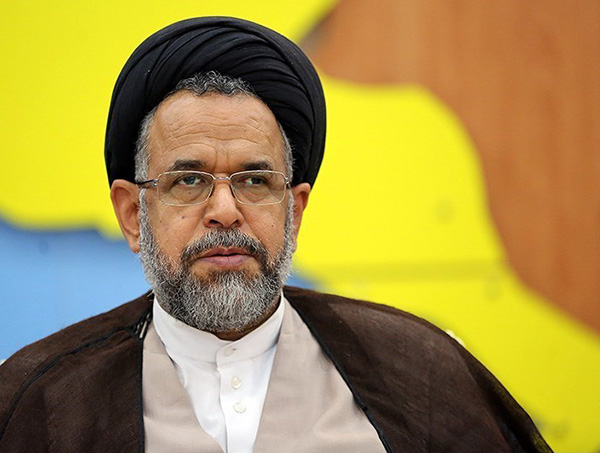
In comments on Monday, Alavi said the Intelligence Ministry forces have immediately buckled down to investigation after the assassination of the nuclear scientist on November 27 with the utmost effort.
The intelligence forces have found plenty of clues, the minister added, noting that the case is being probed in all of its dimensions.
Alavi declined to provide more details since the issue is still under investigation, saying the details will be made public after achieving “clear results”.
Speaking to reporters on the sidelines of burial of the late Iranian scientist on Monday, Secretary of Iran’s Supreme National Security Council Ali Shamkhani said Israel and its espionage service, Mossad, have masterminded the complicated assassination attack on Fakhrizadeh.
Pointing to the clues that Iran has found about the attack, Shamkhani said, “It has become clear to us who has masterminded this and what its background is. The Munafeqin (Mujahedin-e Khalq Organization terrorists) have been involved for sure, and the criminal element in this job is definitely the Zionist regime and the Mossad.”
“Unfortunately, the operation was a very complicated one. It took place with the employment of electronic equipment. No person (assassin) was present at the scene,” he explained, confirming an earlier report by Fars News Agency.
© All Content by IFP News ( Iran Front Page ) is licensed under a Creative Commons Attribution 4.0 International License.
