Monday, December 29, 2025
Home Blog Page 262

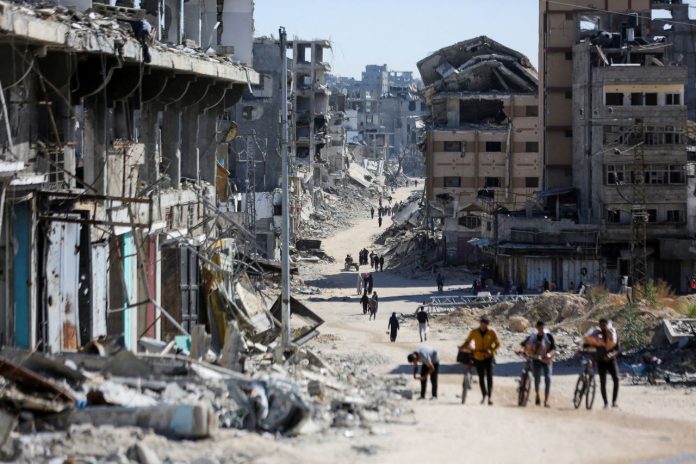
Gaza death toll surges past 58,000 amid relentless Israeli attacks

Gaza War

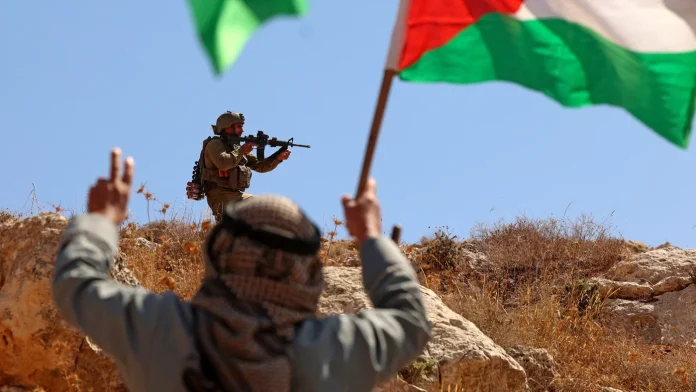
A ministry statement said that 139 bodies were brought to hospitals in the last 24 hours, while 425 people were injured, taking the number of injuries to 138,520 in the Israeli onslaught.

“Many victims are still trapped under the rubble and on the roads as rescuers are unable to reach them,” it added.

The ministry also noted that 28 Palestinians were killed and over 180 injured while trying to get humanitarian aid in the last 24 hours, bringing the total number of Palestinians killed while seeking aid to 833, with over 5,432 others wounded since May 27.

The Israeli army resumed its attacks on the Gaza Strip on March 18 and has since killed 7,450 people and injured 26,479 others, shattering a ceasefire and prisoner exchange agreement that took hold in January.

Last November, the International Criminal Court issued arrest warrants for Israeli Prime Minister Benjamin Netanyahu and his former Defense Minister Yoav Gallant for war crimes and crimes against humanity in Gaza.

Israel also faces a genocide case at the International Court of Justice for its war on the enclave.

France says to raise defence targets, citing Russia threat

French Army

Defence efforts” must be made in the face of mounting threats and a disintegrating world order, Elysee officials said ahead of the president’s 7:00 pm (1700 GMT) speech to the armed forces, traditionally held on the eve of France’s national Bastille Day holiday.

Despite France’s difficult budgetary situation, the president’s announcements will be “major”, they added.

French military and security officials have been warning of global threats weighing on France, with Defence Chief of Staff Chief Thierry Burkhard saying on Friday that Russia posed a “durable” threat to Europe and that the “rank of European countries in tomorrow’s world” was being decided in Ukraine, invaded by Russia in 2022.

Russia currently views France as its “main adversary in Europe”, Burkhard stated.

He also warned of the consequences of a diminished US commitment to Europe, along with cyber threats, disinformation campaigns and the risk of terror attacks.

“We have to take account of the fact that there has been a change in strategic parameters,” he added.

On Sunday, Defence Minister Sebastien Lecornu weighed in, telling the La Tribune weekly newspaper that “it’s our job to provide answers”.

France needed to make “a new effort” if it wanted to “depend on nobody” in the future, the minister said.

France’s defence budget has already increased sharply since Macron took power, rising from 32.2 billion euros ($37.6 billion at current rates) in 2017 to 50.5 billion currently, and is projected to reach 67 billion euros in 2030.

Any major defence spending boost could, however, threaten French efforts to cut deficits and reduce its debt mountain, amid pressure from the EU Commission on Paris to impose more fiscal discipline.

The servicing of France’s debt alone will cost the Treasury 62 billion euros this year.

But Prime Minister Francois Bayrou, who on Tuesday is to outline his budget plan for 2026, has declared the defence budget to be “sacrosanct” and exempt from budgetary cuts.

Several NATO countries are boosting their military spending, after the alliance’s members agreed last month to spend five percent of their gross domestic product (GDP) on security.

Britain aims to increase its defence budget to 2.5 percent of GDP by 2027, and to 3.0 percent after 2029. Germany plans to reach a defence budget of 162 billion euros by 2029, equivalent to 3.5 percent of its GDP, while Poland already dedicates 4.7 percent of GDP to defence.

“Very clearly, we need to revise our programming and strategy today, in light of the changing nature of risks,” Macron stressed on Thursday.

Lecornu this month detailed the most urgent needs for the French armed forces, including ground-to-air defences, ammunition, electronic warfare and space capabilities.

In Sunday’s interview, he noted France was mostly worried about falling behind in “disruptive technologies” including artificial intelligence and quantum technology.

Beyond budget increases, the French government is also seeking to boost “national cohesion” in the face of global crises.

Macron is expected to outline a potential mobilisation drive for young people who should be given “an opportunity to serve”, Elysee officials added.

UN warns of sharp rise in malnutrition cases in Gaza

Gaza War

In a statement, the agency said one of its clinics in Gaza “has seen an increase in the number of malnutrition cases since March, when the siege imposed by the Government of Israel started.”

“UNRWA hasn’t been allowed to bring in any humanitarian aid since,” the agency noted.

“Despite a critical shortage in supplies essential for treatment, our teams continue their work in Gaza to help the most vulnerable, including through nutritional assessment for children,” it added.

At least 67 children have died of hunger in Gaza since October 2023 as Israel’s total blockade of the territory enters its 103rd consecutive day, the Government Media Office in Gaza said Saturday.

Gaza’s healthcare system is in a state of collapse due to Israel’s deliberate targeting of hospitals and health centers, as well as its continued closure of border crossings, which has blocked the entry of fuel, medicines, and medical equipment.

The ongoing fuel crisis threatens to shut down the few remaining medical facilities still operating in the strip.

Rejecting international calls for a ceasefire, the Israeli army has pursued a brutal offensive on the Gaza Strip since Oct. 7, 2023, killing nearly 57,900 Palestinians so far, most of them women and children. The relentless bombardment has destroyed the enclave and led to food shortages and the spread of diseases.

Last November, the International Criminal Court issued arrest warrants for Israeli Prime Minister Benjamin Netanyahu and his former Defense Minister Yoav Gallant for war crimes and crimes against humanity in Gaza.

Israel also faces a genocide case at the International Court of Justice for its war on the enclave.

Sand, dust storms affect about 330 million people in 150 countries due to climate change: UN

On Saturday, the UN General Assembly (UNGA) marked the International Day of Combating Sand and Dust Storms and its designation of 2025 – 2034 as the UN Decade on Combating Sand and Dust Storms.

The storms “are fast becoming one of the most overlooked yet far-reaching global challenges of our time”, said Assembly President Philemon Yang.

“They are driven by climate change, land degradation and unsustainable practices.”

The secretary-general of WMO, Celeste Saulo, stated that sand and dust storms do not just mean “dirty windows and hazy skies. They harm the health and quality of life of millions of people and cost many millions of dollars through disruption to air and ground transport, on agriculture and on solar energy production.”

Airborne particles from these storms contribute to 7 million premature deaths annually, said Yang, adding that they trigger respiratory and cardiovascular disease, and reduce crop yields by up to 25%, causing hunger and migration.

“About 2 billion tonnes of dust are emitted yearly, equivalent to 300 Great Pyramids of Giza” in Egypt, Laura Paterson, the WMO’s UN representative, told the UNGA.

More than 80% of the world’s dust comes from the deserts in North Africa and the Middle East, added Paterson, but it has a global effect because the particles can travel hundreds and even thousands of kilometres across continents and oceans.

Undersecretary-General Rola Dashti, head of the UN Economic and Social Commission for Western Asia, told the assembly the storms’ economic costs are “staggering”.

In the Middle East and North Africa, it costs $150bn, roughly 2.5% of gross domestic product (GDP), annually to deal with dust and sand storms, she said.

“This spring alone, the Arab region experienced acute disruption,” Dashti added, citing severe storms in Iraq that overwhelmed hospitals with respiratory cases and storms in Kuwait and Iran that forced school and office closures.

Dust from the Sahara Desert in Africa has travelled as far as the Caribbean and Florida, she said. For the United States, dust and wind erosion caused $154bn in damage in 2017, a quadrupling of the amount since 1995, according to a study in the scientific journal Nature.

The WMO and World Health Organization also warned that the health burden is rising sharply, with 3.8 billion people – nearly half the global population – exposed to dust levels exceeding WHO safety thresholds between 2018 and 2022, up from 2.9 billion people affected between 2003 and 2007.

Iran reports severe environmental damage from 12-day aggression by Zionist regime

The report warns of significant damage to the country’s water resources and soil and also warns of the serious risks to public health due to the attacks.

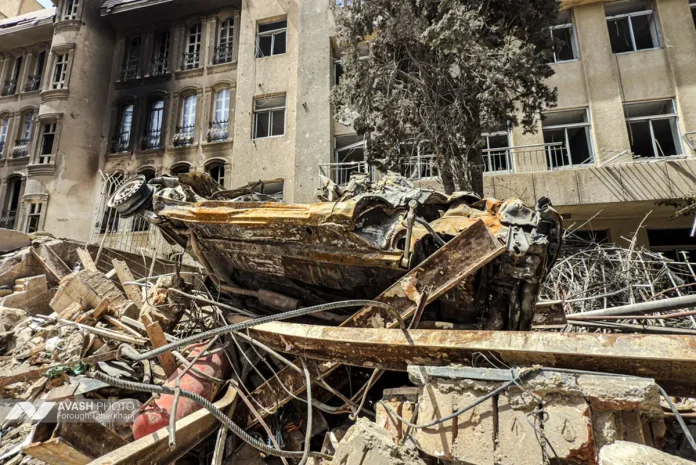
The Department of Environment said beyond the human casualties and infrastructure destruction, the Zionist regime’s attacks have caused extensive environmental harm with long-term ecological implications. It further condemned the aggression, calling for legal accountability and reparations.

The Department of Environment also confirmed that comprehensive assessments of environmental damage are underway nationwide, and a detailed report will soon be released.

Iranian Army announces military drills in Esfahan, warns of possible explosions

Crime Scene

The Army said controlled explosions and loud sounds may be heard during this period as part of pre-planned drills.

It underlined that these activities are routine and pose no threat to public safety.

The Army urged people in Esfahan and its suburbs to be alarmed, as all operations are conducted under approved safety protocols within the designated area.

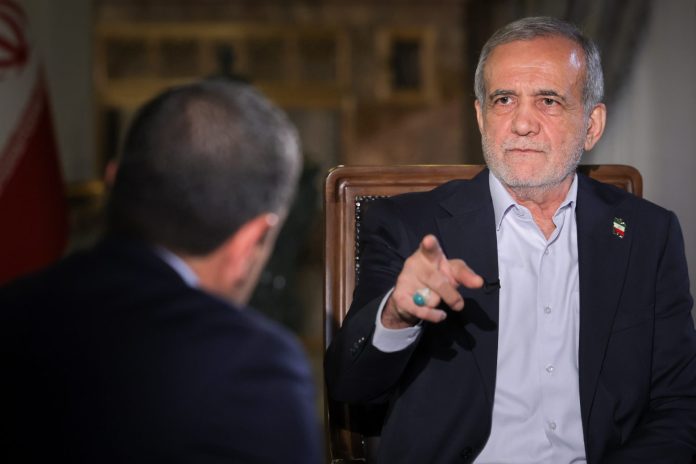
Iran’s Ettela’at Daily: Calls for assassinating President Pezeshkian, reckless, divisive

Masoud Pezeshkian

The editorial described such remarks as reckless, divisive, and aligned with enemy agendas, warning against incitement during a time of national crisis.

The article criticized those who exploit wartime tensions to sow discord, calling the assassination wish “an appeal to Netanyahu” and a betrayal of unity.

It underlined that Pezeshkian, elected by the people and endorsed by the leader, has worked diligently to maintain national security and support the military in recent conflicts.

Ettela’at also addressed recent incendiary comments by lawmaker Abolfazl Zohrevand, who accused the administration of incompetence and conspiracy, alleging internal sabotage and coup attempts. The newspaper warned that such rhetoric fuels polarization and emboldens adversaries.

While referring to the resilience of the Iranian people and the state during the recent 12-day confrontation with the Zionist regime and the U.S., the editorial said, “The people of Iran stand with their elected government…Iran’s history is one of resistance and pride, not treachery”.

Iran among top 10 global producers of heavy water

Heavy water, which is produced domestically at the Khondab Heavy Water Complex near Arak, in central Iran, plays a crucial role in nuclear reactors, radiopharmaceutical production, and scientific research.

The Khondab facility, with an annual production capacity of approximately 20 tons, was designed and built indigenously, officially launching operations in 2006.

Over the years, Iran has exported dozens of tons of heavy water globally including 32 tons to the United States and 38 tons to Russia. Buyers from Asia and Europe have also shown strong interest due to the product’s high quality.

On June 18, 2025, the Zionist regime carried out a military strike near the Khondab complex. However, authorities confirmed there were no casualties or radioactive leaks, as the site had been preemptively evacuated.

Iran faces severe water shortages as dam inflows drop by 43%

Outflows also declined by 21%, and total dam storage has decreased by 26%, now standing at 23.67 billion cubic meters.

National rainfall has dropped 39% below the long-term 57-year average and 40% compared to last year.

The hardest-hit provinces include Hormozgan (-78%), Sistan and Baluchestan (-76%), and Bushehr (-54%). Tehran’s major dams — including Amirkabir, Lar, Taleqan, and Latian — have also seen significant declines in water levels.

Experts attribute these alarming figures to climate change, rising temperatures, and increased evaporation, urging immediate water consumption management across households, agriculture, and industry.

Only Gilan province saw a slight rainfall increase (+7%), while all others recorded deficits.

Fars News reveals new details of Zionist regime’s attack on Iran’s Supreme National Security Council meeting

According to the report, the attack occurred shortly before noon on Monday, June 16, during a meeting attended by the heads of the three branches of power including Iran’s President Masoud Pezeshkian and also other senior officials.

The session was taking place in the lower levels of a secure government facility in western Tehran when the assault began.

Fars adds the attack was modeled after an Israeli plan to assassinate Hezbollah leader Sayyed Hassan Nasrallah, involving the launch of six bombs or missiles aimed at entry and exit points to block evacuation routes and disrupt ventilation.

Following the explosions, power was cut to the targeted floor. However, Iranian officials reportedly managed to escape through a pre-designated emergency hatch. Some, including the president, are said to have sustained minor leg injuries while evacuating the premises.

Fars also criticized the hypocrisy of Western and pro-Zionist media outlets, saying they ignore acts of state terrorism while simultaneously attack Iran for calling Donald Trump and Benjamin Netanyahu “enemies of God” (mohareb) based on Islamic jurisprudence.