Wednesday, April 8, 2026
Home Blog Page 2584

Rouhani’s Aide Says Iran Must Negotiate with ‘The West minus Trump’

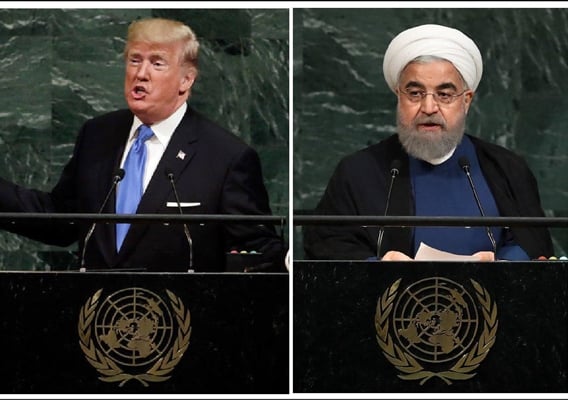
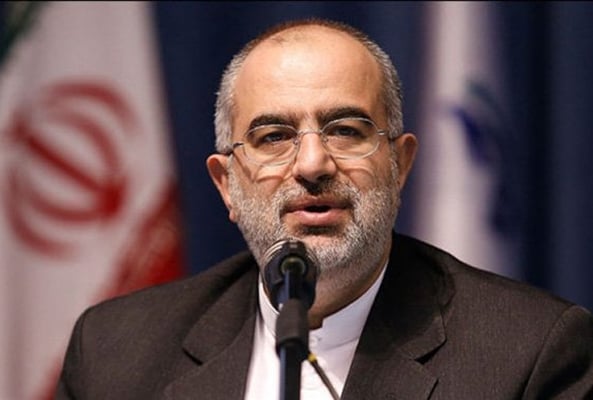
Referring to the Monday meeting between Trump and his Russian counterpart Vladimir Putin in Finland’s capital of Helsinki, Hesamoddin Ashna said the meeting did not end up in favour of Iran’s adversaries.

“They thought the Helsinki meeting will be a sad day for Iran, but now former US officials and some senators and European figures say it was a sad day for America!” Ashna wrote in a post in his Twitter account, ILNA reported.

Pointing to Trump’s confrontational stance towards US allies showcased in the recent G-7 meeting in Canada and Trump’s visit to Europe this week, Ashna said this behaviour contrasted sharply with Trump’s friendly approach towards Putin.

“Trump has transformed the definition of the West … The Helsinki [meeting] showed that now the West means the coalition between Europe and the [anti-Trump] Americas against Trump’s America,” he said.

Trump’s trip to Belgium, Britain and Finland was marked by his frequent taunts and threats aimed at America’s NATO allies, a sharp contrast to his unrestrained bid to court Russia despite the conclusion by US intelligence agencies that Moscow meddled in the 2016 US election to aid his candidacy, Euronews reported.

In Brussels, Trump sowed confusion and chaos, blasting NATO allies for not contributing enough money for their own defense. Then he called German Chancellor Angela Merkel a “captive” of Moscow for its support of the Nord Stream 2 gas pipeline from Russia, and supported domestic opponents of British Prime Minister Theresa May.

On the eve of his summit with Putin, Trump added insult to injury by calling the EU a “foe” for its trade policies in a CBS interview that aired on Sunday.

That language stood in stark contrast to the scene on Monday at Finland’s presidential palace, where Trump called the Russian leader, accused by the West of all manner of grievances, a “good competitor” and said “I think the word competitor is a compliment.”

The Trump-Putin meeting drew a wave of condemnation by US lawmakers from both Republican and Democratic parties, worried that Trump is creating a chasm among the US and its traditional allies that could be highly dangerous to the US interests.

Ashna said Trump’s controversial measures have created a chance for Iran to draw closer to anti-Trump western leaders.

“This is chance for improving relations with the West. Now we have something called ‘the West minus Trump’,” he said, adding the new definition of the west covers Europe, Canada and a half of US population.

“It’s time for us to enter into talks with the anti-Trump America and the west minus Trump,” he said.
Putin’s Envoy Due in Tehran to Brief Iranians on Helsinki Summit

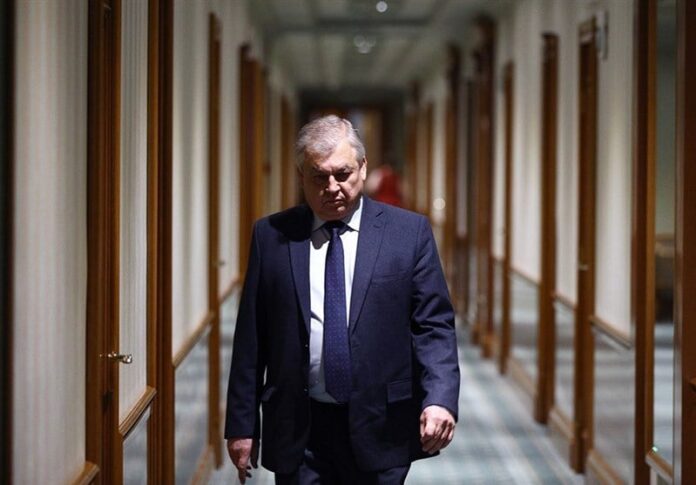
According to the report, carried by RBS news agency on Wednesday, Lavrentiev will travel to the Iranian capital on Wednesday to brief Iranian officials on the Trump-Putin meeting held in Helsinki on Monday.

He is also reportedly scheduled to coordinate possible joint actions based on the agreements reached in the Finnish capital.

On July 16, US President Donald Trump and his Russian counterpart Vladimir Putin had a one-on-one meeting in Helsinki that lasted more than 90 minutes.

Ahead of the meeting, Ali Akbar Velayati, an international adviser to the Leader of the Islamic Revolution, visited Moscow and held talks with Putin.

Iran FM Says Europe Underestimating Its Power, Influence

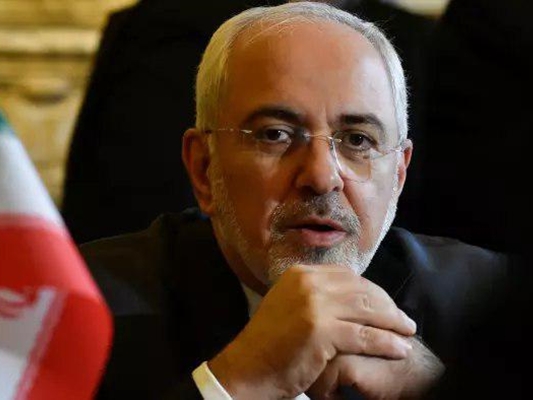
Speaking in an exclusive interview with Euronews on Wednesday, the Iranian top diplomat said he believes Europe is selling itself short.

“What we need from the Europeans is both the political commitment, which they have made, now we need to see the measures in place on the ground, not simply in writing, not simply in words — in the banking sector, in the investment sector, in the energy sector, in the transportation sector, in the SME sector,” he said.

“I believe generally Europe is underestimating its power and its influence, we believe that it should be more active in regional peace and security, in international peace and security as well as in promoting a greater cooperation and dialogue”.

Zarif went on to say that Tehran has a good relationship with Russia and the Syrian government but blames the US for supporting the so called Islamic State.

“We have good communication and coordination with Russia and with Syrian government and we will continue to do so. Our objective here is very clear, that is our objectives and the objective of the Russian Federation and that is to fight against terrorism and extremism”.

“Now if President Trump wants to take credit for it, he should take credit for supporting ISIS which has been what the US and its allies have been doing all along. The fact that US arms, US weapons have been found in the hands of ISIS and other extremist organizations is documented, is documented by western sources. So I think we should look at the realities, those who fought terrorism, those who fought extremism are Syrian people and those who work with Syria people.”

The remarks come as Iran has filed a suit against the US alleging that Washington’s decision in May to impose sanctions after pulling out of a nuclear deal, violates a 1955 treaty between the two countries.

“Iran President Ignored Eight Calls by Trump in 2017 NY Trip”

“During the last year visit of Hassan Rouhani to New York, Trump called us eight times but we didn’t respond,” said Mahmoud Vaezi, the presidential chief of staff, after a Cabinet meeting in Tehran on Wednesday.

The remarks came in response to Trump’s statement Thursday that he expects Iran to call him wanting to make a deal.

“Iran at some point will call me and ask for a deal, and we’ll make a deal,” he said. “They are feeling “a lot of pain right now,” he added.

Trump has hardened the US’ line on Iran, reviving a nearly-forgotten mantra that all options are on the table when it comes to Iran, including military ones.

Trump has also pulled the US out of the 2015 nuclear accord and is preparing to impose what he has described as “the highest level” of sanctions on Iran to push the country to renegotiate the nuclear deal.

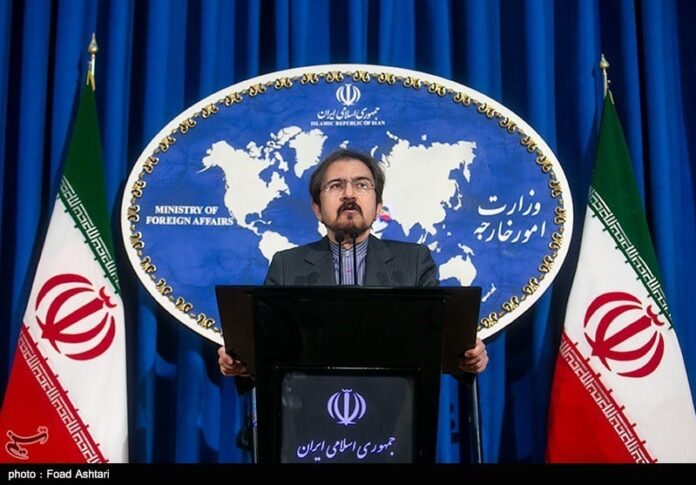
Iran’s Foreign Ministry Spokesman Bahram Qassemi said Monday it will be Trump who has to make the call to begin talks with Iran.

“Maybe someday he will call Tehran and ask for negotiations – this is more likely,” Qassemi said.

“There were some signs of this in the past,” Qassemi said, referring to Trump’s rejected calls last September.

The Trump call was first reported by Qassemi himself shortly after Rouhani returned from New York.

Hossein Mousavian, a member of Iran’s nuclear negotiating team in 2000s who is currently a fellow at Princeton University, said last month US Vice President Mike Pence had called Deputy Foreign Minister Abbas Araqchi and invited Rouhani to Trump’s dinner feast.

This is while US officials have denied any such requests have been made by Trump.

In 2013, shortly after Tehran and Washington engaged in nuclear talks that later led to the 2015 nuclear deal, then US President Barack Obama and Rouhani spoke by telephone.

Tehran to Host Gathering of Iranian Ambassadors, Heads of Missions Abroad

In a Wednesday statement, Qassemi said it will be the first gathering of Iranian ambassadors in the 12th administration.

“The gathering will be held next week after the Iranian foreign minister and Foreign Ministry executives as well as the heads of the Islamic Republic of Iran’s missions abroad meet Supreme Leader [of the Islamic Revolution Ayatollah Seyyed Ali Khamenei] and visit the shrine of the founder of the Islamic Republic of Iran [Imam Khomeini], with Iranian President [Hassan Rouhani] delivering a speech,” said the spokesman.

“The heads of the legislative and judiciary branches [of government] will also deliver speeches at the gathering,” he said.

According to Qassemi, high on the agenda of the gathering will be the latest regional and international developments as well as Iran’s position on those developments within the framework of the “Targeted Promotion of Diplomacy and Foreign Relations” plan.

In addition to specialized meetings, the seminar will also feature speeches by several ministers on key regional issues as well as other specialized topics on which the participants will exchange views, he added.

“Given the importance of economic diplomacy within the framework of [the] Economic Resilience [initiative] and while taking the new circumstances in the country as well as global developments into account, and considering the necessity of paying more attention to economic issues, a major part of the sessions and meetings at the seminar, compared to previous seminars, will be allocated to economic issues and how Iranian embassies should engage with the public and private sectors in their respective countries and how they should interact with their domestic counterparts in order to deal with the new situation,” said the spokesman.

Gov’t Pays Blood Money for 2014 Isfahan Acid Attacks as Culprits Not Caught

“Unfortunately, the perpetrators were not eventually apprehended and a few people arrested at the time were later found to have played no role in the incident,” Hossein Abbasalizadeh said.

The lawyer said this is while the investigators left no rock unturned in search of the culprits.

“The province’s judicial and police authorities made every effort to find the perpetrators, and did not ignore any possibility,” he told Tasnim News Agency in an interview on Tuesday.

The lawyer said the victims have received blood money from the government, as the perpetrators have not yet been found.

Four year ago, a spate of acid throwing attacks on four to ten women in Isfahan led to widespread panic and nervousness in the city.

According to eye witnesses, the male attackers riding on motorbikes threw acid on faces of young women while shouting statements against the targeted women’s allegedly loose clothing.

Their statements led to rumors that the victims were chosen because they were wearing clothing that did not conform to Islamic norms and the assailants were motivated by religious motives.

The attacks came after a number of high-level clerics had publicly stated that effective enforcement of proper hijab must go beyond verbal warnings.

Just prior to the attacks, Isfahan’s Friday Prayers Leader Mohammad Taqi Rahbar gave a sermon suggesting women with “bad hijab” should be confronted by more than just words.

But authorities denied that the assaults had anything to do with the hijab, and some believe that the attacks were aimed at tarnishing the image of the Islamic Republic.

Acid attacks in Iran and other countries are usually linked to personal grudges.

Acid Attack Victim Pushes for Law Banning Sale of Acid in Iran

Iraq to Import Electricity from Saudi Arabia as Iran Stops Exports

Iran, Iraq Agree on Two Electricity Contracts

An Iraqi delegation, including the Minister of Electricity, Minister of Youth and Sports and a representative of the Iraqi Ministry of Foreign Affairs, had earlier travelled to Tehran to discuss electricity imports.

The Iraqi Electricity Minister issued a statement on Monday announcing that his country’s delegation could not reach an agreement with Tehran to continue exporting electricity to Iraq.

According to Al-Fahdawi, after the Iranian side announced it could not resume electricity exports to Iraq through four lines of power transmission between the two countries, the Iraqi Electricity Ministry has set an alternative plan for importing electricity, i.e. importing power from Iran’s arch-rival Saudi Arabia.

The Electricity Ministry had previously said that due to an increase in the Iraqi debts to Iran, Tehran has cut off exports of electricity to the country.

The Iraqi government has more than $1 billion electricity debts to Iran, a report by Khabar Online said.

The Iraqi Electricity Ministry says the country needs 23,000 MW per day, of which the country can only produce 15,700 MW itself.

The protests in southern Iraq entered their second week on Monday, with rage erupted over the government’s inability to reduce unemployment and provide basic services.

Two people were killed in Basra on Sunday, following a gathering outside the governor’s office, while on Friday demonstrators stormed Najaf’s airport which led to cancellation of flights.

Iraqi counter-terrorism forces were sent across the capital Baghdad on Tuesday, as anti-government demonstrations continued into their second week over social problems and lack of basic services – including electricity.

Abadi promised on Tuesday to allocate funds for electricity and water in Basra, one of the key centres of dissatisfied citizens.

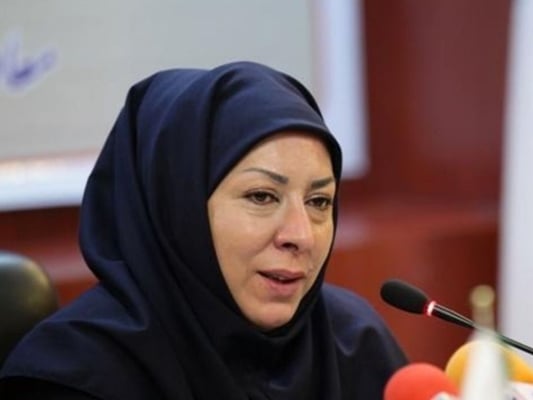
Iran Appoints Woman as Envoy to Finland

Vadiati is the second female envoy of the Islamic Republic after Marziyeh Afkham.

Afkham was earlier appointed as the Iranian Ambassador to Malaysia in President Hassan Rouhani’s first term in office.

Afkham was appointed as the first female ambassador since the 1979 Islamic revolution, marking a breakthrough for women in government under President Rouhani.

She was a veteran diplomat, having served in the foreign ministry for about 30 years as a ministerial aide.

In 2013, Iran’s Foreign Minister Mohammad Javad Zarif, appointed Afkham as his spokeswoman, the first Iranian woman to hold such a high-profile role.

ISIS Terrorists Arrested before Carrying Out Attacks in Iran

Speaking in a televised interview, Mahmoud Alavi described how the intelligence teams identified and arrested the four-member group.

“The team consisted of four terrorists who wanted to launch their operation from one of south-western provinces of the country. The operation was scheduled to be commanded by a person whose brother had been killed in Syria in a clash between the Takfiri and terrorist currents,” ISNA quoted Alavi as saying.

“Of course, in this case, it should be remembered that despite the fact that he had been killed in Syria, some ignorant people in the social media wanted to say he was killed in the territory of the Islamic Republic. Fortunately, this conspiracy was soon neutralized and it became clear that this Takfiri person had been killed in Syria.”

Alavi further added that the deceased man’s brother formed a team of four who were planning to join ISIS and were ordered by the ISIS leader to stay in Iran. He had also advised them to provide weapons and facilities to take action in Shiraz and Isfahan.

“They had hatched their plots and they had explosives and facilities, but they were identified and necessary measures were taken against them. Three of their agents were also arrested and their case is currently under investigation,” noted Iran’s intelligence minister.

Iran Welcomes Muslim Figures’ Call for Cessation of War in Yemen

Bahram Qassemi

The Islamic Republic of Iran, from the beginning of this devastating war, called for an immediate end to the conflict and proposed a four-point solution to the crisis, Qassemi noted in a Tuesday statement.

He referred to the statement by a group of respectable figures of the Muslim world to stop the war in Yemen, and stressed that Iran would always support any plan or proposal that could help end this war through dialogue and political solution.

The spokesman also hailed these political figures for feeling responsible in this regard and expressed the country’s readiness for any assistance in implementing this proposal.

Qassemi also called on the international community, especially all Muslim governments, to increase their efforts to stop this devastating war.

He finally referred to the four-point plan proposed by Iranian Foreign Minister Mohammad Javad Zarif to end the Yemen crisis, and said, “As stated in the proposal, the immediate ceasefire, dispatch of humanitarian assistance, initiation of political dialogue between all Yemeni parties and formation of a national inclusive government, are key components of achieving lasting peace in Yemen.

The Saudi attack on Yemen was launched in March 2015 in support of Yemen’s former Riyadh-friendly government and against the country’s Houthi Ansarullah movement.

Yemen has announced that the Saudi-led war had left 600,000 civilians dead and injured during the past three years.

The United Nations says 22.2 million people are in need of food aid, including 8.4 million threatened by severe starvation.