Wednesday, December 31, 2025
Home Blog Page 2551

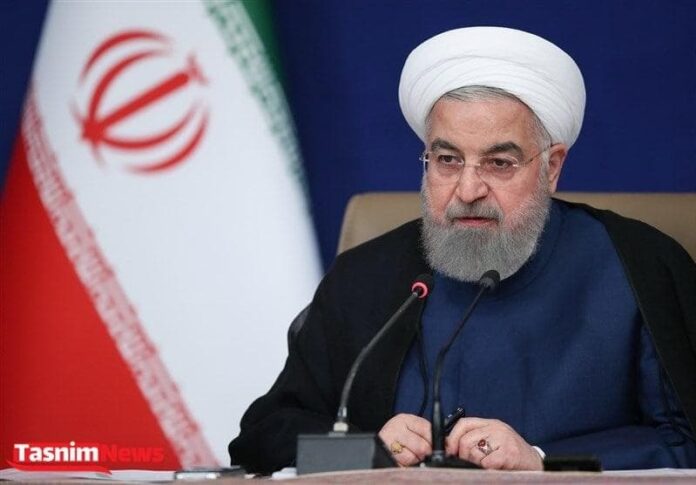
US Will Have to Kneel Down, Lift Iran Sanctions: Rouhani

In comments on Monday, President Rouhani referred to the failure of former US President Donald Trump’s “maximum pressure” against Iran as well as his defeat in the US elections as a victory for the Iranian nation.

“That butcher and murderer was toppled, and the new US administration has confessed four times that the previous administration’s maximum pressure was wrong,” Rouhani said, describing them as two achievements for Iran.

“It is our biggest success in history that, as a result of the Iranian nation’s resilience, they admitted their pressure and sanctions have been futile,” the president said.

He also vowed that the Islamic Republic will be in a better situation this year in terms of the removal of sanctions and its fight against the coronavirus pandemic.

“I’m confident that the world and the US will have to kneel down before this great nation, and abandon the cruel sanctions,” he added.

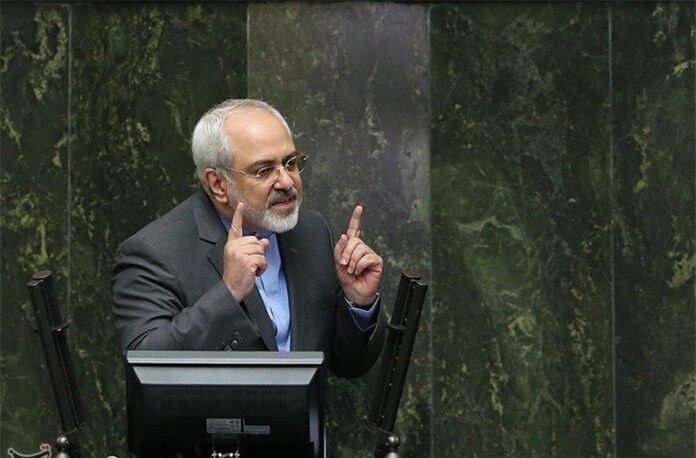
Zarif Warns US, Europe against Censuring Iran at IAEA

Speaking on the sidelines of a meeting with members of the Parliament’s National Security and Foreign Policy Commission on Monday, Zarif said the adoption of an anti-Iran resolution at the IAEA Board of Governors will mess up the current situation.

He said the Europeans have initiated a wrong move by supporting the US at the Board of Governors, and Iran believes that would further complicate the situation.

“We have provided the necessary explanations about the current situation to all members of the Board of Governors,” the Iranian top diplomat said.

“We hope that reason will prevail, otherwise we have our own solutions,” he warned.

His comments came one day after the head of the Atomic Energy Organization of Iran (AEOI) warned the International Atomic Energy Agency (IAEA) against issuing a resolution on Iran at the upcoming meeting of its Board of Governors.

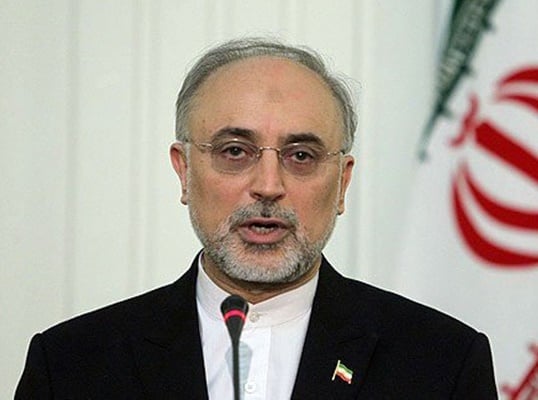
Ali-Akbar Salehi said if the IAEA adopts a resolution against Iran in reaction to the country stopping its voluntary implementation of the Additional Protocol, Iran will show a proper response.

“A letter has also been sent [to the IAEA] in this regard,” he added.

Tehran Warns IAEA against Adopting Anti-Iran Resolution

Ali-Akbar Salehi said if the IAEA adopts a resolution against Iran in reaction to the country stopping its voluntary implementation of the Additional Protocol, Iran will show a proper response.

“A letter has also been sent [to the IAEA] in this regard,” he added.

He further referred to a recent agreement between the AEOI and the IAEA, and said, “The appendix to the statement on the agreement with the IAEA about Iran’s stopping the voluntary implementation of the Additional Protocol based on the Strategic Action to Lift Sanctions Act is confidential.”

“No special conditions have been set in this regard, and due to the precise information mentioned in this appendix about the list of the installations and monitoring cameras, and because of security considerations and the necessity of key Iranian facilities remaining clandestine, this appendix

Iran Rejects EU’s Offer, Says Time Not Ripe for Informal Meeting with US

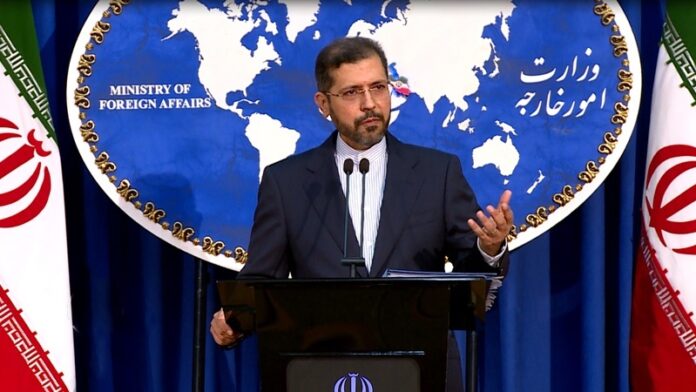
In a statement on Sunday, Khatibzadeh said, “In view of the recent stances and measures taken by the United States and the three European countries, the Islamic Republic of Iran believes this is not a good time for holding an informal meeting on the accord as proposed by the EU foreign policy chief, Josep Borrell.”

“There has been no change in the United States’ stances and behaviour, and the Biden administration has not only failed to abandon Trump’s failed policy of maximum pressure, but has also failed to declare its commitment to the implementation of all its obligations under the JCPOA and the UN Security Council Resolution 2231.”

He said the implementation of commitments by all parties to the JCPOA is not a matter of negotiation and give-and-take, and all options for give-and-take were exhausted five years ago.

“The path forward is quite clear: The US must end its unlawful and unilateral sanctions and return to its JCPOA commitments. This issue neither needs negotiation, nor a resolution by the Board of Governors [of the International Atomic Energy Agency],” he added.

“The Islamic Republic of Iran will respond to actions with action, and just as it will return to its JCPOA commitments with the removal of sanctions, it will also answer in kind to all hostile measures and behaviours,” Khatibzadeh added.

He finally stressed that the Islamic Republic will continue its close bilateral and multilateral consultations with the current parties to the JCPOA as well as Mr Borrell as the JCPOA coordinator.

His comments came after an earlier report by The Wall Street Journal, which quoted senior diplomats as saying that Iran has rejected a European Union offer to arrange direct nuclear talks with the US in coming days.

According to The Wall Street Journal, two senior Western diplomats said Iran has ruled out attending a meeting in Europe for now, saying it wanted a guarantee first that the US would lift some sanctions after the meeting.

‘Iran-China Cooperation against COVID-19 Proves Significance of Strategic Ties’

“The civilisational relation between Iran and China has even turned problems into an opportunity for reinforcement of ties,” Saeed Khatibzadeh said in a tweet in Chinese.

“Cooperation in containing the coronavirus once again proved the significance of strategic relations between the two countries,” he added.

“We appreciate the donation of 250,000 doses of coronavirus vaccine by the government of the People’s Republic of China as a new symbol of friendship between the two nations,” the spokesman noted.

Earlier today, Iran received 250,000 doses of Sinopharm COVID-19 vaccine donated by Beijing.
Iran’s Food and Drug Organization had already authorized the conditional emergency import and use of the Sinopharm vaccine.

In recent weeks, Iran has imported two batches of the Russian vaccine Sputnik V, containing 120,000 doses in total.

The vaccination drive against the coronavirus pandemic began in Iran on February 9, with the frontline health workers receiving the Sputnik V vaccine.

Iran Summons Turkish Envoy over Interior Minister’s ‘Unacceptable’ Remarks

In the Sunday meeting, it was stressed that Iran is seriously determined to fight terrorism and the acts committed by terrorist groupings inside Iran which have killed many civilians.

The Turkish diplomat was also reminded that recent comments made by the Turkish interior minister about the presence of PKK forces in Iran are unacceptable and against Tehran-Ankara cooperation.

It was also highlighted that Tehran is prepared to boost mutual cooperation and jointly fight terrorist groups in border areas.

Meanwhile, the Turkish ambassador was asked to urge his respective country to adopt serious measures to prevent terrorist operatives from crossing the border into Iran.

Iran also expressed discontent with the unjustifiable comments made by the Turkish ambassador to Iraq, stressing that countries’ territorial integrity and sovereignty are a basic principle of international relations.

Earlier, the Turkish foreign ministry had summoned the Iranian ambassador to Ankara to protest at the remarks made by the Islamic Republic’s envoy to Baghdad.

Iraj Masjedi, the Iranian ambassador to Iraq, had in an interview with Rudaw called for an end to the presence of Turkish military forces in northern Iraq.

Iran Welcomes India-Pakistan Joint Statement on Ceasefire

In comments on Sunday, Khatibzadeh said the joint statement is an important step towards further peace and stability in the South Asia region.

He also expressed hope that the two countries will move towards peace, stability, and welfare of the region by taking further strides.

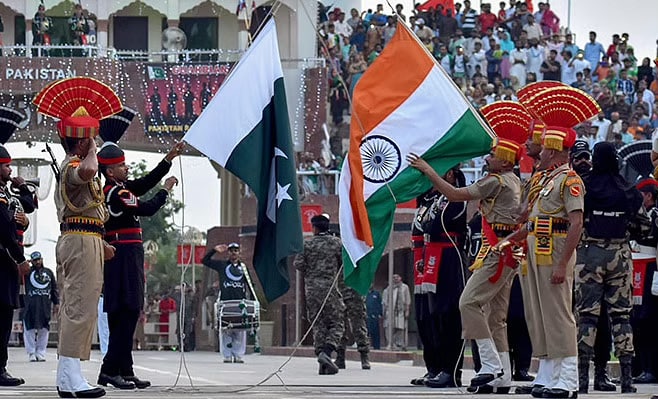
The armies of India and Pakistan announced on February 25 that they had begun to strictly adhere to a ceasefire along the Line of Control (LoC) in Jammu and Kashmir from the midnight of February 24.

The armies released a joint statement following a discussion between India’s Director General of Military Operations (DGMO), Lt Gen Paramjit Singh Sangha, and his Pakistani counterpart, Maj Gen Nauman Zakaria, reportedly on February 22, over their established telephone hotline.

In an audio statement, Pakistani Prime Minister Imran Khan’s adviser on security affairs, Moeed Yusuf said that the ceasefire was an outcome of “behind-the-scenes” contacts and “more roads will open” in the future.

Under the pact, the DGMOs of both countries also “agreed to address each other’s core issues and concerns which have propensity to disturb peace and lead to violence” in the interest of “achieving mutually beneficial and sustainable peace along the borders.”

Both sides agreed that existing mechanisms of hotline contact and border flag meetings will be used to “resolve any unforeseen situation or misunderstanding.”

Iran Reduced Commitments after US Failed to Fulfil Obligations: VP

US Lying that No Restrictions Put on Food, Drug Import: Iran

Es’haq Jahangiri added the Iranian nation did a great job by standing up to Washington’s economic pressure.

“The Americans sought to bring Iran and the country’s economy to their knees, and a clear sign of that was the US assassination of top general Qassem Soleimani, who was a guest in another country (Iraq),” he added.

The Americans always tried to pretend that they didn’t favour official and state terrorism, but they finally committed that crime,” he said.

“Amid tough economic pressure [put on Iran by the US], they wanted to create a catalyst such as the assassination of general Soleimani to expedite Iran’s collapse,” he said.

The top official underlined that the policy of pressuring Iran has been a non-starter.

“Even John Bolton believes maximum pressure policy against the Iranian nation has failed,” he said.

He then touched upon UN Security Council Resolution 1929 in which, he said, Iran had been introduced as subversive of world peace and “if a person like Trump had got his hands on this resolution, he might have taken military action against the Iranian nation based on it.”

He said for the JCPOA to be revived, the US and Europeans should return to their commitments.

Second Iranian COVID-19 Vaccine Undergoes Human Trial

The vaccine, produced by Iranian experts at the Razi Institute, is the first injectable-inhaled mRNA recombinant vaccine for coronavirus.

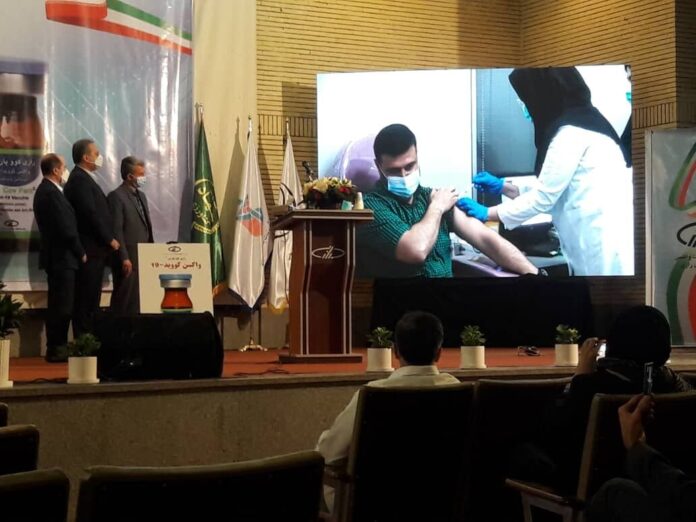
Razi COV-Pars was administered to two volunteers at a ceremony in Tehran on Sunday attended by Agriculture Minister Kazem Khavazi and a number of other officials at Tehran’s Rasoul Akram Hospital.

A total of 133 people will get two shots 21 days apart in the first clinical trial of the vaccine. On Day 51, the booster (inhaler) is administered in the form of an intranasal spray, according to the Razi Institute.

The vaccine, which was unveiled by Razi Institute a few weeks ago, has been developed based on the instructions of the World Health Organization (WHO), and is administered in three doses.

Razi COV-Pars was first tested on 500 animals, including pigs, hamsters and monkeys, according to Iran’s agriculture minister.

Iran’s health minister has also described Razi COV-Pars as one of the safest vaccines with very few side effects, saying it will stop the recipient from transmitting the virus to others.

“This vaccine stimulates the immune system with the least side effects and makes the person safe.”
Iranian scientists had earlier unveiled another domestic vaccine, named COVIran Barekat, which is undergoing clinical trials.

‘US Attack on Syria Aimed at Paving Way for Terrorists’ Return’

By attacking Popular Mobilization Units (PMU) on the Iraqi-Syrian border, US President Joe Biden showed that his military decisions are not a far cry from those of his predecessor Donald Trump. The United States’ first military actions under Biden’s leadership was to attack PMU headquarters in Syria. This unusual move came at a time when the Democratic government of the United States has been seeking to define its foreign policy separately from that of Trump. Nevertheless, in an impetuous move, the US president took the same type of actions that his predecessor favoured. The raids were conducted on the Syrian border at a time when the PMU is regarded as part of Iraq’s military, and taking military action against it is considered both a violation of Syria’s territorial integrity and an attack on Iraq’s official military troops.

Following the military assault, the US secretary of state claimed Washington had already coordinated the attack with Baghdad. However, it turned out that his claim was not true. Russia condemned the attack, too, and the UK foreign secretary welcomed that position. Biden himself claimed that the attack on Syria had been designed as a warning to Iran.

Speaking to Khabar Online, Middle East expert Hassan Hanizadeh has weighed in on these developments.

Why did Biden, all of a sudden, decide to do the same thing that Trump would do?

The United States recent attack on PMU forces of the resistance front on the Syria-Iraq common border can be analysed within the framework of Joe Biden’s scheme to disintegrate Iraq. In 2005 when Biden was the head of the Foreign Policy Committee of the US Senate, he presented a plan to then President George W. Bush a plan that would envisage the disintegration of Iraq into three parts: a Shia-populated, Sunni-populated and Kurdish-populated area. However, that plan was not implemented. Now after having won the presidential election, Biden is once again trying to implement that plan.

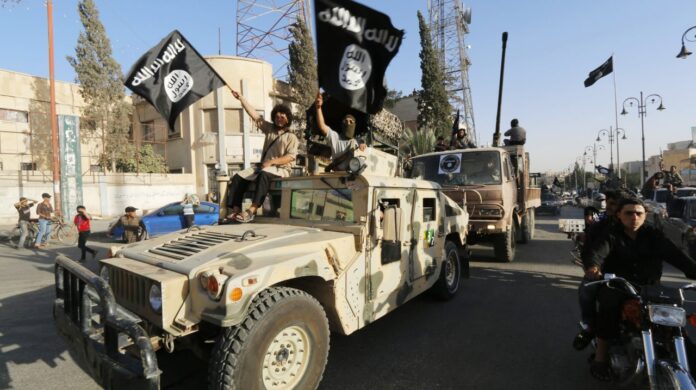
The recent moves include incessant bombardments of PMU troops in Syria and Iraq, the remobilization of Iraqi Ba’ath Party forces and the relocation of ISIS terrorists from Syria to Iraq are part of efforts to create insecurity in Iraq and disintegrate the country. PMU forces in the area prevented the relocation of ISIS terrorists from Syria and Iraq. So, US troops attacked the area to create a secure military corridor for ISIS operatives to return to areas in northern and western Iraq. 

You’re the whole thing has more to do with the scheme on Iraq than Syria?

Yes. Saudi-linked media outlets recently had interviews with top leaders of the Iraqi Ba’ath Party in bid to portray these isolated Ba’ath elements as popular figures. It is said that, in recent days, several individuals from the Ba’ath Party in Mosul and Saladin have been transferred to western Iraq in order to take power.

What repercussions does this saga have for Syria, which itself is at war?

Syria is at war, but PMU troops are the ones mostly stationed on the common border between Syria and Iraq and are present in a location through which ISIS terrorists are usually relocated from Syria to Iraq, so that they will prevent this relocation. The US attack was conducted in order to create insecurity in the region and set the stage for the transfer of ISIS operatives to Iraq. You know, ISIS terrorists are stationed to the east of the Euphrates, and that is why it seems the US attacks were aimed at creating a diversion and deflect the attention of PMU troops.

How will the situation unfold in Syria as an independent country? During the time Trump conducted military operations in Syria, Jen Psaki would denounce such moves, highlighting that Syria was an independent country and the attacks illegal. Can the US raids on the Iraq-Syria common border be reviewed without mentioning the violation of the territorial integrity of an independent country? 

Syria has, time and again, been struck by Israeli and US warplanes, and Syria’s territorial integrity and sovereignty have been violated several times. The same goes for Iraq where US troops are present. The solution is that American forces, as occupiers, should leave Iraq and the Iraqi Parliament’s legislation on the withdrawal of US troops from the country should be implemented.

That is why now Joe Biden and his team are trying to create insecurity in Iraq in order to revive the ISIS terrorist group. Furthermore, Biden is seeking to rebuild fugitive Ba’ath Party forces with the help of Saudi Arabia, the United Arab Emirates and Jordan.

In his latest interview, Joe Biden also mentioned Iran and said he had attacked Syria to give warning to Iran. Does that mean that Washington is seeking rivalry and confrontation with Iran on Syrian soil?

As Iran has to and has undertaken to maintain security in Iraq and Syria, it seeks to promote security and establish stability in both countries. But the United States’ deployment of its military troops from thousands of miles away amounts to a violation of the sovereignty of the two countries. Iran has a common border with Iraq, so it needs to ensure Iraq’s security. This comes as American forces are mainly to blame for insecurity in the Middle East and are now trying to use ISIS as a tool against Iran in Iran and Syria, which is a violation of sovereignty and security in the region. 

Biden’s saying the attacks came as a warning to Iran is similar to what happened during Trump’s tenure. However, the attacks are conducted on Syrian soil most probably in order to disrupt the situation in the region.