Tuesday, April 28, 2026
Home Blog Page 253

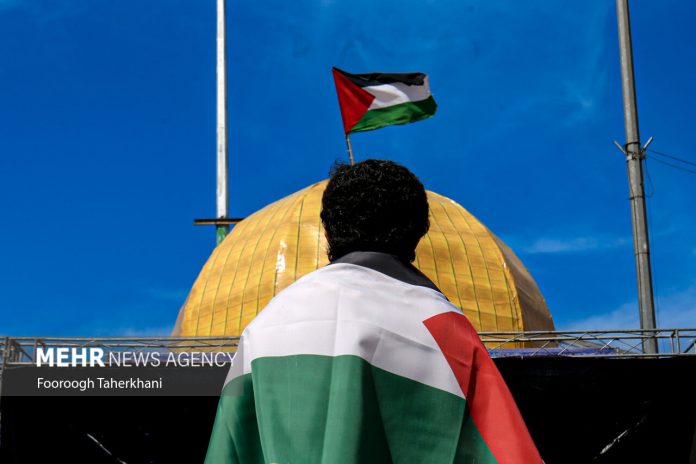
Iran’s Army, IRGC issue stern warnings to Israel ahead of Quds Day rallies

Iran Quds Rally

The Iranian Army’s proclamation condemned “seven decades of Western-Zionist conspiracy” that created Israel, accusing the “bloodthirsty regime” of massacring “millions of innocent people.”

The statement particularly highlighted recent Israeli military actions in Gaza, citing “tens of thousands of martyrs among children, women and civilians” as evidence of “shameless brutality.”

“The silence of so-called human rights advocates proves the Zionist entity respects no moral or legal principles,” the Army declared, asserting that only sustained resistance could liberate Palestine.

The IRGC’s communiqué framed Palestine as the central issue confronting the Islamic world. It boasted that Hamas’s October 7th Operation Al-Aqsa Storm had transformed the conflict into a global concern, leaving Israel “humiliated and strategically defeated” after 18 months of fighting.

Both military institutions paid tribute to slain resistance leaders, including Hezbollah’s Seyyed Hassan Nasrallah, Hamas’s Ismail Haniyeh, and Iran’s General Qassem Soleimani.

The statements come as millions in the world are preparing for the annual Quds Day marches on the last Friday of the holy month of Ramadan in support of Palestine.

Iran calls on Iraq to counter ‘enemy provocations’ in oil trade

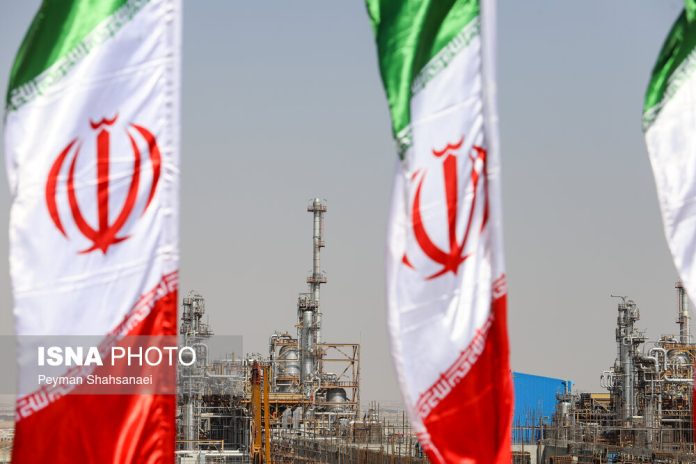
Iran Oil Gas

The conversation followed Iraqi media reports claiming the US Navy had seized Iranian tankers allegedly using forged Iraqi documents in the Persian Gulf, allegations Iran has firmly denied.

Paknejad stressed the need to protect bilateral relations from external interference while reaffirming Iran’s commitment to legal oil trade practices.

“Iran’s oil sales strictly comply with internationally accepted trade standards,” Paknejad stated during the call. Both sides described their nations’ ties as “friendly and brotherly.”

He emphasized the need for “joint alertness against divisive schemes by adversaries,” without naming specific countries.

Earlier, Iran’s Deputy Oil Minister Seyed Ali Mohammad Mousavi dismissed the allegations as “baseless US propaganda,” insisting Tehran’s oil trade complies fully with legal norms.

The US has yet to provide evidence supporting the seizure claims. Analysts view the dispute as part of broader tensions over Iran’s oil exports, which remain a focal point in the geopolitical standoffs.

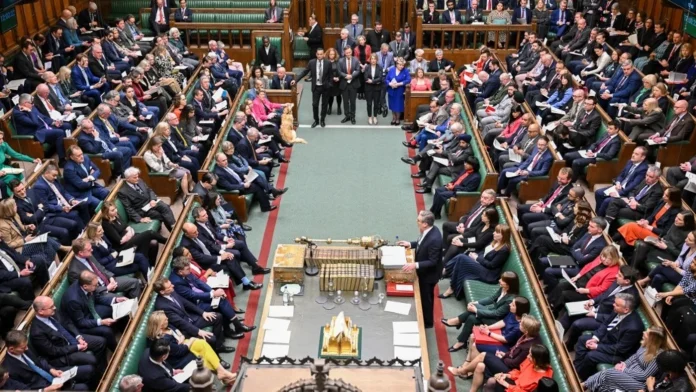
Petition urges British government to launch inquiry into anti-Palestinian racism

The petition was launched on Monday by Gary Spedding, an independent cross-party consultant on Israel-Palestine, and has since racked up over 1,500 signatures.

If it receives 10,000 signatures, the government will respond. And if it reaches 100,000 signatures, it will be considered for debate in parliament.

“Many view Anti-Palestinian Racism as a significant and growing problem in the UK, manifesting at all levels of society and in multiple spheres,” the petition reads.

“We believe this hatred reinforces oppressive & discriminatory systems that dehumanise and demonise Palestinians whilst also fracturing community cohesion.”

Independent MP Adnan Hussain told Middle East Eye that calls for the government to recognise and specify anti-Palestinian racism are “welcome and necessary”.

“Dehumanisation of the Palestinian people over a period of many decades has led us to a place where we are now witnessing a genocide against them,” he added.

“Crimes of such catastrophic and grave natures are not born out of a vacuum. So indeed, any and all action possible must be taken to fight against this status quo, including the recognition of racism specific to the Palestinian people.”

The petition advocates for the government to adopt a definition “based on the International Convention on the Elimination of All Forms of Racial Discrimination”, a 1969 United Nations convention that committed members to eliminating racial discrimination and promoting understanding between races.

Independent MP Ayoub Khan told MEE: “We should all be concerned about the rise of anti-Palestinian racism in the UK, which manifests across society and reinforces harmful, discriminatory systems that dehumanise and demonise Palestinians.

“This growing issue not only fractures community cohesion but also stifles free expression and hinders open, respectful debate on the Israel-Palestine conflict.”

Dr Zahira Jaser, an Italian-Palestinian academic at the University of Sussex Business School, explained: “We can imagine anti-Palestinian racism having three broad categories: the denial of Palestinian existence (e.g. ‘a land without a people’), the denial of Palestinians’ suffering at the hand of Israel (e.g. Palestinians died, instead of Palestinians are assassinated by strikes), the blanket defamation of antisemitism and terrorism to anyone who is Palestinian or speaks for Palestine.”

Jaser is the author of a recent working paper on anti-Palestinian racism.

She added: “The racism in the form of defamation of Palestinians and their supporters as antisemitic or terrorist is key to silencing Palestinians and their grievances against Israel. Hence, it interferes with free speech on campuses and in society in general, it interferes with the democratic process.”

Spedding, who created the petition, told MEE that “British politics is awash with anti-Palestinian racism”.

“Our political leaders are often parroting language and rhetoric that reinforces the demonisation and dehumanisation of Palestinians.”

Spedding stated that Palestinians are often “portrayed as irrational violent actors who hate Jews for being Jewish”, saying that anti-Palesinian racism clouds “crucial conversations” about injustices Palestinians face.

“We urgently need a working definition of anti-Palestinian racism with clear examples, so that this hatred can be challenged,” he added.

Iran slams EU diplomat’s remarks, accuses West of ‘double standards’ over Gaza

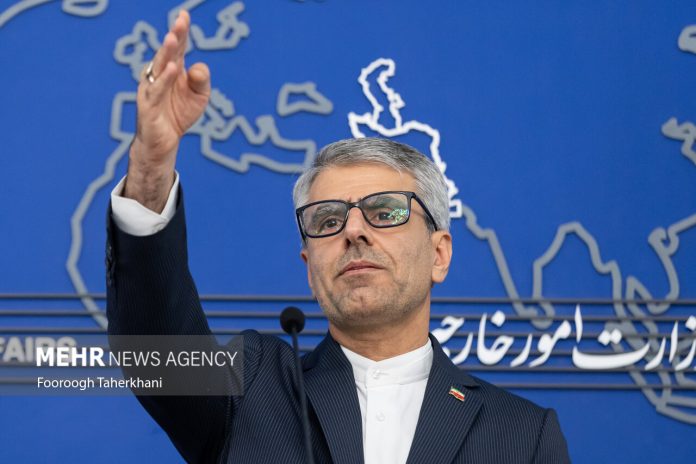
Esmael baghaei

During her recent visit to the occupied Palestinian territories, Kallas, the EU’s High Representative for Foreign Affairs, claimed Iran was a “major threat to regional and global stability” and accused it of supporting Russia’s war in Ukraine.
She also warned against Iran obtaining nuclear weapons.

Baqaei dismissed the remarks, saying Kallas should instead address Israel’s genocide in Gaza and its repeated aggressions against Lebanon and Syria if she were truly concerned about regional security.

He said the EU is applying “double standards,” adding Kallas’s statements lacked legal and moral credibility.

“Unlike her predecessors, who at least paid some attention to international law, Kallas makes reckless statements that further damage Europe’s credibility,” Baqaei said.

He urged the EU to adopt a “realistic and just approach” based on the UN Charter and respect for other nations’ rights, rather than making unfounded allegations.

Iran has repeatedly denied seeking nuclear weapons and maintains its nuclear program is peaceful.

The Islamic Republic has also condemned Western support for Israel amid its ongoing military offensive in Gaza.

Iran Quds Force commander says Tehran to continue supporting Palestine until Quds liberation

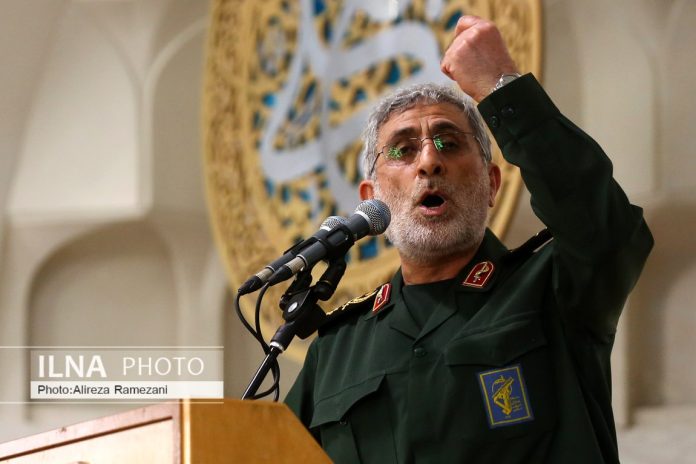
Brigadier General Esmaeil Ghaani

General Esmail Qa’ani was speaking on the occasion of the International Quds Day, which is marked on Friday with worldwide rallies in support of the Palestinian cause.

Qa’ani noted that the al-Aqsa Flood operation completed the meaning of resistance at the battlefield and that of popular resistance.

He said that the al-Aqsa
Flood created a new phenomenon of field unity manifested in the form of solidarity by resistance groups.

Qa’ani added that the martyrs of the resistance displayed dignity and honor in their battle and thanks to their sacrifices, the axis of resistance is now stronger than before.

He stressed that the Muslim ummah has realized the importance of the Palestinian issue and the free nations of the world have also come to understand it and are now supporting the oppressed people of Palestine by holding rallies.

Iran rejects claims of hosting al-Qaeda members on its soil

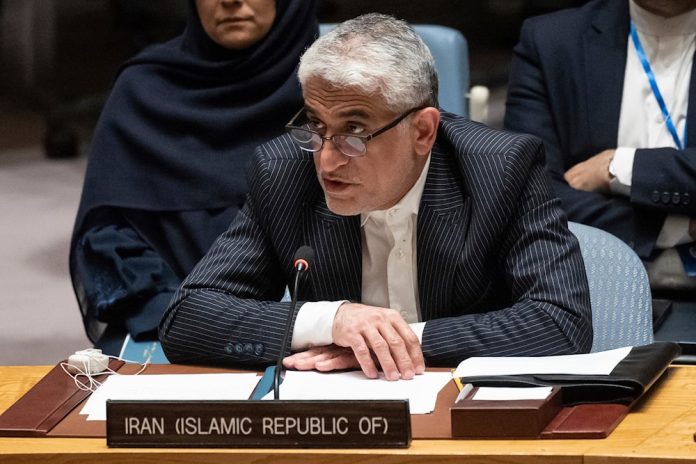
Amir Saeed Iravani

In a letter to the UN Security Council and the world body’s secretary general, Iravani said the claims have been made in a report by the team monitoring the UN sanctions.

He described the accusations as baseless, spiteful and unsubstantiated, saying they have been leveled based on claims of a country and without providing any proof.

Referring to Iran’s history of fighting terrorist groups like al-Qaeda and Daesh at the battlefield, Iravani said Tehran has not only provided no haven for terrorists, but it has also been a victim of organized terror itself.

The letter also said any attempt to tie Iran to al-Qaeda’s activities in Syria, Lebanon, Afghanistan and Yemen has no logical basis.

Iravani underlined the need to revise the UN monitoring team’s unprofessional and politically motivated approaches amid rising terrorist operations in the region and urged the UN Security Council’s sanctions committee to address genuine threats to regional and global security without political bias.

He further reaffirmed Iran’s commitment to regional and international cooperation in combating terrorism and called for enhanced intelligence sharing in order to trengthen global counter-terror efforts.

Iran’s leader pardons hundreds of convicts on occasion of Nowruz, Eid al-Fitr

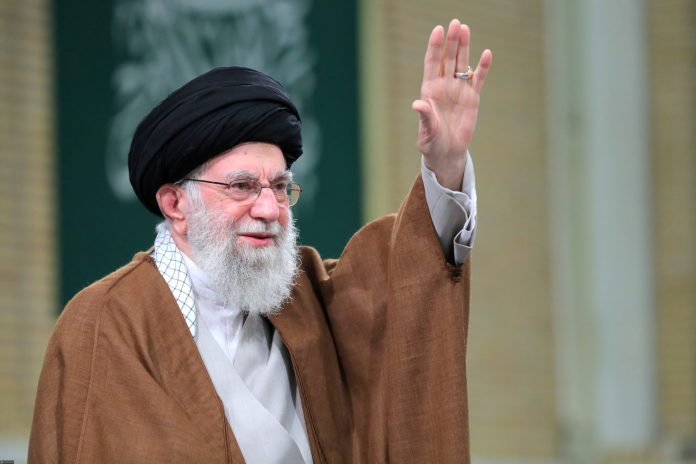
Ayatollah Sayyed Ali Khamenei

The media center of the Iranian Judiciary quoted Ali Mozafari, the deputy of the Judiciary, as saying that 1,457 convicts from revolutionary courts, 16 from the armed forces judicial organization, and 53 from the discretionary organization were included in the pardon.

Mozafari noted that 46 death-row inmates, whose sentences had been upheld and were awaiting execution, were granted Islamic mercy and had their penalties commuted to imprisonment.

These individuals had primarily been found guilty of committing drug-related crimes.

Mozafari noted that 13 foreign nationals and 66 women are also among those pardoned or receiving sentence reductions.

Around 400 people die in road accidents in Iran during Nowruz holidays

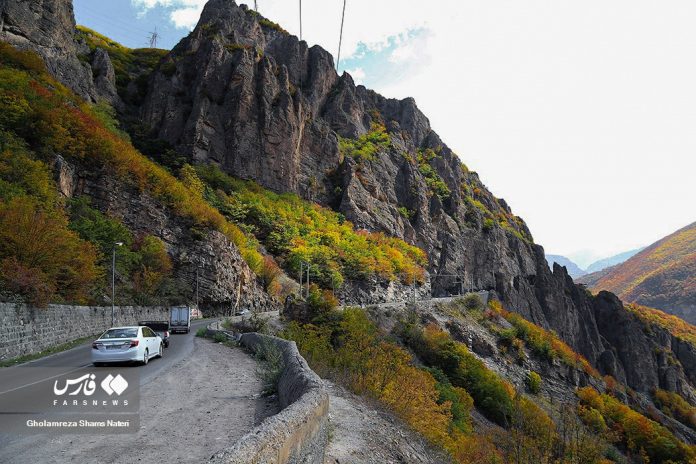
Iran Road

According to the traffic police, lack of attention to the roads ahead on highways accounts for 44% and inability to control the vehicle accounts for 22% in the accidents.

The police also put the number of incidents at 51,501.

Meanwhile, officials have taken a series of measures to lower the possibility of road crashes including repairing speed cams and improving conditions of accident-prone parts of roads.
Millions of Iranians travel to tourist destinations across the country during the Nowruz holidays.

The rising number of deaths comes as Iranian traffic police and other officials have been urging citizens since the start of the Nowruz holidays to join the “No to Accidents” campaign and avoid dangerous driving behaviors that cause incidents on roads across Iran.

Iran intercepts major fuel smuggling involving oil export company

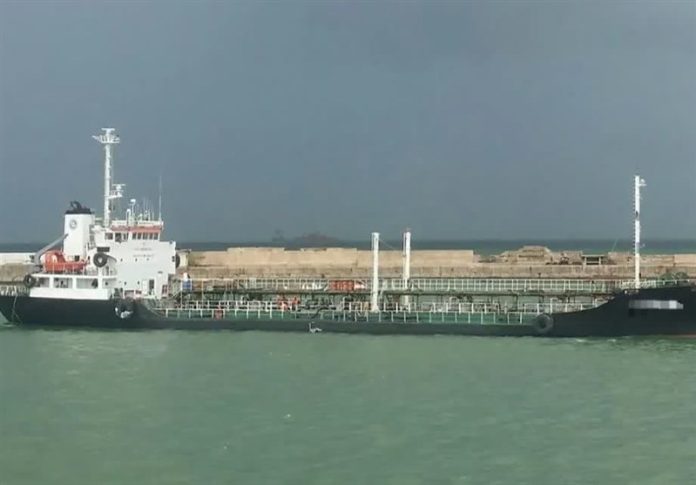
The vessel, allegedly operated by a prominent oil export company, was detained by maritime police following an intelligence-led operation.

Judiciary officials in Hormozgan Province revealed the ship was found transporting one million liters of unlicensed petroleum products while falsely declaring its cargo as legal bitumen exports.

The operation led to the arrest of several crew members accused of involvement in organized fuel smuggling and investigations are ongoing to collect evidence and prosecute the case.

According to Hormozgan Judiciary Chief Mojtaba Ghahremani, the intercepted vessel lacked proper customs documentation and navigation permits, raising serious questions about compliance procedures in Iran’s oil export sector.

Suspects allegedly transported oil derivatives from the provinces of Fars, Bushehr, and Khuzestan to Shahid Rajaee Port in Bandar Abbas for loading onto the ship during Persian New Year holidays.

The chief justice stated that Hormozgan’s judiciary, in cooperation with the provincial security council, government officials, and law enforcement, has intensified efforts to prevent and combat fuel smuggling.

Death sentence issued in murder case of female Iranian journalist

Iran Court

Majid Asadi confirmed to IRNA that a provincial criminal court handed down the death penalty during an extraordinary session on March 9.

The defendant was additionally ordered to pay blood money for secondary injuries inflicted during the lethal attack that happened in November last year.

The 52-year-old victim, a veteran IRNA correspondent, was fatally stabbed and bludgeoned in her home on November 11 following what authorities described as a domestic dispute.

The convicted husband reportedly confessed to the crime during investigations.

Under Iranian law, the sentence remains appealable for 20 days following formal notification to the Supreme Court.

The case has drawn significant attention in Iranian media circles, where Ghadiri Javid was known for her cultural research work.

A final hearing was held March 9 with both the accused and victim’s family representatives present before the verdict was issued.

Judicial observers note this represents one of the swiftest capital case rulings in recent years for spousal homicide cases.