Saturday, December 27, 2025
Home Blog Page 2523

Iranian People’s Resistance Led to US’ Submission: First VP

Jahangiri said Iranian people stood up to the economic war launched by Washington against the Islamic Republic.

“The experience of the tough period of the economic war showed resistance holds the key to success, and what forced the US into submission to the Iranian nation was the people’s resistance,” he said.

The vice president urged people to learn to have a common understanding of issues and threats facing the country.

“Today, we are facing different threats and opportunities in society, and we can work out a common solution only when we have a common understanding of threats and opportunities,” he added.

Jahangiri underlined that dialogue is a very important issue. “The skill of holding dialogue is very important and we should not talk to each other with the language of violence.”

The top official underscored that ill-wishers seek to put the brakes on Iran’s progress, adding efforts should be made to stop such efforts.

Iran to Raze Tel Aviv, Haifa to Ground If Israel Makes Mistake: Cmdr.

This picture, released by the Iranian Defence Ministry on Oct. 11, 2015, shows the launching of an Emad long-range ballistic surface-to-surface missile in an undisclosed location.
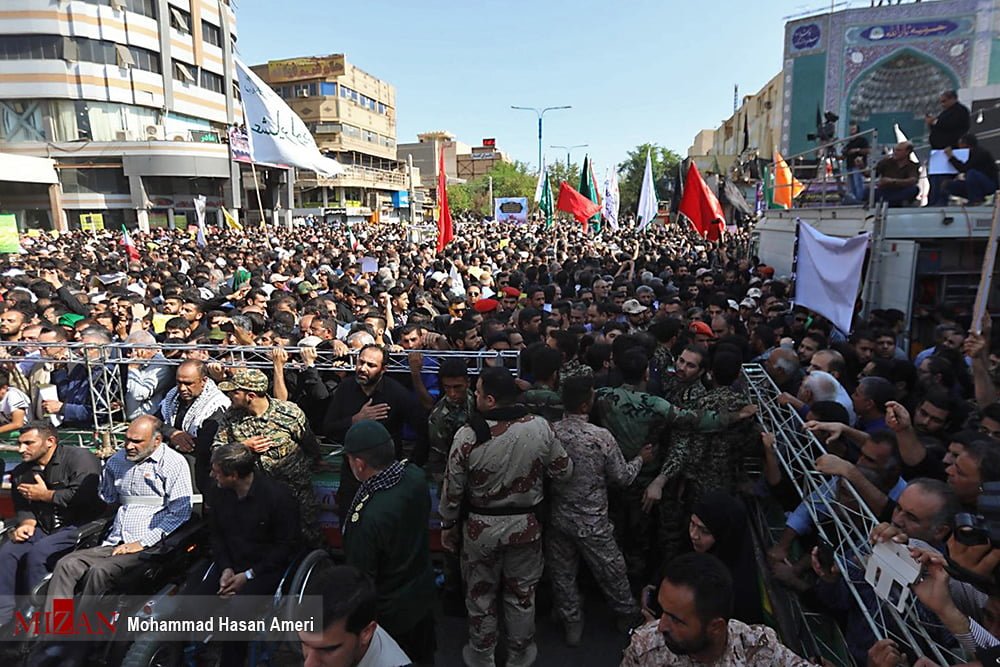
Brigadier General Abolfazl Shekarchi, the spokesperson for the General Staff of the Armed Forces, was echoing comments made by Leader of the Islamic Revolution Ayatollah Seyyed Ali Khamenei.
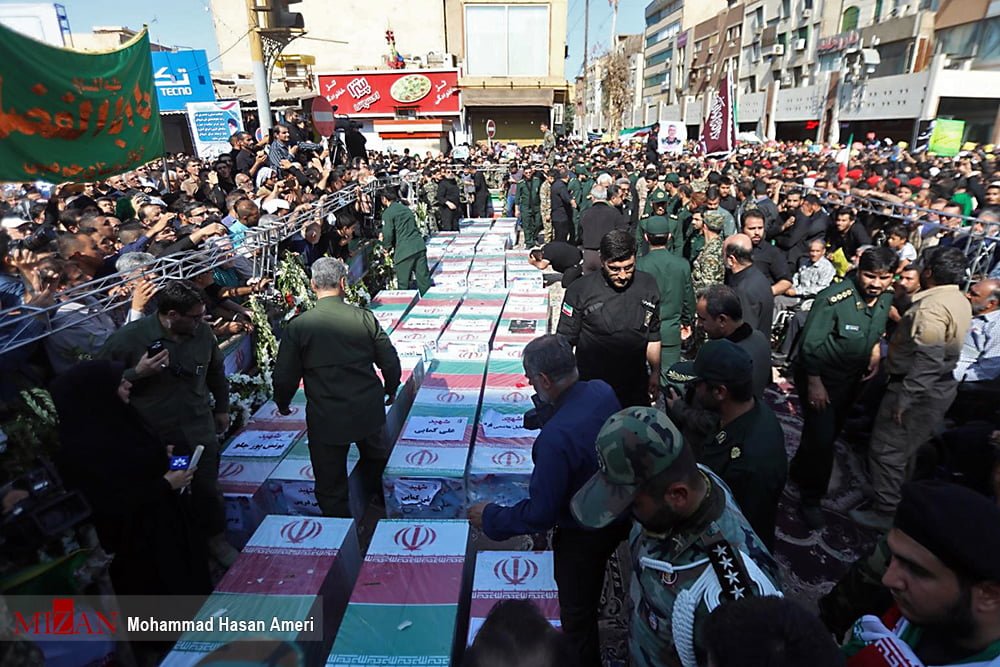
“As the Leader said in the past, if the Israeli regime makes the slightest mistake against the Establishment of the Islamic Republic of Iran, we will not only strike the missile bases which they say have set up to attack Iran, but also raze Haifa and Tel Aviv to the ground in the shortest time possible,” he noted.

The top general dismissed as psychological warfare the recent threats by Israeli general Aviv Kochavi.

“They are not aware of the capabilities of the Islamic Republic of Iran, capabilities which have not been revealed yet. Just part of them was displayed during the recent military exercises,” he noted.

“With those capabilities, Tel Aviv will be razed to the ground in no time as the Supreme Leader said,” the top general noted.

“If they make a mistake, they will see their collapse, and in fact, they will bring forward the time of their collapse,” he said.

“Today, the collapse of the Israeli regime is on the agenda. This regime must collapse and this cancerous tumour in the region must fall apart as it has brought a lot of losses upon the Muslim community,” he added.

Iran’s Zarif, Armenian PM Meet in Yerevan

In the meeting with the Armenian premier on Wednesday evening, Foreign Minister Zarif elaborated on the latest status of Iran-Armenia relations and the regional developments, particularly after the recent conflicts in the Karabakh region, and explicated the Islamic Republic of Iran’s stances on the issue.

The top Iranian diplomat also pointed to the opportunities available in the bilateral and multilateral relations, cited the common concerns in the region, and reiterated the Islamic Republic of Iran’s call for a future full of cooperation and peace in the region.

Foreign Minister Zarif also explicated the Islamic Republic of Iran’s stances that favor the observance of international law, protection of people, respect for the rights of minorities, preserving territorial integrity, and avoidance of resorting to force amid the Karabakh crisis.

Prime Minister Pashinyan, for his part, highlighted the commonalities between Armenia and Iran in various issues pertaining to peace, security and development, saying the relations between the two nations have been based upon friendship throughout centuries. 

The Armenian prime minister and the Iranian foreign minister also held extensive talks about cooperation between the two neighbours in various fields such as trade, electricity and gas industries, transit cooperation, road constructions, and railway industry.

Iran VP Pledges Support for Kenyan Knowledge-Based Firms

Iranian Vice President Sattari, who is leading a scientific and technological delegation in a visit to Kenya, made the remarks in a meeting with Kenyan Cabinet Secretary in the Ministry of Information and Communications, Joseph Wakaba Mucheru, on Wednesday.

In the meeting, which revolved around the promotion of cooperation between the two countries, Sattari said Iran will provide the successful experience of its knowledge-based and innovative companies with their Kenyan peers.

The meeting, held on the second day of the Iranian delegation’s visit to Kenya, was also attended by Richard Ngatia, president of Kenya’s National Chamber of Commerce and Industry.

Highlighting Iran’s remarkable advances in the nanotechnology field, Sattari said, “Iran has been grappling with the US’ cruel sanctions for 40 years. However, not only did the sanctions fail to prevent Iran’s progress, but turned into the best driving force for the (Iranian) scientists and scientific elites that made us gain self-sufficiency in various scientific fields.”

Iran VP Pledges Support for Kenyan Knowledge-Based Firms


The fact that Iran has had to design and manufacture the whole equipment and products to supply its demands steered the country towards self-sufficiency and homegrown industries, he added.

The products of the Iranian knowledge-based companies meet the international standards, the vice president noted, adding, “All of these products have been manufactured with the best quality and in compliance with the world standards. The powerful Iranian companies can share their experience in this regard with the Kenyan companies applying for it.”

The Iranian vice president explained that such cooperation could happen in the form of transfer of technologies and technical knowledge and selecting competitive prices for the knowledge-based products and services, adding, “Iran’s innovation and technology center in Kenya has also facilitated such interaction.”

He said the Iranian center has been established in Kenya two years after announcement of plans to inaugurate the center, noting that its potential would be employed for the expansion of mutual cooperation with Kenya.

Sattari finally invited the Kenyan technology sector’s officials to visit Iran and observe the growing technological trend in the country and the achievements of the Iranian knowledge-based companies.

For his part, Joseph Wakaba Mucheru praised Iran and the Iranian Vice Presidency for Science and Technology for setting up an innovation center in Kenya, hailed Iran’s advances in the emerging technologies, and expressed the African country’s readiness to use Iran’s experiences in developing the technology and innovation ecosystem.

Highlighting the Iranian knowledge-based companies’ capabilities in advanced technologies, he said Kenya needs to use Iran’s development plans as a model.

Kenya has great potential for growth in digital economy as well as the information and communications technology, the minister noted, saying such capabilities have not still thrived in his country.

“Using Iran’s successful experiences in creating startups and knowledge-based companies is seen as a special opportunity for Kenya,” Mucheru added.

At the conclusion of the meeting, the Kenyan officials visited an exhibition of the Iranian knowledge-based products in the newly-inaugurated innovation and technology centre (IHIT).

Iranian Vice President for Science and Technology Sattari is visiting Kenya for the second time with a 40-strong delegation of representatives of local knowledge-based and innovative companies to pave the way for the export of homegrown knowledge-based products.

The Iranian delegation held business meetings with their Kenyan counterparts on Wednesday as part of a huge event earlier organized for the trip.

Iran Armed Forces Fully Prepared for Any Israeli Attack: Official

Speaking to reporters on the sidelines of a weekly cabinet session on Wednesday, Mahmoud Vaezi said the threatening remarks from the Israeli officials are nothing but a psychological war.

“Our people and people of the region are familiar with the language that the Zionist regime’s officials have used so far,” he noted, adding that the Zionists have neither a plan nor the capability to take action against Iran.

The Iranian Armed Forces, including the Army and the Islamic Revolution Guards Corps (IRGC), are seasoned forces defending the country, he added.

Vaezi also described the recent military exercise staged by the Iranian forces as a sign that “we have no intention of launching an offense and no intention of war, but we are serious in defending the country.”

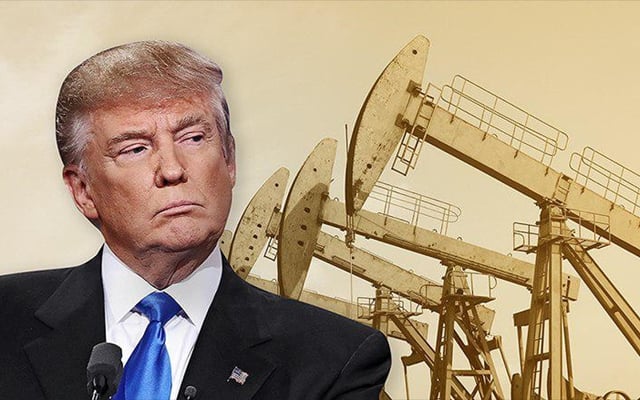
“However, a number of the Zionist regime’s officials think that Washington will accept whatever they say. There was once someone called Trump with a son-in-law, who was practically and actually the henchman of Zionists that did a series of jobs in Washington, and imposed a series of Zionist regime’s views,” he added.

He also urged the new US administration to preserve its independence and ignore the psychological warfare by Israel and others.

“The US’ return to the JCPOA and lifting of the sanctions is an issue that is strongly opposed by the Zionist regime and some Arab countries in the region which are hostile to us, such as Saudi Arabia. They are attempting hard. They have also launched lobbies in Washington. They are constantly trying to prevent it (US’ return to JCPOA),” Vaezi stated.

The chief of staff of the president’s office finally noted that Iran does not take such psychological war and propaganda campaign seriously.

Armenia’s Territorial Integrity Is Iran’s Red Line: FM Zarif

In the meeting held in Armenia on the third leg of Zarif’s regional tour, the top Iranian diplomat highlighted the cordial and good neighbourly relations between the two countries.

He said both Iran and Armenia enjoy age-old civilizations and a long history.

Zarif described Armenia as an important neighbour for Iran, and added Tehran-Yerevan relations are a symbol of interaction and dialogue between the followers of two faiths.

Iran’s foreign minister underscored the significance of territorial integrity, independence and national sovereignty of all countries in the region, including Armenia.

He said in is necessary to observe the rights of all ethnic groups in the region.

Zarif said Armenia’s territorial integrity is Iran’s red line, which has already been emphasized.

He described as a brave move the decisions by the Armenian government and Prime Minister Nikol Pashinyan to move toward the future.

Zarif expressed regret over the human losses inflicted during the recent conflict in the region and said Iran stands ready to offer whatever assistance and make any efforts in that regard.

He expressed hope the humanitarian issues caused by the conflict will be resolved as soon as possible.

Zarif strongly dismissed the presence of terrorists and foreign fighters in the region, adding the presence of such troops is a cause for concern for both countries.

He said Tehran is ready to work with Yerevan and other neighbours in that regard and to help boost economic development in the region by tapping into the opportunity created and by taking the common interests of regional countries into account.

The top Armenian diplomat, in turn, emphasized the significance of close political, economic and trade ties with Iran.

He described his meeting with Zarif as a good opportunity to exchange views on the prospects of mutual cooperation. 

He described Iran as Armenia’s fourth economic partner.

Aivazian touched upon the importance of regional stability and security, and highlighted Iran’s key role in the region.

Among other issues on the agenda of the talks were mutual banking relations as well as issues pertaining to transportation, Iran’s exports and the environment of the Aras river.

Iran Calls on Germany to Account for Supplying Saddam with Chemical Arms

Iran’s Ambassador to the United Nations Esmaeil Baghaei Hamaneh recalled that Germany provided the former Baghdad regime with chemical arms, and said the German government has a responsibility to seriously look into the issue.

Speaking at a United Nations’ plenary session on disarmament held in Geneva, the top diplomat reiterated that all natural persons and legal entities that had a role, in whatever manner, in arming the former Iraqi dictator with chemical weapons are accomplices to Saddam Hussein’s war crimes, and this fact will not slip into oblivion with the passage of time.

He blasted remarks by the German ambassador to the UN, who had said that the issue goes back four decades and that Iran’s bringing up the issue is unjustifiable. 

“The issue of Saddam Hussein’s regime using chemical arms and German companies’ complicity with him will not fade away in Iranian people’s memory,” he said.

“Rather, it is felt wholeheartedly by the oppressed victims of these weapons, who are still suffering from the complications of the wounds caused by these arms,” Iran’s envoy added.

However, he welcomed comments by the Germany envoy who claimed his country is prosecuting German firms involved in selling chemical arms to the former Iraqi regime.

Meanwhile, Iran’s ambassador stressed that Tehran will never abandon efforts to follow up on this “blatant tyranny.”

He said Iran expects the German government to publicly announce the outcome of its probes, including investigations into German officials’ involvement or failure to prevent the illegal transfer of chemical arms to Iraq.

It is noteworthy that the German ambassador expressed surprise at the Iranian envoy’s bringing up the issue of Germany’s complicity with the former Iraqi regime in producing chemical weapons. 

The top German diplomat claimed that back then, German judicial authorities looked into accusations of chemical arms transfers to Iraq and successfully handled the case.

In response, the Iranian ambassador reminded the German envoy that Tehran has, time and again, brought up the issue of Germany’s involvement in supplying Saddam Hussein’s regime’s with nuclear weapons.

Furthermore, he added, crimes against humanity and war crimes will not fade away with the passage of time.

He also criticized the German envoy for introducing Iran along with North Korea as proliferation threat.

Iran Tells Taliban It Won’t Recognize Currents Using War to Take Power

Shamkhani made the remarks in Wednesday meeting with a political delegation of the Taliban, led by deputy head of the group’s political office Mullah Abdul Ghani Baradar.

The senior Iranian security official underlined that the Islamic Republic of Iran would never recognize any current seeking to take power in Afghanistan through war, stressing the need for all ethnic groups to participate in a fully peaceful process to decide the fate of Afghanistan.

Pointing to the US’s warmongering and evil activities in the region, Shamkhani said, “The US is not after peace and security in Afghanistan. The US’ strategy is the continuation of war and bloodshed among various Afghan strata.”

“The US is pursuing the peace negotiations show with the purpose of creating a deadlock in the negotiations among various Afghan parties in order to blame them for insecurity and instability,” Shamkhani warned.

He also described any harm to security in Afghanistan, particularly in the provinces bordering Iran, as an intolerable issue, stressing the need for the Taliban to cooperate with the government of Afghanistan in the fight against insecurity and the activities of ISIS (Daesh) terrorist group.

For his part, Mullah Abdul Ghani Baradar gave a report of the process of peace negotiations in Afghanistan, highlighted previous US president Donald Trump’s failure to carry out the peace deal, and stressed that the Taliban does not trust the US and will fight against any current working as a mercenary of the US.

The Taliban believe that all ethnic and tribal groups must participate and play a role in the future of Afghanistan, he underlined.

Mullah Abdul Ghani Baradar also emphasized the necessity of protecting security of the common border between Afghanistan and Iran, expressing the Taliban’s readiness for cooperation in this regard.

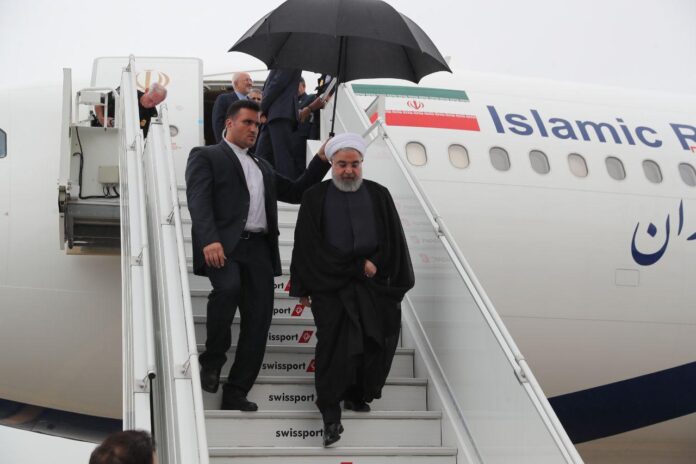
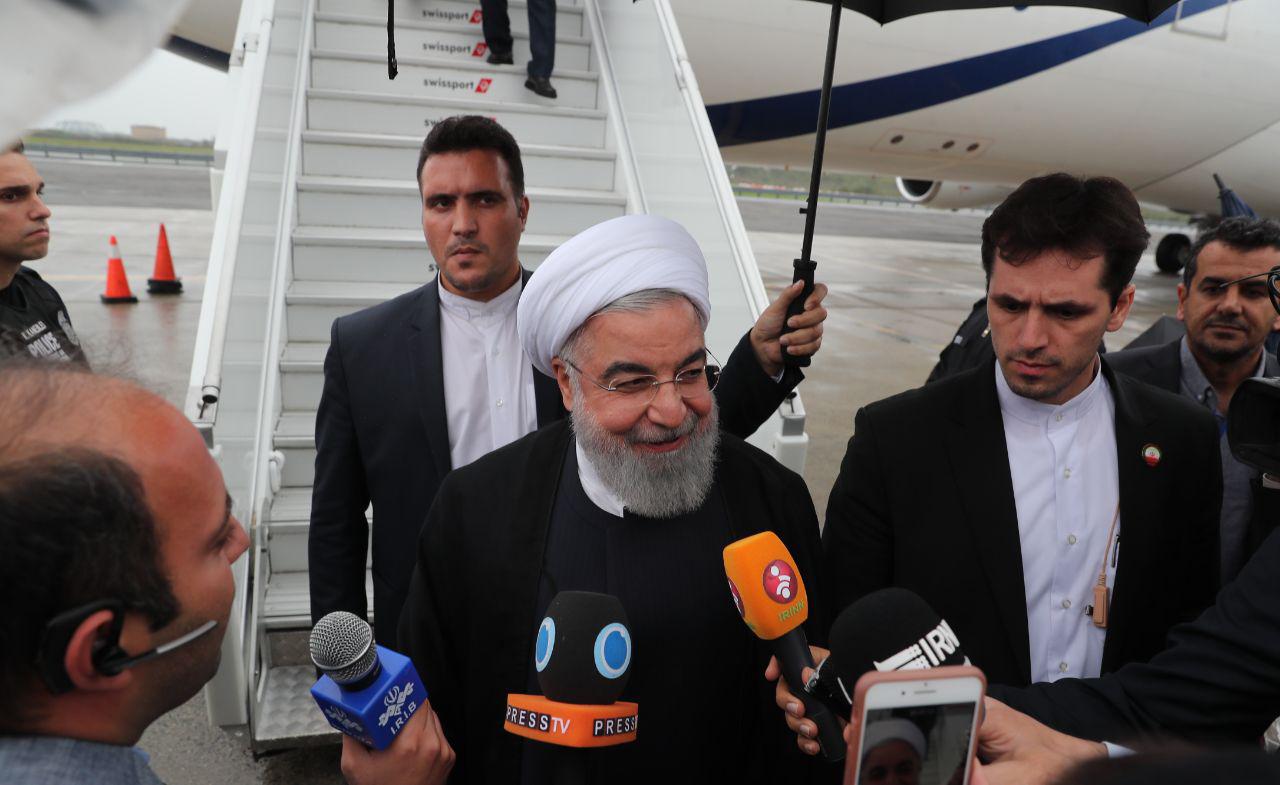
Iran to Return to Its Commitments One Hour after US Does So: Rouhani

President Hassan Rouhani further said all countries around the world agree that Washington should make good on its commitments.

“All countries are of the opinion that the United States should return to its obligations. There is a consensus on that across the world,” he said.

“The whole world is unanimously telling the US to return to its obligations as soon as possible,” the president noted.

He recalled that Tehran scaled down its commitments under the Iran nuclear deal because the US unilaterally pulled out of the agreement and Europe failed to fulfill its obligations under the deal. Elsewhere in his remarks, the president highlighted the failure of the economic war imposed by the White House on Iran.

“Not only has the economic war on Iran failed, but its days are numbered as well,” said President Rouhani.

He also said the situation has improved tremendously for Iran’s economic cooperation with regional countries as former US President Donald Trump is gone.

“That wicked criminal who annoyed people is gone,” he said.

Iran Opens ‘House of Innovation and Technology’ in Kenya

The Iranian vice-president opened the centre in a ceremonyheld on Wednesday, January 27, 2021, ahead of a business meeting between Iranian high-tech companies and their Kenyan counterparts.

Addressing the ceremony, Sattari hailed the capacities of Kenya for development of technology and innovation ties, saying the African country is among Iran’s priorities for promotion of mutual cooperation.

What follows is the full text of VP Sattari’s speech at the Iran-Kenya Business Forum:

Good morning ladies and gentlemen,

I would like to acknowledge my appreciation and gratitude to the Kenyan authorities and enterprises.

After my visit from East African countries two years ago, in which Iranian knowledge-based companies accompanied me; we realized various capacities of Kenya to develop technology and innovation ties.

It is obvious that Kenya has made significant political, structural and economic reforms that have largely driven sustained economic growth, social development and political gains over the past decade. Kenya’s economic growth of near six percent in 2019 placed this country as one of the fastgrowing economies in Sub-Saharan Africa, which made this country a focal point in the east of Africa for business and technology cooperation withIran.

Now, I am glad that my promise to establish an innovation and technology centre in Kenya has been fulfilled today. I must appreciate the efforts of the Honorable Ambassador of Iran in Kenya (Dr. Barmaki), my colleagues in Vice Presidency for Science and Technology,and also our Executive Agent (Mr. Hassani) for their efforts for the renovation of the building and establishing this centre.

Unfortunately, during the past year the COVID-19 pandemic has been the major problem for us. Its serious damages have affected all sectors of business, health, education and public welfare in all communities especially vulnerable groupsIt is important to think about solutions to prevent and control these disasters with technological approaches.

Under these circumstances, we need to share our experiences, expertise, and technological solutions for forming effective collective actions. Needless to say, overcoming this crisis requires the best efforts to acquire new technologies. At the same time, the dissemination of existing technological possibilities to facilitate universal access is of equal importance. This collective approach ensuring that nations have access to the right of basic technological requirements for public health and well-being.

I would like to mention that from the beginning of the outbreak of COVID-19, the support of the Government of the Islamic Republic of Iran has caused knowledge-based companies to design and manufacture equipment and drugs related to the diagnosis and treatment of COVID-19 at the level of international standards and cut the country’s dependence on imports of these products while exporting them to the other countries.

The Islamic Republic of Iran, as a leading country in science, technology and, innovation in the Islamic world, has had many successes in combating COVID-19. Here I would like to mention some of Iran’s technological achievements in this field:

1. In the field of COVID-19 vaccine, three groups have started their activities in Iran since months ago, which has passed clinical phases, and in the near future, we will hear promising news that Iranian scientists obtaining this vaccine.
2. In the field of effective drugs for the control and treatment of the COVID-19virus, countless clinical studies have been conducted in the Iranian medical health care sector, which has led to the discovery of effective therapies in the control and treatment of the COVID-19 virus. 
3. In the field of diagnostic kits and COVID-19 extraction kits, five Iranian companies have succeeded in manufacturing these kits.
4. In the field of medical equipment, in order to prevent the spread of Coronavirus and treatment of it, Iranian experts and knowledge-based companies have succeeded in manufacturing hospital ventilators, home oxygenators, hospital oxygenators, vital signs monitors, pulse oximeters, non-contact digital thermometers, CT scan devices, etc.
5. In the field of medical consumables products, in order to prevent the spread of the COVID-19 virus, Iranian companies have succeeded in manufacturing machines and devices for the production of various types of masks, gloves, alcohol-based and non-alcohol hand and surfaces sanitizers. 

All these developments have taken place in a situation where, despite that my country showed good faith in the Joint Comprehensive Plan of Action (JCPOA), the most severe oppressive sanctions by the United States of America hindered importing even international humanitarian aids. However, a significant amount of equipment, medical supplies and diagnostic kits have been exported to various countries. Also, we have a package of medical equipment as a gift to one of your hospitals in Kenya.

In that vein, my country is ready to participate effectively in bilateral scientific and technological cooperation, with the aim of strengthening Kenya long-term development agenda to Vision twenty-thirty, the “Big Four” development priority areas regarding manufacturing, universal healthcare, affordable housing and food security.

Dear audiences, Here I’d like to draw your attention to the point of how innovation is significantly prevailing in the Islamic Republic of Iran to move the country toward an innovation-driven economy.

As you are well aware, there are vast capacities in terms of science and technology in Iran; with regard to the changing discourse of the economy of the Islamic Republic of Iran as a transition from a traditional and oil-based economy to the development of a knowledge-based economy, Vice Presidency for Science and Technology, has expanded the ecosystem of innovation and technology in Iran with the aim of evolving new business environment and entrepreneurship.

In recent years, we have witnessed significant growth in technology and innovation areas in our country. Iran’s global rank in science production has risen from 34th to 16th and the first in the region. The number of university students in Iran has increased from 2.4 million to 4.8 million, which puts Iran among the top five countries in terms of the number of graduate engineers. Iran’s ranking in the Global Innovation Index has also increased by fifty-five places over the past five years, and we have had an increasing growth in the development of advanced technologies such as nanotechnology, biotechnology, renewable energies, cognitive science, stem cells and,ICT. Also as a result of the implementation of knowledge-based economy development policies in Iran, the size of the knowledge-based economy in Iran has grown to over eleven billion US dollars, through the activity of five thousand and six hundred knowledge-based companies and more than one thousand and forty creative and innovative ones.

My dear friends;

We all know effective global cooperation is now much more important for us because we are investing in technology and innovation to keep sustainable and competitive growth.

To this aim, the Islamic Republic of Iran, by relying on its capabilities, is trying to develop constructive and dynamic relations and cooperation globally; Hopefully, Kenya isamong the priorities of Iran’s bilateral cooperation.

Undoubtedly, the role of the government in each country is to pave the way for basic required platforms for international interactions of the private sector, something which has been done by opening this technology and innovation centre and holding more commercial forums like this.

I hope today’s opening ceremony of the centreand following B2B meetings between Iranian and Kenyan enterprises become a turning point in the bilateral economic collaboration.

The Islamic Republic of Iran fully supports such partnerships between Iranian and Kenyanenterprises.

Thank you all for your kind attention