Sunday, December 28, 2025
Home Blog Page 2514

JCPOA Joint Commission Decides to Speed Up Process of Negotiations

In the plenary meeting, the participants decided to speed up the process of negotiations, and agreed that the activities of expert groups continue in a fast and intensive way in the two domains of “removal of sanctions” and “nuclear issues”.

It was also decided that a third expert group, namely the “Expert Group on Practical Arrangements”, be formed with the aim of holding talks on the practical arrangements required for the removal of sanctions and then the US return to the JCPOA.

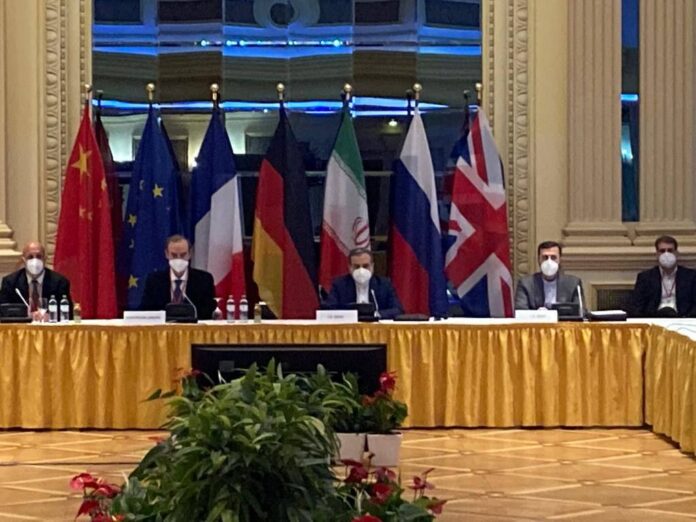
In the Tuesday plenary meeting held at the Grand Hotel of Vienna, Iranian Deputy Foreign Minister for Political Affairs Seyyed Abbas Araqchi headed the Iranian delegation, which also included representatives from other relevant bodies including the Petroleum Ministry, the Central Bank, and the Atomic Energy Organisation of Iran.
European External Action Service (EEAS) Deputy Secretary General Enrique Mora chaired this meeting, which was also attended by the representatives of Iran, Russia, China, France, Britain, Germany, and the European Union.

In this meeting, the participants discussed the verifiable removal of sanctions against Iran and the prospect of the US return to the JCPOA.

Before the plenary meeting, as usual, several bilateral and multilateral meetings were held between the delegations, and these consultations and meetings will continue.

Within the same framework, two meetings were held between Araqchi and Mora today.

Also in the morning, an important trilateral meeting was held between the chief negotiators of Iran, Russia, and China, where the three sides underlined full coordination between Tehran, Moscow, and Beijing, and the necessity of the removal of anti-Iran sanctions all at once.

Araqchi also held a joint meeting with representatives of the three European parties to the JCPOA.
Iran, Russia, China Say US Sanctions Must Be Lifted All at Once

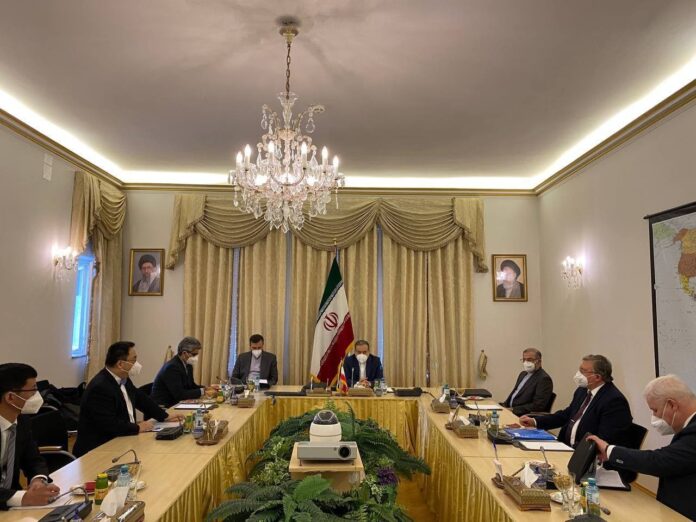
During the meeting, which was held at the office of Iran’s permanent mission to international organisations in Vienna, the three parties reviewed the latest status of talks on the US’ possible return to the JCPOA and the removal of its sanctions against Iran.

They also called for the lifting of the sanctions all at once, describing it as a necessary condition for Washington’s return to the nuclear deal.

The Iranian, Russian, and Chinese chief negotiators further underlined the three countries’ full consensus, and the necessity of continued consultations and serious coordination on a regular and consistent basis among the three states in these negotiations.

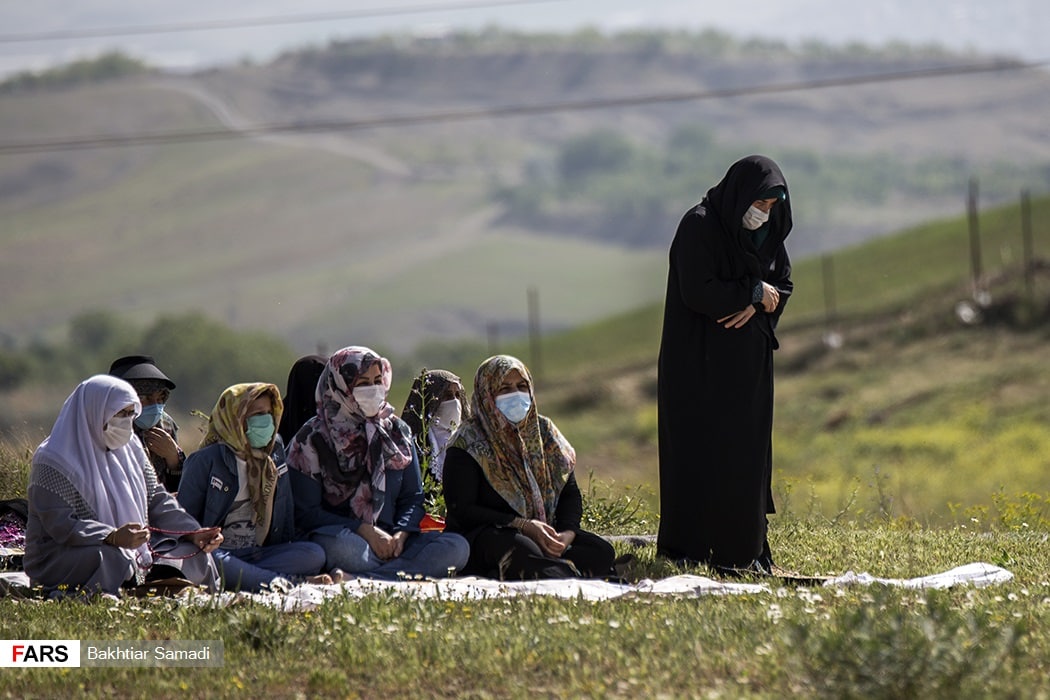
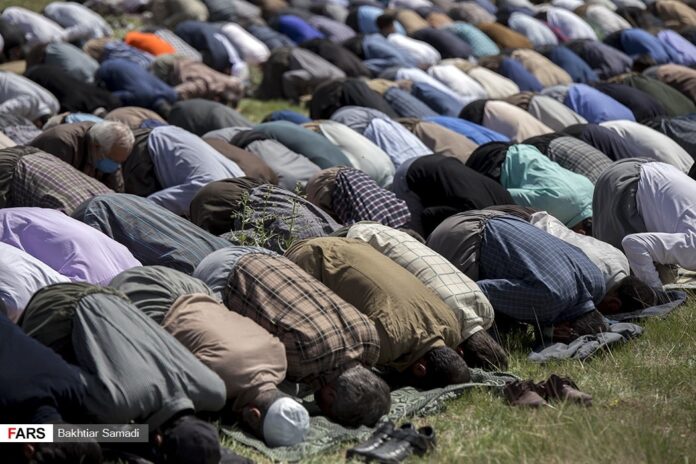
Kurdish Iranians Pray for Rainfall in Sanandaj

This year’s prayers were said outdoors to prevent further spread of the coronavirus.

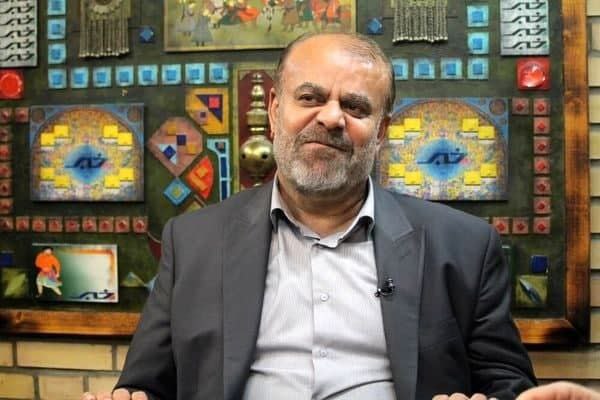
Iran Elections 2021: Deputy Head of IRGC Quds Force to Run for President

Qassemi officially declared his bid for presidency on Tuesday, April 27, 2021.

The veteran military commander used to be Iran’s petroleum minister during the presidency of Mahmoud Ahmadinejad from 2011 to 2013.

He was the chair of the IRGC-affiliated Khatam-al Anbiya Construction Headquarters from 2007 to 2011.

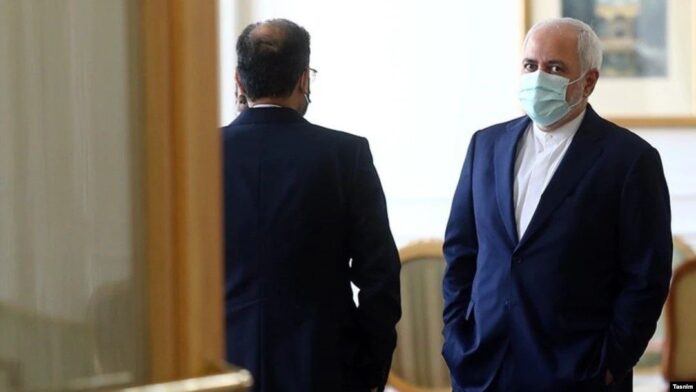
Zarif’s Leaked Audio Tape ‘Stolen’, Says Gov’t Spokesman

Government Spokesman Ali Rabiei added the TV network has always worked against the Iranian nation.

“This audio file was released by the spiteful [Iran International] television run by petro-dollars, and since the day it was established, this television [network] wanted Iranian people to suffer and be under sanctions,” he said on Tuesday.

“This shows the move to steal and selectively broadcast the interview was a plot,” added the spokesman.

“[Iranian] President [Hassan Rouhani] instructed the Intelligence Ministry to identify those behind this conspiracy,” said Rabiei.

“We believe the stealing of these documents is a plot against the government, Establishment, national unity, our efficient institutions on the ground, and our national interests,” he added.

“Of course, we will be waiting for Dr. Zarif to return to Iran and give the necessary explanation on the misinterpretations,” he noted.

Rabiei reiterated that the TV network had “selectively aired parts of a very lengthy interview with wicked intentions.”

He said the interview is, in fact, a program about the performance and achievements of, and challenges faced by the Rouhani administration recorded under the supervision of the President’s Office.

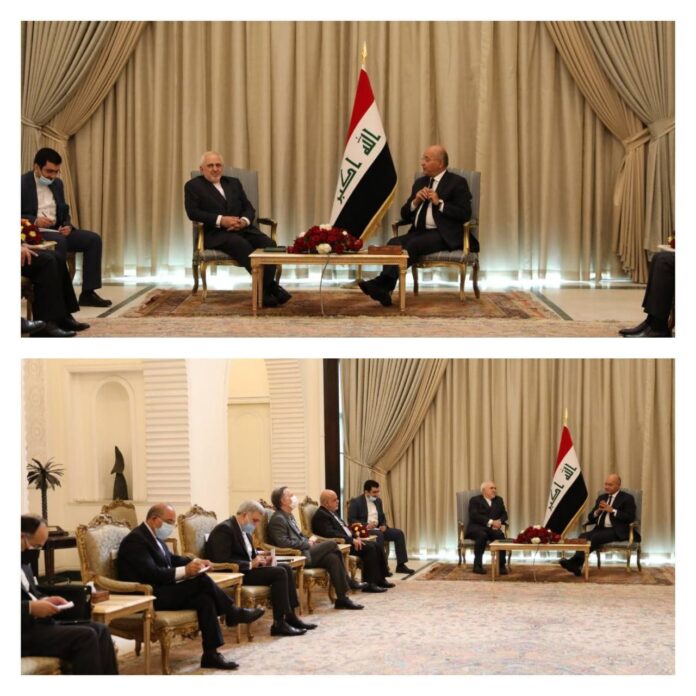
Tehran, Baghdad Stress Implementation of Previous Agreements

During the Monday talks, Zarif described Baghdad’s role in regional issues as effective and important.

He also expounded on Tehran’s viewpoint on the necessity of the existence of a security system in the region with the presence of all Persian Gulf countries which has already been proposed by Iran within the framework of the Hormuz Peace Endeavoir (HOPE).

Zarif touched upon Tehran-Baghdad agreements on different issues, and highlighted the need to make the necessary arrangements to implement those agreements without any bureaucratic barrier.

The Iraqi president, in turn, described mutual relations as important and expounded on his viewpoints with regards to the immediate implementation of the agreements reached by both sides.

Among other topics discussed in the meeting were issues related to terrorism and extremism in the region, financial issues, mutual cooperation at the regional level as well as cooperation with other countries.

Iran Urges Implementation of Iraq Legislation on Withdrawal of US Forces  

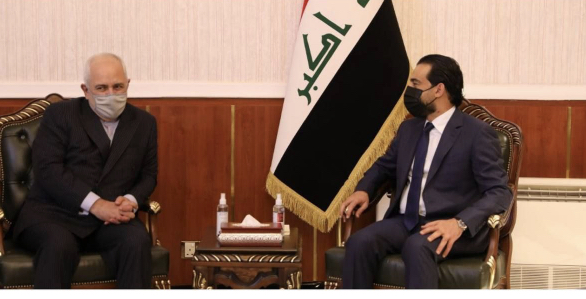
During the Monday talks, the top Iranian diplomat highlighted Tehran’s emphasis on regional convergence, and welcomed Iraq’s constructive role in that regard.

Zarif said the implementation of the Iraqi parliament’s legislation on the withdrawal of foreign troops amounts to respect for Iraq’s sovereignty.

“The Americans killed Hajj Qassem Soleimani and Abu Mahdi (al-Muhandis) on the Iraqi soil,” said Zarif.

Elsewhere in his remarks, Zarif said the upcoming elections in Iran and Iraq symbolise democracy in both countries, and wished Iraq luck in holding a calm election.

The top Iraqi parliamentarian, in turn, highlighted the Iraqi government and parliament’s role in helping shape a tranquil atmosphere in the region, and expressed hope the ground will be prepared to boost trade between Iran and Iraq.

Iran Urges Implementation of Iraq Legislation on Withdrawal of US Forces  

Iran Respects Diversity of Religious, Ethnic Groups in Iraq: FM Zarif

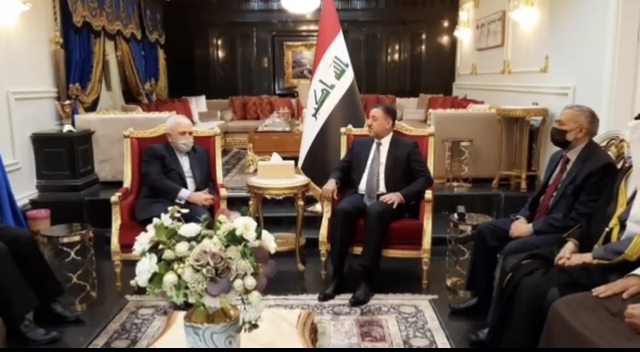
In the Monday meeting, which was part of Zarif’s meetings with Iraqi political and religious figures, the top Iranian diplomat touched upon Tehran’s opposition to sectarianism as well as the necessity of unity in the Islamic community and among different groups.

Zarif also referred to the status of holy Quds in Iran’s foreign policy, saying Tehran will continue to stand by world Muslims of different faiths despite all existing pressure.

He said Iran’s behaviour is defined based on partnership with its friends.

He underscored the need for a logical and rational relationship between Iraqi groups, saying Tehran respects the diversity of religious, ethnic and political groups in Iraq.

In addition to Khamis al-Khanjar, some other top members of the Legitimate Arabic Centre were also present at the meeting where they discussed, in detail, their viewpoints about Iraqi issues.

PM Kadhimi Calls Iran ‘Strategic Partner’ of Iraq

PM Kadhimi Calls Iran ‘Strategic Partner’ of Iraq

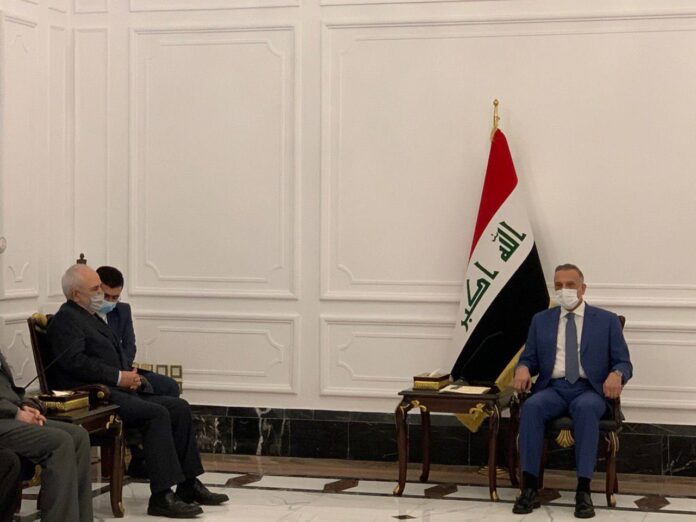
Iran’s Foreign Minister Mohammad Javad Zarif, who is in Baghdad to discuss issues of mutual interest with Iraqi officials, attended an Iftar banquet hosted by Prime Minister Mustafa al-Kadhimi on Monday evening.

In this meeting, Foreign Minister Zarif praised the Iraqi prime minister’s special efforts to pursue the existing cases in bilateral and regional relations related to the Islamic Republic of Iran, and elaborated on the latest developments in Iran’s negotiations with the P4+1.

He also expressed gratitude for Baghdad’s support for the JCPOA and the removal of the United States’ cruel and unilateral sanctions.

Zarif also referred to certain problems with the relations of Iranian companies and economic groups working in the fields of commerce, transport, and technical-engineering services as well as financial issues, and called for Iraq’s assistance in resolving them.

The Iraqi prime minister, in turn, stressed that Baghdad’s view of Iran does not just fall within the framework of neighbourliness, but Iran is a strategic partner of Iraq.

He pointed to Iran’s support for Iraq in the fight against ISIS, and said the history will never forget the stance adopted by Iran.

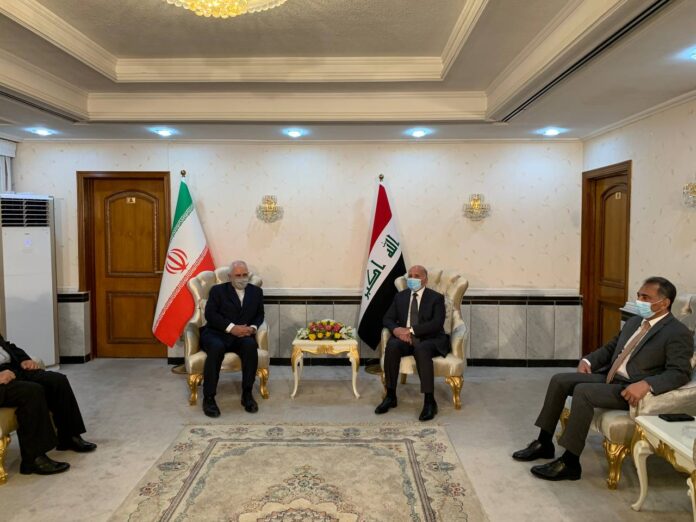
Iranian, Iraqi Foreign Ministers Meet in Baghdad

At the beginning of the Monday meeting, the Iranian foreign minister extended the Iranian nation and government’s condolences to the Iraqi nation and government, especially the families of the victims of the recent tragic incident at Ibn Khatib Hospital of Baghdad, which resulted in the deaths and injuries of dozens of Iraqi citizens.

Foreign Minister Zarif then welcomed Iraq’s regional role in strengthening regional relations and the cooperation of the countries of the region with each other, and expressed Iran’s support for Baghdad’s constructive role.

The Iranian foreign minister further expressed concern over the ISIS terrorist group’s recent activities in Iraq, and said a serious fight against these efforts requires that Iran and Iraq cooperate with each other once again.

He also stressed the significance of pursuing the case of the martyrdom of Lt. General Qassem Soleimani, Abu Mehdi Al-Muhandis and their comrades, and praised the Iraqi government’s efforts in this regard as well as the country’s judicial cooperation during the Iranian Judiciary chief’s trip to Baghdad.

Emphasising respect for the sovereignty and territorial integrity of Iraq, Foreign Minister Zarif reiterated Tehran’s opposition to certain military actions in Iraq, including the ones against diplomatic missions, and announced the readiness of the Islamic Republic of Iran to assist Iraq in preventing such actions.

In turn, Iraqi Foreign Minister Fuad Hussein expressed satisfaction with the trend of Iran’s talks with the P4+1 group of countries and elaborated on Iraq’s regional policy of bringing the viewpoints of regional countries closer together.

The Iraqi foreign minister also stressed the need to resolve certain trivial issues in the implementation of the agreements and memoranda of understanding between the two countries.

Following up the agreements reached during the Iranian president’s visit to Iraq, settlement of Iraq’s debts to Iran, transportation and railway issues, visa problems of Iranian businessmen, certain problems hindering the activity of Iranian technical-engineering companies in Iraq, and financial issues were among other issues discussed by the two ministers.