Wednesday, December 24, 2025
Home Blog Page 2450

Iran Says Had Notified IAEA of Its Nuclear Measures

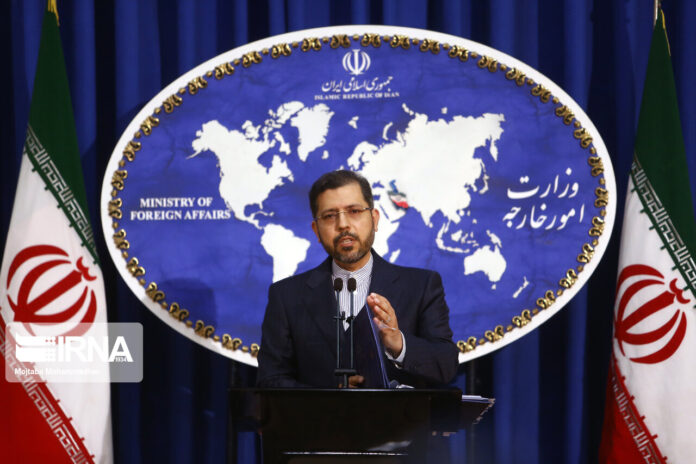
In a statement on Tuesday, Khatibzadeh noted that the International Atomic Energy Agency (IAEA) has been supervising Iran’s nuclear activities and that Tehran has notified the IAEA of its measures in advance.

He said Iran’s remedial reduction of its JCPOA commitments has been done according to mechanisms within the 2015 nuclear deal, and as repeatedly said, was in response to the widespread violation of the JCPOA and the UN Security Council Resolution 2231 by the United States in addition to the lack of full compliance of other parties to the accord, especially the three European countries.

“Clearly the Islamic Republic of Iran will move forward with its peaceful nuclear program merely based on its needs and the decisions made by its leadership and within its Safeguards commitments, unless the US and other JCPOA parties return to the full and unconditional implementation of the JCPOA,” he added.

Khatibzadeh once again reaffirmed the peaceful and civilian nature of Tehran’s nuclear program, and said all of the country’s remedial measures under the JCPOA are reversible provided that all the signatories honour their commitments and the US removes all its unlawful and unilateral sanctions against the Iranian nation effectively and verifiably.

His comments were made after the IAEA said in a report on Monday that Iran has made progress in its work on enriched uranium metal, with Tehran saying the process is aimed at producing a reactor fuel plate.

Iran’s representative to the international organizations in Vienna said in July that the Islamic Republic would soon produce enriched uranium metal and that the country had earlier informed the United Nations nuclear watchdog of the move.

The JCPOA was reached between Iran and six world powers, including the United States, Britain, France, Germany, Russia and China in 2015. However, the deal was ditched by former US President Donald Trump in 2018 in spite of Iran’s full compliance with its contractual obligations.

Washington then began to put enormous pressure on Iran through sanctions, in what it called a “maximum pressure” policy, in order to force Tehran to negotiate a “better deal,” prompting Tehran to take remedial measures by gradually reducing its nuclear commitments under the deal.

Since April, representatives from Iran and the remaining signatories to the JCPOA have been holding face-to-face talks in the Austrian capital aimed at bringing the US back to compliance and putting the deal back on track.

So far, six rounds of negotiations have been held in the Austrian capital, as a result of which, according to participants, “significant progress” has been made in the course of the “constructive” and “businesslike” talks.
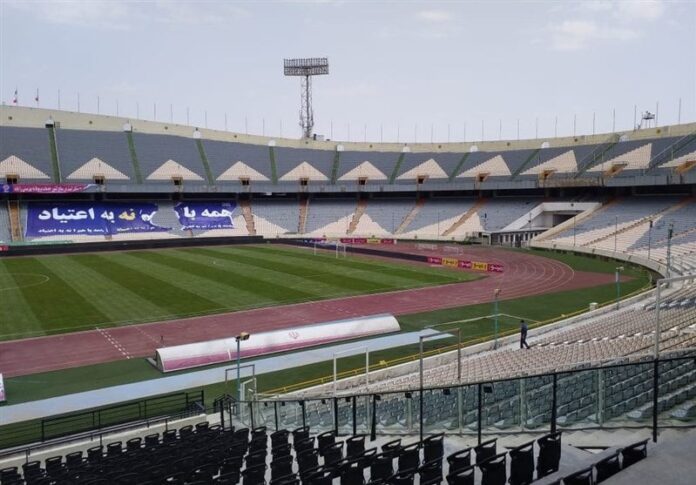
US Sanctions May Deprive Iran of Right to Host FIFA World Cup Qualifiers

Iran earlier hoped to be able to import the VAR system provided by the AFC in its home matches at Tehran’s Azadi Stadium; however, the country’s eligibility to play host is now questioned.

Iran should now wait for FIFA and AFC to see whether it can still host the matches in Tehran without the VAR system or it must hold the games in a third country.

Earlier, the AFC had announced that VAR should be used in all matches of this stage of qualifiers.

Iran will play Syria, Iraq, the UAE, South Korea, and Lebanon in the third stage of the 2022 World Cup qualifiers. Dragan Skocic’s team will host Syria on September 2 in the first step.

It has been years that Iran is pursuing to buy such a system but officials cite US sanctions and financial problems as the main barriers.

Elegy on Imam Hussein Most Widely-Used Text on Persian Inscriptions

Morteza Rezvanfar is a faculty member of the Research Center on Cultural Heritage, who is working with the Iranian Academy of Arts on a book called The Common Heritage of Iran and the World with a Focus on Persian Inscriptions. 

“The subject of this book is Persian inscriptions around the world and it covers the area of influence of the Iranian culture and civilization. I have been working for a few years to identify and document Persian inscriptions across the world. Therefore, I travel to different areas and document the inscriptions. After the text of the inscriptions are read and written down, they, along with the pictures of the inscriptions and the building [where it is installed] will be published in the form of a book,” he said.

Rezvanfar said his work spans the farthest Asian port cities in the east through Africa to Europe. He said there were numerous Persian inscriptions to document in the geography he is covering. 

“I first saw Mohtasham’s elegy at Shah Abbas Safavi Mosque in the city of Darband (the city which was built by Sassanid king Khosrow Anushirvan and his father Kavad as the apex of the Sassanid civilization) in Russia’s Republic of Dagestan. Later, I saw the poem in Burma or Myanmar in East Asian, Iraq’s Kadhimiya, Zanzibar, Tanzania’s Darussalam and Kenya’s port city of Mombasa. I should say Mohtasham’s poem on Ashura is the most widely used Persian text I have documented [on inscriptions] from East Asia to east Africa,” he said.  

 The researcher said there are numerous elegies around, including on Ashura, by renowned poets, but it is the “power and firm structure” of Mohtasham’s craftsmanship, which make it leave an impact.  

According to Rezvanfar, the elegy begins with an epic note and lines asking about the source of a “tumult” he is going to describe, and which has hit “among people in the world”. He said Mohtasham casts it in the form of a resurrection and a day of judgment spanning the whole world and then brings in the suffering of Imam Hussein, and the whole household of Prophet Mohammad’s only daughter, and the oppression they have been subjected to. 

“One can even say this poem is [now] a flag and a manifesto of the Shiite [Muslims] in different areas of the world.” He said.

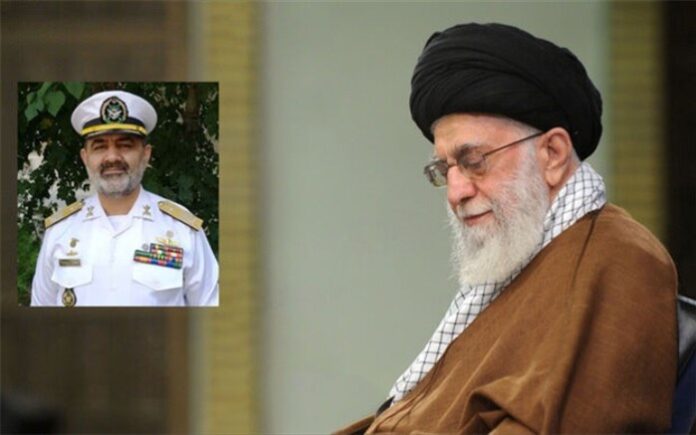
Iran’s Leader Appoints Admiral Irani as New Navy Chief

In his decree, the Leader said the appointments were made in view of the commander’s commitment and valuable work experience and upon the recommendation of the Commander-in-Chief of the Army.

Ayatollah Khamenei also appreciated the efforts made by Rear Admiral Hossein Khanzadi as the previous Navy commander.

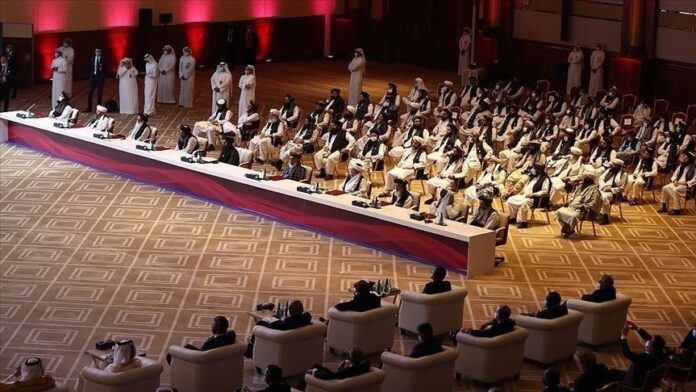
Afghanistan’s Future Decided in Doha by US, Pakistan, Saudi Arabia: Analyst

Pir Mohammad Mollazahi said in an interview with ILNA that Afghanistan’s neighbours, including Iran, took no action as Afghan cities fell to the Taliban one after the other, and despite the fact that the collapse of the capital Kabul and the presidential palace looked imminent. 

“If there was no hesitancy in the foreign policy of Iran, they would definitely not allow the collapse of major Afghan cities pass so easily, so that in a city like Herat, [former warlord] Ismail Khan, as an Islamist fighter and the governor of the city, who had requested help from Iran, would be captured by the Taliban,” Mollazahi said.

“The truth is that a deal was reached among the US, Pakistan and Saudi Arabia in Doha on the future of Afghanistan so that the Taliban would return to power. The Islamic Emirates is an option picked by the US and its allies in the region to replace the liberal democratic forces, which came to power in Afghanistan in 2001. In fact, Washington has bypassed the democratic and pro-human rights groups in Afghanistan.”

Mollazahi added that the deal agreed in Qatar has its “winners and losers”, noting that, so far, the winners are Saudis and Pakistan and the clear losers are Iran, India, Russia and China.

“The inaction, which observers point to in Afghanistan, is in fact understandable when considering Iran. But, on the other side, Pakistanis entered the conflict very seriously and the military forces of this country officially joined the Taliban front and there are reports that, over the past days, 20 to 25 thousand radical forces have entered Afghanistan through Pakistani borders,” the analyst said. 

“There are two viewpoints on the developments in Iran’s eastern neighbour inside our country. The first is what was raised by Mr. Hossein Shariatmadari and the Kayhan newspaper, and considers the establishment of an Islamic Emirates in Afghanistan a reality, which we should accept and work with, to reduce [possible] risks. This, of course, has its backers among our country’s security forces and considers the Taliban a better option than the liberal democratic groups. Now the question is how well this viewpoint corresponds to Iran’s interests. My answer is that it does not correspond to Iran’s interests,” he said

“The second viewpoint is that, despite accepting the Taliban as the reality of Afghanistan, one should not forget that, in case the Islamic Emirates takes power and is established, this group opens the space for radical forces, including a considerable portion of those who are enemies of Iran and have fought against the Islamic Republic in Syria and Iraq, and this poses a risk to our country’s national security. But, Tehran appears to have failed to create a balance between these two viewpoints and remains in a state of indecision.”

Mollazahi added that the hesitancy Iran showed on Heart was also seen in the northern neighbours of Afghanistan. He said Russia, Tajikistan and Uzbekistan were expected to give a positive response to General Abdul Rashid Dostum’s request for help to protect the city of Mazar-i-Sharif, but this did not happen and the city fell to the Taliban. 

“It is clear these countries have also realized that the deal hammered in Doha is too strong to prevent it from happening,” he said.

“After the establishment of the Islamic Emirates, the United States’ next plan is definitely gathering radical forces around from different regions in Asia and uniting them in Afghanistan, to equip them to counter Iran, Russia and China. I have no doubt that this inaction of Tehran will not be in our country’s interest in the end.”

Iran Says Welcomes Peaceful Power Transition in Afghanistan

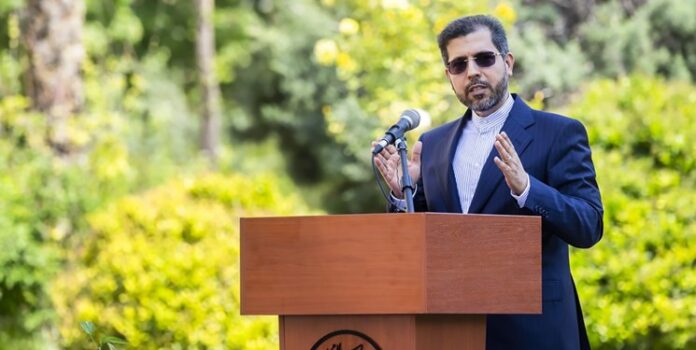
“We are carefully and closely following the developments and are in contact with all parties. As [Foreign Minister [Mohammad Javad] Zarif reiterated in his tweet, the Islamic Republic of Iran uses all available means to facilitate dialogue and compromise in Afghanistan and welcomes the coordination council initiative,” Saeed Khatibzadeh told reporters in a press briefing.

“The Islamic Republic of Iran enjoys numerous historical, civilizational and cultural commonalities with Afghanistan and, at all key and sensitive points in the country’s [Afghanistan] history, with all its power and despite shortages and restrictions, has stood with the neighboring Muslim nation. Accordingly, Iran will stand with them at this fateful point just as it has always done and will put in every effort to ensure peace and calm [in Afghanistan].”

“The Islamic Republic of Iran expresses concern about the escalation in violence in Afghanistan and calls on all parties to reduce violence, keep calm and work for peaceful solutions through talks.”

Khatibzadeh also said Iran strongly hopes that the lives, properties and families of all people, especially the civilians, are protected from any act of aggression amid the swift developments in Afghanistan. He also called on parties to show their commitment to these issues through exercising restraint and looking to the future, and prevent violent groups from exploiting the Afghan territory for their own ends.


“The Islamic Republic of Iran strongly demands serious attention to immunity of diplomats and diplomatic premises within the framework of international conventions and underlines the necessity of keeping diplomats safe and ensuring the security of diplomatic premises. Clearly, the Foreign Ministry is in constant contact with its diplomatic staff in [Iran’s] embassy and consulate in Kabul and Heart and continuously monitors the developments,” he said.

“Unfortunately, the rise in violence and the recent unrest has unleashed a new wave of displaced people. We hope the international community and relevant international bodies pay serious attention to this issue and, especially amid the coronavirus pandemic, help the displaced in line with their inherent duties without losing time.”

“The Islamic Republic of Iran hopes all parties resolve existing problems through talks and understanding. In line with this, Iran, once more, expresses its readiness to help the resolution of topics related to Afghanistan through intra-Afghan talks, owned by Afghans, and also to help create a regional consensus on the issue of Afghanistan. It is in this context that we welcome the peaceful transition of power through the strategic council, comprised of top leaders of Afghanistan.”


Taliban: Shiites Face No Threat for Holding Muharram Mourning Ceremonies

The militants’ official in charge of cultural affairs Molavi Zabihollah Nourani in the north west said they will not create any problems for Shiite citizens of Afghanistan, adding that the group has no problem with Muharram ceremonies.

“Our Shiite brothers can rest assured that they will face no threat from our side and they can go after their activities and mourning ceremonies with peace of mind,” he told Afghanistan’s AVA Press news agency.

In reaction, an Iranian expert on social and religious affairs welcomed the announcement.

“Fortunately the Taliban have no problem with marking of the month of Muharram and have so far had a proper treatment with Shiites,” said Hossein Naderi.

“The current Taliban are different with the Taliban of 20 years ago. They have come to the conclusion that they should keep their Shiite brothers at their side and, as long as I know, the Shiite population [in Afghanistan] is also pleased with how the Taliban are treating them.”


Nearly 14 centuries ago, Shiites third Imam and the grandson of Islam’s holy Prophet Mohammad, along with dozens of members of his family and companions, was martyred on the tenth day of the lunar month of Muharram, known as Ashura. Shiites mark the occasion with mourning ceremonies around the world every year. 

“Imam Hossein, peace be upon him, does not solely belong to Shiites. He is the grandson of the Prophet (peace be upon him) and belongs to all Muslims and the humanity can follow the Ashura uprising as a model to learn lessons about life,” Naderi said.

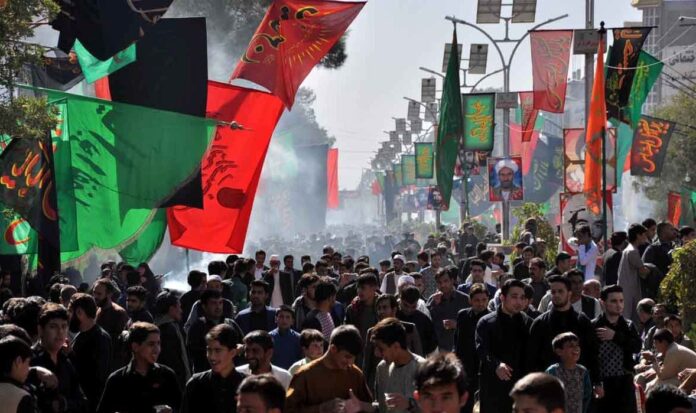
This comes as reports from the city of Mazar-i-Sharif in northern Afghanistan show mourners held street processions on the seventh day of Muharram without facing any disruption or interference by the Taliban.

Iran Allows Import of Pfizer, Moderna Vaccines Despite Earlier Ban

“We have issued the permits for imports of Pfizer and Moderna vaccines from their permissible sources and will [continue] to do so. The name of a vaccine does not lead to limitations or prohibition [of imports] but the source of the vaccine should be trustworthy,” said Mohammad Reza Shanesaz.
Shanesaz added that the Health Ministry moves on the issue of vaccine imports based on the guidelines of the Islamic Revolution Leader.

“Purchase and sales of vaccines takes place between governments across the world. Even Pfizer announced that they deliver their vaccines only to governments. No private sector is involved in the purchase and sales [of coronavirus vaccines],” he said.

Back in January, Leader of Iran’s Islamic Revolution Ayatollah Seyyed Ali Khamenei banned imports of coronavirus vaccines from the US and the UK saying they are not trustworthy and may be seeking to test their vaccines on other nations.

US Military Defeat Should Be Used to Restore Lasting Peace in Afghanistan: Raisi

The president, who chairs the Supreme National Security Council, told Foreign Minister Mohammad Javad Zarif that the people of Afghanistan have a right to stability and welfare.

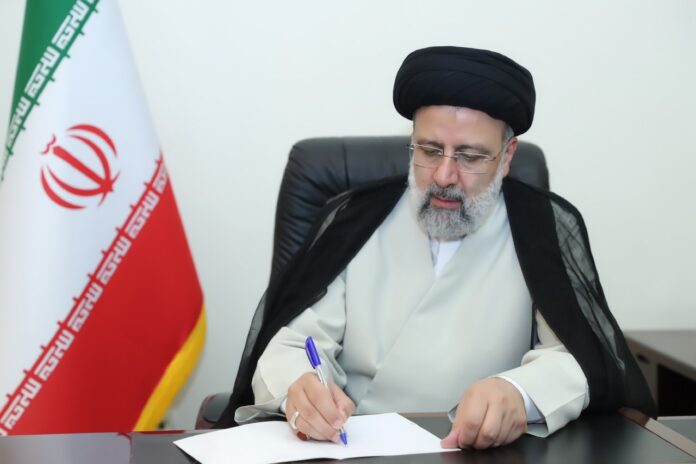
“Iran will work for establishment of stability in Afghanistan, which is the first thing the country needs today, and as a neighboring and brotherly country, calls on all [Afghan] groups to achieve a national consensus,” Raisi said.

The president also stressed Iran believes that with the will of the oppressed people of Afghanistan in place, security and stability with return to the country.

“Iran remains committed to neighboring ties with Afghanistan while attentively monitoring the developments in the country,” He added.

Raisi also tasked Zarif and Secretary of the Supreme National Security Council Vice Admiral Ali Shamkhani to carefully and continuously monitor the situation in Afghanistan and report the developments to the president.