Sunday, December 28, 2025
Home Blog Page 245

Iranian daily: Another war likely if Iran undermines own strength

The article argued that US President Donald Trump’s call for a ceasefire reflected Washington’s recognition that Israel was unable to sustain the fight and that prolonging the war would endanger US bases in the region.

“If the Islamic Republic continues to assert its power visibly, both within and beyond its borders, it is unlikely that a new war will happen soon,” Kayhan wrote.

“But if it acts as if it is weak or in need of concessions to avoid conflict, the next war may be closer than it seems.”

The editorial emphasized the necessity of coupling resistance with diplomacy.

It praised Foreign Minister Seyed Abbas Araghchi for his wartime efforts. However, it cautioned against entering negotiations blindly, warning that talks championed by those who simultaneously undermine them are unlikely to produce meaningful results.

Iranian Leader’s aide meets Putin in Kremlin to discuss nuclear, regional issues

Ali Larijani, top advisor to Supreme Leader Ali Khamenei, meeting Russian President Vladimir Putin | X

During the surprise meeting in Moscow on Sunday, Larijani “conveyed assessments of the escalating situation in the Middle East and around the Iranian nuclear program”, Kremlin spokesman Dmitry Peskov said.

He added that the Russian president had expressed Moscow’s “well-known positions on how to stabilize the situation in the region and on the political settlement of the Iranian nuclear program”.

Meanwhile, the Russian presidency also confirmed the meeting and said that, at the instruction of Ayatollah Khamenei, Larijani presented Iran’s views on the current escalation in the region and, notably, surrounding Iran’s nuclear program.

Putin expressed support for stabilizing the situation in the region and resolving any issues pertaining to Iran’s nuclear program via political means, it added.

The meeting was held amid reports that Iran and the European troika – France, Germany, and Britain – have agreed in to hold fresh nuclear negotiations on Friday in Istanbul, Turkey.

In a statement last week, Russia’s Foreign Ministry dismissed a report claiming that President Putin had urged Iran to agree to a zero enrichment agreement with the United States, describing it as “defamation.”

The statement came after the American news website Axios, citing three sources familiar with the matter, reported that Putin had “encouraged” Iran to accept a nuclear deal that would exclude uranium enrichment.

“Invariably and repeatedly, we have emphasized the necessity of resolving the crisis concerning Iran’s nuclear program exclusively through political and diplomatic means, and expressed our willingness to help find mutually acceptable solutions,” the ministry said.

Iran has consistently announced that it does not seek a nuclear weapon, while defending its “legitimate rights” to use nuclear energy for peaceful purposes.

Israeli attacks in Syria raise US concern over Netanyahu: Report

White House officials told Axios that Israel’s recent bombing of Syria’s presidential compound, general staff headquarters and defense ministry has raised alarm about Netanyahu’s unpredictable behavior.

“The feeling is that every day there is something new,” stated one senior official.

Some White House officials criticized Netanyahu’s increasing aggression, with one saying he “acted like a madman. He bombs everything all the time.”

One official warned that Netanyahu’s actions could undermine US President Donald Trump’s efforts in Syria and exhaust his goodwill.

“The bombing in Syria caught the president and the White House by surprise. The president doesn’t like turning on the television and seeing bombs dropped in a country he is seeking peace in,” said a US official.

A senior official highlighted Israel’s bombing of a church in Gaza last week, which prompted Trump to call Netanyahu demanding an explanation.

Officials emphasized the growing skepticism within Trump’s team toward the Israeli prime minister, saying he is “sometimes like a child who just won’t behave.”

Washington remains alarmed over Netanyahu and his regional policies, officials noted.

Neither Israeli nor US officials have responded to the report.

On July 13, clashes broke out between Bedouin Arab tribes and armed Druze groups in Suwayda in southern Syria.

The violence escalated and Israeli airstrikes followed, including on Syrian military positions and infrastructure in Damascus. Israel cited the need to protect the Druze community as a pretext for its attacks.

Most Druze leaders in Syria, however, have publicly rejected any foreign interference and reaffirmed their commitment to a unified Syrian state.

All parties in Syria agreed to pause the violence as of 5 pm Damascus time (1400GMT) Sunday, Tom Barrack, the US special envoy for Syria, announced.

Iran’s intelligence minister: Crucial Israeli targets exposed to Iranian armed forces

Iran Minister of Intelligence Esmaeil Khatib

Speaking on the sidelines of a cabinet meeting, Khatib credited Iranian intelligence elements for standing up against a joint aggression by Israel and the US, launched on June 13 and left over a thousand Iranians, mostly civilians, dead.

“Thanks to the efforts of the Intelligence Ministry, the armed forces, and the Interior Ministry, full internal security was maintained during the conflict,” he said.

According to Khatib, hostile plans to trigger domestic unrest and terrorist operations were foiled, with all related suspects arrested.

He emphasized the ministry’s success in gathering detailed intelligence from inside the Israeli-occupied territories, which was shared with the military to aid in defense operations.

He also pointed to the role of coordinated drills, and praised the judiciary’s cooperation in counter-espionage efforts.

Khatib warned of ongoing foreign attempts to destabilize Iran, urging unity in the face of efforts to fuel division and polarization.

Iran agrees to new round of talks with European trio in Istanbul on Friday

Esmael baghaei

Esmail Baghaei, quoted by Iranian state media, confirmed the high-level discussions amid escalating tensions.

Iran will be represented by senior diplomats Majid Takht-Ravanchi and Kazem Gharibabadi.

The negotiations will focus on Iran’s nuclear program. This marks the seventh round of talks between Iran and the three European parties under the current administration.

The announcement comes shortly after the E3 foreign ministers, joined by the EU’s foreign policy chief, spoke with Iranian Foreign Minister Seyed Abbas Araghchi, the first official contact since last month’s attacks by Israel and the US on Iran.

These European nations, alongside China and Russia, remain parties to the 2015 nuclear agreement with Iran.

The E3 have signaled they may trigger the UN’s “snapback” sanctions mechanism by the end of August if dialogue with the US, which had stalled following the US-Israeli strikes on Iran, does not resume or yield substantial progress.

#GazaIsStarving trends on social media

Gaza War

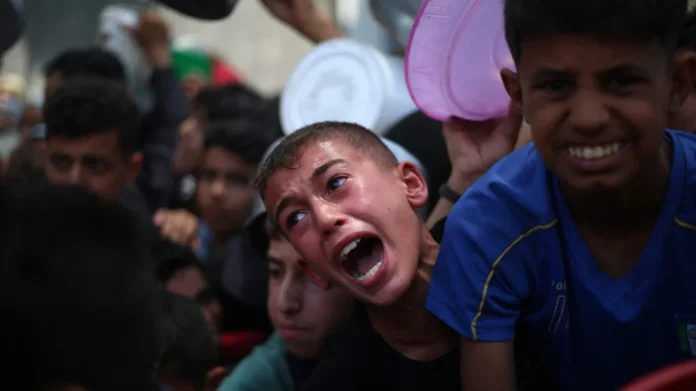
On Sunday, the Arabic version of the hashtag had appeared in more than 227,000 posts on X, where it recently topped the platform’s trending list. On Instagram, the hashtag has been used in more than 5,000 posts.

Most posts are attributing to a post from October 31, 2023, quoting Palestinian surgeon Ghassan Abu Sittah’s warning: “People have started going hungry.”

Nearly two years later, the phrase has become a global rallying cry as Israeli forces kill dozens of starving Palestinians every day.

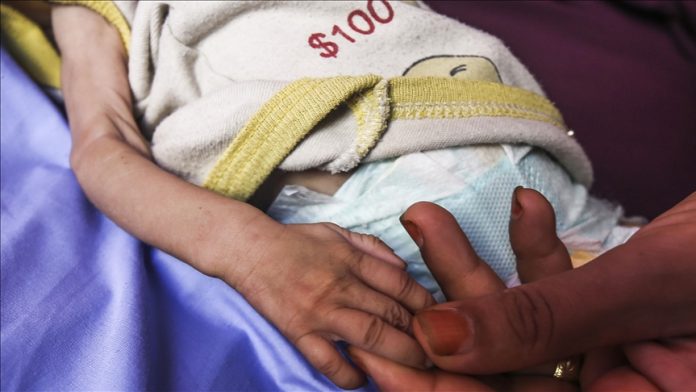
The social media trend also came amid warnings from the United Nations and other aid agencies that Israel is starving Palestinian civilians, including more than a million children, by blocking food and medicines from entering the enclave.

Since May, nearly 900 Palestinians have been killed near aid sites run by GHF, a notorious aid agency backed by Israel and the United States.

Under the hashtag #GazaIsStarving, social media platforms have been flooded with images and videos showing the extent of the humanitarian crisis, which many countries and rights groups have called a genocide.

Israel has killed nearly 59,000 Palestinians, most of them women and children, in Gaza since October 2023. The relentless bombing has destroyed the enclave, almost collapsed the health system, and created famine-like conditions.

Last November, the International Criminal Court issued arrest warrants for Israeli Prime Minister Benjamin Netanyahu and his former Defense Minister Yoav Gallant for war crimes and crimes against humanity in Gaza.

Israel also faces a genocide case at the International Court of Justice for its war on the enclave.

Tehran to shut down on Wednesday amid soaring temperatures, water crisis

Water Crisis

In a statement shared on social media, Mohajerani said the Cabinet’s decision comes as the Iranian capital, Tehran, endures unusually high temperatures and the country faces a worsening water shortage.
“This is an opportunity for rest, short travel, or spending time with family – while observing safety measures and energy-saving guidelines,” she wrote.

The decision follows growing concerns over the compounded impact of the heatwave and Iran’s long-standing water crisis. Authorities recently confirmed that water reserves in Tehran’s main dams have reached their lowest level in over a century, while the capital faces one of the most severe droughts in 60 years.

Meteorological forecasts indicate that temperatures in Tehran are expected to soar above 40°C (104°F) this week, exacerbating the strain on energy and water infrastructure. Officials continue to urge the public to minimize non-essential consumption of electricity and water during peak hours to prevent further pressure on national grids.

Iran’s army commander says Tehran replaced air defenses damaged in Israeli attacks

Speaking on Sunday, Rear Admiral Mahmoud Mousavi said Iran’s radar and air defense systems were among the first targets of Israel in its 12-day cowardly assault, but the Air Defense Force personnel remained at their stations around the clock and confronted the enemy.

“The Zionist enemy sought to destroy Iran’s defense capabilities, and some of our defense systems were damaged in this war,” he added.

“With the efforts of my comrades, however, the damaged systems were replaced and deployed at pre-determined locations.”

Mousavi also noted that by using the existing air defense systems and the new replacements, the Iranian forces managed to cover the country’s skies, and thus the enemy failed to achieve its objectives.

He further stated that Israel did not enter the war alone and that the United States and NATO helped it.

“The capacity of the Iranian Armed Forces is beyond what the illegitimate Zionist regime can counter. However, the supporters of this usurping regime have been aiding it for months by gathering intelligence, and we consider the US complicit in the Zionist regime’s crimes,” he pointed out.

The commander also emphasized that the Iranian nation stood alongside the country’s Armed Forces during last month’s aggression and demonstrated unbreakable unity.

On June 13, Israel launched a blatant and unprovoked aggression against Iran, killing at least 1,060 people, including military commanders, nuclear scientists, and ordinary civilians.

More than a week later, the United States also entered the war by bombing three Iranian nuclear sites in a grave violation of international law.

In response, the Iranian Armed Forces targeted strategic sites across the occupied territories as well as the al-Udeid air base in Qatar, the largest American military base in West Asia.

On June 24, Iran, through its successful retaliatory operations against both the Israeli regime and the US, managed to impose a halt to the terrorist assault.

President Pezeshkian: Tackling Iran’s water crisis requires structural, region-specific solutions

Speaking on Sunday at a government-academic symposium focused on sustainable water management, he emphasized that the water shortage is not a temporary issue but a long-term national challenge.

“The crisis cannot be solved through fragmented projects,” Pezeshkian said.

“We need consistent efforts anchored in five key pillars: integrated water-soil-crop engineering, effective education, incentive policies, strict legal enforcement against violations, and continuous evaluation and oversight.”

He called for the establishment of expert joint task forces between government bodies and academic institutions to design context-specific solutions at the provincial and county levels, noting the vast climatic and geographical differences across Iran.

Pezeshkian also highlighted the importance of raising public awareness.

“Both policymakers and citizens must understand the urgency. We must make water data widely accessible and embed water conservation into educational curricula.”

Meanwhile, Tehran’s water utility announced that current reserves in the capital’s main dams have reached their lowest levels in a century, citing an unprecedented five-year drought and record-low rainfall as contributing factors. The province now faces its most severe water stress in six decades.

Over 1,000 dead in week of fighting in Syria’s Sweida

Humanitarian convoys were readying to enter Sweida to ease the impact of days of sectarian violence that broke out last weekend between Syrian Bedouin, Druze and government forces.

Since midnight, “Sweida has been relatively calm”, the Syrian Observatory on Human Rights (SOHR) reported, saying more than a thousand people had been killed over the past week.

The deaths included 336 Druze fighters and 298 Druze civilians, 194 of whom were “summarily executed by members of the Defense and Interior Ministries”.

Also among the dead were 342 members of government security forces and 21 Bedouin, including three civilians, who were “summarily executed by Druze fighters”.

In addition, 15 members of government forces were killed in Israeli strikes, according to the SOHR.

The observatory added security forces had blocked roads leading to the province on Sunday to prevent the arrival of factional fighters.

The interior ministry announced overnight that the city had been evacuated of all tribal fighters and that the clashes had ceased following President Ahmed al-Sharaa’s announcement of a ceasefire on Saturday.

A spokesperson for the Syrian Council of Tribes and Clans told Al-Jazeera that the fighters had left the city “in response to the presidency’s call and in accordance with the terms of the agreement”.

Residents have been left confined to their homes without electricity and water, while food supplies are scarce.

The US special envoy for Syria, Tom Barrack, stated on Sunday that the country was at a “critical moment”, calling for “peace and dialogue to prevail”.

“All factions must lay down their arms,” he wrote on X.

Fighting between Druze factions, Bedouin groups and troops loyal to Sharaa’s administration has rocked the region since last weekend, exacerbated by Israeli air strikes.

The Druze of Sweida had largely stayed out of Syria’s 14-year war, and the governorate saw protests over living conditions in the last few years of former President Bashar al-Assad’s rule.

Following his ouster in December, many Druze have remained wary of the new government led by Sharaa, the former leader of an al-Qaeda affiliate that carried out sectarian attacks on the community during the war.

Although Sharaa has rejected his previous affiliation and attempted to rebuild ties, several groups in Sweida have actively opposed his government.

Israel has also spent several days attacking Syria, citing the defence of the Druze community.

On Saturday, Washington declared it had brokered a truce between Israel and Syria to avoid further escalation.

Israel had bombed government positions in Sweida and Damascus earlier in the week, with some targeting the Syrian defence ministry, military headquarters and the vicinity of the presidential palace.