Sunday, December 28, 2025
Home Blog Page 246

Iranians told to use less water amid shortages

Iran Water Crisis

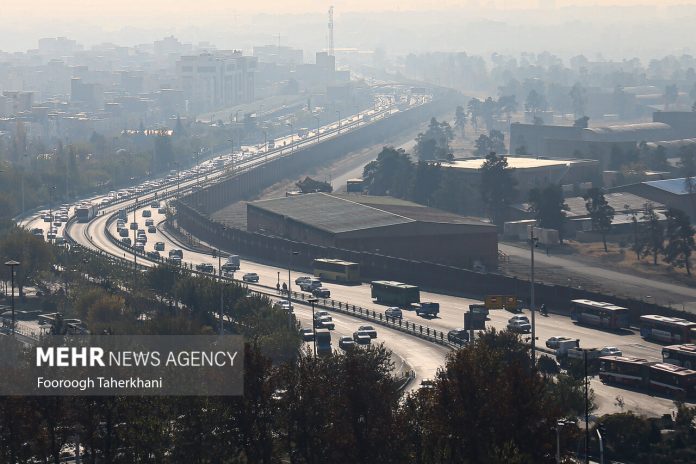
Water scarcity is a major issue in Iran, particularly in arid provinces in the country’s south, with shortages blamed on mismanagement and overexploitation of underground resources as well as the growing impact of climate change.

On Saturday, the national meteorological service said Iran was experiencing its hottest week of the year so far, with temperatures exceeding 50C in some areas.

“People should conserve water to avoid drops in pressure,” stated Tehran city council chair Mehdi Chamran.

Authorities across Iran have issued similar appeals in recent days, asking residents in several provinces to limit water usage.

Tehran’s provincial water management company called to reduce usage by “at least 20 percent” to help ease the shortages.

In a statement, it announced that “the reservoirs of the dams supplying water to Tehran are currently at their lowest level in a century” following years of steady decline in rainfall.

Javan, a daily newspaper, reported on Saturday that authorities had reduced water pressure in parts of the capital in a bid to mitigate the crisis, resulting in “water outages lasting between 12 and 18 hours” in some areas.

Iran’s interior minister: Security indicators improved since war with Israel

Speaking on Sunday, Momeni stated that current insecurity indicators are better compared to the same period last year.

“The general security situation in the country is excellent,” he said, attributing the outcome to strong cooperation between citizens and the military, law enforcement, and intelligence agencies.

He noted that even in provinces where adversaries were reportedly planning to incite unrest, the security situation has significantly improved. “Our preparedness and unity have proven effective,” Momeni added.

Regarding preparations for the upcoming Arbaeen pilgrimage to Iraq’s shrine cities of Najaf and Karbala attended by millions of Iranians as well as Pakistanis and Afghans, the minister said the government had initiated planning months ago.

“We recently held a trilateral meeting with the interior ministers of Iraq and Pakistan to coordinate efforts and streamline the process for pilgrims,” he said.

Momeni emphasized that while recent conflict-related issues are still being managed, ongoing national events are not being neglected.

Israel holding talks with Hamas for first time on possibility of ending Gaza war: Report

Israel Hostages

“This negotiation is different than the ones that brought about the previous deals,” said the source, according to the Haaretz newspaper.

“While the previous deals dealt with the release of the hostages … this deal touches on the issue of ending the war. Therefore, everything is interconnected. This is a very complex deal,” he noted.

The source added that a proposed agreement includes a 60-day ceasefire during which 10 living Israeli hostages would be released, and intensive negotiations on ending the war would begin.

He stated the talks “touches on issues of how the war will end or continue, what will happen in Gaza and how all the hostages will be returned. Within the framework of the deal, there is an entire clause that deals with issues to be discussed regarding the end of the war. Both parties can add topics, and they will be discussed within the 60-day cease-fire.”

The source claimed that “the Israeli delegation embarked to Doha with a broad scope of action and a satisfactory mandate. There is enough flexibility to reach an agreement, without compromising on issues such as Israel’s security needs.”

Israeli media outlets, including the public broadcaster, KAN, reported Friday that Israel is considering sending a second delegation to Doha if the Palestinian side agrees to discuss the deal’s details, amid mediation by Qatar, Egypt and the US.

The proposals reportedly include a 60-day ceasefire, during which 10 living hostages and 18 bodies would be released, with final negotiations on ending the war to resume during the truce.

Despite gaps on issues such as the mechanism for aid delivery and Israeli troop deployment, Israeli sources still see the deal as possible, according to the Israeli broadcaster.

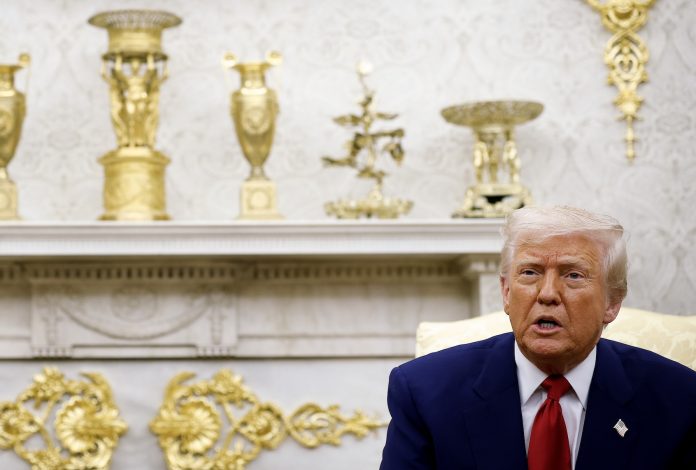
US President Donald Trump announced late Friday that 10 hostages in Gaza would be released soon.

Trump, whose administration offers unconditional support for Israel in its war on Gaza, did not provide details.

During the last 21 months, multiple rounds of indirect negotiations have been held between Israel and the Palestine resistance group, Hamas, to reach a ceasefire and carry out prisoner exchanges.

Two partial agreements were reached in November 2023 and in January.

Israeli Prime Minister Benjamin Netanyahu, who is wanted by the International Criminal Court, avoided finalizing the latest agreement and resumed the war on March 18.

Hamas has repeatedly stated its willingness to release all Israeli hostages “in one batch” in exchange for ending the genocide and a full Israeli military withdrawal from Gaza.

Rejecting international calls for a ceasefire, the Israeli army has pursued a brutal offensive on Gaza since the end of 2023, killing nearly 59,000 Palestinians, most of them women and children.

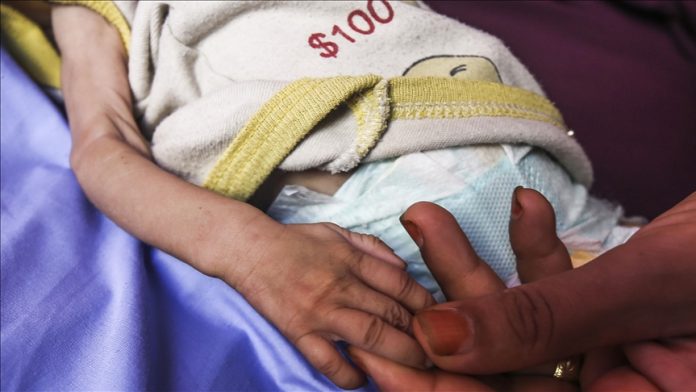
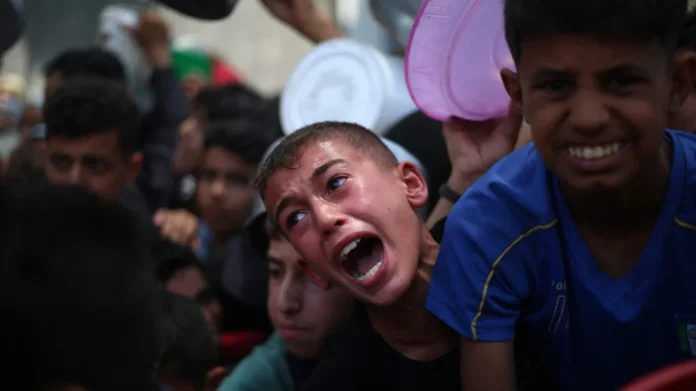
The relentless bombardment has destroyed the enclave and led to food shortages and the spread of diseases.

Last November, the International Criminal Court issued arrest warrants for Netanyahu and his former Defense Minister Yoav Gallant for war crimes and crimes against humanity in Gaza.

Israel also faces a genocide case at the International Court of Justice for its war on the enclave.

Iran, EU3 agree to resume nuclear negotiations: Tasnim

Nuclear Talks in Vienna

The informed source told Tasnim that Tehran and the European troika have come to an agreement in principle on the resumption of the talks about Iran’s nuclear program, but the timing and location of the negotiations are under debate.

The decision as to which country will be hosting the upcoming talks has not been finalized yet, the source said.

Tasnim had obtained information earlier that Iran was considering a request from the EU3 about the resumption of talks on the nuclear issue and the removal of sanctions.

Reports suggest that the next round of talks will be held at the level of deputy foreign ministers of Iran, the UK, France and Germany.

Tens of thousands of Israelis rally in Tel Aviv demanding Gaza ceasefire

Israel Protest

The Yedioth Ahronoth newspaper said demonstrators marched from Hostage Square in central Tel Aviv toward the US Embassy branch on HaYarkon Street, demanding a comprehensive agreement.

The daily reported that protesters carried banners and chanted for an end to the war and the immediate return of the hostages.

Former hostages released by Hamas also reportedly took part in the march.

Participants issued direct appeals to Israeli leaders and US President Donald Trump to move toward finalizing a comprehensive deal.

The paper added hundreds of demonstrators held similar protests in other areas, including Karkur Junction and Rothschild Street in Caesarea in the north.

During the last 21 months, multiple rounds of indirect negotiations between Israel and Hamas have been held to end the war and facilitate a prisoner exchange.

Two partial agreements were reached in November 2023 and in January.

Israeli Prime Minister Benjamin Netanyahu, who is wanted by the International Criminal Court, backed away from finalizing the latest agreement and resumed the war on March 18.

Hamas has repeatedly affirmed its readiness to release all Israeli hostages “in one batch” in exchange for an end to the genocide and the withdrawal of Israeli forces from Gaza.

Rejecting international calls for a ceasefire, the Israeli army has pursued a brutal offensive on Gaza since the end of 2023, killing nearly 59,000 Palestinians, most of them women and children.

The relentless bombardment has destroyed the enclave and led to food shortages and the spread of diseases.

Last November, the International Criminal Court issued arrest warrants for Netanyahu and his former Defense Minister Yoav Gallant for war crimes and crimes against humanity in Gaza.

Israel also faces a genocide case at the International Court of Justice for its war on the enclave.

Iranian paramedic succumbs to injuries weeks after Israeli airstrike

Beyranvand had volunteered for emergency response efforts from the start of the fighting and was critically wounded when warplanes targeted civilian sites in Lorestan Province, western Iran.

After 28 days of medical treatment for severe burns, he passed away on Sunday. Local sources say he worked without armor or weapon, only a medical kit in hand.

Two other paramedics, Mahmoud Zinevand and Mohammad Dalvand, also died in the same attack. Their deaths have raised protests over the targeting of civilian and noncombatants by the Israeli regime during its 12-day aggression.

The Israeli conflict, started on June 13 and ended in a late-June ceasefire, left over 1,000 Iranians dead and nearly 5,000 injured, vast majority of them civilians.

Hamas reviewing new Gaza maps in ceasefire talks

Hamas

The Palestine resistance group has received updated maps from mediating countries showing areas across Gaza still under Israeli control, according to a source close to negotiation teams in Qatar.

They include most of Beit Hanoun in the north, half of Rafah, the neighborhoods of Huzaa and Abasan in southern Khan Younis and a large portion of Gaza City’s Shujaiyya district.

The source told Anadolu that Hamas has begun internal consultations to evaluate the maps and is engaging in discussions with other Palestinian factions.

Previous maps had shown Israel maintaining full military control over large swaths of Beit Hanoun, Beit Lahiya, all of Rafah, extensive parts of Khan Younis and the border areas — proposals that Hamas had rejected.

Hamas continues to insist on a return to the withdrawal lines agreed upon in January, which called for an Israeli pullback of between 390 and 1,100 meters. (1,280 and 3,609 feet)

In light of recent developments, Israeli media outlets have reported a cautious sense of optimism that progress may be possible. The Yediot Ahronot newspaper, citing sources close to the talks, said there were “promising signals that an agreement could be reached within two weeks.”

But the report noted that Hamas remains hesitant about the number of Palestinian prisoners to be released in exchange for each Israeli captive.

Mediators, particularly Qatar, are said to have played a key role in narrowing the gaps between the parties.

Still, according to the Israeli public broadcaster, KAN, which cited unnamed government sources, Hamas has not yet issued a response to the latest proposal.

One Israeli official reportedly said, “We’ve shown flexibility, but Hamas isn’t responding.”

A representative of one of the Arab mediator nations, speaking anonymously to KAN, said that “most of the disputes over the deployment of Israeli forces have been resolved,” leaving only “limited remaining issues.”

The diplomat described the atmosphere as one of “cautious optimism.”

The same diplomat also revealed that in the last two days in Doha, negotiations have focused heavily on the number and identity of Palestinian prisoners to be released in exchange for Israeli captives.

The diplomat pointed to a recent meeting between US President Donald Trump and Qatari Prime Minister Mohammed bin Abdulrahman Al Thani as a “critical turning point” for advancing the talks.

Trump reportedly conveyed that Washington is “satisfied with the progress made so far.”

Trump previously announced that Israel had agreed to the conditions necessary for implementing a 60-day ceasefire.

The proposal, drafted by Qatar and Egypt, was submitted to Hamas for review.

Hamas responded positively, informing the mediators of its willingness to proceed and stating its readiness to negotiate the ceasefire’s implementation.

The Israeli government, however, initially rejected changes Hamas had made to Qatar’s proposal, calling them “unacceptable.”

An Israeli delegation still traveled to Doha to continue talks.

Negotiations in Doha have reportedly resolved many key disagreements, but Israel’s insistence on maintaining its occupation of the Morag Corridor, which separates Rafah and Khan Younis, as well as its continued presence in Rafah itself, remains a sticking point.

UK police detain dozens at parliament rally for banned Palestine Action group

The crowd in Parliament Square had been waving placards supporting the group that was banned this month under anti-terrorism legislation, the force announced in a post on X.

People from the rally, some wearing black and white Palestinian scarves, were taken away in police vans.

British lawmakers proscribed the group earlier this month after some of its members broke into a Royal Air Force base and damaged planes in protest against Britain’s support for Israel.

Membership of Palestine Action now carries a prison sentence of up to 14 years.

The group has called the decision “authoritarian”, and a challenge to the ban will be heard at London’s High Court on Monday.

Palestine Action is among groups that have regularly targeted defence firms and other companies in Britain linked to Israel since the start of the conflict in Gaza.

Police have arrested scores of the group’s supporters at rallies across Britain since the ban came in.

Iranian daily urges firm action on illegal Afghans’ deportation, citing alleged security threats

Afghan Refugee in Iran

The Sunday’s article frames the move as a necessary step in safeguarding Iran’s sovereignty and cites recent intelligence reports on “involvement of certain migrants in hostile espionage activities during a 12-day armed conflict with Israel.”

According to the editorial, the delayed but decisive response by Iranian authorities followed revelations of alleged cooperation between Afghans and Israeli intelligence aimed at destabilizing the country.

It warned against individuals and groups attempting to “sanitize” those accused, describing them as profiteers seeking to preserve their financial interests under the guise of humanitarian concern.

The piece also criticized some Iranians for shedding “crocodile tears” for departing migrants, suggesting such sentiments were “naïve and misplaced.”

State media also came under scrutiny for downplaying the role of undocumented migrants in “security incidents, including attacks in religious sanctuaries and widespread armed thefts.”

The newspaper emphasized that Afghanistan’s security conditions now justify the repatriation of its nationals and that Iran had previously borne significant costs in hosting millions of Afghans.

It concluded that the government’s actions align with international norms and popular domestic sentiment.

Senior IRGC cleric rejects calls for president’s dismissal, urges unity and dignified talks with US

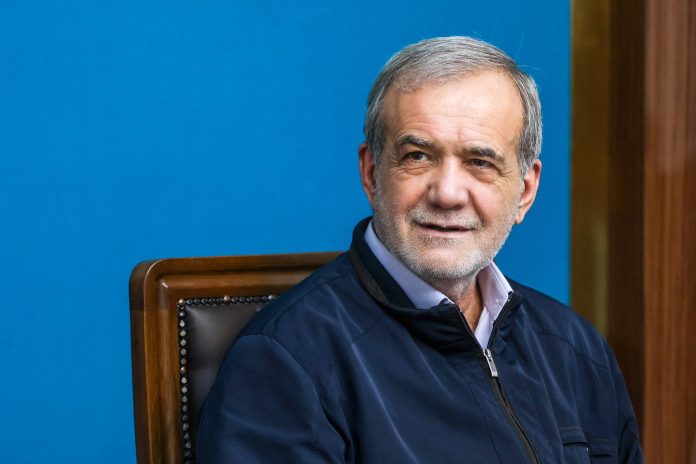
Masoud Pezeshkian

“In no period have officials shown this level of obedience to the Leader’s wise leadership,” Abdollah Hajji Sadeghi said, emphasizing that while certain actions might not align with personal preferences, the overall direction of the Islamic Republic remains firmly rooted in the principles of the Leader.

He warned that undermining national unity, especially after the 12-day heavy war with Israel and the US, would be detrimental.

“One of the blessings of that resistance was our internal cohesion. We must not allow that to be weakened,” he stated.

The remarks came after some political factions in Iran seek to topple the Pezeshkian administration under the pretext of his “incompetency.”

Regarding the possibility of renewed negotiations with the US, Hajji Sadeghi reiterated that any talks should reflect the Leader’s guidance.

“Negotiations are acceptable if they are conducted from a position of strength and dignity, not from weakness or desperation,” he said. “If talks are based on power, they are very welcome.”

Tehran and Washington were in the midst of indirect talks over the Iranian nuclear program, when Israel launched an unprovoked aggression against Iran on June 13.