Tuesday, December 23, 2025
Home Blog Page 245

Iranian officials respond to public concern over ‘tiered internet’ plan

Iran Internet Mobile

Azar Mansouri, head of the Reformist Front, voiced sharp criticism on social media, saying recent statements by government officials and the passage of a new regulation by the Supreme Council of Cyberspace have alarmed and angered the public.

She called on the government to clearly and transparently abandon these plans and accelerate efforts to lift internet filtering and ensure open access.

The controversy follows the Council’s recent unanimous approval of a regulation to facilitate digital business. Critics say the measure marks the beginning of a tiered internet system, potentially limiting access based on user type or role.

Communications Minister Seyed Sattar Hashemi responded by emphasizing President Massoud Pezeshkian’s firm opposition to tiered access. Both officials reiterated that unrestricted internet access is a right for all citizens.

President Pezeshkian stated that the government’s aim is to promote a high-quality and inclusive internet, not impose restrictions. He further warned against policies that would increase reliance on restriction-bypassing VPNs or undermine digital security.

Ten children a day losing a limb in Gaza: Report

According to an update by the UN-sponsored Global Protection Cluster, Israeli attacks on Gaza have “destroyed the protection environment” of the disabled and newly disabled in the enclave.

The report said 134,105 people including over 40,500 children have suffered new war-related injuries since the war began in October 2023.

Twenty-five percent are estimated to have new disabilities requiring acute and ongoing rehabilitation.

“There is no safe space in Gaza. Twenty months of intense hostilities have destroyed the protection environment for persons with disabilities and older persons,” it added.

“Over 35,000 people are believed to have significant hearing damage due to explosions. Ten children per day lose one or both of their legs.”

According to the report, Gaza’s only limb reconstruction and rehabilitation centre became non-functional in December 2023 due to a lack of supplies and specialised health workers, and was severely damaged in air strikes in February 2024, depriving children and adults of life-saving services.

Rights groups and NGOs say the war on Gaza has had a devastating effect on the children of the enclave.

The Palestinian Ministry of Health says that more than 17,000 of the 58,500 Palestinians killed since October 2023 are children and that they account for 30 percent of the total injuries.

An average of 15 children per day acquire potentially life-altering disabilities, the ministry said.

In December, the UN reported that Gaza had the highest number of child amputees per capita globally.

“Gaza now has the highest number of child amputees per capita anywhere in the world – many losing limbs and undergoing surgeries without even anaesthesia,” UN Secretary-General Antonio Guterres stated.

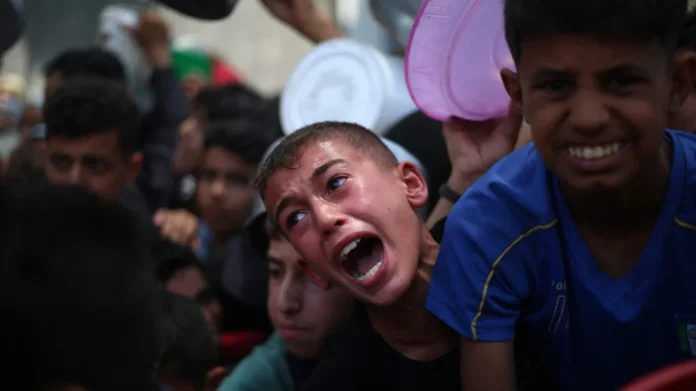
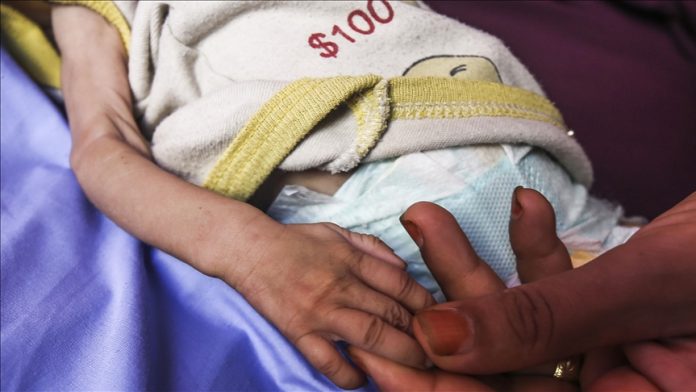
Last week, the UN agency for children, UNICEF, warned that children experiencing acute malnutrition are particularly vulnerable and face a greater “likelihood of dying from simple causes by 10 times”.

Spokesperson James Elder said that access to hospitals in Gaza was no longer safe for ill or malnourished children.

Separately on Tuesday, the UN agency for Palestinian refugees (UNRWA) said one in ten children screened at UN-run health clinics in Gaza is now malnourished.

“Our health teams are confirming that malnutrition rates are increasing in Gaza, especially since the [Israeli] siege was tightened more than four months ago on the second of March,” UNRWA’s director of communications, Juliette Touma, told journalists in Geneva during a briefing via video link from Amman.

Aid agencies have warned repeatedly that famine is looming in parts of Gaza, particularly in the north, where access remains limited.

OPEC data shows Iran’s oil output fell slightly in June

Iran Oil

OPEC data cited in a Wednesday report by the IRIB News showed that Iran had produced 3.241 million barrels per day (bpd) of oil in June, down 1.87% compared to figures reported in May.

Iran’s June quarter oil output reached 3.291 million bpd, down from 3.307 million bpd in the March quarter but up from 3.29 million bpd reported in the last quarter of 2024, the figures showed.

The country had produced an average of 3.257 million bpd last year and 2.884 million bpd in 2023, according to the same data.

Total OPEC output rose by 0.81% to 27.235 million bpd in June, amid efforts in the bloc to gradually remove cuts agreed in recent years to stabilize international oil prices.

Despite the fall in output in June, Iran remained the third largest oil producer in the 12-member OPEC, trailing Saudi Arabia at 9.356 million bpd and Iraq at 3.943 million bpd, OPEC tables showed.

However, the average price of Iran’s heavy-grade oil rose $5.88 or 9.2% compared to May prices to reach $69.13 per barrel. That came as average OPEC basket prices rose by $6.11 or 9.6% to $69.73 per barrel in June, according to the tables.

Iran has consistently raised its oil output in recent months despite the growing pressure of the US sanctions on its exports.

The country fought a 12-day war with the Israeli regime starting June 13, which slightly affected shipping activities in the Persian Gulf.

Israeli military bombs Syrian government buildings in Damascus

Footage released on local TV showed an explosion in central Damascus, with huge plumes of smoke enveloping the area around Umayyad Square.

The Syrian state news agency SANA said, citing the country’s health ministry, that one person hadbeen killed and 18 others injured in the attacks.

Israeli Defence Minister Israel Katz posted footage of the bombing on X, writing: “heavy blows have started”.

SANA also added Israel struck targets in the southwestern province of Daraa.

“Starting at 9:30 a.m. Tuesday, Israeli aircraft began flying over Daraa and Sweida provinces, conducting several maneuvers in Syrian airspace before striking the town of Izraa in rural Daraa and launching another airstrike near the town of Al-Mazraa in Sweida countryside,” stated Abu Amin, a military observer in Syria.

Amin told Middle East Eye that in the afternoon, Israeli drones had targeted several vehicles belonging to General Security, followed by strikes on three tanks operated by the Syrian Ministry of Defense.

“F-35 jets carried out multiple airstrikes on the 112th Brigade and the 175th Regiment of the Syrian Ministry of Defense in the Izraa region of Daraa, resulting in casualties and injuries among Syrian army personnel,” he added.

On Sunday, clashes broke out between Syrian government forces and members of the Druze minority in Sweida, a Druze-majority southern province.

Since the new government, led by former rebel Ahmad al-Sharaa, took power in December, Israel has repeatedly struck Syrian military targets, sometimes in response to tensions with the Druze, which it claims it seeks to protect.

The latest deadly clashes in Sweida have prompted further Israeli bombing, though the strikes on central Damascus are a serious escalation.

The Israeli army announced it was preparing for several days of fighting in Syria and would withdraw forces from the Gaza Strip and divert them northwards to protect the border.

Israel’s far-right National Security Minister Itamar Ben-Gvir went a step further and, in a statement, said Israel should kill Sharaa.

“We need to eliminate the head of the snake,” he said in a statement.

The Israeli army noted that several hundred Druze citizens of Israel had crossed the border into Syria on Wednesday in an apparent attempt to support Syrians from their community.

It added that it was working to return them to Israel, and that it had successfully barred Syrian Druze from entering the country via the Hader area of southern Syria.

On Tuesday, the spiritual leaders of the Druze community said in a written statement that it would allow Syrian government forces to enter Sweida city to stop the violence, which has so far killed almost 250 people according to the Syrian Observatory for Human Rights.

The statement called for armed groups to surrender their weapons and cooperate with incoming troops.

But just hours later, Druze spiritual leader Sheikh Hikmat al-Hijri released a video statement in which he said the initial statement had been “imposed” on them and accused the government of bombarding the city with artillery.

Since the overthrow of Bashar al-Assad in December, the government has struggled to pull together disparate factions and communities across the war-torn country.

Sweida and its Druze largely managed to stay out of the Syrian civil war and maintain some degree of independence even under Assad’s authoritarian rule.

In December, Hijri told Middle East Eye that he was looking forward to working with the new authorities and condemned the Israeli attacks and invasion that had been prompted by Assad’s ouster.

Late on Wednesday, Al-Jazeera reported that an agreement had been reached to cease fire in Sweida, but it was again apparently rejected by Hijri and his supporters in a statement.

Khaled, a resident of Sweida, told Middle East Eye that Sweida province and surrounding villages had witnessed widespread looting, the burning of shops, killings, and assaults on civilians following the entry of Syrian government security forces on Tuesday.

“We hope that bloodshed will end, and that an agreement will be reached to ensure weapons are solely in the hands of the Syrian state and to restore security to our city,” he said, adding, “We are an integral part of the Syrian state throughout history, and we reject Israeli occupation or interference in our regions.”

Iranian govt. spokesperson says regulation of foreign nationals key to economic relief

Fatemeh Mohajerani made the remarks during a press briefing on Wednesdsy.

She underlined that unregulated foreign populations contribute significantly to rising costs in subsidized sectors, especially in energy and bread.

She also said that managing the presence of undocumented migrants is not only an economic necessity but also a public demand.

“We are currently facing drought conditions, and the state of the country’s dams is far from satisfactory”, Mohajerani added. She further noted that Iran is facing broader environmental and infrastructure challenges as well.

Iran has been hosting millions of Afghan refugees over the past decades. The population has put a strain on Iran’s economy, prompting authorities to deport illegal Afghan nationals to their country.

President Pezeshkian urges security review, respectful engagement with public after 12-day war

Pezeshkian said the events revealed clear shortcomings in Iran’s security performance and called for an in-depth evaluation to identify and correct these vulnerabilities.

The president further referred to the importance of learning from past mistakes, stressing the necessity of reform in certain government approaches, especially those that have led to public dissatisfaction.

Pezeshkian underscored that the government’s treatment of its citizens must be entirely respectful at all levels.

He then spoke about the need for a shift in how the government engages with its critics and noted that many people who have voiced opposition to government policies or questioned its direction had, during the Iran–Iraq war, stood firmly in defense of the country.

“We must revise our approach toward those whom we may have considered adversaries simply for criticizing us”, Pezeshkian said.

“Some of them did not accept our views or even our legitimacy, but when Iran was under threat, they stood by the nation…that must not be forgotten.”

Erdoğan rival handed prison term for threatening Istanbul prosecutor

The case is one of a number lined up against İmamoğlu, the main rival of the country’s president, Recep Tayyip Erdoğan. He is already being held over an investigation into alleged corruption.

His arrest in March as part of that case triggered Turkey’s worst street protests in more than a decade.

Wednesday’s hearing was held at Silivri court and prison complex on the western outskirts of Istanbul, where İmamoğlu has been held since his arrest.

He was jailed for a year, five months and 15 days for having insulted a civil servant, and two months and 15 days for threats, the court document showed.

İmamoğlu, who appeared in court, has denied all of the allegations. He says he has been targeted because of his plans to challenge Erdoğan in the 2028 presidential elections.

The prosecutor had initially called for İmamoğlu to face up to seven years and four months behind bars, and to be banned from holding public office.

That ban, which is imposed when a suspect gets a minimum two-year jail term, was not applied.

İmamoğlu was elected Istanbul mayor in 2019 and re-elected in 2024. He was arrested on 19 March in connection with a corruption investigation and allegations of links to terrorism.

The string of charges against him could prevent him taking part in the 2028 presidential election.

His arrest prompted demonstrations across the country in the worst unrest since the 2013 Gezi Park protests, which spread across Turkey and which police brutally suppressed.

WSJ details how Iranian missiles cracked Israeli defense systems

The paper details how Iran has incrementally improved its missile strategies against Israel by analyzing failures and adapting. Using drones, decoys, and hypersonic missiles in coordinated waves, Iran exploited Israel’s multi-tiered air defense and exposed its vulnerabilities, particularly under saturation conditions.

According to the paper, which quoted air defense missile experts who analyzed images of missile fragments and open-source information during the 12-day aggression, Tehran began launching more sophisticated and longer-range missiles from a “variety” of locations deep within Iran.

Iran, the report said, also altered the timing and pattern of the strikes and increased the geographic spread of targets.

“As the war progressed, fewer missiles were fired, but more hit their targets,” the report added.

Iran’s most effective missile strikes occurred on June 22 when 10 of 27 launched missiles reached Israel, according to data from the Jewish Institute for National Security of America (JINSA).

The data suggest that Iran successfully adapted “how, when and what” it was firing, said Ari Cicurel, associate director of foreign policy at JINSA.

The Israeli military declined to comment on JINSA’s figures beyond saying it doesn’t share specifics on interception rates.

An analysis of Israel’s public statements indicates that its interception rate declined over the course of the war. During the act of aggression, the Israeli military claimed it was intercepting 90% to 95% of Iran’s missiles. After the ceasefire on June 24, the military said it had intercepted 86% overall.

Iran also pivoted from firing large overnight barrages to launching smaller waves during daylight hours and from a wider variety of locations, the report said.

Tehran further tested Israel’s interceptors by changing up its firing patterns, targeting far-apart cities and varying the intervals between strikes, according to the report.

As the aggression wore on, a declining number of interceptors and their high cost would also have compelled Israel to conserve resources and only target missiles from Iran that posed the greatest threat, missile experts said.

Israel boasts one of the world’s most advanced aerial defense systems, notably featuring the Iron Dome, developed through close collaboration with the United States.

On June 13, Israel launched an unprovoked act of aggression against Iran, assassinating many high-ranking military commanders, nuclear scientists, and ordinary civilians.

In response, the Iranian Armed Forces, led by the Islamic Revolution Guards Corps (IRGC), launched a powerful and unprecedented retaliatory campaign, Operation True Promise III, against the Israeli regime, using many of domestically developed new-generation missiles for the first time.

Hundreds of Iranian ballistic missiles and drones overwhelmed Israeli air defenses and struck key military, intelligence, industrial, energy, and R&D facilities across the occupied Palestinian territories.

On June 24, the Israeli regime, isolated and abandoned, declared a unilateral halt to its aggression, announced on its behalf by US President Donald Trump.

Iran leader’s website dismisses Gallant’s letter as “psychological warfare tactic”

Yoav Gallant

The article describes the letter as a uniquely structured and content-dense piece, consisting of 1,354 words and nearly 50 distinct content points—23 of which are considered core and strategic.

This density, the article says, transforms the letter into a complex text designed for purposes beyond direct communication.

According to the analysis, the letter employs a psychological tactic known as “stationary displacement”, wherein truthful, well-documented information is initially presented to build trust, followed by subtle distortions to manipulate perception.
Despite Gallant’s claim that he has focused on Ayatollah Khamenei for 30 years, the article argues that the real targets of the letter are Iran’s decision-makers, regional allies, and the public, not Iran’s leader himself.

The article further says Gallant is attempting to create a hyperbolic image of Israel’s intelligence dominance.

It says this is a form of psychological and narrative warfare.

The article also says the former Israeli minister of war’s letter is part of an evolving cognitive conflict between the Zionist regime and Iran, where the battlefield is public perception rather than traditional warfare theaters.

Iranian MPs: US  govt. main responsibile for aggression against Islamic Republic

Iran's parliament

In a strongly worded statement issued on Wednesday, the lawmakers asserted that the blatant act of aggression, carried out in coordination with European governments claiming to uphold human rights, was executed by the Israeli regime as part of a “dirty mission and massive crime.”

According to the statement, this was a failed attempt to dismantle Iran and overthrow the Islamic Republic.

The MPs added that efforts to divide Iran have been pursued by colonial powers for at least the past century, and that the Islamic Republic has stood as a firm barrier against such ambitions for the past five decades.

The statement goes on to say that the U.S. government, particularly the “murderous American president”, was the primary instigator of the attack, authorizing Israel’s prime minister to carry out the mission. During the 12-day war, the US provided full support to the Israeli regime, including arms, operational backing, and defensive aid.

Referring to the timing of the aggression during the Tehran–Washington negotiations, the lawmakers said the US president proved “pure deception,” stating that while presenting himself as a proponent of diplomacy, he effectively signed off on the assault against Iran’s nuclear facilities and took full responsibility for it.