Wednesday, December 24, 2025
Home Blog Page 2444

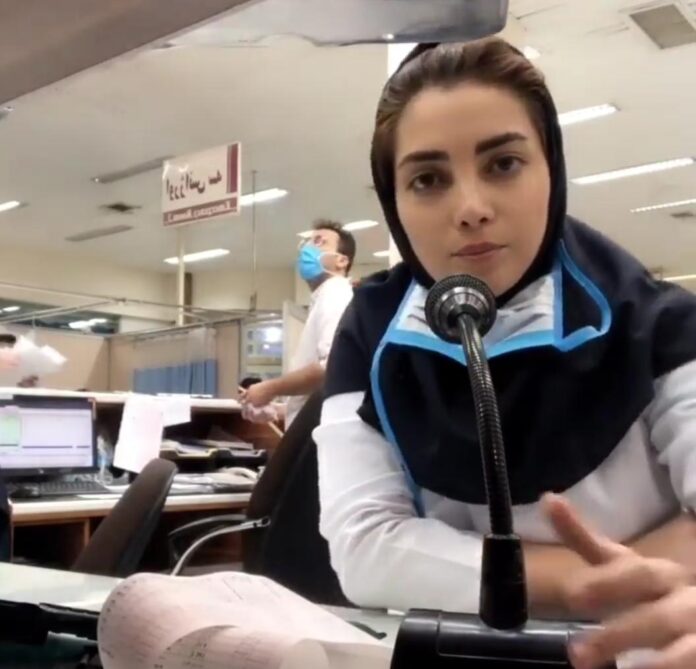
Story of Iranian Nurse Who Recites Poems to Soothe Covid Patients

According to Tasnim News Agency, she has been singing these songs long before people who know about it. She merged her interest in poetry, literature and music with her critical nursing job, to play a more beautiful role in her white nursing attire.

Below you can see the video showing her reciting poems for the patients:


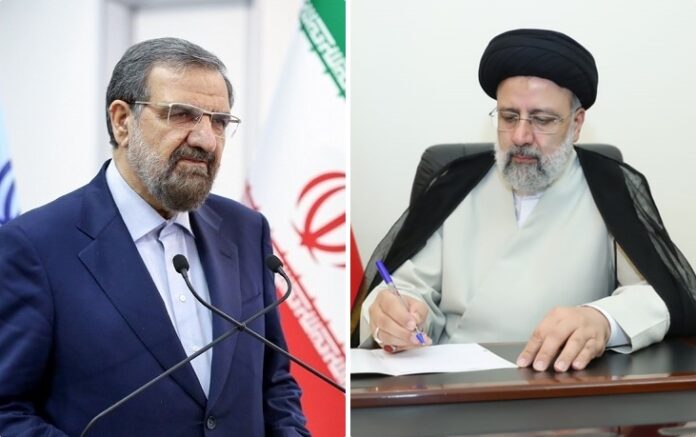
Iran’s Raisi appoints electoral rival as VP

In a decree issued by the president, Mohsen Rezaei was also appointed as the Secretary of the Supreme Council for Economic Coordination among the Heads of the Branches of Government and the Secretary of the Government’s Economic Office.

Rezaei was born in Masjed Soleiman, in the southern Khuzestan Province in 1952. He holds a PhD in Economics from the University of Tehran. Rezaei was Commander-in-Chief of the Islamic Revolution Guards Corps for 16 years from 1981 to 1997.

He’s also served as the Secretary of the Expediency Council since 1997.

Rezaei has run for president in all elections in Iran since 2005 but never won. He contested the 2021 vote as well. Rezaei came second with less than 12 percent of the votes in that election, losing to Raesi.

Rezaei has been described by some as a perpetual candidate and a man who never leaves the scene. His critics say he has no executive experience and lacks the merits required for holding an executive office like presidency. But many praise him as a resilient politician, especially with regards to his crucial role as a senior commander during the eight-year-war that began with an invasion of Iran by neighboring Iraq in 1980.

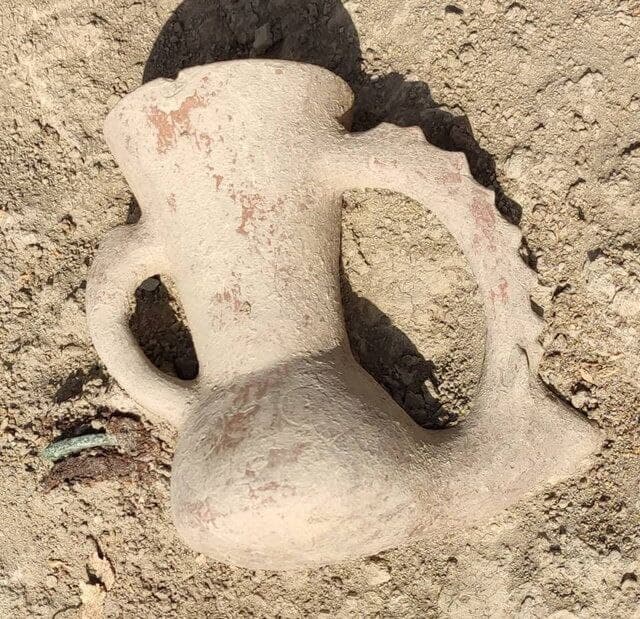
Parthian Rhyton Discovered in Iran’s Iron Age Cemetery

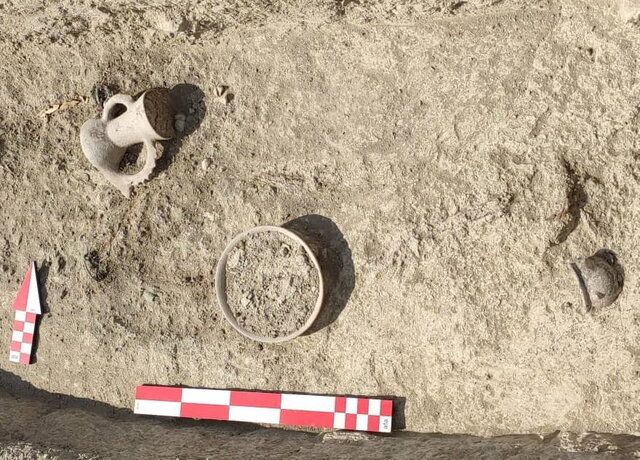
Ata Hassanpour, the head of the archeological team based in Mersin Chal Cemetery in Semnan’s Mahdishahr County stated that so far they have succeeded in opening five graves, adding that the discovered clay rhyton belongs to 2,200 years ago.

He also noted that to date, three trenches measuring 10 by 10 and with an area of 300 square meters have been excavated in this cemetery.

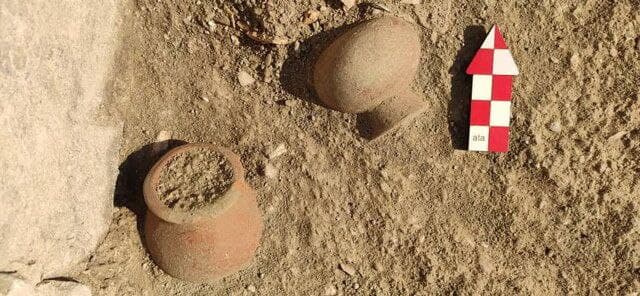
Parthian Rhyton Discovered in Iran’s Iron Age CemeteryThis Iranian scientist further added that the graves in the cemetery are hand-made but without the structure of a grave. According to him, only two stones from above and below are placed as a sign of the grave. The burials in this cemetery are of the arched type with east-west direction, stated Hassanpour.

“In these graves, there are a lot of items that are buried with the deceased, mostly magnificent objects. For example, in a tomb belonging to a lady, along with luxurious objects such as bracelets, anklets, bangles, and all kinds of pottery in various shapes, a bronze ring with the shape of a winged lion was discovered which is unique in its kind.”

Parthian Rhyton Discovered in Iran’s Iron Age CemeteryThe other things found in this cemetery include beautiful flat plates, bronze and iron ornamental objects and all kinds of decorative beads made of stone, underscored Hassanpour.

He went on to say that the objects discovered in Mersin cemetery mostly belong to the Parthian era covering the period from the Achaemenid to the Parthian period.

Iran committee and prosecution general to investigate Evin incidents

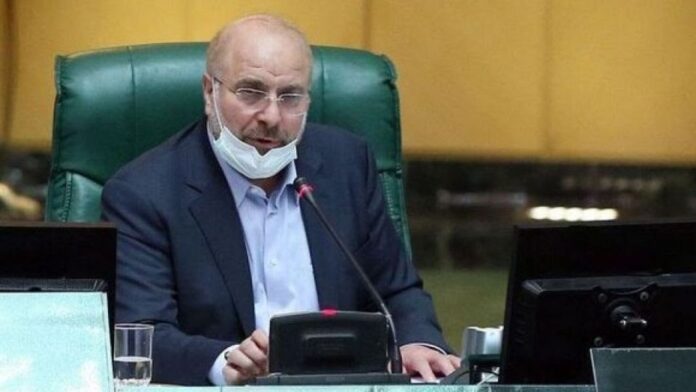
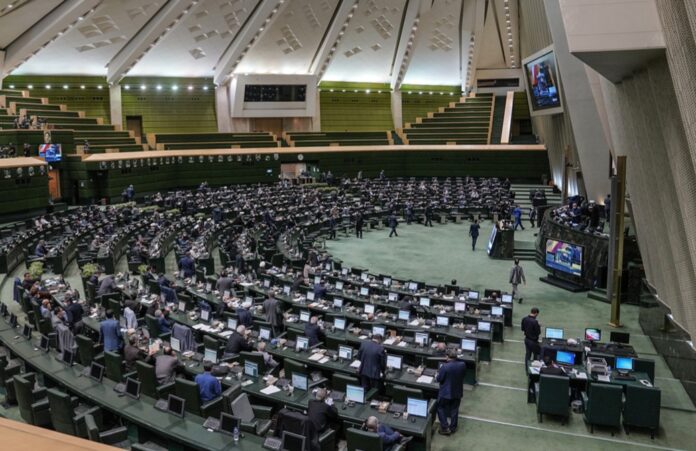
In a Wednesday speech at the parliament open session, Mohammad Bagher Ghalibaf added the commission, mandated under Article 90 of the Constitution in coordination with the prosecution general will investigate the incident.
In the recent days, videos purportedly released by hackers show prisoners being beaten and dragged by security forces inside Evin Prison.
Taking responsibility for the ‘improper behavior’ at Evin, head of Iran’s Prisons’ Organization, Mohammad Mehdi Hajmohammadi has apologized for the bitter incidents.
He also said the prisoners’ efforts will not be ignored due to these errors.

Iranians Offer Special Votive Foods during Muharram

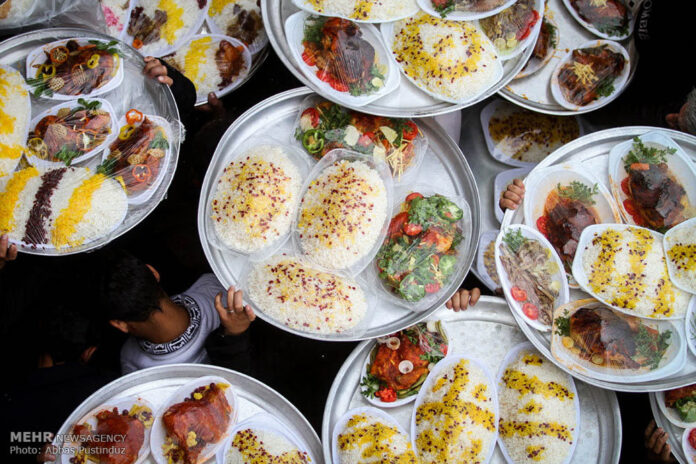
On these occasions, people cook votive food in mosques and even in the courtyards. The cooking of the votive food is usually the responsibility of the men of the families or of the skilled and professional cooks.
In different cities of Iran, various kinds of foods are prepared as offerings, some of which we will discuss below.

Saffron Rice Cake of Garmsar:

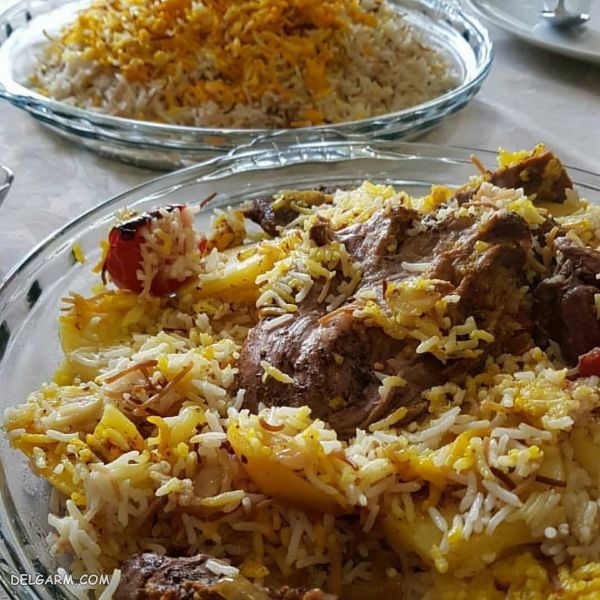
Garmsar in central Iran is one of the cities that prepares a special food for mourners during Muharram. For this dish, the raw meat is cooked in the drained rice, and the bottom layer of the food in the rice pot, which absorbs all the meat juice, becomes the most delicious part of the dish. Raisins are also sprinkled on the rice. During the Muharram mourning days, people of Garmsar usually leave the doors of their homes open to all those who want to participate in the ceremony, so the mourners can participate in this ceremony and get votive food without being invited.
Iranians Offer Special Votive Foods during MuharramQeimeh with Sweet Pilaf of Shiraz and Boushehr:

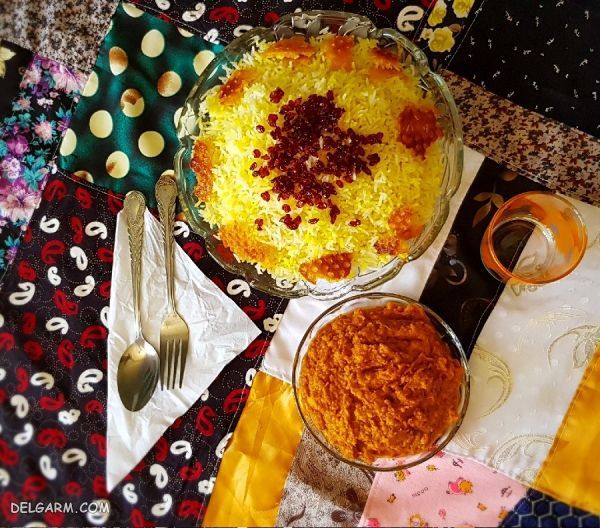
Qeimeh is an Iranian stew consisting of mutton, tomatoes, split peas, onion and dried lime. The stew that people of Shiraz and Bushehr in the south prepare is like the other regions, but Bushehris are interested in a softer Qeimeh. The special feature of this food is that it is served with sugar pilaf. This pilaf is made of rice, sugar, saffron, tangerine slices and pistachios.
Iranians Offer Special Votive Foods during MuharramSholeh of Mashhad:

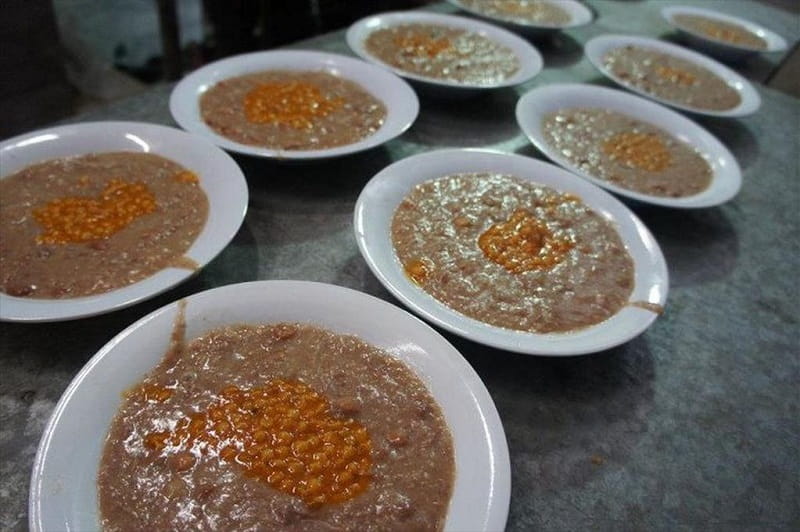
Sholeh Mashhadi is almost the most famous dish of the northeastern Khorasan province which can hardly be found in other cities. This dish is a type of stew the main ingredients of which are meat and pulses. It is very similar to the Persian Halim. Sholah cannot be easily ordered from any restaurant, even in Mashhad. On normal days, people do not cook that much Sholeh, but during Muharram, unlike the other days, Sholeh is prepared in great amount for mourners. People who are from Mashhad have a high level of admiration for this dish.
Iranians Offer Special Votive Foods during Muharram


Meat and Beans of Kashan:

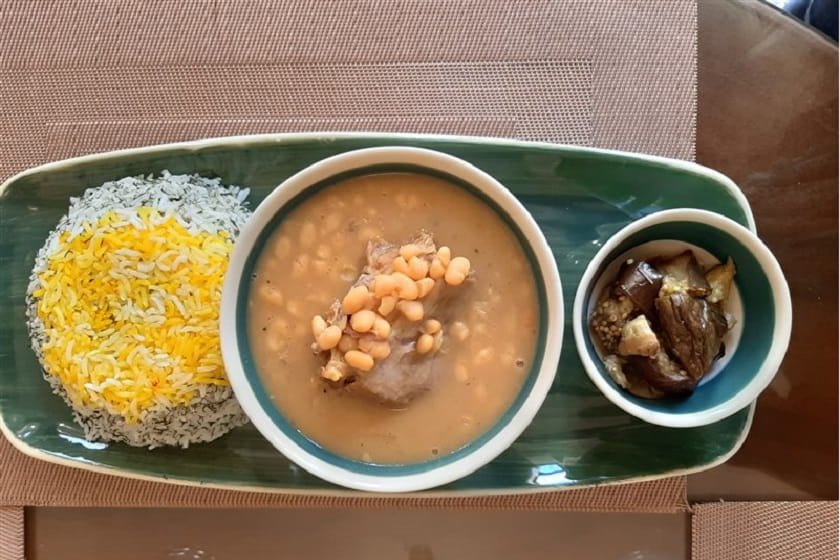
In Kashan, Meat and Beans or Gousht-e Loubiab is served on religious occasions along with rice mixed with dill. This dish, as its name suggests, is made with meat and beans, but does not have much water and is served with pilaf. Mutton, beans, potatoes and spices are the main ingredients of this dish. You should first season lamb’s meat and braise it with onions and turmeric for a while. Add the white beans and let it cook until the meat and the beans are cooked. You can also add rice, dried lime and dried fenugreek leaves.
Iranians Offer Special Votive Foods during MuharramFesenjan Stew of Rasht:

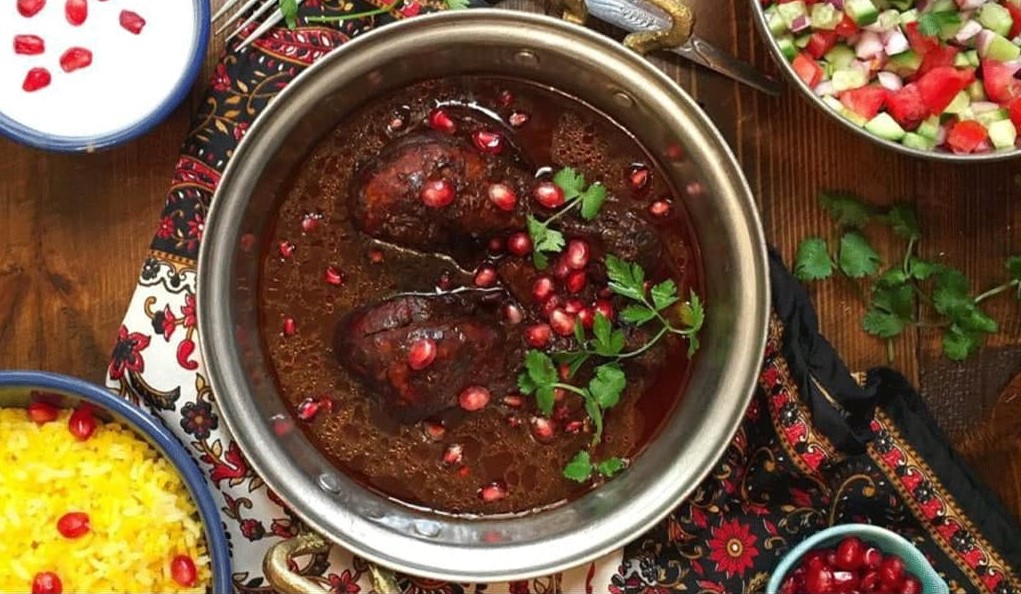
Khoresh-e Fesenjan, is a stew from Iran’s north. It is believed to originate from the Guilan region near the Caspian Sea, mainly the city of Rasht. The people of this city are deeply interested in sour Fesenjan and cook it at weddings and mourning ceremonies. This stew is prepared with meat, walnuts and sour pomegranate paste and its color is dark black when ready to be served.
Iranians Offer Special Votive Foods during Muharram


Lahijan’s Qeimeh with Minced Meat:

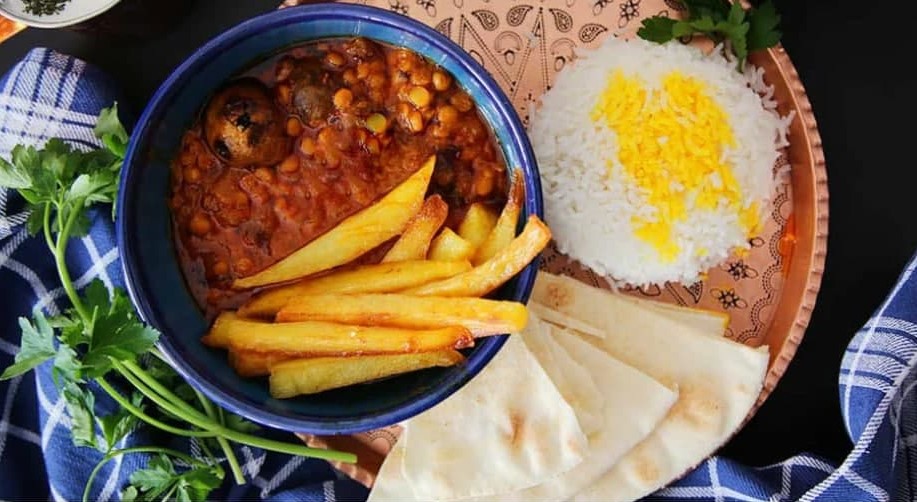
The special votive food of this northern city is a dish called minced meat Qeimeh. The only difference from ordinary Qeimeh is the deeply fried minced meat used in it.
 

Iranians Offer Special Votive Foods during MuharramPlum Stew of Semnan:

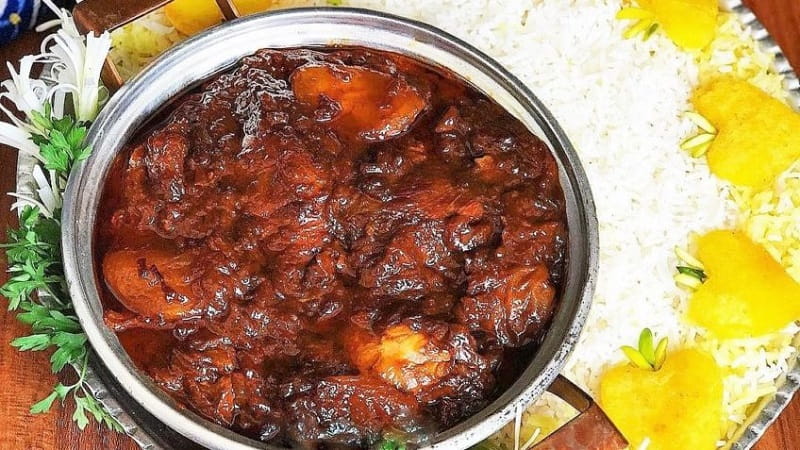
This food is very similar to Qeimeh stew, with the difference that the sour plums native to Semnan in central Iran are added to it. The stew along with rice is distributed among the mourners.
 

Iranians Offer Special Votive Foods during Muharram

Bibi Seshanbe Potage of Arak:

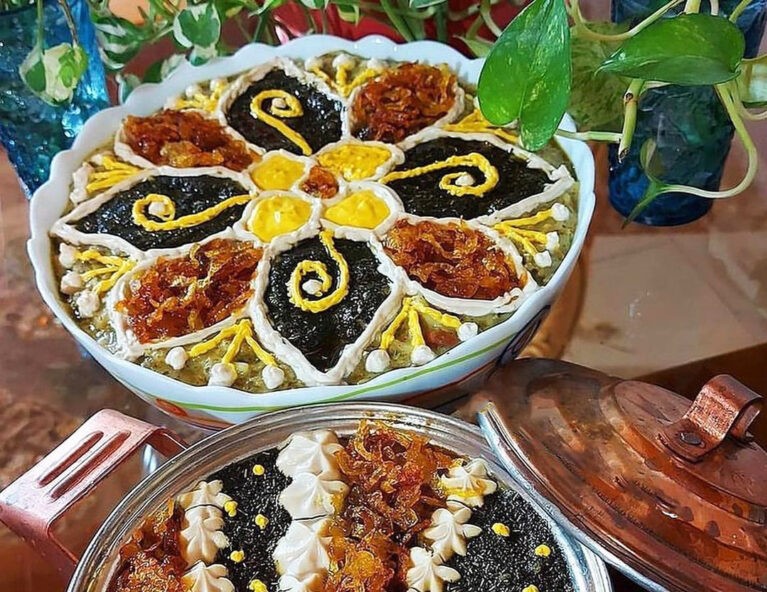
Bibi Seshanbe, which literally means “The Queen of Tuesday,” refers to a Persian mystical figure, considered as a holy angel who can save and cure poor and desperate people when called upon. This dish is offered as a votive food all year round, but it is also one of the first choices of the Arakis in the month of Muharram. Some say as it is distributed on Tuesdays, the potage is known by this name. The ingredients are peas, beans, lentils and bulgur. Meanwhile, like Halim, it is offered in the morning to the mourners.
Iranians Offer Special Votive Foods during Muharram

Biryani of Isfahan:

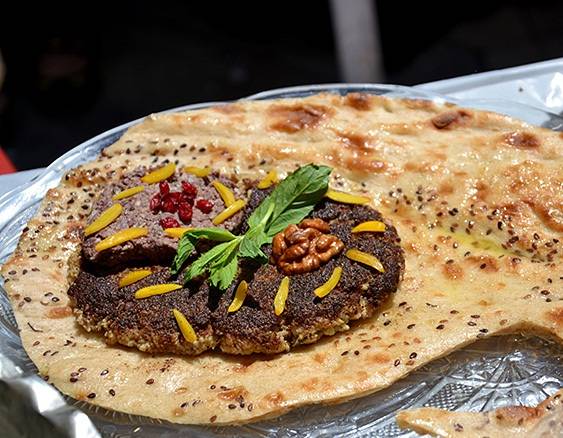
Biryani is one of the traditional dishes of Isfahan, in central Iran. It is a fried meat served on a piece of bread with onion and greens on the side. The ingredients are mutton, sheep lungs, tail fat, onions, cinnamon, saffron, walnuts, pistachio and almonds.
 

Iranians Offer Special Votive Foods during Muharram


Wheat Potage of Yazd:

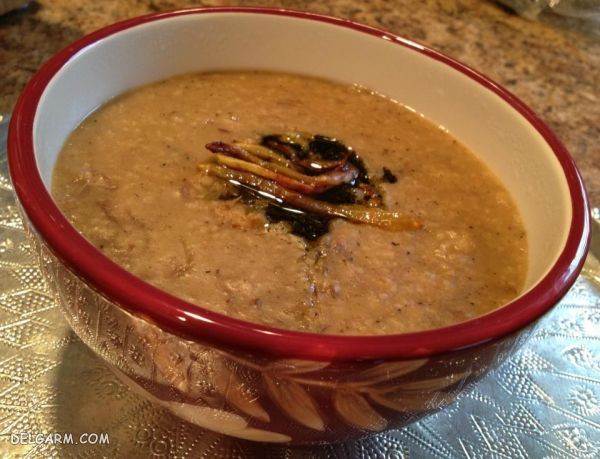
This dish is very similar to Halim. The ingredients are chickpeas, beans, mung bean, wheat and of course meat. It is flavoured with onions and a lot of tail fat. It is a kind of thick soup that has different names in the cities of Yazd province, such as Ash-e Halim, Jah Jah, Shab Esfandi, and Ash-e Imam Hussein. Besides, cooking this typical food has a special ceremony and there are some cooking styles for preparing it. The dish is finally garnished with fried garlic, onion, mint and Kashk or dried yogurt.
Iranians Offer Special Votive Foods during Muharram

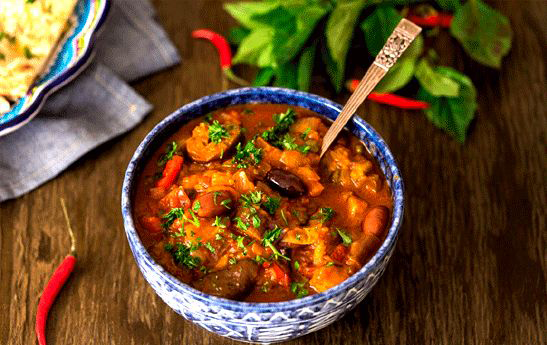
Motajannah Broth of Kerman:

This broth has a sour and sweet taste. The ingredients are very diverse, from apricot leaves to dates, pieces of fruit and fenugreek. It is originally from Rafsanjan and very popular in Kerman province. The dish is also very popular on the days of Tasua and Ashura, therefore, many call it Imam Hossein’s broth too.
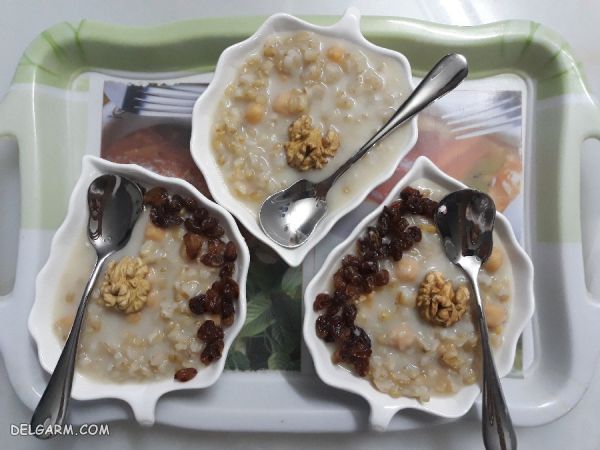
Iranians Offer Special Votive Foods during MuharramHadih Potage of Khoy:

This food is from Khoy in West Azarbaijan province, northwestern Iran. The soup is almost thick. It is made of chickpeas, wheat cooked in milk and very little water. The potage is poured into a dish, and then a layer of roasted raisins and chopped walnuts are added to it.
Iranians Offer Special Votive Foods during Muharram


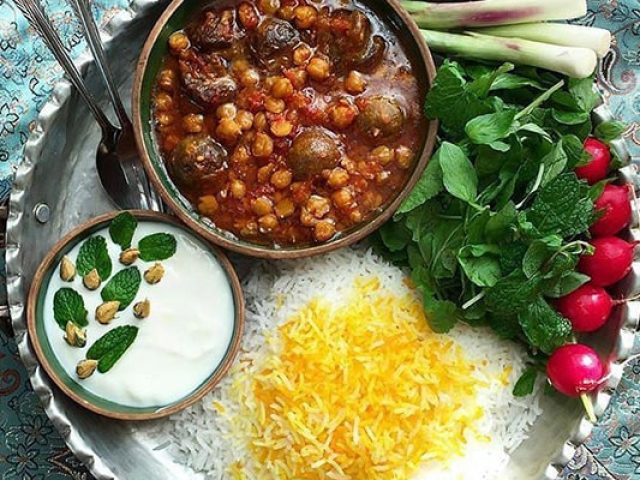
Peas Qeimeh of Dezful:

In this stew served during Muharram, people of Dezful in the south use ordinary peas instead of split peas. They believe that it is much better to prepare Qeimeh with peas because they soak and peel them, so the food is not flatulent and tastes better.
 

Iranians Offer Special Votive Foods during Muharram

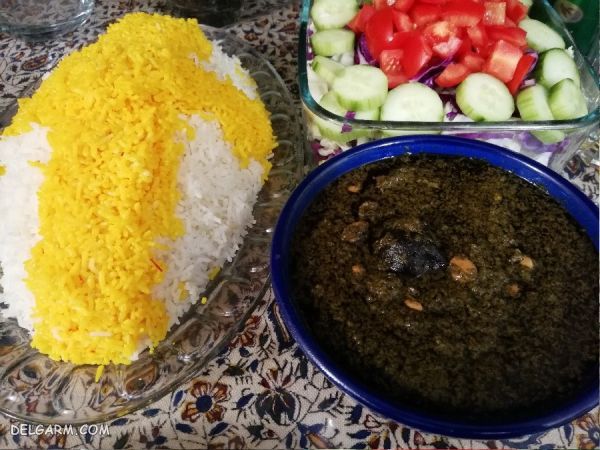
Vegetable Stew of Ahwaz:

On the day of Ashura, People in the southern city of Ahwaz in Khuzestan province prepare a stew called vegetable stew to offer. This dish is made with very fried vegetables and white beans. It is a bit like Ghormeh Sabzi, the famous Iranian dish.

Iranians Offer Special Votive Foods during Muharram

Geneva envoy: Iran denounces violence, rights abuse in Afghanistan

Addressing the UN Human Rights Council’s special meeting on Afghanistan on Tuesday night in Geneva, Esmaeil Baghaei Hamaneh said there must be accountability for all crimes committed in the country. 

Baghaei Hamaneh added that Afghans are entitled to live in peace and have good relations with neighboring countries without illegal foreign military interventions. The Iranian envoy said, “This will be possible only through an inclusive government made up of all ethnic and religious groups of Afghanistan”. 

Baghaei Hamaneh said a peace and reconciliation process led by Afghans themselves should begin for this purpose.

The Iranian diplomat also addressed the root-cause of Afghanistan’s situation, saying what’s happening now is not unrelated to the long US-led occupation of the country. 

Baghaei Hamaneh said the US-led occupation is to blame for the destruction of Afghanistan and the unending ordeal and desperation of its people. 

He noted that the US cannot dodge responsibility for the ramifications of its disastrous military expedition to Afghanistan.

Baghaei Hamaneh also spoke of Iran’s efforts to alleviate the suffering of the Afghan people. He said the Islamic Republic has close ties with Afghanistan and has hosted millions of Afghan refugees over the past four decades. Iran’s Ambassador to Geneva also urged the international community to meet its responsibility to help vaccinate the Afghan refugees against Covid-19. Baghaei Hamaneh said Iran has done its share to help with Afghanistan’s progress and stability and will do its best to pave the way for peace talks between Afghan factions.

The Geneva meeting is held following the withdrawal of the US and other foreign forces from war-torn Afghanistan. 

At the meeting, the High Commissioner for Human Rights urged the Council to craft a mechanism to closely monitor the evolving human rights situation in Afghanistan. 

Michelle Bachelet said there are credible reports of serious violations of international humanitarian law and human rights abuses taking place in many areas under Taliban control such as summary executions of civilians, restrictions on the rights of women, including their right to move freely and girls’ right to attend schools, and recruitment of child soldiers.

Iranian Artist Wins Appreciation Plaque of Acclaimed Photography Federation

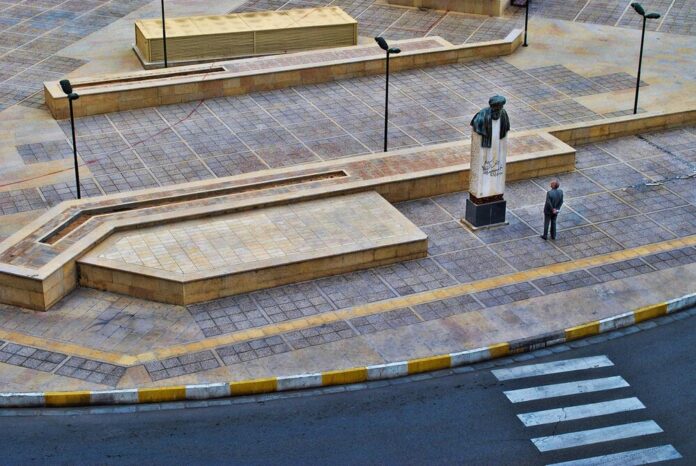
During a festival called “Photo Emotion” which was held in Bosnia and Herzegovina “The Sculpture” by Mehdi Kazemi Boomeh received the prize of the IAAP Photography Association.

The event was held in four sections of coloured photos, monochrome, tourism and emotions.

In this festival, which was jointly held by the International Federation of Photographic Art (FIAP) and the Photographic Society of America, works by photographers who are members of the Focus Photo Club (FIAP representative in Iran) were accepted. Iranian artists including Mehdi Kazemi Boomeh, Marjan Taghipour Fahandari, Omidreza Pournabi, Seyyed Ehsan Mortazavi, Seyyed Ahmad Reza Alavi Pouya, Abbas Haji Hossein Kalantar, Ali Samei, Hadi Dehghanpour, Ahmad Samei and Mir Ali Parandak sent their works to this international festival.

International Federation of Photographic Art (FIAP), recognized as an international institution in the field of photography by The United Nations Educational, Scientific and Cultural Organization (UNESCO), was founded in 1946 and since then has been a medium for communication between national photography institutes in different countries of the world.

Major Iran Sugar Company Returned to Public Sector

The IRIB has quoted Iran’s Judiciary as announcing the return of the company to the public sector. The private sector however said it has not been served the ruling yet. A picture of the verdict, effective immediately, showed the date February 2021. According to the ruling, from the date of issuance thereof, the Iranian government will be responsible for production at Haft Tappeh Sugar Factory and also for payment of personnel salaries.

The company, located in the southern province of Khuzestan, was founded in 1975 to produce sugarcane and related products.

The transfer of the sugar mill to the private sector in 2015 triggered protests and strike by its workers, and its return to the public sector is seen as a victory for them. Following the transfer to the private sector, the workers faced delays in payment of their salaries, which made them angry.

There are also conflicting reports about the arrest of the company’s CEO Omid Asadbeigi. After protests happened at the factory, then Judiciary Chief Ebhraim Raeisi [now Iran’s president] visited the site of the factory and promised the personnel to redress their grievances.

Iran MPs discuss qualifications of President Raisi’s cabinet picks

The proposed Minister of Industry, Mines and Trade, Minister of Science and Technology, outlined their plans before parliament. Then proponents and opponents gave their views.

The proposed Minister of Industry, Mines and Trade, Seyyed Reza Fatemi Amin defended his plans to get Iran to achieve its rightful economic, scientific and cultural place in West Asia. To that end, Fatmei Amin said, the Ministry of Industry, Mines and Trade under his command will rely on scientific production, high-speed and sustainable economic growth and increased income levels.

He added all this will help Iran achieve its development targets. Fatemi Amin added that it’s tricky to achieve the 2025 development goals and “we need to redress our backwardness”.

He also said as the Minister of Industry, Mines and Trade, he will neuter the anti-Iran sanctions and that he will prioritize economic diplomacy and will get help from the Foreign Ministry for this purpose.

Kazem Mousavi, the member of the Presiding Board of the Economic Commission of Parliament, endorsed Fatemi Amin as a trustworthy person and a young revolutionary. He said the plans outlined by the proposed Minister of Industry, Mines and Trade are good.

However, Ardeshir Motahari, Garmsar’s representative, opposed Fatemi Amin’s confirmation. He questioned Fatemi Amin’s promise to increase the daily production of cars to 3 million and export of 1 million automobiles to other countries. Motahari said the proposed minister has no feasible plans to provide basic goods and balance the market.

The proposed Minister of Science and Technology Mohammad Ali Zolfi Gol also outlined his plans. He said under his supervision, the Ministry of Science and Technology will do its utmost to increase the pace of Iran’s scientific drive and to encourage university students and professors to help with the effort to turn Iran into a global scientific source.

Zolfi Gol said he will reduce the ministry’s dependence on state budget through commercializing the discoveries of Iranian researchers and increasing the revenues of universities from royalties on research projects.

An opponent of Zolfi Gol’s confirmation as Minister of Science and Technology was Tehran’s representative at parliament Ruhollah Izadkhah. He said Zolfi Gol’s plans are “merely general policies”.

Izadkhah however praised Zolfi Gol’s scientific background and his academic seat as a prominent chemistry professor and noted that all this has nothing to do with the Ministry of Science and Technology.

Another MP, Mohammad Khodabakhshi, Aligoudarz’ representative at Parliament, supported Zolfi Gol’s endorsement. He described the proposed Minister of Science and Technology as “being prudent” and “a revolutionary”.

The lawmakers also discussed the qualifications of the proposed Minister of Culture and Islamic Guidance, Mohammad Mehdi Esmaeili at Parliament. He also explained his plans. More than 90 percent of those plans for the fields of culture and art were unanimously approved by the members of Parliament’s Cultural Commission.

They described Esmaeili’s programs as realistic, futuristic, transparent and without ambiguities.

But an MP opposed his confirmation. Ali Asghar Khani, the representative of Shahroud, said the proposed Minister of Culture and Islamic Guidance is a graduate of Political Science and his background does not match the post for which he has been picked. Khani added that Esmaeili won’t be able to interact with writers, the media and cinematographers given his working and academic background.

Esmaeili is known for his critical views regarding Iranian cinema and music. Several days ago, the proposed Minister of Culture and Islamic Guidance ripped the House of Cinema [Iran’s largest professional organization for film makers] and the House of Music [the musical equivalent of the House of Cinema]. Esmaeili said the House of Cinema “lacks any legal basis” and described the House of Music as “the premier source of crisis”.

Esmaeili says the House of Cinema is with the “the Islamic Revolution’s opposing cultural front” while the House of Music is responsible for “a horrific increase in the entry of foreign [musical] bands”.

His comments caused outrage among many people involved in music and film industries.
Reports say confirmation process for President Raisi’s proposed cabinet members will end on Wednesday.

With 709 killed, Covid deaths hit new record high in Iran

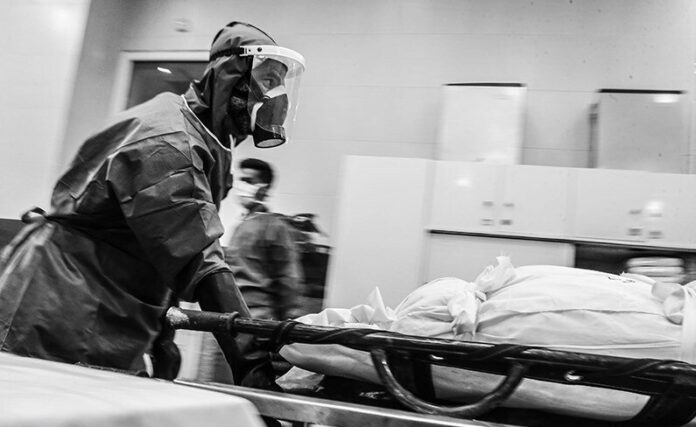
Iran’s Health Ministry figures on Tuesday showed 709 new fatalities over the past day. The total death toll now stands at 103,357. Unofficial sources however say the number of people killed by the disease is much higher than what authorities say.

Health Ministry officials also on Tuesday registered over 40-thousand new infections in 24 hours. Iran’s total Coronavirus caseload has crossed the grim milestone of 4.7 million.

Authorities in Iran blame the fifth wave of the pandemic including deaths and infections on the more contagious Delta variant of Covid-19.

Iran started a nationwide vaccination drive months ago to contain the disease. The Iranian Health Ministry says 17,233,661 Iranians have so far received the first dose of the vaccine while 6,476,773 people have been fully inoculated.

The Health ministry also announced on Tuesday more than 572,000 people have been vaccinated over the past 24 hours. The Iranian government is getting criticized by many citizens for its handling of the Coronavirus crisis. This came after vaccine imports happened with delay. Iran is among few Middle Eastern nations that domestically develop vaccines including COVIran Barekat to fight the pandemic.

The Iranian Health Ministry has now classified 359 cities and towns as Covid red zones where the rate of infections and hospitalizations are very high.