Thursday, April 9, 2026
Home Blog Page 2439

Venezuela reports another ‘terrorist attack’ on electrical system

Reverol said Venezuela had suffered from an attack on the National Electric System as a part of a larger “sabotage plan” against the country.

“We want to report on a new attack on the national electricity system, within this permanent sabotage plan and that is part of the multiform war that we have constantly received,” Reverol told the VTV broadcaster by phone.

VTV reported that the minister was implying a “terrorist attack” against Venezuela.

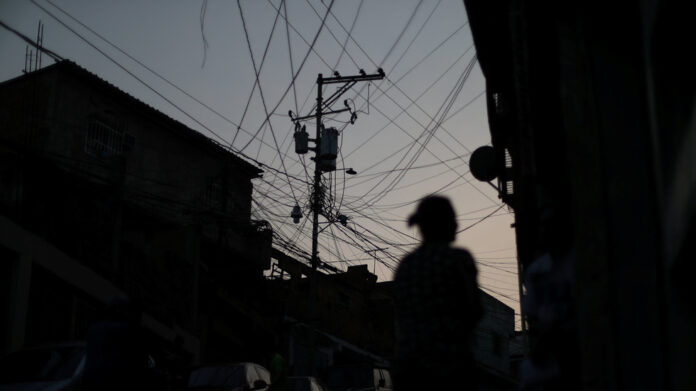
The Socialist cabinet minister added that the purported attack hit a transformer at the Aragua substation, in Jose Angel Lamas municipality, causing an explosion. As a result, a number of states, including Zulia, Táchira, Nueva Esparta, Merida and Falcon, have suffered from power outages.

According to Reverol, the power supply has now been restored in the Capital Region and officials were now working on repairing damage in other regions. He noted that firefighters had acted swiftly in putting out the fire at the Aragua substation.

The minister told VTV that “the electrical war” was just one of the important aspects of “multiform war” Venezuela was suffering from.

In October of last year, Venezuela’s President Nicolas Maduro argued that the country’s Amuay Refinery had suffered from a “terrorist attack” carried out by a “large and powerful” weapon without providing any further details.

Maduro and country’s officials have repeatedly accused the United States in the past of “sabotaging” Venezuela’s infrastructure and causing power shortages and starvation. In March 2019, they blamed “American imperialism” for an outage at the Guri Dam hydroelectric station. Over a year later, Venezuela’s chief prosecutor accused an American citizen of planning to sabotage oil refineries and electrical services in the country – just shortly before the Amuay incident.

The United States has contested Maduro’s presidency since the 2019 election, recognising the then-head of Venezuela’s National Assembly Juan Guaido as the country’s self-proclaimed interim president.

As the US pressed for the power change in Venezuela, it has been expanding sanctions against the country for the last 15 years “in response to the increasing authoritarianism of President Nicolas Maduro”.
Taliban rejects acting deputy PM’s death nor injury

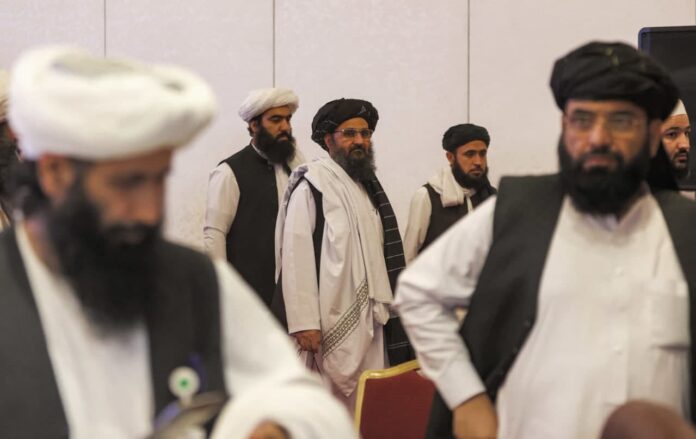
Reports claiming that deputy head of Afghanistan’s interim government, Baradar, has been killed or wounded are untrue, Spokesman for the Qatar office of the Taliban Muhammad Suhail Shaheen told reports on Monday.

“Reports about Mullah Baradar Akhund being injured or killed are baseless and are not true, I categorically refute them,” he stated.

According to earlier reports, Baradar was wounded in a skirmish between Taliban units. Recent photos showed him from the back and his face could not be seen on them.

The Taliban also released a video that the group claimed was Baradar, as it rejected speculations that he had been killed recently. One of the Taliban’s officials claimed that the video was taken in Kandahar.

The video was released a day after Afghan media reported that Baradar was alive, as it cited a statement signed by Baradar and released to a Kabul-based media organisation. Another Taliban official, however, refused to confirm if the signature at the end of the letter was indeed that of Baradar. He also noted that the letter was written by Baradar’s aide.

Sources: TASS and RIA Novosti

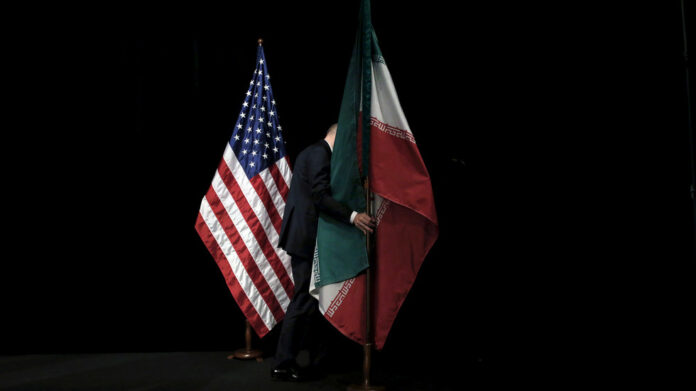
Russia urges US, Iran to resume nuclear talks

“We believe that the fastest way to reviving the nuclear deal requires Washington and Tehran to simultaneously return to their commitments under the JCPOA and UN Security Council Resolution 2231 without any additions and exceptions. Russia is determined to facilitate the process in every possible way,” the Russian Foreign Ministry announced in a statement on Monday.

Moscow welcomes an agreement on maintaining interaction between the International Atomic Energy Agency (IAEA) and the Atomic Energy Organization of Iran (AEOI), the statement said.

“We welcome the agreement on servicing monitoring equipment installed at Iran’s nuclear facilities, which was reached by the IAEA and the AEOI,” the statement added.

According to Foreign Ministry Spokeswoman Maria Zakharova, the important thing is that both parties confirmed their determination to continue dialogue on the entire range of issues related to the IAEA’s monitoring activities in Iran.

Russia “expects that the upcoming session of the IAEA Board of Governors, set to begin on September 13, including discussions on issues related to monitoring activities in Iran, will help enhance mutual understanding between the agency and Tehran, which have once again proved their ability to work together and achieve the desired result. Any external pressure and attempts to interfere in the process are counterproductive”, the statement reads.

“We also expect that a constructive and business-like atmosphere at the session of the IAEA Board of Governors will provide a boost to preparations for the next round of the Vienna consultations on the full restoration of the Joint Comprehensive Plan of Action on Iran’s nuclear program. The root causes of the current difficulties around the nuclear deal, which are widely known, haven’t been addressed yet,” Zakharova noted.

Source: TASS

Myanmar’s Aung San Suu Yyi skips court due to sickness

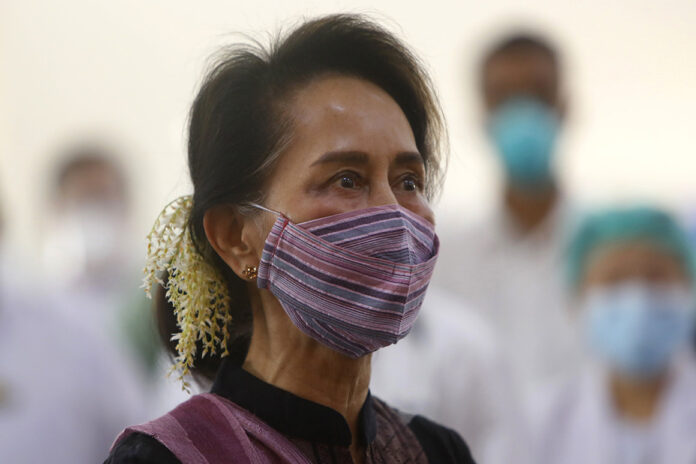
The lawyer stated Suu Kyi was unable to attend a scheduled court hearing for health reasons, describing her condition as dizziness caused by motion sickness.

Min Min Soe told Reuters Suu Kyi, 76, who has been detained on various charges since the February 1 army coup, did not have the coronavirus but felt ill having not traveled in a vehicle for a long time.

“It is not serious sickness … She suffered car sickness. She cannot stand that feeling and told us she wanted to take a rest,” the lawyer added.

She is currently under house arrest and facing multiple charges, including illegal importation and possession of walkie-talkie radios, accepting bribes, and violating coronavirus protocols. The popular Nobel peace prize winner has been charged with unspecified breaches of the Official Secrets Act in a separate and more serious case, which is punishable by up to 14 years in jail. Her lawyers reject all of the allegations.

Myanmar has been gripped by turmoil since the military ousted Suu Kyi in a coup and detained her and several other senior figures from the ruling National League for Democracy (NLD) Party.

At least 1,000 people have been killed and thousands of others arrested by military forces, according to the Assistance Association for Political Prisoners (AAPP) advocacy group.

Last month, the junta leader, Min Aung Hlaing, declared himself prime minister. His caretaker government is scheduled to hold fresh elections by 2023.

Brazilians call for Bolsonaro’s impeachment

Several protests broke out in Brasilia and across 14 capital cities of the country’s 26 states on Sunday with demonstrators demanding the impeachment of Bolsonaro.

Brasilia, Rio de Janeiro, Sao Paulo, Belo Horizonte, Sao Luis, Curitiba and other major cities were swept by anti-Bolsonaro manifestations on Sunday, with many of protesters also rallying against high prices of gas, petroleum and products.

In Brazil’s capital, the protesters marched through the Esplanada dos Ministerios at the doorstep of Bolsonaro’s seat, chanting “Impeachment now”. In Sao Paulo, the demonstrators carried posters, saying “Neither Bolsonaro, nor Lula”, referring to the current president’s political nemesis Luiz Inacio Lula da Silva.

Bolsonaro’s reputation has been in tatters over his entanglement in a range of scandalous probes into his conduct and the clash with judiciary. 

Polls conducted in mid-August showed that only 24% of the Brazilians would vote for Bolsonaro, while 40% said they would support former president Lula da Silva. 

The general election in Brazil is scheduled for October 2, 2022.

Source: GloboNews

Iran Calls Out US for “Trial and Error” that Created Afghanistan Chaos

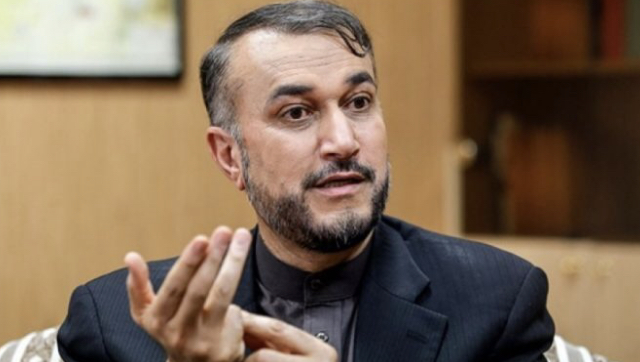
“All of us now face a new challenging situation in Afghanistan and we believe that a major cause for the current instability, insecurity and chaotic situation in Afghanistan has to do with the mistakes and trial and error policies of the US in this country,” Hossein Amir Abdollahian told a high level virtual meeting on the security situation in Afghanistan, chaired by the UN Secretary General Antonio Guterres on Monday. 

The foreign minister also said the US created disasters both during the occupation of Afghanistan and withdrawal from the country.

He said the meeting should relay the message that “a secure, stable and developed Afghanistan can be only achieved in the light of the formation of an inclusive national government” comprised of all political groups.

He also addressed the tragic situation of civilians in Afghanistan, saying the international community “has a duty and has to immediately send its humanitarian aid to Afghanistan”.

 Amir Abdollahian also criticized the international community for its failure to fulfill its duties toward Afghan refugees. He said Iran has kept its borders with Afghanistan open and is ready to facilitate aid to the country.

North Korea calls US war in Afghanistan ‘human rights crime’

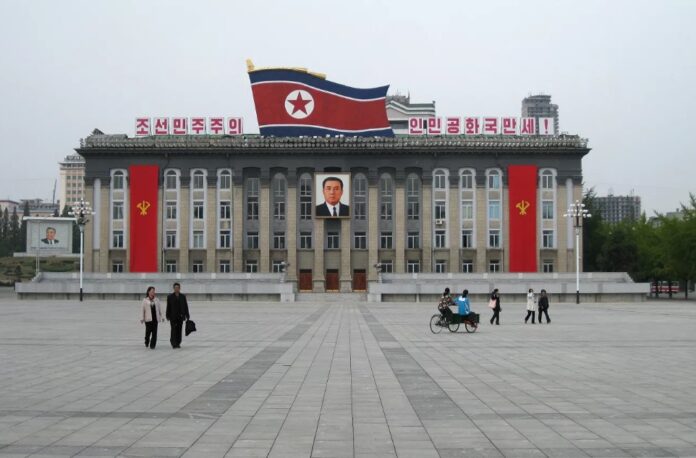
In a statement posted on its website on Sunday, North Korea’s Foreign Ministry called for US forces to be brought to justice for the mass atrocities in Afghanistan.

“At this moment in time, the world is raising the voices demanding that the US troops be brought to justice at all costs for US atrocities of mass destruction committed against innocent people in this country and that a stern judgment be made on the criminals,” it said.

The ministry cited reports by international bodies and countries showing the severity and magnitude of the atrocities and destruction caused by the soldiers fighting the US-led war.

“The above facts corroborate that all the places trampled upon by the US troops were reduced to the barren land of human rights,” the North Korean ministry stated, adding that the United States has engaged in such crimes in different parts of the world behind the veil of being the “judge of human rights”.

The United States and a number of its allies invaded Afghanistan and toppled a Taliban regime there in late 2001 under the pretext of the so-called “war on terror”. The invasion and the ensuing war gravely worsened the security situation in the country.

The militant group has come to power again following an ill-planned and hasty withdrawal of US-led forces from the war-torn country.

Source: Yonhap news agency

Iranian president to visit Tajikistan for SCO summit

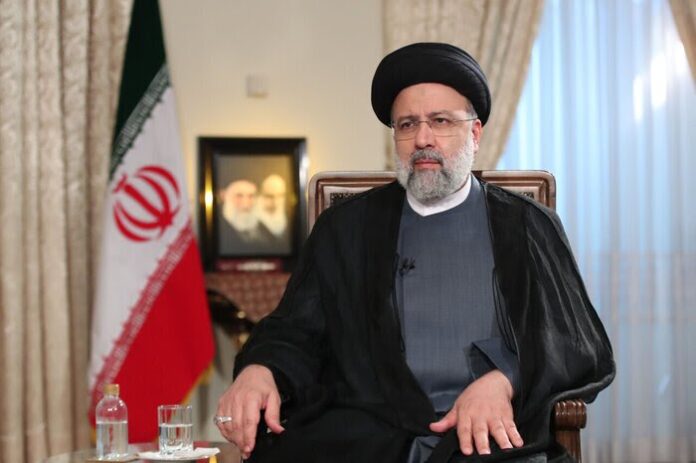
The trip will mark Raisi’s first foreign visit since he took office in early August.

Khatibzadeh said Iran’s request for full SCO membership will be considered during the upcoming summit and expressed hope for a desirable outcome.

Tajikistan’s capital Dushanbe will be hosting the Shanghai Cooperation Organization summit on September 16-17.

The SCO is a Eurasian political, economic and security alliance founded by China, Kazakhstan, Kyrgyzstan, Russia, Tajikistan, and Uzbekistan.

The Islamic Republic has had an observer status at the SCO since 2005.

Western countries drop plans for anti-Iran resolution at IAEA meeting

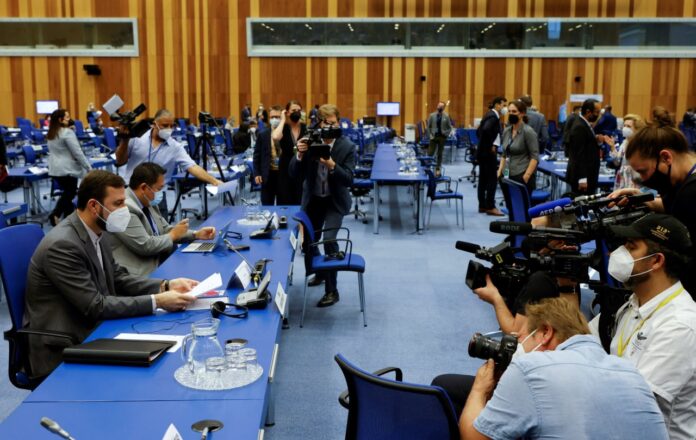
Western countries on Monday scrapped plans for a resolution criticising Iran at the UN atomic watchdog after Tehran agreed to prolong monitoring of some nuclear activities.

The decision by the United States, France, Britain and Germany not to push for a resolution at this week’s meeting of the IAEA’s 35-nation Board of Governors avoids an escalation with Iran that could have killed hopes of resuming wider talks on reviving the Iran nuclear deal.

During a last-minute visit to Tehran this weekend by IAEA chief Rafael Grossi, Tehran agreed to grant his agency overdue access to its equipment in Iran that monitors some sensitive areas of its nuclear programme. Inspectors will swap out memory cards more than two weeks after they were due to be replaced.

Grossi said on Sunday that the agreement solved “the most urgent issue” between the IAEA and Iran. He made clear on Monday, however, that on another source of concern – Iran’s failure to explain uranium traces found at several old but undeclared sites – he had obtained no firm commitments.

“I did not receive any promise,” Grossi told a news conference when asked about the uranium traces, the first of which were found more than two years ago at a site in Tehran that Iran has described as a carpet-cleaning facility.

“What I said there … is that I need to have a clear conversation with the new government about this,” he added.

A joint statement by the IAEA and Iran on Sunday said Grossi would meet Iran’s nuclear chief Mohammad Eslami in Vienna next week and then Grossi would “visit Tehran in the near future to hold high level consultations with the (Iranian) government”.

Grossi declined to say more specifically whom he would meet in Tehran or when.

The aim of the weekend agreement was to buy time for wider diplomatic efforts aimed at bringing the United States and Iran fully back into the 2015 nuclear deal, which imposed restrictions on Iran’s nuclear activities in return for the lifting of international sanctions against Tehran.

Then-President Donald Trump pulled the United States out of the nuclear deal in 2018, re-imposing punishing economic sanctions on Iran. Tehran responded as of a year later by breaching many of the deal’s restrictions and later enriching uranium to purity levels much closer to weapons-grade.

Indirect talks between Iran and the United States stopped in June, days after Ebrahim Raisi was elected President of Iran. Western powers have called on Iran to return to negotiations, saying time is running out, while Raisi has noted Iran is willing to, but without Western “pressure”.

“Iran played its cards well,” one Vienna-based diplomat said of the weekend agreement.

“The promise to continue high-level discussions on the outstanding issues managed to deflate the pressure for a resolution, even if what Grossi brought back from Tehran was pitifully little,” the diplomat added.

Source: Reuters

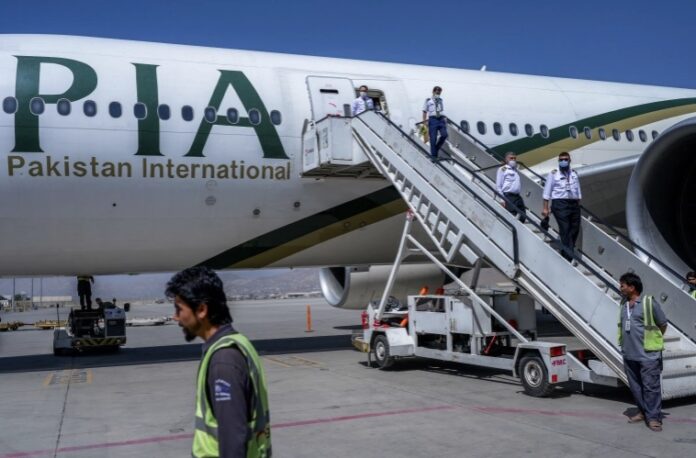
First foreign commercial flight since Taliban return lands in Kabu

The Pakistani state airline flight from Islamabad carrying a handful of passengers landed at the Kabul airport, which was severely damaged during a chaotic evacuation of more than 120,000 people ahead of the August 31 deadline for US withdrawal from Afghanistan.

There was hardly anyone on the plane, around 10 people… maybe more staff than passengers, according to reports.

Hours later, the plane made a return flight back to the Pakistani capital with around 70 people on board, according to airport ground staff.

The passengers on the flight to Islamabad were mostly Afghans, including relatives of staffers with international organisations such as the World Bank.

The resumption of commercial flights will be a key test for the Taliban, who have repeatedly promised to allow Afghans with the right documents to leave the country freely.

Many NATO nations admitted that they had run out of time to evacuate thousands of at-risk Afghans before the August 31 deadline, which was agreed between the US and the Taliban.

A PIA spokesman stated over the weekend that the airline was keen to resume regular commercial services, but it was too soon to say how frequently flights between the two capitals would operate.

Qatar Airways operated several charter flights out of Kabul last week, carrying mostly foreigners and Afghans who missed the evacuation.

An Afghan airline resumed domestic services on September 3.

“This is a big moment. We are very excited,” said one airport employee, dressed in a blue shalwar kameez and orange high-visibility vest, adding, “It’s a hopeful day. Maybe other airlines will see this and decide to come back.”

A bus painted with a “Welcome to Afghanistan” was waiting to ferry the passengers from the plane to the terminal, but in the end the new arrivals walked.

Passenger halls, airbridges and technical infrastructure were badly damaged in the days after the Taliban rolled into Kabul on August 15, when thousands of people stormed the airport in the hope of fleeing.

Tens of thousands of Afghans fear reprisals for helping foreign powers during the 20-year US-led occupation, but the Taliban insist they have granted a general amnesty to everyone – including the security forces they fought against.

While the Taliban have promised a milder form of rule this time, the hardline group has moved swiftly to crush dissent, including firing in the air to disperse recent protests by women calling for the right to education and work.

Sunday, the Taliban Higher Education Minister, Abdul Baqi Haqqani, laid out the new policies at a news conference, several days after Afghanistan’s new rulers formed an all-male government.

Restrictions on female university students include compulsory hijabs although Haqqani did not specify if this meant compulsory headscarves or also compulsory face coverings.

Gender segregation will also be enforced, he noted.

“We will not allow boys and girls to study together,” he said, adding, “We will not allow co-education.”

Haqqani stated the subjects being taught would also be reviewed. While he did not elaborate, he said he wanted graduates of Afghanistan’s universities to be competitive with university graduates in the region and the rest of the world.

In an interview on Afghanistan’s leading Tolo News, Taliban Spokesman Syed Zekrullah Hashmi stated last week that women should give birth and raise children. While the Taliban have not ruled out the eventual participation of women in government, the spokesman added “it’s not necessary that women be in the cabinet”.

Sources: FRANCE 24, AFP and The AP