Monday, December 22, 2025
Home Blog Page 2432

Report: US post-9/11 wars cost 900,000 lives, $8 trillion

Brown University’s Costs of War Project released a report saying that the total budgetary costs and future obligations of the US post-9/11 wars are “about $8 trillion in current dollars”, Sputnik reported. 

This figure includes more than $2.1 trillion spent by the Pentagon, $1 trillion in interest payments, and $2.2 trillion on future health care obligations through 2050. 

The report also found that about 929,000 people had been killed in the US wars on terror.

“There has been no single US government estimate for the total costs of the post-9/11 wars,” the study points out, explaining the significance of the project, which was launched about 10 years ago to find out how much Washington’s wars in Afghanistan, Iraq and Syria cost the US.

The report highlights that instead of a comprehensive picture, different government agencies used to provide partial estimates of what has been spent over the years.

For instance, the Department of Defense has been required to release estimated costs of the wars in Afghanistan, Iraq and Syria to each taxpayer since FY2017. In March 2021, the Pentagon stated that emergency/overseas contingency operations (OCO) in the aforementioned states cost a total of $1.596 trillion or $8,094 per each American taxpayer through FY2020. However, the DoD admitted that “these amounts exclude non-Department of Defense classified programmes”.

Likewise, the Special Inspector General for Afghanistan Reconstruction August 2021 report concluded that the Department of Defense has spent $837 billion on warfighting over the last 20 years in the Central Asian state. However, if one takes into account about $145 billion allocated by the US government for Afghanistan’s “nation-building effort”, as well as other major costs, including costs of caring for the post-9/11 war veterans, this figure soars to $2 trillion, according to the researchers.        


Thus, in order to calculate the overall federal war expenses, The Costs of War Project looked into “the types of budgetary costs of the US post-9/11 wars, how the post-9/11 operations have been funded, and the long-term implications of past and current operations on spending”.

Harvard University professor Linda Bilmes, the leading researcher, explained during a Wednesday virtual presentation that the Americans “haven’t felt” the burden of the $8-trillion price tag because the wars have been financed through debt. In contrast, during the Korean War (1950-53) and the war in Vietnam (1955-1975) the US used to raise taxes to fund wars which created a noticeable burden for the Americans.

In addition to that, interest rates have been nearly record-low since the 2008 financial crisis which made it easier for the federal government to fund overseas military operations, according to the professor. However, if these rates increase to historical averages of 5.5 percent, the US government might default on its obligations to American veterans, warned Bilmes.

“Most Americans pay lower taxes now than before the wars started,” she said as quoted by The Epoch Times, adding, “If [voters] don’t think about how you pay for that, then it’s easy to continue wars for a long time.”

Costs of War Project co-director Catherine Lutz emphasized the importance of the correct evaluation of the consequences of US wars, stressing that otherwise the country risks entering another endless and wasteful conflict.

“Unless we have a new way of telling the story of what the United States does when it goes to war, we’re going to find ourselves in another Afghanistan,” Lutz highlighted, as cited by the media outlet.

Source: RIA Novosti

Iran MP Urges Govt. to Prevent Return of Samsung, LG

“I have heard Samsung and LG companies are going to return to Iran under strange circumstances,” said Alireza Salimi.

“The day we were in need, Samsung and LG left Iran. It would be unacceptable if, with the window opened by the US, South Koran products are supposed to enter our country, instead of the Iranian money frozen there.”

He added that 500 factories are now manufacturing home appliances inside Iran, which makes the return of foreign companies questionable.

“The government, with its special attention in this area, should take note and know that companies such as Samsung and LG, which have betrayed Iran, should not be easily allowed to return to our country,” Salimi noted.

Parliament speaker Mohammad Baqer Qalibaf also threw his weight behind Salimi on the issue.

“In the field of home appliances industry, both in terms of quantity and quality, great strikes have been taken in our country, and the government and the parliament will never allow domestic products to be weakened, seeing their high quality, and will not allow the manufacturing of Iranian products to be disrupted,” he said.

South Korea froze over $9 billion in Iranian assets after the US withdrew from the Iran nuclear deal in 2018 and re-imposed its unilateral anti-Iran sanctions.

MP: US siege on Lebanon to break, thanks to Iran fuel tanker

“As the Lebanese are preparing to receive Iranian fuel with the arrival of the first ship, the doors of the American blockade have begun to break, and options are opened for Lebanon to alleviate the impact of its crisis, after the American administration was forced to back down from its threats and maximum pressure in the face of the will of the Lebanese people,” Hassan Fadlallah said in a statement on Saturday.

He added that the US administration tried to use the siege to impose its will on Lebanon, before it came to realize  the negative and reverse impacts of its failed policies.

It did not take into account the facts pertaining to Lebanon until it suffered a new political defeat in the face of the declared policy that the Iranian ship is considered Lebanese territory, he added.

“The cargo of this ship will be a precise bullet that will break the financial, economic and political siege imposed on our people, especially as it will reach those who need it through a transparent and publicized mechanism in which there is no place for monopolists, smugglers, policy brokers and American investment associations, who traffic in people’s pain,” Fadlallah said.

Apart from providing Lebanon with its needed fuel, the official stated, the shipment challenged US self-proclaimed right to decide on Lebanon’s official relations with Syria, and its prevention of Lebanon’s electricity and gas imports through Syria.

“It is the veto that we have long demanded to challenge because submitting to it causes severe harm to Lebanon’s economy and national interests,” the lawmaker noted.

Fadlallah added that Hezbollah’s humanitarian initiative is one of the many cards of strength that the resistance possesses to defend the rights of the Lebanese people to a decent life.

It also constituted an unexpected surprise for the US administration which revealed the hollow policy of intimidation with sanctions that does not work, he said.

The first ship containing Iranian fuel reportedly entered Syria’s territorial waters on Thursday to unload its cargo, which will be then transferred to Lebanon via tankers. Informed sources noted that two other Iranian ships will also deliver their cargo to Lebanon through the same mechanism.

Fuel shortages in Lebanon have forced businesses and government offices to close, threatening to cause blackouts at hospitals and halt transportation and other vital sectors in the Arab country.

The plan to buy Iranian fuel, announced by Secretary General of Lebanon’s Hezbollah resistance movement Seyed Hassan Nasrallah in mid-August, is seen as a watershed in the US sanctions, which have severely affected Lebanon and Iran alike.

In his announcement, Nasrallah warned the US and Israel that Hezbollah would consider the tanker and next Iranian ships as “Lebanese territory” from the moment they sail. He later stressed that the Lebanese resistance group did not have any political aspirations by importing fuel from Iran.

In a Friday phone call with Gebran Bassil, the former Lebanese minister of foreign affairs and leader of the Free Patriotic Movement, Iran’s Foreign Minister Hossein Amir-Abdollahian said Tehran is ready to sell more fuel to the Lebanese government and businessmen if need be.

Amir-Abdollahian added Iran sets no limitation to the expansion of mutual relations with Lebanon and is ready to sell more fuel production to “new customers”.

Source: Press TV

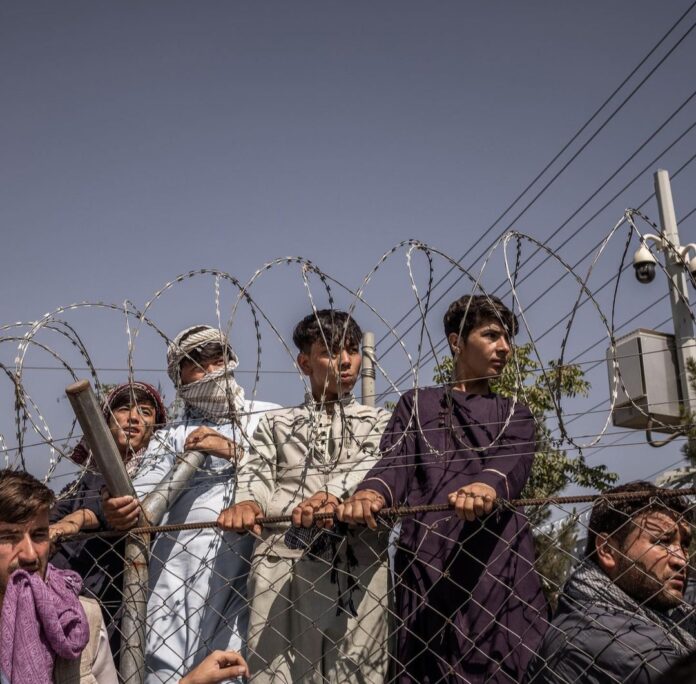
Taliban leader promises ‘inclusive’ government

“I assure the people that we strive to improve their living conditions, and that the government will be responsible to everyone and will provide security because it is necessary for economic development, not just in Afghanistan but in the whole world,” he said in Kabul.

Baradar added security was necessary to kick-start major economic projects in the country.

“If we are able to provide security, we will overcome other problems, and from here the wheel of progress and advancement will begin,” he said, adding that no effort will be spared to reach these goals.

The Taliban swept into Kabul virtually unopposed on August 15 following rapid advances across Afghanistan, as United States-led foreign forces withdrew from the country and President Ashraf Ghani fled.

On Friday, sources within the Taliban told Reuters news agency Baradar would lead the new government in Afghanistan, with Mullah Mohammad Yaqoob – the son of late Taliban founder Mullah Omar – and Sher Mohammad Abbas Stanikzai taking senior roles.

Baradar served as deputy defense minister when the Taliban last ruled Afghanistan between 1996 and 2001. Following the fall of that Taliban government, Baradar served as a senior military commander responsible for attacks on coalition forces, according to a United Nations sanctions notice.

He was arrested and imprisoned in Pakistan in 2010. After his release in 2018, he headed the Taliban’s political office in Doha, becoming one the most prominent figures in the group’s talks with Washington and the signing of their agreement in the Qatari capital last year.

Americans overwhelmingly support Afghanistan pullout, disapprove of withdrawal handling

The new poll shows that 77 percent of Americans support the decision to withdraw all US forces. The support goes across party lines, with 88 percent of Democrats, 74 percent of Republicans and 76 percent of independents supporting the withdrawal.

However, that support drops when it comes to how Biden handled the withdrawal. The poll showed 52 percent saying they support the exit of Afghanistan but disapprove of how the president handled it while just 26 percent said they support both the decision and how the president handled it.

When people were asked more generally whether they approve Biden’s overall management of the withdrawal, 60 percent said they disapprove, while only 30 percent said they approve. The support across party lines varied heavily, with 56 percent of Democrats saying they support Biden’s handling of the exit, while only 7 percent of Republicans say the same. Only 26 percent of independents surveyed said they support Biden’s oversight of the situation.

Criticism for Biden also arose over 13 American service members were killed in the Kabul suicide bombing. The poll shows 53 percent of Americans say Biden bears either a “great deal” or a “good amount” of the blame for the attack, but 43 percent say he doesn’t bear much or any blame.

However, the answers again vary across party lines. About 70 percent of Democrats say Biden bears little to no responsibility for the attack, while nearly 90 percent of Republicans say he does. Fifty-two percent of independents say Biden is to blame.

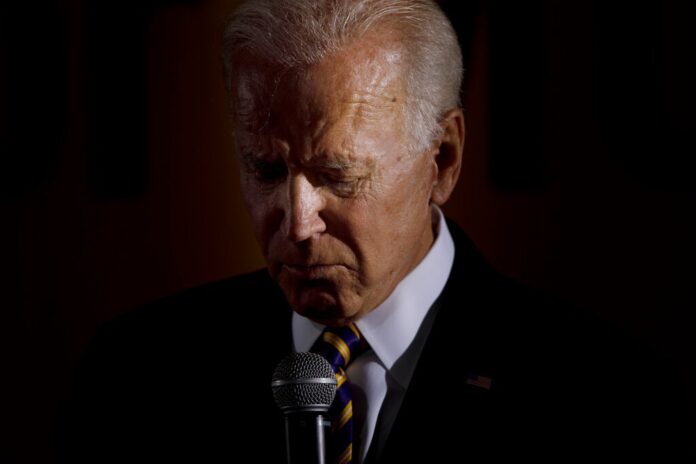
Biden has continuously defended his withdrawal from Afghanistan and said the 20-year war was no longer serving the interest of the US.

“We no longer had a clear purpose in an open-ended mission in Afghanistan,” Biden stated, adding, “After 20 years of war in Afghanistan, I refused to send another generation of America’s sons and daughters to fight a war that should have ended long ago.”

Biden’s approval rating dropped to 43 percent amid the fallout of the chaotic US withdrawal from Afghanistan, according to an NPR/PBS NewsHour/Marist poll released Thursday.

Biden’s new approval is 6 points below NPR’s August poll, which had the president’s approval rating at 49 percent.

The president’s approval rating dipped below 50 percent over multiple polls after the Taliban overthrew the Afghan government in mid-August. A separate Morning Consult Poll released Monday had the president’s approval rating at 48 percent.

The conflict in Afghanistan came to an end last week after all US troops withdrew, ending America’s longest war. The US evacuated more than 124,000 people from Afghanistan, including about 5,500 Americans.

Source: The Hill

Sadegh Amoli Larijani Quits as Member of Iran’s Guardian Council

One of the duties of the Guardian Council is to review the qualifications of presidential nominees.
Following Sadegh Amoli Larijani’s resignation, Iran’s Islamic Revolution Leader Ayatollah Seyyed Ali Khamenei, in a decree, appointed Hosseini Khorassani as a member of the Guardian Council to replace Larijani.

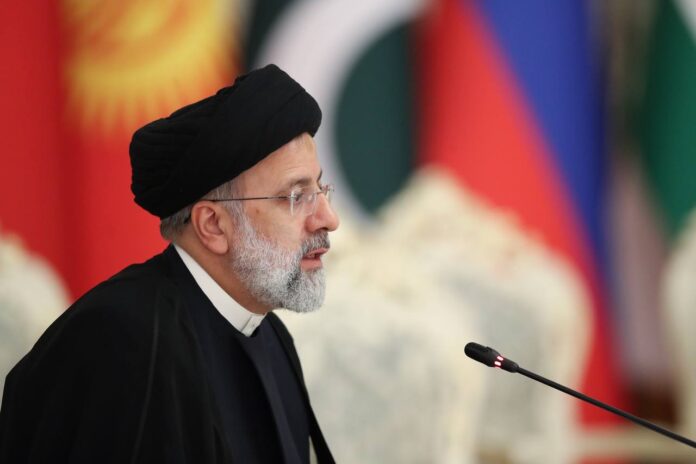
Raisi rules out talks under pressure, calls for all sanctions lifted

In his first interview with IRIB as president, Raisi added, he had announced before that negotiation over the nuclear agreement otherwise known as the JCPOA was on his administration’s agenda.

He however noted, Iran wants all sanctions lifted, adding he will not retreat an iota from the rights of the Iranian people.

The Iranian president rejected the idea of talks for the sake of talks and said Tehran wants result-based negotiations to get the sanctions removed and improve people’s livelihoods.

He also spoke of Afghanistan, saying the US oppression inflicted a big wound on Afghanistan.

He cited international organizations as saying 30 thousand Afghan children have been maimed in the US war.

Raisi said Iran has hosted 3 million Afghan refugees whose rights have been infringed by the US-led occupation of their country.

The president reiterated that the way forward in Afghanistan is to form a government elected by Afghans themselves.

He added, “Afghanistan security is our security and our priority is to have relations with neighbors”.

Raisi said he held talks with more than 50 officials from different countries over Afghanistan and the discussions will continue.

Raisi also touched on economic opportunities in Iran and urged Iranians living abroad to invest inside their country.

Raisi said government bodies have been instructed to receive foreign investments.

In other remarks, Raisi said a big percentage of Iran’s production capacity remains intact, “40 percent of factories are not operating due to different reasons, Iran plans to ramp up production and the prospects are very promising.”

Raisi urged manufacturers to increase their production as plans are afoot to begin exports of Iranian goods.

Ayatollah Khamenei thanks Iran Paralympics caravan

In the message, Ayatollah Khamenei said:

“In the Name of God….I sincerely thank our proud Paralympics caravan’s members who once again made the Iranian people happy by winning medals [in the games].”

Iranian athletes snatched 24 medals (12 gold, 11 silver and 1 bronze) in the Tokyo Paralympic Games 2020.

IRGC navy holds drill in Persian Gulf to mark iconic fighter demise

The navy ships staged a parade in the waters off the city of Delvar, Bushehr province. The drill was to mark the 100th death anniversary of Iranian independence fighter and anti-British colonialism activist Rais Ali Delvari.

Some 180 boats participated in the exercise to display their readiness to defend Iran against any potential aggression.

Rear Admiral Lower Half Ramezan Zirrahi told reporters at the site of the drill that the war game’s message to enemies is “if you make a miscalculation, Iranian armed forces are prepared to give you an unforgettable lesson just as Rais Ali Delvari and his comrades gave the British a good smack in the chops”.

He added that Iran’s history is replete with events of epic proportions that are lasting and must be kept alive as they are a source of great pride.

Zirrahi said an example was the resistance of Rais Ali Delvari and his comrades against British invaders. He noted that today, Iranian youths have modeled themselves on Rais Ali Delvari and will respond to any foreign aggression against Iran.

Iran’s Azizi clinches gold in taekwondo at Tokyo Paralympics

Azizi clinched the gold on Saturday after beating his Croatian rival Ivan Mikulic 12-10 in the final match in the men’s k44 +75kg.

The Iranian taekwondo player began his campaign with an 11-9 win over Costa Rican Esteban Molina Gomez in quarterfinals and then defeating Russian Paralympic Committee’s Zainutdin Ataev 9-4 in the semifinals.

Iran’ other gold medals were brought home by judo athletes Vahid Nouri and Mohammad Reza Kheirollahzade, powerlifter Rouhollah Rostami, long jumper Amir Khosravani, shot putter Mahdi Olad, javelin thrower Hashemiyeh Motaghian, shooter Sareh Javanmardi, javelin thrower Saeid Afrooz, javelin thrower Hamed Amiri, archer Zahra Nemati, and the sitting volleyball team.