Saturday, April 25, 2026
Home Blog Page 241

Survey shows declining trust in Israeli government, army

Israeli Army

A survey by the Institute for National Security Studies, a Tel Aviv-based research institution, showed that 76% of Israelis have lost trust in Netanyahu’s government, which has been in power since December 2022.

It found that public trust in the government fell from 30% to 23% during Israel’s 12-day war on Iran, which broke out on June 13, while trust in Netanyahu himself dropped from 35% to 30%.

According to the poll, the war on Iran also affected citizens’ trust in the Israeli army, as it dropped from 83% to 77%.

Confidence in Army Chief of Staff Eyal Zamir also fell from 69% to 62%, and in the army spokesperson, from 63% to 56.5%.

The survey showed that 28% of Israelis don’t believe in the possibility of a victory in the Gaza Strip, and only 53% see the army’s main goals of ending Hamas’ rule and returning hostages as totally or mostly achieved.

Tel Aviv estimates that 50 Israeli captives remain in Gaza, including around 20 believed to be alive.

The Israeli opposition and hostages’ families have accused Netanyahu of prolonging the war to appease his far-right coalition partners and maintain power.

The poll also showed that 42% of the Israeli citizens rule out the possibility of achieving Israel’s war goals partially or totally.

According to the survey, 61% of Israelis believe that the army’s current strategy in Gaza doesn’t facilitate the return of hostages from the enclave, while only 20.5% said that the current policy contributes to the elimination of Hamas, and 25.5% think the current strategy helps both to eliminate Hamas and return captives.

The poll also showed that Israeli society is divided over the failure to reach a ceasefire and hostage swap agreement in Gaza. While 52% blame the government fully or partially for the impasse, 45% blame Hamas entirely.

Another split was recorded in the public opinion regarding the disarmament of Hamas, as 52% believe that it is possible, and 41.5% don’t believe it could be achieved.

Hamas stressed on Saturday that it will not give up its arms unless an “independent, fully sovereign” Palestinian state is established.

Rejecting international calls for a ceasefire, the Israeli army has pursued a brutal offensive on Gaza since Oct. 7, 2023, killing more than 60,400 Palestinians, most of them women and children.

Last November, the International Criminal Court issued arrest warrants for Netanyahu and his former Defense Minister Yoav Gallant for war crimes and crimes against humanity in Gaza.

Israel also faces a genocide case at the International Court of Justice for its war on the enclave.
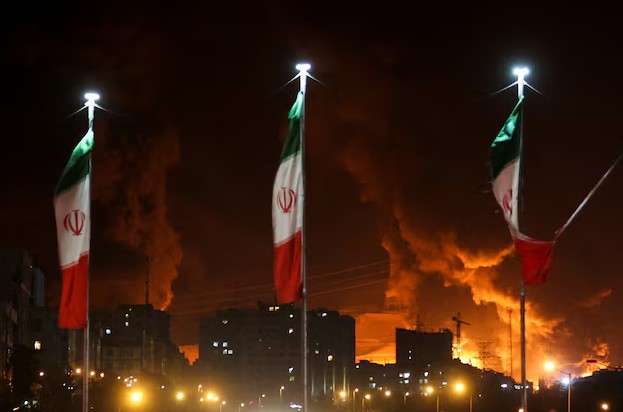
New details emerge about Israeli missile strike on Iranian Supreme National Security Council meeting

According to Jafar Ghaempanah, President Massoud Pezeshkian and other officials were inside the meeting venue when several explosions caused the building to fill with dust and led to a power outage.
The participants were split into smaller groups to locate a safe exit.

President Pezeshkian, who could barely see the light, reportedly only “the size of two palms,” due to the debris, cleared debris to open a passage.

After finding an exit, he helped others escape as well, he noted, adding the group then boarded a damaged vehicle and returned to work shortly after.

Ghaempanah stated that the site was hit two more times following their evacuation. Tragically, several rescue personnel were killed in the subsequent attacks.

The incident marks one of the most direct and high-risk assaults on Iran’s top tier officials during the escalation that started by the Israeli aggression on June 13.

Hamas says open to delivering food to Israeli hostages in Gaza

The statements from Hamas and Netanyahu came after Palestinian groups last week released videos showing two emaciated Israeli captives held in Gaza, where some 2 million Palestinians are struggling to survive the Israeli-induced starvation crisis.

Netanyahu said on Sunday he had spoken to Julian Larson, the head of the ICRC delegation to Israel, requesting the group’s “immediate involvement” in providing food and medical treatment to captives still held in Gaza.

In a post on X, Netanyahu wrote in Hebrew that he told Larson that Hamas was propagating a “lie of starvation” in the enclave, but the reality was that “systematic starvation is being carried out against our hostages”.

Later on Sunday, the spokesman for the Qassam Brigades, Hamas’s armed wing, stated in a statement that Israeli captives held in Gaza “eat what our fighters and all our people eat”.

“They will not receive any special privilege amid the crime of starvation and siege,” the spokesman, known as Abu Obeida, noted.

But, he added, the group is “ready to act positively and respond to any request from the Red Cross to deliver food and medicine to enemy prisoners”.

In order for requests to aid captives to be accepted, “humanitarian corridors must be opened in a normal and permanent manner for the passage of food and medicine to all our people in all areas of the Gaza Strip”, Abu Obeida continued.

Israeli attacks “of all forms must cease during the receipt of packages for the prisoners”, he stressed.

The families of Israeli captives held in Gaza announced on Sunday that Netanyahu’s continued insistence that a “military resolution” was the only solution was “a direct danger to the lives of our sons, who live in the hell of tunnels and are threatened by starvation and immediate death”.

“For 22 months, the public has been sold the illusion that military pressure will bring back the hostages, and today, even before reaching a comprehensive draft agreement, it is said that an agreement is futile,” the families said in a statement.

There are about 50 captives still in Gaza. Fewer than half are believed to be still alive.

Iranian editor criticizes deputy FM for “misinterpretation” of law on IAEA cooperation

IAEA

In an editorial on Monday titled “A Distorted Interpretation of Parliament’s Law on the IAEA”, Shariatmadari responded to comments made by Deputy Foreign Minister Saeed Khatibzadeh, who stated in a Chinese TV interview that Iran’s Supreme National Security Council (SNSC) is the sole authority for managing Iran–IAEA relations, and that cooperation would continue under this framework.

Shariatmadari argued that the law passed by Iran’s parliament in July 2025 explicitly mandates the suspension of all cooperation with the IAEA until two conditions are met: full respect for Iran’s sovereignty and territorial integrity, and recognition of Iran’s nuclear rights under Article 4 of the NPT.

He emphasized that the SNSC’s role is limited to verifying IAEA compliance, not defining bilateral relations.

He further warned that bypassing the law constitutes a criminal offense under Article 19 of Iran’s Penal Code.

Top Trump aide accuses India of financing Russia’s war against Ukraine

“What he (Trump) said very clearly is that it is not acceptable for India to continue financing this war by purchasing the oil from Russia,” said Stephen Miller, deputy chief of staff at the White House and one of Trump’s most influential aides.

Miller’s criticism was some of the strongest yet by the Trump administration about one of the United States’ major partners in the Indo-Pacific.

“People will be shocked to learn that India is basically tied with China in purchasing Russian oil. That’s an astonishing fact,” Miller said on Fox News’ “Sunday Morning Futures.”

Indian government sources told Reuters on Saturday that New Delhi will keep purchasing oil from Moscow despite U.S. threats.

A 25% tariff on Indian products went into effect on Friday as a result of its purchase of military equipment and energy from Russia. Trump has also threatened 100% tariffs on U.S. imports from countries that buy Russian oil unless Moscow reaches a major peace deal with Ukraine.

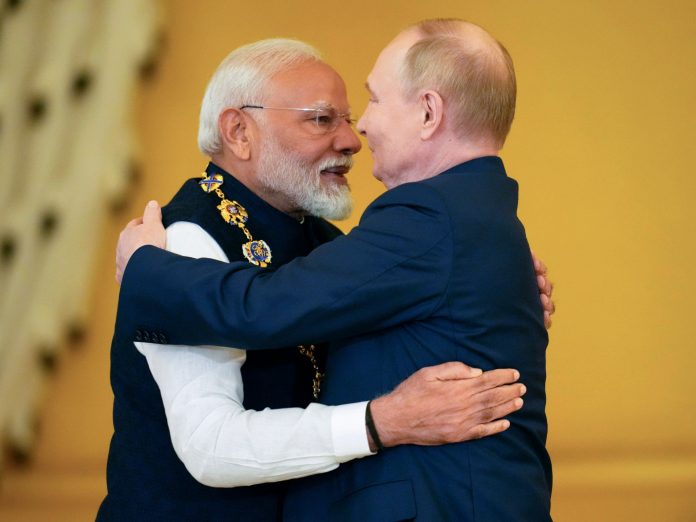
Miller tempered his criticism by noting Trump’s relationship with Indian Prime Minister Narendra Modi, which he described as “tremendous.”

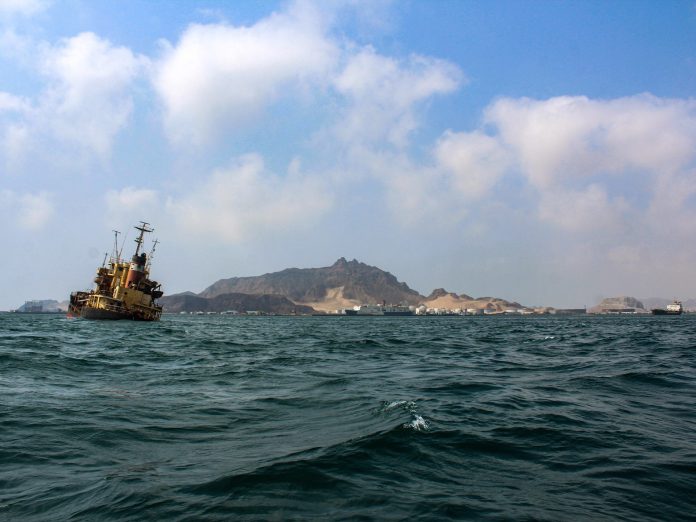
Dozens dead after migrant boat sinks off Yemen

The International Organization for Migration’s country chief of mission, Abdusattor Esoev, told AFP that “as of last night, 68 people aboard the boat were killed, but only 12 out of 157 have been rescued so far. The fate of the missing is still unknown.”

On Sunday, two security sources in southern Yemen’s Abyan province — a frequent destination for migrant smuggling boats — gave a preliminary toll of 27 killed in the shipwreck.

Despite the war that has ravaged Yemen since 2014, the impoverished country has remained a key transit point for irregular migration, in particular from Ethiopia which itself has been roiled by ethnic conflict.

Each yeah, thousands brave the so-called “Eastern Route” from Djibouti to Yemen across the Red Sea, in the hope of eventually reaching oil-rich Persian Gulf countries.

The vessel that sank off the coast of Yemen’s Abyan was carrying mostly Ethiopian migrants, according to the province’s security directorate.

It said on Sunday that security forces were conducting operations to recover a “significant” number of bodies.

Last month, at least eight people died after smugglers had forced migrants to disembark from a boat in the Red Sea, according to the UN’s migration agency.

The International Organization for Migration says tens of thousands of migrants have become stranded in Yemen and suffer abuse and exploitation during their journeys.

Last year, the IOM recorded at least 558 deaths on the Red Sea route, with 462 resulting from shipwrecks.

Witkoff may visit Russia this week: Trump

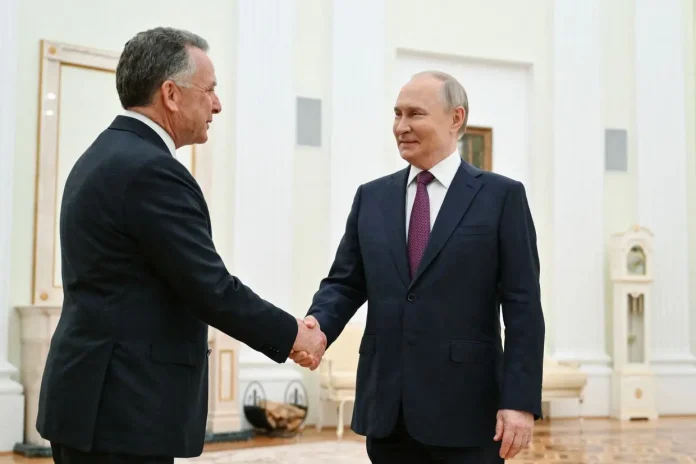
“I think next week, Wednesday or Thursday, (he) may be going to Russia,” Trump told reporters on Aug. 3. “They would like to see him. They’ve asked that he meet, so we’ll see what happens.”

Witkoff met with Russian President Vladimir Putin in April despite being appointed as Trump’s envoy to the Middle East. His interactions with Putin, including the use of Kremlin-provided translators and repetition of Russian narratives about the war, drew criticism from officials in Washington and abroad.

Trump reiterated that sanctions would take effect if Russia does not agree to a ceasefire by Aug. 8.

“There’ll be sanctions, but they seem to be pretty good at avoiding sanctions,” he said. “They’re wily characters, and they’re pretty good at avoiding sanctions, so we’ll see what happens.”

On July 29, Trump announced that tariffs on Russian exports would be implemented within 10 days if the Kremlin failed to end its war in Ukraine.

The proposed measures include sweeping secondary tariffs on countries that continue to import Russian oil, gas and other goods — a move that would significantly affect major trading partners such as China and India.

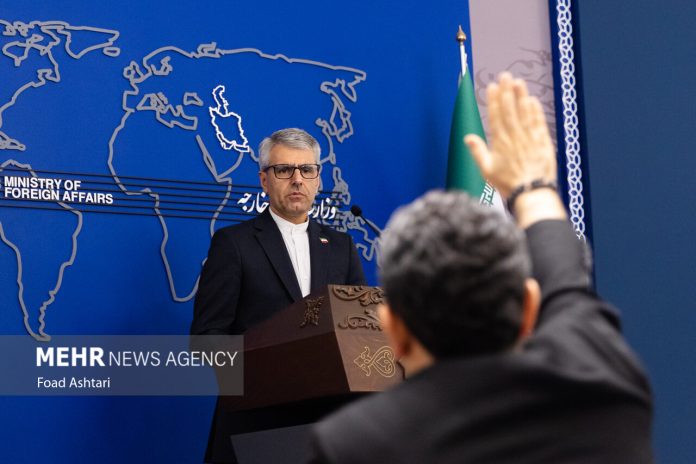
Foreign Ministry Spokesman: IAEA official to visit Tehran

Esmail Baghaei

Esmail Baqaei stressed that Iran remains a member of the Non-Proliferation Treaty (NPT) and the Safeguards Agreement, and as a law-abiding country, it will continue to honor its commitments as long as it retains membership.

He added that Iran’s grievances regarding the IAEA’s politicized conduct are clear, emphasizing that the Agency must act strictly within its technical mandate and avoid succumbing to external pressures.

Baqaei noted that currently no inspectors are present in Iran, and any cooperation with the Agency must be regulated strictly in line with the Iranian Parliament’s resolution.

Regarding the “snapback mechanism” for reimposing anti-Iran sanctions, Baqaei said that the three European countries — the UK, France, and Germany — have no legal right to misuse this mechanism.

He warned that it has become clear to them that resorting to such a tool would certainly have consequences both for the non-proliferation regime and for those three countries themselves.

Baqaei also responded to remarks made by the British foreign secretary against Iran, saying: “He is in no position to make such statements.”

He added that the comments follow the long-standing tradition of that country’s politicians, who, driven by a colonial mindset, are accustomed to making such claims.

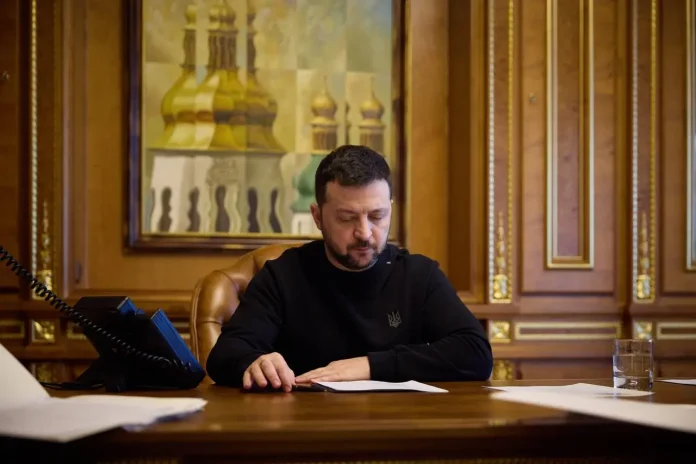
Ukraine puts sanctions against dozens of individuals, several entities from Russia, Iran

In his evening address, Zelensky said that the imposed sanctions mark the first of three planned packages that will be imposed in the near future.

“Sanctions have been imposed on the captains of Russia’s shadow fleet, and we will synchronize all of this – all of these packages – with our partners to ensure the pressure is effective across most jurisdictions,” Zelensky added.

Russia’s shadow fleet refers to Moscow’s aging and poorly insured tankers, which Moscow uses to evade sanctions and conduct espionage, among other objectives.

The sanction target citizens of Russia, Iran, Pakistan, Myanmar, China, Bangladesh, India, and Georgia. Russia regularly has vessels registered in other countries as a means to circumvent Western sanctions and oil price caps.

Russia’s shadow fleet has been increasingly targeted by Kyiv and Western sanctions as international partners seek to curb Russian oil revenues, which help fund its war machine.

Zelensky signed a law on July 30 enabling sanctions against vessels and aircraft involved in covert Russian schemes to transport oil, weapons, and military personnel.

More than 100 shadow fleet ships were targeted in the EU’s 18th sanctions package approved in mid-July. Only a few days later, the U.K. sanctioned 135 Russian oil tankers and two shipping companies linked to Russia’s shadow fleet.

Both the EU and the U.K. also agreed to lower the price cap imposed on Russian crude oil from $60 per barrel to $47.60.

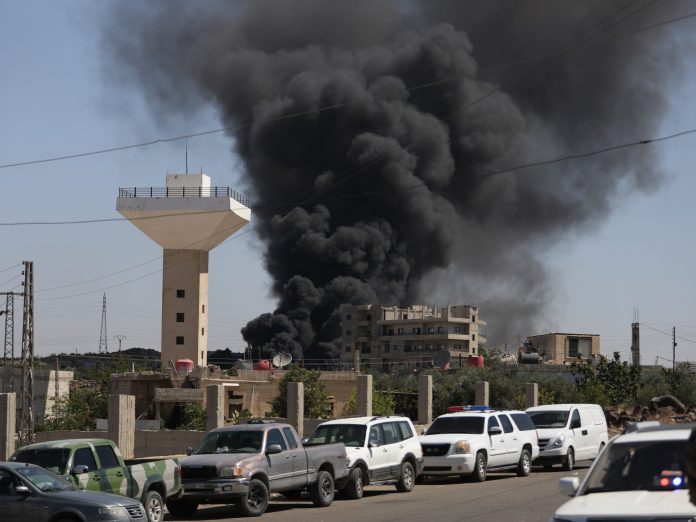
Four killed after armed groups attack Syrian security forces

The Syrian Observatory for Human Rights said three Syrian security forces personnel were killed “as clashes erupted with local factions around Tal Hadid in the western Sweida countryside”.

The Observatory also reported the death of a “local fighter”.

Fighting also erupted around the city of Thaala, the Observatory added, “following bombardment of the area with shells and heavy weapons launched from areas under the control of government forces, while the sound of explosions and gunfire was heard in various parts of Sweida city”.

A security source told the outlet the armed groups had violated a ceasefire agreed in the predominantly Druze region, which has seen more than 1,000 killed in fighting over the past month.

Violence in Sweida erupted on 13 July between Bedouin fighters, Druze factions and government forces.

Israel also carried out strikes on Syrian cities, claiming they were coming to the assistance of the Druze.

A US-brokered truce ended the fighting, while the government said it would investigate the clashes, setting up a committee to investigate the attacks.

Since the overthrow of Bashar al-Assad in December, Syria has been rocked by waves of sectarian violence which new President Ahmed al-Sharaa has struggled to manage.

Attacks by Assad loyalists in the coastal province of Latakia provoked a violent sectarian backlash against the minority Alawi population, which the former president and his family were members of.

At least 1,500 Alawis were killed in the subsequent violence, with a Reuters investigation tracing much of it back to officials in Damascus.