Saturday, December 20, 2025
Home Blog Page 2404

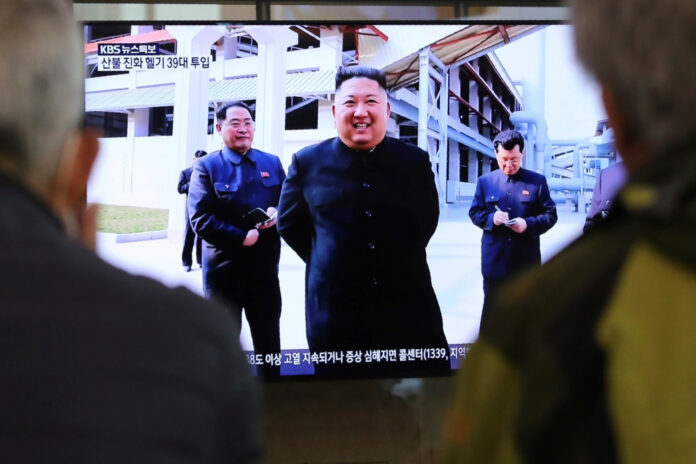
South Korea says North launched two ‘ballistic missiles’

South Korea’s JCS noted that it is carefully analysing the information with US intelligence agencies. 

Japan’s Prime Minister Yoshihide Suga condemned North Korea’s launch of ballistic missiles, dubbing the action a threat to peace and security in the region. Suga also ordered to urgently convene the country’s National Security Council.

“North Korea’s ballistic missile launches threaten the peace and security of our country and the region. They are in violation of the UN Security Council’s decisions. We express our strong protest and strongly condemn [them]”, Suga stated.

Prior to the official statement by the South Korean and Japanese authorities, the nations’ media reported about two unidentified projectiles launched within the space of several minutes.

The state-run Korean Central News Agency (KCNA) reported on September 13 that Pyongyang had carried out a successful test of a cruise missile. North Korean experts reportedly held thrust tests for missile engines on the ground, flight tests, control and guidance tests, and a number of others. The said missiles are reportedly capable of hitting targets at a distance of 1,500 kilometres.

Following the reported launch, Japan’s Defense Minister Nobuo Kishi stated that if the information on the success of North Korea’s cruise missile tests is confirmed, it could become a potential threat to the peace and security of the region.

On September 14, diplomats from Japan, South Korea, and the United States held a trilateral meeting on North Korea in Tokyo. The meeting was attended by US Special Envoy for North Korea Sung Kim, Head of the Japanese Foreign Ministry’s Asian and Oceanian Affairs Bureau Takehiro Funakoshi, and the South Korean Foreign Ministry’s Special Envoy for peace and security on the Korean Peninsula Noh Kyu-duk.

One of the key topics of discussion was a possible response to the statement by Pyongyang about successful missile tests. The parties agreed to continue cooperation on the denuclearisation of North Korea by combining dialogue with North Korean authorities and sanctions pressure.

Source: Yonhap news agency

Iran to pursue assassination of anti-terror icon through legal channels

Speaking at a meeting in the Foreign Ministry with members of a committee tasked with following up the assassination, Amir Abdollahian said the US officials’ role in the assassination of General Soleimani is unforgivable and it’s Iran’s definite policy to bring the state terrorists behind the crime to justice.

The foreign minister noted that the memory of General Soleimani must be kept alive as a national and international anti-terrorism hero.

The members of General Soleimani’s family were present at the meeting in Iran’s Foreign Ministry.

General Soleimani was assassinated along with his companion Abu Mahdi Muhandis in a US drone strike outside Baghdad’s airport in January 2020.

The attack was carried out at the direct order of former US president Donald Trump.

General Soleimani played the key role in defeating Daesh and other terrorist groups in Iraq and Syria and is revered as an anti-terror icon in Iran and the wider region.

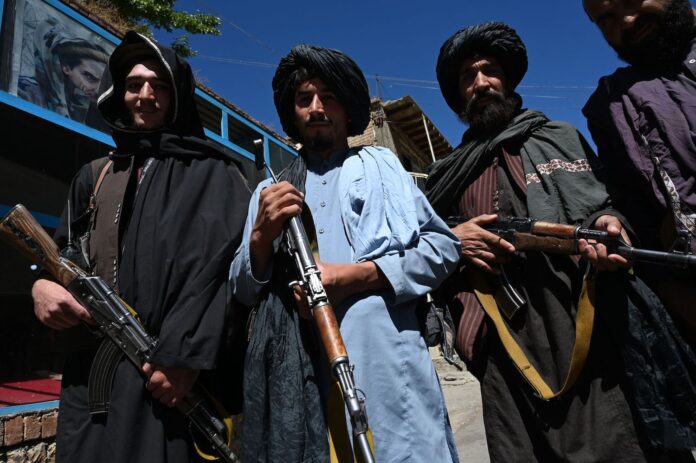
EU says has no option but to engage with Taliban

In a speech at the European parliament on Tuesday, the EU’s high representative for foreign affairs said the bloc could only influence future developments by engaging with the new regime.

“The embassies of the member states have been closed and they are not going to reopen but we still have a delegation that can be seen – just not an embassy, as we are not a state,” Borrell continued. 

“[It] can be used if the security conditions are met in order to discuss with the government in a closer way than through video conferences or through messages,” he added.

Borrell described the swift collapse of the previous US-backed government as a “tragedy” that had proven that “nation building” was more difficult than former US president George Bush had ever appreciated.

The former Spanish foreign minister stated the EU would not recognise the Taliban government but that the bloc had much to gain from talking with the new administration.

The EU is setting conditions on its level of engagement with the Taliban, however, including the protection of human rights.

“Maybe it’s a pure oxymoron to talk about human rights but this is what we have to ask them,” Borrell said. 

“To have any chance of influencing events, we have no other option but to engage with the Taliban … engaging means talking, discussing and agreeing when possible,” he added. 

There is concern in Brussels and the EU capitals at a potential migration crisis as more people seek to flee Afghanistan in the coming months.

Borrell noted he had not been encouraged by the make-up of the new government, which includes individuals on a United nations sanctions list.

Borrell told MEPs that he did not believe, however, that the number of people fleeing the country and entering the EU would match those that came after 2015 as Syria was sucked into civil war.

“We don’t want to create a ‘pull effect’ but we want to protect a lot of Afghan people that deserve our protection and we have to discuss with the Taliban how we can offer and make effective these protections,” Borrell added.

Source: The Guardian

Iran to increase nuclear electricity generation capacity to 8MG

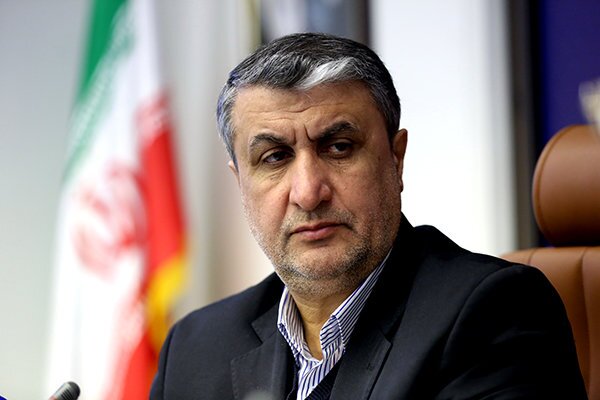
Mohammad Eslami was speaking on Tuesday after visiting Iran’s nuclear power plant in the southern city of Bushehr. 

He said the AEOI has plans on building several other nuclear power plants to hit the 8,000 megawatt target. According to the AEOI chief, the power plant’s current electricity generation capacity is 1,000 megawatts and it plays a key role in meeting Iran’s need for electricity. 

He said the government will accelerate funding for construction of the second and third units at the Bushehr nuclear power plant. 

The AEOI chief blamed the delay in completing the construction on funding shortfalls, adding that the construction operation is underway and efforts are being made to complete the units as planned. 

Eslami noted that the Bushehr power plant is working at full capacity and has generated more than 50 billion kilowatts of electricity over the past 15 days. 

Eslami was appointed as Iran’s vice-president and AEOI chief earlier this month. Elsewhere in his remarks, Eslami noted that Iran’s policy is to expand nuclear power as a clean source of energy to meet its current and future needs.

Witness in Netanyahu’s corruption trial killed in plane crash

Haim Geron, the former senior official at Israel’s Ministry of Communications, and his wife were killed off the island of Samos late on Monday. He was one of 300-plus witnesses listed for Netanyahu’s trial.

Greek authorities are investigating the private plane crash that killed Geron.

The former PM is accused of fraud, bribery and breach of trust and the charges centre around his relationships with businessmen, media tycoons and a leading Israeli telecoms firm.

The small Cessna 182 carrying Geron and his wife took off from Haifa in Israel and crashed near Samos airport.

The coastguard and divers recovered the bodies of the two 69-year-old victims a few hours later.

Greece’s air crash investigations unit announced it had started an investigation into the cause of the incident.

“Shortly before landing, communication with the control tower on Samos was lost and the Civil Aviation Authority informed the search and rescue centre about the loss of communication,” said the Air Accident Investigation and Aviation Board.

The Israel’s Foreign Ministry identified the victims and added consular officials were working to repatriate the bodies.

Netanyahu, whose lengthy tenure in power ended earlier this year, has denied the corruption allegations and mocked the size of the witness list.

Source: Sky News

New appointments at Iran’s Foreign Ministry

By virtue of an order from the Iranian foreign minister, Messrs Ali Bagheri, as deputy foreign minister for political affairs; Mohammad Fathali, as  administrative and financial assistant; Mehdi Safari, as deputy foreign minister for economic diplomacy were appointed. The order says: “It is hoped that under God’s auspices and through following the orders of the Leader, you will succeed in realizing the policies and strategies of the diplomatic apparatus, especially balanced, active, dynamic and smart foreign policy, and also in cooperating with the honorable deputies, managers and experts in performing their duties.”

The Iranian foreign minister, in separate rulings, appreciated the services of the former deputies Messrs Seyyed Abbas Araghchi, Ali Abolhassani and Seyyed Rasoul Mohajer, and appointed them as his advisors.

Bagheri served as deputy secretary of Iran’s Supreme National Security Council from 2007 to 2013. Fathali was also former Iranian ambassador to Lebanon. And Mehdi Safari was former Iranian ambassador to Russia, China and Austria.

Iran’s exports to Iraq rises by 31%

Seyyed Ruhollah Latifi added that Iran’s imports from Iraq also increased by 430 percent in value during this period.

According to Latifi, Iraq is the second largest buyer of Iranian goods in recent years but, due to the outbreak of the Covid pandemic, several border crossings with Iraq were closed for months last year, and like many other countries, trade with Iraq decreased during the period.

In the first five months of the Persian year of 1400 and with Covid’s impact on foreign trade blunting, Iran saw a rise in economic exchanges, and this was also the case with Iraq as Iran’s second largest export partner, Latifi said.

He pointed out that Iran’s exports to Iraq by the end of August was more than 12,024 tons worth more than $3,163,000 which saw a 31% growth in value and a 53% rise in weight.

Regarding imports from Iraq, the Iranian customs spokesman said, “In the first five months of this year, 313,612 tons of goods worth more than $175,989,000 were imported from Iraq, which translates into a 970% rise in weight and a 430% rise in value compared to the same period last year. Figures show Iran’s total foreign trade in the first five months of this year reached 59.3 million tons worth $34 billion, with a positive balance of $1 billion.

World Bank: Climate change could force migration of 216m people

Climate change is a powerful driver of internal migration because of its impacts on people’s livelihoods and loss of livability in highly exposed locations, the report noted, adding that hotspots of internal climate migration could emerge as early as 2030 and “continue to spread and intensify” by 2050.

By 2050, Sub-Saharan Africa could see as many as 86 million internal climate migrants; East Asia and the Pacific, 49 million; South Asia, 40 million; North Africa, 19 million; Latin America, 17 million; and Eastern Europe and Central Asia, 5 million, according to the report.

The report is a “stark reminder” of the human toll of climate change, particularly on the world’s poorest, those who are contributing the least to its causes, said Juergen Voegele, vice president of sustainable development at the World Bank.

“It also clearly lays out a path for countries to address some of the key factors that are causing climate-driven migration,” stated Voegele.

The report added immediate and concerted actions to reduce global emissions and to support green, inclusive, and resilient development could reduce the scale of climate migration by as much as 80 percent.

Source: Xinhua news agency

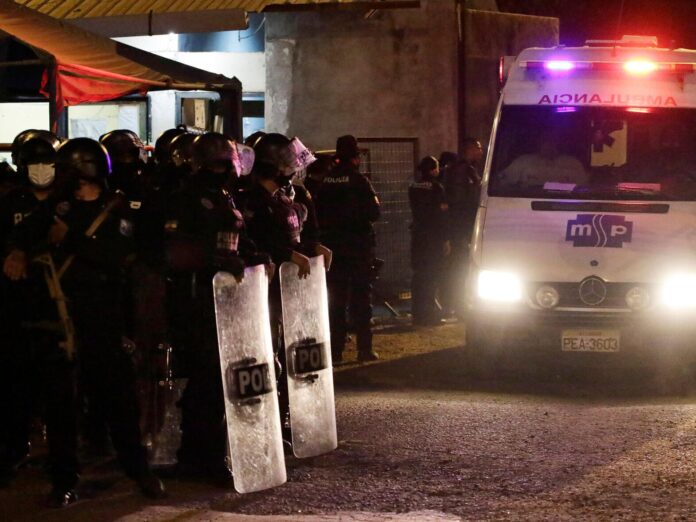
Gunmen raid Nigerian prison, free over 260 inmates

Almost all of the inmates of a prison in south-central Nigeria were broken when armed gunmen breached the perimeter fence of the facility, freeing 266 prisoners.

A soldier and a police officer were killed in the attack and two guards were missing, the interior ministry reported. It was the second major jailbreak in Nigeria this year.

The attackers used explosives to destroy the fence on three sides and fought a gun battle with guards at the medium-security prison at Kabba in Kogi state, southwest of the federal capital Abuja, authorities stated.

Nigeria is struggling with security problems across its vast territory, including armed robberies by criminal gangs, an insurgency in the northeast and a spate of mass school abductions in the northwest.

Twenty-eight out of the 294 inmates at Kabba had not escaped, the interior ministry added, meaning 266 had got away. The prison service had initially put the number of fugitives at 240.

It was the second major jailbreak this year after gunmen attacked a prison in Owerri in southeastern Imo State in April, freeing more than 1,800 inmates.

Police blamed the Owerri jailbreak on a banned separatist movement, the Indigenous People of Biafra (IPOB), which campaigns for several southeastern states to split from Nigeria. IPOB denied any involvement.

Kogi state is not part of the region IPOB wants to see secede. The authorities said the Kabba attackers had not been identified, and they did not suggest a reason for the raid.

The prison service said the Kabba jail was established in 2008 with a capacity for 200 inmates. At the time of the attack there were 224 pre-trial detainees and 70 convicted offenders in the jail, it added.

Suspects can spend years in pre-trial detention in Nigeria. Human rights groups say prisons are often overcrowded and legal procedures inefficient.

The interior ministry announced there were 15 soldiers, 10 police officers and 10 armed prison guards on duty at the Kabba jail at the time of the raid.

Source: Reuters

US Capitol fence to return ahead of pro-rioters rally

The fence surrounding the US Capitol is set to return ahead of the pro-Trump rally on Sept. 18, the head of the Capitol Police confirmed Monday.

“The fence will go up a day or two before, and if everything goes well it will come down very soon after,” Capitol Police Chief Thomas Manger told reporters in the Capitol.

The remarks came just moments after Manger, along with the sergeants-at-arms in both chambers, had briefed the top congressional leaders on the intelligence gathered by law enforcement ahead of Saturday’s “Justice for J6” rally at the Capitol, which will protest the treatment of the hundreds of people arrested in connection with the Jan. 6 riot.

Leaving the intelligence briefing, Senate Majority Leader Charles Schumer (D-N.Y.) declined to comment on the threat level posed on Saturday. But he said he’s confident there won’t be another security debacle like that of Jan. 6.

“They seemed very, very well prepared — much better prepared than before Jan. 6. I think they’re ready for whatever might happen,” he added.

The briefing was held just hours after US Capitol Police officers arrested a 44-year-old California man for allegedly possessing a bayonet and a machete just outside the Democratic National Committee headquarters, which sits just south of the Capitol building. Both items are illegal in Washington.

The man was driving a truck laden with white supremacist slogans, and said he was “on patrol”, according to Capitol Police.

The original Capitol security fence was erected in the days following the deadly rampage at the Capitol on Jan. 6, and quickly became a symbol of both the failure of law enforcement to prepare for violence that day and the ongoing effort by Trump to overturn his election defeat.

It also infuriated Republicans in Congress, who accused Democrats of politicizing Jan. 6 by exaggerating the violent threat posed by Trump’s supporters. Closer to home, neighbors in the vicinity of Capitol Hill also pushed hard to have the fence removed.

Heading into the intelligence briefing, Speaker Nancy Pelosi (D-Calif.) agreed with Schumer’s assessment that law enforcement was taking the threat of potential violence more seriously than they did before Jan. 6.

“I think there’s much better preparation and knowledge about what to expect,” she said, adding, “I do observe much better communication.”

Source: The Hill