Saturday, December 20, 2025
Home Blog Page 2403

Ex-US intelligence operatives admit hacking for UAE

Three former U.S. intelligence and military officials have admitted providing sophisticated computer hacking technology to the United Arab Emirates and agreed to pay nearly US$1.7 million to resolve criminal charges in an agreement that the Justice Department described Tuesday as the first of its kind.

The defendants – Marc Baier, Ryan Adams and Daniel Gericke – are accused of working as senior managers at a UAE-based company that conducted hacking operations on behalf of the government.

Prosecutors say the men provided hacking and intelligence-gathering systems that were used to break into computers in the United States and elsewhere in the world.

The Justice Department alleges that the men committed computer fraud and violated export control laws by providing defense services without the required license.

The case also appears to be part of a growing trend highlighted earlier this year by the CIA of foreign governments hiring former U.S. intelligence operatives to bolster their own spycraft – a practice officials have said risks exposing U.S. secrets.

“This is a loud statement” that the Justice Department takes such cases seriously, said Bobby Chesney, a professor at the University of Texas School of Law who specializes in national security issues.

The charges were filed under a deferred prosecution agreement that, in addition to requiring a US$1.68 million payment, will also force the men to cooperate with the Justice Department’s investigation, to sever any ties with any UAE intelligence or law enforcement agencies and to forego any security clearances.

If they comply with those and other terms for three years, the Justice Department will abandon the prosecution.

As part of the agreement, the three men did not dispute any of the facts alleged by prosecutors.

The Justice Department described it as the “first-of-its-kind resolution of an investigation into two distinct types of criminal activity”, including providing unlicensed technology for the purposes of hacking.

“Hackers-for-hire and those who otherwise support such activities in violation of U.S. law should fully expect to be prosecuted for their criminal conduct,” Mark Lesko, acting assistant attorney general in charge of the Justice Department’s national security division, announced in a statement.

According to court documents, the trio left a U.S.-based company that was operating in the UAE to join an Emerati company that would give them “significant increases” in their salaries.

The companies aren’t named in charging documents, but Lori Stroud, a former National Security Agency employee, stated she worked with the three men in the UAE at U.S.-based CyberPoint and then for UAE-based DarkMatter.

Stroud added she quit because she saw DarkMatter hacking U.S. citizens, noting she assisted the FBI in its investigation and was glad to see the case come to a resolution.

“This is progress,” Stroud continued.

The Emirati government did not immediately respond to a request for comment. Questions sent by email to officials at Abu Dhabi-based DarkMatter could not be delivered.

Since details of DarkMatter’s hacking campaign became public, the company’s profile has dropped over the last few years, with some staff moving onto a new Abu Dhabi-based firm called G42.

That firm has been linked to a mobile app suspected of being a spying tool as well as Chinese coronavirus tests that American officials warned against using over concerns about patient privacy, test accuracy and Chinese government involvement.

DarkMatter’s founder and CEO, Faisal al-Bannai, told The Associated Press in 2018 that the company takes part in no hacking, although he acknowledged the firm’s close business ties to the Emirati government, as well as its hiring of former CIA and NSA analysts.

Prosecutors announced that between January 2016 and November 2019, the defendants increased operations being providing to the UAE government.

They bought exploits to break into computers and mobile devices from companies around the world, including those based in the U.S., according to the Justice Department.

That includes one so-called “zero-click” exploit – which can break into mobile devices without any user interaction – that Baier bought from an unnamed U.S. company in 2016.

Lawyers for Adams and Gericke did not immediately return messages seeking comment, and a lawyer for Baier declined to comment.

The Justice Department described each of them as former U.S. intelligence or military personnel. Baier previously worked at the NSA, according to a former colleague who spoke on condition of anonymity because of the sensitivity surrounding the matter.

The CIA warned in a letter earlier this year about “an uptick in the number of former officers who have disclosed sensitive information about CIA activities, personnel, and tradecraft”.

The letter sent to former CIA officials was signed by Sheetal Patel, the agency’s assistant director for counterintelligence. It described as a “detrimental trend” a practice of foreign governments hiring former intelligence officers “to build up their spying capabilities”.

Some listed examples included using access to CIA information or contacts for business opportunities as well as “working for state-sponsored intelligence related companies in non-fraternization countries”.

“We ask that you protect yourself and the CIA by safeguarding the classified tradecraft that underpins your enterprise,” Patel wrote.

Source: The AP

Biden denies china leader turned down talk offer

The Financial Times cited multiple people briefed on a 90-minute call between the two leaders last week as saying Xi did not take Biden up on the offer and instead insisted that Washington adopt a less strident tone toward Beijing.

“It’s not true,” Biden stated when asked by reporters if he was disappointed that Xi did not want to meet with him.

US National Security Adviser Jake Sullivan announced in a statement earlier on Tuesday that the report was “not an accurate portrayal of the call. Period”.

A source who was among those briefed on the call confirmed the report was accurate.

“Xi apparently intimated that the tone and atmosphere of the relationship needed to be improved first,” the source told Reuters.

China’s embassy in Washington did not immediately respond when asked to comment.

The Financial Times quoted one of its sources as saying Biden had floated the summit as one of several possibilities for follow-on engagement with Xi, and he had not expected an immediate response.

It cited one U.S. official as noting that while Xi did not engage with the idea of a summit, the White House believed that was partly due to concerns about COVID-19.

The G20 summit in Italy in October has been talked about as a possible venue for a face-to-face meeting, but Xi has not left China since the outbreak of the pandemic early last year.

In his statement, Sullivan added, “As we’ve said, the Presidents discussed the importance of being able to have private discussions between the two leaders, and we’re going to respect that.”

The call between Biden and Xi was their first in seven months and they discussed the need to ensure that competition between the world’s two largest economies does not veer into conflict.

A U.S. official briefing before the conversation called it a test of whether direct top-level engagement could end what had become a stalemate in ties, which are at the worst level in decades.

The White House said afterward it was intended to keep channels of communication open, but it has announced no plans for follow-on engagements.

Chinese state media reported Xi had told Biden that U.S. policy on China imposed “serious difficulties” on relations, but added that both sides agreed to maintain frequent contact and ask working-level teams to step up communications.

UK bars Chinese envoy from parliament over sanctions row

Zheng — who assumed the role in July — had been due to attend a meeting of the all-party parliamentary group on China, but the invitation was rescinded Tuesday by the House of Commons’ Speaker Lindsay Hoyle.

The Chinese embassy in London slammed the decision, describing it as “despicable and cowardly”.

The move came after Hoyle met last week with a group of MPs targeted by the Chinese sanctions, which Beijing slapped on a total of 10 U.K. organizations and individuals in March in response to British sanctions for Chinese officials linked to human rights abuses in Xinjiang. The Chinese government stated the British officials were punished for spreading “lies and disinformation” about the situation in Xinjiang.

The British MPs wrote to Hoyle after their meeting, urging him to consider “the implications of the visit for all parliamentarians who need to be able to speak out as part of their duties in the democratic system we all cherish”.

In a statement Tuesday after consulting with Foreign Secretary Dominic Raab, Hoyle noted, “I do not feel it’s appropriate for the ambassador for China to meet on the Commons estate and in our place of work when his country has imposed sanctions against some of our members.”

The ambassador will be banned from both the House of Commons and House of Lords while the sanctions remain.

Relations between China and the U.K. have soured in recent years over Beijing’s crackdown in Hong Kong, tech giant Huawei, and media reports of human rights abuses against the Uyghur minority in Xinjiang. At the same time, the U.K. is also trying to persuade China to endorse its ambitious climate plans at the COP26 summit in Glasgow later this year.

Source: Politico

Iran envoy to US: Stop breaching JCPOA

Kazem Gharibabadi said Tehran has yet to see enough determination from Washington to meet its commitments under the nuclear deal and lift the sanctions it imposed on Iran after withdrawing from the JCPOA in 2018 under former US president Donald Trump.

Gharibabadi was addressing a meeting of the IAEA’s board of governors in Vienna. He added that the US and its European allies should not expect Iran to take constructive steps while the US sanctions are still in place.

Following the US withdrawal from the nuclear deal and its reinstatement of sanctions on the Islamic Republic, Tehran took retaliatory measures. It reduced its commitments under the nuclear agreement gradually.

Iran has also criticized the European signatories to the JCPOA for pressuring Tehran to comply with the deal under such circumstances.

The Troika say Iran must return to the negotiating table in Vienna where efforts have been ongoing to revive the nuclear agreement. Iran has repeatedly said it’s open to negotiations but talking for the sake of talking is futile. It also says the ultimate outcome of any negotiations must guarantee the removal of anti-Iran sanctions.

Haiti’s top prosecutor asks judge to charge PM over president’s assassination

The order filed by Port-au-Prince prosecutor Bed-Ford Claude came on the same day that he had requested Henry meet with him and explain why a key suspect in the assassination of Moise called him twice just hours after the killing.

“There are enough compromising elements … to prosecute Henry and ask for his outright indictment,” Claude wrote in the order.

Claude stated the calls were made at 4:03 and 4:20 a.m. on July 7, adding that evidence shows the suspect, Joseph Badio, was in the vicinity of Moise’s home at that time.

Badio once worked for Haiti’s Ministry of Justice and at the government’s anticorruption unit until he was fired in May amid accusations of violating unspecified ethical rules.

In the two-page document, Claude said the calls lasted a total of seven minutes and that Henry was at the Hotel Montana in Port-au-Prince at that time. He also noted that a government official tweeted last month that Henry told him he never spoke with Badio.

Source: The Independent

Russia says US seeking ‘de dacto partition’ of Syria

US Forces Syria

Ryabkov warned on Tuesday that the continued presence of American troops in eastern Syria amounts to a de facto partition of the country.

“One of the main reasons for the instability and continuation of the conflict in Syria is the illegal presence of the United States in the country,” Ryabkov told RT Arabic on Tuesday.

“I think that in their arsenal there is a scenario of a de facto partition of Syria. We are against this and are acting in accordance with the existing resolutions of the UN Security Council, which has confirmed the territorial integrity of Syria,” he added.

US troops have been deployed to Syria since late 2015, when then-US President Barack Obama began deploying US Special Forces units to support Kurdish militias fighting Daesh, although Washington and allied air forces had been bombing Daesh positions since the year prior. Greater numbers of American troops arrived in subsequent years after Daesh was forced out of Iraq, and US forces in Syria’s Deir-ez-Zor Governorate began building large facilities for a more permanent presence near the country’s primary oil fields.

In 2018, then-US Secretary of State Rex Tillerson said the US intended to keep troops in eastern Syria until its goals of forcing Syrian President Bashar al-Assad from power and training a large proxy force of Kurds and other ethnic minorities in the region who were oppressed by Daesh rule. However, he also added Washington intended to stay in order to keep Iran’s position in Syria weak, a very open-ended mission goal.

Roughly 900 US troops remain in Syria, officially serving as advisors to the Kurdish-dominated Syrian Democratic Forces.

“Iran, unlike the United States, was invited to send forces into Syria by the Syrian government to assist in the fight against Daesh and other terrorist forces allied to al-Qaeda, such as the al-Nusra Front, now known as Hay’at Tahrir al-Sham. Many of those groups, hailed by Washington as “moderate rebels”, also received funding, training, and material support from the United States, Saudi Arabia, Turkey, and Israel, among other states,” he stressed.

Ryabkov’s comments come hours after Assad traveled to Moscow to meet with Russian President Vladimir Putin. At their meeting, Putin similarly pointed to the presence of US and Turkish forces in Syria “without your consent” and against international law, which “does not give you the opportunity to make maximum efforts to consolidate the country, in order to move along the path of its restoration at a pace that would be possible if the entire territory was controlled by the legitimate government”.

Since US President Joe Biden took office in January, he has ordered two sets of airstrikes in eastern Syria, both of which ostensibly attacked Shiite militias the US claimed were responsible for attacking US forces in Iraq. The US has claimed the militias are controlled by Iran – claims both the militias and Tehran have denied.

However, Biden also claimed just last month in a bizarre gaffe that the US had no troops in Syria.

In late July, as the US was preparing for its final withdrawal from Afghanistan and began pulling back on its presence in Iraq, some also wondered if the US would withdraw from Syria, as well. However, a senior administration official told Politico their mission has “been quite successful, and that’s something that we’ll continue”.

Khersin: Most Intact Salt Cave in Iran’s Hormozgan

It’s located in Siaho some 80 kilometers from Hormozgan’s provincial capital, Bandar Abbas.
The cave is made up of slippery salt rocks. Hence, people should be wary when they walk inside the cave.
The entrance of the cave is 3 meters high and 4 meters wide. The cave is 178 meters long.
There is a straight corridor inside that leads spelunkers to the bottom of the cave 170 meters away without any misleading routes on the path.
This is a positive aspect of the cave. Khersin is a village in the north of Hormozgan Province with an arid and dry weather in summer and mild mountainous weather in winter. The salt cave is a national natural landmark.

Wildfire burning Iran’s Kouh-e-Nour forests

That’s according to the head of Boyer Ahmad’s Natural Resources Department. Abbas Hassanzadeh said the fire broke out at 8 pm on Tuesday.

Hassanzadeh added that the Natural Resources Department has deployed three fire fighting teams to contain the blaze.

He added that the fire is raging on in insurmountable parts of Kouh-e Nour, which has caused the firefighters to face an uphill task reaching the site of the fire. There has been no report on the cause of the fire.

Kohgiluyeh and Boyer-Ahmad Province is home to 16,249 square kilometers of pasture and 800,000 hectares of forests, which have witnessed 38 fires so far this year.

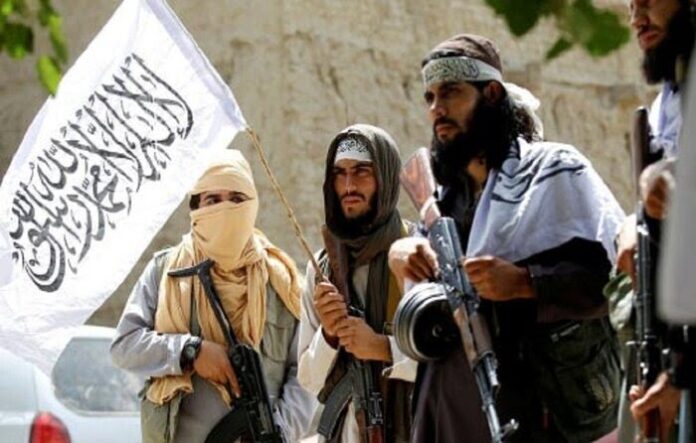
Acting Taliban FM denounces US actions, calls for ties

In his first address to the media since the Taliban announced its new caretaker government last week, Muttaqi said on Tuesday that the group would not allow “any country” to impose sanctions or embargoes on Afghanistan, including the US.

[We] helped the US until the evacuation of their last person, but unfortunately, the US, instead of thanking us, froze our assets,” he added. 

Since the Taliban took control of the Afghan capital, Kabul, on August 15 as former President Ashraf Ghani fled the country, the US Federal Reserve, the International Monetary Fund and the World Bank have cut off Afghanistan’s access to funds, resulting in a widespread liquidity crunch in the cash-dependent economy.

Muttaqi thanked the international community for pledging more than $1bn of aid for Afghanistan at a UN donor conference on Monday.

“We welcome the pledge of emergency aid funding committed to Afghanistan during yesterday’s meeting hosted by the UN in Geneva,” he stated.

No government has yet agreed to formally recognise the Taliban-led administration in Kabul, which could further imperil the Afghan economy, which has been highly dependent on foreign aid for the last 20 years. According to the World Bank, foreign aid makes up some 40 percent of Afghanistan’s gross domestic product.

Muttaqi said the government was willing to work with any country, including the US, but added it will not be “dictated to” by any state.

UN chief Antonio Guterres remarked at the donor conference that it would be “impossible” to provide humanitarian assistance to Afghanistan without engaging with the Taliban.

“I do believe it is very important to engage with the Taliban at the present moment for all aspects that concern the international community,” he noted.

He told ministers that believed aid could be used as leverage with the Taliban to achieve improvements on human rights, amid fears of a return to the brutal rule that characterised the Taliban’s first stint in power from 1996 to 2001.

The European Union’s foreign policy chief Josep Borrell on Tuesday stressed the EU has “no other option but to engage with the Taliban”.

Muttaqi urged countries around the world to open formal relations with the Taliban-led government, citing an end to war in the country.

“Security is being maintained across the country,” he added, and stressed that Afghanistan was open for foreign investment.

Muttaqi also said the government would not allow Afghanistan to be used as a base for armed groups to launch attacks on other countries.

In another assurance to the international community, Muttaqi stated that all Afghans are free to leave the nation if they possess the necessary documentation. 

Activists have accused the Taliban of keeping Afghans, including those with proper documentation, from leaving the country during the international evacuation efforts ahead of the August 31 foreign troop withdrawal deadline.

He called reservations expressed by Paris and other capitals, “unfair and unjust”, before restating that the interim government will respect all human rights, including those of women.

However, in recent weeks, the Taliban has come under heavy criticism for its violent crackdown on protests and media outlets covering recent demonstrations in the country.

Despite his criticisms of Washington, whom he accused of destroying Afghan property, including at Kabul’s Hamid Karzai International Airport, Muttaqi expressed the Taliban’s gratitude towards nations including Qatar, Pakistan and Uzbekistan for their delivery of aid to the nation. 

He promised to equally distribute aid among the Afghan people. 

Source: Al-Jazeera

Russia rejects reports of ‘military aspect’ of Iran’s nuclear program

The statement came in response to a New York Times article, which quoted experts who analyzed the latest reports of the International Atomic Energy Agency (IAEA) as saying that in approximately one month, Iran could obtain a sufficient amount of nuclear materials to build one nuclear warhead.

“Such speculations are not welcome. It is extremely hard for a non-nuclear state to create a nuclear bomb. There are no signs indicating that Iran is working in this direction. It is nothing but speculation, intended to make waves around the issue when all parties involved need to sit at the negotiating table again together with the United States and solve the problem of restoring the Joint Comprehensive Plan of Action,” Ulyanov said.

He added Russia welcomed Iran’s declaration of its readiness to resume negotiations on reviving the nuclear deal.

“The exact date for the resumption of talks is unknown so far. However, an official spokesperson for Iran’s foreign ministry said yesterday that the negotiation process was to resume soon. No such statements have been made by the Iranian side before. Hopefully, this indicates that the Iranians are almost ready to return to the negotiating table in Vienna. If this is the case, we welcome it. We believe that it is high time to do so,” noted Ulyanov, who also represents Russia in the IAEA Board of Governors.

Iranian Foreign Ministry Spokesman Saeed Khatibzadeh stated at a press conference on September 13 that the republic would resume nuclear deal talks in the Austrian capital of Vienna soon.

States parties to the Joint Comprehensive Plan of Action (JCPOA) (Iran, Russia, the United Kingdom, Germany, China and France) plus the United States held six round of negotiations in Vienna in April-June 2021 in a bid to restore the deal in its original form. The sides took a pause in the negotiations in late June, and have so far been unable to resume the talks due to presidential elections in Iran and subsequent efforts to form a new cabinet in the country.

Source: TASS