Saturday, December 27, 2025
Home Blog Page 2402

EU accuses US of disloyalty to allies

The extraordinary rebuke of the new American president, whose election was celebrated across Europe as an opportunity to rejuvenate ties after the four years of belligerence and combativeness of Donald Trump, raised the prospect of a grave and prolonged breach among Western powers.

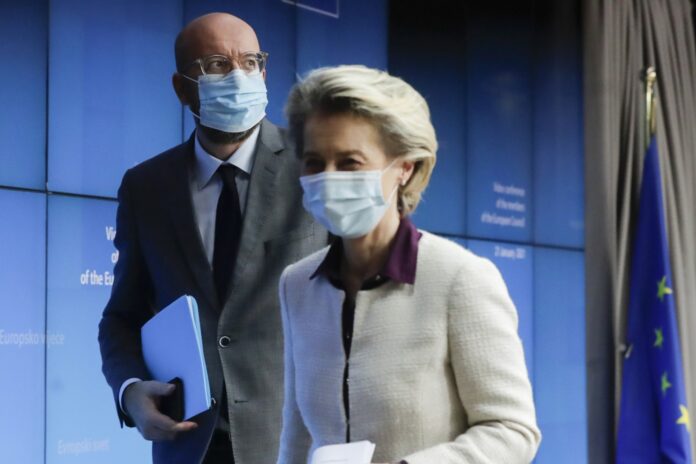
“With the new Joe Biden administration, America is back,” European Council President Charles Michel told reporters in New York, as world leaders convened for the high-level debate of the U.N. General Assembly. 

“What does it mean America is back? Is America back in America or somewhere else? We don’t know,” he added.

By failing to consult EU nations about the new Indo-Pacific strategy, under which Australia canceled a blockbuster contract to buy French submarines, Michel stated Biden had discarded an agreement reached by leaders after many hours of talks at the G7 summit in Britain in June to remain united in confronting authoritarian regimes, particularly China. 

“The elementary principles for an alliance are loyalty and transparency,” Michel said, adding, “We are observing a clear lack of transparency and loyalty.” 

European Commission President Ursula von der Leyen voiced her own dismay during an interview with CNN, in which she called the treatment of France  “unacceptable” and demanded Biden provide an explanation. 

“There are a lot of open questions that have to be answered,” von der Leyen said, adding, “One of our member states has been treated in a way that is not acceptable, so we want to know what happened and why. And therefore you first clarify that before you keep going with business as usual.” 

Michel noted that the 27 EU heads of state and government would discuss the rift with the U.S. over dinner on October 5 in Slovenia, ahead of a summit focused on the Western Balkans.

And von der Leyen’s comment signaled potential disruption of the planned first meeting of a new EU-U.S. Trade and Technology Council in Pittsburgh next week — an event that was supposed to showcase the renewed policy partnerships between Brussels and Washington.

But despite the irate rhetoric, it was unclear what, if anything, EU leaders could say or do about the matter, which some EU diplomats and officials suggested was more of a commercial dispute between Paris and Canberra, and a matter of wounded French pride, than a genuine cause for rupturing relations with the U.S. and sowing divisions that could weaken NATO.

By coming in so squarely behind French President Emmanuel Macron — who still has said nothing publicly and is not attending the U.N. meetings — Michel and von der Leyen seemed to elevate the risk of a prolonged dispute that could be exploited by China, Russia and other rivals, and to increase the difficulty in finding a face-saving exit for the Western allies. 

Michel insisted the feud should not be viewed narrowly as a matter of French economic interests, but rather as part of a pattern of disregard for European allies and their interests by four U.S. presidents, beginning when George W. Bush decided to wage war in Iraq and Afghanistan. 

“[Barack] Obama with charisma, very polished, took important decisions in Syria with negative consequences for Europe, and we could observe also a lack of coordination, of consultation between the United States and European governments,” Michel stated, adding, “At least with Donald Trump it was very, very clear that he was not in favor of the European integration, that for him Europe doesn’t matter, but it was clear.” 

Biden, on the other hand, talked a big game about renewing transatlantic ties, according to Michel, but then railroaded European allies with his decision about following through on Trump’s plan to withdraw from Afghanistan, “and”, he added, “a few days ago with this strange announcement”.

“When the transatlantic alliance is less robust and less solid, this is not good for the security in Europe and everywhere in the world,” Michel said, adding that “this is more than a bilateral trade or industrial topic. It’s more than that”.

Arriving in New York City on Monday, French Foreign Minister Jean-Yves Le Drian said all EU countries should be worried about the disregard the U.S. had shown its allies. 

“Europeans shouldn’t be the rejects of the strategy chosen by the United States,” Le Drian continued, adding, “We are in this new state of mind, which means the Europeans need to identify their own strategic issues and to have a discussion with the United States on this topic.” 

Le Drian noted that conversation was likely to occur in the context of the development of a new “strategic concept” at NATO, a tacit acknowledgment that addressing the affront by the Americans would take quite a bit of time, and some convincing of EU countries heavily reliant on the U.S. for security guarantees. 

While Macron has remained silent, France has moved swiftly to retaliate by recalling ambassadors and also vowing to scuttle a proposed free-trade agreement between the EU and Australia. 

Source: POLITICO
IAEA worried about North Korea’s nuclear program

During an annual meeting of International Atomic Energy Agency (IAEA) member states on Monday, the agency’s Director-General Rafael Grossi stated that the country had resumed “work on plutonium separation, uranium enrichment, and other activities”.

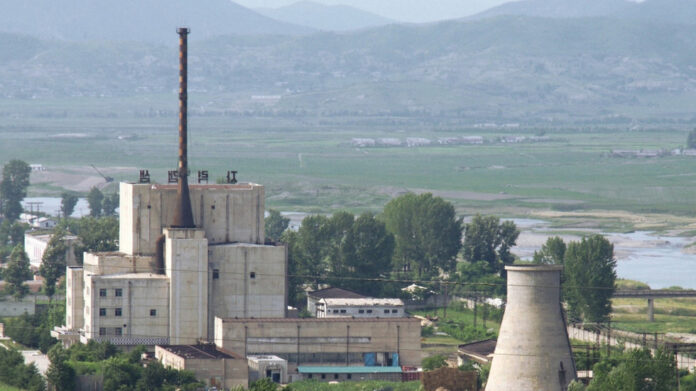
Based on satellite imagery, the IAEA stated in its annual report in August that a five-megawatt reactor at the country’s Yongbyon nuclear complex had been put back into operation sometime in early July, after apparently being idle since December 2018.

The agency had observed discharges of cooling water “consistent with the operation of the reactor”, but it could not “confirm either the operational status” of the facilities listed in the report or the “nature and purpose of activities conducted therein”.

Since Pyongyang expelled IAEA inspectors in 2009, the nuclear watchdog has been primarily reliant on satellite imagery and so-called “open-source information” in its reporting on North Korea (DPRK). Noting that the nuclear activities were “cause for serious concern,” the agency reported a number of “deeply troubling” indicators.

According to the report, a steam plant serving the radiochemical laboratory at the complex had been operational for some five months earlier in the year. Although it stopped working in early July, the agency suggested the time frame was sufficient for reprocessing work to separate plutonium from spent reactor fuel, as well as uranium mining activity, to have occurred.

In recent weeks, a number of media outlets have reported on continuing construction at the Yongbyon Nuclear Scientific Research Center – with the work attributed to the apparent expansion of a uranium enrichment plant within the facility.

The Yongbyon complex, situated 100 kilometers (62 miles) north of the capital Pyongyang, is the country’s largest and best-known nuclear facility, said to be responsible for producing the fissile material used in six nuclear tests, according to the South Korean JoongAng Daily newspaper.

The paper reported that the complex’s reactors had been largely inactive for years, with periodic activity observed at the uranium plant. Citing a study released last week by the US-based Middlebury Institute of International Studies, the paper noted that satellite images showed a walled space had been created out of a previously forested area next to the uranium enrichment plant.

The new construction was deemed sufficient to “house 1,000 additional centrifuges”, according to the report, which calculated that the increased capacity would enable the plant to raise its production of “highly enriched uranium by 25 percent”.

In a report to the IAEA’s board of directors last week, Grossi noted the agency had monitored activity at the Yongbyon nuclear complex from mid-February to early July. While the centrifuge enrichment facility appeared not to be operational at the time of the agency’s August report, Grossi reportedly said cooling units from the facility had since been removed.

In addition to Yongbyon, the IAEA also apparently observed signs of ongoing construction activities at a light water reactor being built at the Kangson nuclear complex outside Pyongyang.

While North Korea has yet to comment on the new reports, last year it labelled the IAEA “a marionette dancing to the tune of the hostile forces against the DPRK”, and dismissed a previous report as being “completely pervaded with guesswork and fabrication”.

Earlier this month, the reclusive country carried out tests of a new long-range cruise missile and reportedly fired two unidentified projectiles – thought to be ballistic missiles – into the Sea of Japan. Pyongyang had repeatedly threatened to resume testing of its long-range missiles after denuclearization talks with the US stalled.

Source: RT

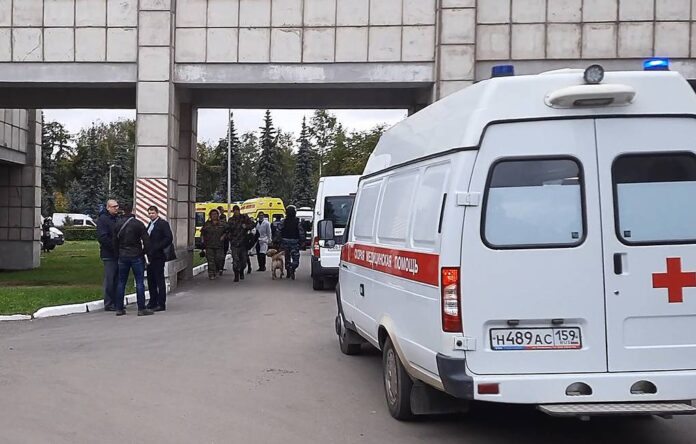
Several killed in Russian university shooting

Ðîññèÿ. Ïåðìü. Íà òåððèòîðèè Ïåðìñêîãî ãîñóäàðñòâåííîãî íàöèîíàëüíîãî èññëåäîâàòåëüñêîãî óíèâåðñèòåòà íà óëèöå Ãåíêåëÿ, ãäå íåèçâåñòíûé óñòðîèë ñòðåëüáó â îäíîì èç êîðïóñîâ. Ìàêñèìàëüíî âîçìîæíîå êà÷åñòâî. Ñíèìîê ñ âèäåî/Ñòðèíãåð/ÒÀÑÑ

The incident happened on Monday morning at Perm State University, one of the oldest universities in the Urals region, close to where Europe and Asia meet. The school’s social media alerted everyone who was on campus to leave if possible, or lock themselves inside a room.

19 of the injured have received gunshot wounds, according to the Russian Ministry of Health.

Images published online, apparently taken at the scene, showed a rush to escape through the windows. A video taken from inside the building appears to show an armed person dressed in black and wearing a helmet slowly walking across the campus as horrified onlookers express their shock.

The crisis ended with the perpetrator apprehended, the university and the police reported. According to some media, he was injured by the police.

Law enforcement officials said the shooter is a student at the university where the attacks happened. Earlier unconfirmed reports identified him as an 18-year-old lone-wolf attacker named Timur Bekmansurov, who allegedly left a note describing his motives on social media.


Source: RT

Biden goes on vacation amid several national crises

“Mr. President, what will you tell Emmanuel Macron?” a reporter asked as Biden sped by.

“When are you going to call Macron?” another reporter asked.

Biden is set to call French President Emmanuel Macron to resolve a diplomatic crisis that developed last week. France recalled its ambassadors to the United States and Australia in response to a joint agreement between the U.S., Australia, and the United Kingdom to provide nuclear submarines to Australia, scrapping a previous agreement to send French-made submarines Down Under.

“At the request of President Macron, I have decided to immediately recall our ambassadors to the United States and Australia to Paris for consultations,” French Minister for Europe and Foreign Affairs Jean-Yves Le Drian said in a statement Friday.

“The abandonment of the ocean-class submarine project that Australia and France had been working on since 2016 and the announcement of a new partnership with the United States aimed at studying the possibility of future cooperation on nuclear-powered submarines constitute unacceptable behavior among allies and partners; their consequences affect the very concept we have of our alliances, our partnerships, and the importance of the Indo-Pacific for Europe,” the statement added.

Earlier in the week, Le Drian told a French radio station that the agreement, perceived as a challenge to China’s presence in the region, was a “stab in the back.” He also compared President Biden to former President Donald Trump.

“This brutal, unilateral and unpredictable decision reminds me a lot of what Mr. Trump used to do,” Le Drian stated, noting, “I am angry and bitter. This isn’t done between allies.”

White House Press Secretary Jen Psaki claimed that France had been notified of the deal before the agreement.

Biden also faces national crises at the southern border and in Afghanistan.
Hundreds of migrants crossed the border into Texas on Saturday, with many of them originally coming from Haiti.

Customs and Border Protection (CBP) announced Wednesday that authorities encountered 208,887 migrants in August, a slight decline from the 212,000 encounters in July and the second month in a row where the number of encounters breached the 200,000 mark.

The 208,887 number for August represents a 317% increase over August 2020, which saw 50,014 encounters — and a 233% increase over August 2019, where there were 62,707 amid that year’s border crisis.

Meanwhile, the head of U.S. Central Command, Gen. Kenneth F. McKenzie Jr., announced on Friday that it is unlikely any Daesh members died in a Kabul drone strike on August 29, which led to multiple civilian casualties.

An untold number of Americans and U.S. allies remain trapped in Afghanistan after President Biden ordered the full withdrawal of U.S. troops on August 31, leaving the country in the hands of the Taliban. Retired military leaders have called for the mass resignation of Biden’s diplomatic and military leaders in the wake of the fiasco.

Meantime, Gen. Mark Milley, chairman of the Joint Chiefs of Staff, faces serious accusations after Bob Woodward’s upcoming book, “Peril”, revealed that Milley gave assurances to China that America would not strike the country amid his worries that Trump’s actions might spark a war.

Source: FOX News

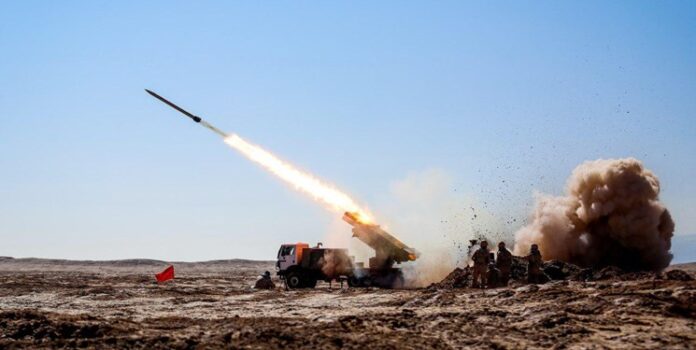
IRGC launches fresh strikes against terror groups on border with Iraq

“We had warned that if these hostile groups make the slightest error, they will receive a harsh response,” Brigadier General Majid Arjmandfar, the second in command of the Hamzeh Seyyed Shohadda Headquarters in West Azarbaijan Province said.

He said the Islamic Revolution Guards Corps struck the positions of the anti-revolutionary cells on the border and destroyed four of their bases.

“Anti-revolutionary groups have been set up in Iraq’s north by the intelligence agencies of foreign hostile countries and even some Arab states to be used to advance their interests and place obstacle in the way of the Islamic Republic,” Arjmandfar explained.

The general warned that the Iranian armed forces will deem any area, where these groups are present, as enemy territory and have a duty to mount operations against them.

The latest Iranian anti-terror strikes comes as Chief of Staff of the Iranian Armed Forces Major-General Mohammad Baqeri warned of more operations against terrorist cells in Iraq’s northern Kurdistan region.

The top Iranian commander stressed that Iran has a right to confront them under the Charter of the United Nations.

Earlier in September, Iran’s Islamic Revolution Guards Corps pounded the positions of these groups in northern Iraq with several missiles.

Iran has been critical of officials in Baghdad and Iraq’s semi-autonomous Kurdistan region for failing to act on anti-Iran terror groups increasingly active in border areas.

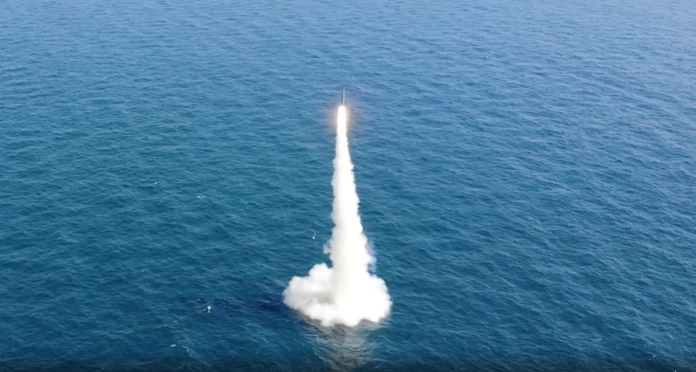
N. Korea calls South’s submarine-missile test ’clumsy’

On Monday, Jang Chang Ha, chief of North Korea’s Academy of the National Defence Science, criticized South Korea’s submarine-launched ballistic missile (SLBM) test as being “clumsy”, and cast doubts on its logistics, stating that it did not even bear a resemblance to the weapon it claimed to be.

Instead, according to Jang, the armament looked like a South Korean short-range ground-to-ground “Hyunmoo-serial” missile, while the warhead was an imitation of India’s K-15 SLBM.

“Whatever the purpose, the hasty revelation of the picture which would definitely arouse doubt of all the military experts indicates that South Korea must have been pressed to hastily get around the world the news about its possession of SLBM with its own efforts,” the military chief explained.

The military research chief suggested that Seoul’s missile is just for “bragging” and “self-comforting”.

“If what South Korea opened to [the] public and trumpeted so much is [an] SLBM, it is just in the stage of [an] elementary step”, Jang went on, claiming it has insufficient “strategic and tactical significance” to threaten its northern neighbor.

Seoul’s “ambitious efforts” to beef up its submarine-launched weaponry, however, are “a clear omen for the military tension that will be certainly aggravated on the Korean peninsula”, Jang warned.

South Korea hailed the success of the trial conducted last week, with the office of President Moon Jae-in stating that the armament was going to play a key role in the country’s ability to defend itself.

The test came just hours after North Korea fired two projectiles suspected of being ballistic missiles into the sea outside of Japan’s exclusive economic zone. Pyongyang had also tested a new long-range cruise missile that traveled some 1,500km (930 miles) a few days prior, which the Pentagon said showed that the isolated nation is a threat to “its neighbors and the international community”.

Pyongyang has also condemned Washington for undermining regional stability and global power balance – and vowed retaliation if its divisive nuclear-powered submarine deal with Australia threatens its national security.

“This is a very controversial and dangerous move which undermines the strategic balance in the Asia-Pacific region and can trigger a nuclear arms race,” the North Korean Foreign Ministry said.

The ministry claimed that while the United States routinely demonstrates double standards, the new administration is more “unpredictable,” and now even Washington’s allies are wary of getting “stabbed in the back”.

Pyongyang added it fully understands Beijing’s concerns that such an irresponsible military pact will undermine “regional peace and stability, the international nuclear non-proliferation system, and intensify the arms race”.
The so-called AUKUS deal, announced by the US, UK and Australian leaders last week, caused an unprecedented diplomatic row and heated tensions with NATO ally France, which as a result lost a lucrative shipbuilding contract with Canberra. The move has also triggered a strong backlash from Beijing, as most observers agree the controversial pact is aimed at countering and containing China.

Days before the AUKUS announcement, North Korea caused uproar in Seoul, Tokyo and Washington, after it test-launched two different types of weapons – a railway-borne missile system and a long-range cruise missile. Several days later, Seoul conducted a submarine-launched missile test of its own, while on Friday the US Navy fired two strategic Trident II SLBMs, insisting the test was “not conducted in response to any ongoing world events, nor as a demonstration of power”.

However, the latest developments, Pyongyang claimed, fully validate the isolated state’s drive to bolster its national security and means of deterrence.

“We are closely analyzing the repercussions of the US decision, and will surely take appropriate measures if it has any negative impact on our national security,” it announced.

Source: KCNA

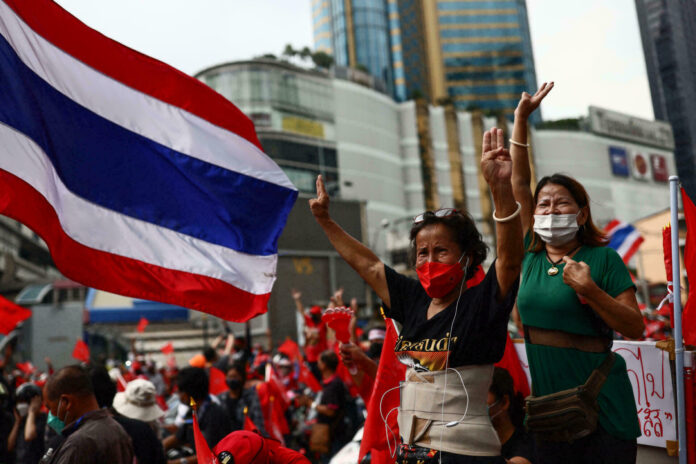
Thai Protesters call for resignation of prime minister

People drove through Bangkok’s streets on Sunday to mark the 15th anniversary of a military coup that removed Shinawatra.

The billionaire ex-leader – now living in self-exile – has remained a prominent figure in the country’s politics since the military deposed his government on September 19, 2006.

Unloading a massive cardboard model of a tank for their “cars against tanks” protest, rallygoers honked car horns to call for the resignation of Prayuth, a former army chief who came to power in a 2014 coup.

“Fifteen years have passed, we are still here to fight,” shouted Nattawut Saikuar, a politician long associated with Thaksin, to a sea of supporters waving “Kick out Prayut” flags.

“No matter how many coups there are, it cannot stop us … No matter how good capacity their tanks are, it cannot stop the fighting hearts of the people,” Saikuar added.

Thailand has seen more than a dozen coups since the end of absolute monarchy in 1932 – often staged in the name of protecting the powerful royal family.

Thaksin’s juggernaut rise to power was boosted by the so-called “Red Shirts”, mostly working-class supporters who revere him for populist contributions such as instating a universal healthcare system. But he was hated by Bangkok elites and the powerful military, and has faced many corruption accusations.

His influence in Thailand’s patronage-reliant politics permeated the kingdom even after his removal – his sister Yingluck was the next leader, before she too was deposed in a 2014 coup led by then-army chief Prayuth.

The general went on to become prime minister in the 2019 elections conducted under a new constitution authored by his generals.

Nattawut stated the prime minister has had plenty of time to improve Thailand, “but the country is in recession. The economy, society and politics are collapsing”.

The red-clad protesters in cars and on motorcycles planned to move to Democracy Monument, the site of several rallies by an anti-government movement that has repeatedly called for Prayuth’s resignation since last July.

Scrutiny of the government increased after a new COVID-19 wave in April snowballed Thailand’s cumulative caseload from less than 29,000 to more than 1.4 million infections in just five months, as well as a rising death toll.

Earlier this month, Prayuth survived a no-confidence vote – his third since 2019.

Source: AFP

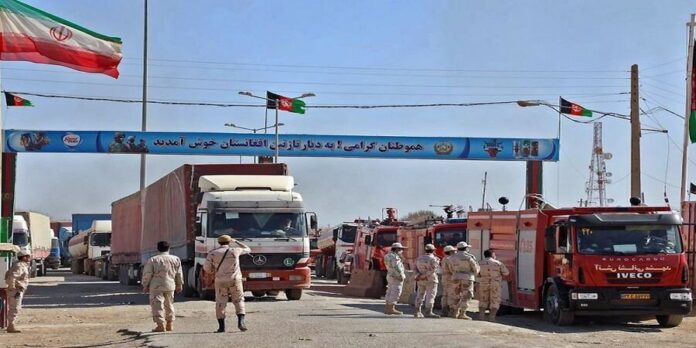
Iran goods account for 30-40 percent of Afghanistan imports

Salimi was speaking in an interview with Iran’s Khabaronline news website. He said Afghanistan has a long border with Iran and Iranian goods including food products and construction material account for 30 to 40 percent of Afghanistan’s imports.

According to Salimi, those figures will never plummet to zero because no other country has such geographical and geopolitical possibilities to maintain relations with Afghanistan.

Salimi however noted that he cannot give an accurate assessment of the state of bilateral relations, saying, “We should wait and see what’s going to happen after things are stable and the Taliban’s chamber of commerce is formed”.

The head of the Iran-Afghanistan chamber of commerce said Iranian exports to Afghanistan mostly include construction material, steel and food products.

Salimi also dismissed the possibility of China replacing Iran as Afghanistan’s main food supplier, saying the taste of Afghanistan is far different from that of the Chinese.

Salimi also spoke of Afghanistan’s mines. He said not only Pakistan but also China is very eager to do excavations in Afghan mines and quarries.

He added that there are all kinds of minerals and rich, untapped mines in Afghanistan, and most countries in the world are interested in participating in excavations in these mines.

He said Iran must compete with the Chinese, the Indians, and the Pakistanis as they are also vying to do excavations in the Afghan mines.

Salimi however said Iran’s main rival in this competition is Turkey. He referred to Turkey’s edge over Iran in this regard, saying Turkey grants loans to other countries provided that they import goods from Turkey.

Iran nuclear chief: Time for US to redress mistakes and lift sanctions

Mohamamd Eslami made the demand during his address to the 65th General Assembly of the International Atomic Energy Agency in Vienna on Monday.

He said it’s time the US redress its mistakes and the first step would be the removal of all sanctions on Tehran.

Eslami said the Iran nuclear deal also known as the JCPOA that was meant to remove obstacles to Tehran’s progress was a clear example of the Islamic Republic’s goodwill.

He added that the United States not only left that agreement but it also breached UN Security Council Resolution 2231 due to its unilateral policy.

The head of the AEOI added that the so-called “maximum pressure” policy of the US has failed, and Washington has no choice but to give up its addiction to unilateral sanctions and respect international law.

He added that Iran is for talks to resolve the deadlock over the nuclear deal but it believes that negotiations must be result-oriented and aimed at removing all unfair pressures and sanctions on the Iranian people.

Eslami noted that Iran has always cooperated with the IAEA but insists that the agency must maintain its neutrality and independence and avoid politics.

He demanded that the agency launch an inquiry into acts of terrorism and sabotage against Iranian nuclear facilities which are exclusively for peaceful purposes.

Eslami also said Iran was the first country to introduce an initiative in 1974 pushing for a nuke-free Middle east, adding the Islamic republic is really worried about the Israeli regime’s secret nuclear arsenal. Israel has endangered the NPT by doing acts of sabotage against Iran’s civilian nuclear facilites and by assassinating its nuclear scientists.

Earlier, the IAEA chief Rafael Grossi opened the agency’s 65th General Assembly, saying Iran and the UN atomic watchdog are cooperating to resolve the nuclear issue.

He referred to his recent visit to Iran, saying he hopes to travel to Tehran again soon for more talks aimed at dispelling concerns over the Islamic Republic’s nuclear program.

The IAEA meeting comes as efforts are underway by Iran, Russia, China and the European troika to revive the Iran nuclear deal which plunged into disarray following the US withdrawal in 2018.

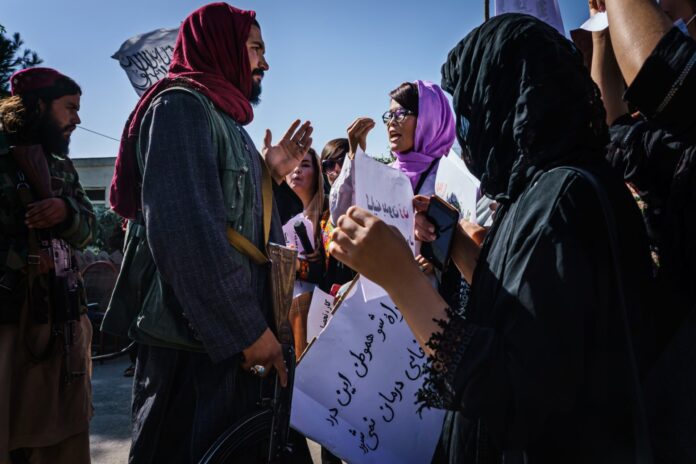
Taliban orders Kabul’s female employees to stay home

Kabul’s interim mayor, Hamdullah Namony, on Sunday said that only women who cannot be replaced by men, such as skilled workers in design, will be permitted to report to work. 

According to Namony, a final decision on women in Kabul municipal departments is still pending and they will continue to earn a salary while this decision is being made.

After taking power in Afghanistan, the Taliban signaled that they would be more moderate than when they previously held power. However, parts of the international community expressed skepticism at this assurance.

During the 90’s, the Taliban banned women and girls from receiving an education or working. They were also not permitted to leave their homes without a man, essentially trapping some female Afghans in their own homes.

In August, the Taliban also announced that mixed-gender classes would be banned. Last week, the Taliban addef all male students and teachers in grades six through 12 were to return to school, notably leaving out female students and teachers in the announcement.

“They can be doctors, teachers, be educated and can work to benefit society,” Taliban spokesperson Zabihullah Mujahid has previously said, adding, “They are our sisters, we must show them respect. They should not be frightened. The Taliban are humans and from this country. They fought for our country. Women should be proud of us, not scared.”

A group of about 50 Afghan women in the city of Herat held rally earlier in September, demanding opportunities for work and education for themselves and their daughters.

Source: The Ap