Saturday, December 27, 2025
Home Blog Page 2401

Iran denounces Saudi Arabia’s nuclear accusations

“The Islamic Republic of Iran fully and genuinely implements its comprehensive safeguards agreement with the agency (IAEA),” Political Counselor to the Permanent Mission of the Islamic Republic of Iran in Vienna Khodayar Rouzbahani said on Tuesday.

He said Saudi Arabia is still implementing the old version of the Small Quantities Protocols of the International Atomic Energy Agency and is therefore preventing the agency from comprehensively monitoring and verifying the nature of its nuclear program.

The Iranian diplomat noted that Iran, the IAEA and the international community will be very happy if Saudi Arabia and others in the Middle East start fulfilling the same safeguard commitments that Iran is honoring.

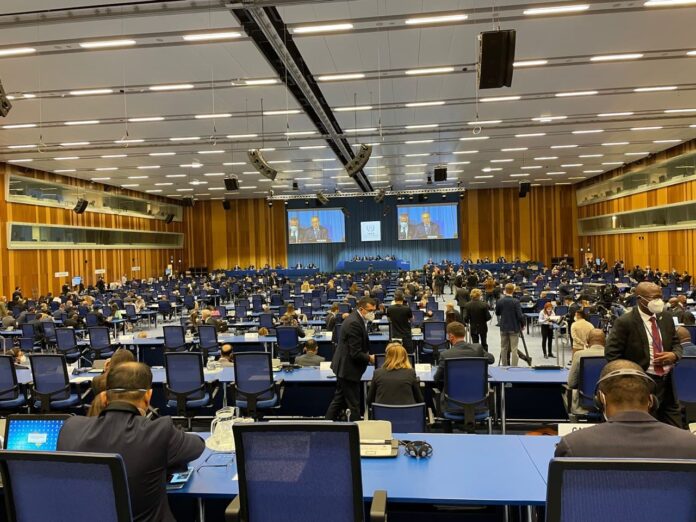
At the 65th General Conference of the IAEA in Vienna on Monday, Saudi Arabia’s Minister of Energy Prince Abdulaziz bin Salman expressed concern over what he called “Iran’s lack of transparency” with regards to its nuclear program.

Under its nuclear deal with world powers in 2015, Iran agreed to unprecedented IAEA monitoring and inspection of its atomic energy program in return for the removal of sanctions.

In 2018, former U.S. president Donald Trump withdrew America from the deal, known as the Joint Comprehensive Plan of Action, and re-imposed sanctions on Tehran.

The Iranians have in response rolled back some of their commitments.

Iran Covid death toll rises to 117,905

The fatalities happened in the past 24 hours.

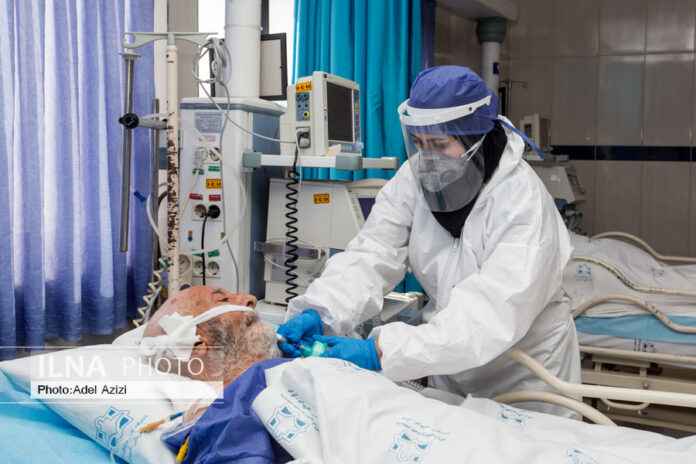
Meanwhile, 17,564 more people tested positive for Covid-19 since Monday. Iran’s Covid kill count now stands at 117,905 while the total caseload is 5,459,796. Iranian healthcare workers have stepped up their fight against the deadly virus over the past few weeks.

Health Minister Bahram Einollahi says 45 million have so far been vaccinated against Covid. That translates into more than 50 percent of the population.

Einollahi added that the figure will increase to 70 percent in the coming weeks.

The health minister also said the government is going to partially or wholly lift some Covid-related restrictions like traveling or nighttime driving bans in the next two weeks.

Iran Says No Plans for Talks with 4+1 Group in New York

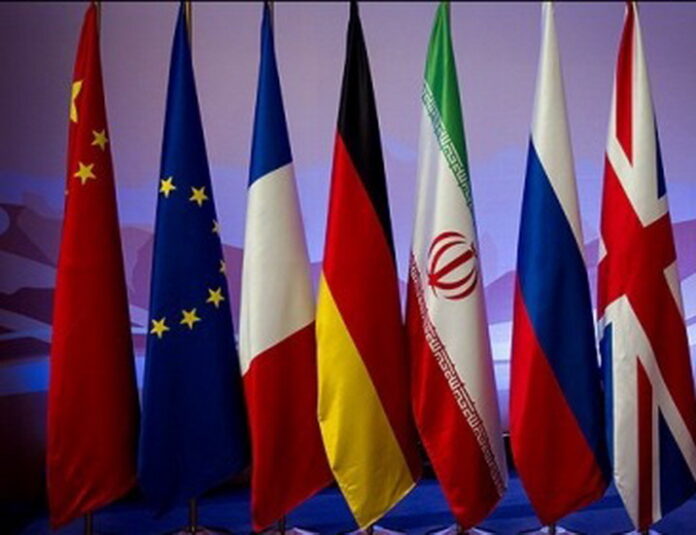
Saeed Khatibzadeh made the comment after French Foreign Minister Jean-Yves Le Drian pointed to the possibility of a meeting about the deal known as the Joint Comprehensive Plan of Action (JCPOA) between Iran and the 4+1 group (including France, Germany, Britain, Russia and China) on the sidelines of the UN General Assembly meeting in New York.

The top French diplomat had also suggested that time was acting against any possible agreement with Iran.

He had also said he would meet Iran’s foreign minister.

“Other foreign ministers had also expressed their interest in this regard, too, and the JCPOA will be one of the topics of our discussion with the foreign ministers of countries which are members of the 4+1 group, but talks between Iran and the 4+1 group is not on the agenda,” said Khatibzadeh.

Iran’s Foreign Minister Hossein Amirabdollahian is in New York to attend an annual meeting of the UN General Assembly set to start on Tuesday.

He is scheduled to have dozens of one-on-one meetings on the sidelines of the event.

Lebanon new government wins parliament confidence vote

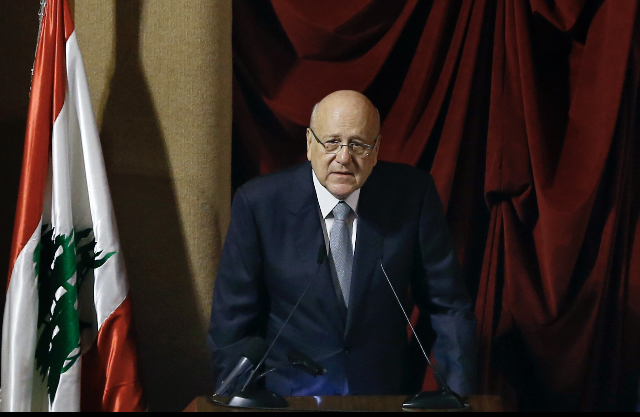
Following a parliamentary session on Monday, 85 Lebanese lawmakers voted for Prime Minister Najib Mikati’s cabinet while 15 voted against it.

The remaining 17 MPs were not present during the voting session, which was hit by a power outage and lasted for more than seven hours.

Mikati has drawn up a policy program aimed at reviving talks with the International Monetary Fund (IMF) on a bailout package to purportedly rescue the debt-ridden country from its worst economic meltdown in history.

The program also involves controversial reforms that donors want to see before they unlock foreign assistance.

“From the heart of the suffering of Beirut … our cabinet was born to light a candle in this hopeless darkness,” Mikati said in his speech.

“We will immediately begin the reform file. We have actually begun discussions with the International Monetary Fund… This issue is not an option but a mandatory passageway that must succeed in order to serve as the first foundation toward salvation and the right way for Lebanon’s revival,” he added.

Referring to the ailing electricity sector, the Lebanese premier underlined the need for raising electricity tariffs and increasing supply and production.

He further promised that the government would thrash out a plan to restructure the banking sector and revitalize the economy saddled with over $90 billion in public debt.

Paralyzed by severe fuel shortages and wide-scale power cuts, Lebanon has been mired since late 2019 in a deep financial crisis that has caused the Lebanese pound to lose around 90 percent of its value to the dollar.

The US has exacerbated the crisis by imposing a siege on Lebanon in a bid to force the formation of a Western-friendly administration there.

Mikati also underscored his government would seek to boost Lebanon’s international relations and appealed to “brotherly Arab countries” to help Beirut out of its current crisis.

He stressed that “Lebanese citizens have the right to oppose Israel’s occupation, and to respond to its attacks”.

Mikati also pledged that his government would continue to work to liberate territories occupied by Israel.

The new administration, the prime minister added, supports the United Nations Interim Force in Lebanon (UNIFIL) and will demand that it “end Israel’s invasion of Lebanese sovereignty — land, sea, and air”.

Mikati further said he plans to resume indirect talks with Israel on the demarcation of Lebanon’s southern maritime border with the occupied Palestinian territories.  

Lebanon fought off two Israeli wars in 2000 and 2006. On both occasions, battleground contribution by its Hezbollah resistance movement proved an indispensable asset, forcing the Israeli military into a retreat.

Lebanon and the occupying regime are technically at war since the latter has kept the Arab country’s Shebaa Farms under its occupation since 1967.

Pro-Putin party wins majority in Russia election

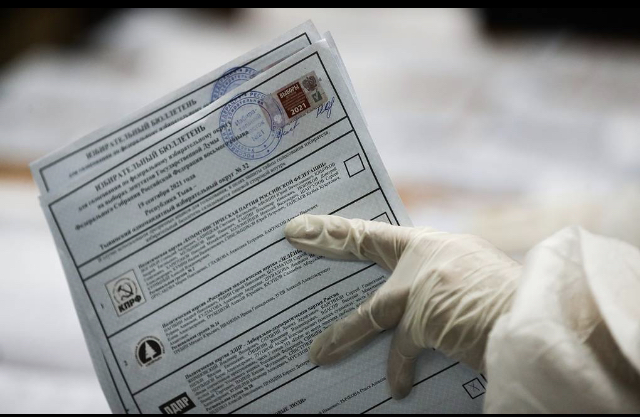
The United Russia political party won the majority of seats after the nationwide election to the State Duma (the lower house of the Russian parliament), the Central Election Commission reported on early Tuesday.

After 100% of casted ballots were processed, the United Russia won 49.82% of the votes to take some 112 seats in the parliament’s lower house. The party’s representatives are also winning the election in 198 single-mandate constituencies of the country.

Therefore, the United Russia political party receives the constitutional majority of over 300 mandates on the overall.

The Communist Party of the Russian Federation is second with 18.93%, the Liberal Democratic Party of Russia, third with 7.55%, A Just Russia, fourth with 7.46%, and New People, fifth with 5.32%.

These five parties have cleared the five-percent hurdle required for their representation in the State Duma.

Elections to the 8th Russian State Duma (lower house) were held during three days – on September 17, 18 and 19. In addition to the State Duma elections, voters went to the polls to cast ballots for the heads of nine Russian regions and in elections for 39 regional parliaments.

Remote electronic voting in Russia’s parliamentary elections on the federal platform was held in six regions: the city of Sevastopol, as well as the Kursk, Murmansk, Nizhny Novgorod, Rostov and Yaroslavl regions. Remote voting in Moscow took place on its own platform.

Source: TASS

Barekat Foundation Says Delivered 6mn Doses of Covid Vaccines to Health Ministry

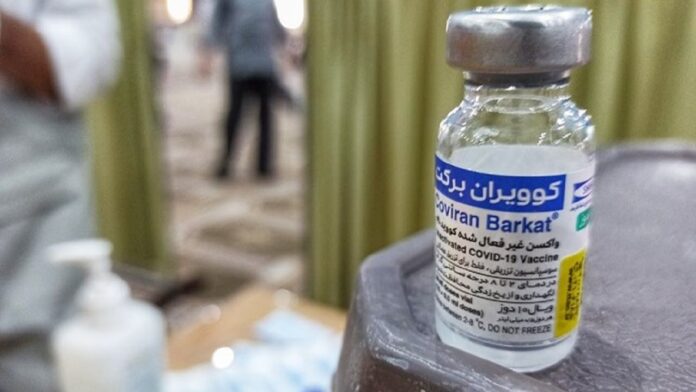
“Up until today September 21, 14 million doses of the vaccine have been produced at Shifa Pharmed group and sent for quality control. Also, 6 million doses of this vaccine have been delivered to the health ministry for mass administration,” said Hassan Jalili, the manager of Coviran Barekat project.

He added that the quality control takes 16 to 20 days and the vaccines will be then delivered to the health ministry. 

The announcement comes amid criticism of officials in charge of the Barekat vaccine project for failing to deliver on their pledges.

These mainly centered on the announcements made on the timing of the vaccine’s delivery and problems that emerged in its manufacturing plant. 

In fact the new announcement by the Barekat vaccine project manager comes after the director of the Headquarters for Execution of Imam’s Order failed to fulfill his pledges time and again.

Mohammad Mokhber first talked of a monthly production of more than 12 million doses before June and raising that to up to 20 million doses by the end of the spring.

He then revised down the pledges to a total 30 million doses by late August, which also did not materialize due to what officials called problems in the manufacturing plant.

Top US, UK diplomats discuss Iran, Afghanistan

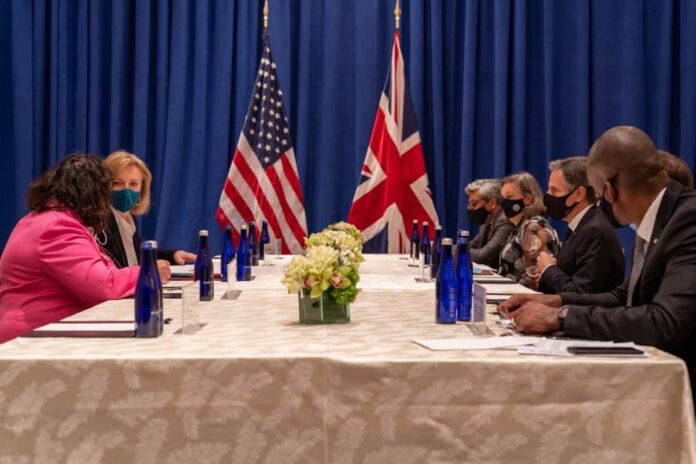
Blinken and Truss discussed a range of issues, including the situation in Afghanistan, tackling the climate crisis, Iran, a free and open Indo-Pacific, and deepening economic ties.

The US secretary of state also wrote on Twitter he had a great first in-person meeting with the UK foreign secretary to discuss shared priorities, “from Iran and Afghanistan to a free and open Indo-Pacific”.

Britain’s foreign office also announced Truss met Blinken during the U.N. General Assembly in New York and held discussions on Iran, Afghanistan and the trilateral security partnership between the U.S., Australia and the UK.

The UK Foreign Office added Britain and the United States agreed on the need for Iran to return to negotiations in Vienna on the Joint Comprehensive Plan of Action (JCPOA).

Source: Reuters

Ismail Khan: Iran can pressure Taliban into forming inclusive government

Q: Khalilzad wrote in his memoir that you wanted the Ministry of Interior.

A: They told me to go to the Ministry of Interior. When I said I would come to Kabul, they made a promise and took me to the Ministry of Energy.

Q: Do you think that Khalilzad wanted to remove you because of American influence and confrontation with Iran, or that he was a Taliban man from the beginning? I mean did he have a lot of ties with the Taliban and wanted to weaken the Afghan government by removing you?

A: Well, Khalilzad and one of the goals of the Americans themselves was to remove the jihadi leaders from power altogether, and all of Khalilzad’s effort was to remove jihadiswho were governors in Afghanistan, in Kandahar, Jalalabad, Herat, etc.

Q: What was your opinion about the Shia and Sunni fabric of Herat during your rule? After all, you were always influential in Heart. Did you mind at all if the Shia population of Herat increased during this period or did it not matter to you? For example, did you have a demographic cultural policy about the debate between Shia and Sunni? After all, this might be the case anywhere, for example, the fact that Hazaras ostly moved to Heart and bought houses there … Did you ever care about stuff like this?

A: In Herat, the Shia and Sunni issue was resolved in such a way that if you go to Herat now, you will see that Shias and Sunnis live in the same alley. They do not have specific neighborhoods. But the Hazaras eventually settled in the region due to the difficult conditions in Bamyan and other central mountainous provinces, but the Shia areas came into being in Herat after they came together to marry and live together in a village. This is almost completely solved in Herat. Religious conflicts did not harm anyone in houses in the city and they do not happen.

Q: What is your view on the cultural commonalities between Iran and Afghanistan and our bonds? I mean our common civilization, our common past, our common language. Thats because I’m talking to some Iranian friends and some of them say these are slogans, feelings, and it does not matter much. In practice, for example, politics is something else. Do you think that our common assets can really be useful in the field of action, in politics, in the economy, in society? We now have the same language, our own script and our own calendar. We are the only two countries that have Persian language and script. Tajikistan is different from us in this respect. Only you and we have the Hijri Shamsi calendar. Now if the Taliban do not change it. How do you think these cultural assets can be used?

A: Well, from the distant past, Afghanistan and Iran were like a family. They have very close similarities in different aspects of life. These have caused them to always make good use of each other’s civilization and culture and to have good mutual acceptance. I can say that Afghans in particular have always considered Iran as their second home. They never view Iran as a foreign country or treat Iran as they do other countries. Thats because we have very special commonalities, as you said, especially our common language, which have caused us to always make good use of this area of civilization and to have mutual acceptance.

Q: You are a jihadi figure; you are a prominent Islamic figure; and at the same time, you are you interested in, for example, Ferdowsi’s Shahnameh, myths …because I always saw you mention ancient Heart. Do you have love stuff like this? Do you?

A: Naturally. Those who have more armed struggles, especially freedom struggles, and they chant freedom-seeking slogans, these are my favorite.

Q: So do you like mythical figures like Rostam and Siavash and the like?

A: It is very interesting that this might not be found in Iran, but in Afghanistan, I used to go to many villages where old men holding a big cane would read the story of Shahnameh by memory and at the same time perform the same acts.

Q: Some say we should not celebrate Nowruz as Eid?

A: This is what an ignorant person would say out of prejudice. Nowruz is definitely celebrated in Afghanistan, especially in

that you were mobilizing the forces well. You resisted for about 20 days and we followed the news daily Herat.

Q: Did Herat fall because they stabbed you in the back? I saw that said you were liberating the districts, and there was good resistance in Herat. But suddenly in one or two days, things were upside down. Were you betrayed? Did the Afghan government betray you and pull the rug from under your feet?

A: In general, something of a coup took place in Afghanistan. President Ghani really committed a great national betrayal. I mean, we also told you that on many occasions politicians always had meetings with Ashraf Ghani. They were 5 or 10 or 15 people. We always met him. Things went on that way until recently when Afghanistan collapsed. I think Ashraf Ghani was an agent who would do that anyway, and lately you may have heard him say we handed over Afghanistan to its main heirs, the Pashtuns”. That was a national treason on the part of Ashraf himself. Afghanistan would have never fallen with all the great assets at its disposal, but Ashraf Ghani could not tolerate the Mujahideen taking over this government. He did not want the resistance to take power. He could not stand it, because he was not from this family. This was what caused him to remain indifferent to the fall of the first governorates until the last one that fell. No matter how hard we tried and said lets take over the provinces and lead the war”, he didnt let us do that. We finally had to, when we saw the war approaching the city, we finally took action. But unfortunately it was too late. Although we fought for two months, the last twenty days were very noisy, because the war was around the city, but we started the war two months ago, when there was a war in the governorates. At the end of the day, when the Taliban could not enter the city on the front we had, Ashraf Ghani ordered the army to surrender. We fought on but they surrendered. It caused the Taliban to enter the city from two prongs, which were the headquarters of the Herat army, and the headquarters of the police of Heart. These units stopped resisting and the Taliban entered the city.

Q: What exactly happened on July 21?

A: On that day, the Taliban retreated from the two strongholds, which was the army corps and the police command. When the Taliban entered the city, we stayed out. And finally, when we saw that they had taken the city and we were out, we also went to the army corps. When we arrived there, the army corps had surrendered. In appearance, we thought they were on our side, but in fact, they had already made a commitment to each other. We stayed there that night and the next morning the Taliban arrived inside the army corps.

Q: You mean their commander was on the Talibans side?

An: yes.

Q: How about Hearts governor?

A: Hearts governor and his men were in cahoots with the Talibans side.

Q: So, the governor himself betrayed you, because I saw them come to your house on the twenty first day, and the governor was offering you condolences. So all this was a show?

A: Well, the commander of the army and the security officer who was sent from Kabul to coordinate the war and the deputy security chief, they had already made a commitment. When the governor saw that they were together, he joined them. But they could not say anything openly.

Q: Did the Taliban put pressure on you when they started talking to you?

A: No. If you saw the interview, I did not mention the Taliban nor did I congratulate their victory or say any of these things.

Q: They wanted to force you to tell others to surrender.

A: They asked many questions and speak to the crowd for them to do this and that.

Q: At the same time, you emphasized social justice, which was a great thing. What do you think will happen to Afghanistan now?

A: I think this government will not last. You see the cabinet that was announced. If anyone wanted to stay in Afghanistan or hope for Afghanistans future, the Taliban showed with the cabinet that these are a special group and only one party, one group of people who want to rule a country, which is not possible.

Q: How do you think this situation is going to change, now that the Taliban are in power and have taken over all of Afghanistan? The world is almost behind them.

A: No, that is not the case, because in Afghanistan it was first shown that no government has been able to maintain its rule by force. You saw that the communists themselves first staged a coup by Davud Khan. The government did not last. When the communists staged a coup, it did not last more than six months. It lasted three months. For example, Amin did a coup that lasted one year. The Mujahideen could not use force and at the same time the Taliban failed the first time. No government can survive in Afghanistan by force.

Q: How do you evaluate this resistance in Panjshir, AmrollahSaleh and Ahmad Massoud? Can they do something or not?

A: Well, these are not alone. Everything starts from the beginning in a corner, and at least the rest of the provinces of Afghanistan will announce their cooperation.

Q: Is Saleh a reliable person given he worked with Ghani?

A: Well, the leader of the Panjshir resistance is Ahmad Massoud. Saleh doesnt call the shots.

Q: Do you consider Ahmad Massoud a reliable person?

A: Naturally, this is the case, given the experiences that he has from his father, and him having by his side these Mujahideenwho are experienced and were his father’s friends. We hope that, God willing, they will remain prudent.

Q: What do you think Iran could do and what can it do now?

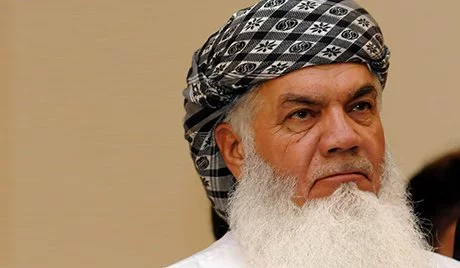
A: Iran did all it could in this regard. During this period, there was no talks with the Taliban over the formation of a government. The Taliban should have come up with a plan to form a government with the participation of all groups. But unfortunately they didnt do so. Iran, as a big country and neighbor, plays a big role in political matters and it can pressure the Taliban into forming an inclusive government and avoid a war given Iran has friends in the region and with the help of other neighbors.

Q: Can Iran, through political, diplomatic and moral support, be effective without political interference to prevent a unilateral Taliban rule?

A: Well, our effort and wish is that all our friendly and brotherly and neighboring countries make every effort not to solve the issue of Afghanistan by war, but to resolve it through consensus and dialogue.

Q: You mean Iran wields sufficient spiritual influence to bring them into line?

A: Certainly, yes.

Q: Was Karzai also involved in Ghanis betrayal, especially in Kabuls surrender?

A: No, Karzai was not involved in that.

Q: Do you consider the role of Karzai and Abdullah positive?

A: Yes.

Ismail Khan: Recent events in Afghanistan coup, Ghani committed treason

 

Iran FM to Focus on Economic Diplomacy on UNGA Sidelines

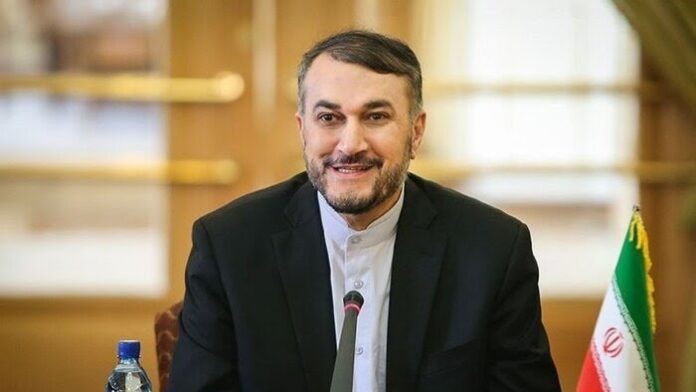
“I hope we can use this opportunity in line with a balanced foreign policy and active, dynamic and smart diplomacy of the 13th administration [current Iranian government] to adjust and develop our foreign relations with all regions of the world and target countries, and to hold talks and consultations with counterparts,” Hossein Amirabdollahian, who heads Iran’s delegation, said after arrival in New York.

“One of the topics, which has been on our agenda, is focus on Asia and neighboring countries as a priority, along with a balanced foreign policy and interaction with all countries in the world.”

The foreign minister added that he will also follow up on the problems of Iranian expatriates during a meeting planned in New York. That, he said, is one of the dozens of bilateral and multi-lateral meetings scheduled during his visit.

Amirabdollahian also expressed hope that the current Iranian government can help ease the problems expatriates face and offer them a strong support.

UN General Assembly Session Opportunity for Intl. Convergence: Analyst

“This session n is an opportunity for diplomacy chiefs of different countries to meet and hold consultations with their counterparts as well as other participating dignitaries as a large number of authorities of various countries come together under one roof at a certain point in time which they can use to boost their alliances and coalitions and also air their grievances,” said Amirali Abolfat’h, an expert on international affairs.

He also touched upon Iranian Foreign Minister Hossein Amirabdollahian’s plan to attend the UN General Assembly session as well as the meetings he is scheduled to have on the sidelines of the event.

“This session is a good opportunity for officials and foreign ministers of different countries to learn about the viewpoints of the new Iranian administration and foreign minister,” he explained.

Asked how Iran can use the UN session as an opportunity to present the points of view of the thirteenth administration, the expert replied, “Traditionally, foreign ministers of different countries take part in the annual session of the UN General Assembly, and sit down with their opposite numbers on the fringes of the event.”

“Generally, on the sidelines of this session, friends and rivals meet each other and share views on the latest bilateral, regional and international developments and try to bridge their differences,” he added.

He said Amirabdollahian’s trip to New York as Iran’s foreign minister to attend the UN General Assembly meeting is a routine visit.

“Moreover, the Iranian foreign minister and president have changed after eight years, and this session will serve as an opportunity for representatives from different countries, including rivals, allies and partners, to get familiar with the viewpoints of the new Iranian administration and the country’s foreign minister, and this is an opportunity which Iran should also seize to elaborate on its positions and views in line with securing the Iranian nation’s interests,” he said.

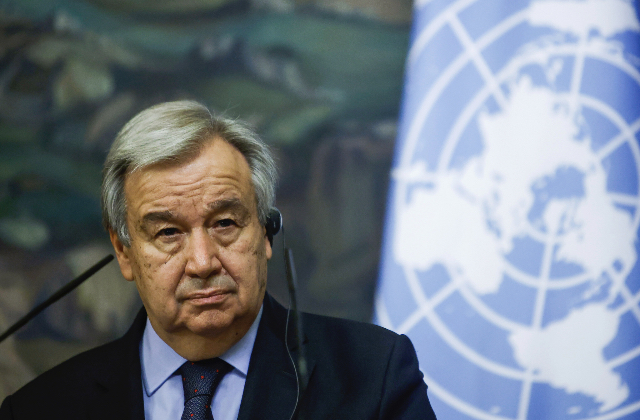
However, he said, the UN is playing a key role in leading efforts to provide humanitarian aid to Afghans, and called on the international community to engage with the Taliban due to the unclear situation in the country.

Guterres further added US President Joe Biden’s commitment to global action on climate, including rejoining the 2015 Paris Climate Agreement that former president Donald Trump withdrew from, is probably “the most important” action he could take.

He also expressed regret over the failure of countries to work together to tackle global warming and ensure that people in every country are vaccinated.

He once again urged the world’s 20 major economic powers in the G20, who failed to take united action against COVID-19 in early 2020, to create the conditions for a global vaccination plan.

Guterres also said the divide between developed countries in the north and developing countries in the south “is very dangerous for global security”, adding that “it’s very dangerous for the capacity to bring the world together to fight climate change”.