Monday, April 27, 2026
Home Blog Page 239

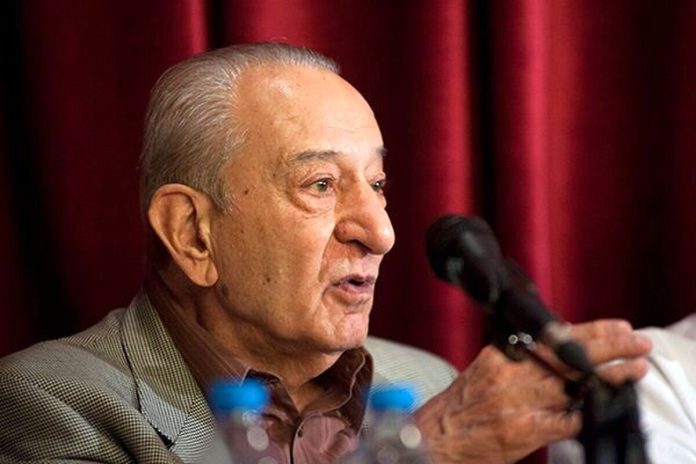
“Father of Iran’s nuclear technology” dies

Father of Iran’s nuclear technology

Etemad was the head of the AEOI before the 1979 Islamic Revolution and is credited for being the founder of the organization.

He continued his studies in electrical engineering at the University of Lausanne in Switzerland before the revolution.

Later,  Etemad worked at the Atomic Research Center of the Swiss Federal Institute. The result of his research was a doctoral thesis that he submitted to the Swiss Polytechnic University and was consulted by the International Atomic Energy Agency due to his expertise.

He returned to Iran in 1965 and  a year later established the Atomic Energy Office of the Planning and Budget Organization and was tasked with managing it, a position he held until 1967.

In 1968, Etemad was appointed as the first head of the Institute for Scientific and Educational Research and Planning, the Iranian equivalent of the National Center for Scientific Research (CNRS) in France.

In 1974, he took over as head of the Atomic Energy Organization of Iran after founding the organization. Etemad served as the director of the AEOI until 1978.

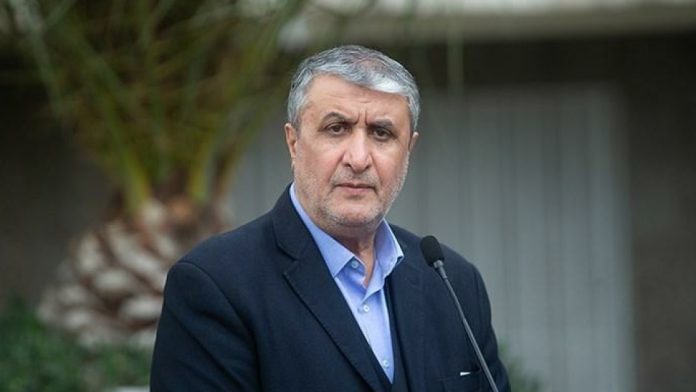
Mohammsd Eslami, Deputy Iranian President and head of the the AEOI, as well as Ali Akbar Salehi, former director of the organization, have offered condolences over  Etemad’s passing, saying with his unparalleled foresight, sincerity, and honesty, he laid such a solid foundation in the nuclear industry and technology that now Iran proudly and forcefully carries forward all of this precious legacy.

Etemad lived in France at the time of his death.
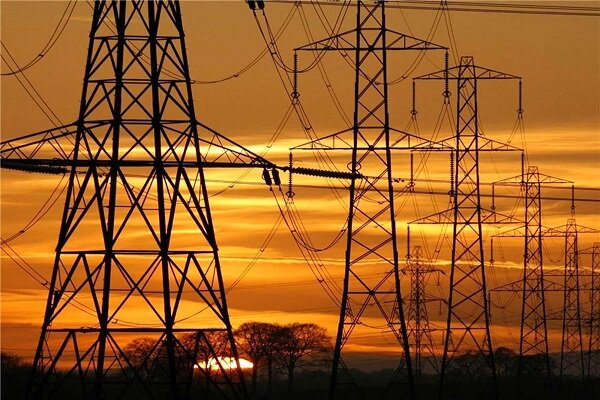
Iran faces summer power crisis as drought worsens, daylight saving debate reignites

The crisis has reignited debate over parliament’s controversial 2022 decision to abolish daylight saving time.

Mostafa Rajabi Mashhadi, CEO of state-run Tavanir power company said on Friday, “Restoring daylight saving time could alleviate up to 15% of our expected shortfall this summer.”

With rainfall 40% below normal this year, reservoir levels at hydroelectric dams have dropped to critical lows, cutting a key power source just as air conditioning use spikes.

The situation is compounded by increased evening electricity demand since Iran stopped shifting clocks forward in summer – a change energy experts say adds nearly 1,000 megawatts to peak loads, equivalent to the output of the Bushehr nuclear plant.

The government has submitted emergency legislation to reverse parliament’s decision, but with temperatures already climbing, officials warn major cities may face rolling blackouts during heatwaves.

Iranian official: West practicing hypocrisy on human rights

Kazem Gharibabadi, Iran’s Deputy Foreign Minister for Legal Affairs, visited chemical attack survivors at Tehran’s Sasan Hospital, where he condemned ongoing Western hypocrisy.

“Seeing our chemical warfare veterans’ suffering burns my soul,” Gharibabadi posted on X.
“These living martyrs expose the emptiness of human rights claims by countries like Germany – the main enabler of Iraq’s chemical weapons program.”

The diplomat emphasized that time doesn’t erase Germany’s responsibility, referencing Iran’s proposed truth-finding mechanism about foreign roles in arming Saddam.

During the 1980-88 Iran-Iraq War, Western-backed Saddam Hussein’s forces repeatedly used chemical weapons against Iranian soldiers and civilians, with over 100,000 Iranians suffering long-term effects.

Declassified documents reveal German, Dutch and other Western companies supplied chemicals to Iraq’s weapons program.

Germany has previously acknowledged some companies violated export controls but maintains current governments can’t be held liable.

Iran’s Stone Garden: A silent protest turned tourist attraction

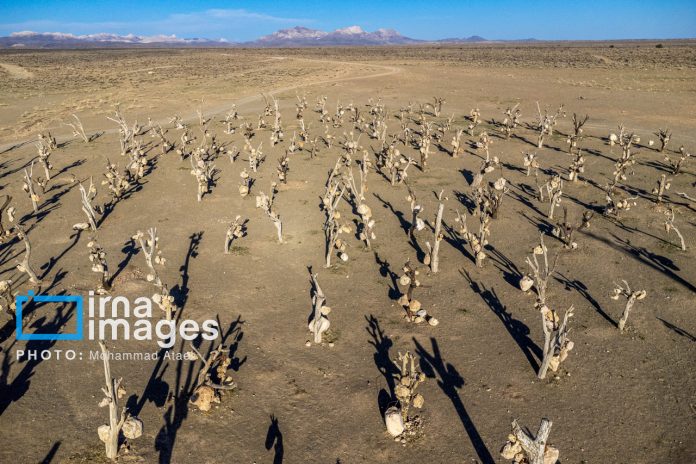
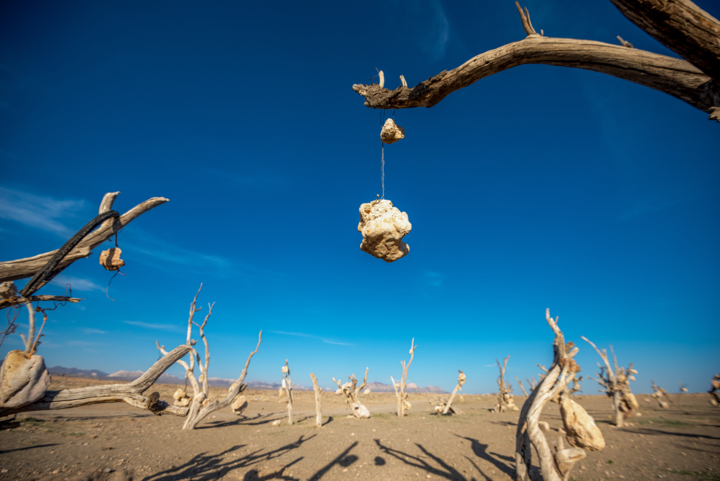
The Sirjan Stone Garden, created by deaf-mute farmer Darvish Khan Esfandiyarpour as a protest against land reforms in the 1960s, has become one of Iran’s most enigmatic tourist attractions.

Spanning 1,000 square meters, the garden features 180 dead trees hung with hundreds of perforated stones – some weighing over 10kg – suspended by wire.

Iran's Stone Garden: A silent protest turned tourist attraction

Local legend suggests Esfandiyarpour, who lost his lands during the 1961 agrarian reforms, created this surreal landscape as a silent cry against injustice.

“The stones speak louder than words,” said a local guide, noting how the 90-year-old creator (1904-2007) spent four decades carefully selecting and hanging each rock before being buried at the site.

Now listed as a cultural heritage site, the garden draws photographers and travelers to its haunting tableau.

Two award-winning films by Parviz Kimiavi, 1976’s The Stone Garden and 1994’s The Old Man and the Stone Garden, documented the creator’s life.

Iran atomic chief highlights nuclear breakthroughs, defies Western ‘red lines’

Mohammad Eslami, the head of the Atomic Energy Organization of Iran (AEOI), made the statement while addressing Friday prayers congregation in Tehran, saying Western attempts to restrict Iran’s nuclear program have failed.

“They cannot tolerate independent nations challenging their dominance,” Eslami said, adding, “All their efforts to stop Iran’s nuclear progress have been unsuccessful.”

The official highlighted civilian applications of nuclear technology, including medical breakthroughs in treating diabetic wounds and cancer through plasma therapy.

He pointed out, in agriculture, Iran has implemented radiation technology to address its 30% annual food waste problem, equivalent to about 40 million tons of produce, further explaining new preservation systems currently process 500,000 tons per year.

Despite international sanctions, Eslami emphasized progress on Iran’s ambitious plan to generate 20,000 megawatts of nuclear energy.

He cited the Bushehr nuclear plant as a success story, claiming it has produced 72 billion kilowatt-hours of electricity since 2013, saving the equivalent of 110 million barrels of oil worth approximately $10 billion.

The announcement comes amid ongoing tensions with the International Atomic Energy Agency, which Iran says is yielding to US pressure.

While asserting Iran’s compliance with nuclear inspections, Eslami denied any concealment in the country’s nuclear activities.

New figures: Iran-Saudi trade sees astonishing 6,483% growth

According to Iran’s Customs Administration, the country’s total non-oil commerce with 15 neighboring nations reached $74.3 billion last year, representing a 21% increase compared to 2023. Trade volume grew to 112.8 million metric tons, up 16% year-on-year.

The United Arab Emirates remained Iran’s largest regional trading partner at 29.2billion, followed by Turkey (19.4 billion) and Iraq (12.5billion).

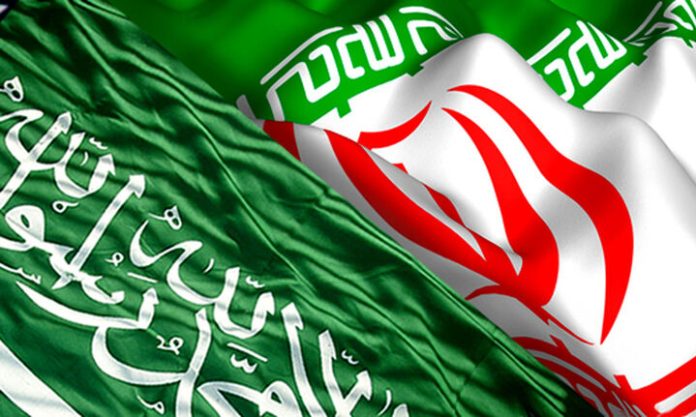
But the standout story was the resurgence of trade with Saudi Arabia, which reached 12.5 billion – a symbolic but significant jump from nearly zero the previous year.

“This explosive growth reflects the new economic realities following the restoration of diplomatic relations,” said the customs administration chief in a statement accompanying the data release.

The figures offer the first comprehensive look at how the China-brokered détente between Tehran and Riyadh is translating into commercial ties.

After severing relations in 2016, the regional powers agreed to reestablish diplomatic ties in March 2023.

Other notable gainers included trade with Turkey (up 63%), Qatar (46%) and Afghanistan (28%).

Overall, Iran exported 36 billion worth of non-oil goods to neighbors, up 17%.

Iran Foreign Ministry: Saturday talks to test US intentions, seriousness

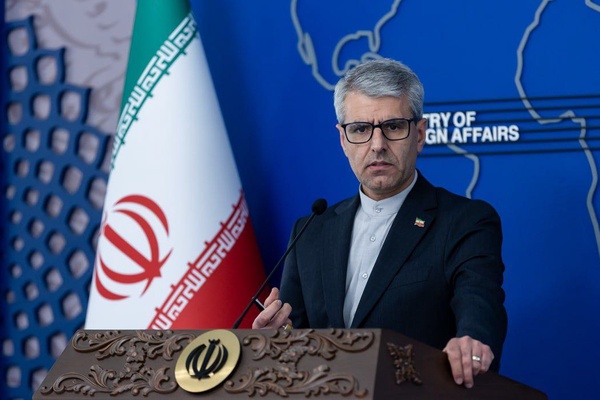
Esmail Baqaei

In a post on X social media platform, Foreign Ministry Spokesperson Esmaeil Baqaei emphasized Iran’s approach, writing “In earnest & with candid vigilance we are giving diplomacy a genuine chance. US should value this decision formed despite their prevailing confrontational hoopla.”

“We do not prejudge…We do not predict…We intend to assess the other side’s intent & resolve this Saturday. We shall reflect and respond accordingly,” Baqaei further asserted.

The remarks on Friday come as Washington continues its “maximum pressure” policy of sanctions on Iran, most recently targeting its oil network and nuclear program.

Longtime adversaries Iran and the US are set to hold talks in Oman’s capital, Muscat, aimed at reaching a potential nuclear deal.

Leading the talks will be US special envoy Steve Witkoff and Iran’s Foreign Minister Abbas Araghchi.

US President Donald Trump said the talks would be ‘direct’ but Araghchi has insisted they would be ‘indirect.’

Trump has warned military action against Iran was ‘absolutely’ possible if talks failed to produce a deal, but Iranian officials say the approach is a non-starter.

Iran Leader ddvisor: Continued external threats could lead to expulsion of IAEA onspectors from Iran

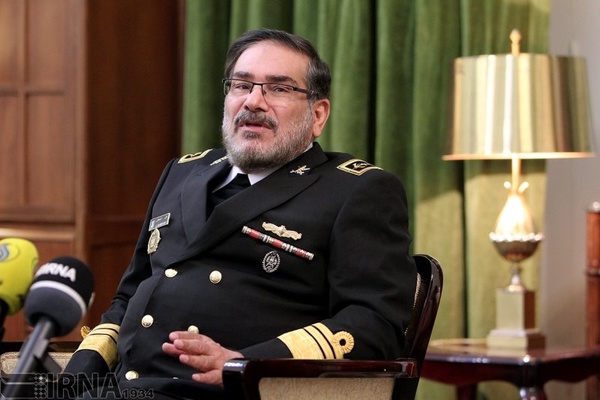
In a post on the X network, Shamkhani wrote that Iran might cease cooperation with the IAEA if external threats continue.

The Supreme Leader’s advisor further stated, “Transferring enriched materials to secure and undisclosed locations in Iran could also be placed on the agenda.”

Iran and the United States are set to begin indirect negotiations on the nuclear issue on Saturday in Oman.

Seyed Abbas Araqchi, Iran’s Foreign Minister, emphasized that lifting anti-Iran sanctions must be on the agenda of the Oman meeting.

Meanwhile, Mohammad Eslami, head of Iran’s Atomic Energy Organization, in response to the possibility of US demands during the Oman talks for a complete halt to uranium enrichment and the dismantling of centrifuges, described such requests as a “joke.”

Eslami stated, “The Islamic Republic will not back down from its nuclear program.”

Referring to recent US threats of attacking Iran’s nuclear facilities, he called them part of a “psychological operation” aimed at gaining more concessions.

Meanwhile, Rafael Grossi, Director General of the IAEA, is scheduled to visit Iran soon to discuss safeguards issues with Iranian officials.

The Islamic Republic of Iran has urged the IAEA Director General to focus on the agency’s technical duties and not be swayed by political pressures from the United States, the Zionist regime, and their European allies.

China dismisses role in war against Ukraine, calls on Kyiv to temper rhetoric

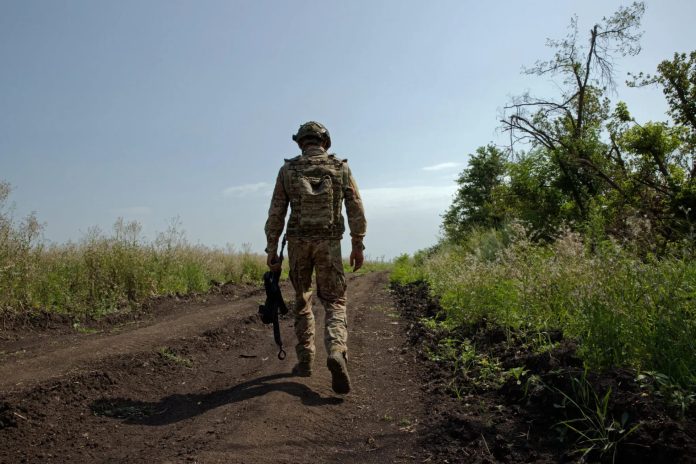
Russia Ukraine War

Lin’s statement came after President Volodymyr Zelensky said that 155 Chinese citizens were fighting for Russia on the territory of Ukraine. A day prior, Kyiv captured the first two Chinese nationals in Donetsk Oblast.

“Beijing knows about this. The Russians distribute advertising videos about recruitment through Chinese social networks,” Zelensky stated.

When asked about the details Ukraine’s president provided, the Chinese spokesperson reiterated that “we are not a party to it.”

“The Chinese government always asks Chinese nationals to stay away from areas of armed conflict, avoid any form of involvement in armed conflicts, and in particular avoid participation in any party’s military operations,” he said at a briefing.

“We call on the relevant party to be right and sober about China’s role and refrain from making irresponsible remarks,” he added.

Earlier in the day, Kremlin spokesperson Dmitry Peskov also denied China’s involvement in Russia’s war, describing the country as a “strategic partner, friend, comrade.”

A Ukrainian intelligence document seen by the Kyiv Independent showed that there are at least 163 Chinese nationals serving in Russia’s Armed Forces as of early April. Another document showed photos and passport details of 13 Chinese recruits who were being selected for service in the Russian army as of April 2.

One of the captured soldiers claimed he paid 300,000 rubles (roughly $3,500) to a middleman in China to join the Russian military in exchange for the promise of citizenship, Ukraine’s Luhansk military unit press service told Ukrainian Pravda earlier in the day.

China, which portrays itself as a neutral party in the war, has become the Kremlin’s largest supplier of dual-use goods essential for weapons manufacturing.

Unlike North Korean troops, who have fought on Russian soil, the Chinese nationals were captured on Ukrainian territory, marking a potential escalation in foreign involvement.

North Korea sent around 12,000 troops to Russia’s Kursk Oblast in 2024 to reinforce Russian lines after a Ukrainian cross-border offensive. Kyiv has said it captured two North Korean soldiers in January, estimating 4,000 casualties among the deployed units.

Top Iranian MP: Negotiating team in Oman will act based on natl. interests

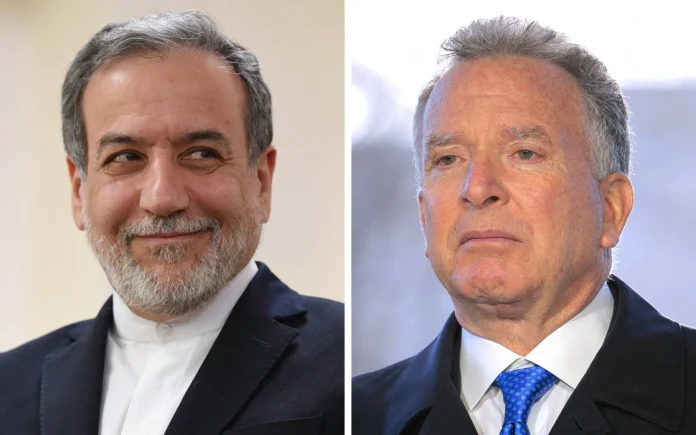
Araghchi Witkoff

Ebrahim Azizi, Chairman of the Iranian Parliament’s National Security and Foreign Policy Commission, stated that the Foreign Ministry and the negotiation team are committed to upholding the rights of the Iranian people through principled engagement.

He added that if the initial stages of dialogue proceed positively, a structured framework for future negotiations may be established.

Referring to the upcoming indirect talks between Iranian Foreign Minister Seyed Abbas Araghchi and Steve Witkoff, U.S. President Trump’s special envoy, Azizi stressed that Iran will not accept pressure or threats alongside diplomatic negotiations. “There can be no talks under duress,” he asserted.

Azizi also underlined the strategic role of Iran’s military strength in shaping diplomatic outcomes.

He stressed that the country’s armed forces have long supported the values of the Islamic Revolution and will continue to provide the foundation for Iran’s foreign policy stance.