Sunday, December 21, 2025
Home Blog Page 2384

US green-lights certain transactions with Taliban

Amid concern that sanctions on the Taliban would worsen a continuing humanitarian crisis in Afghanistan, the United States has taken steps to pave the way for aid to flow into the economically paralysed nation.

The US Treasury Department on Friday said it issued two general licences, one allowing the US government, NGOs and certain international organisations, including the United Nations, to engage in transactions with the Taliban or Haqqani Network – both under sanctions – that are necessary to provide humanitarian assistance.

The second licence authorises certain transactions related to the export and re-export of food, medicine and other items.

“Treasury is committed to facilitating the flow of humanitarian assistance to the people of Afghanistan and other activities that support their basic human needs,” Andrea Gacki, director of the US Treasury’s Office of Foreign Assets Control, stated in the statement.

She added that Washington will continue to work with financial institutions, NGOs and international organisations to ease the flow of agricultural goods, medicine and other resources while upholding sanctions on the Taliban, Haqqani Network and others.

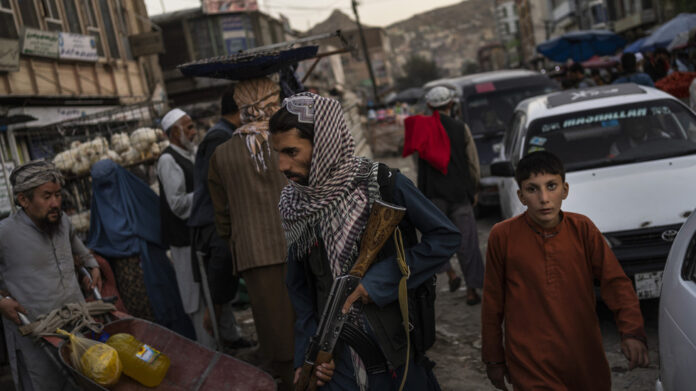
The Taliban seized control of the country last month as foreign forces allied with the US withdrew from Afghanistan after a 20-year war. The events culminated in the capture of the capital, Kabul, on August 15, two decades after the Taliban was driven from power by a US-led campaign following the September 11 attacks on the United States.

The United Nations warned that at the start of the year more than 18 million people – about half of Afghanistan’s population – require aid amid the country’s second drought in four years.

UN Secretary-General Antonio Guterres said last week that Afghanistan is on “the verge of a dramatic humanitarian disaster” and has decided to engage with the Taliban in order to help the country’s people.

US President Joe Biden’s administration has noted it is committed to allowing humanitarian work in Afghanistan to continue, despite Washington listing the Taliban as a specially designated global “terrorist” group.

The sanctions freeze any assets the Taliban has in the US and bar Americans from dealing with the group, including the contribution of funds, goods or services.
Friday’s move expands on that specific licence, allowing international organisations and NGOs to pay taxes, fees, import duties or permits, licences or other necessary transactions for assistance to reach the people of Afghanistan.

The licences allow NGOs and foreign financial institutions to continue humanitarian assistance such as the delivery of food, shelter, medicine and medical services, including COVID-19 assistance, a Treasury spokesperson said.

“We have not reduced sanctions pressure on Taliban leaders or the significant restrictions on their access to the international financial system,” the spokesperson added.

On Friday, Afghans held a protest in Kabul, calling for the release of central bank assets held in the US.

The US froze $9bn US in Afghan foreign reserves held in New York and the World Bank, and the International Monetary Fund and European Union have suspended financing for projects in Afghanistan.

Source: Al-Jazeera
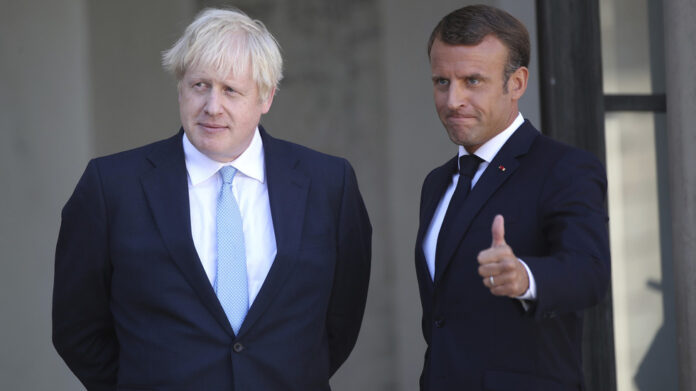
UK PM bidding to ease tension with France over AUKUS

A description of the conversation from Macron’s office said the prime minister sought the call on Friday, and expressed the hope that the countries could resume cooperation “in line with our values and our common interests”.

In response, the French president told Johnson “he is awaiting his proposals” on how to do this, the brief statement from the Élysée added.

A more lengthy Downing Street readout of the call omitted this last detail, instead saying the pair “reaffirmed the importance of the UK-France relationship and agreed to continue working closely together around the world on our shared agenda, through NATO and bilaterally”.

“The leaders noted in particular the strategic significance of our longstanding cooperation in the Indo-Pacific and in Africa, including through the joint mission in Mali,” it added.

The prime minister on Thursday urged the French to “prenez un grip about this and donnez-moi un break” – to “get a grip” and “give me a break” – over the fallout from the Aukus deal.

Relations between the two countries were already facing strain over the repercussions of Brexit and the UK’s desire for France to limit the number of refugees and migrants crossing the Channel.

Tensions rose last week after the UK’s decision to join the US and Australia in the Aukus pact, leading Canberra to cancel a £48bn submarine contract with France and replace it with nuclear technology from the UK and US, an arrangement negotiated without any prior French knowledge.

France recalled its ambassadors to the US and Australia for consultations about what was termed the “exceptional seriousness” of Canberra’s decision to cancel the order. While the French ambassador in London remained in place, this was only because France considered the UK a “junior partner” in the affair, the French Europe minister, Clément Beaune, stated.

During a visit to Washington this week, Johnson further deepened the row by claiming the UK, US and Australia had been “a bit taken aback by the strength of the French reaction” over Aukus.

The Downing Street statement said Johnson and Macron agreed to “intensify cooperation” on Channel crossings, the Northern Ireland protocol and post-Brexit fishing licences. The former two issues are notably bigger domestic political issues in the UK than in France.

It added, “The prime minister also looked forward to welcoming President Macron to Glasgow in November for Cop26, and they discussed the importance of increased international action ahead of the summit on climate finance and net zero commitments.”

On Thursday, French Foreign Minister Jean-Yves Le Drian told his US counterpart Antony Blinken the way out of a diplomatic crisis between France and the US over a submarine deal will “take time and require actions”.

The meeting of Blinken and Le Drian came after U.S. President Joe Biden and Macron spoke by telephone on Wednesday and agreed to launch in-depth consultations to rebuild trust between the two NATO allies. They also agreed to meet in Europe at the end of October.
Le Drian said in a statement he had discussed with Blinken at the United Nations in New York “the terms and main issues” to be addressed during those in-depth consultations.

The U.S. State Department said Blinken and Le Drian had also discussed cooperation between the United States and European countries including France in the Indo-Pacific region.

Blinken stated in a press conference later on Thursday that he was committed to working closely with Le Drian on the consultations.

“We recognize this will take time and hard work and will be demonstrated not only in words, but in deeds,” Blinken added.

“I am convinced that our interests together are so strong and the values that we share so unshakable that we will carry forward and get some good work done,” he continued.

China frees two Canadians following release of Huawei executive

Canadian citizens Michael Spavor and Michael Kovrig are returning to Canada nearly three years after they were arrested in China, Prime Minister Justin Trudeau announced on Friday evening.

“These two men have gone through an unbelievably difficult ordeal,” Trudeau said in Ottawa, adding, “For the past 1,000 days, they have shown strength, perseverance, resilience and grace.”

Spavor and Kovrig boarded their flight about 7:30 p.m. ET, Trudeau noted. They are being accompanied by Dominic Barton, Canada’s ambassador to China.

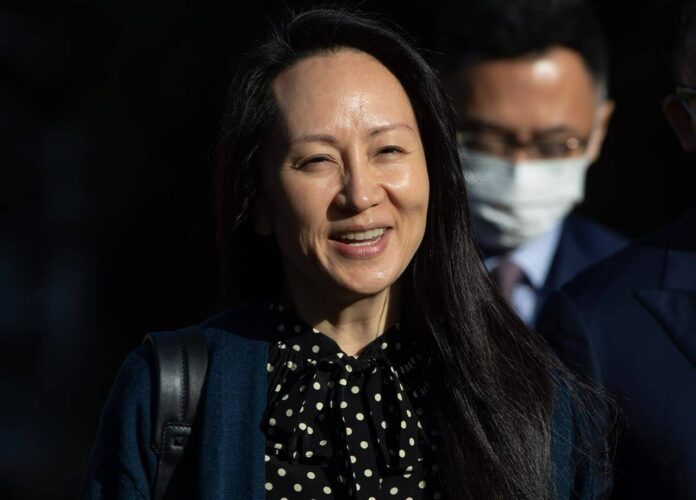
The ‘two Michaels’ were detained in what is widely considered a retaliatory act after Meng was arrested in Vancouver on Dec. 1, 2018, at the request of the U.S. government.

Meng reached a deferred prosecution agreement with the U.S. government earlier Friday, setting off a quick chain of events that saw her extradition case dropped by a B.C. court and concluded with her departure from the Vancouver airport, also about 7:30 p.m. ET.

China has insisted throughout the legal saga that Spavor and Kovrig were arrested on legitimate grounds, but the timing of their release is sure to bolster Ottawa’s argument that the two men were arbitrarily detained.

Trudeau deflected questions about what the development will mean for the strained relationship between Canada and China. He also did not answer exactly how their release came about.

“There is going to be time for analysis and reflection in the coming days and weeks, but the fact of the matter is, I know Canadians will be incredibly happy to know right now, this Friday night, Michael Kovrig and Michael Spavor are on a plane and they’re coming home,” he told reporters in Parliament’s West Block building.

Spavor, an entrepreneur who worked in North Korea and China, was found guilty of spying and sentenced to 11 years in prison and extradition by a Chinese court in August.

The trial for Kovrig, a diplomat, concluded in March, but he had not yet been sentenced.

Both men were initially detained on Dec. 10, 2018, 10 days after Meng’s arrest in Vancouver.

Trudeau was asked on Friday if he spoke to Chinese President Xi Jinping ahead of the release, but Trudeau said Canadian diplomats were the ones leading the work.

U.S. Secretary of State Antony J. Blinken said in a statement that his government welcomes the return of the Spavor and Kovrig “after more than two-and-a-half years of arbitrary detention”.

As part of her arrangement with U.S. prosecutors, Meng pleaded not guilty in a court Friday to multiple fraud charges.

The Huawei chief financial officer entered the plea during a virtual appearance in a New York courtroom. She was charged with bank fraud, wire fraud and conspiracies to commit bank and wire fraud more than two and a half years ago.

The agreed statement of facts from Friday’s U.S. court appearance said that Meng told a global financial institution that a company operating in Iran in violation of U.S. sanctions was a “local partner” of Huawei when in fact it was a subsidiary of Huawei.

David Kessler, an attorney with the United States Attorney’s Office for the Eastern District of New York, told the court the deferred prosecution agreement (DPA) will last four years — from the time of her arrest on Dec. 1, 2018, to Dec. 1, 2022.

Meng’s legal battle in Canada played out in stark contrast to the Chinese prosecutions of Spavor and Kovrig, which Canadian officials routinely decried for a lack of transparency.

She also lived under house arrest at a multimillion-dollar home in Vancouver while awaiting extradition. Spavor and Kovrig were held in Chinese prisons during the same period.

Meng read from a prepared statement, following what was likely her last appearance in a B.C. court, in which she thanked the Canadian government “for upholding the rule of law”.


Source: CBC News

China urges U.S. to lift sanctions on Iran

In an address to the 76th session of the UN General Assembly via video conference on Tuesday night, Iranian President Ebrahim Raeisi said “nukes have no place in Iran’s defense doctrine”, and called for all signatories to the 2015 nuclear deal, known as the Joint Comprehensive Plan of Action (JCPOA), to stay true to the landmark agreement.

The Iranian president stressed that Tehran has so far been adhering to its nuclear commitments under the JCPOA while Washington violated the accord‎ by withdrawing from it three years ago and reimposing draconian sanctions on the country.

Raeisi added that 15 reports released by the International Atomic Energy Agency have attested to the adherence of Iran to its commitments, however, the US has not yet discharged its obligation, which is lifting sanctions.

“China appreciates this and believes it shows Iran’s constructive attitude of upholding the JCPOA and supporting negotiations to resume compliance,” Zhao Lijian, the Chinese Foreign Ministry spokesperson, said at a regular news briefing in the capital Beijing on Friday.

“China always believes that resuming full and effective implementation of the JCPOA meets common interests of all parties,” he added.

Zhao censured the so-called US maximum pressure campaign against Iran and expressed China’s pledge to work relentlessly to bring the 2015 nuclear deal “back onto the right track” by helping to resume negotiations on the revival of the accord and cooperating with other JCPOA-related parties.

“As the one that started the new round of tensions in the Iranian nuclear situation, the US should redress its wrong policy of maximum pressure on Iran, lift all illegal sanctions on Iran and measures of long-arm jurisdiction on third parties, and work to resume negotiations and achieve outcomes at an early date,” the Chinese Foreign Ministry spokesperson stated.

“China will work with all parties and continue to make relentless efforts to bring the JCPOA back onto the right track,” Zhao continued.

In an interview with NBC News on Thursday, Foreign Minister Hossein Amir Abdollahian noted Iran is ready to resume talks on reviving the 2015 nuclear deal but the administration of US President Joe Biden is sending a “negative sign” by keeping illegal sanctions on Tehran.

Amir Abdollahian stressed that Iran remains ready to restart the nuclear talks “very soon” but the US administration is refusing to remove the sanctions and is instead imposing new ones.

Iran and six world powers—the US, Russia, China, France, Britain and Germany—agreed on the JCPOA in 2015. Three years later, the JCPOA was unilaterally abandoned by Washington under former US President Donal Trump and more sanctions were introduced as part of the so-called maximum pressure campaign, in spite of Tehran’s hitherto strict compliance with the multilateral accord.

The parties to the JCPOA began high-profile talks in Vienna earlier this year after the Biden administration voiced willingness to rejoin the deal and remove the draconian sanctions his predecessor slapped on the Islamic Republic.

Since the beginning of the Vienna talks, Tehran has argued that the US—as the first party that violated the JCPOA—needs to take the first step by returning to full compliance with the agreement. Tehran also says it will resume all of its nuclear commitments under the deal only after the US removes all the sanctions in practice.

Source: Press TV

Iranians Bid Farewell to Ali Landi, the National Hero

On social media these days, what we see a lot are the images of Ali Landi, a self-sacrificing Iranian teen who gave his life to save the lives of two neighbours from fire and whose memory will remain in the minds of Iranians.

Millions of Iranians both inside the country and abroad have, on social media networks, appreciated the sacrifice that he made and have called him a national hero.

“He is only 15 years old! He went through the fire to save two women. He has suffered 90% injuries and he says he doesn’t regret what he has done. He is a real man,” wrote a compatriot in a tweet.

“The story of the bravery and sacrifice of Ali Landi, a teen from Izeh, should be published at the beginning of all school texbooks,” read another tweet.

“How simply his childhood world went down in history as one of a great man,” said another Iranian in a tweet.

Ali Larni, a 9th-grader from the town of Izeh in southern Khuzestan province, died in hospital with severe burns on September 24, 2021.

Iranians Bid Farewell to Ali Landi, the National Hero
The old woman the National Hero saved from blazing fire

Ali was visiting her aunt at her place as a guest on October 10, 2021 when, at 6:00 pm, he heard screams from the adjacent apartment block.

Ali immediately went to the neighbour’s house where he saw a middle-aged woman and her mother were caught in a blaze caused by a gas cylinder which had burst into flames.

Ali took the cylinder to take it away from the two women.

He was throwing it away when the liquid gas leaking from the cylinder poured on him and caught fire.

He was taken to a hospital in Isfahan with 90-degree burns, but succumbed to his injuries and passed away.

The governor, mayor and Friday prayers leader of Isfahan as well as the Ahwaz mayor and a host of artists were among those who visited Ali while he was in hospital.

A funeral procession was held for the national hero on Saturday, September 25.

He was then taken to his final resting place in his hometown, Izeh.

Iran’s Islamic Revolution Leader has expressed condolences to Ali Larni’s family.

Ayatollah Seyyed Ali Khamenei’s office on Saturday contacted Larni’s bereaved family and conveyed the Leader’s thoughts and prayers to them.

Iranian President Ebrahim Raeisi has also, in a message, expressed condolences on his demise and termed him a national hero.

Undoubtedly, the story of Ali Larni showed that “age” is not a determining factor for becoming a national hero.

Swedish FM: To end Yemen crisis consultation with Iran a must

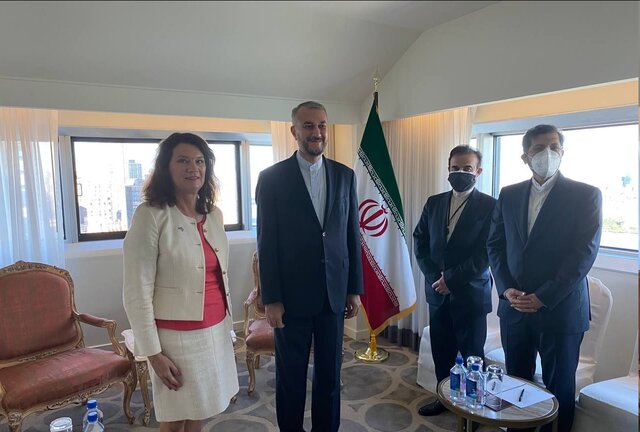
During the meeting, held on Friday, the Swedish foreign minister referred to the 400-year history of the relations between the two countries. She praised the Iranian expatriates living in Sweden as well-educated and added that she has personally visited Iran.

Linde noted that Sweden seeks expansion of ties with Iran and proposed a meeting of the joint political committee of the two countries to be held in Tehran in the near future.

She also touched on the crisis in Yemen, saying her country is committed to help end the crisis. The top diplomat added that Sweden is in contact with all sides in Yemen and considers consultations with Iran in this regard as essential.

During the meeting, the Iranian foreign minister also said the volume of trade and economic ties between the two countries is currently not at a favorable level. Amirabdollahian called for measures to improve and upgrade trade exchanges between the two countries, including through facilitation of the ties between private sectors, establishment of direct flights and easing of travel between the two countries.

The top diplomat also stressed that the crisis in Yemen does not have any military solution, saying the human crisis should be addressed through lifting of the [Saudi-led] blockade.

He added that the conflict in Yemen is an unequal war in which the people of the country are targeted in acts of cowardice.

During the meeting, Amirabdollahian also mentioned the trial held for an Iranian national in Sweden. He said the MKO terror grouping is behind the fabricated case and the inhuman plot.

The foreign minister stressed that the court should pay attention to the fact that all evidence and allegations presented to the court, are fabricated by a group, which is known to engage in falsification and deceit. He said this demonstrates that the court process lacks validity and is politicized.

During the meeting, the two sides also exchanged views on the Afghan situation and the latest developments in the country.

Iran FM: UN expected to do more to lift anti-Syria bans

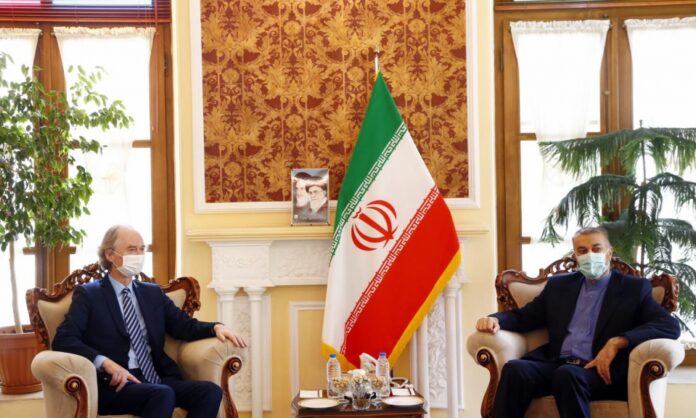
During the meeting, held on Friday noon, the Iranian foreign minister expressed support for the work done by the United Nations and the special envoy to help end the crisis in Syria, and at the same time, called for the world body’s attention to

all aspects of the crisis in the country.
Amirabdollahian also condemned the United States’ sanctions against Syria, stressing that the UN is expected to play a more active role to help remove the cruel sanctions, which have targeted the people of Syria.

He noted that occupation, military presence and intervention by some countries, against the will of the government and people of Syria, have further prolonged the crisis in the country.

Amirabdollahian once more reiterated support for the territorial integrity and the will of the people of Syria as a fundamental policy of the Islamic Republic of Iran.

During the meeting, the UN special envoy also briefed the Iranian foreign minister on the latest developments in Syria and the UN measures in the country.

Iran FM: Window of opportunity over JCPOA not open forever

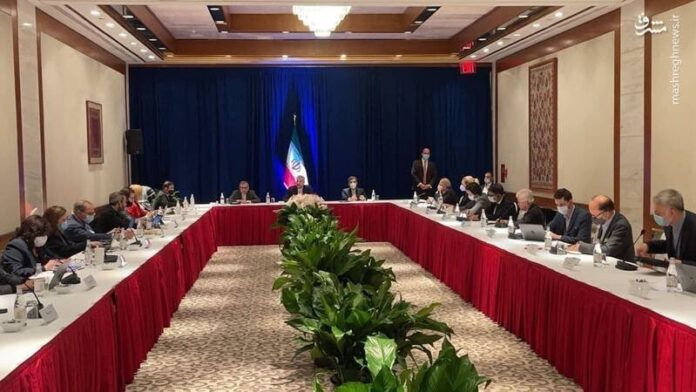
He said in his opening speech that: The main priority of the new administration is to pursue a balanced foreign policy. We have a plan to have ties with all the countries in the world, and the only country that we believe has no legitimacy, and no connection will be established between us and that country is the fake regime of Israel, which we do not recognize, and we have clear and precise positions on its unconstructive policies and destructive actions in the region.

Regarding the United States, Amirabdollahian said: Our criterion is to observe the practical behavior of American politicians and statesmen. We will make decisions based on Mr. Biden’s practical behavior.

Regarding the Joint Comprehensive Plan of Action, Amirabdollahian said the Americans, on the one hand, insist on returning to the nuclear deal and ask Iran to return to the negotiating table in Vienna, but simultaneously impose new sanctions on Iran. He said this is a paradoxical behavior which is not conveying a constructive message.

The foreign minister said since its inauguration, the new Iranian administration has declared its clear and unequivocal policy towards the JCPOA which is recognizing the resumption of negotiations, not distancing itself from the JCPOA, and pursuing full return of all parties to the JCPOA. He stressed that this window of opportunity will not remain open forever.

He described Mr. Grossi’s trip to Tehran and his meeting with the new head of the Atomic Energy Organization and their constructive agreement as another positive sign and action by Iran.

In another part of his speech, Amirabdollahian mentioned receiving conflicting media and diplomatic messages from the White House, and told reporters and journalists in New York: The new Iranian administration is a pragmatic one.The extent to which American statesmen live up their commitments matters more than words to us. It is unacceptable for Biden to talk about negotiations, agreements and even request bilateral talks with Iran, but continue the wrong policies of previous U.S. president Trump.What determines the outcome of the negotiations on the JCPOA is the behavior of the United States. Since Mr. Biden took office, he has taken no constructive practical step, other than making contradictory comments.

Later in the meeting, the foreign minister referred to Iran’s lack of access to its money and assets in banks in Japan, South Korea and some other countries to purchase needed medicine and vaccines, and called U.S. sanctions a crime and terrorism.

The top Iranian diplomat stated: We are reviewing the Vienna talks file and the Vienna negotiations will resume soon. At the same time, he stressed that Iran only deems a negotiation with tangible and practical results as constructive.

Regarding regional issues, Amirabdollahian noted that the foreign policy of the new Iranian administration is being designed for the best relations with neighboring countries and the region. He said the ongoing talks in the Persian Gulf, constructive initiatives to restore peace to Yemen and Syria, the formation of an inclusive government in Afghanistan and progress and development in Iraq are top priorities of Iran’s regional policies.

He said: Prioritizing our neighbors and the Asian continent does not mean ignoring other priorities; rather the principles of the new administration’s foreign policy are pursuing a balanced foreign policy and active foreign relations with all countries, based on mutual respect and interests.

At the end of his speech, Amirabdollahian said in reference to U.S. statesmen that: The United States can also take this opportunity by reconsidering its wrong and unconstructive policies toward the Islamic Republic of Iran. The Iranian nation has a great history and civilization, and the American statesmen should know that the language of sanctions and threats will not work, as it has been proven to them over the past 40 years.

We expect the U.S. statesmen to come to Vienna realistically and take practical, positive, constructive and measurable steps instead of saying beautiful words, and they should be in no doubt that if they want to speak with their past choice of words and unconstructive behavior, the Islamic Republic of Iran will not be without options.

It should be noted that in this meeting, the foreign minister answered the questions of the reporters.

Taliban to lodge protest to UN over US killing of Afghans

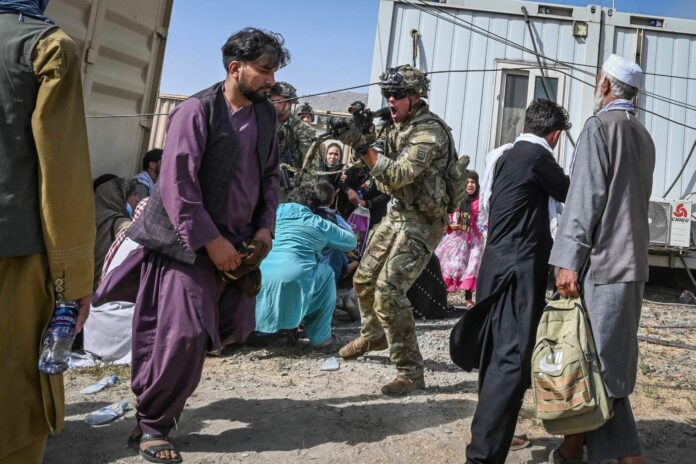
“Actions in the vicinity of the airport and in Kabul, in general, resulted in deaths of civilians, including women and children. This is a question of justice, this is against humanity. We insist this should be recognised and we will file a complaint with the UN and other authorities,” Afghan Deputy Minister of Culture and Information Zabihullah Mujahid said.

Last month, the Taliban escalated its offensive against Afghan government forces amid the withdrawal of the US military from the country. After the movement came close to the capital, mass evacuations started, with thousands of Afghans flocking near the airport, hoping to leave before the Taliban comes.

The militants entered the capital city of Kabul on 15 August, declaring that the war is over.

Deadly firefights occurred in the area several times, while on 26 August a suicide bomber attacked the main entrance to Kabul Airport, killing 13 US service personnel and at least 200 civilians. Later, Daesh claimed responsibility for the explosion.

Source: RIA Novosti

Abbas gives Israel ultimatum to withdraw from Palestinian territory

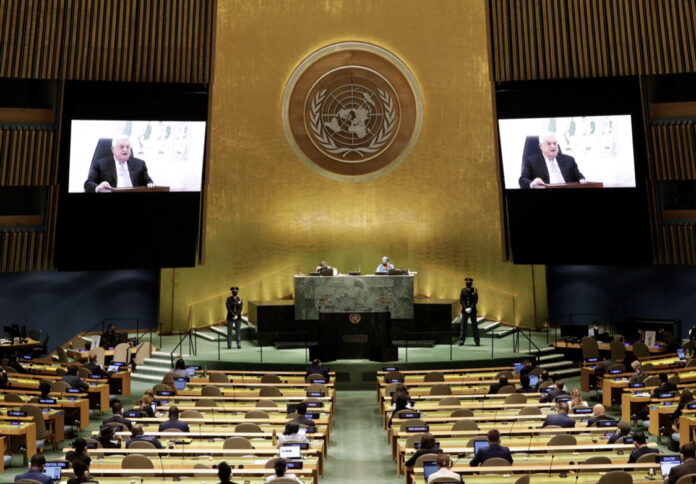
Abbas accused Israel on Friday of destroying the two-state solution with actions he said could lead Palestinians to demand equal rights within one binational state comprising Israel, the occupied West Bank and Gaza.

Addressing the UN General Assembly via video link from the West Bank, Abbas, 85, urged the international community to act to save the two-state formula that for decades has been the bedrock of diplomacy for the Israeli-Palestinian conflict.

Abbas added Israel was “destroying the prospect of a political settlement based on the two-state solution” through its settlements on West Bank land it captured in the 1967 Middle East war.

Most countries view the settlements as illegal, a position Israel disputes.

“If the Israeli occupation authorities continue to entrench the reality of one apartheid state as is happening today, our Palestinian people and the entire world will not tolerate such a situation,” Abbas said, as Israel rejects accusations of apartheid.

“Circumstances on the ground will inevitably impose equal and full political rights for all on the land of historical Palestine, within one state. In all cases, Israel has to choose,” Abbas added from Ramallah, the seat of his Palestinian Authority, which has limited self-rule in the West Bank.

There was no immediate Israeli comment on Abbas’ remarks.

Critics say internal Palestinian divisions have also contributed to the deadlock in US-sponsored peace talks, which collapsed in 2014.

Under interim peace accords with Israel, Abbas’ PA was meant to exercise control in Gaza as well. But Hamas seized the coastal enclave in 2007 and years of on-and-off talks have failed to break their impasse.

Israeli Prime Minister Naftali Bennett, a far-rightist who sits atop a cross-partisan coalition, opposes Palestinian statehood. His government has vowed to avoid sensitive choices towards the Palestinians and instead focus on economic issues.

In his UN address, Abbas threatened to rescind the Palestinians’ recognition of Israel if it does not withdraw from the West Bank, Gaza and East Jerusalem within a year.

“If this is not achieved, why maintain recognition of Israel based on the 1967 borders? Why maintain this recognition?” Abbas stressed.

While some Palestinians and Israelis support the idea of a single binational state, most have very different ideas of what that entity would look like and how it would be governed.

Most analysts contend a single state would not be viable, for religious, political and demographic reasons. Israeli governments have viewed a one-state concept as undermining the essence of an independent Jewish state.

US President Joe Biden reiterated his support for the two-state solution during his own UN address on Tuesday, saying it would ensure “Israel’s future as a Jewish, democratic state living in peace alongside a viable and democratic Palestinian state”.

Source: Reuters