Monday, December 22, 2025
Home Blog Page 2382

Taliban says Daesh chief in Afghanistan killed

Khorasani had reportedly succeeded Sheikh Abdul Haseeb Logari in April 2017 after he was killed.

After the Taliban captured the Afghan capital, Kabul, on August 15, conflicting reports were released about his fate with some suggesting that Khorasani was released along with thousands of other prisoners while others said he had been killed by the Taliban.

In an August 26 report, The Wall Street Journal said the Taliban had killed the militant and eight other members of his terror group after seizing Kabul and its prison the previous week.

On Saturday, the Taliban confirmed that Khorasani had been shot dead.

According to The Wall Street Journal, Khorasani stated he had left Nangarhar last year as the remnants of Daesh militants dispersed inside Afghanistan. He was arrested by US and Afghan forces in a house outside Kabul in May 2020.

A judge sentenced him to death and 800 years in prison, he added. But the Taliban got to him first.

Daesh has a foothold in eastern and northern Afghanistan, particularly in Nangarhar, which is regarded as its base in the war-torn country.

It has claimed responsibility for several attacks against the Taliban recently.

Following President Joe Biden’s decision to fully withdraw US forces from Afghanistan, the Afghan government swiftly collapsed and the Taliban took control of the entire country.

The Taliban announced the formation of a caretaker government in early September.

Before the United States invaded the country under the pretext of fighting terrorism following the 9/11 attacks and toppled the Taliban-run government in 2001, the group had ruled Afghanistan from 1996 to 2001.

Mikdad says US must end illegal presence in Syria

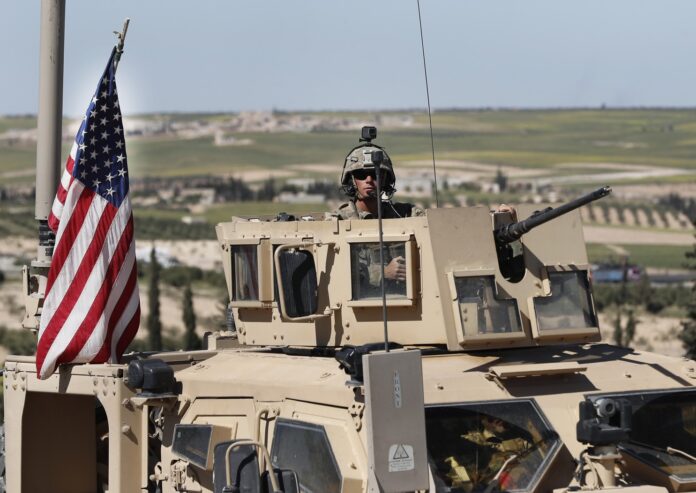
Mikdad made the comment during an interview with Russia 24 television channel on Friday, stating, “The presence of US forces in Syria is illegal and they must leave as soon as possible.”

“If they do not, they will end up just like in Afghanistan or any other country,” the Syrian foreign minister warned.

He referred to the chaotic withdrawal of US forces from Afghanistan amid lightning advances of the Taliban across the country. The group finally ousted the government in Kabul in mid-August and allowed the safe pullout of the remaining American forces from the war-ravaged country days after the fall of the capital.

The US has for years deployed forces and military equipment in Syria without any authorization from Damascus or the United Nations in a declared goal of fighting against the Daesh Takfiri terrorist group and other terror factions.

However, the Syrian government says the US and its allies are aiding Takfiri terrorist groups wreaking havoc in the Arab country.

Washington has long been training militants, collaborating with anti-Damascus militants, and stealing Syria’s oil, ignoring repeated calls by Damascus to end its occupation of the country.

Furthermore, the White House has also slapped rounds of crippling sanctions on Syria, which has been gripped by foreign-backed militancy since March 2011. The measures target almost all Syrian economic and trade activities, as well as the country’s government officials.

Mali says France did ‘abandonment’ over troop drawdown

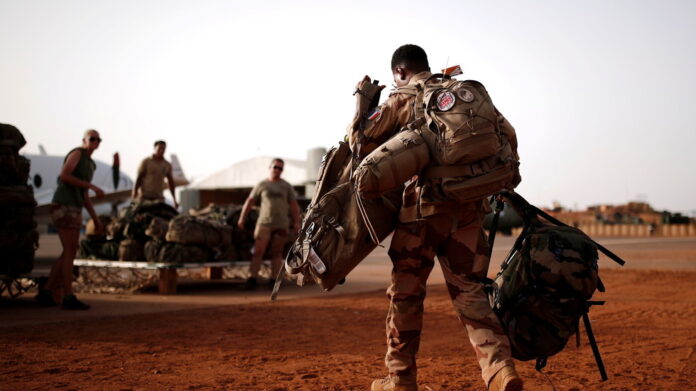
Mali has asked private Russian companies to boost security, Russia confirmed Saturday, as the Malian leader accused France of abandoning the conflict-ridden country by preparing a large troop drawdown.

European countries have warned the Malian government on the sidelines of the UN General Assembly this week against hiring paramilitaries from the controversial Wagner group.

But with Paris set to reduce its military presence in Mali, Russia’s Foreign Minister Sergey Lavrov told reporters that the Malian government was turning towards “private Russian companies”.

“This is activity which has been carried out on a legitimate basis,” he stated during a press conference at the UN headquarters in New York.

“We have nothing to do with that,” he added, stressing the Malian government estimated that “its own capacities would be insufficient in the absence of external support” and initiated the discussions.

According to reports, Mali’s army-dominated government in Bamako is close to hiring 1,000 Wagner paramilitaries.

France has warned Mali that hiring the fighters from the Russian private-security firm would isolate the country internationally.

But the Mali PM accused France of abandoning his country with the “unilateral” decision to withdraw troops as he addressed the UN General Assembly.

He noted his government was justified to “seek other partners” to boost security and slammed a “lack of consultation” by the French.

The Wagner group is considered close to Russian President Vladimir Putin and Western countries accuse it of acting on behalf of Moscow.

Russian paramilitaries, private-security instructors and companies have grown increasingly influential in Africa in recent years, particularly in the conflict-ridden Central African Republic, where the United Nations has accused Wagner contractors of committing abuses.

Moscow admits having deployed “instructors” to CAR but says they aren’t active in fighting. Russia insists there are no paramilitaries in Libya, despite Western claims to the contrary.

The UN, which has some 15,000 peacekeepers in Mali, has also expressed concern at the possible involvement of Wagner fighters.

The EU, which trains Malian troops through its EUTM Mali mission, made up of 700 soldiers from 25 European countries, has warned that Wagner’s involvement would “seriously” affect its relations with Bamako.

“To say, ‘I was there first, get out,’ it’s insulting, first of all for the government in Bamako which invited foreign partners,” insisted Lavrov.

France, which has lost 52 soldiers in the Sahel since it began engagements in January 2013, has decided to reorganize its military presence around a tighter unit centered on targeted strikes against jigadist leaders and on supporting local armies.

Soldiers are due to leave some bases by the end of the year and French troops in the Sahel should fall from around 5,000 currently to 2,500 or 3,000 by 2023.

France’s defence minister, Florence Parly, reaffirmed Monday that France was not abandoning Mali and that it remained “determined” to continue the fight against terrorism alongside the Malian forces.
Germany, which also has troops in the country, has warned Bamako it will reconsider its deployment should the government strike a deal with Wagner.

Already battling a jihadist insurgency, Mali slid into political turmoil last year, culminating in a military coup in August 2020 against president Ibrahim Boubacar Keita.

Under the threat of sanctions, the military then appointed an interim civilian government tasked with steering the country back to democratic rule.

But military strongman Colonel Assimi Goita overthrew the leaders of that interim government in May — in a second putsch — and was later declared interim president himself, drawing international condemnation.

French President Emmanuel Macron announced his troop reductions in July in the aftermath of the second coup.

Following his press conference, Lavrov sharply criticized Paris and Berlin during his address to the annual General Assembly.

He accused them of wanting to impose their vision of the world on the rest of the planet without considering different opinions.

North Korea says open to another summit with South

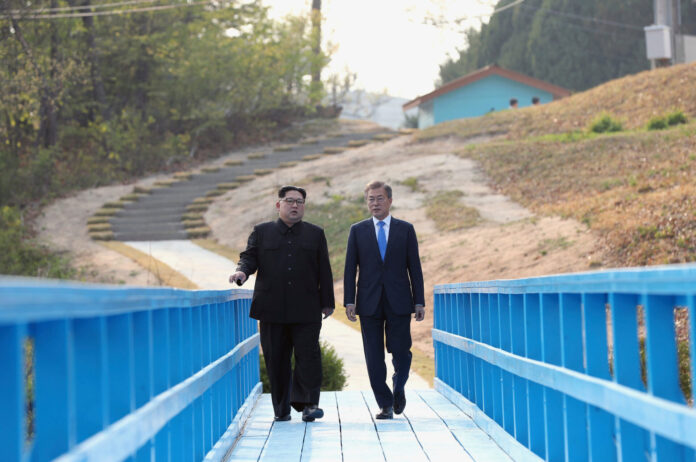
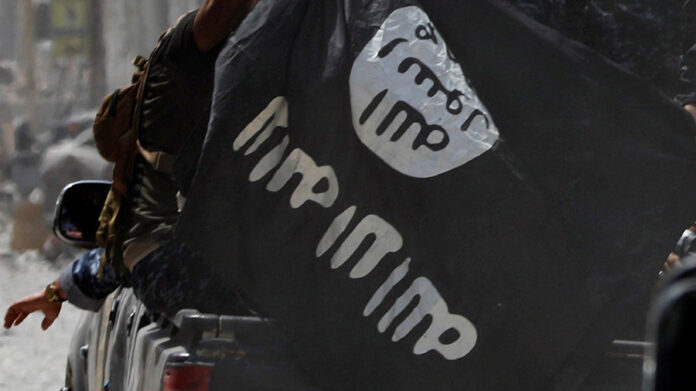
The statement on Saturday was Kim Yo Jong’s second in two days.

She had urged Seoul on Friday to end its “hostile policies” towards Pyongyang after South Korea’s President Moon Jae-in called for declaring an official end to the state of war with the North.

The 1950-53 Korean War ended with an armistice not a peace treaty, leaving United States-led forces technically still at war with North Korea.

Pyongyang for decades has sought an end to the war but the United States has been reluctant to agree unless North Korea gives up its nuclear weapons.

“I think that only when impartiality and the attitude of respecting each other are maintained, can there be smooth understanding between the north and the south,” Kim Yo Jong noted.

She also said a summit, as well as discussions on a declaration to end the war, could be held “at an early date through constructive discussions”.

She went on to reiterate Friday’s call for the South to drop its “unequal double-standards”, in an apparent reference to Moon’s criticism of the North’s recent missile launches.

Last week, the South successfully test-fired successful a submarine-launched ballistic missile (SLBM), making it one of a handful of nations with the advanced technology.

North Korea carried out two missile firings this month alone, one involving a long-range cruise missile and the other short-range ballistic missiles.

Communications between the North and South have largely been cut in the aftermath of a second US-North summit in Hanoi that collapsed in February 2019 as then-US President Donald Trump and North Korean leader Kim Jong-un could not agree on the terms of an agreement.
Kim Yo Jong, who is a powerful confidant of her brother, said she noted with interest the intense discussion in the South over the renewed prospect of a formal declaration of the end of the Korean War.

“I felt that the atmosphere of the South Korean public desiring to recover the inter-Korean relations from a deadlock and achieve peaceful stability as soon as possible is irresistibly strong,” she stated, adding, “We, too, have the same desire.”

North Korea’s offer to engage in talks with South Korea comes after it rejected several overtures for dialogue by the US.

Joe Biden, the President of the US, said in his UN address last week that he wanted “sustained diplomacy” to resolve the crisis surrounding North Korea’s nuclear and missile programmes.

The head of the UN atomic watchdog meanwhile stated last week that North Korea’s nuclear programme was going “full steam ahead”.

Iran-Iraq FMs discuss money transfer, gas and electricity export

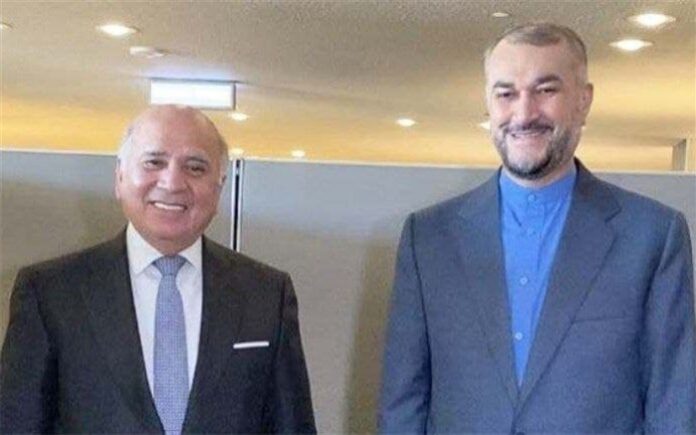
In the meeting, the two sides discussed mutual relations and exchanged views on the agreements reached during a recent trip to Tehran by the Iraqi prime minister, the Iranian foreign minister’s visit to Bagdad and meeting of Iraq’s neighbouring countries held in New York.

Another topic which came up for discussion was economic diplomacy.

The two sides also reached agreement on issues pertaining to the exports of natural gas and electricity to Iraq.

The two top diplomats also agreed to more seriously follow up on and quickly resolve certain bilateral issues, including the transfer of Iran’s assets currently kept by Baghdad.

They also discussed the latest developments in the region, the Persian Gulf and Afghanistan.

Polls open across Germany in federal parliamentary vote

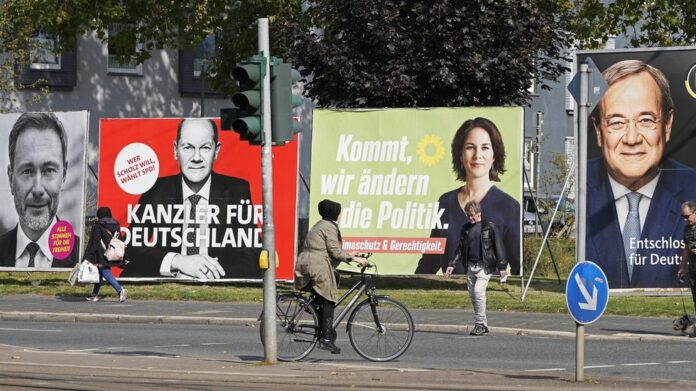
Some 60.4 million people are expected to cast their ballot before 18:00 CET.

The election was too close to call on Friday with Merkel’s centre-right Union bloc (CDU-CSU) polling a very close second to the centre-left Social Democrats (SPD). If these projections were confirmed, finance minister Olaf Scholz would then secure the country’s top job after 16 years of Merkel in power.

Coalitions have been a fixture of German federal politics for decades and this election is unlikely to buck the trend. Negotiations could take weeks or months and would thus require Merkel to remain at the helm in a caretaker capacity until a power-sharing deal is struck.

The CDU-CSU and SPD have been in multiple power-sharing agreements together, including in the last government. This time around, they’re both hoping they can make do without the other.

The Green Party, which is expected to come in third place with about 17% of the vote, have signalled they’re willing to enter into government with the SPD. This could see them return to power for the first time since the 1950s.

However, this is quite a reversal of fortunes for the party which was leading in the polls until April. The party’s chances were hurt after its candidate for chancellor, Annalena Baerbock, was hit by a series of setbacks including accusations of plagiarism and undeclared bonuses.

An SPD-Green alliance would however not be enough to secure a majority in the Bundestag. The radical left Die Linke could then be brought in, although it would be expected to give up its criticism of NATO.

The Free Democrats are likely to have the envious role of kingmaker.

For Scholz, an alliance with the pro-business FDP is more palatable than with Die Linke, while Armin Laschet — the candidate for Merkel’s Union bloc — is also pinning his hope on an alliance with the FDP and the Greens.

The far-right AfD, which entered the Bundestag for the first time four years ago, is expected to confirm its parliamentary foothold with around 10% but remains excluded from any possible coalition.

Source: The AP

Hundreds protest Russia election results

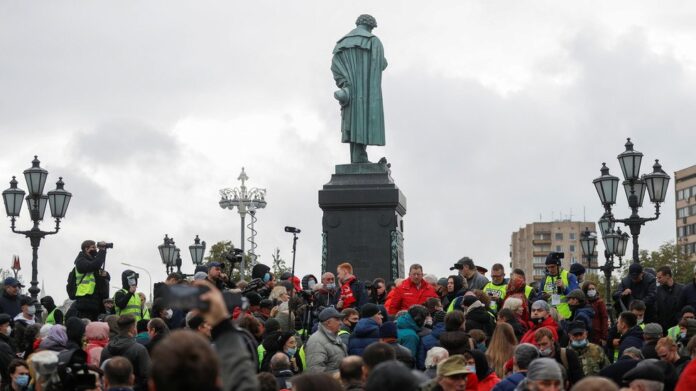
Some 400 people showed up for an unauthorized demonstration staged by Russia’s Communist Party. The communists have rejected the outcome of the parliamentary elections, blaming their poor performance in the city on alleged fraud.

The communists gathered in Pushkin Square to protest about the results that their party, the KPRF, garnered in last weekend’s elections. Since the demo was not authorized by the authorities, in line with coronavirus restrictions, the organizers insisted the gathering was not a proper rally, but instead merely a “meeting with MPs”.

Some 400 KPRF supporters showed up for the event, Moscow police told TASS. Some Russian news outlets have provided higher estimates, however, reporting some 1,000 people as being in attendance.

The protesters were met with a moderate police presence, the officers repeatedly urging the communists to disperse. A small group of counter-protesters, chanting anti-communist and pro-authorities slogans was also present. The latter engaged in minor scuffles with the communists, but no one ended up being detained.

While the KPRF saw a 6% gain overall and secured 15 new seats in parliament, it suffered a series of defeats in Moscow despite its candidates taking the initial lead. Several of them lost the vote after ballots cast online were counted. That unexpected twist prompted the party to reject the results of the voting in the capital, and to claim it had fallen victim to alleged election fraud.

However, after the opposition requested a recount of electronic votes in Moscow, the Election Monitoring Public Committee failed to find any foul play. The committee’s head, prominent journalist Alexey Venediktov, who leads the liberal radio station Ekho Moskvy, repeatedly said that the IT team analyzing the results had found no evidence of tampering, and that each individual vote could be traced back and verified, thanks to the system being based on blockchain technology.

Russia calls on U.S. to ‘be more active’ to revive Iran nuclear deal

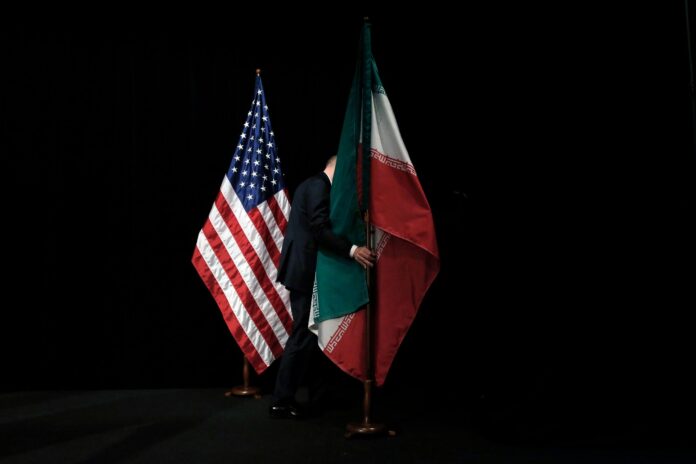
Russian Foreign Minister Sergei Lavrov has criticized the unilateral sanctions imposed against Iran after the United States’ withdrawal from the nuclear agreement, urging Washington to take a “more active” approach to help resume stalled talks aimed at reviving the deal.

“It seems evident they should be more active” in “resolving all issues related” to the accord, Lavrov told reporters at the United Nations in New York on Saturday, referring to the nuclear deal, officially known as the Joint Comprehensive Plan of Action (JCPOA).
“Iran is not doing anything that would be prohibited,” he added.

The top Russian diplomat expressed hope that Iran and the remaining parties to the nuclear agreement – Britain, France, Germany, Russia and China – would resume the negotiations in the Austrian capital of Vienna “as soon as possible”, as Tehran wished.

Iranian Foreign Minister Hossein Amir Abdollahian on Friday slammed U.S. lack of commitment and Europe’s inaction regarding the JCPOA, saying the Islamic Republic is ready for result-oriented talks on the agreement’s revival that would secure people’s rights and interests.

“Despite the U.S. lack of commitment to the JCPOA, which has continued since the administration of [former U.S. president Barack] Obama, coupled with Europe’s inaction, the Islamic Republic of Iran remains committed to diplomacy based on its principles and is ready for result-oriented talks that serve the interests and [protects] rights of the Iranian people,” the top Iranian diplomat added.

The U.S., under former president Donald Trump, unilaterally withdrew from the deal and reinstated crippling sanctions on the Islamic Republic, although the country had been fully compliant with the deal.

In early April, Iran and the remaining parties to the JCPOA began to hold talks in Vienna after the Joe Biden administration voiced willingness to rejoin the nuclear agreement and remove the draconian sanctions his predecessor had slapped on the Islamic Republic.

Since the beginning of the Vienna talks, Tehran has argued that the U.S.—as the first party that violated the JCPOA—needs to take the first step by returning to full compliance with the agreement. Tehran also says it will resume all of its nuclear commitments under the deal only after the U.S. removes all the sanctions in practice.

The negotiations were paused soon after the victory of Ebrahim Raeisi in Iran’s June 18 presidential election.

Addressing the 76th Session of the UN General Assembly on Tuesday, Biden announced his willingness to rejoin the JCPOA and resolve the issue with Iran over its peaceful nuclear program.

The U.S. president said Washington was “working” with China, France, Russia, Britain and Germany to “engage Iran diplomatically and to seek a return to” the JCPOA.

“We’re prepared to return to full compliance if Iran does the same,” he added.

The United States and the Europeans have been holding intensive talks throughout the week on the JCPOA revival on the sidelines of the UN General Assembly.

Iran says it needs to see concrete measures by the U.S., stressing Washington should abandon policy of paying lip service to its commitments.

Another 6mn Covid-19 Vaccine Doses Arrive in Iran

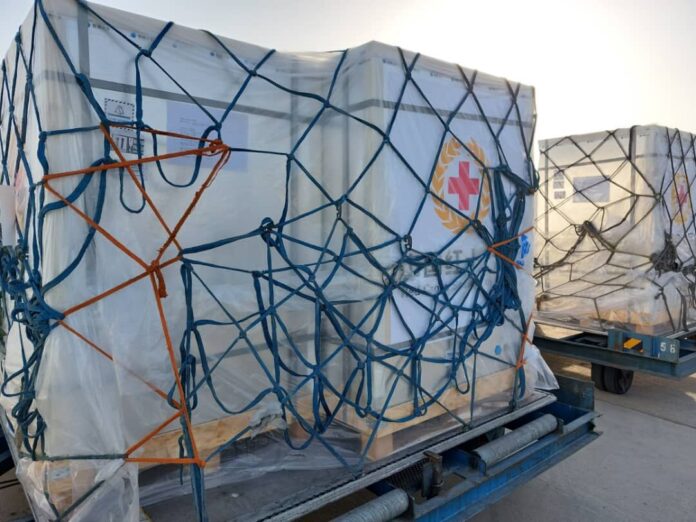
“This is the 57th consignment of [COVID-19] vaccines to have entered the country,” said Mehrdad Jamal Aronghi, the deputy head of Iran’s Customs Administration.

Meanwhile, the first single-dose consignment of coronavirus vaccines for 3-to-17-year-olds have also entered the country.

“Today, 6 million single-dose coronavirus vaccines from a total of 12 million recommended doses for those between 3 and 17 years old have arrived in the country and handed over to the health ministry,” said Mohammadhassan Qosian, the secretary general of the Iranian Red Crescent Society (IRCS).

He said the IRCS has, so far, imported more than 46 million doses of Covid vaccines.
“As scheduled, we will import larger shipments of Sinopharm vaccines every week or twice a week,” he said.

Meanwhile, Iran’s President Ebrahim Raeisi said on Saturday nearly 50 million Covid vaccine shots have been administered to Iranian citizens so far.

Raeisi noted that Iran is reaching the goal of vaccinating 70 percent of the population, adding “We are reaching a point where we should plan on removing Covid-related restrictions instead of imposing new ones”.

Health authorities said on Saturday that 280 more people had died of the Coronavirus in the previous 24 hours. That pushes the death toll from the start of the pandemic to more than 119,000. Meanwhile, 10,843 new infections were detected from Friday to Saturday.

A huge rise in vaccine imports and production inside Iran has accelerated the vaccination drive in the country over the past few weeks.

Iran FM: U.S. will be judged by its actions

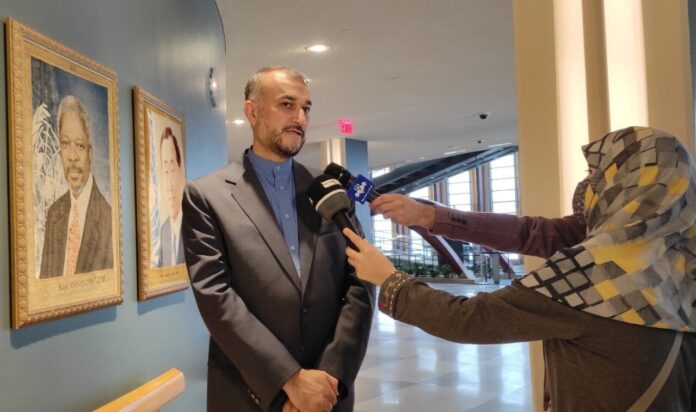
“Of course, we made it clear in the United States that we will make a judgment based on the practical behavior of Americans, and that conflicting American messages conveyed to us through the media or diplomatic channels will not be the basis of our final decision,” Amirabdollahian told the IRIB on Saturday at the end of his five-day visit to New York to attend the United Nations General Assembly meeting.

The Iranian foreign minister said the path back to the Iran nuclear deal was a topic of serious discussion in his meetings with United Nations Secretary-General Antonio Guterres and foreign ministers of France, Germany and Britain as well as the High Representative of the European Union for Foreign Affairs and Security Policy Josep Borrell.

He also criticized decision-makers in the United States for hasty and irrational behavior and blamed it for the current situation in Afghanistan which he said is experiencing the consequences of “inefficient American policies”.

The top Iranian diplomat said he openly explained the behavior of Americans, especially in a closed-door meeting with the heads and directors of American think tanks and professors of international relations during his trip to New York.

Iran and the remaining parties to its nuclear deal, known as the Joint Comprehensive Plan of Action, have held several rounds of negotiations on a possible U.S. return to the deal. The U.S. insists that it wants to return to the deal but is still fully enforcing the unilateral sanctions that were re-imposed by former U.S. president Donald Trump who withdrew America from the JCPOA in 2018.