Monday, December 22, 2025
Home Blog Page 2332

US special envoy to Afghanistan resigns

Khalilzad will leave his post following the breakdown in peace negotiations and Taliban takeover this summer, the US State Department confirmed Monday.

Thomas West, who previously served as Khalilzad’s deputy, will take over the top post, Secretary of State Antony Blinken said in a statement.

Khalilzad told Blinken of his decision to resign in a letter obtained by POLITICO.

“Tomorrow, I step down from my position as the Special Representative for Afghanistan Reconciliation. I decided that now is the right time to do so, at a juncture when we are entering a new phase in our Afghanistan policy,” he wrote.

While he defends his tenure, he admits “the political arrangement between the Afghan government and the Taliban did not go forward as envisaged. The reasons for this are too complex and I will share my thoughts in the coming day and weeks.”

“Going forward, I plan to contribute to the discussion and debate about not only what happened but what should be done next,” he continued.

The veteran diplomat, who served under both Presidents Donald Trump and Joe Biden as the special representative for Afghanistan reconciliation, led talks with the Taliban in Qatar that resulted in the Trump administration’s agreement to leave the country by May 2021.

The Biden administration kept him on through the transition, as he continued to try to coordinate a power-sharing agreement between the Taliban and the Afghan government.

But the diplomatic talks broke down after Biden announced in April that the U.S. would end its 20-year mission in Afghanistan by Sept. 11.

Khalilzad was one of the first Biden administration officials to admit that the Taliban’s rapid sweep across Afghanistan caught the U.S. flat footed.

“It’s not surprising that with the reduction, or almost complete withdrawal of U.S. forces that was on the side of the Afghan government, that they would make some progress,” he told POLITICO in July. 

“They have made more progress, perhaps, with the reduction and withdrawal [than] one could have analytically predicted,” he stated.

“Their position, given the developments of the past several weeks, is stronger than it was before,” he added. 

The Taliban seized Kabul on Aug. 15.

The Biden administration’s chaotic departure from Afghanistan was marred by scenes of chaos and a frantic rush to evacuate American citizens and Afghan allies. At Hamid Karzai International Airport, where tens of thousands of people gathered trying to leave the country, a suicide bombing attack killed 13 American service members. A botched U.S. drone strike in retaliation for that bombing accidentally killed 10 civilians.

The State Department and Pentagon inspectors general, as well as several congressional committees, have launched investigations into the end of U.S. operations in Afghanistan.

Russia halts diplomatic ties with NATO

Russian Foreign Minister Sergei Lavrov said on Monday that Russia has suspended the operation of NATO’s information office in Moscow.

“In response to NATO’s actions, we are suspending the work of our permanent mission in the alliance, including the work of the chief military representative. [It will] probably [be suspended] as of 1 November, or it will take a few more days”, Lavrov told a press conference in Moscow.

He added that “secondly, we [Russia] are suspending the activities of the NATO military liaison mission in Moscow, with the accreditation of its employees due to be revoked from 1 November 2021”.

“And thirdly, the activities of the NATO information office in Moscow, which was established at the Embassy of the Kingdom of Belgium, are being terminated,” Lavrov noted.

NATO previously confirmed that it had revoked the accreditation of eight employees of the Russian mission to the alliance and reduced the number of accreditations for the Russian Federation to 10.

Iran FM: Tehran returns to full nuclear compliance, if others do

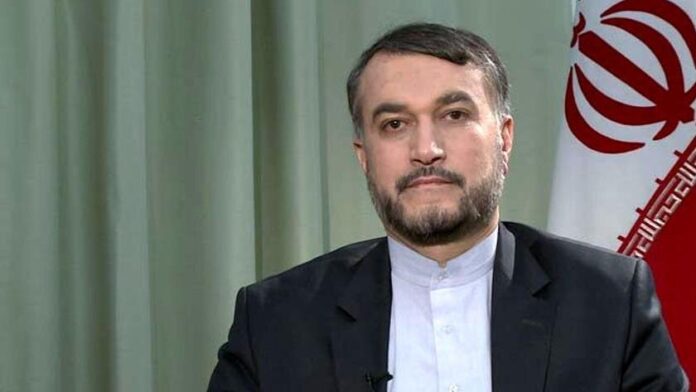
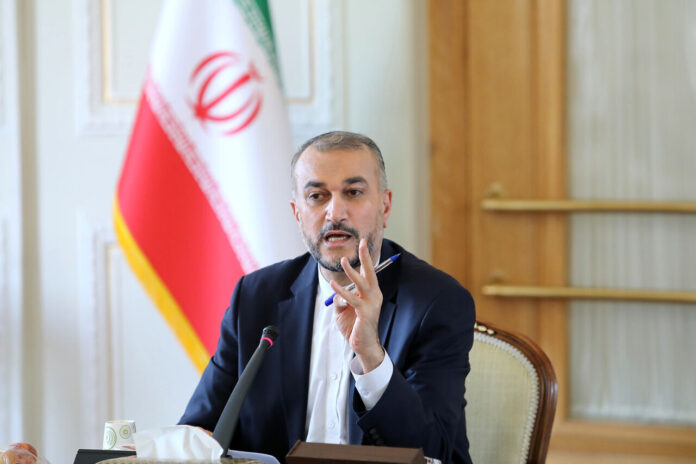
In a phone conversation with Secretary General of the United Nations Antonio Guterres on Monday evening, Hossein Amir Abdollahian said the Islamic Republic of Iran supports negotiations that have tangible practical results.

Amir Abdollahian referred to the nuclear negotiations and stated that the recent talks between the Iranian deputy foreign minister and European Union Deputy Foreign Policy Chief Enrique Mora in Tehran were positive and that they will continue their negotiations next week in Brussels.

Amir Abdollahian also referred to Daesh terrorist acts in Afghanistan in recent days and called for serious action by the UN secretary general to stop and confront terrorism in Afghanistan.

He said terrorist activities and the targeting of worshipers, along with the new wave of Afghan refugees, have added to the responsibility of the United Nations and its secretary general in this regard.

The top Iranian diplomat also invited Guterres to visit Tehran.

Guterres, in his turn, expressed hope for the success of the nuclear talks, adding the United Nations has always supported the Joint Comprehensive Plan of Action.

The UN chief also called for the formation of an inclusive government that represents all Afghan ethnic groups and minorities.

He the UN will continue to send humanitarian aid to Afghanistan.

Raeisi: Iran serious about nuclear talks, sanctions must be removed

In an interview with the IRIB, Raeisi said Iran is serious about result-based negotiations, noting
that the sign of seriousness on the part of the other side is the removal of sanctions on Iran.

He however noted that his administration will not tie people’s livelihoods and the Iranian economy to the nuclear talks.

Raeisi said Iran has never walked away from the negotiating table and is ready for talks.

The president referred to his promise before the formation of his cabinet to pursue the issue, saying the Foreign Ministry is now doing just that.

Raeisi reiterated that Iran sticks by its word and that it conveyed this message to the envoy of the European Union.

Elsewhere in his comments, the Iranian president spoke of the country’s membership in the Shanghai Cooperation Organization, SCO. Raeisi said Iran’s access to the SCO linked the country to the economic infrastructure of Asia and that all economic activists should avail themselves of this potential.

He added that Iran has a good capacity for increasing exports to the region, including neighboring countries.

Raeisi said Iran’s current economic standing in regional trade is not good, adding that strengthening ties with neighboring and regional countries is a priority and “I want all economic activists to be ready for a different movement in economic and trade ties in the region”.

Asked about his appointment of a special envoy for Afghanistan and Iran’s stance on the developments in the war-ravaged country, Raeisi said, “As we have said before, we support the formation of an inclusive government with the participation of all ethnic groups in Afghanistan”.

He however noted that, apart from the need to create a broad-based government, what matters now is the presence of the Daesh terror group in Afghanistan as a creation of the US.

The president said this “US-made group” is destabilizing Afghanistan but our strategy regarding Afghanistan is to establish unity and stability there. Raeisi noted that Deash is sowing sedition in different countries including Afghanistan.

He also urged Afghanistan’s rulers to stand up to the terrorist group’s crimes against the Afghan people.

Iran parl. speaker calls for closer economic ties with Venezuela

“It is the duty of the governments and parliaments of Iran and Venezuela to pave the way for the expansion of cooperation by bringing the private sectors of the two countries closer together,” Ghalibaf said in a meeting with Venezuelan Foreign Minister Felix Plasencia in Tehran on Monday evening.

“Political ties between the two countries are at a good level, so we should try to strengthen economic relations accordingly; although the long distance has made it (boosting economic ties) a bit difficult… problems can be solved,” the Iranian parliament speaker told the visiting Venezuelan foreign minister.

Ghalibaf referred to the experiences of the Islamic Republic in countering sanctions imposed by the United States against Iranians stressing that Tehran and Caracas should boost cooperation in the fields of tourism, agriculture, technical services and engineering.

The Venezuelan foreign minister said Caracas is interested in strengthening economic relations with Tehran adding that a meeting of the joint economic commission of Iran and Venezuela in the coming months will help strengthen bilateral economic ties.

EU: Iran nuclear deal at ‘critical point’

“We are at a critical point in time for the JCPOA. Everybody is determined to bring the JCPOA on track,” Borrell stated in reference to the troubled 2015 nuclear deal between Iran and world powers.

“Time is not on their side,” he added.

The top diplomat noted there would be no nuclear talks between EU and Iranian diplomats in Brussels on Thursday.

Earlier in the day, Borrell had stated he hoped EU and Iranian diplomats would meet soon to discuss a potential return to nuclear negotiations.

A senior EU official said last week Iran was not ready yet to return to actual talks with world powers over its nuclear programme and related U.S. sanctions but could discuss with the EU in Brussels texts that would later be put forward.

“No confirmation yet, but things are getting better and I am hopeful we will have preparatory meetings in Brussels in the days to come,” Borrell stated in Luxembourg as he arrived for an EU foreign ministers meeting, adding, “You never know, I am more optimistic today than yesterday”.

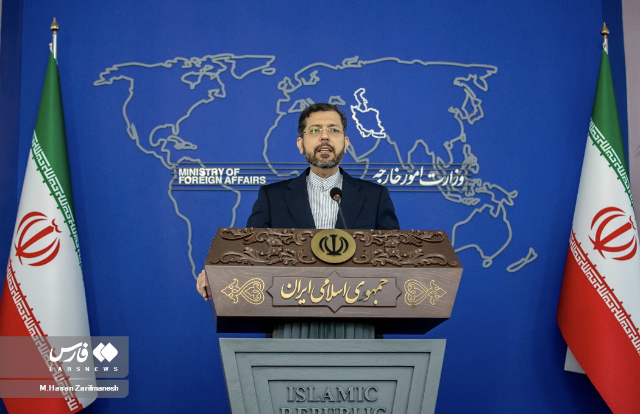
On Monday, Iran’s Foreign Ministry spokesman Saeed Khatibzadeh said the Thursday talks between Iranian Deputy Foreign Minister Ali Bagheri and EU official Enrique Mora in Tehran were good and constructive.

Talking to reports during his weekly briefing on Monday, Khatibzadeh added that Bagheri conveyed Iran’s message to the coordinator of the negotiations and the two sides agreed to continue talks in Brussels in the next few days. He noted that this agreement was bilateral.

Khatibzadeh said in Brussels, Iran and the other parties must hold talks over the challenges and obstacles they failed to resolve in Vienna.

The spokesman added that the talks will be pursued by the Foreign Ministry and the members of the negotiating team will be introduced.

He noted that the meeting in Brussels will be the continuation of the talks over issues raised in Tehran.

Khatibzadeh said the continuation of talks by Iran is a final decision, adding that Iran insists all sides return to full compliance with the nuclear deal unconditionally and under UN Security Council Resolution 2231 and all anti-Iran sanctions be lifted.

He also referred to the Joe Biden administration’s failure to make good on its promise to go down a different path than that taken by former US president Donald Trump.

Iranian and Pakistan FMs talk Afghanistan on the phone

In this telephone conversation, the Iranian foreign minister invited his Pakistani counterpart to attend a meeting of foreign ministers of Afghanistan’s neighbors in Tehran.

Shah Mahmood Qureshi thanked for the invitation and stressed that the meeting is a joint initiative of the two countries to ensure peace and stability in Afghanistan and its holding is important for the Afghan people.

Amir Abdollahian expressed regret over the recent terrorist incidents in Afghanistan, which led to the killing of worshipers in this country. Amir Abdollahian condemned these terrorist acts and stressed the need for all neighboring countries of Afghanistan and other world nations to condemn them.

In other remarks, the Iranian foreign minister also spoke of the responsibility of the rulers of Afghanistan to ensure the Afghan people’s security and to effectively confront the actions of terrorist groups.

The top Pakistani diplomat also said in the telephone conversation that the Pakistani government condemns these terrorist acts in Afghanistan. Shah Mahmood Qureshi expressed hope that the rulers of Afghanistan will take necessary actions and prevent the terrorist groups from gaining a foothold in Afghanistan.

IRGC general: Adventurism against Iran to be regretful

general amir ali hajizadeh

Brigadier General Amir Ali Hajizadeh was speaking in a meeting with military attaches of foreign countries based in Iran.

Hajizadeh said the regimes that think their security is provided by the Zionist regime are mistaken.

He then referred to the US wars in the region, saying the United States invaded Afghanistan in 2001 with the help of its followers and left it after 20 years of trying to create civil war and chaos in the country.

He however said the US conspiracies will continue with the aim of igniting a civil war in Afghanistan.
Hajizadeh also said the US has created Takfiri terrorist groups in the region like Daesh to drag Syria and Iraq into civil war.

Hajizadeh then described Iran’s top anti-terror General Qassem Soleimani as a champion of peace in the region as he fought against Takfiri terrorists who had targeted the security of regional countries.

The commander of the Aeronautics Force of the IRGC added that Europe is today indebted to General Soleimani and his companions for its security but the US cowardly assassinated him.

Hajizadeh added that despite all these oppressions, the US is on the decline and the age of unipolarism is over.

He added that it is an undeniable fact that the United States is not able to stand up to Iran, Russia, China and the free nations of the world.

Expert: Yemen, Iran nuclear program, keys to Tehran-Riyadh ties

Tehran Still Ready to Mend Ties with Riyadh Despite ‘Foolish’ Moves

Fatemeh Nekou Laal Azad, in an article in the news and analysis web site, irandiplomacy.ir, referred to the recent talks between Iran and Sudi Arabia, adding talks can reduce tensions and result in renewal of relations, but will not necessarily lead to stability in ties.

She said “after the victory of the Islamic Revolution, relations between Iran and Saudi Arabia have had various ups and downs and have experienced different periods of political relations, tension and crisis in relations, detente and rapprochement.”

“The political relations between the two countries were last severed in December 2015. In recent months, meetings between Iranian and Saudi officials have happened in Baghdad with Iraq being the mediator. The goal was to normalize relations between the two countries. Experience shows talks can reduce tensions and result in renewal of relations, but will not necessarily lead to stability in ties between the two countries. In the past, talks resulted in a rapprochement, but this time the situation is completely different because this time around the root-cause of crisis in the Iran-Saudi Arabia relations is by nature different.”

“The fact is that the reopening of embassies is the most superficial layer of relations, and Iran-Saudi Arabia relations are affected by other factors. If those factors are not addressed, the reopening of embassies and consulates will not last. Two key factors are the Yemeni war and the Iranian nuclear issue.”

“The Saudis view Yemen’s Ansarullah as a threat and a pawn of Iran. But the reality is Ansarullah is not completely controlled by the Islamic republic. As long as this source of discord between Tehran and Riyadh persists, one should not expect peace in their relations.”

“Meanwhile, Saudi Arabia is an opponent of Iran’s nuclear program. Whenever tensions mount between Iran and the West over the matter, Tehran-Riyadh relations are also strained. This means that if the talks on reviving the nuclear deal do not pay off, tensions persist between Tehran and Riyadh.

Accordingly, to achieve peace in Iran-Saudi Arabia relations, the two countries should reach an agreement on the war in Yemen and Iran’s nuclear program. Otherwise, ties between Iran and Saudi Arabia will be cold and fragile and the two sides risk severing their relations at any moment.”

OIC chief: Afghanistan not a safe haven for terrorists

Yousef Al-Othaimeen referred to the recent bomb blasts in the two Shia mosques in Afghanistan and expressed solidarity with the Afghan people.

He was talking on the phone with Iran’s Foreign Minister Hossein Amir Abdollahian on Monday.

Othaimeen presented a brief report on the actions of the OIC in addressing the latest developments in Afghanistan and emphasized the need for the inclusiveness of the new government in Afghanistan and respect for human rights and women’s rights.

Othaimeen stressed that members of the OIC do not differentiate between Islamic sects, and in its view, all Muslim people have the same citizenship rights, and it is not permissible for Muslims and worshipers of any sect to be targeted by terrorists.

The OIC’s secretary general strongly condemned the recent terrorist acts in Afghanistan.

Meanwhile, Amir Abdollahian referred to the recent terrorist and criminal acts of Daesh and its brutal attacks on worshipers in two mosques in Kunduz and Kandahar. He stated that the aim of these terrorist acts was to cause sectarian division in Afghanistan.

Amir Abdollahian described extremist groups as one of the most important problems faced by the region.

The Iranian foreign minister referred to the Daesh terrorist group’s movements in Afghanistan and stressed Iran’s support for a more active role by the Organization of Islamic Cooperation, especially its secretary general, in Afghanistan.