Monday, December 22, 2025
Home Blog Page 2333

Russia: Military cooperation with Iran priority

“The issue of cooperation between the two countries in the field of weapons and the capabilities of Iran and Russia in this field should be among top priorities of the talks between the two countries,” Gerasimov said during a Monday meeting with Chief of Staff of the Iranian Armed Forces Major General Mohammad Baqeri in Moscow.

During their talks, the two sides discussed a wide range of bilateral, regional and international issues.

Baqeri told Russia’s top military commander that bilateral military and defense relations have grown significantly in recent years, and expressed hope that the cooperation will continue.

He stressed that Tehran and Moscow are determined in the fight against terrorism and that the two countries have, in the past 10 years, seriously pursued the issue of international terrorism especially in Syria and Iraq.

Referring to the cooperation between the two countries at the command and political levels, the Iranian chief of staff of the armed forces said the Leader of the Islamic Revolution Ayatollah Seyyed Ali Khamenei and Iranian President Seyyed Ebrahim Raeisi attach special importance to developing relations with Russia.

Heading a high-ranking military delegation, General Bagheri arrived in Moscow on Sunday.

EU: No meeting with Iran Thursday

A spokeswoman for the bloc, Nabila Massrali, told AFP on Monday: “There will not be a meeting Thursday.”

“At this stage we cannot confirm if or when a meeting will take place,” Massrali added.

The announcement came after Iran’s foreign ministry spokesman said the country’s lead nuclear negotiator, Ali Bagheri, would go to Brussels for discussions Thursday.

EU foreign policy chief Josep Borrell said earlier on Monday that there was “hope that we will have preparatory meetings in Brussels in the days to come, but I cannot be sure of that”.

The EU, which acts as coordinator for the 2015 pact with world powers, has been seeking to restart talks aimed at reviving the deal, hit by the withdrawal of the US under former president Donald Trump in 2018.

Negotiations got under way in Vienna in April after Trump’s successor President Joe Biden signalled a willingness to come back on board and lift sanctions imposed by Trump.
But the negotiations have been suspended since June, when ultraconservative Ebrahim Raisi was elected president of Iran.

Tehran has repeatedly said in recent weeks that it is seeking to return to full talks soon in Vienna, but has set no date for doing so amid growing impatience from the other parties.

The US has participated only indirectly in the Vienna talks, and Washington insists Iran must return to its nuclear commitments that it has been rolling back.

China rejects FT report about ‘hypersonic missile test’

“It’s understood that this was a routine test of a space vehicle to verify technology of spacecraft’s reusability,” Chinese Foreign Ministry spokesperson Zhao Lijian stated on Monday. 

He added the test is essential for reducing the cost of spacecraft use, providing a convenient and inexpensive way for humans to use space for peaceful purposes.

The Financial Times earlier reported that the test of the alleged hypersonic glider vehicle by China this summer “caught the US government by surprise” as it purportedly demonstrated the great progress achieved by Beijing in this area.

Colin Powell, former US Secretary of State, dies of Covid

Powell, also the chairman of the Joint Chiefs of Staff, has died from Covid complications at the age of 84.

Powell was previously diagnosed with multiple myeloma, a type of blood cancer that hurts the body’s ability to fight infections.

“General Colin L. Powell, former U.S. Secretary of State and Chairman of the Joint Chiefs of Staff, passed away this morning due to complications from Covid 19,” the Powell family wrote on Facebook.

“We have lost a remarkable and loving husband, father, grandfather and a great American,” the family added, noting he was fully vaccinated.

Powell, the son of Jamaican immigrants, became the first Black national security adviser during the Reagan administration. President George H.W. Bush tapped Powell to be the youngest and first Black chairman of the Joint Chiefs of Staff.

As chairman, he oversaw America’s Desert Storm operations during the Persian Gulf war. After 35 years of military service, Powell retired from the U.S. Army as a four-star general.

In 2001, he became the first Black secretary of State under President George W. Bush.

UK MPs facing ‘out of control’ online hate

Raab has said online hate is “out of control” – but a wedge should not be put in between MPs and their constituents after the murder of Sir David Amess.

The Deputy PM called for the vilification of MPs to stop as he paid tribute to the “big-hearted” Sir David, who was stabbed to death at a routine meeting with his constituents on Friday in Leigh-on-Sea, Essex.

Raab, who is also the justice secretary, told Sky News’ Kay Burley: “The elephant in the room of all this is the amount of online hate that we all get is out of control.

“I know the home secretary has talked about what more she wants to do there, the online bill is going through pre-legislative scrutiny,” he noted.

“I’m a free speech man, I want to defend that to my dying days but, at the same time, I think the amount of abuse, the vilification directed at MPs, particularly female MPs, has got to stop,” Raab said.

He added that since he was elected in 2010 he has been “very conscious” the risk to MPs has increased, particularly at a local level.

“We’re all conscious as we try and make sure we’ve got that connection of trust with our constituents and our communities, which all MPs across the divide want to rally around and cherish and nurture,” he said.

But he stated MPs do not want “a wedge” placed in between them and their constituents.

Raab added he personally would not choose to have plain-clothed police officers outside any surgery he was holding, saying it would have a “chilling effect”, but added he could understand if other MPs wanted them.

“I think everyone has a real nervousness and concern and the forces are already doing this – local forces need to sit down with them and see what they can do to provide the concrete security but also what will give them reassurance and peace of mind,” he underlined.

“We’re not going to be much good for our constituents if we’re not confident going into those meetings and we’re all looking over our shoulder with trepidation,” the justice secretary underscored.

Home Secretary Priti Patel said over the weekend the Prevent counter-radicalisation programme will be reviewed to see if it is “fit for purpose”.

Raab defended the programme, saying he does not think there can ever be a “perfect” counter-extremism programme, but admitted it can always be improved.

He stated lessons will be learned from both the increase in hate during the pandemic and Sir David’s murder. He added Prevent is always being looked at and tweaked for improvement.

A 25-year-old man, understood by Sky News to be named Ali Harbi Ali, was arrested at the scene of the MP’s death on Friday on suspicion of murder and officers have been granted a warrant to detain him until 22 October.

Sky News understands he is the son of a former senior Somali government official.

A spokesperson at the Somali Embassy in China has also confirmed the terror suspect is the nephew of Somalia’s ambassador to China, Awale Kullane.

Sir David’s death was officially declared as a terrorist attack late on Friday.

The House of Commons will pay tribute to the 69-year-old today, with a morning of prayers followed by a minute’s silence and MPs paying tribute to their murdered colleague.

A memorial service is due to take place at Westminster Abbey from 6pm, but limited space means it will only be open to MPs and peers.

A book of condolence is also being placed in the House of Commons Library, as well as in Westminster Hall and Portcullis House.

On Sunday evening, Sir David’s family – his wife, four daughters and son – announced their “hearts are shattered” by what has happened, and described his death as “cruel and violent”.

Raeisi: Iran seeks to expand ties with Latin America

“Latin America, especially Venezuela, is one of the priorities of the Islamic Republic of Iran’s economic diplomacy, and we are determined to develop our relations with these countries,” Raeisi said in a Monday meeting with Venezuelan Foreign Minister Felix Plasencia in Tehran.

The Iranian president emphasized the need to expand Tehran-Caracas relations in different fields, adding that a clear and long-term plan should be devised for the development of bilateral relations.

Raeisi expressed hope that a visit by the Venezuelan president to Tehran in the near future will pave the way for long-term bilateral cooperation.

The visiting top diplomat described Iran and Venezuela as two friendly countries which are united against the system of domination in the world and those who seek to harm the two countries’ independence.

Plasencia called Iran an important and influential country in the region, stressing that the Bolivarian Republic of Venezuela will stand by Iran in defending multilateralism and countering U.S. interventionism.

The Venezuelan top diplomat also sat down for talks with his Iranian counterpart Hossein Amirabdollahian.

In a joint press conference, the Iranian foreign minister announced that Venezuelan President Nicolas Maduro will visit Tehran in the coming months and that during his trip the foreign ministers of Iran and Venezuela will sign a 20-year cooperation document.

“We have had good agreements in the technical, economic, commercial, science and technology, energy, and mining fields between the two countries in recent years and important parts of them are being implemented,” Amirabdollahian noted.

He also described U.S. policies against Venezuela as unconstructive, and condemned the recent extradition of a Venezuelan diplomat from Cape Verde to the United States calling it piracy and a violation of Venezuelan sovereignty.

NATO chief raises the alarm over ‘Rise of China’

In an interview with the Financial Times, Stoltenberg stated China was already having an impact on European security through its cyber capabilities, new technologies and long-range missiles.

How to defend NATO allies from those threats will be “thoroughly” addressed in the alliance’s new doctrine for the coming decade, he added.

The military alliance has spent decades focused on countering Russia and, since 2001, terrorism. The new focus on China comes amid a determined shift in the US’s geopolitical orientation away from Europe to a hegemonic conflict with Beijing.

“NATO is an alliance of North America and Europe. But this region faces global challenges: terrorism, cyber but also the rise of China. So when it comes to strengthening our collective defence, that’s also about how to address the rise of China,” Stoltenberg said.

“What we can predict is that the rise of China will impact our security. It already has,” he added.

NATO will adopt its new Strategic Concept at a summit next summer, which will outline the alliance’s purpose for the following 10 years. The current version, adopted in 2010, does not mention China.

The NATO alliance is seeking a new direction following the end of its 20-year deployment in Afghanistan, while discussions over the future of the US military presence in Europe are ongoing.

Stoltenberg, the former Norwegian prime minister who is set to step down next year after almost eight years at the helm, said that NATO allies would seek to “scale down” activities outside of their borders and “scale up” their domestic defensive resilience to better resist external threats.

“China is coming closer to us . . . We see them in the Arctic. We see them in cyber space. We see them investing heavily in critical infrastructure in our countries,” he noted.

“And of course they have more and more high-range weapons that can reach all NATO allied countries. They are building many, many silos for long-range intercontinental missiles,” he continued.

China tested a nuclear-capable hypersonic missile in August, the FT reported over the weekend, demonstrating an advanced long-range weapons capability that surprised US intelligence and underscored the rapid military progress China has made on next-generation weapons.

But any suggestion of a shift away from deterring Russian aggression would meet protests from Eastern European member states that view Moscow as an existential threat and the alliance as their sole security guarantor.

Stoltenberg stressed Russia and China should not be seen as separate threats.

“First of all China and Russia work closely together,” he said, adding, “Second, when we invest more in technology . . . that’s about both of them,” he added.

“This whole idea of distinguishing so much between China, Russia, either the Asia-Pacific or Europe: it is one big security environment and we have to address it all together. What we do on readiness, on technology, on cyber, on resilience matters for all these threats. You don’t put a label,” he added.

Stoltenberg said the hasty withdrawal of NATO forces from Afghanistan in August was “an obvious choice” after the US decision to leave the country.

He stated that while European militaries might have been able to remain without US support, political leaders could not justify a continued presence.

“It was partly a military aspect: capabilities. But I think fundamentally more important was the political aspect: we went into Afghanistan after an attack on the United States,” he said, adding, “Militarily it would have been possible [to stay]. But politically, I regard it as absolutely unrealistic . . . that was the main reason.”

Several injured in Kuwait oil refinery fire

A fire has broken out at the Mina al-Ahmadi oil refinery, the Kuwait National Petroleum Company reported on Monday.

The fire broke out at the refinery’s treatment unit, which removes sulfur from the oil products. According to the KNPC, the blaze caused several injuries.

At the same time, the company noted that refinery operations and exports won’t be affected by the incident.

“The refinery operations and export operations were not affected and there has been no impact to local marketing operations and supplies to the electricity and water ministry”, KNPC said on its Twitter account.

Locals in the Fahaheel district also reported the sound of an explosion. Several photos and videos, allegedly taken at the site of the fire, have since emerged online. They depicted a big cloud of smoke and flames rising high above the facility.

EU optimistic about fresh round of Iran nuclear talks

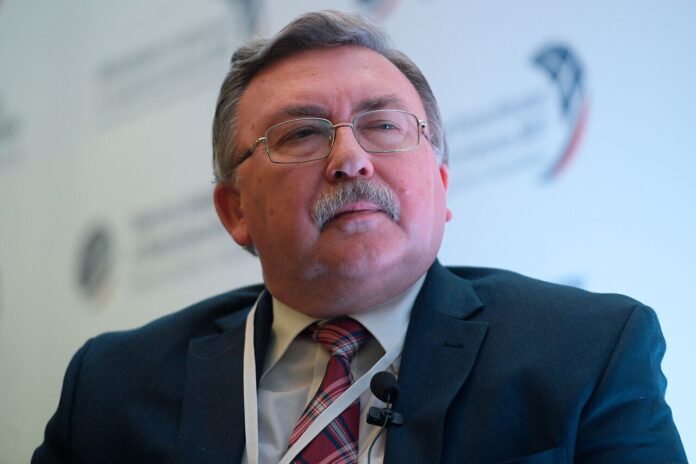
Borrell said on Monday he hoped EU and Iranian diplomats would meet soon to try and revive nuclear talks but declined to confirm reports of a meeting in Brussels on Thursday.

Bloomberg News reported that Iran’s foreign minister gave the date on Sunday, citing an Iranian lawmaker. A senior EU official last week confirmed that meetings were planned in Brussels, rather than Vienna, but gave no date.

“You never know, I am more optimistic today than yesterday,” Borrell stated in Luxembourg as he arrived for an EU foreign ministers meeting.

“No confirmation yet, but things are getting better and I am hope we will have preparatory meetings in Brussels in the days to come,” he added.

EU political director Enrique Mora, the chief coordinator for the talks, was in Tehran last Thursday to meet members of Iran’s nuclear negotiating team, four months after discussions broke off between Iran and world powers.

Iranian President Ebrahim Raisi has so far refused to resume indirect talks with the United States in Vienna on both sides returning to compliance with the deal, under which Iran curbed its nuclear program in return for economic sanctions relief.

But after Mora’s visit, Iran’s foreign ministry announced it would hold talks in the coming days with the EU in Brussels.

Western diplomats have said they are concerned Tehran’s new negotiating team – under a president known as an anti-Western hardliner, unlike his pragmatist predecessor – may make new demands beyond the scope of what had already been agreed.

Iran has long denied any ambition to acquire nuclear weapons.

The Iranian foreign ministry spokesman has announced that Deputy Foreign Minister Ali Baqeri Kani will travel to Brussels in the coming days to continue talks with Mora.

“As previously announced, the visit by Deputy Foreign Minister Baqeri to Brussels will be solely for the purpose of continuing talks with European Union Foreign Policy Chief Josep Borrell’s deputy Enrique Mora based on an agreement reached in Tehran,” Saeed Khatibzadeh stated on Sunday evening.

His explanation came after some interpreted remarks made by Foreign Minister Hossein Amirabdollahian in a closed session of the parliament on Sunday as an announcement of a new round of talks between Iran and the remaining parties to the Joint Comprehensive Plan of Action.
An Iranian lawmaker said on Sunday negotiations will resume in the coming days on the 2015 Iran nuclear deal known as the Joint Comprehensive Plan of Action (JCPOA).

Behrouz Mohebbi made the comment in a tweet on the sidelines of a closed-door meeting with Abdollahian.

Mora and Baqeri met in Tehran last week to discuss Iran-EU relations, regional issues, and lifting of anti-Iran sanctions.

They agreed to continue talks in Brussels over the possibility of further negotiations between Iran and the P4+1 group in the Austrian capital Vienna.

Belarus expels French envoy

France’s ambassador to Belarus has left the country after the authorities in Minsk demanded he leave by Monday, the embassy announced.

But according to reports in the Belarusian media, ambassador Nicolas de Lacoste never met President Alexander Lukashenko to give him copies of his credentials.

France, like other EU countries, has not recognised the Belarusian strongman’s claim to a sixth presidential term in disputed elections in August last year.

“The Belarusian foreign ministry demanded that the ambassador leave before October 18,” an embassy spokeswoman told AFP Sunday.

“Ambassador Nicolas de Lacoste left Belarus today,” she added.

“He said goodbye to the staff of the embassy and recorded a video message to the Belarusian people, which will appear tomorrow morning on the embassy’s website,” she continued.

The European Union has imposed waves of sanctions on Lukashenko’s regime over a post-vote crackdown on dissent in Belarus after the country erupted in historic protests against his rule.

Lukashenko has since put down the demonstrations, with authorities jailing hundreds of protesters and closing dozens of independent media outlets and NGOs.

All of the country’s top opposition leaders are either in prison or have fled the country.