Monday, December 22, 2025
Home Blog Page 2331

US says Brussel meeting ‘not necessary’ for Iran nuclear talks

A senior EU official said last week Iran was not ready yet to return to actual talks with world powers over reviving its 2015 nuclear program and related U.S. sanctions but could discuss with the EU in Brussels texts from when negotiations ended in June.

After initially suggesting optimism that preparatory talks in the Belgian capital could take place soon, EU foreign policy chief Josep Borrell played down the possibility on Monday and dismissed Iranian reports of discussions planned for Thursday this week.

“To be clear, we do not think it is necessary,” Price told reporters at a news briefing when asked about the possibility of a meeting in Brussels.

“The destination we seek is in Vienna, not an intermediate step in Brussels,” he noted, adding the United States its allies and partners involved in the Iran deal agreed that the indirect talks in Vienna “should resume as soon as possible.”

Earlier on Monday, Iranian hardline President Ebrahim Raisi said Iran backs talks with six major powers that are result-oriented.

“We are serious about result-oriented negotiations…If Americans are serious, they should remove unjust sanctions on Iran,” Raisi told state TV.

Iran’s Foreign Ministry spokesman Saeed Khatibzadeh has stated the Thursday talks between Iranian Deputy Foreign Minister Ali Bagheri and EU official Enrique Mora in Tehran were good and constructive.

Talking to reports during his weekly briefing on Monday, Khatibzadeh added that Bagheri conveyed Iran’s message to the coordinator of the negotiations and the two sides agreed to continue talks in Brussels in the next few days.  

He noted that this agreement was bilateral. 

Khatibzadeh said in Brussels, Iran and the other parties must hold talks over the challenges and obstacles they failed to resolve in Vienna. 

Khatibzadeh added that the talks will be pursued by the Foreign Ministry and the members of the negotiating team will be introduced. 

He noted that the meeting in Brussels will be the continuation of the talks over issues raised in Tehran. 

Khatibzadeh said the continuation of talks by Iran is a final decision, adding that Iran insists all sides return to full compliance with the nuclear deal unconditionally and under UN Security Council Resolution 2231 and all anti-Iran sanctions be lifted. 

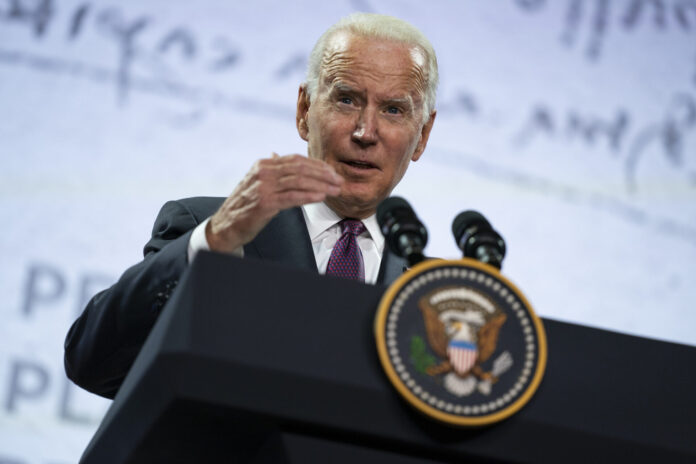
He also referred to the Joe Biden administration’s failure to make good on its promise to go down a different path than that taken by former US president Donald Trump.

Ex-Envoy: Iran Will Expand Beneficial Cooperation with Venezuela

Ahmad Sobhani told Ilna news agency that Iran will sell out products wherever there is client and it is beneficial, even if such trade is sanctioned by the US.

He added that Iran should have started its oil trade with Venezuela 10 years earlier, seeing the heavy crude Venezuela produces and Iran’s potential to dilute it using its large reserve of condensates. This, he said, brings added value both to Iran’s condensates and Venezuela’s crude.

“It is natural that when we are facing illegal US sanctions, we would be searching for alternatives for transfer of money including with our national currencies. Currently, solutions have been worked out. Of course, we do not have the past difficulties for exchanges with Venezuela as sanctions may deal a serious blow early after their implementation, but with the passage of time, alternatives to neutralize them are found,” Sobhani said.

The former envoy also touched on the visit by the Venezuelan foreign minister to Tehran on Monday. He said a 20-year roadmap for cooperation between Iran and Venezuela will be drawn up and will be signed by foreign ministers of two countries during a visit by Venezuelan President Nicolas Maduro, which is scheduled to take place soon.

Majority of Americans see US in “wrong direction” under Biden

The Morning Consult/Politico survey released Wednesday found that only 38 percent of Americans say the country is on the right track, compared to 62 percent who said it’s moving in the wrong direction.

The survey also showed Biden’s approval at 46 percent, with 51 percent disapproving of his job performance.

The results fell in between a CNN survey published Wednesday, which put Biden’s approval rating at 50 percent, and a Quinnipiac poll from last week that found just 38 percent of respondents approved of Biden’s performance.

Nearly 50 percent of GOP respondents in the Morning Consult/Politico survey said they would vote for former President Donald Trump if the 2024 Republican primary were held today. The next closest potential candidate was Florida Gov. Ron DeSantis (R), at 15 percent.

More than 80 percent of Democratic respondents stated they would vote for Biden in the 2024 Democratic presidential primary if it were held today.

US’ Lebanon Plot Failing: Top Iran Cmdr.

“These days we are seeing the United States’ retreat and its last months of presence in Iraq. We are seeing their failure in the dangerous Lebanon project,” said Major General Hossein Salami, the commander in chief of the Islamic Revolution Guards Corps (IRGC). 

“We are seeing the enemy has failed to achieve its objectives in Syria. We are seeing that the enemy has failed to reach the objectives it has pursued in imposing sanctions on Iran, and we are seeing the enemy’s political and economic blockade on our country has failed,” said the top commander.

He then touched upon late Iranian general Qassem Soleimani, who was assassinated by the US in Iraq in January 2020.

He said the movement of Iran’s Islamic Revolution and its military drive not only does not stop with the martyrdom of such great people, but gains momentum as well.

“Today, we are seeing this momentum all across the region where a resistance front has emerged to fight colonialism and hegemony in order to restore Muslims’ rights,” said the top commander. 

“You are seeing the conspicuous retreats of our enemies and major powers from the region,” he said.

Iran President Calls for Unity in Muslim World

“We seek to ensure stability in Islamic countries, unlike the enemy, which tries to create instability. We believe unity is the strategy that the Islamic community should adopt, but the enemy’s strategy is to sow discord,” said Ebrahim Raeisi in a keynote speech at the opening ceremony of the 35th International Conference on Islamic Unity in Tehran on Tuesday.

He said any move to disrupt unity will play into the hands of the enemy.

President Raeisi then noted that Palestine is the most pressing issue of the Muslim world, and should not be sidelined. 

He said the ongoing conference is an ideal opportunity to further promote Islamic awakening, which has already emerged in the Muslim community.

“Islamic awakening, which came into being thanks to struggles and martyrs’ blood, should not lose momentum, and all of us should strive to protect and boost it,” President Raeisi explained.

He also urged Muslim states to stand up to conspiracies by enemies.

“Today, we are seeing the enemies of Islam trying to sow discord and hatching plots in all regional countries, namely in Iraq, Syria, Afghanistan, Lebanon and Yemen. All of us should try to protect the Muslim community against these conspiracies,” he said.

“Hegemonic powers seek to undermine Muslim countries’ elements of power by sowing suspicion and discord within the Islamic community using its media power,” he said, urging Muslims to stand up to enemy plots.

Raeisi also urged the Muslim world to stand up to terrorist groups such as Daesh. 

He reiterated that corruption, poverty and terrorism should be eradicated from the Islamic world. President Raeisi also encouraged closer scientific, cultural and media cooperation among Muslim nations.

The 35th International Conference on Islamic Unity kicked off in Tehran on Tuesday. 

The six-day event brings together Islamic thinkers and intellectuals from more than 50 countries, who will deliver speeches either in person or online. 

The event is themed on Islamic unity, peace and refraining from discord and conflict in the Muslim world. Among the major topics on the agenda are fighting extremism and terrorism, mutual respect between different Islamic schools of thought, easing tensions and practical ways of achieving Islamic unity.

Ankara summons 10 envoys over Turkish businessman detention

The ambassadors of the US, Germany, Denmark, Finland, France, the Netherlands, Sweden, Canada, Norway and New Zealand in Ankara were summoned to the Turkish Foreign Ministry.

Earlier, the embassies shared a statement on social media calling for Kavala’s release, claiming the ongoing case has cast a shadow over democracy and the rule of law in Turkey.

Turkey’s parliament speaker Mustafa Sentop and Omer Celik, the spokesman for Turkey’s Justice and Development (AK) Party, criticized the statement. 

Sentop stated that this is stepping out of bounds.

“Statements by diplomats, who work in our country, to influence the Turkish judiciary are unacceptable,” Celik said, adding that Turkey is a sovereign state of law and the Turkish judiciary is independent.

Justice Minister Abdulhamit Gul also said that diplomats are duty bound to have respect for the judiciary of the country they are serving in.

“According to our Constitution, no ambassador can give advice to our courts or tell them to do anything. What casts a shadow on the rule of law is this presumption,” Gul added.

Interior Minister Suleyman Soylu highlighted that Turkey is a democratic country based on the rule of law, adding it is unacceptable that ambassadors tell the Turkish judiciary what to do.

Kavala was first arrested over criminal charges related to the 2013 Gezi protests, a small number of demonstrations in Istanbul that later transformed into nationwide protests which left eight protesters and a police officer dead.

The businessman was later remanded into custody by an Istanbul court as part of a probe into the 2016 defeated coup in Turkey, with prosecutors accusing him of spying.

The Fetullah Terrorist Organization (FETO) and its US-based leader Fetullah Gulen orchestrated the defeated coup of July 15, 2016 which left 251 people dead and nearly 2,200 wounded.

Turkey also accuses FETO of a long-running campaign to overthrow the state through the infiltration of Turkish institutions, particularly the military, police and judiciary.

US says not to attend Moscow summit on Afghanistan

The US will not participate in the Moscow Format consultations on Afghanistan, scheduled for October 20, but Washington does support these talks and may participate in the future, US Department of State spokesman Ned Price said Monday.

“We will not participate in the Moscow talks,” he noted, adding that the US supports the process itself and may join a similar meeting in the future. “It’s just logistically difficult for us to take part this week to support the process.

He also stated that the Troika plus format (Russia, the US, China, Pakistan) is an “effective and constructive forum”.

“We look forward to engaging in that forum, going forward, but we’re not in a position to take part this week,” he continued.

The radical Taliban movement has confirmed participation in Moscow consultations. A senior delegation of the Islamic Emirate of Afghanistan will pay an official visit to Moscow at the invitation of the Russian leadership, Taliban spokesman Wardak al-Hanafi tweeted on Friday.

The consultations are scheduled for October 20, 2021. The Moscow format was established in 2017 on the basis of a six-party consultation mechanism of the special envoys of Russia, Afghanistan, India, Iran, China and Pakistan.

Seoul says North fired ballistic missile towards Sea of Japan

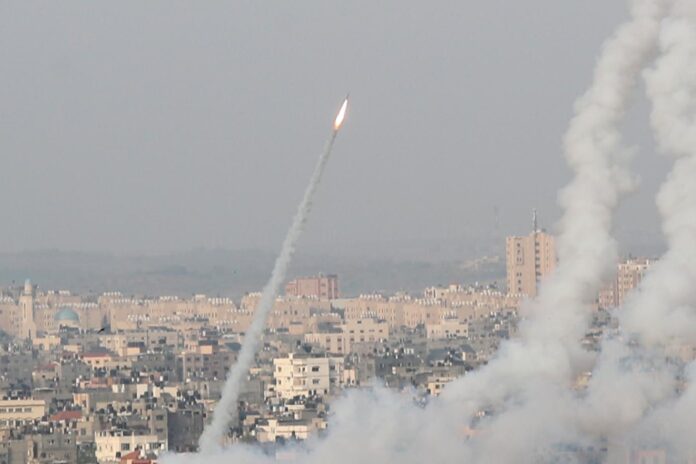
North Korea fired a submarine-launched ballistic missile (SLBM) from off its east coast on Tuesday, South Korea’s military said, pulling Japan’s new prime minister off the campaign trail and overshadowing the opening of a major arms fair in Seoul.

The launch, reported by officials in South Korea and Japan, came after U.S. and South Korean envoys met in Washington to discuss the nuclear standoff with North Korea on Monday. Spy chiefs from the United States, South Korea, and Japan were reported to be meeting in Seoul on Tuesday as well.

The North Korean launch would be the latest weapons test by the country, which has pressed ahead with military development in the face of international sanctions imposed over its nuclear weapons and missile programmes.

The missile was launched about 10:17 a.m. local time from the sea in the vicinity of Sinpo, South Korea’s Joint Chiefs of Staff said, where North Korea keeps submarines as well as equipment for test firing SLBMs.

It was not immediately clear whether the missile was fired from a submarine or from a submersible test barge, as in most previous tests.

“Our military is closely monitoring the situation and maintaining readiness posture in close cooperation with the United States, to prepare for possible additional launches,” JCS announced in a statement.

The missile flew about 430-450 kilometres to a maximum altitude of 60 kilometres, the Yonhap news agency reported, citing an unnamed source.

The North displayed new Pukguksong-4 and Pukguksong-5 SLBMs during its military parades in October and January, respectively, and a previously unseen, smaller missile was spotted at last week’s defence fair in Pyongyang.

North Korea has also been working on what would be its first operational submarine capable of launching an SLBM, according to South Korean officials. It currently has an experimental ballistic missile submarine it claims was used in a 2016 test, though some analysts say that may have used a barge.

The Washington-based Nuclear Threat Initiative has assessed that “an operational (ballistic missile submarine) and SLBM capability could provide North Korea with additional options for nuclear launch, and a hedge against destruction of its land-based nuclear systems.”

South Korea’s national security council held an emergency meeting and expressed “deep regret” over the test, urging the North to resume talks.

Japanese Prime Minister Fumio Kishida stated that two ballistic missiles had been detected, and that it was “regrettable” that North Korea had conducted a string of missile tests in recent weeks.

There was no immediate explanation from South Korea’s JCS for the conflicting number of missiles detected.

Kishida cancelled scheduled campaign appearances in northern Japan, and the deputy chief cabinet secretary told reporters that Kishida was planning to return to Tokyo to deal with the missile situation.

The launch came as the intelligence chiefs of the United States, South Korea, and Japan were due to meet in Seoul to discuss the standoff with North Korea, amid other issues, Yonhap reported, citing a government source.

The U.S. special representative for North Korea, Sung Kim, noted that he would visit Seoul for talks this week.

“The U.S. continues to reach out to Pyongyang to restart dialogue,” Kim noted after meeting with his South Korean counterpart in Washington on Monday. 

“We harbour no hostile intent towards (North Korea), and we are open to meeting with them without preconditions,” Kim added.

The series of recent launches as well as the opening of the unusual military showin Pyongyang suggest that North Korea may be resuming military and international affairs after nearly two years of focusing inward amid the COVID-19 pandemic, said Chad O’Carroll, CEO of Korea Risk Group.

“North Korea’s renewed testing of ballistic missiles suggests the worst of domestic hardship between summer 2020-2021 could be over,” he wrote on Twitter.

“Pyongyang tends to focus on one big strategic issue at a time, so the renewed testing could suggest military – later foreign policy – now priority,” he added.

The missiles tested recently by North Korea appear aimed at matching or surpassing South Korea’s quietly expanding arsenal, analysts have stressed.

Last month South Korea successfully tested an SLBM, becoming the first country without nuclear weapons to develop such a system. North Korea test fired a missile launched from a train on the same day.

This month the two Koreas held duelling defence exhibitions aimed at showcasing their latest weaponry amid a spiralling arms race.

As news of Tuesday’s missile launch broke, representatives of hundreds of international companies and foreign militaries were gathered in Seoul for the opening ceremonies of the International Aerospace and Defence Exhibition (ADEX).

It is set to be South Korea’s largest defence expo ever, organisers said, with displays of next-generation fighter aircraft, attack helicopters, drones, and other advanced weapons, as well as space rockets and civilian aerospace designs.

South Korea is also preparing to test fire its first homegrown space launch vehicle on Thursday.

Though analysts say the South Korean rocket has few potential applications as a weapon, such tests are unlikely to be welcomed in North Korea, which has complained of a double standard in which its own space programme is criticized overseas as a front for military missile development.

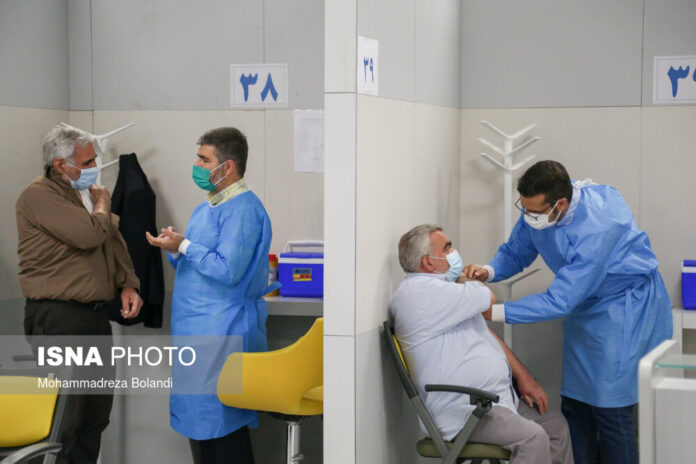
Iran Imports Another 6mn-Dose Shipment of Covid Vaccines

The Red Crescent’s director said his organization will continue its push to import vaccines.

“Over the past 10 days, the Red Crescent Society has imported 5 shipments containing [an overall] 30 million doses of coronavirus vaccines,” Karim Hemmati said.

“The Red Crescent Society has imported a total 82 million and 390 thousand doses of vaccines since late April.”

Hemmati added that the Red Crescent is purchasing the vaccines from China’s Sinopharm, stressing that the jabs have a long expiry date.

“Fortunately, the main outcome of the imports of vaccines and inoculation of people is a reduction in the fatalities from the coronavirus disease among the medical staff and people and a reduced number of patients in intensive care units of the hospitals,” he said.

Iran’s health ministry announced on Monday 181 patients had died of Covid-19 in the past 24 hours, bringing the number of the dead to 124,256 since the start of the pandemic.

Nasrallah: Hezbollah has 100k armed fighters

Hezbollah’s leader has accused the Lebanese Forces party of shooting at their supporters and killing seven people last Thursday near a protest against the judge investigating the Beirut Port explosion.

Nasrallah said in a televised address on Monday that the Christian party and its leader Samir Geagea are trying to start conflict in the country.

“The real programme of the Lebanese Forces party is civil war,” Nasrallah continued, adding, “They don’t have a problem with causing events that lead to bloodshed … even if it will lead to a large-scale military confrontation of civil war.”

Nasrallah said that Hezbollah’s armed wing has 100,000 “armed, trained, and experienced” fighters.

Unidentified gunmen fired at hundreds of Hezbollah and Amal supporters last Thursday at a protest by the Beirut Justice Palace, leading to hours-long clashes that killed at least seven combatants and civilians and wounded more than 30 others.

Lebanese Forces leader Samir Geagea, longtime adversaries of the Iran-backed party, repeatedly denied the accusations of organising an attack.

Nasrallah dismissed accusations that armed members of Hezbollah and its ally Amal were at the protest before the clashes.

“We don’t didn’t carry weapons or take any security measures, and let the security agencies handle it because it was in a sensitive area,” he stated.

The protesters demanded the removal of Judge Tarek Bitar from the Beirut Port blast probe, and accused him of being biased and politically motivated.

The Lebanese Army has so far arrested 20 people in their investigation into the clashes, and have received a video that shows a soldier shooting and killing an unarmed protester.

More than 200 people were killed and some 6,500 wounded when hundreds of tonnes of highly explosive ammonium nitrate fertiliser stored in the Beirut Port for years ignited on August 4, 2020. The blast destroyed several neighbourhoods in the Lebanese capital. No officials have been convicted yet.

Judge Bitar has charged and pursued senior political and security officials. He has charged former Prime Minister Hasan Diab, and former ministers Ali Hasan Khalil, Ghazi Zeiter, Nouhad Machnouk, and Youssef Finianos with criminal negligence.

Nasrallah insists Bitar should instead focus on the judicial officials that permitted the ship carrying the explosive ammonium nitrate to dock at the Beirut Port, and again accused him of not being impartial.

“There are embassies, references, and there is politics involved,” the Hezbollah leader noted.