Monday, December 22, 2025
Home Blog Page 2329

China demands US explanation about nuclear sub accident

A Chinese military spokesperson on Tuesday urged the United States to clarify an incident involving a US nuclear submarine, and to cease conducting the so-called “freedom of navigation” operations in the South China Sea.

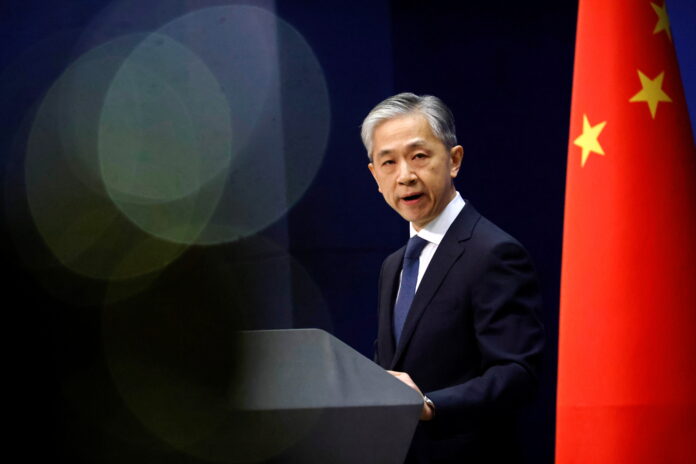
Tan Kefei, a spokesperson for the Ministry of National Defense, made the remarks when responding to an inquiry about a US nuclear submarine that had recently collided with an unknown object in the South China Sea, causing some damages and injuries.

“We notice that the US military has deliberately delayed and concealed the details of the incident,” Tan said, adding that such an irresponsible and secretive approach makes China and the countries surrounding the South China Sea have no choice but to question the truth of the incident and the intentions of the US side.

The root cause of the incident is that the United States has for a long time frequently dispatched aircraft carriers, strategic bombers, nuclear submarines and other advanced weapon systems into these waters, Tan noted, adding that such a show of force has heightened tensions and undermined peace and stability in the region.

Tan also mentioned that recently, the United States, the United Kingdom and Australia have established a trilateral security partnership to carry out cooperation on nuclear-powered submarine, giving the non-nuclear-weapon state Australia access to nuclear materials that can be used to make nuclear weapons, posing a huge risk of nuclear proliferation and a grave challenge to regional peace and security.

“China urges the United States to take seriously the concerns of all parties, take a responsible attitude and give a detailed account of the incident as soon as possible, so as to give a satisfactory explanation to the international community and regional countries,” he stated.

Gangs seek $17mn for US, Canadian missionaries kidnapped in Haiti

Justice Minister Liszt Quitel told the newspaper that the notorious 400 Mawozo gang is asking $1 million per hostage.

The Mawozo gang controls the Ganthier commune in the eastern suburbs of the country’s capital, Port-au-Prince, where the group of 16 U.S. nationals and one Canadian was kidnapped on Saturday while traveling to visit an orphanage.

The hostages include five children, ranging from 8 months to 15 years old, Christian Aid Ministries, the nonprofit sponsoring the missionaries’ efforts in Haiti, confirmed Tuesday. The adults in the group are aged between 18 and 48 years old. 

Earlier on Monday, White House press secretary Jen Psaki said the FBI was involved in a coordinated U.S. government effort to get the Americans to safety.

The agents had arrived in Haiti the previous day to assist the State Department in securing the missionaries’ release, a source close to the Joe Biden administration told NBC News.

The Human Rights Analysis and Research Center, a Haitian nonprofit group, says it has recorded at least 628 kidnappings since January, of whom 29 were foreign nationals. September had a 300 percent increase in the number of incidents compared to July, the center announced.

As the search for the kidnapped missionaries intensified on Monday, Haitians held a general strike in Port-au-Prince to protest pervasive violence and the country’s devastated economy. Conditions for the vast majority have only worsened since the assassination of President Jovenel Moïse in July and a 7.2 magnitude earthquake in August that killed 2,200 and further damaged an already weak infrastructure.

Armed gangs even now control access to medical assistance, one doctor in the country told NBC News.

Dr. Richard Frechette has to negotiate with gangs to ensure the passage of liquified oxygen he needs to treat Covid-19 patients at St. Luke’s Hospital in Port-au-Prince.

“It’s hair-raising because you’re going to have 40 people dead in your hospital in a matter of hours if you don’t succeed … And it’s very complex when you have to go through a gang to get oxygen,” he noted over the phone from Port-au-Prince.

Christian Aid Ministries said the group’s work in Haiti included providing medicine to clinics, teaching Haitian pastors, and most recently, coordinating a rebuilding project for Haitians who lost their homes in an earthquake in August. 

In an update Monday, they asked for prayers from “believers around the world, including our many Amish and Mennonite supporters.”

Arman Abdolali’s execution postponed again

Abdolali’s lawyer says the execution, which was scheduled for Wednesday morning, has not been carried out.

Abdolali was earlier moved to solitary confinement in a prison in Karaj in preparation for his death sentence to be carried out.

This is the third time that the 25-year-old’s planned hanging is stopped.

Arman was 17 when he was arrested for the murder of Ghazaleh Shakour.

He was sentenced to death in 2015 a year after Shakour disappeared. Her body has never been found.

Many Iranian celebrities have called on the judiciary to grant him a stay of execution.

Russia rules out recognition of Taliban

Russia is not considering any possibility of the official recognition of the Taliban movement, Lavrov said on Tuesday.

“The official recognition [of the Taliban] is not being discussed and it has been stated publicly,” he told journalists after a meeting with the participants in the 18th annual session of the Valdai international discussion club.

He noted that “like other countries that have influence in the region,” Russia maintains contacts with the Taliban and hopes the Taliban will keep its promises and take measures to ensure the inclusiveness of the Afghan government not only from the ethnic but also from the political point of view.

Pentagon chief in Ukraine amid Moscow-Kiev tensions

No third countries have the right to influence Ukraine’s determination of its future foreign policy, Austin said at a joint briefing with Ukrainian Defense Minister Andriy Taran in Kyiv on Tuesday, commenting on the reaction of Russia to the possibility of Ukraine joining NATO.

“No third country has the right to veto NATO membership. Ukraine, as I have already noted, has the right to decide its future foreign policy without external interference. I will say that our support for Ukrainian sovereignty is unshakable and we will continue to work together for in order to assure that we are in the right place, and Ukraine can defend itself,” Austin added.

The US intends to support defense reform in Ukraine until it reaches the criteria for NATO membership, Austin noted.

Austin stated that following the NATO summit in June 2014, NATO allies pledged support for Ukraine in its intentions to become a full member of NATO. The United States remains unwavering in support of Ukraine’s defense reform, which will help achieve the criteria for full NATO membership.

He announced the United States has a duty to help Ukraine, and US President Joe Biden has noted that on several occasions.

Austin also said that he likes Ukraine, the people of Ukraine, and the United States has a responsibility to help them. President Biden has emphasized this on several occasions – about the US commitment to support Ukraine, its territorial integrity and integrity. He added that he is here to reassure in the US serious intentions.

The accession of Ukraine to NATO is a “worst-case scenario” that would cross a “red line” for Moscow’s interests and, if Kiev were accepted as a member, Russia would be forced to take measures to protect its national security.

That’s according to Kremlin spokesman Dmitry Peskov, who told Parisian TV channel France 5 about the threat Moscow perceives from the US-led bloc, while also noting that Russia wishes to be a part of a prosperous Europe.

“Ukraine’s accession to NATO would be the worst-case scenario,” Peskov told the French journalists for a program called ‘Vladimir Putin: Master of the Game’.

“This is a scenario that goes beyond the red lines of Russia’s national interests. This is a scenario that could force Russia to take active measures to ensure its own security,” he explained.

Peskov also responded to accusations that the movement of Russian troops near the country’s frontier with Ukraine was a threat to the West.

“Of course, we can understand your feelings. But we prefer that you Europeans become better informed,” the Kremlin spokesman added.

“Because, before the Russian troops were moved to that region, there were large NATO exercises held near the Russian border. Everyone talks about the concentration of Russian troops all the time, but nobody talks about the concentration of NATO troops,” he stated.

Peskov also batted away suggestions that Russia is interested in a “divided Europe” and called for the European Union to have its own independent army and defense system, outside of the American-led bloc.

“It is not clear whether Americans will stay in Europe and continue to defend Europeans against those ‘terrible Russians’,” he noted.

Iran calls for identifying assassins of General Soleimani

general-ghasem-soleimani

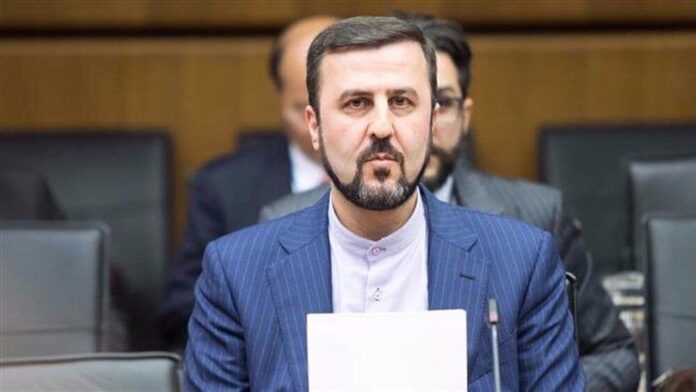
Kazem Gharibabadi, deputy Judiciary chief for International Affairs and Secretary of Iran’s Human Rights Headquarters, in a tweet, referred to his meeting with Iraq’s justice minister, saying he told  the Iraqi official a joint committee must be formed to probe the assassination and convene a session for this purpose as soon as possible.  

General Soleimani and his companions including Abu Mahdi Muhandes, a commander of Iraq’s Popular Mobilisation Forces were killed in a US drone strike in January 2020 outside Baghdad’s airport. 

In the tweet, Gharibabadi added that he also spoke with Iraq’s justice minister about legal, judicial and human rights issues as well as about the need to investigate the problems of nationals of the two countries. 

Gharibabadi was until recently Iran’s envoy to the international organizations in Vienna and after the end of his tenure, he was appointed as the secretary of Iran’s Human Rights Headquarters.

Iran: Israel’s crimes should not go unpunished

Takht Ravanchi was speaking at the UN Security Council session on the situation in the Middle East and the Palestinian issue on Tuesday.

He said the current situation in occupied Palestine is worrying and the continuation of these circumstances is a cause of concern for the international community.

Takhta Ravanchi said the crisis in the occupied Palestinian territories will come to an end only if the undeniable rights of the Palestinian people are recognized and restored.

He added that the only solution to this crisis is holding a referendum in line with historical realities and international law and with the participation of all Palestinians including Muslims, Christians and Jews.

Elsewhere, Takht Ravanchi responded to accusations leveled against Iran by the Israeli regime’s  representative to the UN. He flatly rejected the allegations, saying Tel Aviv’s representative was playing the victim in a bid to distract the international community’s attention from the regime’s crimes against Palestinians.

Takht Ravanchi noted that Israel’s claims against Iran’s peaceful nuclear program are totally unfounded as the civilian nature of the Islamic Republic’s atomic activities has time and again been verified by the IAEA.

The Iranian representative to the Un said the Israeli regime’s accusations against Iran are merely aimed at covering up the danger its own nukes pose to the region and the whole world.
He urged the international community to force Israel into joining the nuclear Non-proliferation Treaty, give up its threatening nuclear activities and put all its nuclear facilities under the supervision of the IAEA.

Takht Ravanchi said the threat from the Israel nukes is a gross violation of the UN Charter, especially Article 2 thereof and, therefore, it must be condemned by the UN Security Council.
He added that Iran reserves the right to do all it can to protect itself from Israel’s threats.

Senior Iranian diplomat calls for eradication of terrorism in Syria

Italian Special Envoy for Syria Stephen Ravanan has met with the Iranian foreign minister’s senior advisor on special political affairs Ali Asghar Khaji.
The meeting was held on October 19 on the

sidelines of the meeting of the Syrian Constitutional Committee in Geneva. The two sides discussed the latest developments in Syria.

In this meeting, Ravanan stressed the importance of Iran’s regional role, especially in Syria.

He added that the Italian government is involved in the fight against terrorism, pursuing a political solution to the Syrian crisis and providing humanitarian assistance to the Syrian people through the European Union and the United Nations.

In this meeting, the senior advisor to the Iranian minister of foreign affairs said the Syrian people are basically in need of humanitarian aid.

He further called for the return of refugees to their country and the eradication of terrorism in Syria, stressing that tranquility in Syria will lead to stabilization of the region. Khaji said the continuation of U.S. and European sanctions policies will not help resolve the Syrian crisis.

In the end, the two sides agreed to continue their consultations in the future on helping with the Syrian crisis.

IAEA chief calls for meeting with Iran’s FM

Grossi said in an interview he urgently needed to meet Tehran’s foreign minister to discuss proposals to reinvigorate the fragile surveillance programme.

“I haven’t been able to talk to [Iran’s new] foreign minister,” Grossi told the Financial Times during a visit to Washington.

“I need to have this contact at the political level. This is indispensable. Without it, we cannot understand each other,” he added.

The head of the UN’s atomic watchdog has warned that stop-gap measures to monitor Iran’s nuclear activities are no longer “intact” amid concerns that talks to resurrect a global agreement to curb Tehran’s atomic work have stalled.

The continued surveillance of Tehran’s nuclear activity through cameras and other devices has sustained hope that a global deal to curb Tehran’s nuclear activity and lift sanctions can be resurrected. In 2018, Donald Trump withdrew from the 2015 multi-party nuclear pact with Iran and imposed hefty new sanctions. Tehran has since rejected key monitoring efforts while increasing the volume and purity of its fissile material. The country has always denied it is trying to build a nuclear weapon.

Joe Biden’s administration is seeking to re-enter the deal but six rounds of indirect talks have stalled since the election of President Ebrahim Raisi in June.

Grossi noted Iran was “within a few months” of having enough material for a nuclear weapon, although he said he did not think it was pursuing one.

The so-called breakout time was “continuously lessening” as Iran enriched more uranium, with more efficient centrifuges, he added.

“It is becoming shorter and shorter,” Grossi added, saying he needed working cameras reinstalled at Tesa Karaj — a manufacturing complex west of Tehran that fabricates parts for centrifuges — “yesterday”.

Grossi negotiated a last-minute compromise in February to keep cameras recording — temporarily forgoing examination of footage — at key sites in Iran after Tehran’s parliament voted to end snap inspections by the IAEA. But late last month Grossi reported Iran had broken an agreement by refusing to grant surveillance access to Tesa Karaj, a “very important” facility that produces parts for centrifuges and whose data Grossi stated were essential to “reconstruct” the record of Iran’s nuclear activities.

Iran has defended its decision not to allow cameras to be installed. It announced Israel sabotaged its facilities in Tesa Karaj in a June attack it said had “severely damaged” the site, including cameras. Iran wants the international community and the IAEA to condemn the attack.

Grossi stated, “There is this issue with Karaj, and I’m working on it . . . Our stop-gap has been seriously affected so it’s not intact. But it’s not valueless either.”

Western officials hope negotiations will pick up next month, ahead of the next quarterly meeting of the IAEA board of governors, where any prospect of western powers pushing to censure Iran formally would embarrass Tehran.

Ali Vaez, Iran director at the International Crisis Group, said Iran wanted to avoid such a resolution but it did not want to yield unilaterally to inspections pressure while it was under such harsh sanctions.

Grossi spoke to the FT after meeting US Secretary of State Antony Blinken earlier on Monday.

“We both want this to work and at the moment it’s not sure, it’s not certain that it will work,” he said of his talks with America’s top diplomat.

Grossi added Tehran had told him he could meet the foreign minister “but they are taking their time”.

The US Department of State announced on Monday it wanted talks to resume in Vienna “as soon as possible” but that Biden had “made clear that if diplomacy fails we are prepared to turn to other options” he had yet to spell out. Israel is pushing for an aggressive “Plan B”.

Raisi said on state TV on Monday night that his government was “serious” about chasing nuclear negotiations.

“[Talks] . . . must bear results for the Islamic republic. The readiness of the other parties for lifting of sanctions can be regarded as a sign of their seriousness,” he added.

Iran reiterates determination to fight narcotics trafficking

“If, God forbid, we ever wanted to turn a blind eye to drug trafficking, not a single young person in Europe would have remained safe today,” Omrani said in a technical session held to review the consequences of the developments in Afghanistan for the battle against narcotics.

He said the judiciary with all its capabilities in Tehran and provinces backs the anti-narcotics task force and “no excuse will be accepted in this regard”.

He said the Leader of Iran’s Islamic Revolution Ayatollah Seyyed Ali Khamenei has personally held three meetings with officials on the subject of drugs in which the Leader stressed that the drug traffickers’ financial network must be disrupted.

Iran’s neighbor Afghanistan produces 90 percent of the world’s opium and almost the entire heroin in the world comes from Afghan opium.

Drug traffickers see Iran as the main transit route for Afghan-produced opiates to Europe and beyond.

Iranian law enforcement forces seize and destroy hundreds of tones of illicit drugs every year especially in the country’s eastern border areas.