Wednesday, April 15, 2026
Home Blog Page 2305

Over 98 million doses of Covid vaccine administered in Iran

COVID-19 Vaccine in Iran

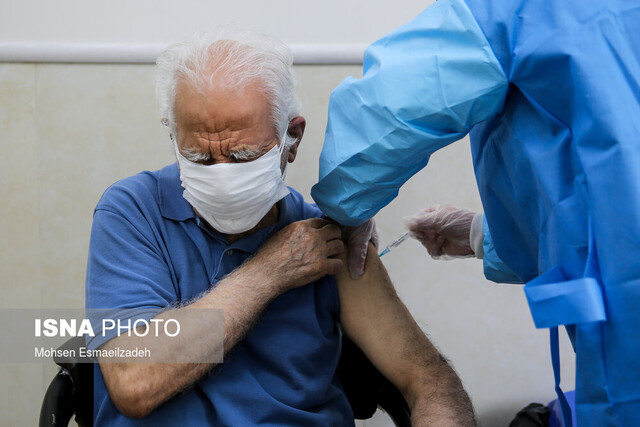
Since Friday, 621,154 doses of Covid vaccine have been administered to people in Iran. 

The number of people who have received the first dose has reached 55,576,533. Meanwhile, 42,183,468 people have received the second dose. The number of people who have been given the third dose, also known as the booster shot, is going up steadily, standing at 421,339. 

Meanwhile, the total number of doses administered in Iran is 98,181,400 doses. 

Currently, 26 cities in Iran are marked red, which means the risk of Covid is very high there. 87 cities are orange, 220 yellow and 100 are blue. Blue cities face the least level of risk from Covid. 

The high rate of vaccination has kept down the number of new infections, deaths and hospitalizations. But officials are urging all unvaccinated people to get their jabs. They also say no one should relax health protocols as laxity could increase the chances of a sixth wave of the outbreak. 

One area where the high number of new cases has caused concern is Kerman province in southern Iran. Kerman’s governor has warned that if necessary measures are not put in place, Kerman will be among the first provinces where a sixth wave of Covid happens.

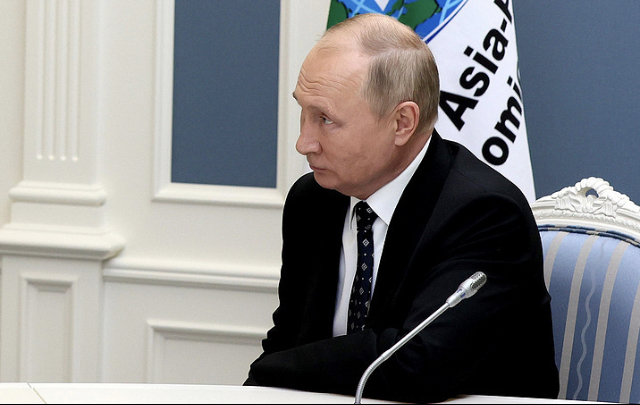
Putin: NATO exercises serious challenge for Russia

“Now, the United States and its NATO allies are conducting unscheduled, I want to underline it, unscheduled drills in the waters of the Black Sea. And not only a powerful ship group has been formed, but also aviation, strategic aviation, is being used in the drills,” Putin stated.

“I should say that our Defence Ministry also proposed to hold its own unplanned exercises in the same area. But I believe that this is not appropriate and there is no need to further escalate the situation there”, Putin told the TV channel Russia 24.

The president’s statements come after the US and its allies launched drills near Russian waters. Previously, the United States Sixth Fleet’s flagship USS Mount Whitney enetered the Black Sea, and Russia registerd multiple reconnaissance flights by NATO aircraft near the Crimea.

Moscow has repeatedly slammed NATO’s activities in the Black Sea as a provocation to spur tensions and pursue a policy of containment of Russia. Putin recently called the drills “destabilising” and “dangerous”, while Foreign Minister Sergei Lavrov stressed that by sending their vessels to the area near the Russian border Washington is trying to push coastal countries toward confrontational policies.

In his interview, Putin also dismissed claims that Russia is planning an invasion of Ukraine, noting it is pure “alarmism”, and stressing that his country is not a side in the conflict in Donbass.

He commented on the current situation in the region, saying that Ukraine had officially confirmed it has been using Turkish-made Bayraktar drones in the area – which is strictly prohibited by the Minsk agreements.

Last month, the Ukrainian General Staff claimed that the military had destroyed an enemy howitzer with a guided bomb launched via a Bayraktar strike drone in Donbass. According to Moscow, Kiev is acting in a provocative manner to trigger a response from the local militia and get Russia involved.

The Russian president additionally commented on the migrant crisis that is unfolding along the Belarus-Poland border, stressing once again that Moscow has no ties to that situation.

“Everyone is trying to impose responsibility on us for various reasons – and for no reasons at all,” the president stated.

He stressed that Russian airlines do not transport migrants, and are not responsible for those individuals now on the Poland-Belarus border.

“All the time we have heard that humanitarian issues should be put in first place. Now, at the Poland-Belarus border Polish border guards beating those migrants, firing live rounds above their heads, turning on sirens – day or night – near those places where children and women are in the last months of pregnancy are settled – somehow this does not really fit with the humane ideas that supposedly underlie the entire policy of our western neighbours,” Putin added.

Per Putin, a solution must be found that satisfies Belarus, European countries, including Poland and Germany and other states, since their social welfare systems actually are under pressure.

He expressed hope that direct contacts between the leadership of Belarus and the leaders of major European countries will help solve these problems.

The Russian president also commented on President Alexander Lukashenko’s warning that Belarus could stop gas transit if the EU slaps new sanctions on Minsk.

“Frankly speaking, this is the first time I’m hearing of it. I have talked twice to Alexander Grigorievich [Lukashenko] lately, and he never told me that, not even a hint,” he noted.

In theory, Putin stated, Lukashenko can make that decision, but it will break transit contracts and expressed hope that it won’t happen.

“…there is nothing good about it, and I will, of course, talk to him on this issue. Unless he just said it in the heat of the moment,” Putin continued.

Additionally, he mentioned that in 2008 Ukraine used this tactic and blocked Russian gas meant for European users, simply stopping the transit.

The migrant crisis has been escalating over the past weeks, as Poland (along with neighbouring Latvia and Lithuania) has reported an influx of migrants trying to cross into the European Union from Belarus and accused Minsk of facilitating illegal migration.

Belarus denied those accusations, saying it has no funds to stop the migration due to European sanctions.

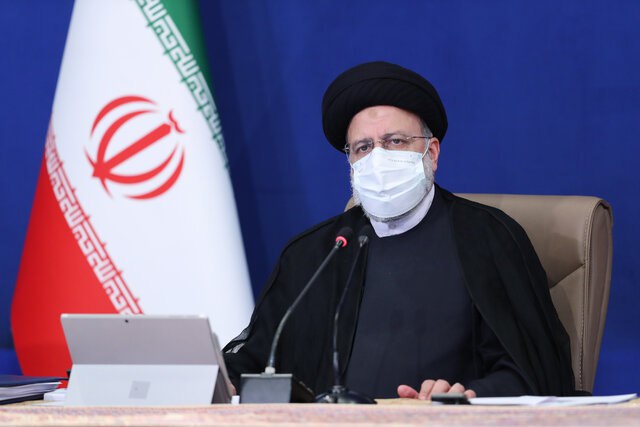
local Covid vaccine producers should be supported: Raeisi

“In order to support the efforts made by these producers, locally-developed vaccines approved by the Ministry of Health and Medical Education should definitely be purchased in advance,” said Ebrahim Raeisi in a meeting of the National Coronavirus Task Force.

He described local firms’ production of COVID-19 vaccines as invaluable.

“Supporting the activities and production of vaccines by these companies is among the priorities of the government, and to that end, prepurchasing these products can further encourage them to press ahead with, and expand their activities,” the president noted.

He appreciated round-the-clock and untiring efforts by medical personnel and all those involved in countering coronavirus.

“I hope we, with the cooperation of our noble people, will be able to reach a point of certainty in containing this disease and protect people’s health by vaccinating more than 80 percent of the population,” he said.

President Raeisi urged people to avoid any move that would lead to laxity in the observance of health protocols, adding the easing of some restrictions should not cause people to regard the disease as something ordinary.

He said travel to and from the country via land, sea and air borders should be controlled.

“Given that some neighboring countries are facing a new surge in the disease, it is necessary that individuals without a negative Covid test result be prevented from crossing the borders,” he added.

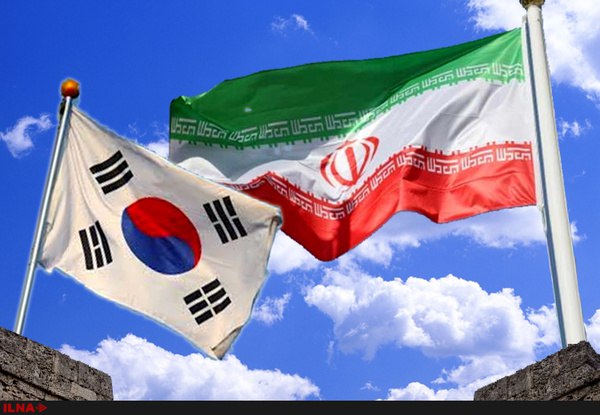
‘South Korean has not freed up Iran’s frozen assets’

“The $3.5 billion in assets claimed to have been released was not part of Iran’s frozen assets in South Korea,” Hossein Tanhai added.

He made the comment after a report was released claiming $3.5 billion in Iranian assets had been freed up.

The largest amount of frozen Iranian assets is in South Korea, standing at $7 billion.

He also touched upon the status of trade transactions between the two countries,

“Exchanges between the two countries are very little and are mostly related to small firms working together unofficially,” he explained.

“But as Major South Korean firms mostly work with the US, they are not working with Iran. Trade transaction between the two countries is tiny, amounting to less than $150 million,” he said.

“Most of our imports from South Korea include medical goods and paper. Our exports to that country is very limited and mostly includes oil and petrochemical products, which are exported to the country indirectly,” he said.

South Korea refuses to release Iran’s frozen assets in the country under the United States’ pressure. Tehran has, time and again, called on Seoul not to be swayed by the White House and to free up Iran’s money. However, the South has, so far, failed to take practical action in that regard.

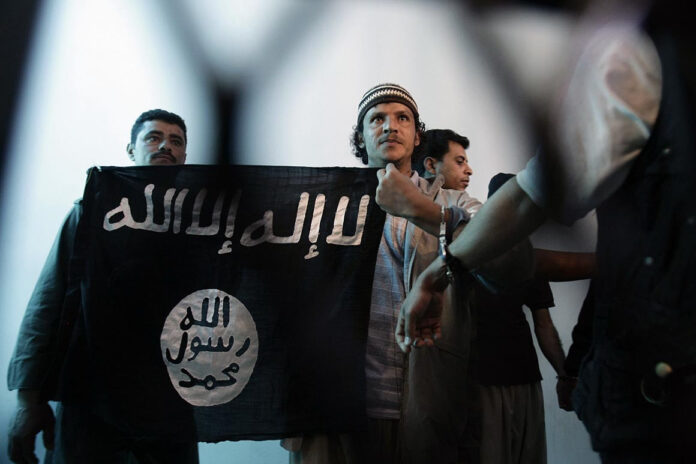
‘Al-Qaeda militants fighting alongside Saudi mercenaries against Ansarullah’

“Our role in fighting the Houthis is apparent, and no one can deny it,” al-Mayadeen television news network quoted Khalid Saeed Batarfi, the current emir of al-Qaeda in the Arabian Peninsula (AQAP), as saying.

He added that the AQAP terrorists have fought within the ranks of Saudi troops and mercenaries against the Yemeni army and their allied Popular Committees on 11 fronts.

The remarks come as Yemen’s Interior Ministry has confirmed that the al-Qaeda terrorists are fighting alongside Saudi-backed militants in Yemen’s strategic Ma’rib province, as Yemeni forces are pressing ahead with an offensive to liberate the city.

Yemen’s Deputy Interior Minister Major General Abdul Majeed al-Murtadha stated in a statement carried by al-Masirah television network earlier this year that devices and equipment owned by al-Qaeda were found in the central province of al-Bayda after the Yemeni military managed to clear terrorists from there, which were linked to foreign intelligence services.

Murtadha noted the elimination of al-Qaeda in al-Bayda by the Yemeni armed forces and allied fighters from the Popular Committees ruffled feathers in Washington, and that is why Washington has been calling on the Yemeni forces to halt their offensive on the city.

Saudi Arabia, backed by the US and regional allies, launched the war on Yemen in March 2015, with the goal of bringing the Hadi government back to power and crushing popular Ansarullah.

The war has left hundreds of thousands of Yemenis dead, and displaced millions more. It has also destroyed Yemen’s infrastructure and spread famine and infectious diseases.

Yemeni armed forces and the Popular Committees have grown steadily in strength against the Saudi-led invaders and left Riyadh and its allies bogged down in the country.

Top Daesh sniper killed in Iraq’s Kirkuk

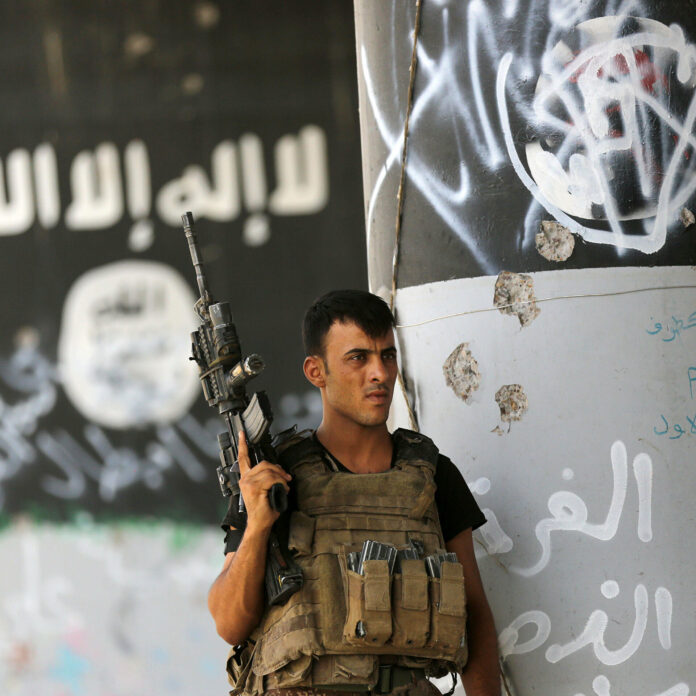
The Iraq’s Ministry of Defense reported the killing of a Daesh prominent official in Kirkuk governorate on Friday.

The defense ministry announced in a statement, “The 3rd regiment launched an operation in the Albu Muhammad area of Wadi al-Shay in Kirkuk which resulted in the killing of the leader of the sniper detachment in Daesh Organization, nicknamed “Abu Qatada” and the injury of two others.

Earlier, The Directorate of Military Intelligence in the Iraqi Ministry of Defense arrested a terrorist in Kirkuk Governorate.

The Security Media Cell said that, based on intelligence information, the authorities had arrested a terrorist responsible for distributing funds (Kafala) to the families of Daesh in Kirkuk.

In 2017, Baghdad declared final victory over Daesh after Iraqi forces drove its last remnants from the country, three years after the militant group captured about a third of Iraq’s territory.

The war has had a devastating impact on the areas previously controlled by the militants. About 3.2 million people remain displaced.

Yet, Daesh still has sleeper cells in several Iraqi Governorates.

Recently, the terrorist organization has become more active, as sleeper cells target civilians, security forces, power transmission lines, and towers in several governorates.

The Iraqi forces and the Popular Mobilization Forces launched various operations against Daesh in different locations, which led to the killing and the arrest of many members.

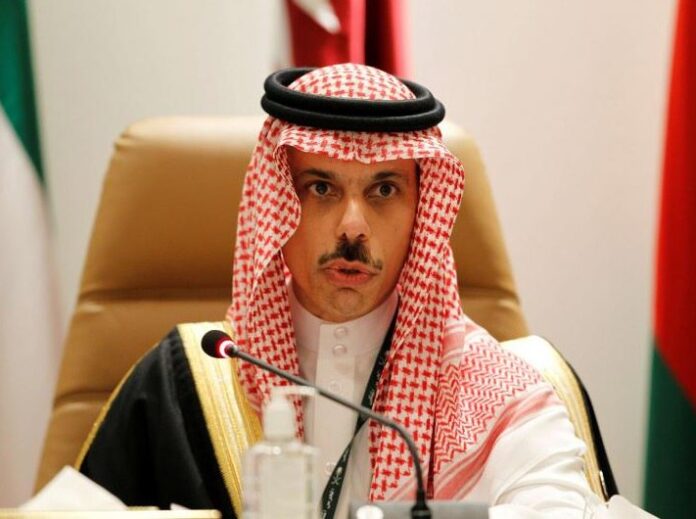
FM: Iran and Saudi Arabia can reopen consulates

Expressing hope that Tehran-Riyadh talks would continue, the top Saudi diplomat told France 24 that the talks between the two neighbors have made enough progress which makes it possible to move forward.

Negotiations have so far been transparent and explicit in nature, but have not yielded results. We are committed to serious negotiations with Iran in areas that we and other countries in the region are concerned about. This allows us to have normal relations with our neighbor Iran, the Saudi foreign minister stated.

He added that the two sides seem to have some kind of agreement on interests, noting that Saudi concerns need to be addressed.

Asked whether the Saudis are interested in another round of talks with the Islamic Republic, Prince Faisal bin Farhan expressed hope that further talks will be held adding that this is not planned, but the Saudis are ready to hold it in Iraq or elsewhere.

In response to a question about possible reopening of consulates in the two countries, the Saudi foreign minister said the kingdom is definitely ready to consider all suggestions and issues if they are serious and tangible. He added that the issue of reopening consulates could occur, but no decision has been made yet.

The two neighbors and regional rivals have had no diplomatic relations since January 2016 following the attack on the Saudi Embassy in the Iranian capital Tehran after Saudi Arabia executed Shia Muslim cleric Sheikh Nimr al-Nimr. 

The two sides have held several rounds of talks over the past months in Iraq on a possible détente.

WHO: 1mn Afghan children likely to die of malnutrition

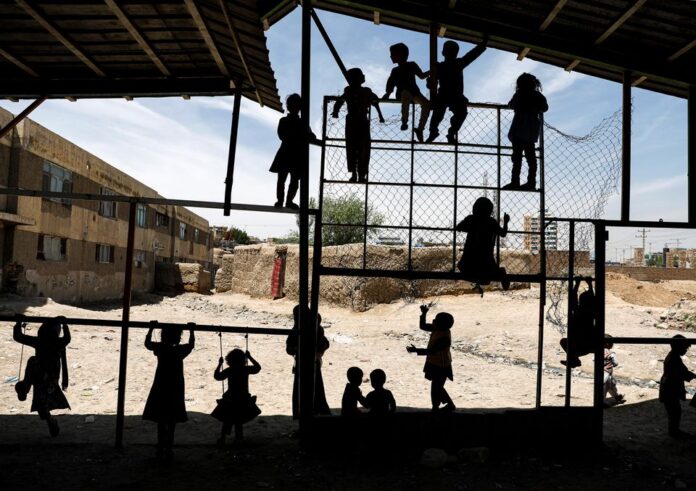
Around 3.2 million children are expected to suffer from acute malnutrition in Afghanistan by the end of this year, with 1 million of them at risk of dying as temperatures drop, a WHO spokesperson said on Friday.

Aid agencies have warned of famine as a drought coincides with a failing economy following the withdrawal of Western financial support in the aftermath of a Taliban takeover in August. The health sector has been hit especially hard, with many healthcare workers fleeing due to unpaid salaries.

“It’s an uphill battle as starvation grips the country,” Margaret Harris told Geneva-based journalists by telephone from the capital Kabul, adding, “The world must not and cannot afford to turn its back on Afghanistan.”

Nighttime temperatures are falling below zero degrees Celsius and colder temperatures are expected to make the old and the young more susceptible to other diseases, Harris said. In some places, people are chopping down trees to provide fuel for the hospitals amid widespread shortages, she continued.

Harris did not have numbers for the number of children who had already died from malnutrition but described “wards filled with tiny little children”, including with a seven-month old baby whom she described as “smaller than a newborn”.

Measles cases are rising in the country and WHO data shows 24,000 clinical cases had so far been reported.

“For malnourished children, measles is a death sentence. We will see so many more deaths if we don’t move on this quickly,” Harris stated.

With millions facing starvation and nearly the entire population teetering on the brink of poverty, Afghanistan could experience the worst humanitarian crisis “we’ve ever seen”, a United Nations Development Programme official has warned.

Some 23 million people are in desperate need of food, the $20 billion economy could shrink by $4 billion or more and 97% of the 38 million population are at risk of sinking into poverty, Abdallah Al Dardari, the resident representative for the UNDP in Afghanistan, said Wednesday.

“Afghanistan is probably facing the worst humanitarian disaster we’ve ever seen,” Al Dardari added.

“We have never seen an economic shock of that magnitude and we have never seen a humanitarian crisis of that magnitude,” he said.

Funding for the humanitarian crisis and for essential services is crucial to maintain lives and livelihood in the Central Asian country, he added.

Multiple reports say that several areas in Afghanistan are also facing droughts even as winter approaches.

Russia seeks restoring JCPOA, removal anti-Iran bans in Vienna

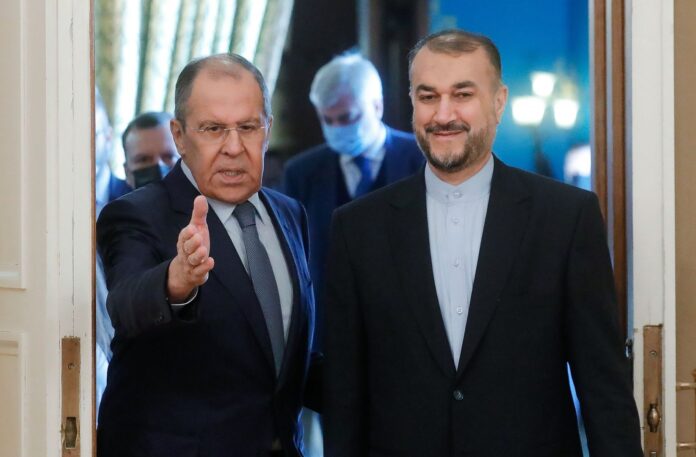
“On November 29, it is planned to resume talks of the signatories to the Joint Comprehensive Plan of Action (JCPOA) on settling the situation around the Iranian nuclear program. We will insist on implementing the agreements reached under this document in 2015, on their full implementation,” he stated.

“It means that the United States should resume the implementation of its commitments, including lift all the sanctions imposed in the context of the JCPOA,” Lavrov stressed.

According to the Russian top diplomat, the Iran nuclear deal was among the topics discussed in Paris during the 2+2 meeting between Russian and French defense and foreign ministers.

“Here, we have prospects for more constructive cooperation,” he added.

The JCPOA has had six offline meetings in Vienna since April to find ways to restore the nuclear deal in its original form. The sides discuss prospects for the United States’ possible return to the deal, steps needed to ensure full compliance with the deal’s terms by Iran, and issues of lifting the anti-Iranian sanctions.

The JCPOA, also known as the Iran nuclear deal, was signed between Iran, the five permanent members of the United Nations Security Council (Russia, the United Kingdom, China, the United States and France) and Germany in 2015. Under the deal, Iran undertook to curb its nuclear activities and place them under total control of the International Atomic Energy Agency (IAEA) in exchange of abandonment of the sanctions imposed previously by the United Nations Security Council, the European Union and the United States over its nuclear program.

The future of the deal was called in question after the United States’ unilateral pullout in May 2018 and Washington’s unilateral oil export sanctions against Teheran. Iran argued that all other participants, Europeans in the first place, were ignoring some of their own obligations in the economic sphere, thus making the deal in its current shape senseless. This said, it began to gradually scale down its commitments under the deal.

Meanwhile, US’ incumbent President Joe Biden has repeatedly signaled his readiness to return the US to the deal.

Biden: Supplies of petroleum sufficient to reduce purchase from Iran

The White House is required to affirm every six months that there is enough oil supply globally to maintain sanctions against Iran that were put in place in 2012, during Barack Obama’s administration.

Biden’s statement comes in advance of a virtual meeting with China’s President Xi Jinping on Monday, in what is expected to be the leaders’ most extensive meeting since Biden took office.

China is the largest purchaser of Iranian oil, averaging purchases of more than 500,000 barrels a day over the last three months.

Chinese purchases of Iranian crude have continued this year despite sanctions that, if enforced, would allow Washington to cut off those who violate them from the US economy.

The Biden administration is currently not enforcing those sanctions ahead of forthcoming negotiations with Iran to revive a 2015 nuclear deal that would let that nation sell its oil openly again.

“Consistent with prior determinations, there is a sufficient supply of petroleum and petroleum products from countries other than Iran to permit a significant reduction in the volume of petroleum and petroleum products purchased from Iran by or through foreign financial institutions,” Biden announced in a memo to the State Department on Friday that.