Monday, December 22, 2025
Home Blog Page 2306

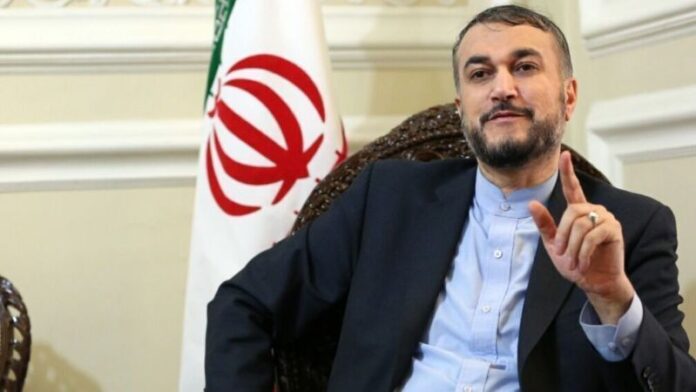
Official: Iran holds talks with Taliban

The Foreign Ministry’s Director General for West Asia Rasoul Mousavi said Iran always tried to prevent the Taliban’s takeover of Afghanistan in the past, but now it has no choice but to accept Afghanistan’s realities.

He added, “Whether we like it or not, the Taliban are now the rulers of Afghanistan”.
The Foreign Ministry official said the talks need to be made official.

Mousavi also said, in the secret negotiations, the Taliban recognized Iran’s right to the water of Hirmand River, the longest river in Afghanistan part of which is in Iran.

Iran has not yet officially recognized the Taliban as rulers of Afghanistan, saying its recognition is contingent upon their formation of a broad-based government made up of all Afghan ethnic and political groups.

Top Iran negotiator in Moscow: Nuclear talks to resume

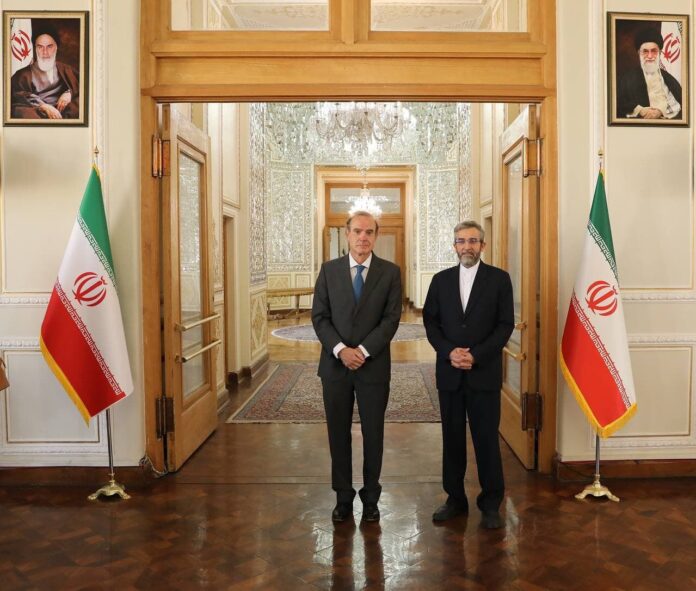
Bagheri made the comments in Moscow where he’s going to talk with his Russian counterpart Sergei Ryabkov to explore ways of resuming the nuclear negotiations. Bagheri referred to his talks with the EU coordinator Enrique Mora in Tehran and Brussels, describing them as candid and constructive.

Bagheri added that during the meeting with Mora, he outlined Iran’s demands that must be met in Vienna. According to Bagheri, it was also agreed that Iran and each of the signatories to the nuclear deal will hold separate face to face meetings in Vienna to discuss ways of removing the oppressive sanctions.

Bagheri noted that what matters is the seriousness of the other side to lift the illegal sanctions.

Iran and the signatories to the nuclear deal have agreed to resume the Vienna talks before November’s end.

The nuclear deal plunged into chaos after the US withdrawal in 2018. Following its pullout, the US under former president Donald Trump reinstated sanctions on Iran. Tehran rolled back its commitments under the agreement in retaliation.

US President Joe Biden now says he intends to return to the nuclear deal. He has asked Iran to also return to full compliance with the agreement. But Iran says it will only do so after Washington removes the sanctions.

IAEA chief hopes to meet Iran’s president “soon”

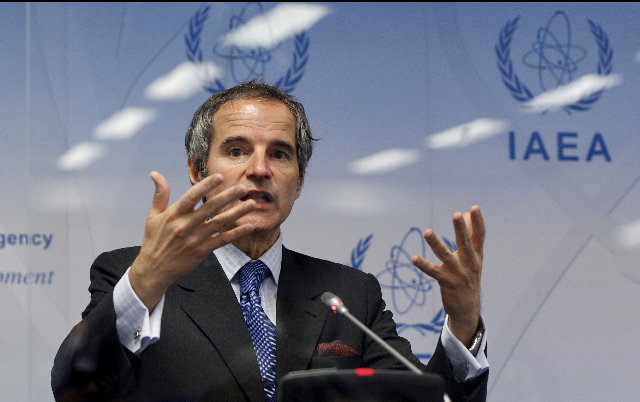
The Director-General of the International Atomic Energy Agency (IAEA), Rafael Grossi, spoke about Iran’s recent decision to restart nuclear talks before the end of November in an interview with Euronews.

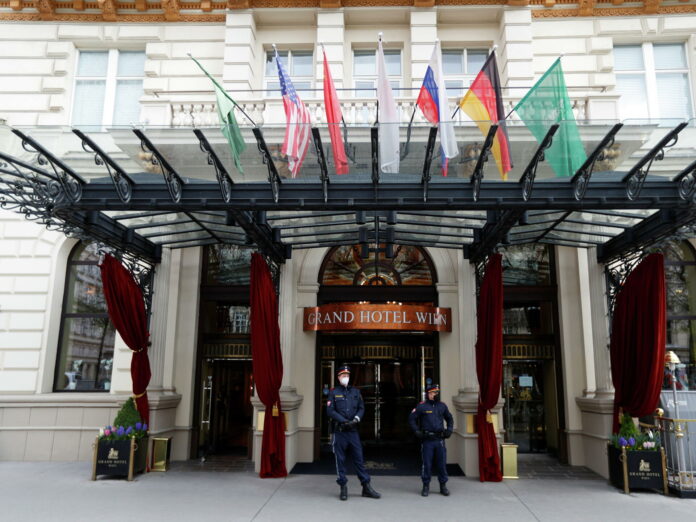
Negotiations to revive the Iran nuclear deal, officially called the Joint Comprehensive Plan of Action (JCPOA), have been taking place in Vienna with Germany, France, the United Kingdom, China, Russia and indirectly the United States. But the process reached an impasse after Raisi won the presidency in June.

Grossi, who, as IAEA chief, acts as guarantor of the whole agreement, said he hasn’t yet met President Raisi but hopes to do it soon to build a relation of “mutual trust and confidence”.

“Our relationship with Iran is a permanent one, it’s not predicated on the JCPOA or other things. It’s a permanent relationship based on their membership on the Treaty on the Non-Proliferation of Nuclear Weapons, which requires all countries in the world to have a system of inspections,” he continued.

“Of course, there are ups and downs as in any relationship, and we are always making every possible effort to keep it at a good level. And this has been my message all along,” the IAEA chief added.

The director called on Iran to allow the agency to replace the monitoring and surveillance equipment installed in the country’s nuclear sites.

IAEA inspections are an essential part of the 2015 deal and have become in recent years an important point of contention.

“I think diplomacy cannot fail. We have to make sure that every element is there and it is possible to have a sort of a modus vivendi,” he stated.

“Iran can continue with its nuclear programme within important limitations and giving, at the same time, all the necessary assurances to the international community that nothing is incorrect or not in the way it should be. And for that, you have the inspectors,” Grossi added.

Grossi has recently expressed hope to meet with Iran’s Foreign Minister Hossein Amir Abdollahian “soon”, describing it as “very important”.

The chief had stated he expects to visit Tehran before the end of next month for talks with Iranian officials over the country’s nuclear programme.

On Wednesday, Iran announced it will resume negotiations with world powers in November on reviving the nuclear deal.

Iran’s Deputy Foreign Minister Ali Bagheri Kani said he and coordinator of the nuclear deal’s joint commission Enrique Mora have agreed to the resumption of the Vienna talks before the end of November.

Bagheir made the announcement in a tweet following his talks with Mora in Brussels.

He stated he held serious and constructive negotiations with Mora over the vital components of the nuclear talks.

Bagheri added that the two sides agreed to resume negotiations before the end of November, noting the exact date of the talks will be announced next week.

The Vienna talks stalled before a new administration took office in Iran several months ago. The current Iranian government has repeatedly stressed it’s ready for talks but insists any dialogue must bear tangible results that would serve the interests of the Iranian people.

The Iran nuclear deal plunged into disarray after former US president Donald Trump pulled Washington out of the agreement in 2018.
Following his withdrawal, Trump reinstated harsh sanctions on Iran. In response, the Islamic Republic rolled back its obligations under the deal.

The US under President Joe Biden has announced multiple times it intends to return to the JCPOA.

It has called on Iran to return to full compliance with the deal. But Iran says the US must first show good-will by removing the anti-Tehran sanctions. Iran has also criticized the European troika for their inaction to resist the US’s unilateral sanctions on Iran.

China urges US to correct wrong policy on Iran

“The US should thoroughly correct its wrong policy of ‘maximum pressure’ on Iran, and Iran should resume full compliance on this basis,” Wang Wenbin, a Chinese Foreign Ministry spokesperson, said.

“Other parties should also create a favorable atmosphere for achieving the above goals,” he added.

Wang stressed that it is in the common interests of the international community to bring the deal, officially called the Joint Comprehensive Plan of Action (JCPOA), back on track as soon as possible and promote regional peace and stability.

He made the remarks a day after Iran’s new lead negotiator, Ali Baqeri-Kani, announced that the negotiations to revive the JCPOA will resume before the end of November.

There has been mounting pressure on Tehran to return to the negotiating table in recent weeks.

Back in April, Iran and the remaining parties to the landmark nuclear deal began negotiations to restore the deal. The talks were paused in late June, after Iran’s presidential election.

But according to Baqeri-Kani, the exact date of the next meeting would be announced in the course of the next week.

“China welcomes Iran’s announcement of its return to the Vienna negotiations before the end of November, appreciates Iran’s invitation for the IAEA chief’s visit, and supports both sides in resolving differences through dialogue,” Wang stated during his Thursday presser.

Noting the “important progress” made in the previous six rounds of negotiations, he said all parties should make renewed efforts to push for breakthroughs in the negotiations based on the principle of objectivity and justice.

“China will stay in close communication with relevant parties, take a constructive part in negotiations, firmly uphold the JCPOA and push for the political and diplomatic settlement of the Iranian nuclear issue,” the Chinese spokesman continued, adding, “At the same time, we will resolutely safeguard our legitimate rights and interests.”

The current complications surrounding the full implementation of the JCPOA by all sides began after the US unilaterally withdrew from the deal in May 2018 and reinstated the harsh economic sanctions on Iran that were lifted after the deal went into force in January 2016.

Following the US withdrawal, Tehran waited a whole year for the remaining parties to the deal, mainly the Europeans, —France, Britain, Germany—to secure its economic interests under the accord.

However, as the European trio failed to honor their commitments by safeguarding Iran’s economy from Washington’s so-called maximum pressure policy, the Islamic Republic began to exceed the limits set by the JCPOA on its nuclear work in May 2019, as part of its right under the deal.

On Wednesday, Baqeri-Kani told Press TV that Iran is dead set on its position of engaging in only “result-oriented” negotiations via the Vienna format.

“Result-oriented talks are acceptable for us; talks that will have practical outcomes; talks that will lead to the removal of cruel and illegal sanctions. But we do not accept talks for the sake of talks and reject them,” he stressed, following a long meeting with Enrique Mora, the European Union’s deputy foreign policy chief, in Brussels.

Biden to discuss Iran with E3 at G20

Sullivan told reporters aboard Air Force One en route to Rome that Biden will meet with the leaders of Germany, France, and Britain “to touch base on where things stand right now with respect to trying to resume negotiations for a return to the JCPOA”, referring to the Joint Comprehensive Plan of Action, commonly known as the Iran nuclear deal.

The discussion will be an opportunity to coordinate on a joint negotiating position and understand Iran’s progress on its nuclear program, he added.

Iran’s Deputy Foreign Minister and nuclear negotiator Ali Bagheri Kani stated on Wednesday that Tehran has agreed to resume negotiations over the nuclear deal before the end of November.

The United States and Iranian officials began indirect talks in Vienna this April to restore the 2015 nuclear agreement, but their disagreements remained significant after six rounds of negotiations, which have been interrupted due to Iran’s government transition.

To pressure Tehran, the Biden administration has recently reiterated the window for negotiations on a return to the JCPOA will not be open forever and warned of turning to other options if diplomacy fails.

The United States withdrew from the 2015 nuclear deal in May 2018 when Donald Trump was in office, and imposed sanctions on Iran. In response, Tehran has gradually stopped implementing parts of its commitments to the deal since May 2019.

Armenian denies withdrawing from border region

Pashinian said there has been no change in the posture of the Armenian troops in Syunik province.

He added, “Our border guards have been serving in the posts since December 2020”. The denial from Pashnian comes after repeated claims by Azerbaijani officials about the Zangezur corridor near the Iranian border.

Aliyev has threatened to capture the corridor by force and in violation of the UN Charter. Azeri officials stand accused of causing tension over “Zangezur” through resorting to propaganda after the country signed a truce with Armenian in November 2020, ending their 44-day bloody war.

They claim that during the ceasefire talks, Azerbaijan Republic and Armenia agreed on carving out a swath of land linking Nakhjavan to Azerbaijan.

This is while the 9-point agreement does not make any reference to the issue. Only Article 9 says Armenia has agreed to open closed routes for transportation between Azerbaijan’s west and Nakhjavan.

The wording does not say anything about the creation of a corridor which would eliminate the border and deprive Iran of access to Armenia’s transit route.

Obviously, Baku is making an effort to insinuate its own narrative and interpretation of Article 9 of the truce deal through resorting to propaganda.

IRGC eliminates terror cell in Sardasht

The Islamic Revolution Guards Corps Ground Force said in a statement that through reconnaissance and intelligence measures, the armed terrorist group that intended to infiltrate into the country and carry out sabotage operations in the northwestern region was destroyed upon entering the Iranian soil.

The IRGC also seized some weapons and ammunition from the terrorist cell.

Pomegranate harvest from Abarkooh gardens in Yazd

There are about 6,000 hectares of pomegranate gardens in the desert province of Yazd, mostly in the cities of Meybod, Ardakan, Yazd, Taft and Abarkooh.

Many of the pomegranate cultivars have are fit for export quality-wise. Of the 40 cultivars produced in this province, 11 are exported to other countries.

This year, Abarkooh farmers harvested the best pomegranate in terms of quality with timely irrigation, non-use of chemical pesticides and timely pruning.

Yazd province ranks fifth in terms of cultivated area and fourth regarding pomegranate production in Iran. The high quality pomegranate cultivars of Yazd province include Yazdi malt, Shirin Shahvazi, Qasr al-Dasht, Yazd Sweet-and-Sour and Gol Taft.

The sweet-and-sour, Black Seed and Hasibi cultivars are exported to Iraq and other countries in the Persian Gulf.

Farmers process a portion of the crop into high-quality traditional paste while they also put aside part of it for fresh consumption and for selling to neighboring provinces.


Iranian refugee convicted by Dutch court on terror charges

The Rotterdam District Court said the 42-year-old man was linked to the SMLA and was convicted of preparing and financing terror attacks in Iran.

The defendant was in contact with separatist militants who planned and carried out terror attacks in Iran, including torching banks and targeting people linked to the Iranian government, the court added.

He also discussed possible targets, offered financial support and urged terrorists to make video recordings of their attacks.

The court further announced that the defendant, through his actions, “played an important role in a criminal and terrorist organization whose goal was to support attacks in Iran”.

The SMLA has been after separating the Southwestern province of Khuzestan — home to the country’s Arab population — from the rest of Iran through engaging in terrorist attacks against Iran.

The terror outfit is directly supported by the intelligence agencies of Saudi Arabia and Israel.

SMLA ringleader Farajollah Chaab, also known as Habib Asyud, was arrested in November 2020 on the back of a set of “specialized and combined measures” by Iranian intelligence forces.

In his confessions, Chaab admitted to cooperation with the Saudi intelligence service.

In September 2018, SMLA claimed responsibility for the attack on military parade in Ahvaz, Khuzestan’s provincial capital. The assault killed 25 people, including members of Iran’s Islamic Revolutionary Guard Corps (IRGC) and civilian bystanders, and injured 70 others.

Yemen: Saudi, allies should admit defeat in war

In an interview with Lebanon’s al-khbar newspaper, al-Atefi emphasized that the Yemeni army and Popular Committees have scored major victories against the Saudi-led coalition over the past years.

“According to strategic and military implications, … we declare today to the whole world that international aggression against Yemen has already been defeated,” the minister said, adding that the aggression coalition has “no choice but to have the courage to admit the big defeat.”

Al-Atefi further noted the liberation of “most of the districts in Ma’rib province have been secured by the army and Popular Committees.”

The recapture of Ma’rib City is “a matter of time,” the minister said, adding that the Yemeni forces have reached the outskirts of Ma’rib City, and almost encircled the city.

He stressed that all occupied areas in Yemen would soon be restored to the Yemeni sovereignty.

Yemen’s al-Masirah television network reported on Wednesday that the Yemeni forces have taken control of the district of al-Juba, south of Ma’rib City, which marks the latest gain scored by the Yemeni forces as part of an operation aimed at purging Mar’ib of the Saudi-backed militants.

Spokesman for the Yemeni Armed Forces Brigadier General Yahya Saree said in a statement that the Yemeni forces had liberated the districts of al-Juba and Jabal Murad in Ma’rib as part of the second stage of the operation Operation Rabi’ al-Nasr (Spring of Victory).

He stated the operation has inflicted heavy losses on the Saudi-backed mercenaries.

The Yemeni Armed Forces also praised the tribes of Ma’rib province and their contribution to the success of the operation.

The Armed Forces also assured the civilians in Ma’rib City that it will work to secure them and their property.

Also in his interview, Yemen’s defense minister reacted to reports as to whether Saudi Arabia and the United Arab Emirates are facilitating the Israeli presence on a number of Yemeni islands such as Mayun and Socotra, al-Atefi and noted, “We will not rest” until we regain control of every inch of our Yemeni land, including islands, ports and provinces.

Elsewhere is his remarks, al-Atefi stressed that the Yemeni oil is a sovereign wealth and belongs to the Yemeni nation, warning that “we are in possession of strategic … weapons that can deter any direct or indirect aggression that may target Safer oil facility or any other Yemeni facilities.”

He added that Yemen would respond to any such attack by hitting targets “deep inside” the member countries of the coalition, emphasizing that all the aggressors’ oil facilities would be targets of the Yemeni missiles and drones.

Al-Atefi also warned the Saudi-led coalition that Yemeni forces were prepared to take their counterstrikes to the stage of “great pain” which has yet to begin, noting that the Yemeni forces will move to this stage should the Saudi aggression and siege continue.

Referring to the presence of British forces in Yemen’s al-Mahrah province, the minister said the British military presence in the province is “open colonization and occupation, with no justification or legitimacy,” adding, “All international laws and norms allow dealing with it as a colonial power that has penetrated state sovereignty.”

“London and every occupier of our land must be sure that the Yemeni people will not stand idly by,” he continued, emphasizing that the Yemenis would give a “painful” response to the British occupation.

Saudi Arabia, backed by the US and regional allies, launched the war on Yemen in March 2015, with the goal of bringing the government of former president Abd Rabbuh Mansur Hadi back to power and crushing the Ansarullah movement, which had overthrown the previous Yemeni government in a revolution.

The Saudi war has left hundreds of thousands of Yemenis dead, and displaced millions more. It has also destroyed Yemen’s infrastructure and spread famine and infectious diseases.

In the meantime, Yemeni armed forces and the Popular Committees have grown steadily in strength against the Saudi-led invaders and left Riyadh and its allies bogged down in the country.