Monday, December 22, 2025
Home Blog Page 2307

Iran administers over 1mn more shots as it races to avert sixth Covid-19 wave

The ministry figures released on Thursday show over 84,600,000 Covid-19 inoculations in Iran since the outbreak began in 2020.

Iran has intensified imports and domestic production of different types of Covid-19 vaccines over the past months in a bid to contain the outbreak of the deadly disease.

On Thursday, the Islamic Republic’s Red Crescent Society imported six million more doses and delivered the shipment to the Health Ministry. The Red Crescent stressed that the imports will continue until the country’s needs are met.

Meanwhile, Iran reported 159 more deaths from the virus taking the total number of fatalities to 125,875.

The fatalities have been below 200 for days. That’s far lower than the peak of the fifth wave about two months ago.

Over 11,000 new infection cases have also been identified in the past 24 hours in Iran.

The country has managed to bring the outbreak under control somehow and eased many restrictions, but authorities have been warning that a sixth wave could be looming on the horizon if protocols are not observed properly.

Turkey to US: Deliver F-35s or give money back

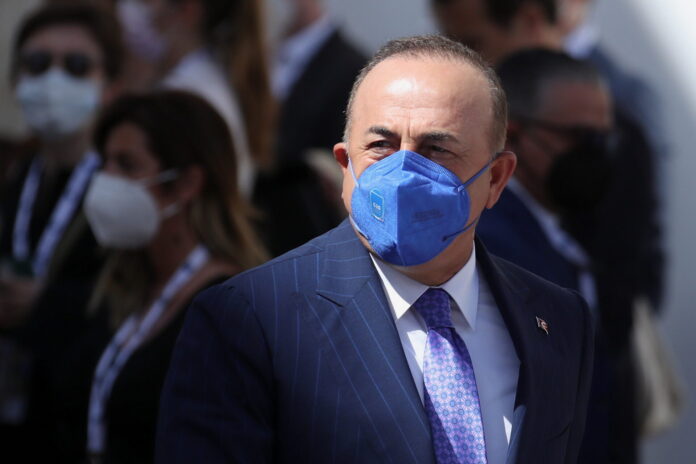
“If the US does not want to resolve the issue about F35s, or if the US Congress blocks it, Turkey will consider other options including purchasing (Russian-made) SU-35 or SU-57,” Foreign Minister Mevlut Cavusoglu told CNN Turk in a televised interview.

Turkey and the US have agreed to continue talks to resolve the issue over the F-35 Joint Strike Fighter program, the Turkish Defense Ministry said on Thursday.

According to a statement, representatives of the Turkish and US defense ministries held a meeting in the capital Ankara, in which they also discussed financial issues.

In 2019, Washington announced that it was taking Turkey out of the F-35 program over Ankara’s purchase of Russia’s S-400 air defense system.

Turkey, however, stressed that the S-400s would not be integrated into NATO systems and pose no threat to the alliance or its armaments.

Ankara also repeatedly proposed setting up a commission to clarify the issue.

When asked about statements by 10 Western ambassadors regarding the Osman Kavala case, Cavusoglu stated that they did not have the right to interfere in Turkey’s internal affairs and certainly they are not entitled to give directions to Turkish judiciary.

“We had made the preparations to declare them persona non grata upon the instruction of our president (Recep Tayyip Erdogan) and we were going to present that to the Cabinet on Monday. After our president’s speech, the panic deepened even more, some of the envoys started to pack their suitcases, and then they took a step back,” he added.

Last week, Turkey’s Foreign Ministry summoned the ambassadors of the US, Canada, Finland, Sweden, Denmark, Norway, New Zealand, the Netherlands, Germany, and France for meddling in the Turkish judiciary.

Erdogan on Saturday ordered the foreign minister to declare these 10 ambassadors persona non grata over their statements on the ongoing case of Kavala.

Early on Monday, the 10 embassies in Turkey announced that they abide by Article 41 of the Vienna Convention on Diplomatic Relations, which calls on the envoys not to interfere in the internal affairs of the states they serve in.

Kavala faced charges over the 2013 Gezi Park protests, a small number of demonstrations in Istanbul that later transformed into nationwide protests which left eight protesters and a police officer dead. He was acquitted of all charges in February 2020, however, an appeal court overturned this verdict in January.

Kavala was also accused of involvement in the 2016 defeated coup orchestrated by the Fetullah Terrorist Organization (FETO) in Turkey. He was remanded into custody on charges of spying in March.

Putin warns of Asia arms race following US exit from nuclear treaty

Speaking at the 16th East Asia Summit on Wednesday, Putin stated, “We have repeatedly warned that the termination of the treaty on intermediate and short-range missiles [INF] means the region is now facing the possibility of these strike weapons appearing across its vast space, and a new arms race as a result.”

The Russian president added that, despite former President Donald Trump’s decision to pull out of the INF in August 2019, Moscow has “declared a unilateral moratorium on the deployment of intermediate and shorter-range missiles in the Asia-Pacific region and other parts of the world, while calling for a serious dialogue on the issue with the states it affects.”

According to him, “the Russian proposal remains open, and it is increasingly important.”

Cooperation with other nations, Putin said, “is the only way, in our view, to stop existing and emerging threats and solve problems that affect our region and the world as a whole.”

He went on to add that dialogue needs to focus on “sustainable development and improving the well-being of the population,” insisting that Moscow stands ready to take part in any such talks.

Washington blamed its withdrawal from the INF on purported breaches of the nuclear pact by Russia. Moscow has denied the claims and said that US missile defense systems in Central Europe break its terms. The Kremlin suspended its own participation in the treaty the day after Washington announced it would no longer be bound by it.
Earlier this month, Putin’s press secretary, Dmitry Peskov, noted that Moscow was unconcerned about rumors that China had tested a nuclear-capable rocket that can orbit the Earth and strike targets faster than the speed of sound.

Britain’s Financial Times reported that the alleged launch of the hypersonic rocket “took US intelligence by surprise.”

Robert Wood, President Joe Biden’s ambassador to the UN, has since warned that “hypersonic technology is something that we have been concerned about, the potential military applications of it, and we have held back from pursuing.”

According to Peskov, the development, which Beijing has refused to confirm, does not pose a threat to Moscow as “we have allied relations with China” which, he stated, “is developing its armed forces and its weapons systems, but isn’t going beyond the framework of any international agreements.”
At the beginning of October, Russia announced that it had successfully fired a hypersonic Zircon anti-ship missile from a nuclear submarine for the first time in history. Capable of flying at nine times the speed of sound, US military chiefs have previously warned the Zircon poses unprecedented challenges for detection and interception by conventional rocket defense systems.

Iran Gas Stations Back on Line after System Disruption

“Gas is now offered at all pumps across the country,” said Fatemeh Kahi, the spokesperson for the National Iranian Oil Products Distribution Company (NIOPDC).

She said gasoline is now available at full price at 3,000 out of a total 3,700 gas stations across the country, and at subsidized price at 700 pumps.

On Wednesday, gas station systems offering gasoline at subsidized prices went off line nationwide.

Drivers were able to get fuel at full price, but not at subsidized price.

She said efforts are underway to bring back on line systems offering subsidized-price gasolines at all gas stations.

Iran’s National center of Cyberspace confirmed Wednesday that the gas stations across the country were shut down due to a cyber attack.

The outage left millions of drivers stranded due to the closure of gas stations countrywide.

Iran rejects Reuters narration of nuclear talks

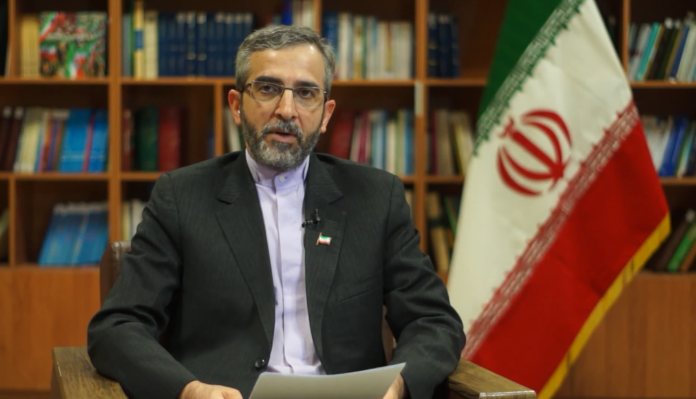
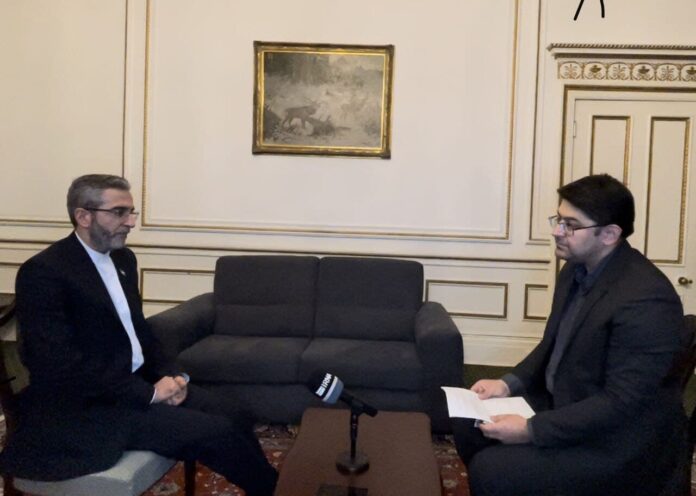
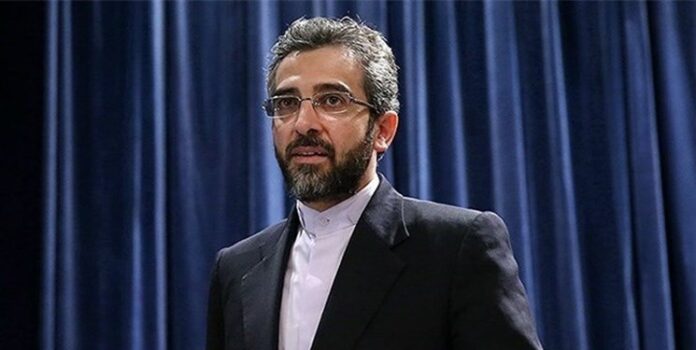
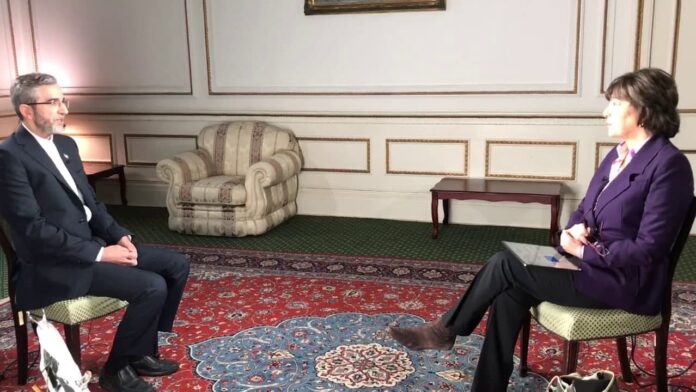
Bagheri, who held a five-hour meeting with Deputy EU Foreign Policy Chief Enrique Mora at the EU Headquarters in Brussels on Wednesday, called these talks serious and constructive.

“The lifting of oppressive sanctions against the Iranian people will be the main agenda of the talks,” he added.

He called the Reuters news about the resumption of talks with the P5+1 incorrect, stating Iran will continue talks with the P4+1, and the groundwork has not yet been laid for the Americans to be able to return to the JCPOA.

In response to US officials’ remarks that Iran should seek answers to its questions from the United States, not Europe, Bagheri said that the European Union is the coordinator of the JCPOA Joint Commission.

“We had such talks in previous periods [with EU], and now in the continuation of the same talks, he [Enrique Mora] plays the role of coordinator of the P4+1 and Iran, and these talks have been formed on that basis,” he continued, adding, “Our talks with the P4 + 1 will actually take place in November.”

Earlier, in a tweet on Wednesday, Bagheri wrote, “I had a serious and constructive talk with Deputy EU Foreign Policy Chief Enrique Mora in Brussels about the essential elements of successful negotiations.”

“We have agreed to restart nuclear talks in Vienna by the end of November,” he said, adding that the exact date will be announced next week.

Iran and the remaining signatories to the JCPOA known as the P4+1 have held six rounds of talks so far with no results. The Western powers made excessive demands during the talks and the talks were postponed at the end of the previous Iranian administration under Rouhani until the formation of the new government in Iran under President Ebrahim Raeisi.

The new Iranian administration has vowed that it will return to the Vienna talks if they are result-oriented and can yield tangible results for Iran in terms of the removal of the sanctions and abidance of the parties by the JCPOA provisions.

Iranian army unveils Friendship 5-3031 aircraft

“Unfortunately, the aircraft was not in a good condition at the beginning, but through efforts and work, its condition improved and reached a good point,” he added.

General Qorbani then touched upon the capabilities of the Iranian military.

“Our Armed Forces are strong and the unrivalled power in the region,” he said.

The top commander underlined that Iran’s Armed Forces are standing on their own feet today.

“Our army is a revolutionary one and always stands by the people,” he said.

“We, the Armed Forces, become united against the enemy and at the same time stand by our dear people,” said the commander.

Russia warns of tension rise in Syria

“Despite the general stabilization of the military political situation in Syria, risks of the escalation of tensions are still high, especially on the territories that are not controlled by the government – in Idlib, on the eastern bank of the Euphrates, and in al-Tanf,” Russian First Deputy Permanent Representative to the United Nations Dmitry Polyansky said at a meeting of the United Nations Security Council.

Russia, in his words, is concerned over “the reports about ongoing illegal airstrikes by the Israeli air forces at Syria’s territory.”

“Internecine skirmishes go on” in the country’s northeastern areas, where Islamic State militants are operating, he continued.

“In this context, we would like to stress once again the importance of promoting the intra-Syrian dialogue geared to restore Syria’s unity, territorial integrity, sovereignty and independence,” Polyansky added.

Turkey deploys troops in Syria for attack on Kurds

The main goal of the planned offensive is to ensure that two-thirds of Turkey’s 560-mile border with Syria is free from the presence of Kurdish forces, the officials told the news agency, speaking on the condition of anonymity.

The move by Ankara could also help the country’s President Recep Tayyip Erdogan build up domestic support and put pressure on the US and Russia to pacify Kurdish forces, officials added.

Officials also noted that Ankara intends to seize areas in the south of the city of Kobani in order to unite the territories under its control to the west and east of the Euphrates River. Another potential target of the Turkish authorities could be the Menagh airfield, over which the Kurdistan Workers’ Party and the Syrian Kurdish Self-Defense Forces, banned in Turkey, have established power.

On 13 October, Turkish Foreign Minister Mevlud Cavusoglu claimed that Russia and the United States have failed to fulfill their obligations and did not clear Syria’s north from Kurdish militant units.

Later, on October 21, the Turkish President threatened that the country’s armed forces will use heavy weapons to solve the problem and “not leave the situation as it is.”

In 2016-2019, the Turkish army conducted three operations in northern Syria – “Euphrates Shield” against militants of the IS terrorist group, “Olive Branch” and “Peace Spring” against Kurdish formations.

Iran judiciary body condemns latest report by UN Human Rights Rapporteur

“The High Council for Human Rights rejects and strongly condemns the report by Javid Rehman on the human rights situation in Iran for failing to take into account facts on the ground and being based on an unprofessional, unfair and politicized approach. Today, exploitation of human rights as a tool by western countries and the US is clear to the people of the world and people of the world consider such political behavior the real violation of human rights,” the council said. 

The council added that western countries, which funded the former Iraqi regime’s war on the Iranian people and armed it with chemical and other weapons, killing and injuring numerous Iranians, cannot lay any claim to be champions of human rights. 

The council said this is specially the case for Canada amid the revelations about murders of innocent indigenous children, who were buried in mass graves. 

The council also touched on the “illegal and inhuman” sanctions by the US, which “have jeopardized the health of children, women and men, who are in need of medicine and medical care”. It said the rapporteur’s failure to address such “blatant violations of human rights” by the US is a source of deep regret. 

It added that Rehman’s latest report is based on speculation and information fabricated by terrorist anti-Iranian groups, and shows the “lack of goodwill” and “insincerity” of the rapporteur   

“Unfortunately, he [the rapporteur] engages in leveling false accusations and presenting false information so his latest report is legally null and void,” the council stressed.

Four nations summon Lebanon envoys over Yemen war criticism

Kordahi said during an interview aired on Monday that the Iran-backed Houthi rebels are “defending themselves … against an external aggression”, adding that “homes, villages, funerals and weddings were being bombed” by the coalition.

He also called the seven-year war in Yemen “futile” and stated it was “time for it to end”.

Tens of thousands of people – most of them civilians – have died and millions have been displaced, in what the United Nations has called the world’s worst humanitarian crisis.

Saudi Arabia’s foreign ministry said in a statement on Wednesday that it handed the ambassador a memorandum protesting against Kordahi’s “offensive” remarks.

It also expressed its regret about the “insulting” statements, saying they were “clearly biased towards the terrorist Houthi militia that threatens the security and stability of the region”.

Shortly after, the United Arab Emirates – a member of the coalition – condemned Kordahi’s statements and said it had also called in the Lebanese ambassador.

Kordahi’s “disgraceful and biased” comments “offended the member countries of the coalition,” it said in a statement carried by the official WAM news agency.

The Gulf Cooperation Council’s secretary general earlier noted Kordahi’s comments reflected little understanding and was a superficial reading of events.

GCC member Kuwait also summoned Lebanon’s charge d’affaires in protest.

On Tuesday, the Lebanese government announced that Kordahi’s statements were “rejected and did not reflect the position of the government”, adding that the interview in question took place before Kordahi was appointed to the cabinet in September.

Lebanese Prime Minister Najib Mikati has been hoping to improve ties with Gulf Arab states which have been strained for years, because of the influence wielded in Beirut by the Iran-backed Shia group Hezbollah.

Lebanon, he added, was eager for the best relations with Arab states.

Kordahi, a well-known television presenter, told local reporters on Wednesday that the interview in question took place on August 5, before he became a minister and was his “personal opinion”.

“I did not wrong anyone. I did not attack anyone. Why should I apologise?” he noted, adding, “I stated my position with love as a human who feels Arab suffering.”

He said he was committed to government policy and would not resign.

“I am against Arab-Arab wars … accusing me of hostility to Saudi Arabia is rejected,” he continued.

When asked during the show about drone attacks, which the Houthis have launched repeatedly into Saudi Arabia along with missiles, he answered, “Yes, but see also the damage that is being done to them as a nation … they are being bombed by planes.”

Beirut has adopted a policy of staying out of regional conflicts even as Hezbollah has deployed fighters to Syria. The Saudi-led coalition has claimed Hezbollah also sent fighters to Yemen.

Rights groups have strongly criticised the coalition for civilian casualties in its aerial bombardment.

The Saudi-led coalition says it does not intentionally target civilians in Yemen, where air raids have killed civilians at hospitals, schools and markets during the war.