Thursday, December 25, 2025
Home Blog Page 2258

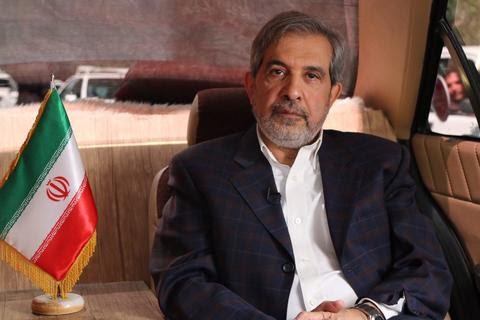
Iran FM: Reaching good agreement in Vienna talks possible

Hossein Amir Abdollahian made the remarks in a Friday phone talk with Josep Borrell, the European Union Foreign Policy Chief.

The two sides exchanged views over the upcoming Vienna talks slated for the November’s end.

The Iranian foreign minister said despite the violation of the nuclear deal by the US and the European troika, Iran will attend the Vienna talks in good faith and seeks a good and verifiable agreement.

He added that returning to the JCPOA must in practice mean adherence to all its provisions and content.

The Iranian foreign minister thanked Borrel for his efforts as the coordinator, saying it is clear that six rounds of talks in Vienna failed to produce the final results, so all issues that must be resolved have been taken into consideration by the Iranian negotiating team.

Amir Abdollahian stressed that there must be adequate and serious guarantees that the US, which is not trustworthy, will not quit the JCPOA again.

The Iranian foreign minister referred to the US’s contradictory behavior and their failure to translate their words into action. He said the White House has in two stages imposed sanctions on Iranian individuals and companies in recent weeks while at the same time declaring readiness to return to the JCPOA. Therefore, Amir Abdollahian said, everyone must see serious action and determination in practice to completely remove the sanctions.

The Iranian foreign minister said the West must come to Vienna with a new and constructive approach.

In the phone call, Josep Borrell also referred to his contacts with all sides as the coordinator of the JCPOA’s joint commission. Borrel said intensive and detailed negotiations must be held over pending issues and the sanctions removal and it’s likely that all sides can return to the original form of the JCPOA.

Borrel also spoke of the US obligations, saying sanctions can only be removed through reviving the nuclear deal. He added that this will enable Iran to achieve its rights and the international community to ensure the peaceful nature of Iran’s nuclear program.

Borrel expressed hope at the end that all parties will enter the Vienna talks with a positive and pragmatic approach and with a firm determination for negotiations over disputed issues and the removal of sanctions.

Report: Israel concerned US may strike partial nuclear deal with Iran

While US officials have characterized such a deal as the product of brainstorming, Tel Aviv claimed that a partial deal with Iran would be a gift to the new government of Iranian President Ebrahim Raisi.

Despite the purported brainstorming, no proposals or initiatives have yet been finalized.

“Israel is very concerned that the US is setting the stage for what they call a ‘less for less’ agreement,” an unnamed senior Israeli official told the WSJ.

Such an agreement would be detrimental and would only benefit Iran, the official stated, adding it would be an enormous gift to Tehran.

In May 2018, then-US President Donald Trump unilaterally pulled the US out of the Joint Comprehensive Plan of Action (JCPOA) – also known as the Iran nuclear deal – and re-imposed sanctions that crippled the Iranian economy. Soon after, Tehran also abandoned its commitments under the agreement.

Following the election of a Democratic US president, negotiations to revisit the agreement kicked off in April but stalled in June, when Raisi was elected.

Both nations have since confirmed that talks regarding sanctions and the nuclear deal are scheduled to resume in Vienna on November 29.

Earlier this week, Israeli Prime Minister Naftali Bennett asserted that Iran is at “the most advanced stage of its nuclear program”, but was “much more vulnerable than is commonly thought”. The PM warned that Tel Aviv’s modern-day advances in cyber technologies could be used to achieve its desired result over Tehran.

Iran has accused Israel of conducting a number of attacks against its nuclear program, including the June 2021 drone attack on the Karaj Nuclear Centre for Medicine and Agriculture and the November 2020 assassination of Mohsen Fakhrizadeh, a top Iranian nuclear scientist.

A recent New York Times report detailed that US officials warned Israeli counterparts that attacks targeting Iran’s nuclear program were “ultimately counterproductive”, as it allows Tehran to rebuild a more efficient enrichment system. Israeli officials, however, have “no intention of letting up”, per the report.

Report: 500k internally displaced in Afghanistan in 2021

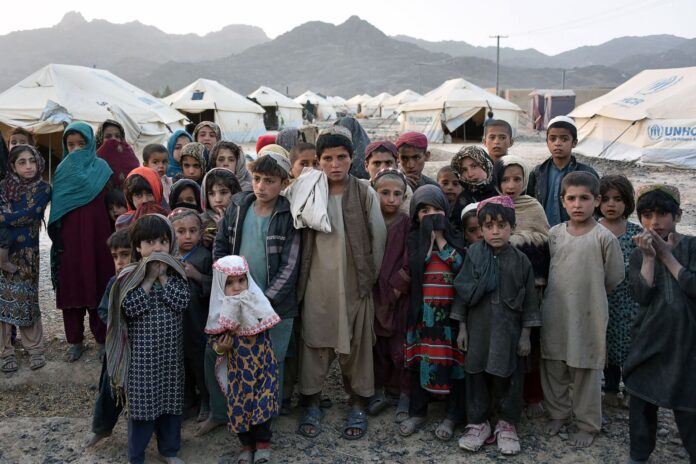
The report which has been conducted between 11-21 November 2021, has found that only 667,900 people have been internally displaced between January 1 and November 21.

The report has also identified the number of refugees who have been returned back to Afghanistan during the current year from Pakistan and Iran.

Over 1.146 million undocumented Afghan refugees have been returned from Iran and Pakistan during the year 2021, the majority of whom have returned from Iran.

This comes as, on the other hand, hundreds of thousands of Afghans have also emigrated to Iran, Pakistan, Turkey, India, Europe, England, US, and Canada in the last 100 days, since the Taliban took over Afghanistan by force.

The country went into chaos as talks with expectations to a political settlement failed following flee of Afghan President Mohammad Ashraf Ghani.

Unverified reports suggest that over 95% of Afghan citizens leave under the poverty line since August 15 and the country’s economy has fallen by over 35% since then.

Many western countries launched an emergency humanitarian evacuation program to help certain categories of Afghans in fleeing the country to a safe place.

A number of Afghan women leaders, journalists, rights activists, attorneys, and judges have been evacuated by the western countries.

Still, there are a large number of vulnerable Afghans stuck in Afghanistan who are waiting to receive assistance.

Several women rights activists and journalists have recently spoken to Khaama Press who are in Kabul and Mazar-e-Sharif cities waiting for flights out.

“US must scrap anti-Iran sanctions; provide guarantees not to abandon deal again”

Deputy Foreign Minister Ali Bagheri, who leads the country’s talks with the nuclear agreement’s signatories, made the remarks in an interview with The Independent on Thursday.

The first talks due to be held by Iran’s new government with international powers over the country’s nuclear programme will fail unless the US agrees to a key set of conditions, Tehran’s chief negotiator has warned.

The US left the historic accord in 2018 under former American President Donald Trump. It then returned the sanctions that the deal had lifted and started to force other countries to abide by the economic restrictions too.

Trump would call the policy Washington’s “maximum pressure” campaign. His successor Joe Biden has voiced a willingness to return the US to the deal, but has refused to take any meaningful measures towards the self-proclaimed intention.

“Regrettably, the failed policy of pursuing the maximum pressure campaign, which began in the Trump administration, remains in the agenda of the Biden administration,” Baqeri said.

“President Biden needs to remove the sanctions in order to relieve himself of what we see as political bewilderment and the pursuit of failed and inhumane policies of the Trump administration,” he added.

The official also noted Iran “demands guarantees from the other party not to exit the deal, not to impose and enforce new sanctions, and not to reinstate and reapply the previous sanctions.”

The expectation is aimed at securing the deal against “political chaos” in the United States, he continued, referring to the possibility that future American administrations could again take Washington out of the deal unless they were stripped of the political machinery to do so.

So far, six rounds of talks have been held in Vienna to examine the possibility of the Biden administration’s standing by its words.

It has, however, stopped short of doing so and even slapped new economic measures against the Islamic Republic.

A seventh round of talks is to go underway in the Austrian capital towards the end of this month.

The Iranian official announced the upcoming negotiations would fail too if Washington refused to both remove the bans and secure the deal that is officially known as the Joint Comprehensive Plan of Action (JCPOA).

The Iranian Foreign Ministry’s spokesman, Saeed Khatibzadeh, meanwhile, wrote a tweet, comparing the measures that Iran had taken in the run-up to the talks and the counterproductive attitude of the US and its European allies in the deal—the UK, France, and Germany.

Iran has vowed that it is seriously willing to negotiate a “good deal” if the Western countries were likewise determined to make the talks work.

UAE general accused of torture picked as Interpol chief

“Mr Ahmed Nasser al-Raisi of the United Arab Emirates has been elected to the post of president,” Interpol tweeted.

Al-Raisi, the head of the United Arab Emirates’ security forces, will take on a largely ceremonial and voluntary role during his four-year term.

The Interpol secretary general, Jürgen Stock, handles day-to-day management of the organization. Stock was given a second five-year term in 2019.

Complaints of torture were filed against al-Raisi in recent months in France and Turkey, which is hosting Interpol’s general assembly in Istanbul this week.

The appointment follows generous funding by the UAE for Interpol, which is based in Lyon, France, and accusations Abu Dhabi has abused its system of “red notices” for wanted suspects to persecute political dissidents.

Three European parliament members wrote a letter dated 11 November to the European Commission president, Ursula von der Leyen, to warn of the impact the general’s appointment would have on Interpol.

“The election of General al-Raisi would undermine the mission and reputation of Interpol and severely affect the ability of the organization to carry out its mission effectively,” they wrote.

In October 2020, 19 NGOs, including Human Rights Watch, expressed concern about the possible choice of al-Raisi, whom they described as being “part of a security apparatus that continues to systematically target peaceful critics”.

Hezbollah condemns Australia’s “terrorist” listing

In a statement carried by Lebanon’s al-Manar television network on Wednesday, Hezbollah announced the Australian decision is “a humiliating submission to American and Zionist diktats” and “a blind bias” in the service of Israeli interests.

The movement also stressed that the Australian move and similar decisions previously made by some Western countries “will not affect Hezbollah’s stance, and its natural right to resist and defend its country and people, and to support resistance movements against the Zionist occupation and aggression.”

According to the statement, the Australian designation will also fail to affect the morale of the Lebanese people or that of the free people around the world.

In 2003, Australia blacklisted Hezbollah’s military wing, but the Wednesday’s decision expanded its listing to include the entire group.

Hezbollah was established following the 1982 Israeli invasion and occupation of southern Lebanon. The movement drove out Israeli forces from Lebanon in May 2000.

Since then, the group has grown into a powerful military force, dealing repeated blows to the Israeli military, including during a 33-day war in July 2006.

Foreign combat troops to leave Iraq in two weeks

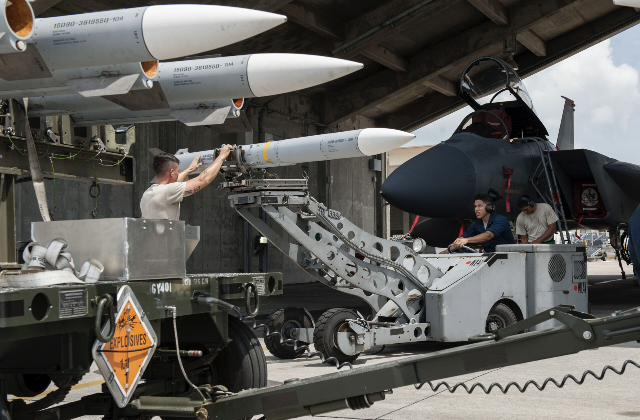
Iraq’s Joint Operations Command (JOC) confirmed on Wednesday that foreign combat forces will leave the country within 15 days, except for a number of advisers who will remain for the purpose of supporting Iraqi forces.

The statement follows a round of strategic dialogue with the United States last July, during which the two countries agreed on withdrawing all US combat troops from Iraq by December 31.

JOC Spokesman Tahseen al-Khafaji told the official Iraqi News Agency that ending the presence of foreign forces is proceeding according to plan, and that no legacy military bases will remain, notwithstanding a limited presence at Ayn al-Asad Air Base in the western province of Anbar.

Iran judiciary chief meets with families of fuel protests convicts

The country’s chief justice said during the meeting on Thursday that the Judiciary wants to reduce or modify the sentences handed to as many prisoners as possible.

After issuing orders regarding the convicts and the defendants, Mohseni-Ejei asked their families to provide proper conditions for the released individuals so they will never end up behind bars again.

Many Iranian cities were rocked by protests triggered by fuel price hikes in November 2019.

Some of the protests turned violent and led to clashes with security forces leaving scores of people dead.

Kamalvandi: Iran and IAEA almost finished the job, good progress made

Behrouz Kamalvandi said the two sides almost finished the job and only a few words remained over which they are negotiating.

Kamalvandi referred to the terrorist attack at the Tessa Complex near Karaj and the IAEA’s reaction, saying the agency has condemned the act of terror halfway but that’s not going to suffice. “We declare that the agency’s cameras have been destroyed and the IAEA must condemn it over its own cameras”, the spokesman of the AEOI said.

Kamalvandi said by “inconclusive”, Grossi meant the two sides have yet to finish the job unlike how the media interpreted that word. He cited the IAEA’s chief as confirming this.

Kamalvandi added that Iran and the IAEA failed to complete their talks because Grossi’s visit was short.

He also said the IAEA has failed to treat Iran fairly under the influence of big powers but that cannot be an excuse to leave the agency.

He said at present, we have more than 30 kg of 60% enriched uranium, and in the next one or two days, the amount of 20% enriched uranium will reach twice the capacity set by the Iranian parliament.

Regarding the leak of the IAEA’s confidential reports on Iran’s nuclear program in the Western media, he said: “We have repeatedly protested publication of confidential reports to the IAEA through letters, official statements, explanatory notes, meetings with IAEA officials, etc.”

Iranian National Football team goalie has entry in Guinness Book

Alireza Beiranvand threw the ball 61 meters during the National Football Team’s match against South Korea in September 2021. That smashed all previous records.

The 28-year-old currently plays on loan for Boavista at Portugal’s Primeira Liga.

He helped the Iranian national team to the top of Group A in the FIFA World Cup Qatar 2022 qualifiers.

Many football fans, experts and even players including goalies would call his throws incredible stuff.

In addition to his ability to throw the ball long distances, Beiranvand’s story is nothing short of inspirational. As a youngster, he left his father’s home to achieve his dream of becoming a professional soccer player.

Having moved away from his own town, he was homeless for some time in Iran’s capital Tehran. He would later work in a dress factory, at a car wash and as a street cleaner before becoming of the best goalkeeper in Iran’s Premier League.

Beiranvand was catapulted into global stardom after he saved a Cristiano Ronaldo penalty during Iran’s match against Portugal at the 2018 World Cup.