Thursday, December 25, 2025
Home Blog Page 2259

Covid downward trend holds in Iran

The health Ministry announced on Thursday 96 people died of Covid in the past 24 hours, compared to the 95 deaths confirmed yesterday.

This has pushed the total number of fatalities since the pandemic started to 129,376.

Meantime, 4,850 new infections have been logged since Wednesday including 786 hospitalizations.

Since the Covid outbreak began in Iran, 6,097,672 people have contracted the disease. Of that figure, 5,830,653 people recovered from the Coronavirus.

Iran’s nationwide inoculation drive has been credited with the downward trend in deaths and infections. The number of Covid vaccine doses administered to Iranians has crossed the 104 million mark.

So far, 57,179,012 people have received the first dose of vaccine while the number of those who have been given the second shot is 45,942,308. The number of the third dose, known as the booster shot, is 902,909.

The number of cities marked red zones in Iran is still eight. Red zones are areas facing the highest risk from the Coronavirus. Meanwhile, 58 cities are orange, 236 yellow and 146 blue with the latter showing the lowest level of risk.

Authorities say Covid has abated in Iran but people should remain careful because another wave of the pandemic is still a possibility.

Israel approves settlement expansion in WB, Palestinians decry

Israel has given initial approval to a plan that would expand Jerusalem’s municipal boundaries by building thousands of new illegal settlement homes on occupied West Bank land around the city, drawing a Palestinian demand that Washington intervene.

On Wednesday, Jerusalem municipality green-lit what it described as a new eastern neighbourhood on lands located over the West Bank boundary, near the Palestinian hub city of Ramallah. The site, which once housed Qalandiya Airport, is known to Israelis as Atarot.

The airport site, which was closed after the eruption of the second Intifada in 2000, was designated in former US President Donald Trump’s Middle East plan as a Palestinian tourism zone. The area is sandwiched between the Palestinian neighbourhood of Kafr Akab and the Qalandiya refugee camp.

The plan, which requires further stages of approval, is for 3,000 homes to be built, with a view to adding another 6,000 eventually, Jerusalem Deputy Mayor Arieh King told the Reuters news agency.

Israeli settlements are considered illegal under international law.

The two-state solution laid out by the Oslo Accords of 1993 envisioned East Jerusalem as the capital of a Palestinian state made up of the West Bank and Gaza Strip. Israel claims the entire city of Jerusalem as its indivisible capital.

US-sponsored peace talks between the two parties stalled in 2014. Washington has since recognised Jerusalem as Israel’s capital, without explicitly backing its claim on all the city.

“This settlement plan aims to conclude the separation of Jerusalem from our outlying Palestinian area … in a bid to Israelise it, Judaise it and annex it,” the Palestinian Foreign Ministry said in a statement.

It urged the US and other powers “to immediately intervene to stop these colonial projects and plans”.

The US Embassy in Jerusalem had no immediate comment.

About 475,000 Israeli Jews live in settlements in the occupied West Bank.

Israeli settlement expansion in the occupied West Bank and occupied East Jerusalem has continued under every Israeli government since 1967.

However, construction accelerated in the last few years under former Prime Minister Benjamin Netanyahu, with a significant boom during Trump’s US administration, which Palestinians accused of egregious pro-Israel bias.

Iran calls for removal of sanctions as goodwill gesture

“The next round of Vienna talks provides a unique opportunity for other remaining parties to the nuclear deal and the U.S. to demonstrate their real intention to return to full implementation of their commitments by effectively lifting all inhumane sanctions,” Acting permanent Mission of the Islamic Republic of Iran to the International Organizations in Vienna Reza Ghaebi said during a meeting of the International Atomic Energy Agency’s Board of Governors on Thursday.

“The credible and effective lifting of sanctions is the basis of Iran’s willingness to abide by the terms of the agreement, and U.S. violations have nullified and effectively rendered those parts of the agreement void,” Ghaebi noted.

It is unfortunate that European countries still do not want to openly condemn the unilateral withdrawal of the United States from the nuclear deal and the re-imposition of sanctions, which is the only cause of all these problems, and refuse to call on the United States to resume fulfilling its obligations and remove its sanctions against the Iranian nation, the Iranian diplomat told the IAEA Board of Governors adding that Europeans arrogantly call on Iran to fulfill its JCPOA obligations.

“I would like to reiterate that until sanctions against Iran are removed, it is unreasonable to expect more restraint from Iran. Our nuclear activities, including enrichment at various levels and the production of metal-based uranium fuel, are fully peaceful, in accordance with our rights under the Non-Proliferation Treaty, and under the oversight and verification of the Agency’s safeguards,” Acting Iranian permanent mission to the International Organizations in Vienna added.

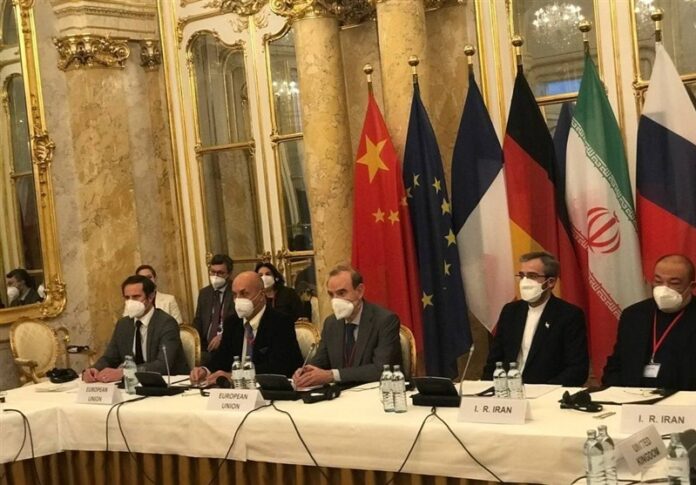
Iran and the remaining JCPOA parties will resume negotiations in the Austrian capital Vienna later this month. U.S. negotiators will also be present in the city, but there will be no direct discussions between them and the Iranians.

Top US commander acknowledges Iran’s missiles accuracy

The top general has warned that Iran has a “very capable” ballistic missile program, calling it “the one thing the Iranians have done over the last three to five years.”

Iran has shown its missiles have a proven ability to strike targets with precision, McKenzie noted.

In January 2020, Tehran launched more than a dozen ballistic missiles from launch sites at three bases in western Iran that hit two Iraqi bases, Al Asad and Erbil, where hundreds of Americans were stationed. The missiles turned buildings, aircraft and living quarters into smoldering rubble. No one died, as most had managed to shelter in underground bunkers and trenches, but concussions from the blasts injured at least 100 American troops.

The military operation was in retaliation for Washington’s assassination of Tehran’s elite commander, Islamic Revolution Guards Corps (IRGC) Qods Force Commander Lieutenant General Qassem Soleimani in Iraq’s Baghdad.

“Those missiles hit within tens of meters of their targets,” McKenzie stated, noting, “The one thing the Iranians have done over the last three-to-five years is they built a very capable ballistic missile platform.”

Iran has called the January 2020 operation “only a slap across the face” of the United States, stressing that “military moves like this are not enough, and the Americans corruption-stirring presence should come to an end”.

“70% of Iranians received both doses of Covid vaccine”

He was speaking on the sideline of the delivery of 5 million doses of a homegrown jab dubbed Razi Covopars. The health minister said the rate of vaccination is an amazing statistic in the world, adding that this is a sign of the Iranian people’s confidence in the Health Ministry.

Einollahi said the Covid outbreak has subsided in Iran, but there is always the possibility of a new wave, and health protocols must be strictly observed.

He noted that Iranians must learn to live with Covid, pointing out “One of the best jabs in the world has been produced in Iran, which has a lot of health, safety and effectiveness.”

Einollahi said Razi Covopars is one of the advanced and effective vaccines and Iran will use it to administer the booster shot. “At present, up to 20% of Razi Institute vaccines can be exported”, he noted. According to the Iranian helath minister, people who received Sinopharm for their first and second doses must get Astrazeneca vaccine for the third.

WSJ: Saudi Arabia and Russia mulling pause in oil production increases

According to the WSJ, citing sources familiar with the talks, other members of the Organization of the Petroleum Exporting Countries (OPEC) do not see the pause as necessary. The United Arab Emirates (UAE) and Kuwait are reportedly among the latter.

Saudi Arabia, the largest OPEC producer, and Russia have been at the helm of the effort to stabilize the oil supply on the global market during the Covid-19 pandemic recovery. OPEC, Russia, and a number of other oil-producing states struck a long-term deal earlier this year to boost their collective oil output by 400,000 barrels a day each month through next year, until they reach pre-pandemic production levels, which was slashed at the height of the pandemic to battle oversupply.

The US announced on Tuesday it would release 50 million barrels of oil from its strategic reserves to curb rising gasoline prices, in a coordinated move with a number of other major oil consumers, including Japan, the UK, India, China, and South Korea. All of them, except for China, also announced the release of reserves at varying volumes. However, the plan is seen by some as an empty gesture, as its proposed volume equals roughly one day’s worth of global demand for crude.

Washington’s move came after repeated attempts to pressure OPEC and allies to increase production over the agreed to level. The group argued that it would result in oversupply, and has stuck to its plan so far.

OPEC+ agreed to meet monthly to assess the oil supply-demand correlation and adjust the output boost policy if necessary. They are scheduled to meet next week.

The US’ efforts have not borne fruit so far. After slightly dropping on news of the release of reserves on Tuesday, oil resumed its upward trend. Brent crude was up 15 cents at $82.40 a barrel early on Thursday, while US crude benchmark West Texas Intermediate was also trading higher at $78.41 a barrel, as of 06:26 GMT.

China: Iran stance on Vienna talks fair

Wang Yi made the remarks in a virtual meeting with his Iranian counterpart, Hossein Amir Abdollahian.

He also described the resumption of the Vienna talks and the recent visit by the IAEA director general to Tehran as positive.

Yi also referred to the threats issued by the US and the European parties to the JCPOA, who have repeatedly tried to pressure Iran by talking of options, outside the negotiations, to counter Iran’s civilian nuclear program.

The Chinese foreign minister, once more, extended an invitation to his Iranian counterpart for a visit to Beijing.

Wang Yi further underlined the need for a focus on expanding different aspects of bilateral ties with Iran.

Amir Abdollahian also said the outcome of the upcoming talks in Vienna, on the removal of anti-Iran sanctions, hinges on the willingness of the remaining parties to the nuclear deal to fulfill their relevant obligations.

“The Islamic Republic of Iran enters the Vienna talks with full determination to achieve a good agreement, and seeing the illegal withdrawal of the US from the nuclear deal and the European parties’ failure to fulfill their obligations, if they attend the Vienna talks with the necessary will for the implementation of their obligations, getting an agreement quickly will be possible,” Iranian foreign minister said.

Amir Abrollahian also hailed the positive developments in the mutual relations with China over the past several months.

He said Tehran is preparing the grounds for the implementation of economic agreements with Beijing.

Iran denies cyberattack on dams

E’tezad Moghimi, who heads crisis management and civil defenses in the Energy Ministry said the ministry itself had imposed brief curbs on general access to the databases to carry out updates on the system.

Moghimi added that the system was available for technical experts and no cyberattack had happened.

The statement came hours the IRIB News quoted an informed source as saying the system used for management of water quantities in dams and reservoirs in Iran had been shut down for the past two weeks apparently because of a cyberattack.

The source added that the attack had even affected access to software used by staff for messaging and internal communication.

Iran has been hit by several high-profile cyberattacks on its key infrastructure in recent months, including one earlier this month which disrupted gas stations countrywide for several hours.

Another cyberattack happened in July. It hit systems in the Transportation Ministry and briefly hampered train services.

Iran blames such cyberattacks on the United States or the Israeli regime. Government departments have beefed up their defenses while authorities say they are on high alert for cyberattacks.

‘Iranian companies ready to boost presence in Armenia’

During the phone call, the two top diplomats exchanged views over different issues including bilateral ties, economic cooperation, the Joint Economic Commission of the two countries, regional and international developments.

Amir Abdollahian expressed satisfaction with the growing trend in the Tehran-Yerevan relations over the recent months. He underlined the importance of expanding cooperation between the two sides in the political, economic and other fields.

Iran’s foreign minister said Iranian companies are ready to boost their presence in Armenia and expressed hope that the Join Economic Commission of Iran and Armenia will convene as soon as possible.

The top Iranian diplomat also said the Islamic Republic will not accept any change in the borders of countries in the region.

Amir Abdollahian also voiced concern over the recent hostilities in the Caucasus region and urged restraint and respect for territorial integrity of countries.

The Armenian foreign minister also referred to the proposed roadmap of relations between Iran and Armenia which was emphasized during his recent visit to Tehran. Mirzoyan said Yerevan is ready to hold the Joint Economic Commission and expand trade ties with Tehran.

He thanked the Islamic Republic for its support of the territorial integrity of countries and stressed Armenia’s resolve to boost relations in all fields with Iran.

Iran and Armenia have enjoyed good political and economic relations. Armenia recently built a transit route for Iranian trucks after the Azerbaijan Republic imposed levies on vehicles using another road that passed through

Iran rejects Bahrain terror allegations against Tehran

No Change in Iran’s Borders as Karabakh Peace Deal Unfolds: Spokesman

The Bahraini authorities also claim “terrorists have been arrested for plotting terrorist operations against security and civil peace”.

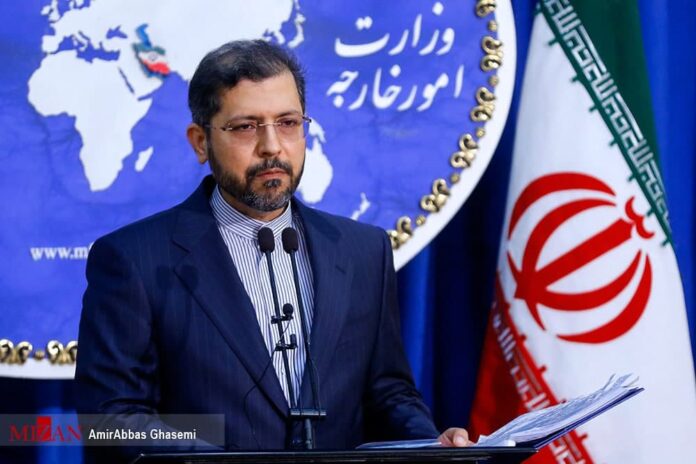
“Such baseless allegations by the officials of Bahrain, in time with the Manama Dialogue that had turned into a platform against Iran, show the lack of understanding in Bahrain on regional issues,” Iran’s Foreign Ministry Spokesman Saeed Khatibzadeh said.

The spokesman stressed that the government of Bahrain cannot “cover up its domestic and foreign problems” with such “unfounded allegations”.

Khatibzadeh also slammed Bahrain’s ties with Israel. “The government of Bahrain has put relations with the illegitimate Zionist regime before relations with its own people and prevents the realization of their civil demands,” he said.

In the past, Manama has repeatedly accused Iran of backing “terrorist” operations in Bahrain. Tehran, however, says these are stunts to divert attentions from Bahrain’s security problems due to suppression of its own people and disregard for the massive domestic opposition Manama is facing over its normalization agreement with Israel.