Thursday, December 25, 2025
Home Blog Page 2260

‘UK blacklisting of Hamas goes against international law’

Nasser Abu Sharif described the move as a violation of international law. He made the remarks on Wednesday at a media panel.

Abu Sharif said London’s move is aimed at winning the support of Zionist lobbying groups.

He also said Britain’s foreign secretary is behind the blacklisting of Hamas, calling Elizabeth Truss an anarchist rightist politician.

Abu Sharif added that Palestinians have a legitimate right to resistance, adding, “We want the free nations of the world to stand up against this move by bullying powers”. The Islamic Jihad representative said Britain is targeting the Palestinian people instead of condemning Israel’s demolition of Palestinian homes.

Abu Sharif described Britain’s blacklisting of Hamas as racial apartheid, saying it will further tarnish the UK’s image.

Members of Basij hold large gathering in Tehran

Some five thousand members of Iran’s Basij force hold a gathering in Mosalla of Tehran in a ceremony where Deputy Commander of the Islamic Revolution Guards Corps Brigadier General Ali Fadavi was present.

Marzban 1000-year-old village in northern Iran

The location of Marzban village has caused it to be located next to the dense Hyrcanian forests, close to the Caspian Sea, and to create beautiful landscapes. 

Among the tourist attractions of this village, we can mention the Riqo forest and the Fiki hole.

Armenian PM accuses Azerbaijan of “thuggish behavior”

He made the comment in response to Azeri President Ilham Aliyev’s demand that Yerevan open a corridor through its territory to give Azerbaijan access to Nakhjavan, an autonomous Azeri region. 

Pashinian strongly condemned Azerbaijan’s territorial claim to the Zangezour area. The Armenian premier called on the international community to investigate what he called Azerbaijan’s continued aggression against Armenia.  

Pashinian’s comments come days prior to his meeting with Aliyev and Russian President Vladimir Putin in Suchi, Russia. 

He said the Azeri president’s insistence that Baku will do whatever it desires verges on international thuggish behavior. 

He called for the enforcement of international mechanisms against Azerbaijan Republic.   

Last week, the Armenian prime minister said his country welcomes proposals by Russia to resolve border disputes with Azerbaijan. 

The Republic of Azerbaijan and Armenia fought a bloody war in November 2020 that claimed thousands of lives. The war ended after Azeri forces captured areas over which Baku claims sovereignty. 

The two sides are still widely divided over a range of issues and have engaged in sporadic clashes after the end of the 44-day war.

Guinness Book records Iranian disabled athlete

Alireza Sadeghi, a disabled athlete from Isfahan, who has been practicing throwing a b-ball into the basket with his hand for 11 years, was once again able to do it in the UAE with the presence of a Guinness representative, from a distance of 15 meters.

This is unique globally, and so far, no athlete has managed to register the record. At the same time, this throw has been nominated by Guinness for the best skill of the year.

Sadeghi has a disability in both legs, and his talent in football is excellent. He has been playing football with sticks for many years and has unique moves.

Apple sues Israeli spyware company over iPhone hacking

Apple announced Tuesday that it is suing the NSO Group, claiming the Israeli company broke U.S. law by selling ways to hack into its iPhones.

In the lawsuit, filed Monday, Apple said NSO’s elite program that can remotely hack into its flagship product — iPhones — was the work of “amoral 21st century mercenaries”.

The tech giant sought to block the company from using any Apple product, a move that would demolish NSO’s current business model if enforced.

“State-sponsored actors like the NSO Group spend millions of dollars on sophisticated surveillance technologies without effective accountability. That needs to change,” Craig Federighi, Apple’s senior vice president of software engineering, said in a company announcement.

NSO has in recent years gone from being a little-known Israeli security company to emerging as one of the most notorious purveyors of digital tools that break into iPhones through previously unknown software vulnerabilities. The company has long insisted that it only leases its technology to legitimate governments for the purposes of tracking criminals and enforcing laws and interests.

Those claims have been countered by cybersecurity researchers who discovered NSO software used by governments to spy on human rights activists and journalists around the world.

“Thousands of lives were saved around the world thanks to NSO Group’s technologies used by its customers,” a company spokesperson stated in an emailed statement.

“Pedophiles and terrorists can freely operate in technological safe-havens, and we provide governments the lawful tools to fight it. NSO Group will continue to advocate for the truth,” the spokesperson added.

Apple’s lawsuit makes it the second major tech company to sue the company, after WhatsApp filed a similar lawsuit in 2018.

John Scott-Railton, a researcher at the University of Toronto’s Citizen Lab, which has conducted the most thorough public research of governments’ abuses of NSO tools, called the suit “extremely welcome from the point of view of protecting civil society”.

“The mercenary spyware problem has got totally out of hand,” he said, adding, “One by one, tech companies are recognizing that they can’t solve this problem simply through technical means.”

“Otherwise they’re always going to be playing catch-up,” he continued, stating, “They’re realizing it’s time to take spyware to court.”

The suit is the latest in a string of problems NSO has had to deal with this month. 

In early November, the U.S. Department of Commerce blacklisted the company, saying its products “maliciously target government officials, journalists, businesspeople, activists, academics, and embassy workers”.

CEO Isaac Benbenisti resigned several days later after only a few days on the job.

Iran’s Covid deaths hit new low

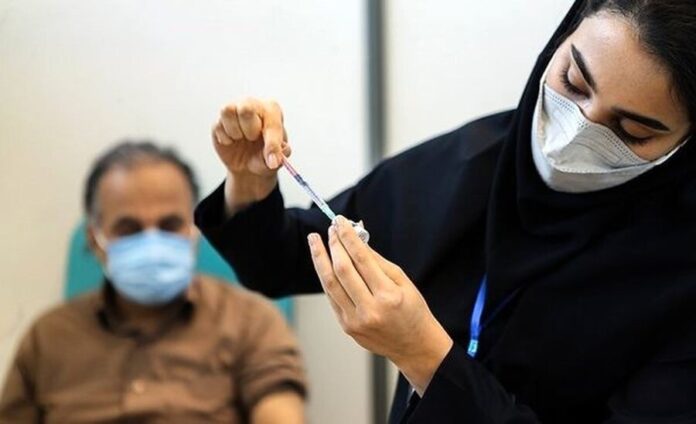
The Iranian Health Ministry says 95 people have died of the disease since Tuesday. This is the lowest daily death toll from the disease in nearly eight months. 

The deaths push to 129,280 the number of people killed by the Coronavirus since the start of the pandemic in early 2020. 

The Health Ministry also said on Wednesday there were 4,813 new cases including 724 hospitalizations over the past 24 hours. 

Since the start of the pandemic, 6,092,822 people have contracted Covid in Iran. The majority of them, that is, 5,819,025 people recovered from the disease. 

The downward trend in Covid deaths and new infections has held after the fifth wave of the pandemic subsided in Iran. Officials say the downward trend is due to the high rate of vaccination. 

In spite of the fact Covid is in marked retreat in Iran, authorities are urging people to remain cautious as the country is not yet out of the woods.

UN: Yemen war deaths to reach 377k by year’s end

In a report published on Tuesday, the United Nations Development Programme (UNDP) estimated that 70 percent of those killed would be children under the age of five.

It found that 60 percent of deaths would have been the result of indirect causes, such as hunger and preventable diseases, with the remainder a result of direct causes like front-line combat and air raids.

“In the case of Yemen, we believe that the number of people who have actually died as a consequence on conflict exceeds the numbers who died in battlefield,” UNDP Administrator Achim Steiner stated.

Saudi Arabia, backed by the US and regional allies, launched the war on Yemen in March 2015, with the goal of bringing the government of former Yemeni President Abd Rabbuh Mansur Hadi back to power and crushing popular Ansarullah resistance movement.

The war has left hundreds of thousands of Yemenis dead, and displaced millions more. According to the United Nations Office for the Coordination of Humanitarian Affairs, the conflict has killed more than 233,000 people.

The conflict has also destroyed Yemen’s infrastructure and spread famine and infectious diseases. The World Health Organization (WHO) has warned more than 16 million Yemenis are food insecure. The body has also estimated 75 percent of Yemeni children suffer from acute malnutrition. The situation in the country has been described by the UN as the world’s worst humanitarian disaster.

The report projected grim outcomes in the near future should the conflict drag on.

It said some 1.3 million people would die by 2030, and that 70 percent of those deaths would be the result of indirect causes such as loss of livelihoods, rising food prices, and the deterioration of basic services such as health and education.

The report also found that the number of those experiencing malnutrition would surge to 9.2 million by 2030, and the number of people living in extreme poverty would reach 22 million, or 65 percent of the population.

The report also projected that extreme poverty could disappear in Yemen within a generation if the conflict were to end immediately.

Using statistical modelling to analyse future scenarios, the UNDP report added if peace were reached by January 2022, Yemenis could eradicate extreme poverty by 2047.

“The study presents a clear picture of what the future could look like with a lasting peace including new, sustainable opportunities for people,” noted Steiner.

If the conflict ends, the report estimated economic growth of $450bn by 2050, in addition to halving malnutrition – currently affecting 4.9 million people – by 2025. Further projections showed that focused efforts on empowering women and girls across Yemen could lead to a 30 percent boost of gross domestic product (GDP) by 2050, coupled with a halving of maternal mortality by 2029.

However, the UNDP noted that the war “continues to propel in a downward spiral”.

“The people of Yemen are eager to move forward into a recovery of sustainable and inclusive development,” said Khalida Bouzar, Director of the UNDP Regional Bureau for Arab States.

“UNDP stands ready to further strengthen our support to them on this journey to leave no one behind, so that the potential of Yemen and the region can be fully realised – and so that once peace is secured, it can be sustained,” Bouzar added.

The report emphasises that the upward trend for development and wellbeing must be supported not just by peace efforts, but also by regional and international stakeholders to implement an inclusive and holistic people-centred recovery process that goes beyond infrastructure.

Investments focused on agriculture, women’s empowerment, capacity development, and effective and inclusive governance were projected to have the highest return on development.

Raisi calls for an end to vast salaries of some government officials

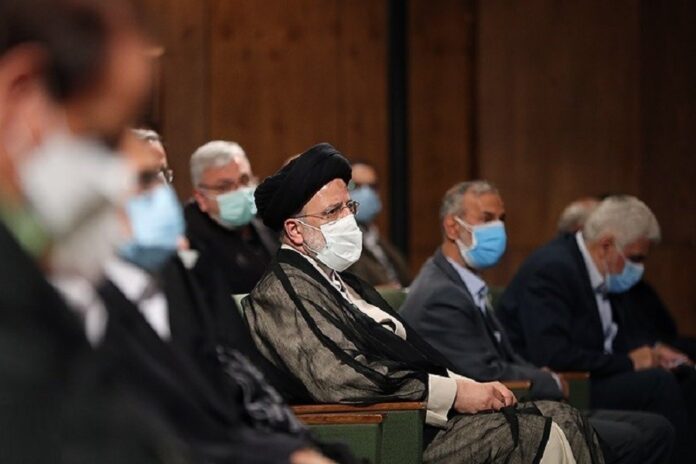
President Raisi said on Wednesday there is a limitation on salaries that must be enforced for all people working at government organizations and they must not be paid more than that. 

Raisi also said people do not want to hear anymore about astronomical salaries and such unconventional payments must be ended. 

In the recent past, fury has erupted in Iran over vast salaries paid to some government officials.

Raisi also said his administration succeeded in providing vaccines and pressing ahead with a nationwide vaccination campaign to roll back the Covid pandemic in Iran. 

Raisi said after dealing with Covid, the main issue on the government’s agenda is people’s livelihood, and the ministers should explain their actions in this regard to the people.

Regarding water shortages in the provinces of Isfahan and Chaharmahal and Bakhtiari, Raisi said the decisions that have been made in this respect should be followed up and the people should be notified of the results. 

He added that the issue of drinking and agricultural water of the people is important. 

Raisi also touched on the reopening of schools after Covid receded in most of Iran. The president thanked the Ministry of Education for holding in-person classes. 

He said parents of students are also satisfied with the decision to hold classes on an in-person and virtual basis.

Turkey seeks Saudi records for Khashoggi murder suspects

As the case of the 2018 murder in Istanbul of Khashoggi continues, a Turkish court on Tuesday sought the Saudi verdict about the fugitive defendants, if any.

During the hearing at the High Criminal Court no: 11 in Istanbul, the panel of judges decided to ask Saudi authorities if there is any investigation or trial about the fugitives in the Khashoggi case and for a copy of the final verdict to prevent multiple penalty.

The process will be carried via the Foreign Relations Department of the Turkish Justice Ministry.

The court, in line with the prosecutor’s demand, ordered the execution of the arrest warrants and red notices for the defendants to be put on hold, and the replies to the rogatory letter regarding their extradition to be awaited.

It also ruled that a response to the letter sent to the Interpol department of the Turkish police regarding the supply of the defendants’ criminal records and identity registrar copies to be waited for acquiring.

The 26 defendants of the case were not present at the hearing, while Khashoggi’s fiancee Hatice Cengiz, her lawyer Ali Ceylan, and an officer from Germany’s Consulate General in Istanbul attended it.

Both Ceylan and the defendants’ lawyers asked the court to correct the deficiencies in the case file.

Khashoggi, 59, a columnist for The Washington Post, was killed and dismembered by a group of Saudi operatives shortly after he entered the country’s consulate in Istanbul on Oct. 2, 2018.

Riyadh offered conflicting narratives to explain his disappearance before acknowledging he was murdered in the diplomatic building in a “rogue operation”.

On Sept. 27, 2020, Turkish prosecutors filed a second indictment against six Saudi suspects over Khashoggi’s killing in Turkey.

The 41-page indictment prepared against six fugitive suspects – including two consulate staff members – was approved by the chief prosecutor’s office in Istanbul and referred to the High Criminal Court no: 11, where the main case of the defendants was heard.

The indictment against the two members of consular staff – Sultan Yahya A. and Yasir Halit M. – demands separate aggravated life sentences over “deliberate killing with a monstrous feeling”.

The prosecutors seek between six months to five years in prison for four suspects – Ahmet Abdulaziz M., Khalid Yahya M., Mohammed Ibrahim A., and Obaid Ghazi A.

According to the indictment, the two consular staff members were in the team that carried out the murder and left Turkey after the killing while the other four suspects are accused of leaving Turkey after tampering with evidence by going to the crime scene immediately after the murder.

The Turkish court later merged the two indictments, with the defendants of the case rising to 26.

On Sept. 7, 2020 the Riyadh Criminal Court commuted death sentences handed down last year to the accused into prison terms of up to 20 years.

The Saudi trial process was widely criticized.

“The Saudi prosecutor performed one more act today in this parody of justice. But these verdicts carry no legal or moral legitimacy,” said Agnes Callamard, the UN special rapporteur on extrajudicial execution.